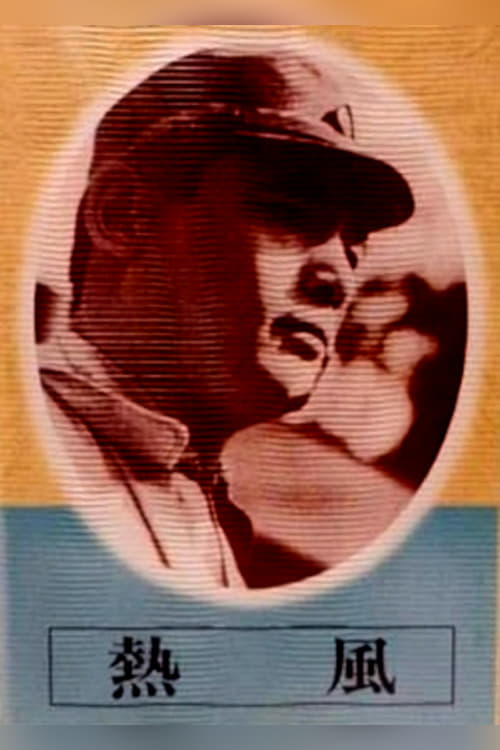
Set in wartime at the Yawata Steel Works in Tobata, Yawata, and Kokura cities in Fukuoka Prefecture, the film depicts people taking on the evil blast furnaces that prevent increased production. The film was shot on location at the actual Yawata Steel Works for an extended period of time, and special effects were created using a miniature blast furnace that closely reproduces the actual one.
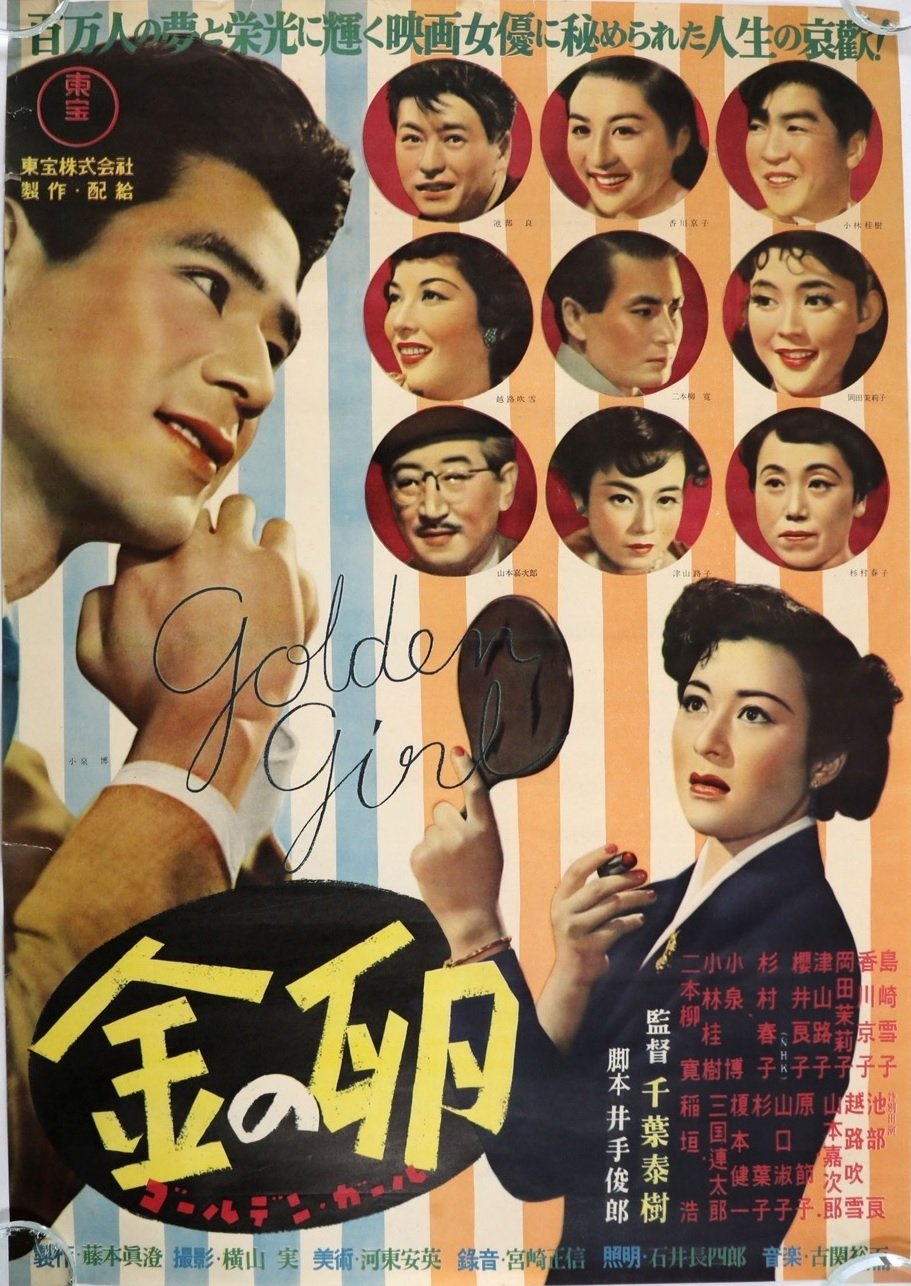
Once an average and seemingly ordinary Tokyo girl, she suddenly finds herself as a TV star owing to her discovery by a casting company, which noticed photographs that her cousin had sent. When another actress falls ill she is given the role instead. Her first film is a success propelling the young actress to popularity, her own fans, money and a house. While everything looks dandy from the outside not all is well within the family however.
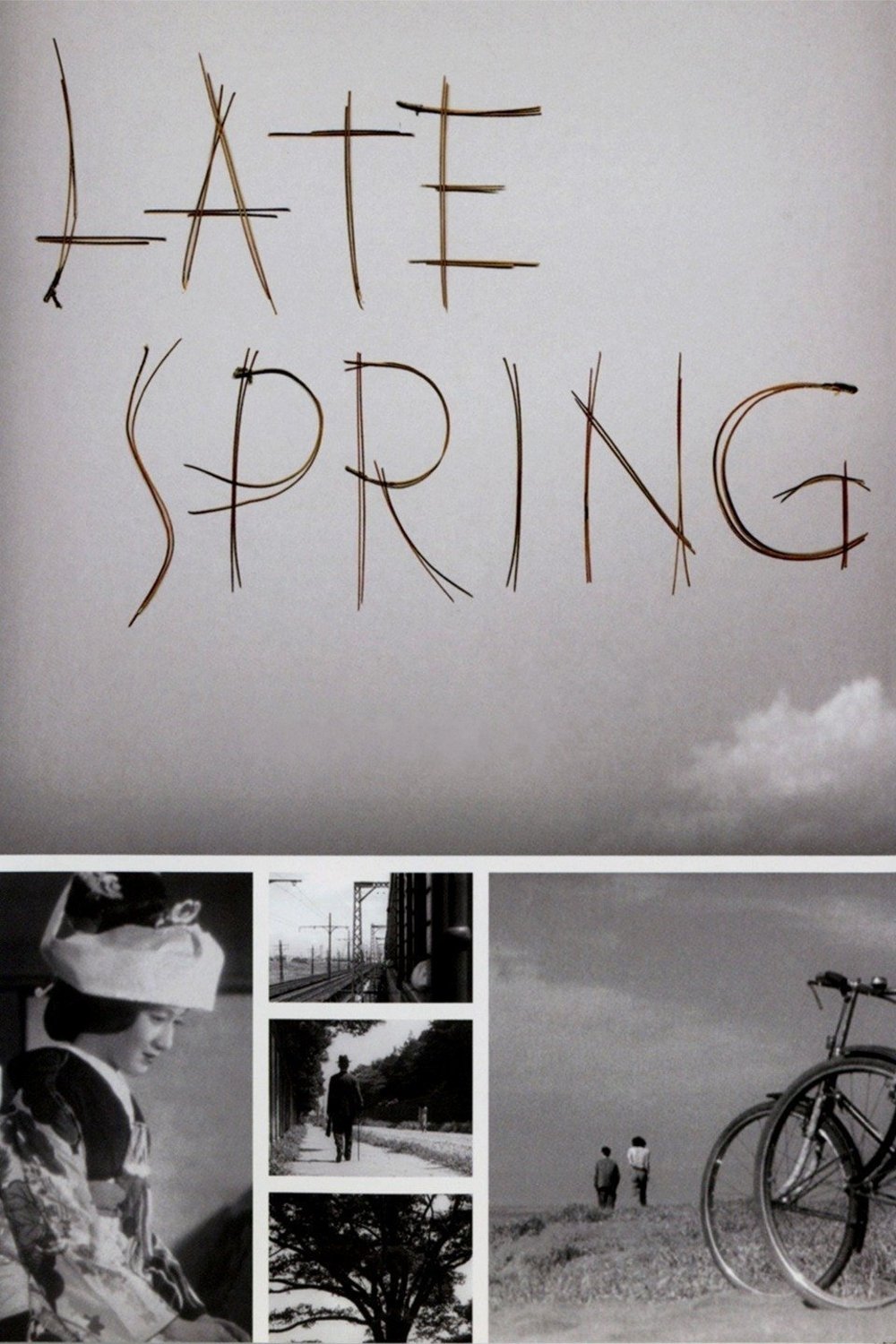
Noriko is perfectly happy living at home with her widowed father, Shukichi, and has no plans to marry -- that is, until her aunt Masa convinces Shukichi that unless he marries off his 27-year-old daughter soon, she will likely remain alone for the rest of her life. When Noriko resists Masa's matchmaking, Shukichi is forced to deceive his daughter and sacrifice his own happiness to do what he believes is right.
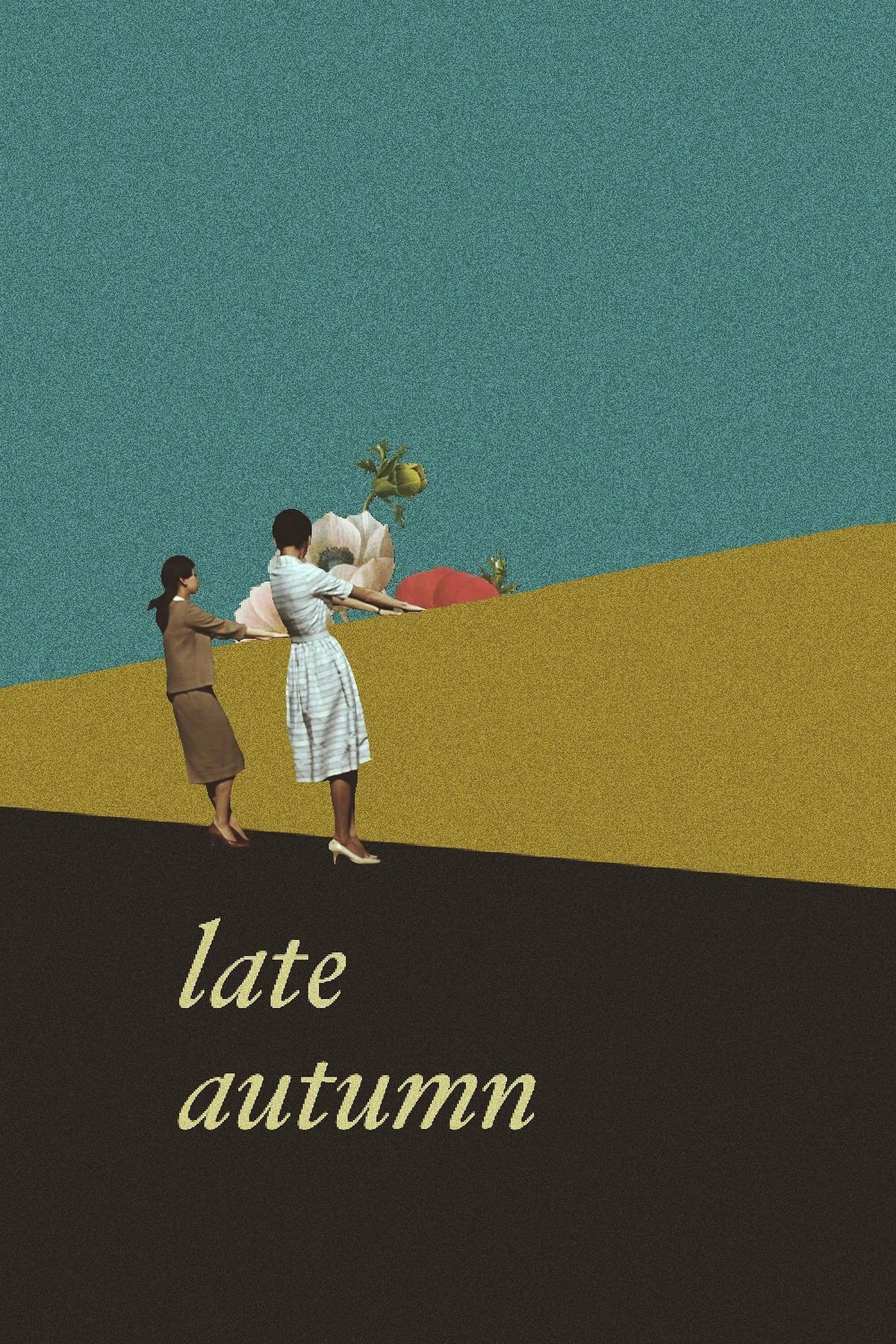
A woman and her daughter are each forced to contend with an increasing pressure to marry, particularly from three men who knew her late husband.

A gentle, war-shattered ex-soldier, Kinji Kameda, arrives in wintry Hokkaidō and is pulled into a volatile tangle of love and pity between the disgraced Taeko Nasu, the proud Ayako, and his possessive friend Akama. Kameda’s saintly compassion exposes everyone’s wounds, steering the quartet toward jealousy, violence, and inexorable tragedy. Adapted from Dostoevsky’s novel.
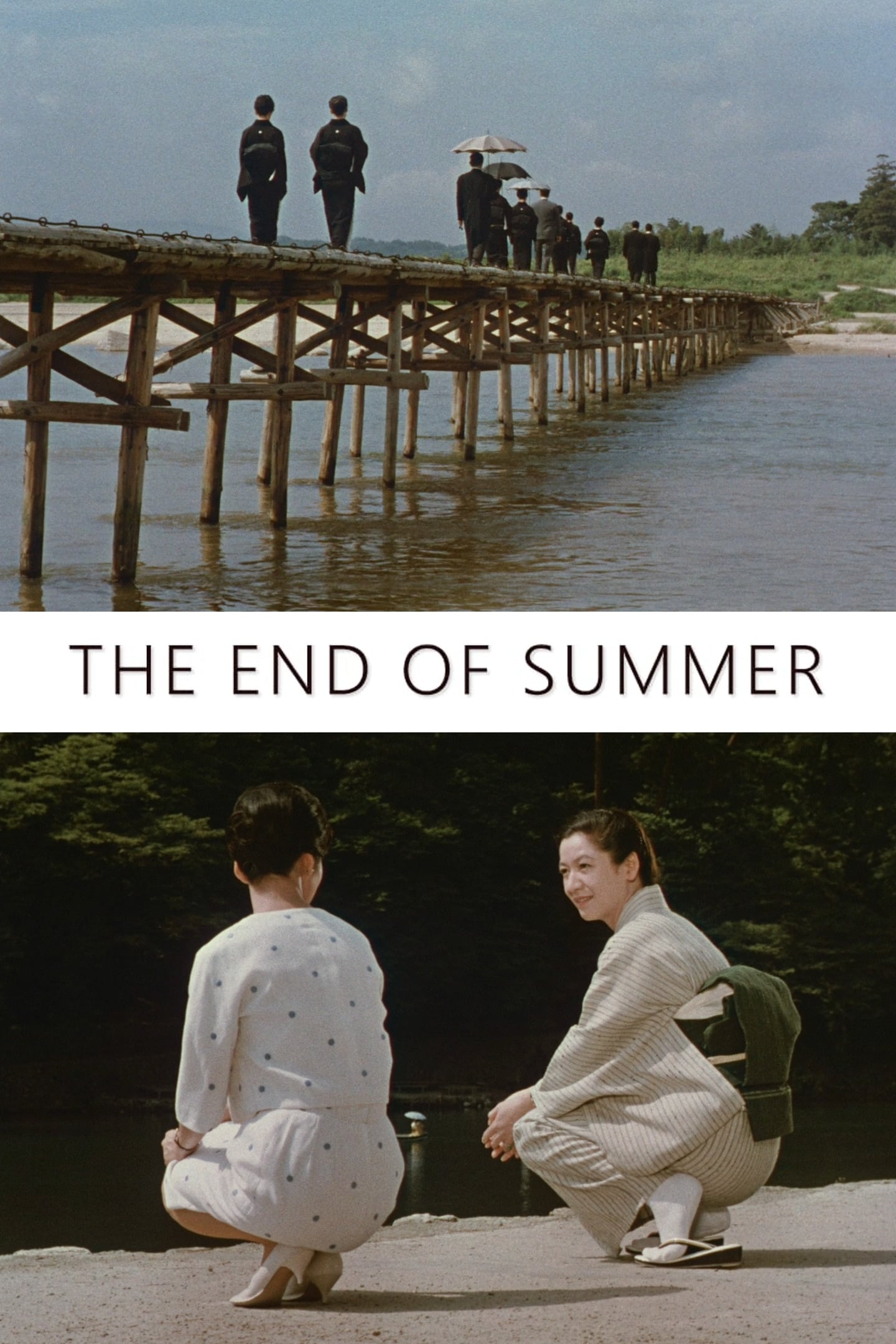
The family of an older man who runs a small sake brewery become concerned with his finances and his health after they discover him visiting an old mistress from his youth.
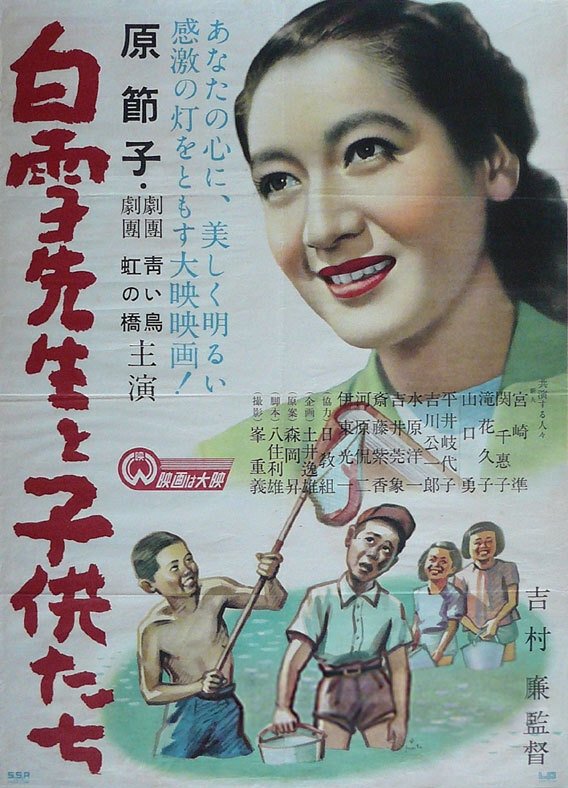
The film centers a compassionate teacher (Setsuko Hara) who teaches at a Tokyo grade school where students curse and gamble. The school has a pond on-premises that she's in charge of and cares for. The pond holds a number of carp, but someone is snatching them. The teacher forms a special bond with a child who lives in abject poverty.
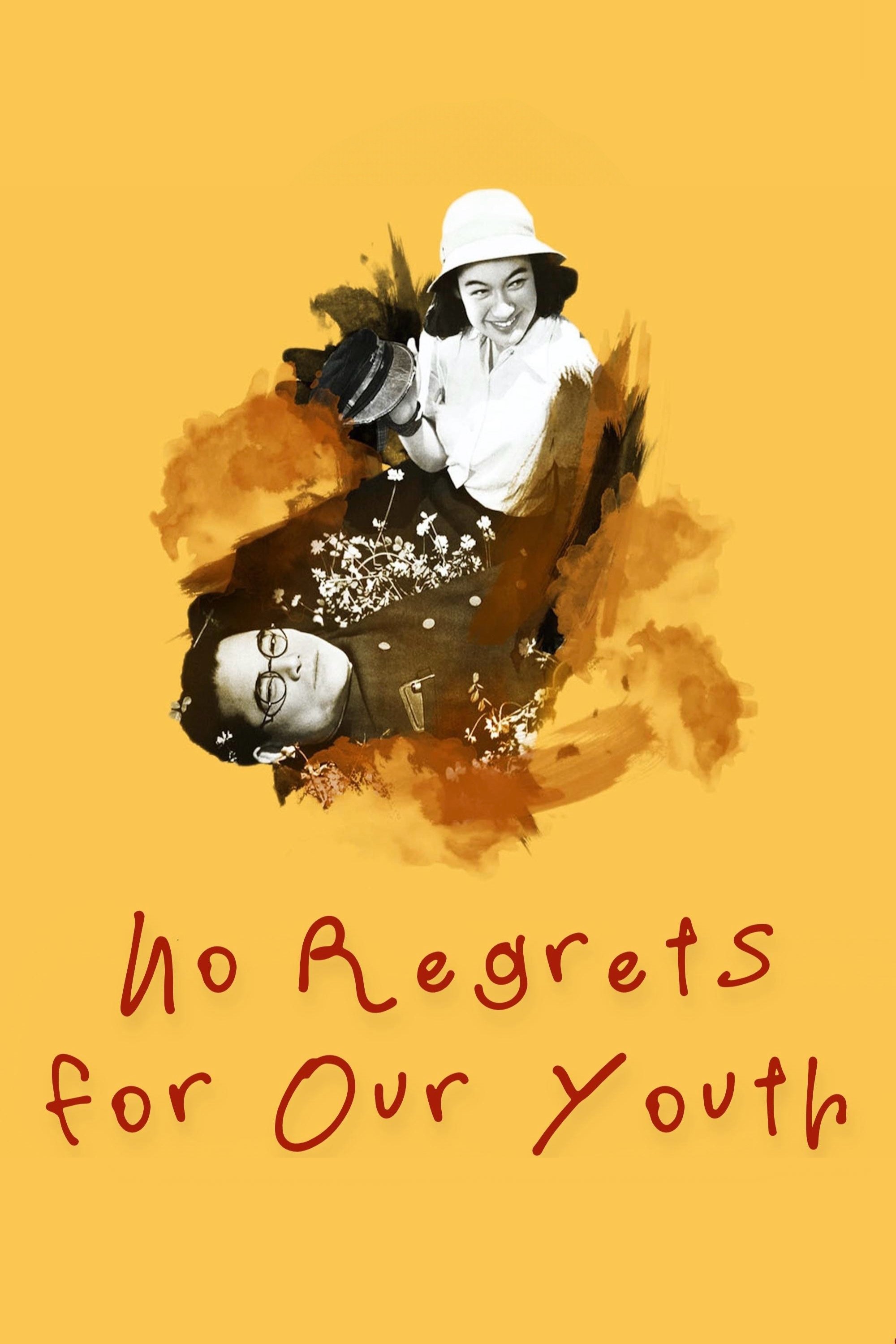
After her anti-fascist professor father is dismissed, Yukie navigates love, political repression, and wartime upheaval—ultimately forging her own path in pre- and post-WWII Japan.

After their lord is tricked into committing ritual suicide, forty-seven samurai warriors await the chance to avenge their master and reclaim their honor.
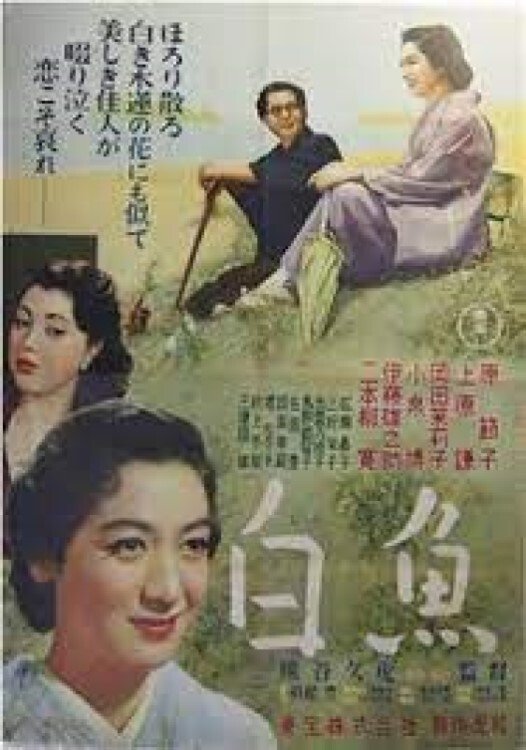
A family comprised of a man, woman and their only son is torn apart when the father, who is a doctor with his own clinic, is to go off to war. Soon the wife and the son are left without an update of his status and whether he is alive or not. With the clinic lying dormant the doctor's wife rents the premises to her husband's underling. This is a man who does not accept payment from the poor. The woman, in the meantime, works at a restaurant whose owner being ill has given her additional duties. Her younger sister is an unmarried finance writer who also lives with them. It is both sisters, however, who receive marriage proposals.
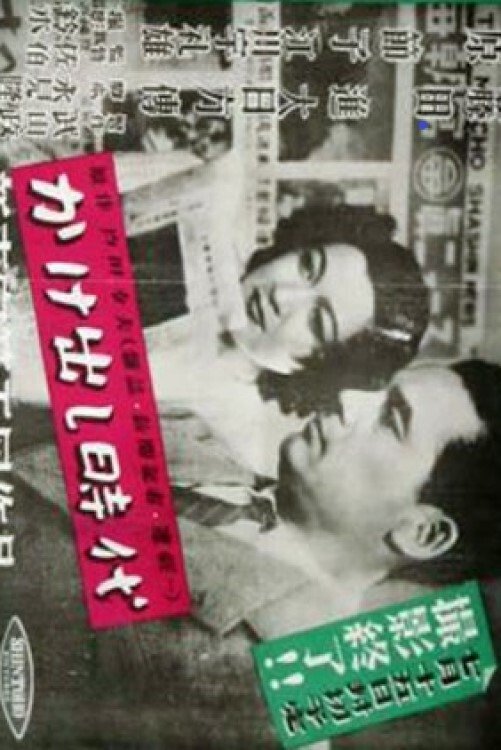
A newly hired daily newspaper writer covering the society beat receives an assignment to cover Tokyo at night by walking and observing it. He gets into the right frame of mind by dressing the part as a vagrant with not a penny to his name. He gets into trouble ending up at the police station slammer overnight. He has no material to write about and, with his assignment unfulfilled, faces a cross editor.
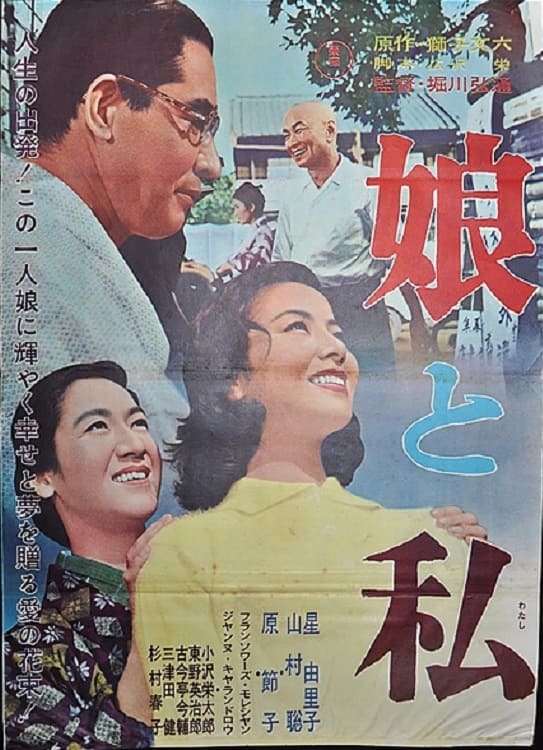
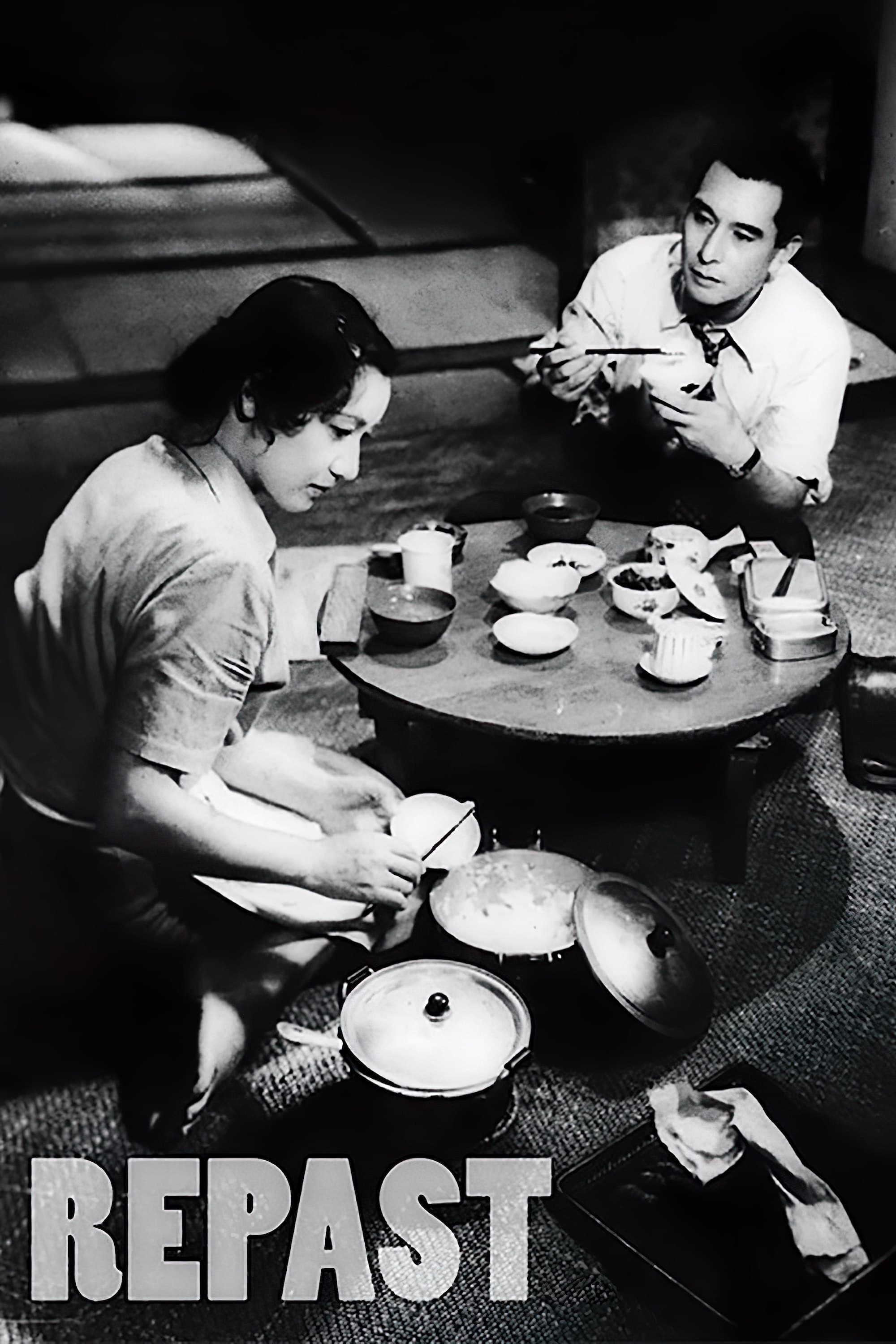
In post-WWII Osaka, a middle-aged woman is forced to examine her dreary life and marriage when her husband's young and flirtatious cousin arrives for a brief stay to escape an arranged marriage.

An ingratiating bride develops warm ties to her father-in-law while her cold husband blithely slights her for another woman.
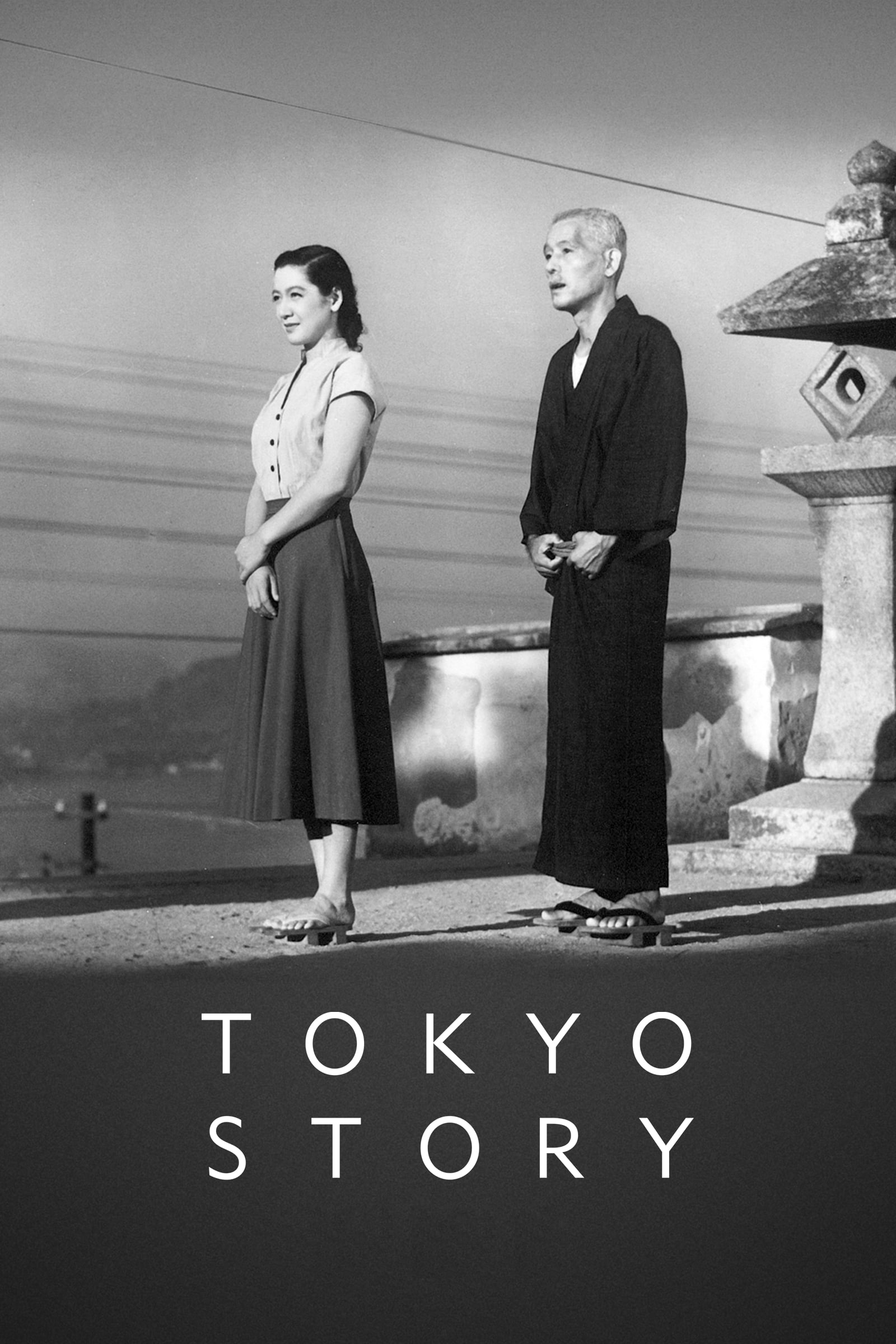
The elderly Shukishi and his wife, Tomi, take the long journey from their small seaside village to visit their adult children in Tokyo. Their elder son, Koichi, a doctor, and their daughter, Shige, a hairdresser, don't have much time to spend with their aged parents, and so it falls to Noriko, the widow of their younger son who was killed in the war, to keep her in-laws company.
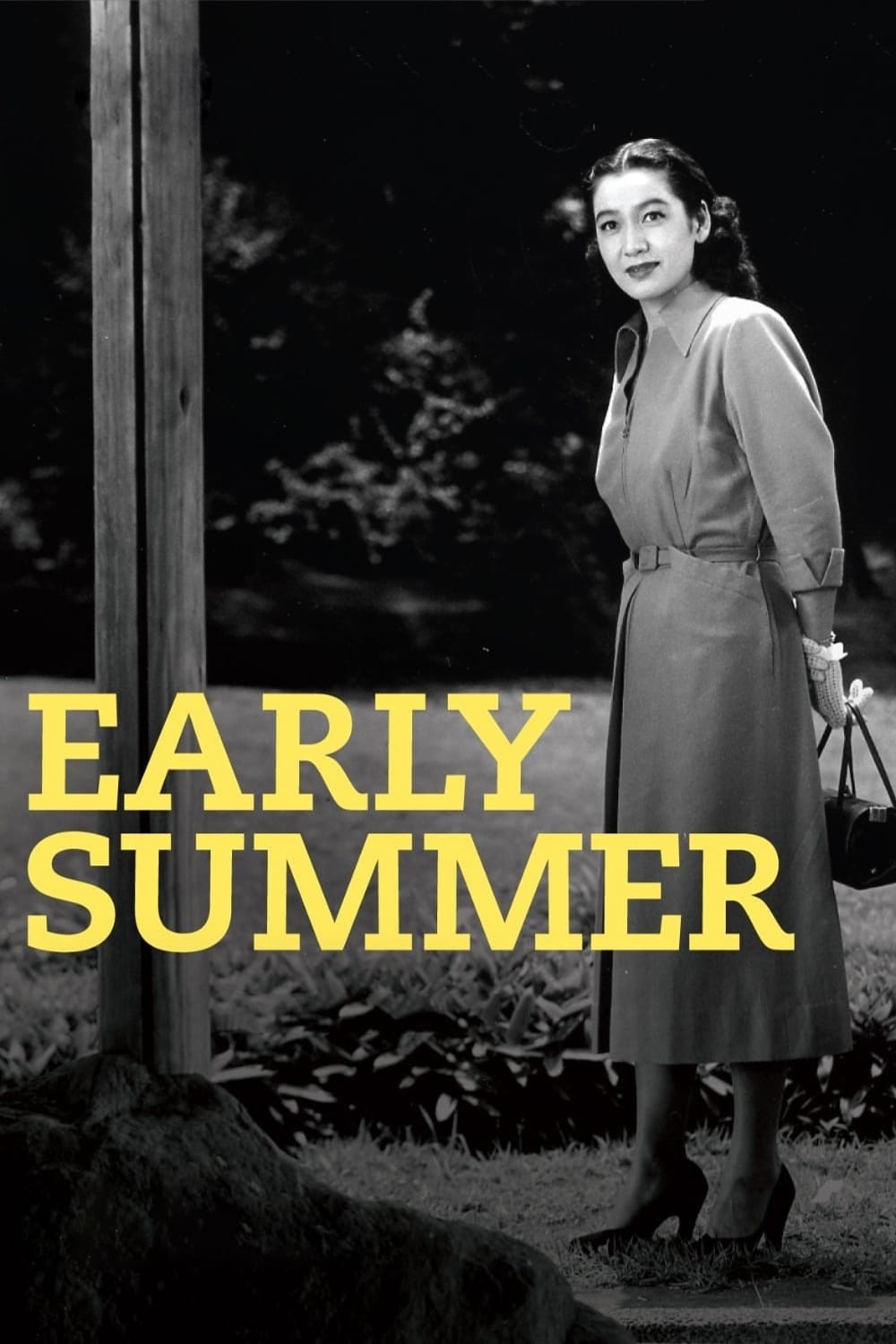
In postwar Tokyo, Noriko lives with her extended family. Although she enjoys her career and her social life, her more traditional family worries about her single marital status at the advanced age of 28. 40-year-old business associate Takako proposes, Noriko's family press her into accepting, but when her widowed childhood friend Kenkichi returns to the neighborhood, she finds her heart leading in another direction.
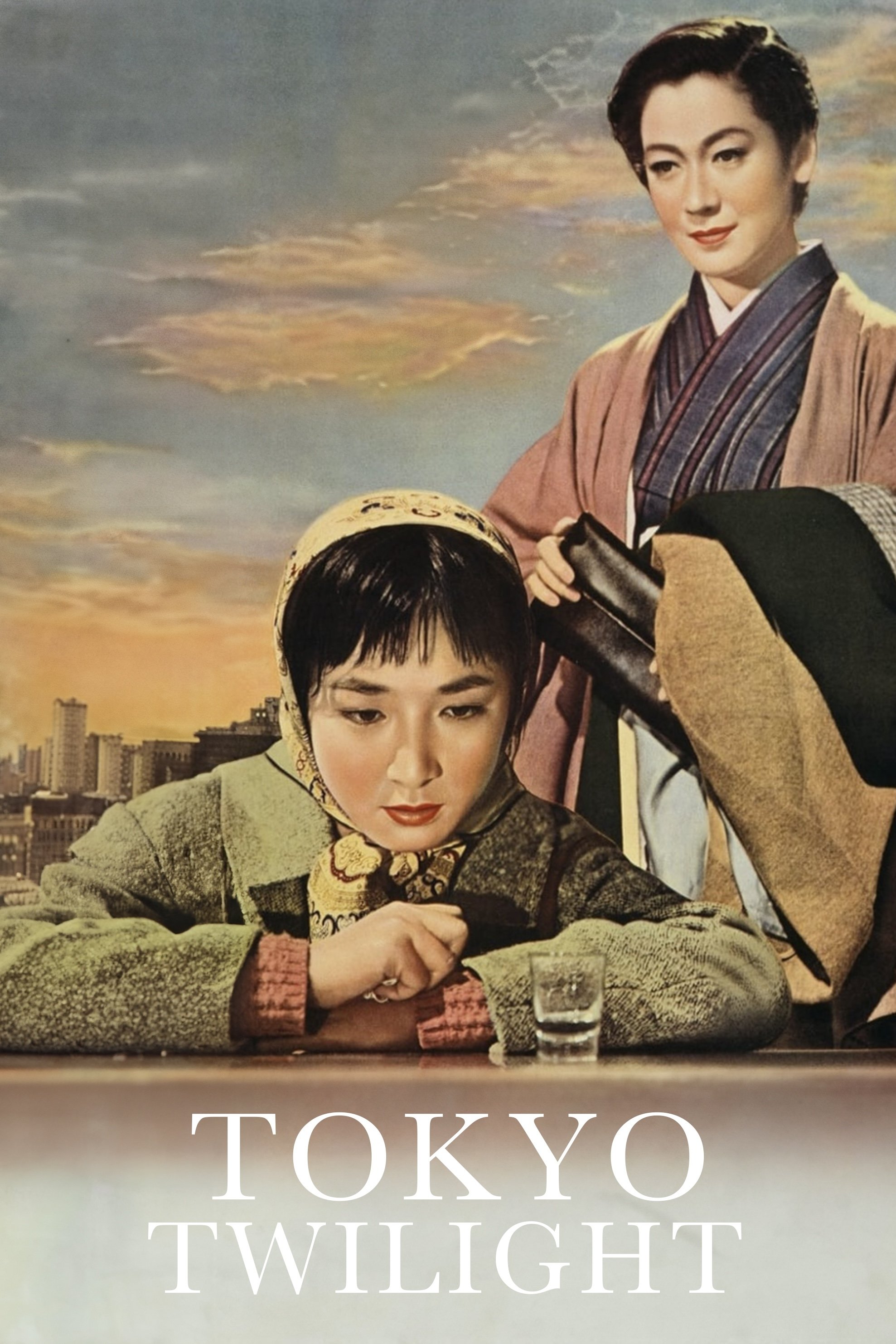
Two sisters find out the existence of their long-lost mother, but the younger cannot accept the fact that she was abandoned as a child.
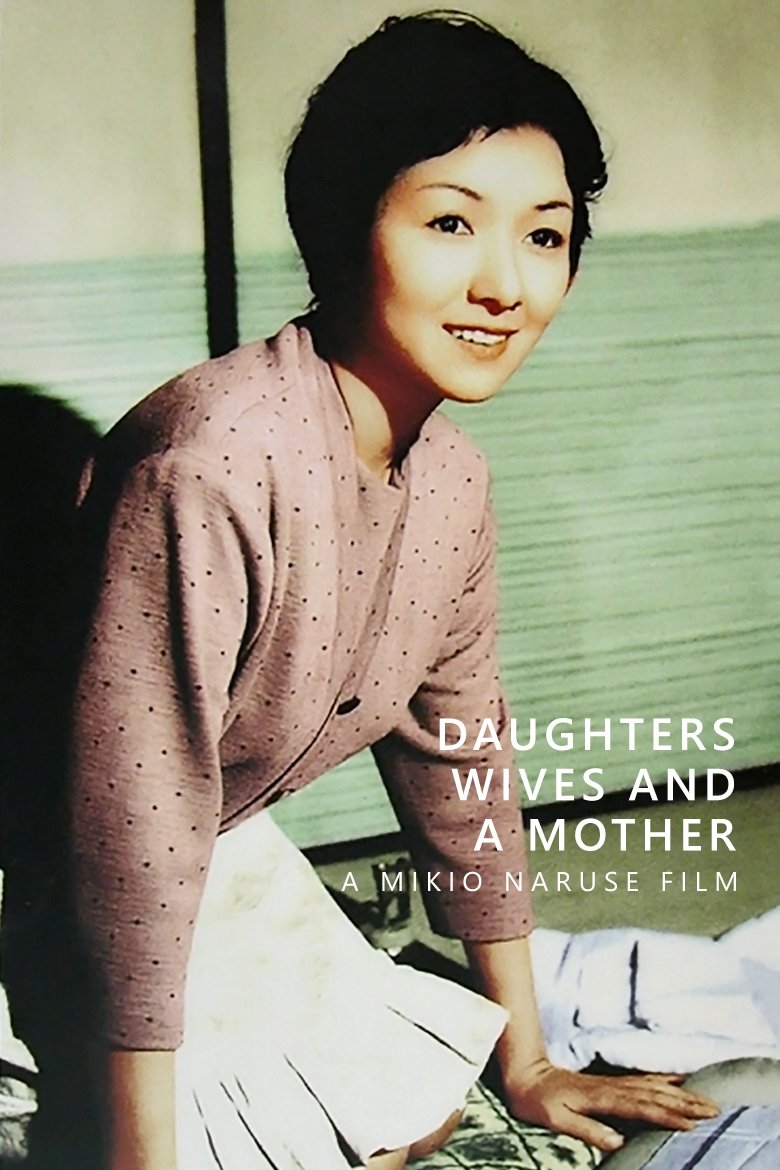
Sanae is left a widow after her prestigious husband dies, but holds the proceeds of a million yen insurance policy. Being childless, her former in-laws have no objection to her return to her own family.
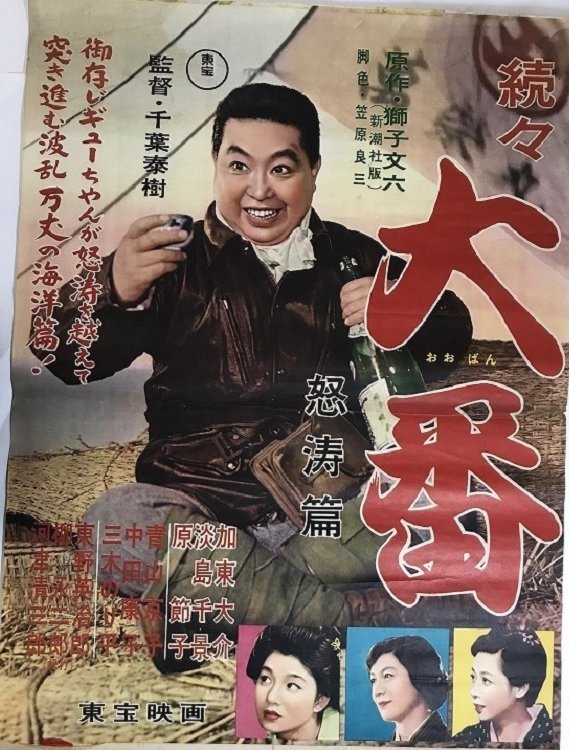
Ushinosuke returns to his hometown to become a farmer. Part three (of four) of the film adaptation of Bunroku Shishi’s novel, Oban.
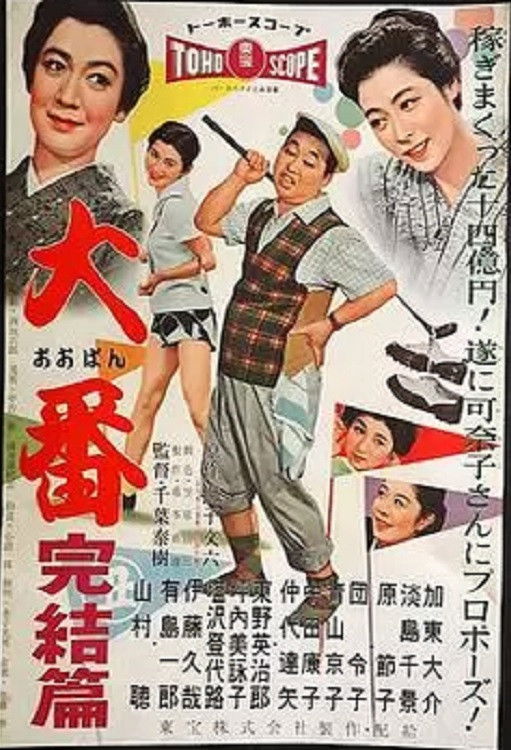
Ushinosuke returns to Tokyo with new ambitions. Fourth and final part of the film adaptation of Bunroku Shishi’s novel, Oban.
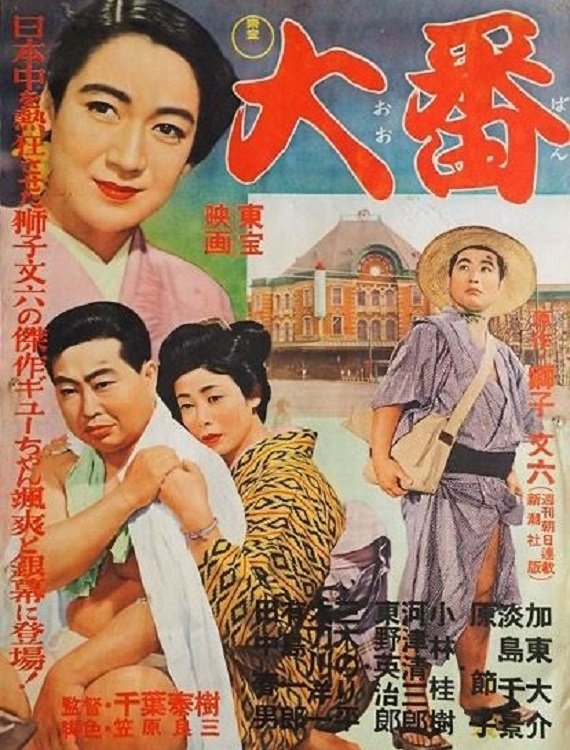
A young country boy leaves his village for Tokyo, where he begins to work as a stock trader. First part (of four) of the film adaptation of Bunroku Shishi's novel, Oban.
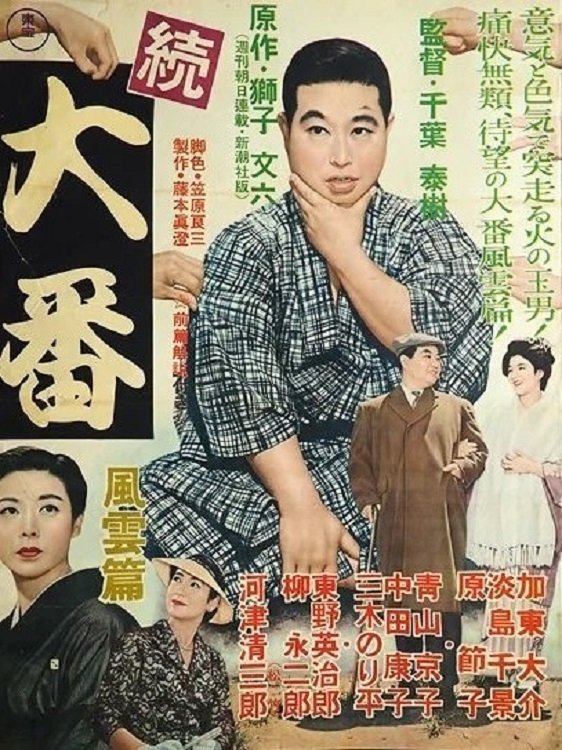
Ushinosuke returns broke to his hometown, where everyone believes he's rich and successful. Part two (of four) of the film adaptation of Bunroku Shishi's novel, Oban.
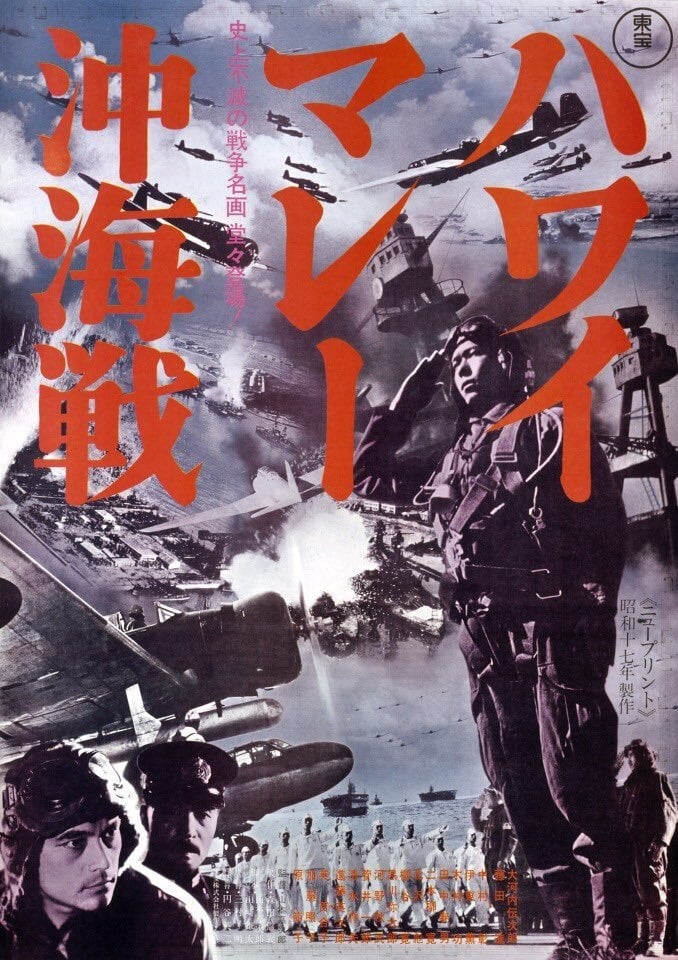
Japanese Navy air cadets train for the attacks on Pearl Harbor and the HMS Prince of Wales.
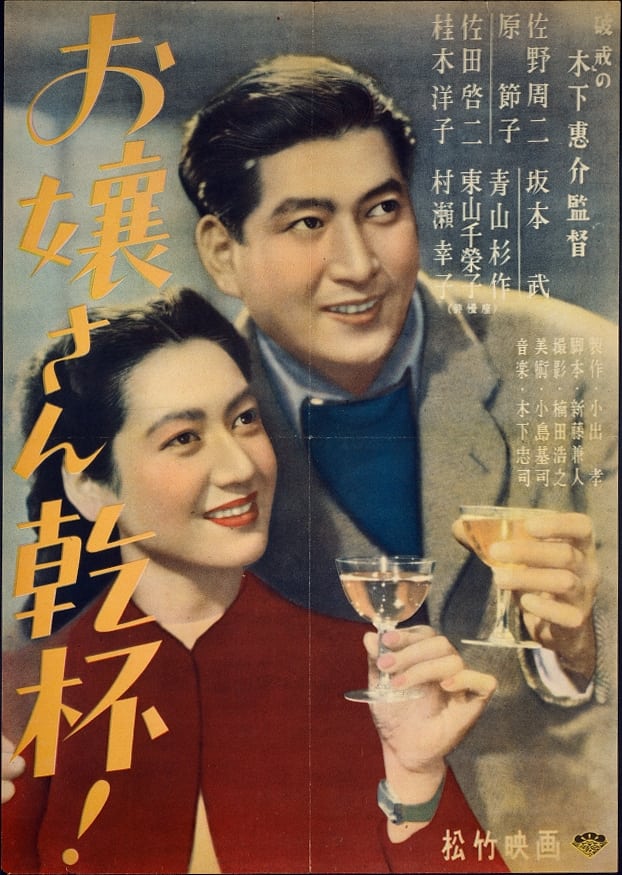
A matchmaker looks to unite a young woman from a wealthy Tokyo family with the humble owner of an auto garage.

After Japan's defeat in the war, the Anjo family lose their peerage and wealth. Since their mansion is due to pass into the hands of a creditor, the family holds one last ball before leaving.
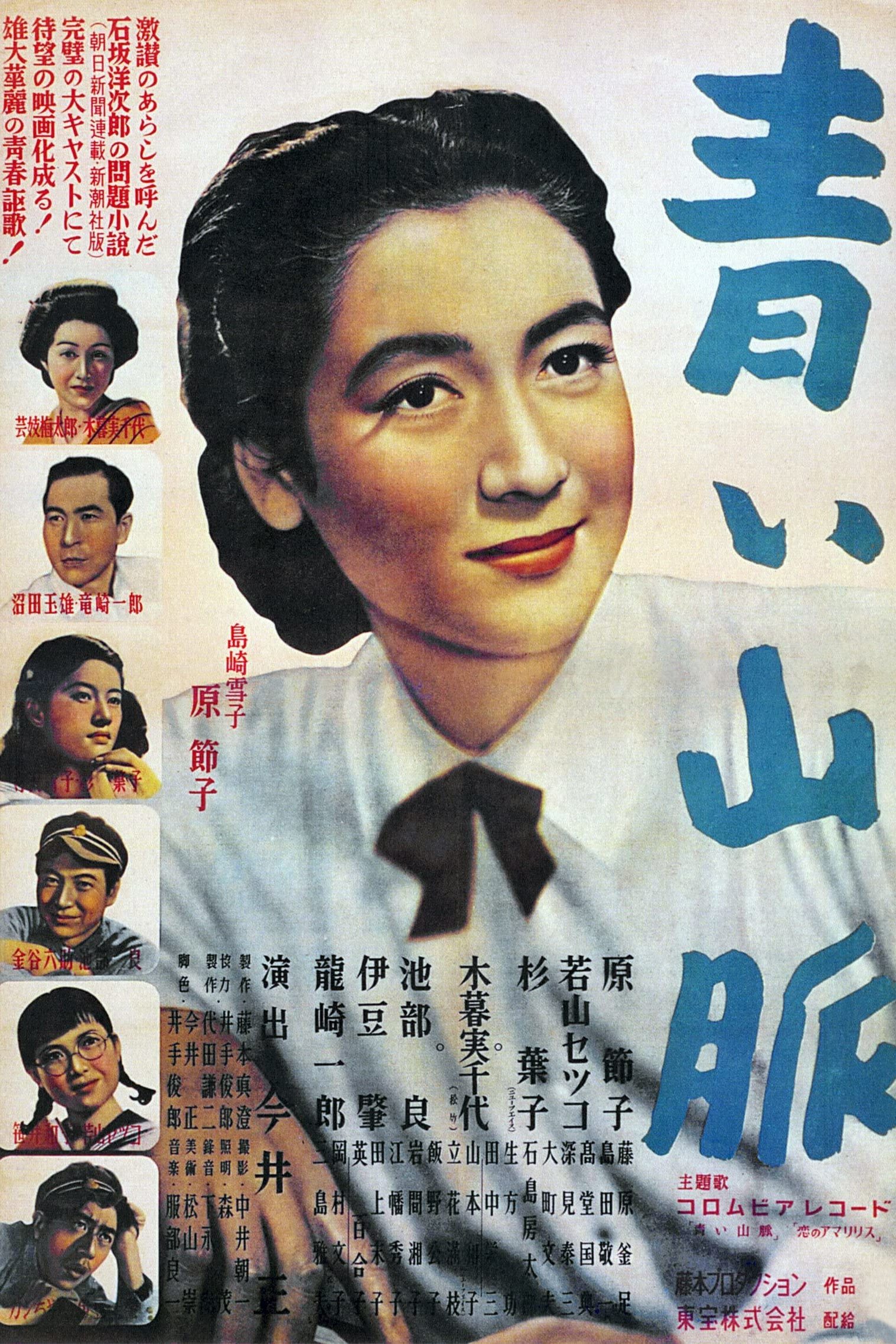
Teacher Yukiko finds herself in opposition to conservative faculty and villagers after defending a student for being in a relationship with a young man from Tokyo.

The film reconstructs the life of Noriko by selecting scenes from Oz Yasujiro’s films featuring actor Hara Setsuko.
Two brothers run a factory canning crabs. The elder brother Kotaro is righteous and insists on honesty. The younger brother is fixated on money. They are polar opposites. When a boat sails out looking for crab and does not return one day the brothers begin to argue over how to run their facility. They had just received a large order from a foreign country and had obtained a loan from a lender that needed to be repaid.
An Invention laboratory is working on the creation of a performance 'bomb' in the shape of a rocket that could be delivered to the front in order to entertain and amuse the national troops. Inside this rocket would be tiny performers. Once launched from the laboratory and landed amidst the Japanese troops the soldiers could enjoy the performers. The laboratory succeeds and the rocket is built. It bears the insignia, 'until the victory days.' The Japanese government began a program of shooting and disseminating propaganda and entertainment movies for its troops during World War II. It is a lost film.
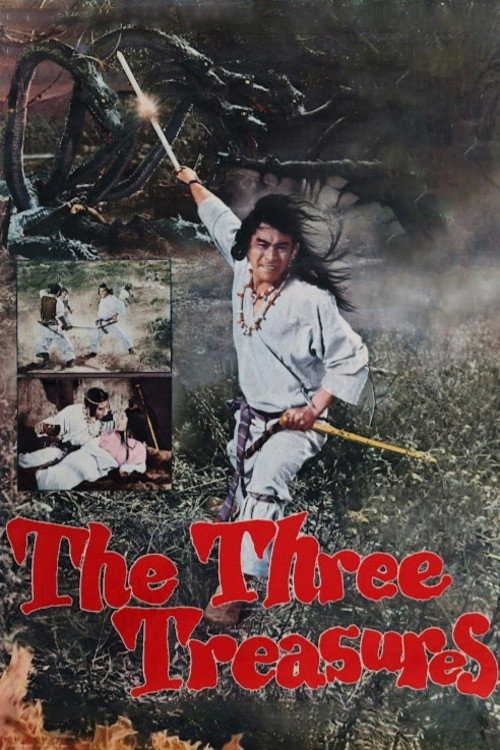
The legend of the birth of Shintoism. In Fourth Century Japan, the Emperor's son Ouso expects to succeed his father on the throne, but Otomo, the Emperor's vassal, prefers Ouso's stepbrother, and conspires to have Ouso die on a dangerous mission he has contrived. But Ouso prevails in the mission and returns to his father's castle under a new name, Prince Yamato Takeru. Otomo plots to have the Prince sent into even greater danger, but Otomo is unaware that the gods have favored the Prince and the outcome is far from what any of them expected.

Set in Qingdao, China, a Japanese company locates an office there and begins work and cooperation with a local Chinese company for business. Many Japanese engineers also move to China, with their families, for the company in order to construct a canal. There are young Chinese resisting the Japanese in this area.
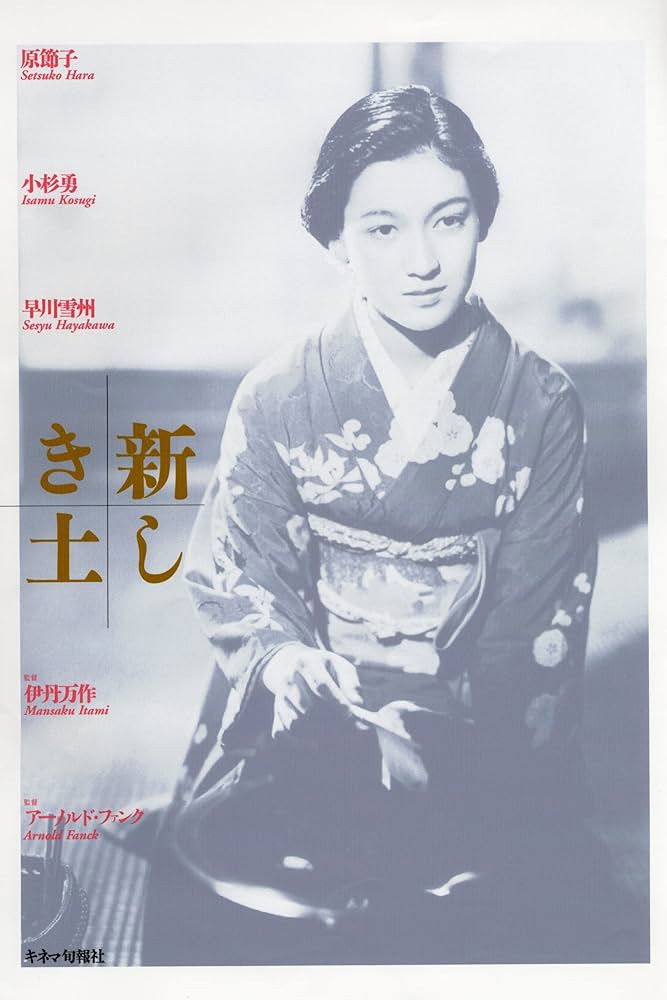
Teruo gets caught up in a conflict between tradition and modernism after returning to Japan from Germany after having spent a number of years there studying. Now, he is supposed to marry Mitsuko, the daughter of his adoptive father, to whom Teruo has long been promised. But Teruo, who has gotten to know the freedoms of the western world, would rather marry the woman he loves and behaves brusquely to Mitsuko.
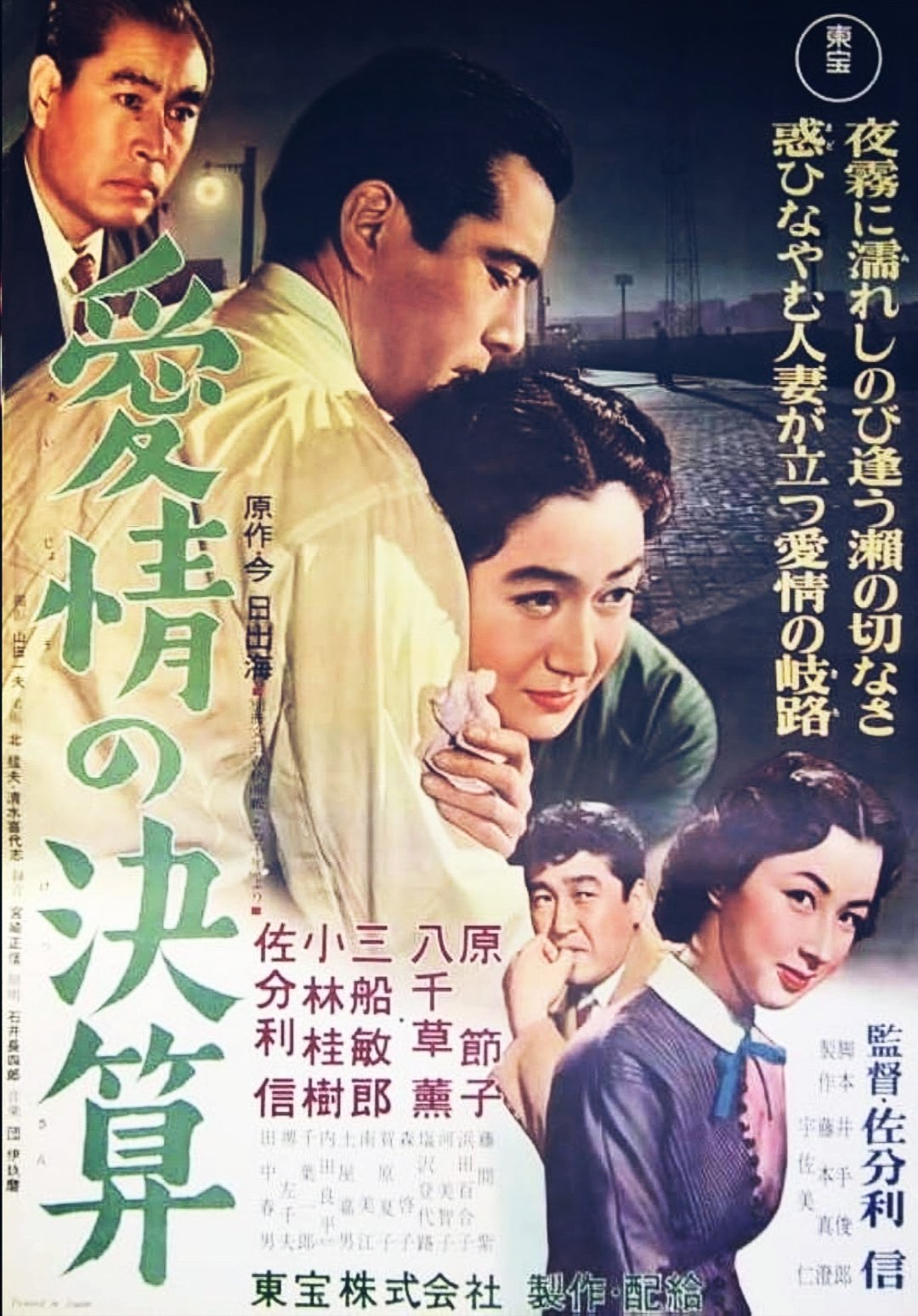
Living in a house that has lost its man to the war a year earlier are the widow and her child. Four of the dead man's friends gather to have an anniversary wake. Some time following the ceremony one of the attendees marries the widow. Soon another friend of the deceased and his family also make the house their home when they move to town. Everyone's life is changed quite a bit. When the newer husband sustains an injury to his leg and loses his job it leads to the wife having to work. By the time the fifth anniversary of the friend's death occurs and another reunion is held another friend is in love with the former widow.
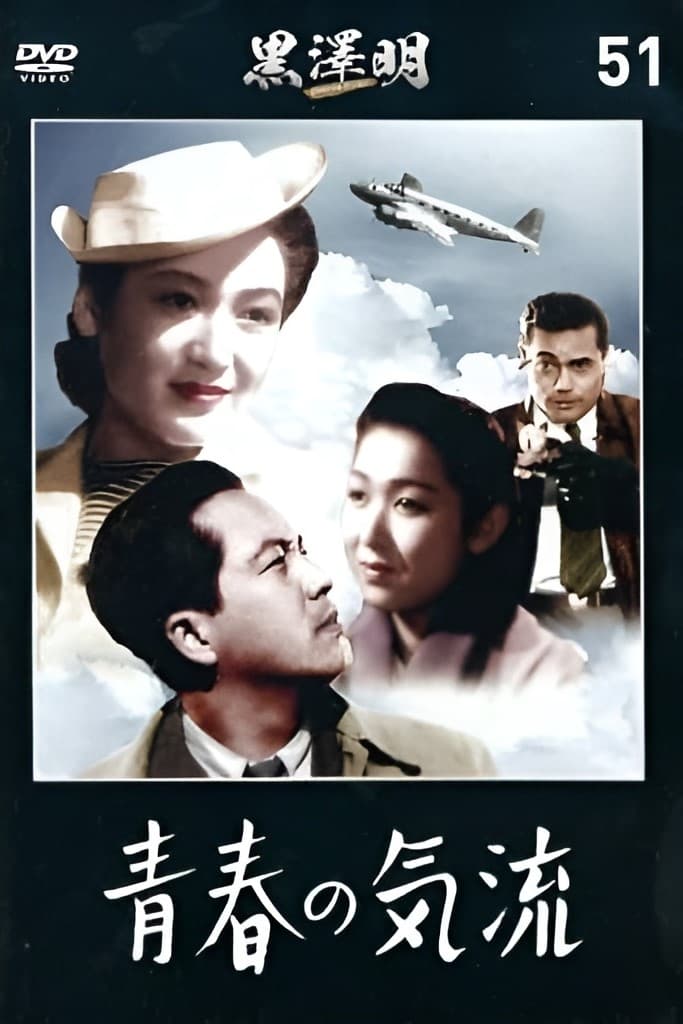
It was supposed to be about a love story, but it was and was not. An aircraft mechanic working for the government is matched by his boss with the latter man's daughter (Setsuko Hara) who is both beautiful and aggressive. Yet, he picks a woman who is less assertive as his bride.
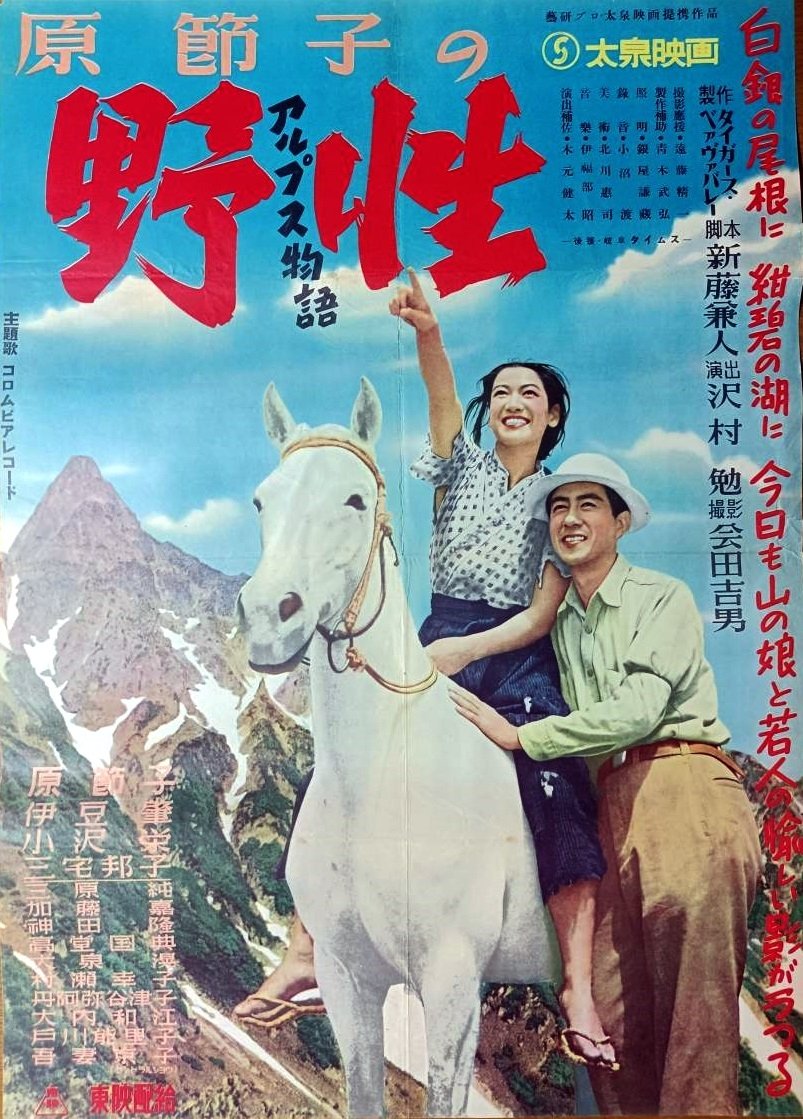
1950 Japanese film
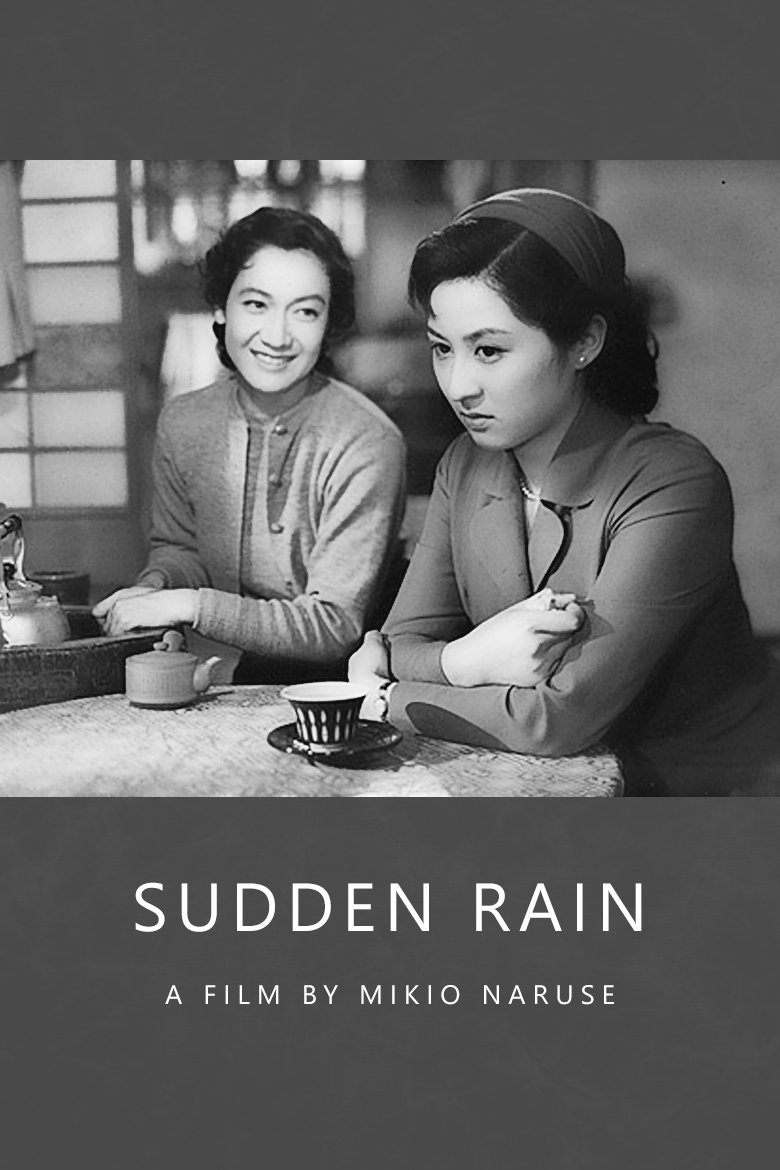
Fumiko and Ryōtarō Namiki's marriage has gone stale, with both constantly arguing over what to do on a day off, or about her cutting out recipes from the newspaper before he finishes reading it. Their animosities are witnessed by Fumiko's niece Ayako, who visits to complain about her own husband's inattentiveness, and their new neighbours, the Imasatos.
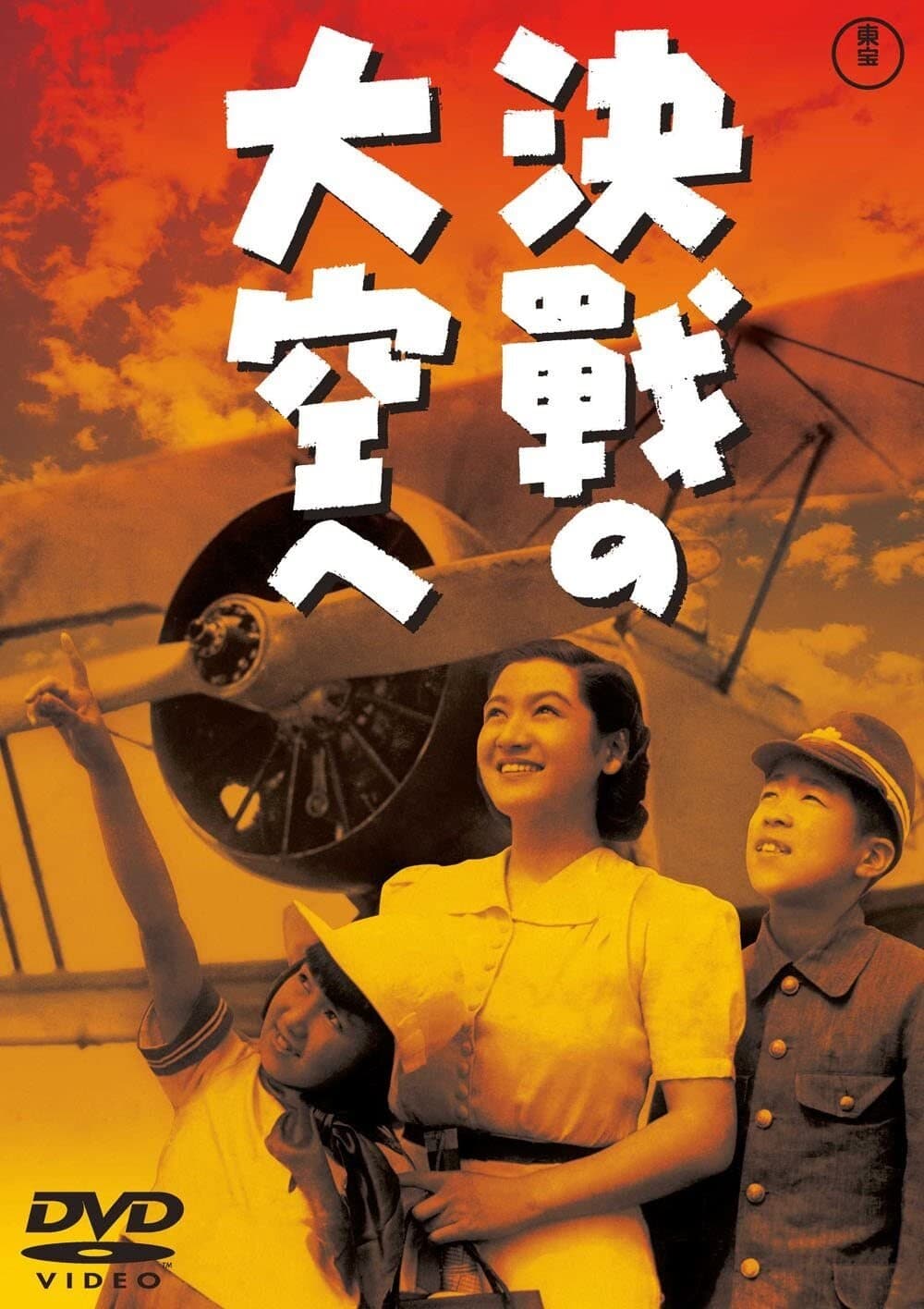
Young men endure challenging flight training in the Yokaren, a program feeding new pilots into the Army and Navy. By the time of the filming, the pressure of the war had led the government to shorten the training and expand the age range of the recruits. Yokaren was highly selective, and thus an object of great fascination and desire for boys and young men. In this Navy–sponsored film, Setsuko Hara plays the daughter of a family that often entertains recruits on their days off—a surrogate sister to many trainees. Her fragile younger brother aspires to join the program, but is rejected. With perseverance and much support from Hara and their mother, he surmounts his weaknesses and becomes a flier.
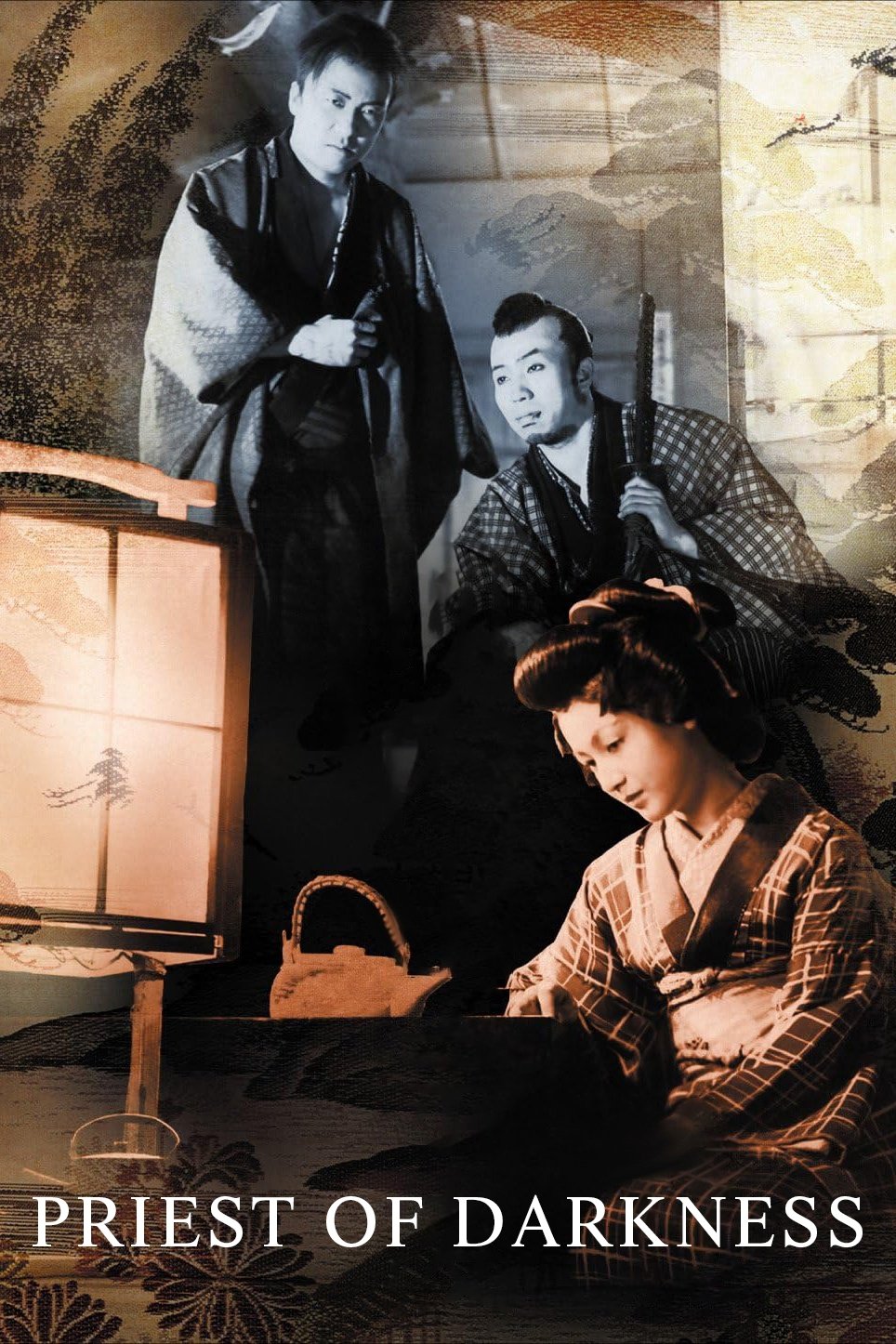
A boy steals a knife from an old samurai, unaware of its value, setting off a strange chain of events.
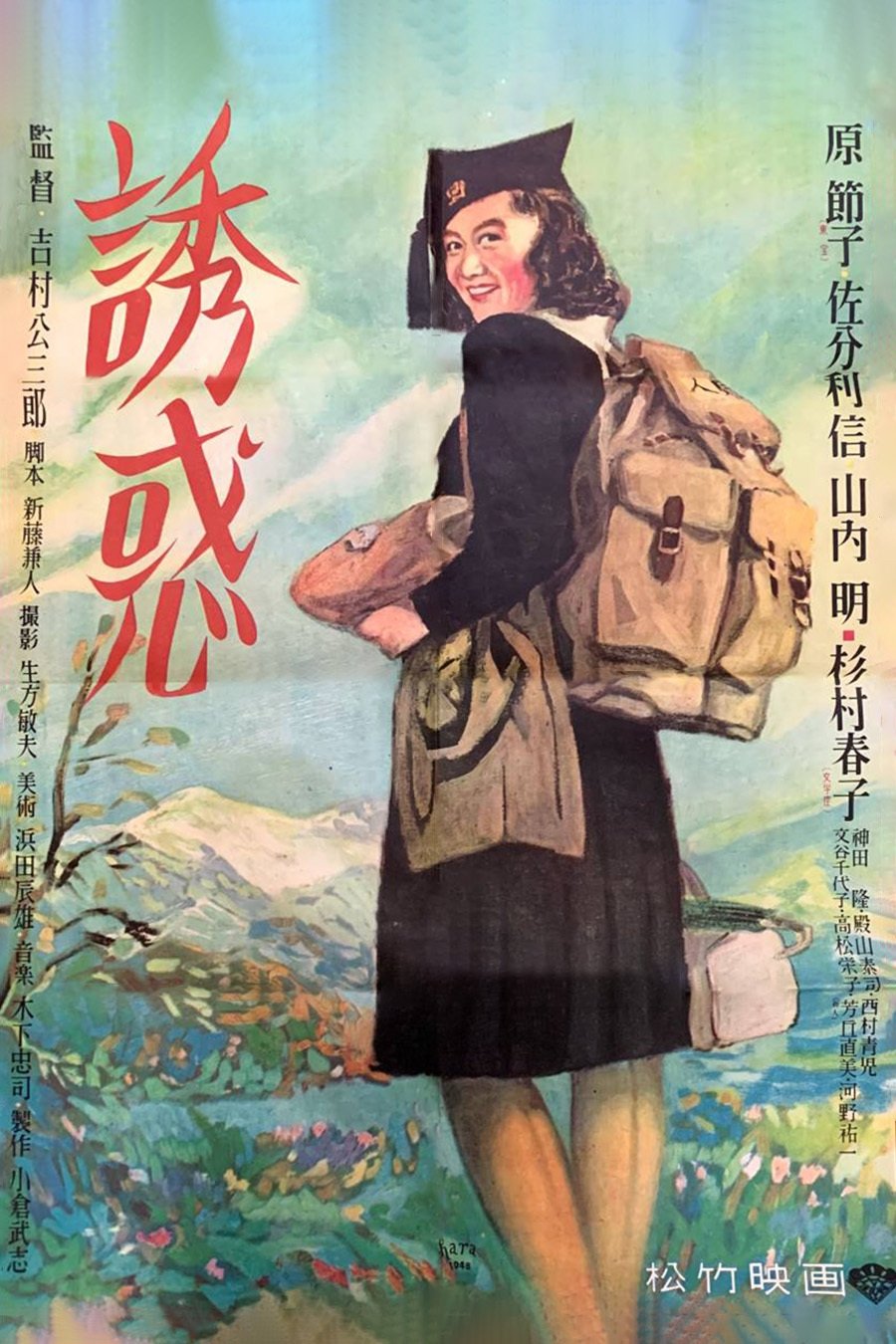
A young lawyer falls in love with the daughter of his former professor, whom he's hired to tutor his children.
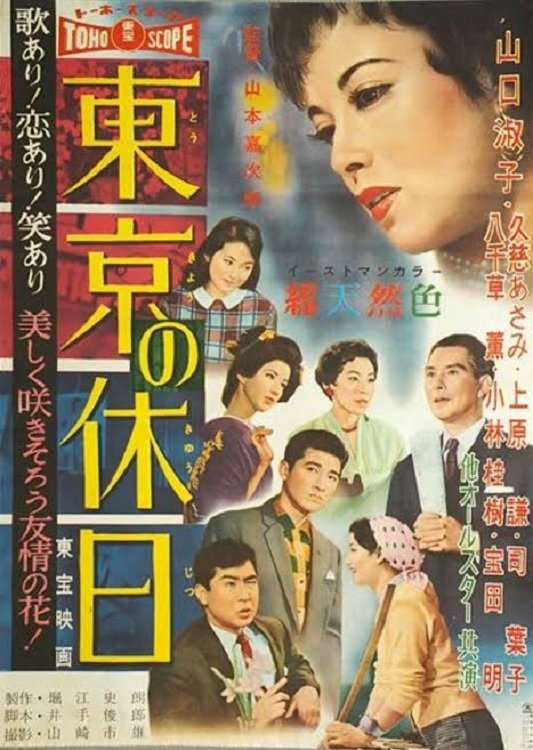
May Kawaguchi is a famous Japanese fashion designer. Returning to Tokyo from her home in New York, she travels incognito with a tour group, in hopes of having a quiet vacation without being noticed. But she is spotted and the press has a field-day with the returning celebrity. Her hopes of rest shattered, she agrees to put on a large-scale fashion show.
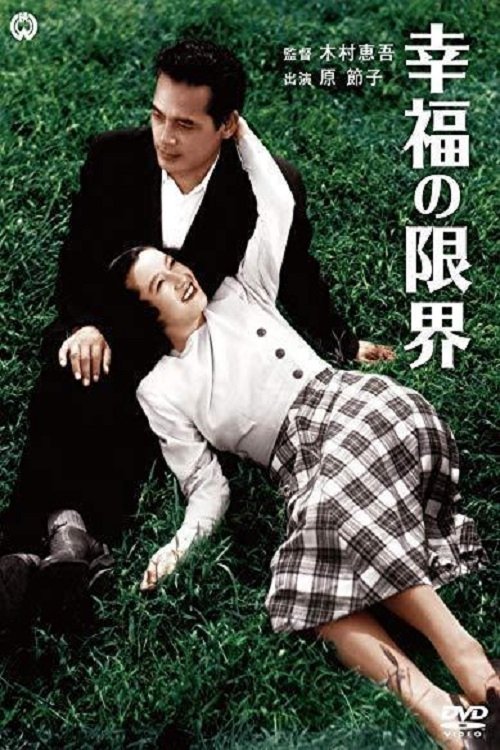
The eldest daughter of the Takamatsu family, Atsuko, a widow, returns home due to not getting along with her late husband's family. On the other hand, the youngest daughter, Yukiko, is in love with a teacher older than her, much to her father's chagrin. All of this, together with Yukiko and Atusko not getting along, will shake the foundations of the Takamatsu family.
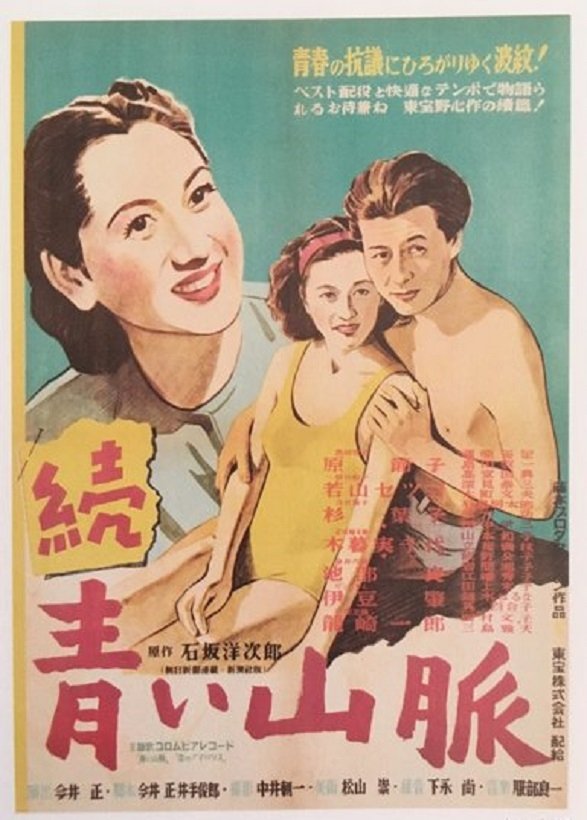
Continuation of The Blue Mountains: Part I. Released a week later.
When Sentarô’s father is killed by a drunken samurai, Sentarô avenges him. His deed puts him on the run and leaves his sister behind. While running from both the authorities and the assassins, Sentarô meets with the beautiful travelling-actress Oshima who takes him under her protection.
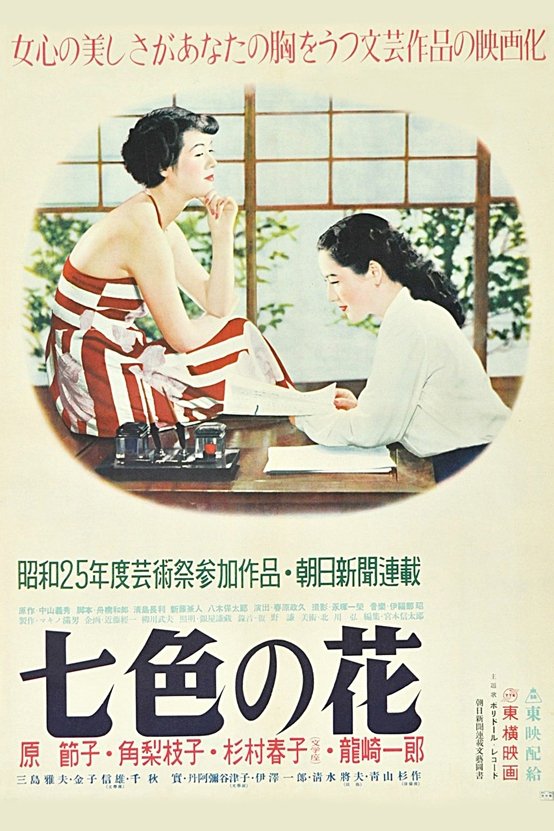
Ebihara is a budding novelist entangled in a complicated web of relationships with three women from three different generations: Kazue, a coquettish teenage war orphan who tries to offer herself for money but is instead taken in by Ebihara, Koyabu, a middle-aged woman who has spent much of her life as the kept woman of a wealthy man, and Teruko, the modest daughter of Ebihara's former teacher who comes to rely on him after the death of her father.
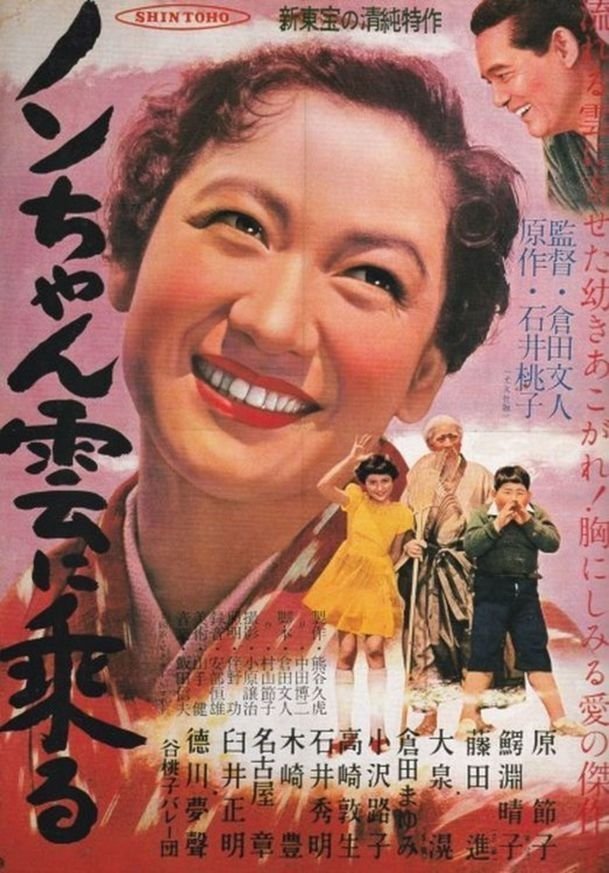
A little girl who falls into a lake and is saved by a god who then takes her up to the clouds and shows her what the world was like before she was born and what the world would be like if she where never born. While in the clouds she meets her grandparents and a few other people she loved who have passed on.
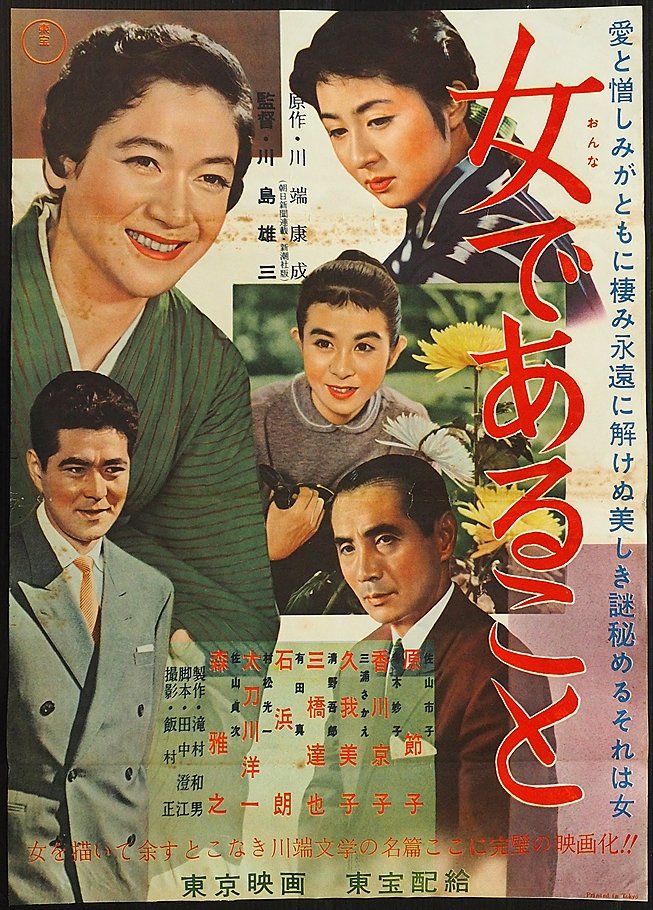
A childless lawyer and his wife take in the quiet daughter of an imprisoned client, whose presence eventually creates romantic tension with the husband. The household dynamic is further disrupted by the arrival of a bold friend from Osaka and the wife's chance encounter with a former flame.
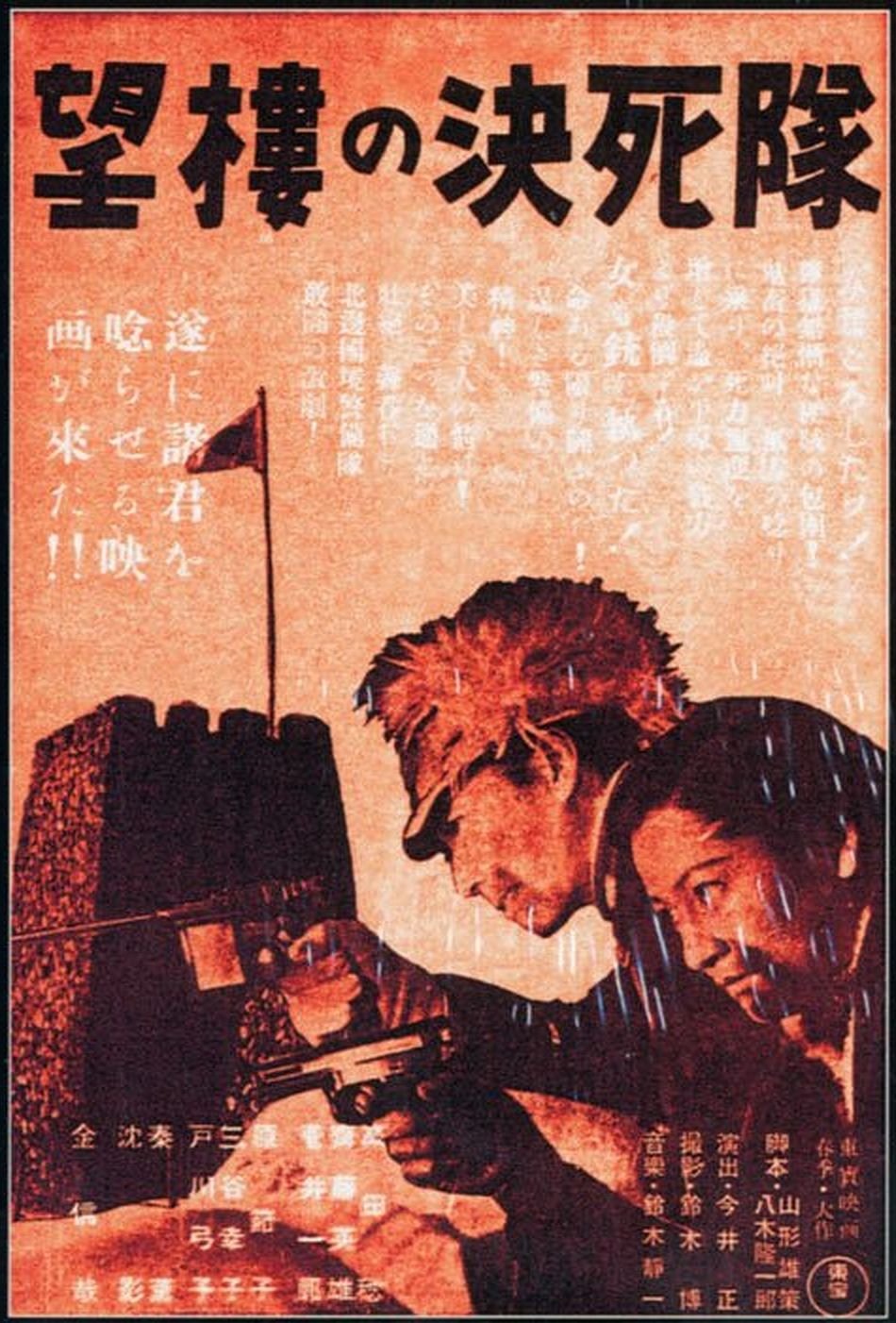
Stalwart soldiers of the Japanese Empire – Japanese and Korean alike – stand in defense of a military outpost threatened by "bandits."
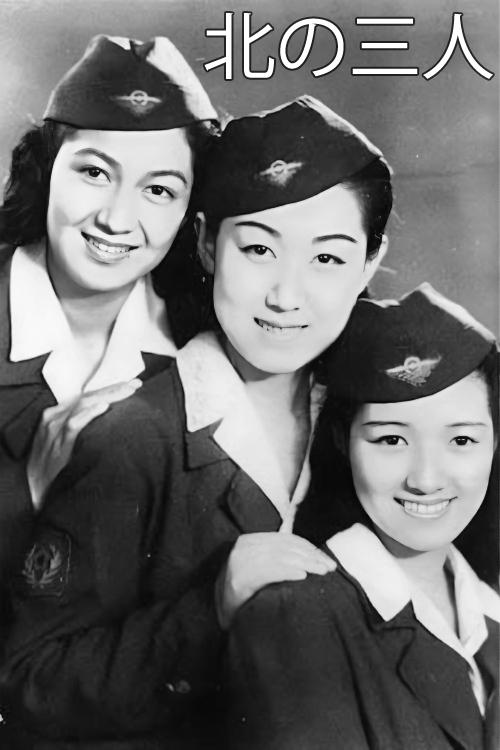
The story of an airport and its air traffic control crew in a remote and northern Japanese town. Three of the air traffic controllers are female with one of them working with her dead fiancé's sister. The engaged man had gone to war and never returned.
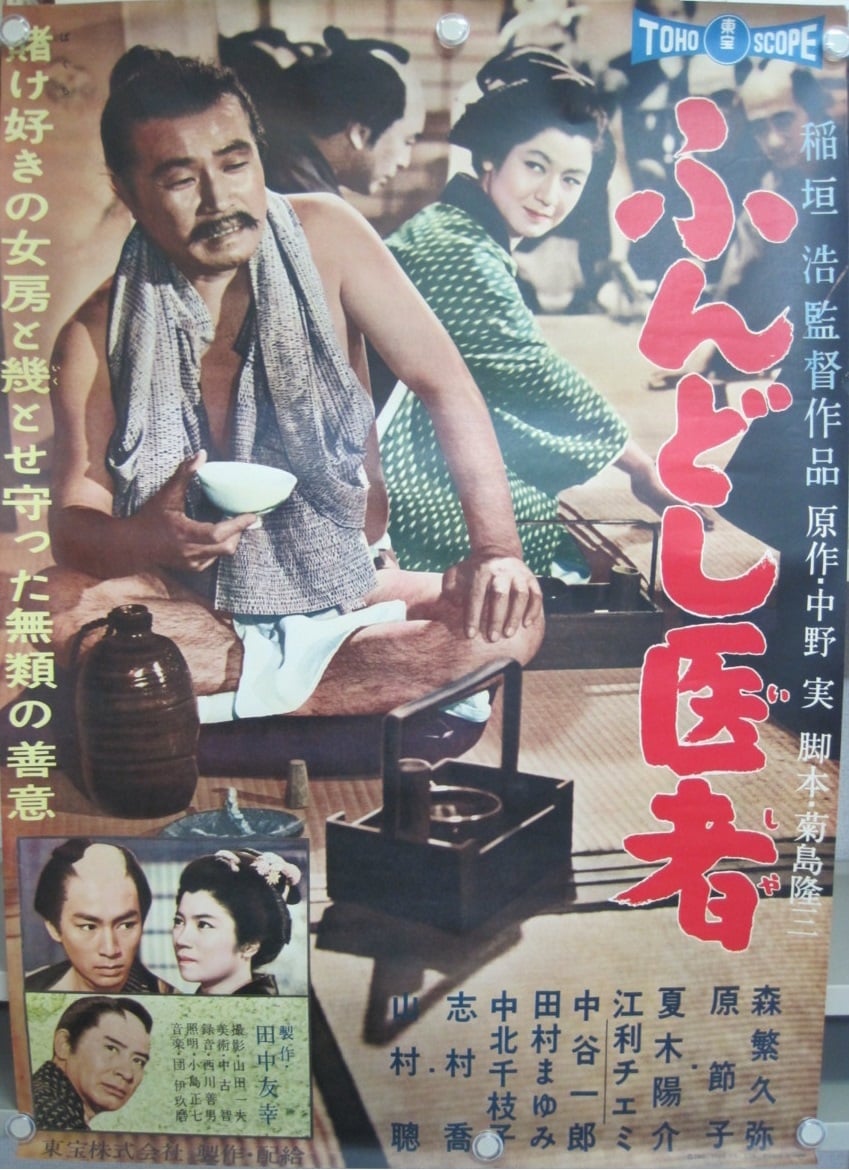
A skilled country doctor's talents are such that he can even perform operations as difficult and novel as removing a patient's kidney for the first time in Japan. Unfortunately for him, however, his wife's addiction to gambling is of such a magnitude that he is down to selling his underwear to make money. The image sticks and he becomes known as the 'underwear doctor.' On the other hand, his successful surgery's patient is so grateful he himself wants to become a physician.
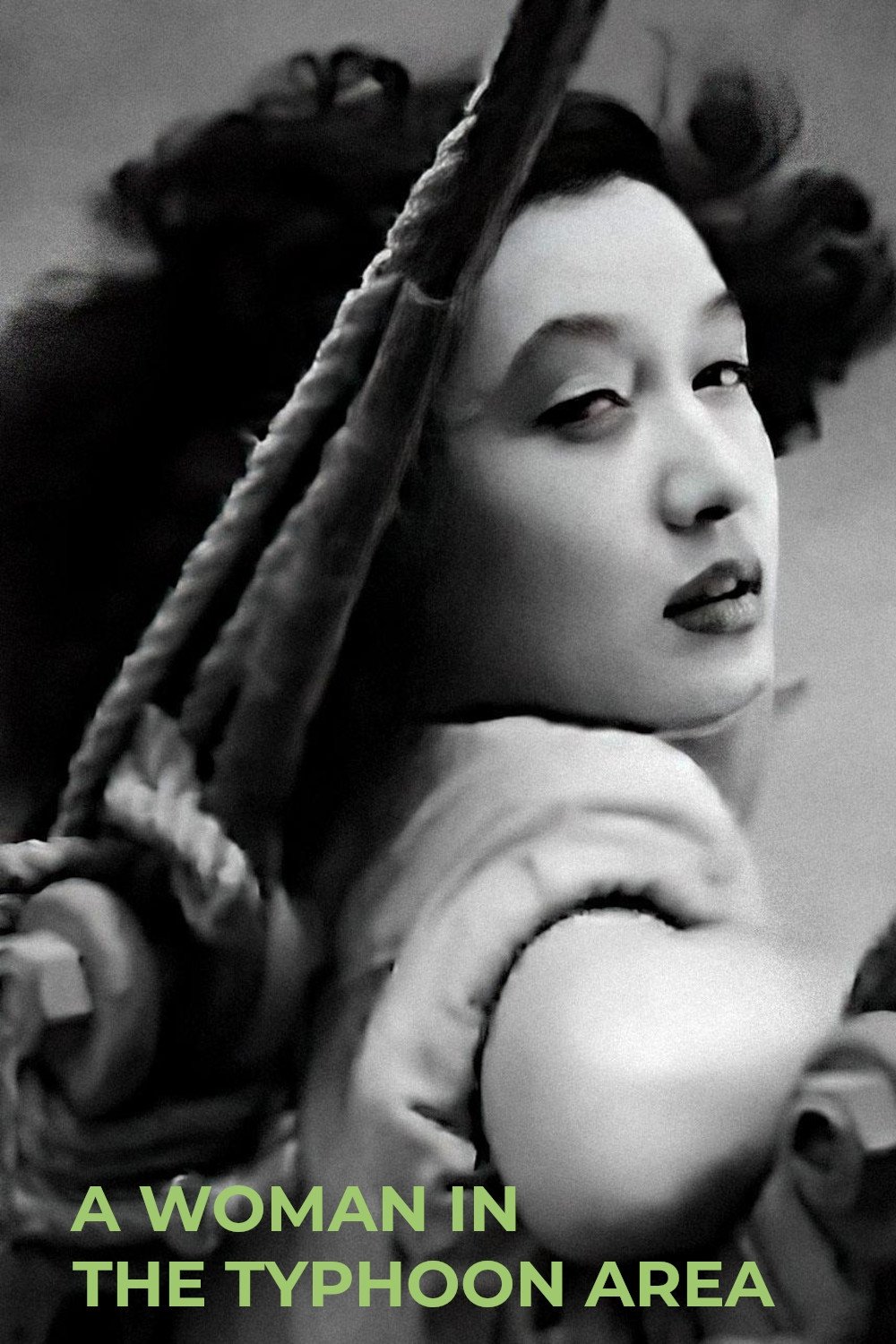
Four unlucky pirates head to a weather tracking station set on a remote island with the intention of holding the weather trackers as hostages and assaulting their next incoming supply ship; but at the station they are told that a serious typhoon is on the way, so the ship will be delayed.
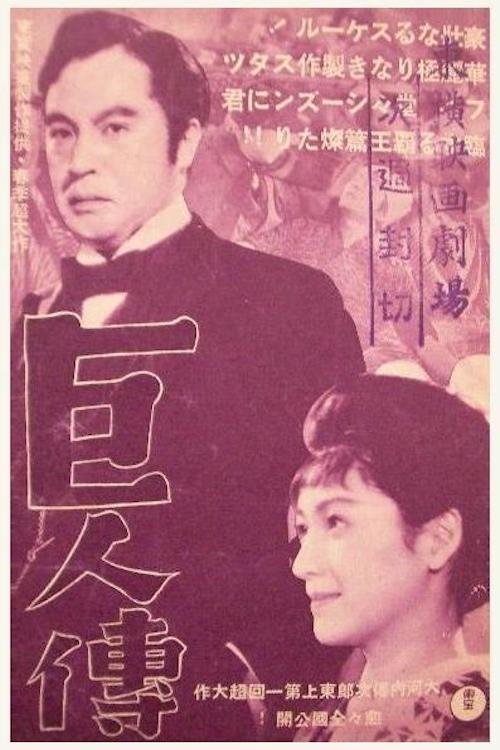
Japanese adaptation of LES MISERABLES. The last film of director Itami took inspiration from Les Miserables. Transpiring during the Southwestern War of 1877 in Japan, which was the last civil war in the country, a criminal escapes prison only to be found by a monk. The criminal decides to turn a new leaf based on their conversation and goes on to become a town's mayor. He hears news of a mistaken arrest and identity. The revelation of truth is the start of a series of miseries.
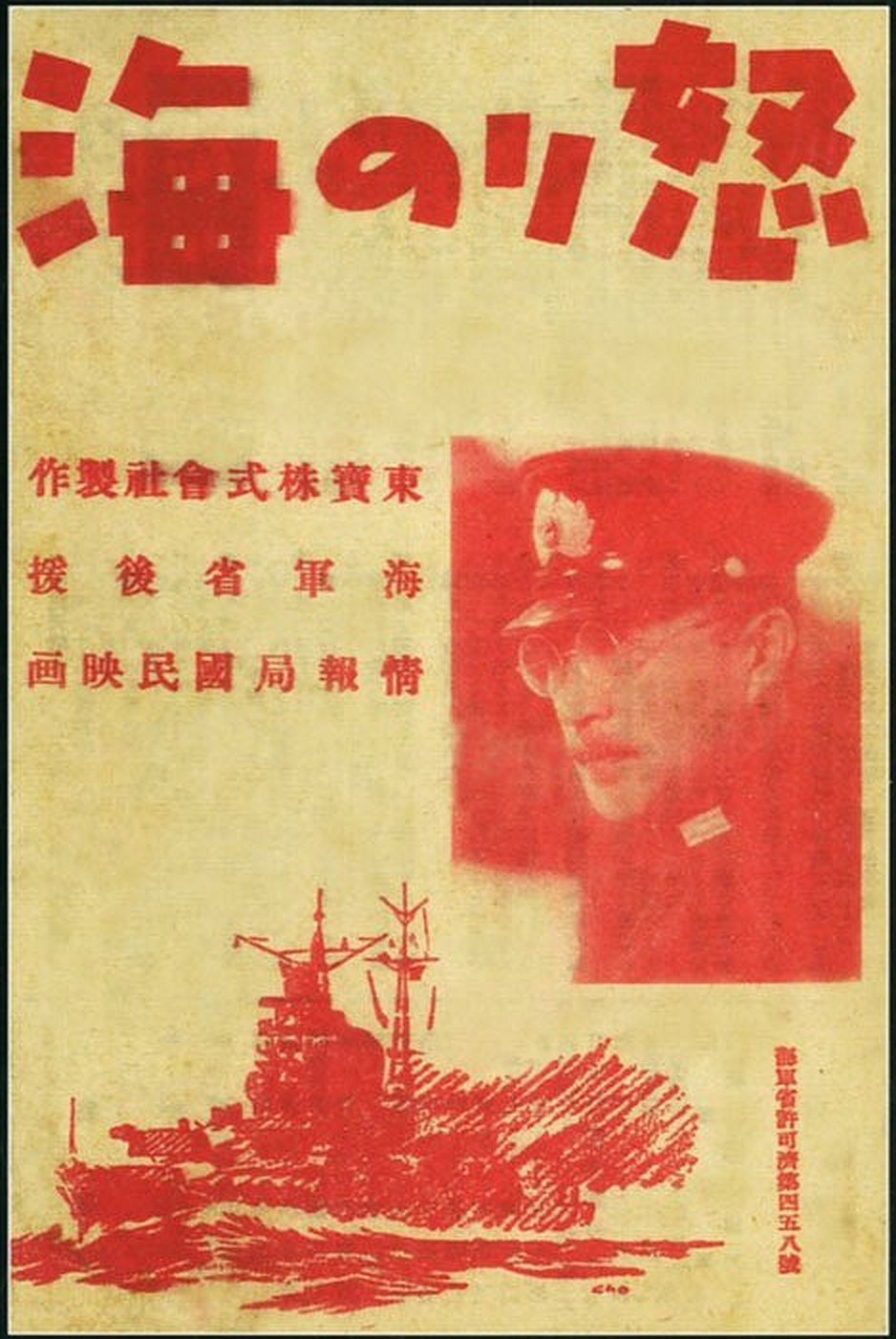
It is 1921 and a town has a newspaper which prints urgent bulletins as required. The Washington-based CITES treaty, in which Japan participates, puts a limit on the number of warships any country can possess. As a result, Japan has to decommission a ship to its makers' disappointment. An institute of technology's laboratory designs a new ship. Due to less ships, sailors have to retire and are also disappointed. The laboratory's manager and an admiral are visiting a patient at a hospital and meet coincidentally. The former has a daughter who worries about her father's workload. She asks him to accompany her to a concert. Father has little time, but is convinced for her sake. He is inspired for a ship's design at the performance. The film is inspired by the life of Jo Hiraga.
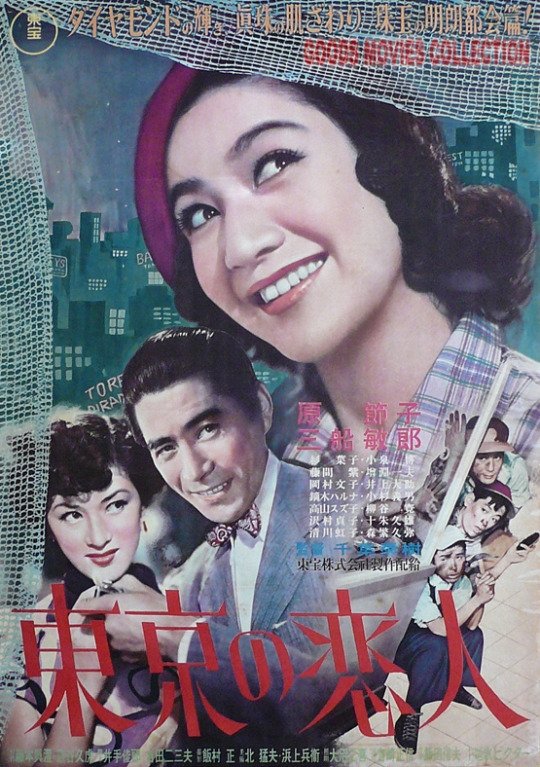
Following the Second World War, the lives of various people in a poverty-stricken area of Tokyo are entertwined. Pachinko parlor girls, shoeshine boys, a maker of costume jewelry, and a streetcorner artist all struggle to make their livings and to find happiness in difficult surroundings.
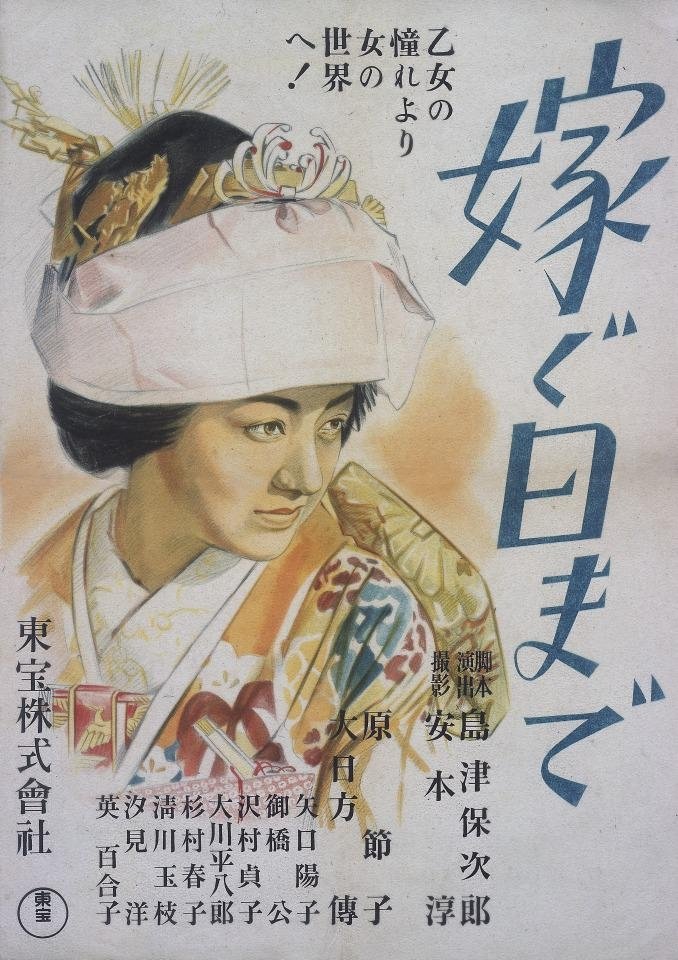
Twenty-year-old Yoshiko (Setsuko Hara) and her younger sister Asako (Yōko Yaguchi) struggle to accept changes in their home during the preparations of their widowed father's wedding to his chosen bride, Maki Tsuneko (Sadako Sawamura), who's anxious about her conduct as the bride.
A film that begins with wit and comedy when a husband tries to hide and mask his drinking, which his Jesus freak and very Christian wife dislikes, by gargling and other methods, turns somber when the man loses his job after being fired. He attempts to keep us appearances by having parties and still going to night clubs, which means money is even more of a short supply. He turns to gambling and the race horse tracks as a result.
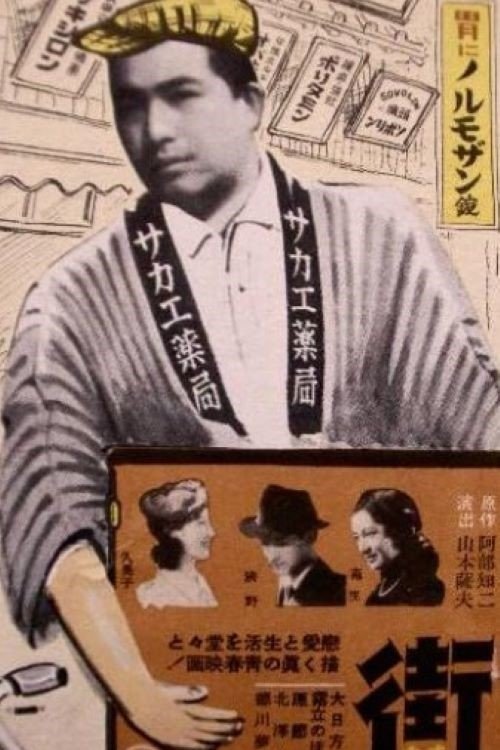
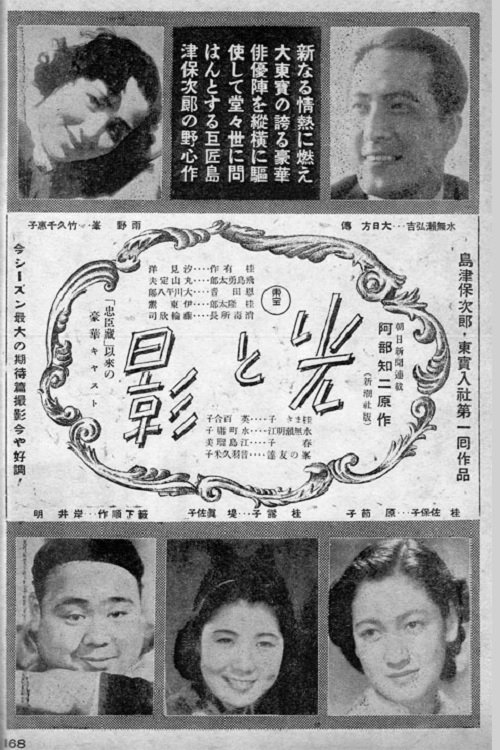
Part one of two.
Part two of two.
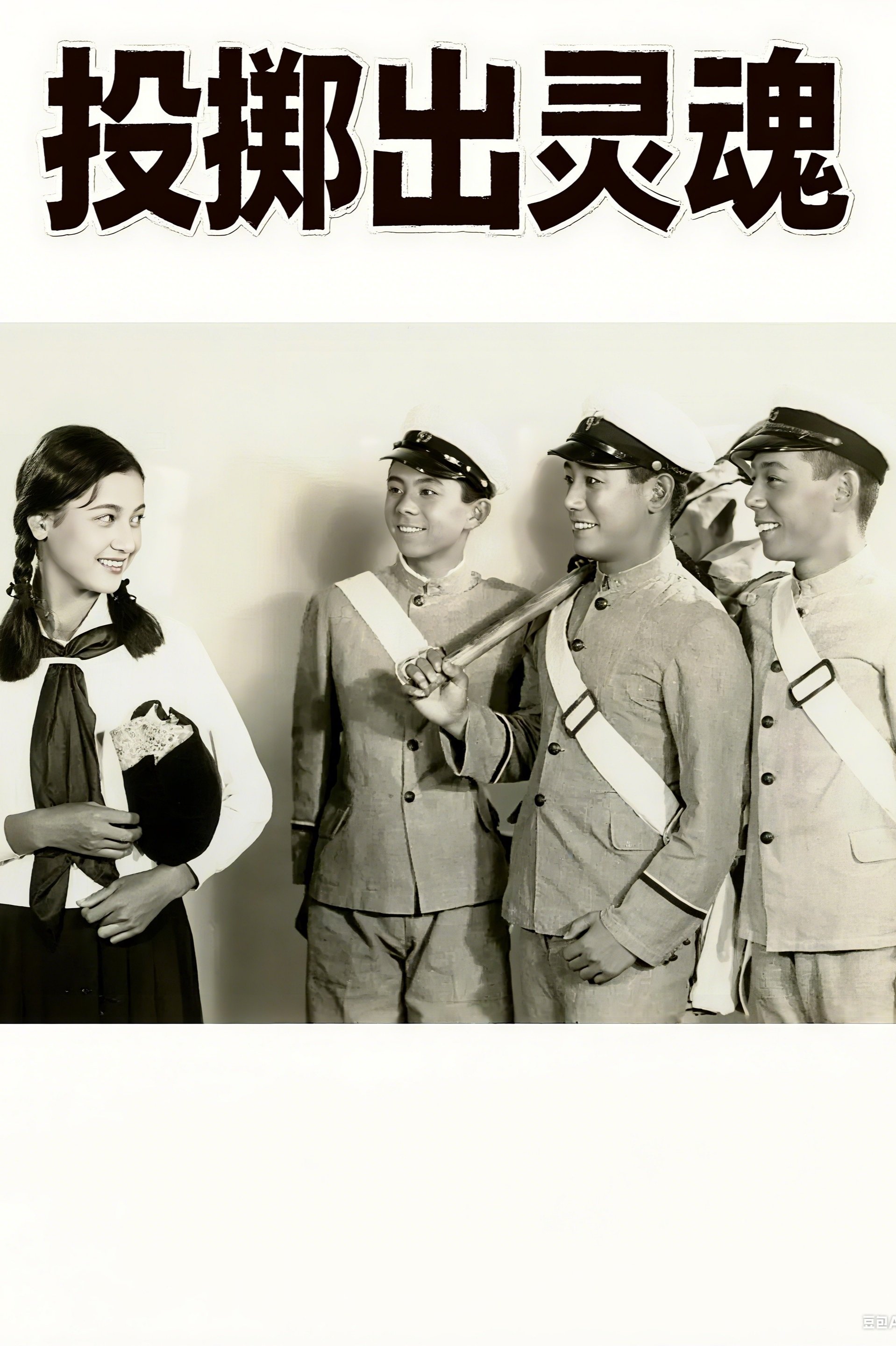
The film centres around junior high school students. They are members of the school's baseball team. They are very good. Izawa's father asks him to stop playing prior to an important game. Hayasaki health deteriorates at this time and he becomes absent. The team decides to speak to Izawa's father to plead their case and ask for the return of their team member.
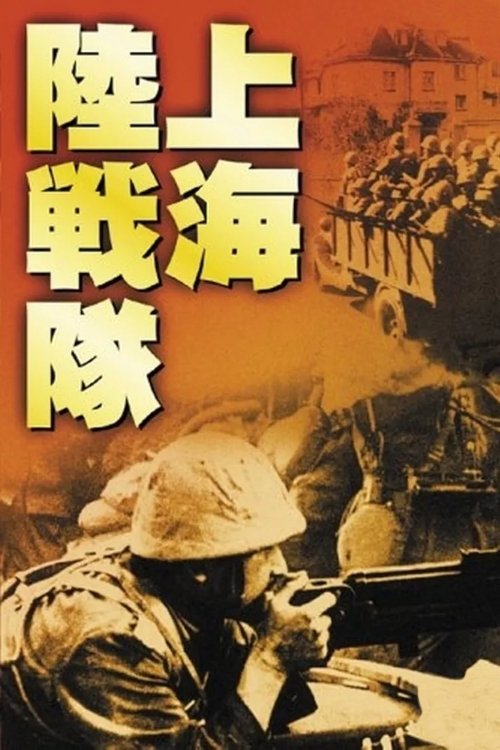
This film attempts to reconstruct the tension of the Battle of Shanghai through an episode in an understated way, introducting its story in a documentary mode. In the film story, Japan's marine regiment protects Japanese residents and Chinese refugees-women and young children-from rampant street fighting, Shanhai Rikusentai unsparingly uses its first eight minutes for an official-mannered self-justification of the war. From the viewpoint of explaining Japan's military operation,the narration refers to the city s spatial division in sync with maps on screen.
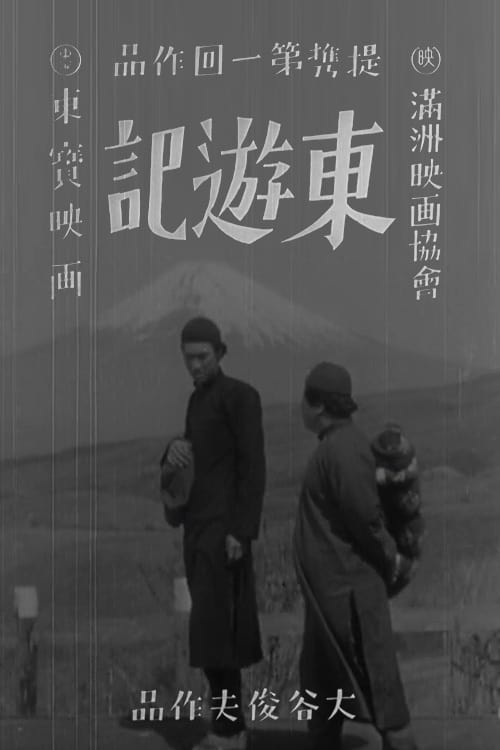
Shot mostly in Tokyo, this comedy depicts two Chinese tourists who have travelled from their country to Japan in order to experience the latter country.
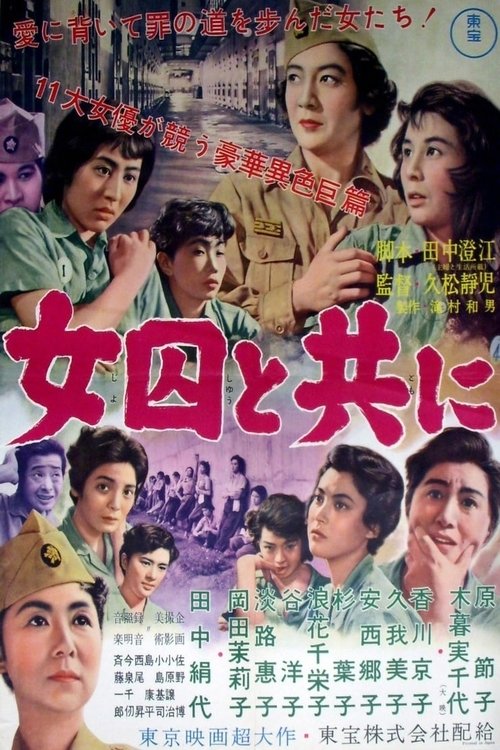
The woman prison has a cast all with a story of their own and with no dull or routine day. There is an employee who is divorced after her husband had an affair. She loves the jailed criminals and almost sees them as family. One day at a workshop someone faints while working hard to make money because she has a poor boyfriend. Another inmate is knocked up Another is a mother and has her child with her.
The Opium War is a 1943 black-and-white Japanese film directed by Masahiro Makino. "Ahen senso" in Japan refers to the First Opium War. The story of the film concerns this war.
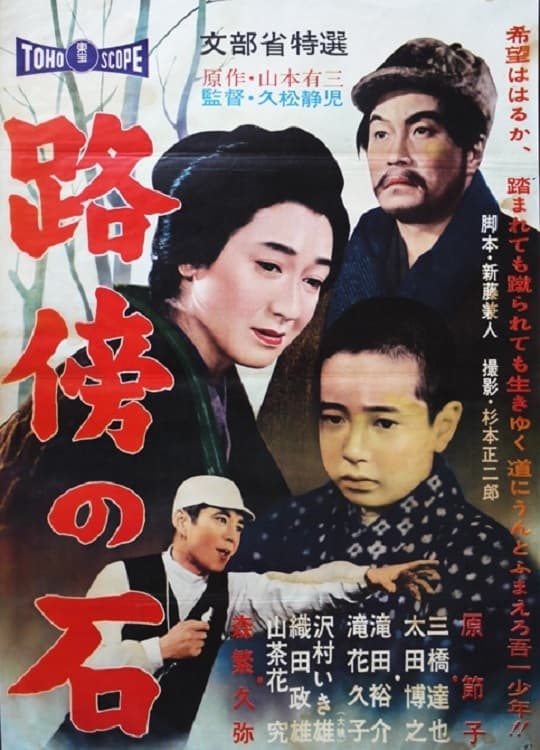
In Meiji era Japan a sixth grade boy is smart, likable and confident and owing to his academic success liked by his teacher. Things are not going well at home, however, where his father does not work leaving the mother to toil . With the boy's family having no money he cannot progress his education and has to drop out of school. A neighbour, who is a bookstore owner, offers the family money to allow the boy to continue his schooling, but the father is too proud to accept and rebuffs the offer forcing the boy to work.
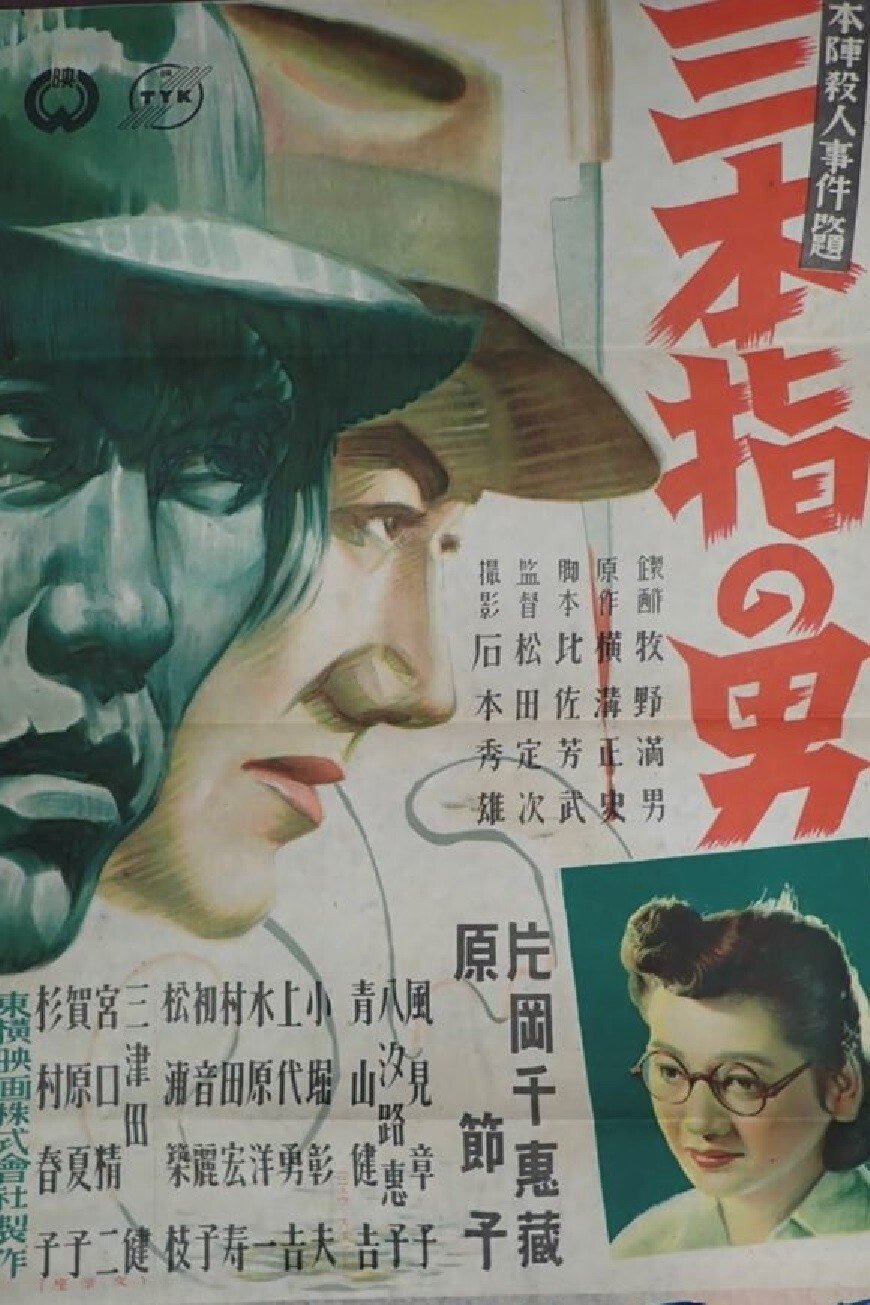
Being acquainted with the bride's uncle, a famed private detective is invited to a wedding ceremony. The groom's family is moneyed and owns large tracts of land. The bride is a former teacher and was rumoured to have had an affair, which explains why the groom's family opposed the union. On the night of the ceremony the bride and groom are killed in a sealed room. There is evidence left, however, as there is a hand print on the wall albeit with only the trace of three fingers.
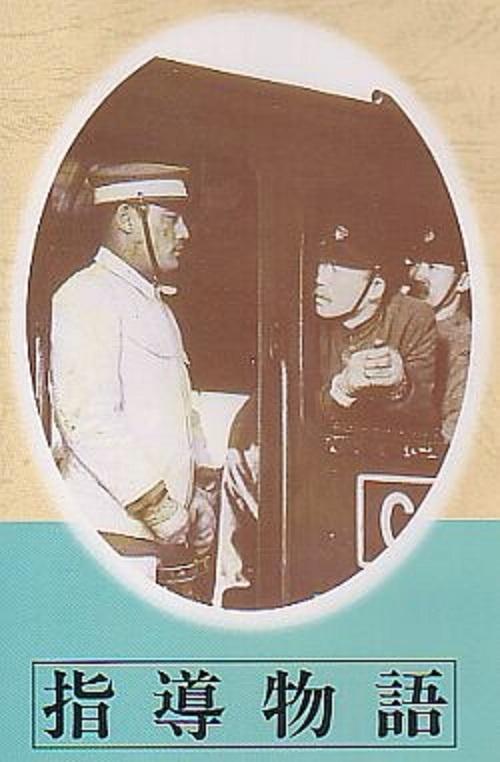
In this semi-documentary, an older locomotive driver is tasked with training younger ones and is currently training two in particular. The old man is finding the task overwhelming as it is hard work with practical lessons and classroom components. His wife has died, but he has three daughters with the oldest taking care of her younger siblings.
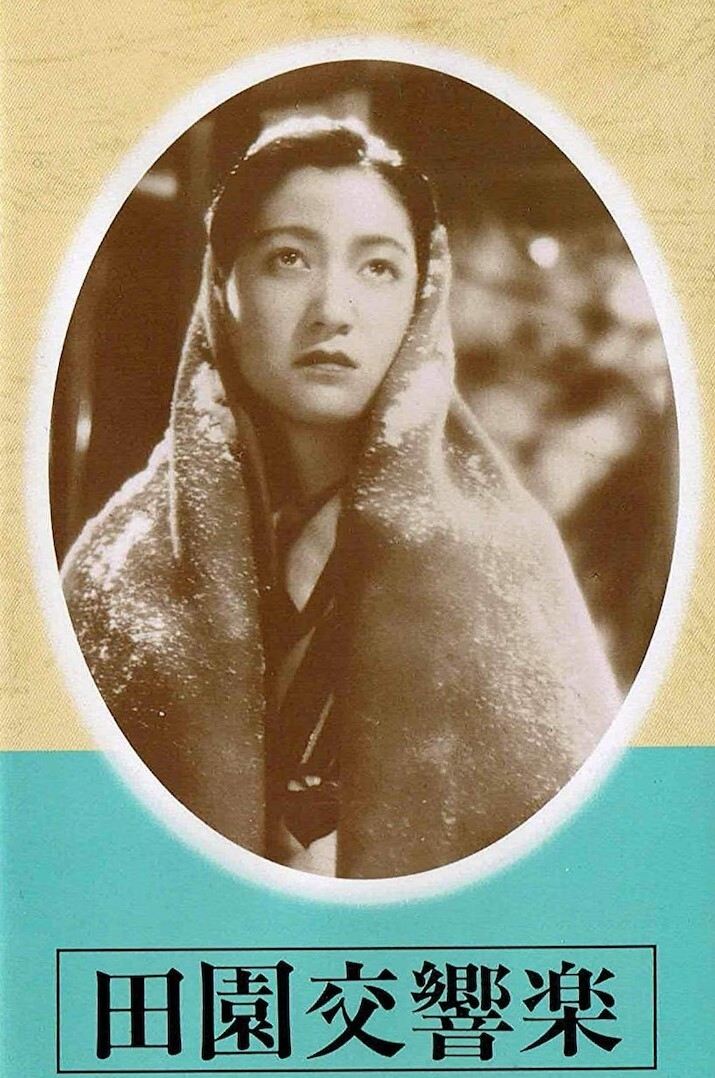
A priest in Hokkaido adopts a blind orphan girl, and as she grows up he finds himself falling in love with her.
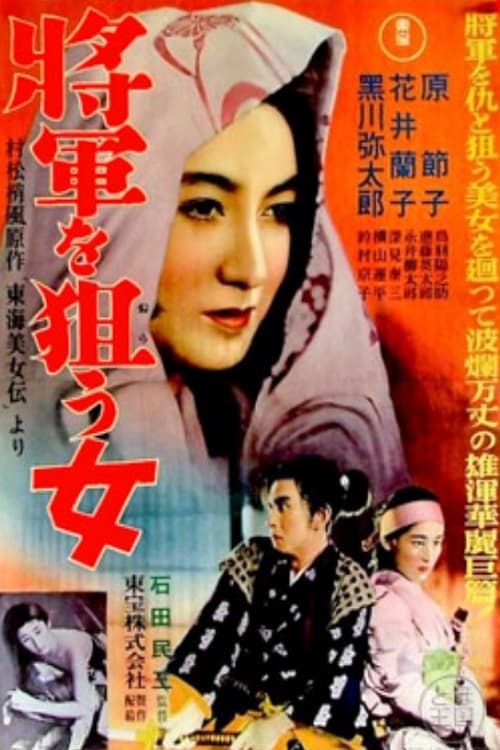
A man attacks the shogun, but does not succeed in his assassination attempt. He flees to the mountains and hides in a shed. There he finds an old man and a girl. The latter is the daughter of Shogun's former wife and also has revenge on her mind. The former is also connected to the castle. Separately a girl lives at the shogun's castle and believes in god.
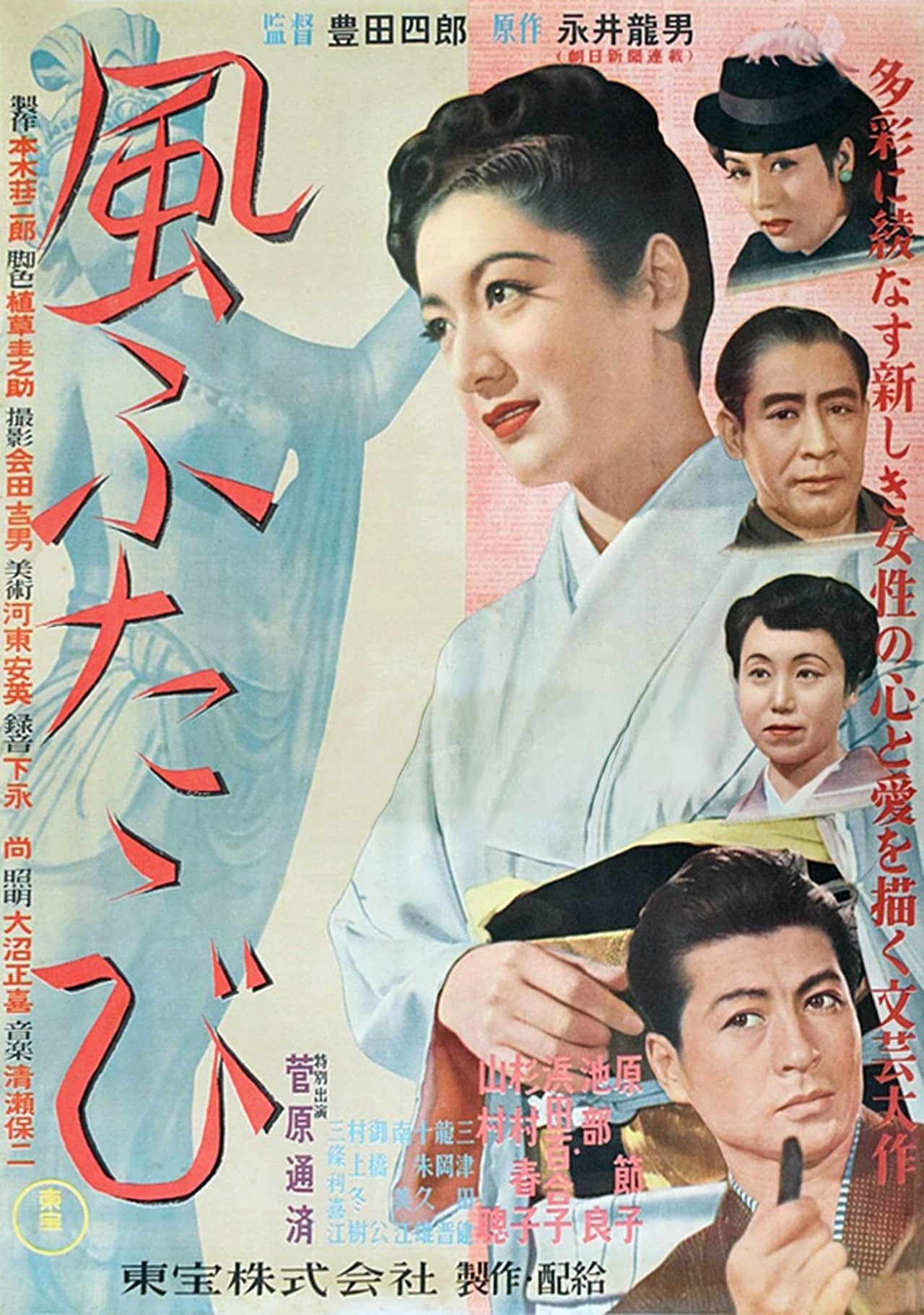
Kanae, who broke up with her husband and moved to her uncle's house, met two men when her father, a university professor, collapsed. Michihara, a wealthy man and Miyashita, a youth scholar. Kanae is attracted to Miyashita, but ...
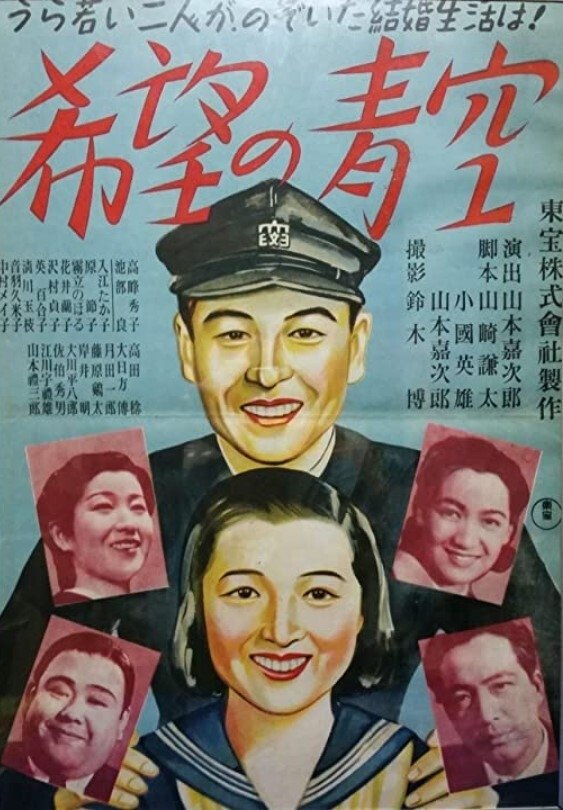
What is marriage? Young couple in match-making wanted to know before they decide. They visited married couples of sisters and brothers. Love comedy in 1942.
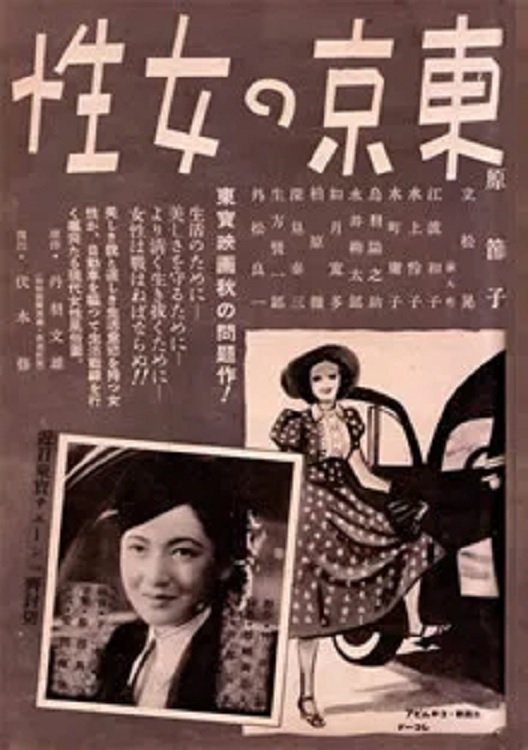
This is the story of a woman who enters the world of sales. She works at a company in Ginza as a typist. She determines that she needs money for her family and herself and asks her co-worker, who is a salesman, for guidance on sales. Armed with the information he provides, she begins in sales and is successful. Her original guide eventually begins to feel strange about her...
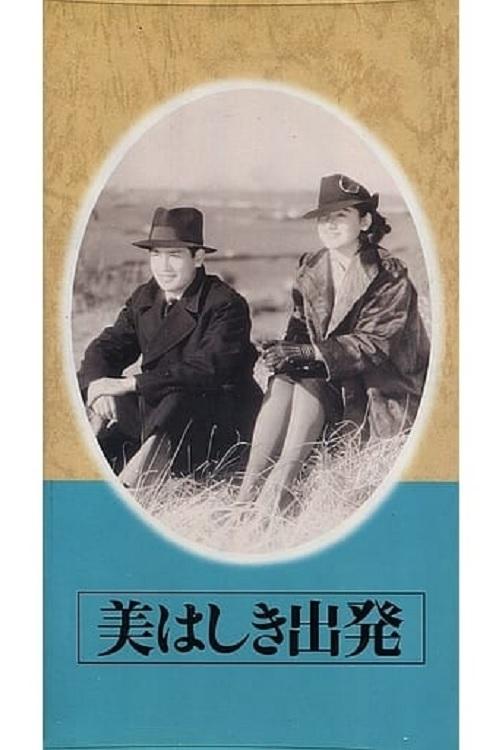
A rich bourgeoisie family has little care in the world and knows no other lifestyle. It is only the family's second daughter who has an insecure bone in her body and ponders a day when the good times might end. Then one day the family-owned company goes bankrupt and a new era begins.
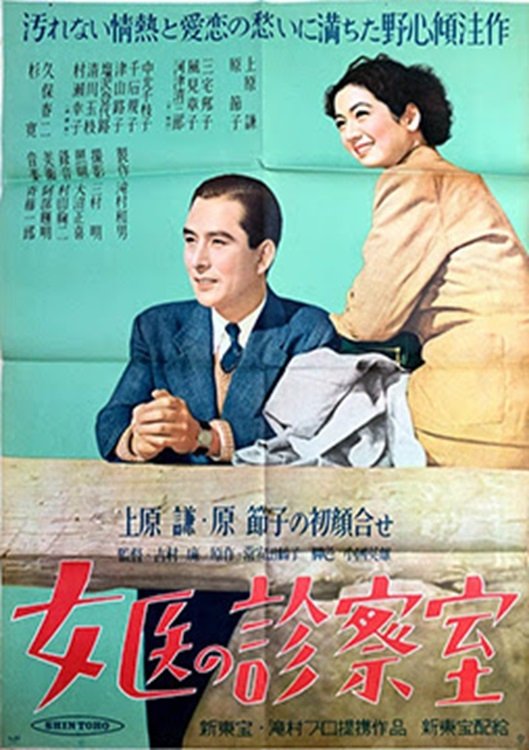
A doctor is surprised when her long-lost love is transferred to the same hospital, and even more surprised to discover that he has a wife and child. Will she be able to confess her feelings to him before her worsening heart disease claims her life?
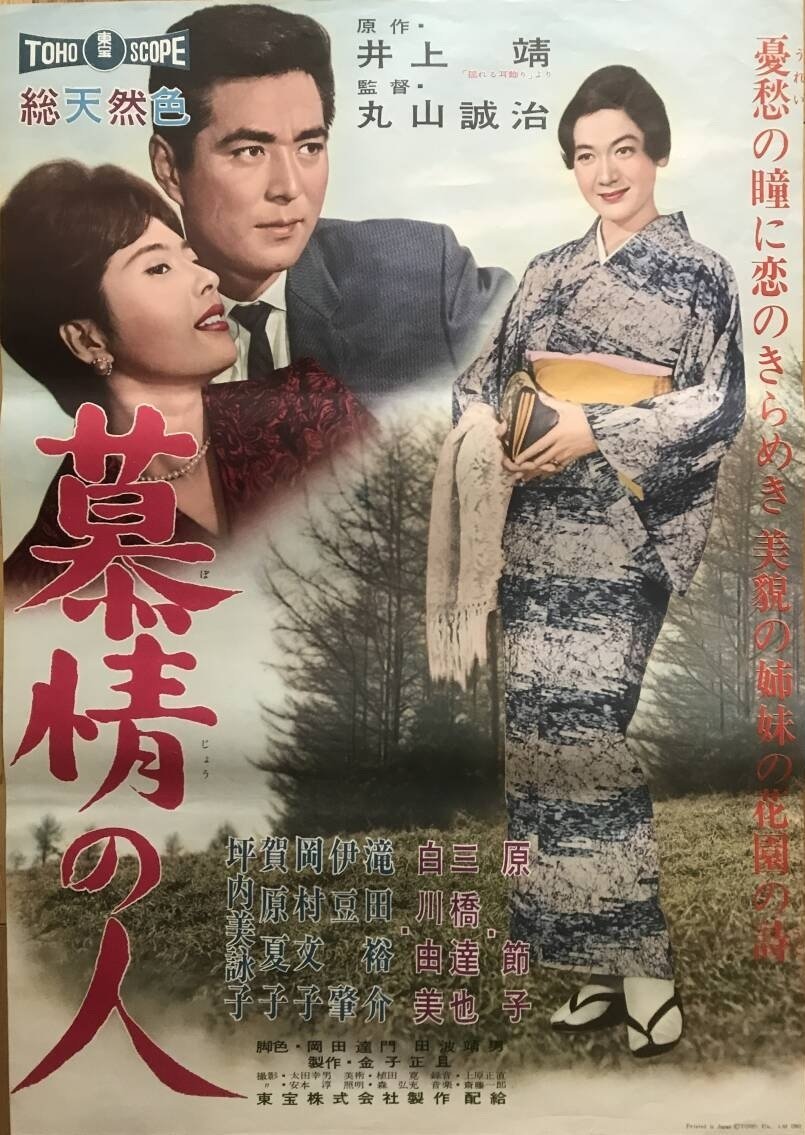
1961 Japanese movie
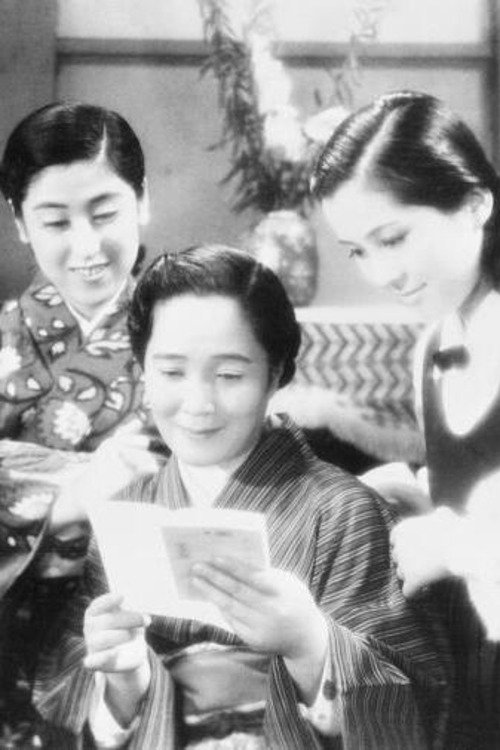
A family comprised of a father, mother and three sisters lives in a posh area. The father is a doctor who has to join the army and work at war. The four remaining women have to take care of themselves. The eldest sister is calm and lady-like. The middle sister (played by Hara Setsuko), in contrast, is active and contemporary. She aspires to be a physician too. The story is based on Little Women by Louisa May Alcott.
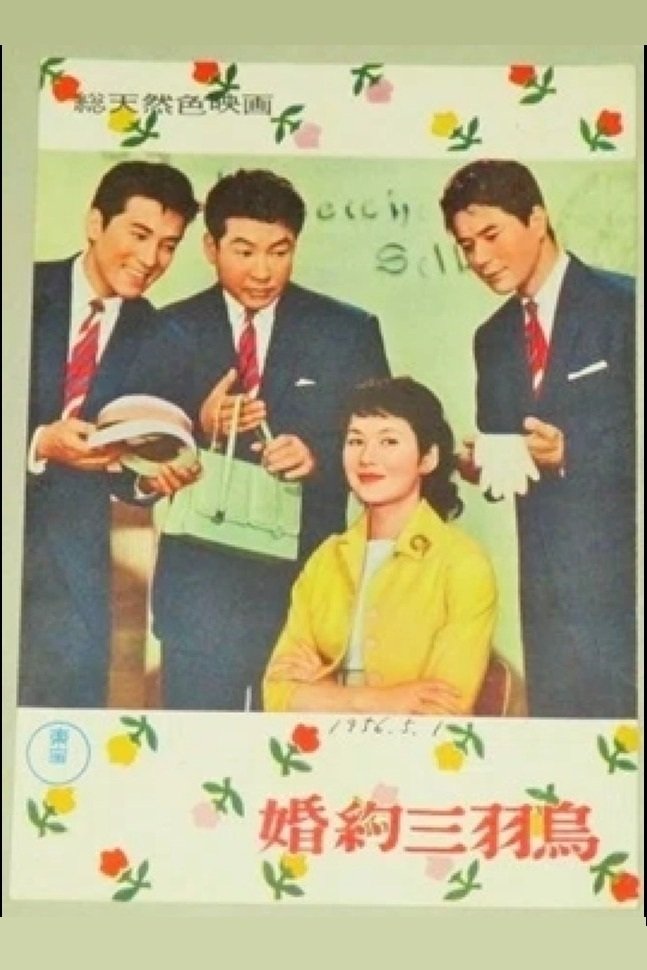
1956 Drama by Toshio Sugie
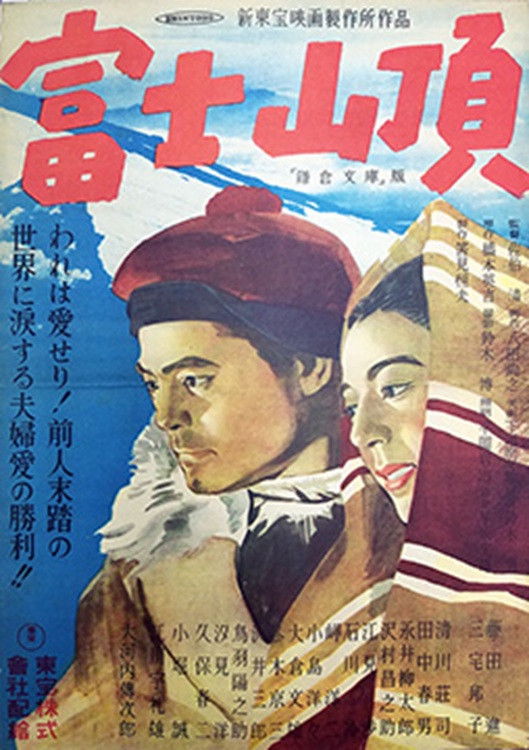
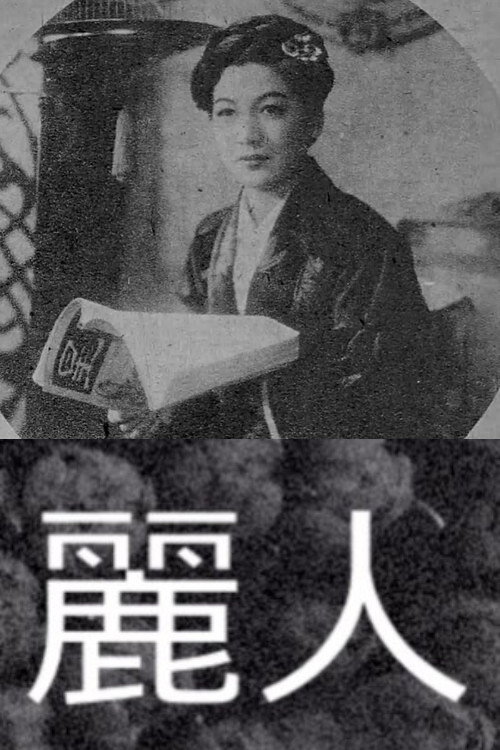
The story is based on the life of a poet who lived in Japan in the Taisho era. When her fiancé is arrested she believes he has suddenly disappeared and that he has abandoned her. She faces a dilemma. Despite her family being of a high class, they do not have money, which means she has to get married to someone who does. This drives her to marriage with an older man whose sole affection is directed at her looks and outside. Then she meets her freed fiancé.
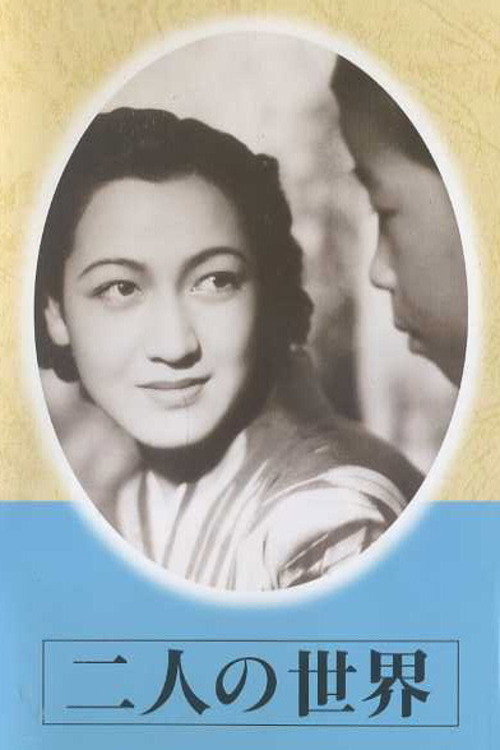
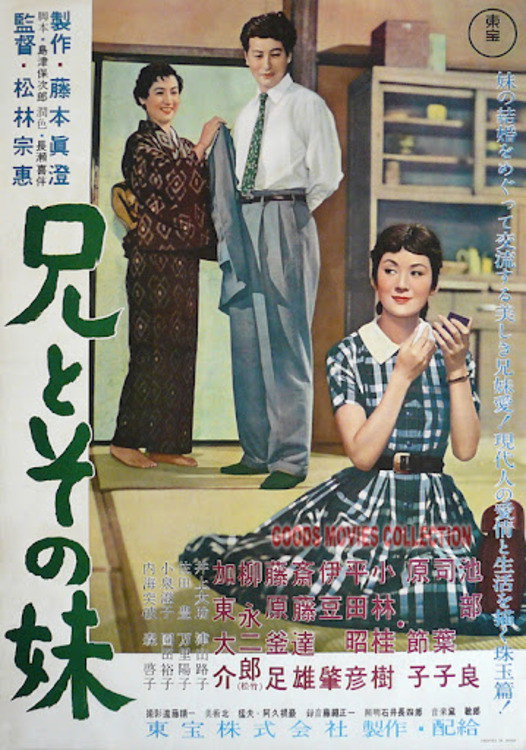
In a household of three the husband is a salaryman who lives with his younger sister and wife in Tokyo. He is returning home late in the evenings because he plays go, or a Japanese version of chess, with his boss. The wife and sister are unhappy about this. The man's co-worker advises him to stop the late evenings out with the boss, but the man cares less. His sister works at a foreign firm and speaks English. When a man who had earlier visited her workplace returns and asks her out for dinner, she rejects him by lying about a husband. He had made impolite comments about her in English during his earlier visit not realizing she understands him.
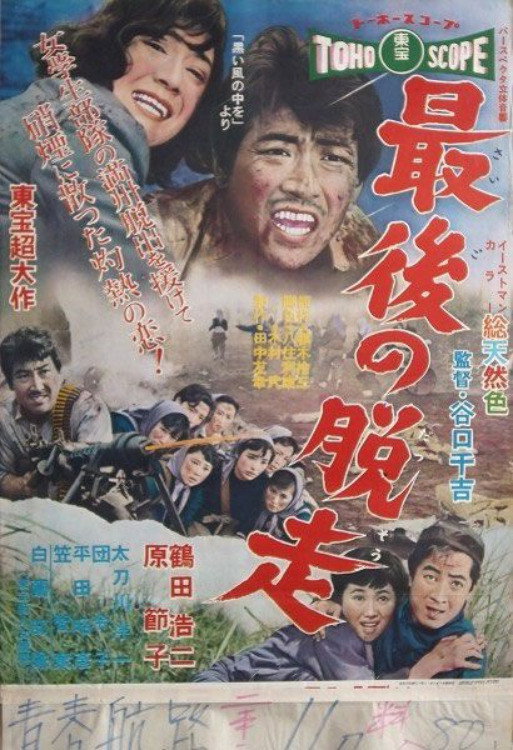
A group of Japanese nursing students and their instructor is serving at an army camp in China. When Japan loses the war the group sets out to depart China, but on the way back to Japan is captured by the Chinese and coerced to instead treat the Chinese army at a clinic. Caught with the group is also a Japanese doctor. When the Chinese army faction itself loses in battle the Japanese plan their escape.

Adapted from a poem, which was composed by poet and sculptor Kotaro Takamura, Chieko-Sho is the story of the artist's wife Chieko. The poet meets a woman, who also as an artist illustrates, one day. They marry and have a good life spending many years together. One day, however, she loses her mind and has to be confined to a hospital. The poetry was some of star Hara Setsuko's favourite even before her involvement in the film.
A novice city-based teacher's first assignment is to a fishing village's grade school. The young teacher's first week with her new students is enjoyable, but she gradually notices that many of the students are skipping school. Visiting her students' after class she realizes that many of them are charged with work and tasks like making money, toiling on the farm, doing housework or tending to their younger siblings. Many of them live in unhygienic homes due to poverty or overwork. She not only reports and explains the situation to the school's principal, but also attempts to improve the conditions by making textbooks, teaching cleanliness and making her classes relevant.