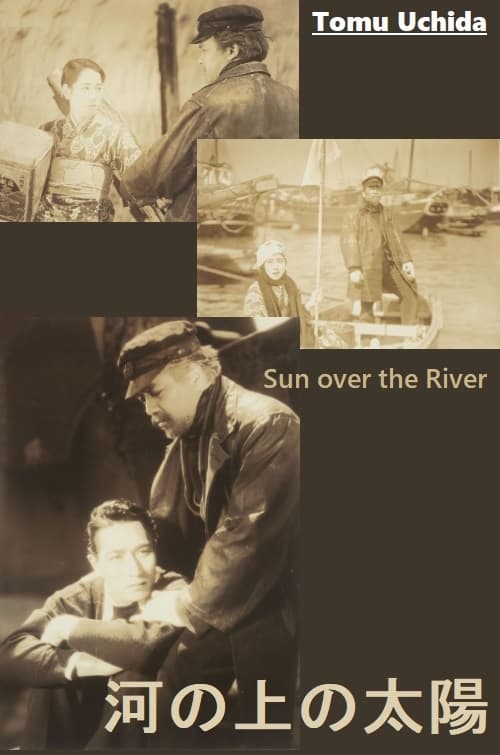
Father, son Kentaro and daughter Ochiyo, who live on the banks of the Sumida River, regain their love for each other after family discord and separation. The film is considered lost.
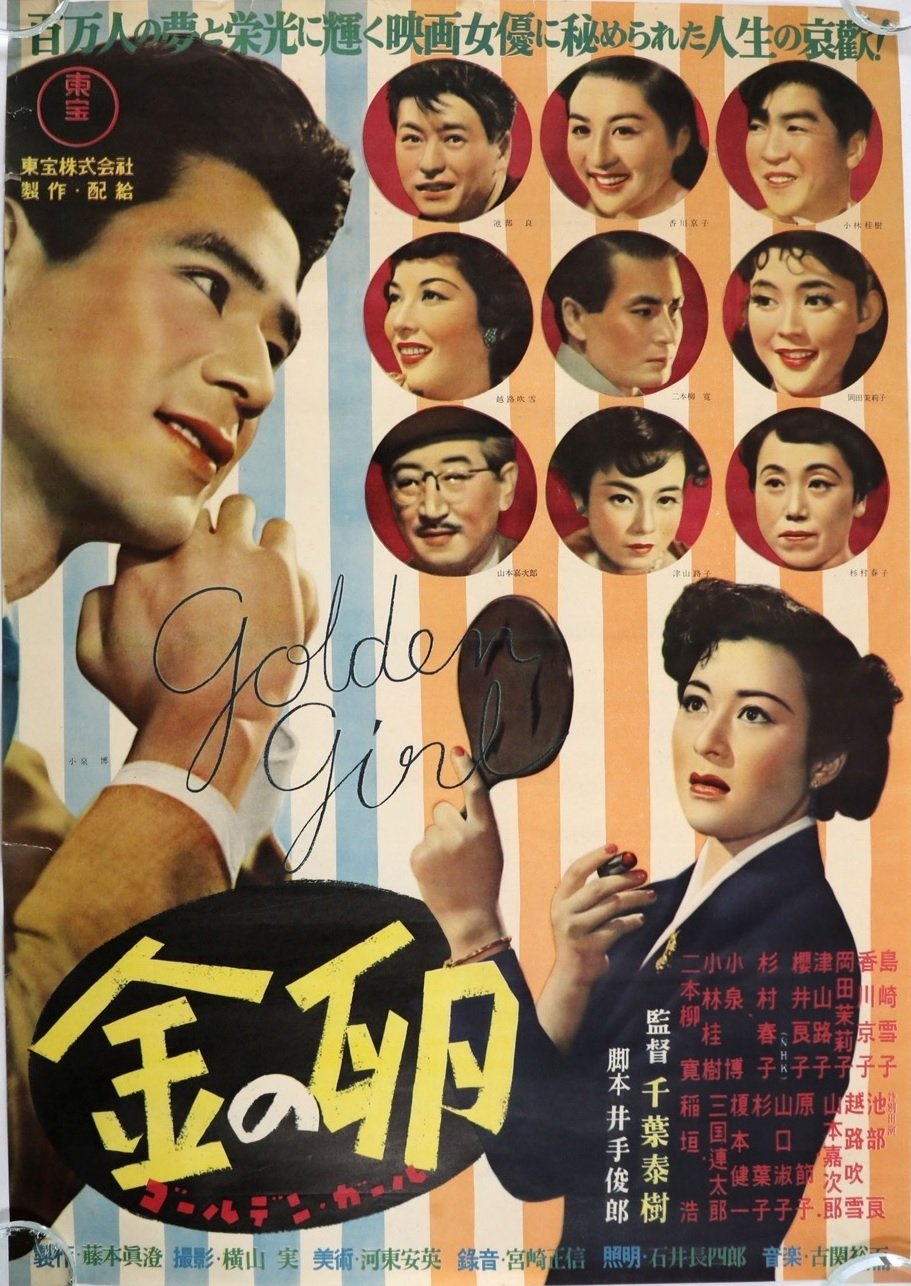
Once an average and seemingly ordinary Tokyo girl, she suddenly finds herself as a TV star owing to her discovery by a casting company, which noticed photographs that her cousin had sent. When another actress falls ill she is given the role instead. Her first film is a success propelling the young actress to popularity, her own fans, money and a house. While everything looks dandy from the outside not all is well within the family however.
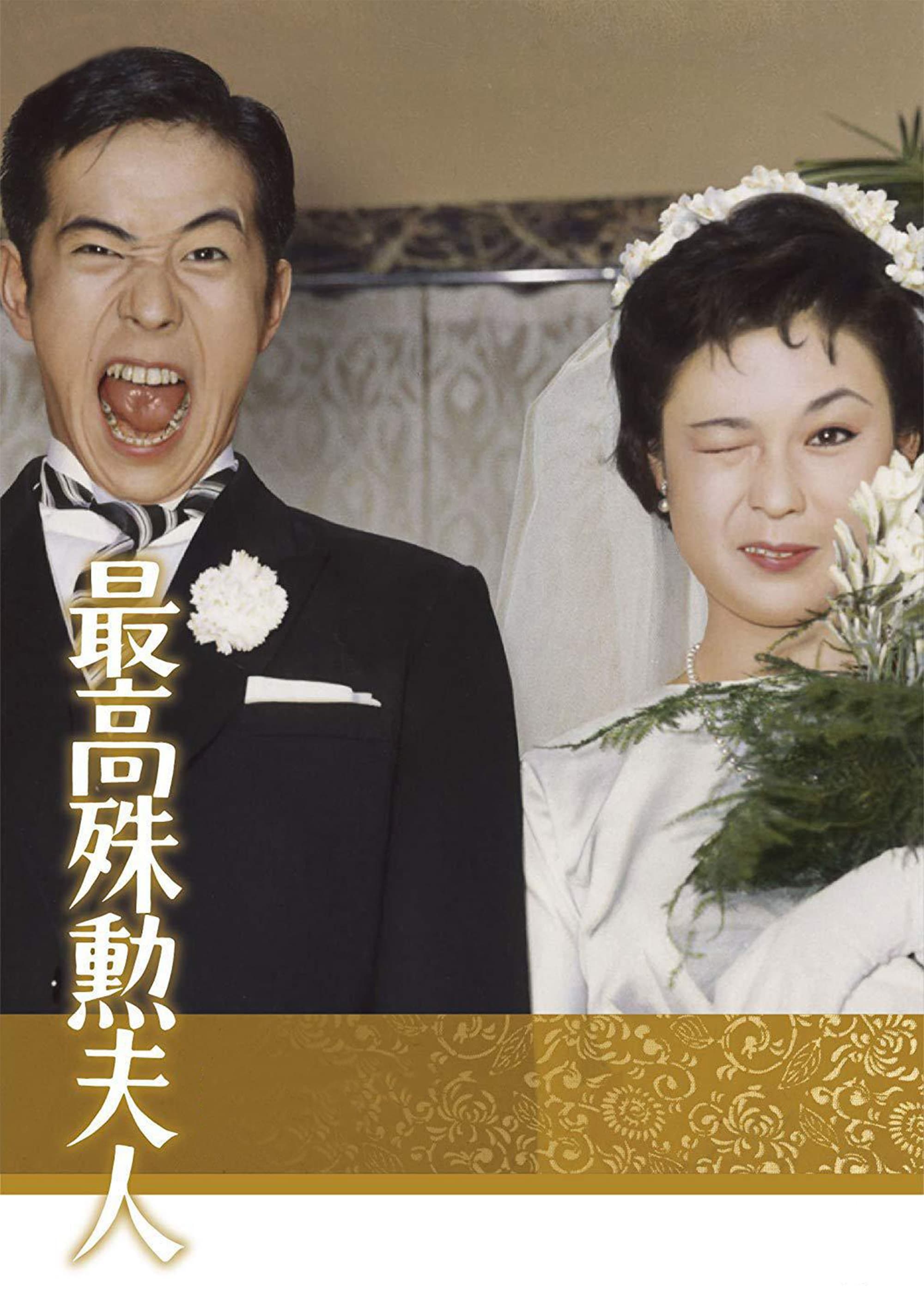
Kyoko is the third daughter of the Nonomiya family, a very ordinary family. Momoko, the eldest daughter, is married to Ichiro, the president of Mihara Shoji, and Riko, the second daughter, is married to Jiro, the managing director, and they plot to marry Kyoko to Saburo, the third son of the Mihara family. Kyoko is angry at the marriage talk that is being pushed forward without her permission, and declares that she "definitely won't get married," but before she knows it, she begins to become aware of the other person...
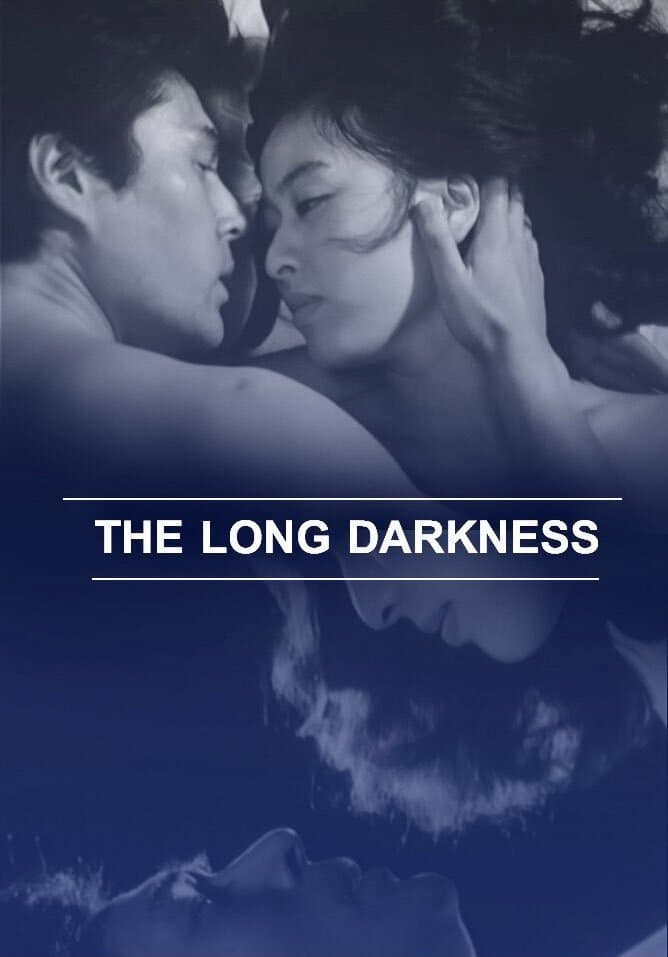
The relationship between Tetsuro, a university student from a disgraced, burdened family, and Shino, a waitress supporting her impoverished relatives. The couple decides to marry despite the significant emotional and social hardships each faces, viewing their love as a means to overcome the shame and despair inherited from their pasts.
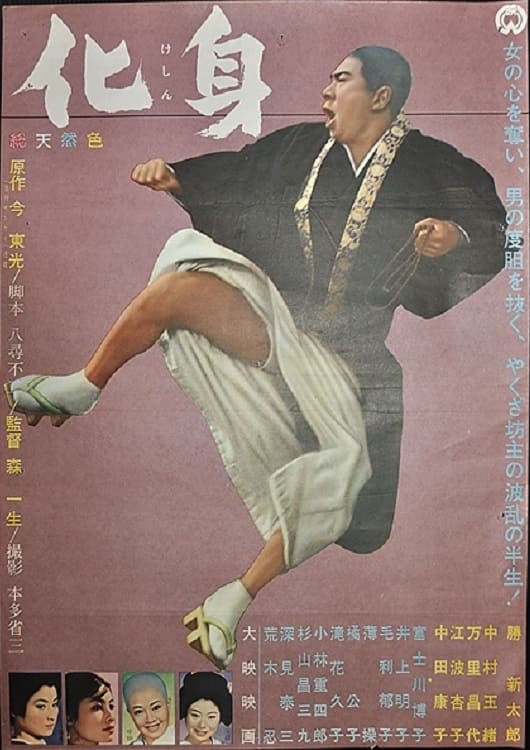
1962 Japanese movie
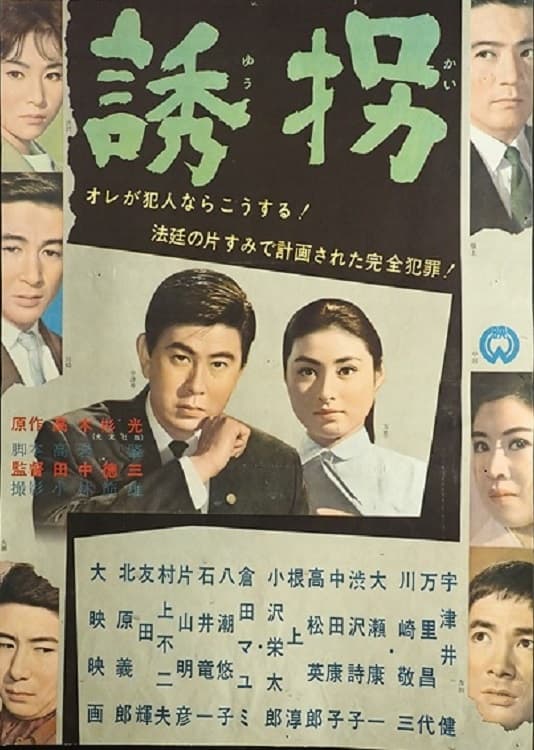
1962 Japanese movie
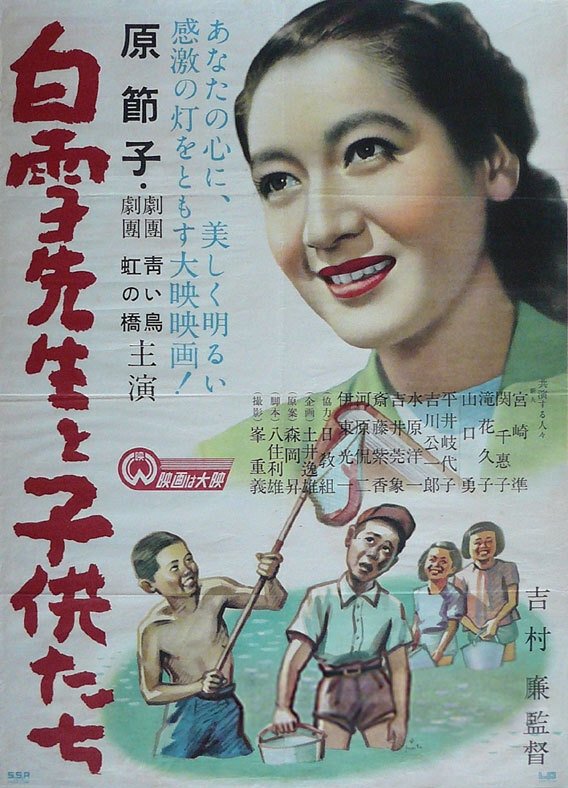
The film centers a compassionate teacher (Setsuko Hara) who teaches at a Tokyo grade school where students curse and gamble. The school has a pond on-premises that she's in charge of and cares for. The pond holds a number of carp, but someone is snatching them. The teacher forms a special bond with a child who lives in abject poverty.
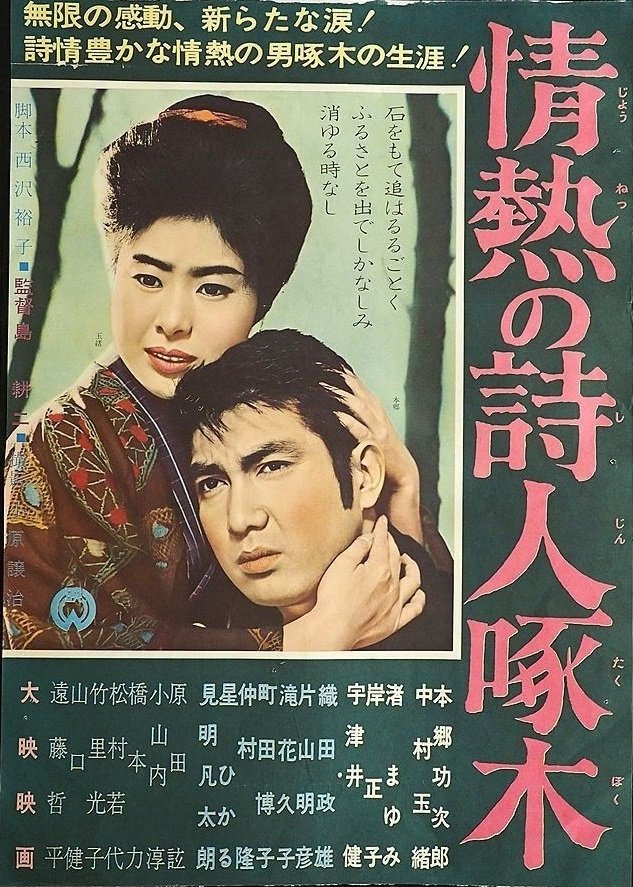
1962 Japanese movie
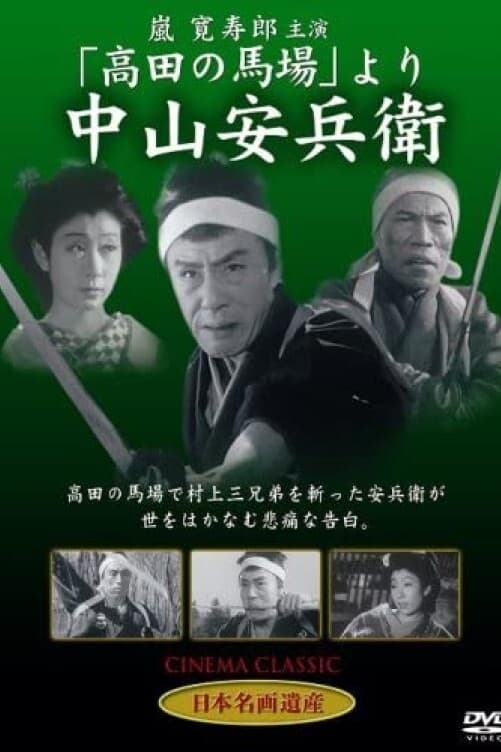
Jidai-geki about the life of Yasubei Nakayama, a famous ronin who did participate in the revenge against Lord Kira Yoshinaka as detailed in Japan's famous epic Chushingura
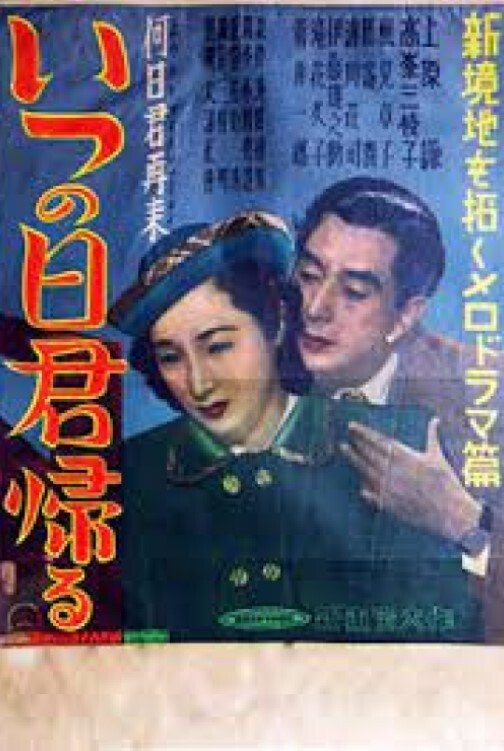
Melodrama by Kiyoshi Saeki
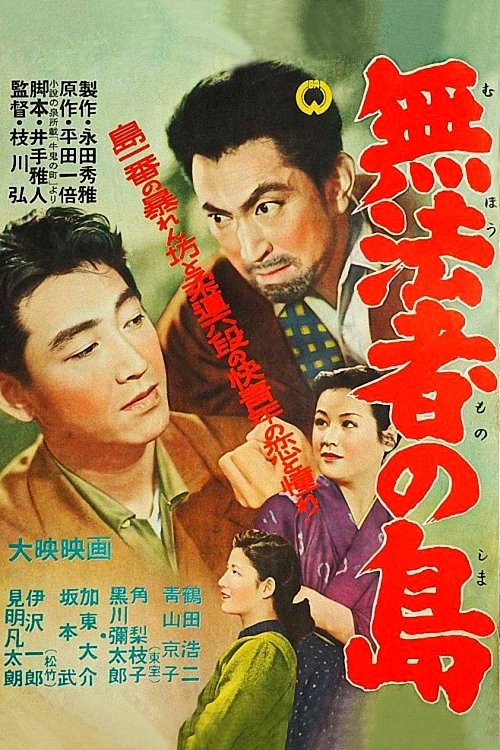
The southern tip of Shikoku. This village, surrounded by a bay, where, according to legend, the former warriors of the Heike clan settled, is famous for its bullfights. Today there is also a bull market in the village, and there are extremely many people here. The black bull "Great Tengu", which Gonzo from Misaki offered, cost 50,000, but was forcibly taken away by a Bakuro soldier, who possessed extraordinary strength and physique, for less than half the price. However, the violent soldier was in love with Tsunayo, the hostess of the inn and the organizer of the bullfight. One day, a young man from the city, an Ihara police officer, arrives in the village. And soon the real problems will begin…

In postwar Japan, a new teacher, Miyamoto Yasuko, is discovered by her estranged daughter, Fukuoka Shōko, at a high school. As Yasuko confronts her past, she navigates themes of forgiveness, identity, and motherhood, addressing social taboos of the time.
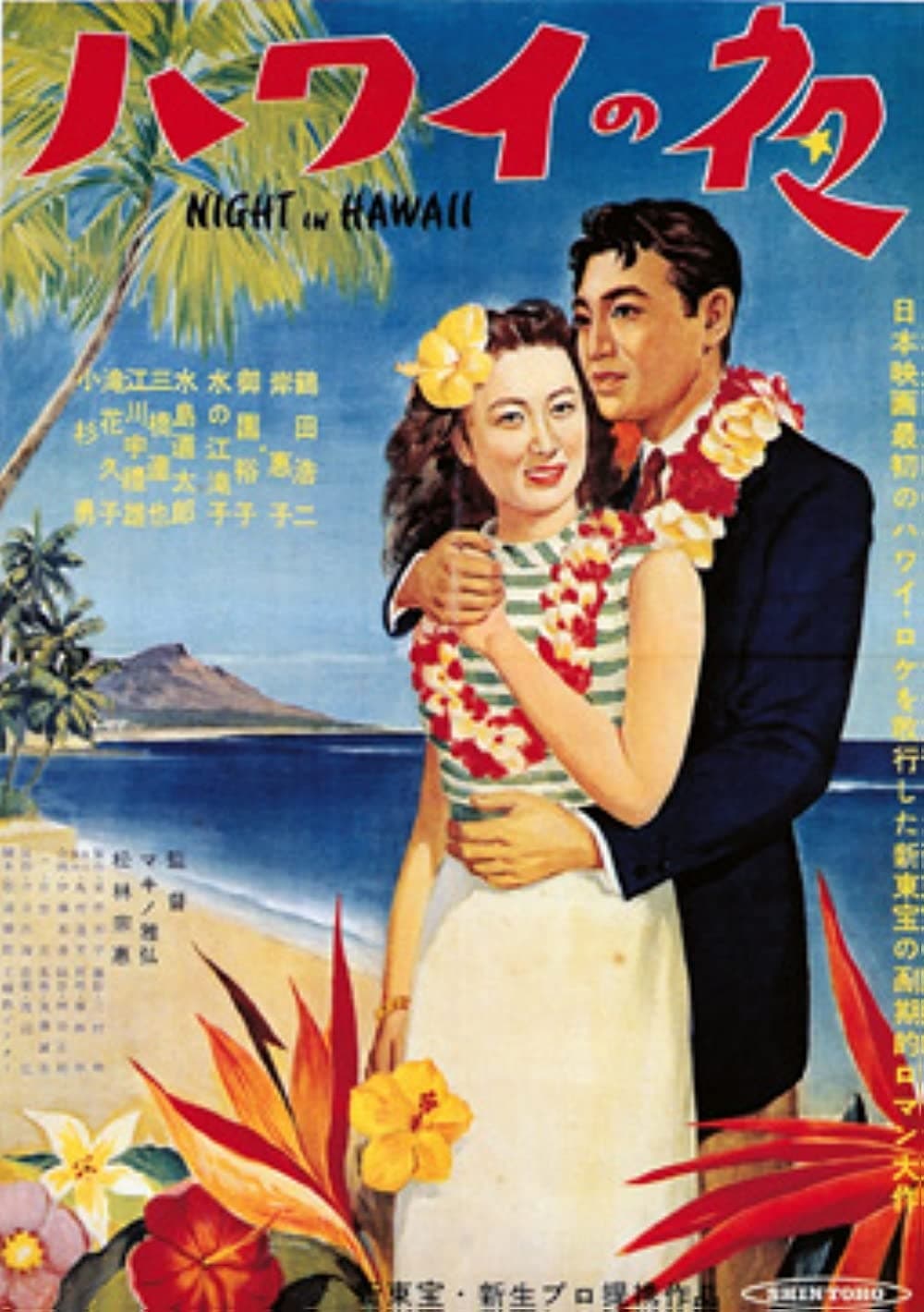
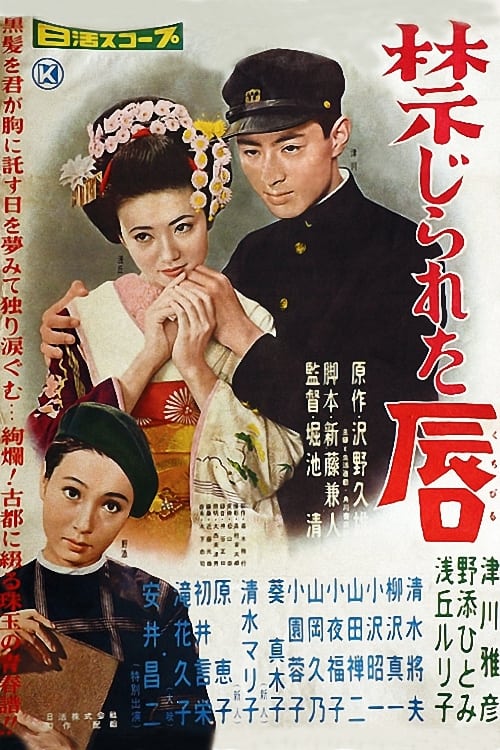
A youth lyrical story of pure love of a girl who grew up in the Kyoto Gion quarter, with a geisha mother and sisters Maiko and a college student.
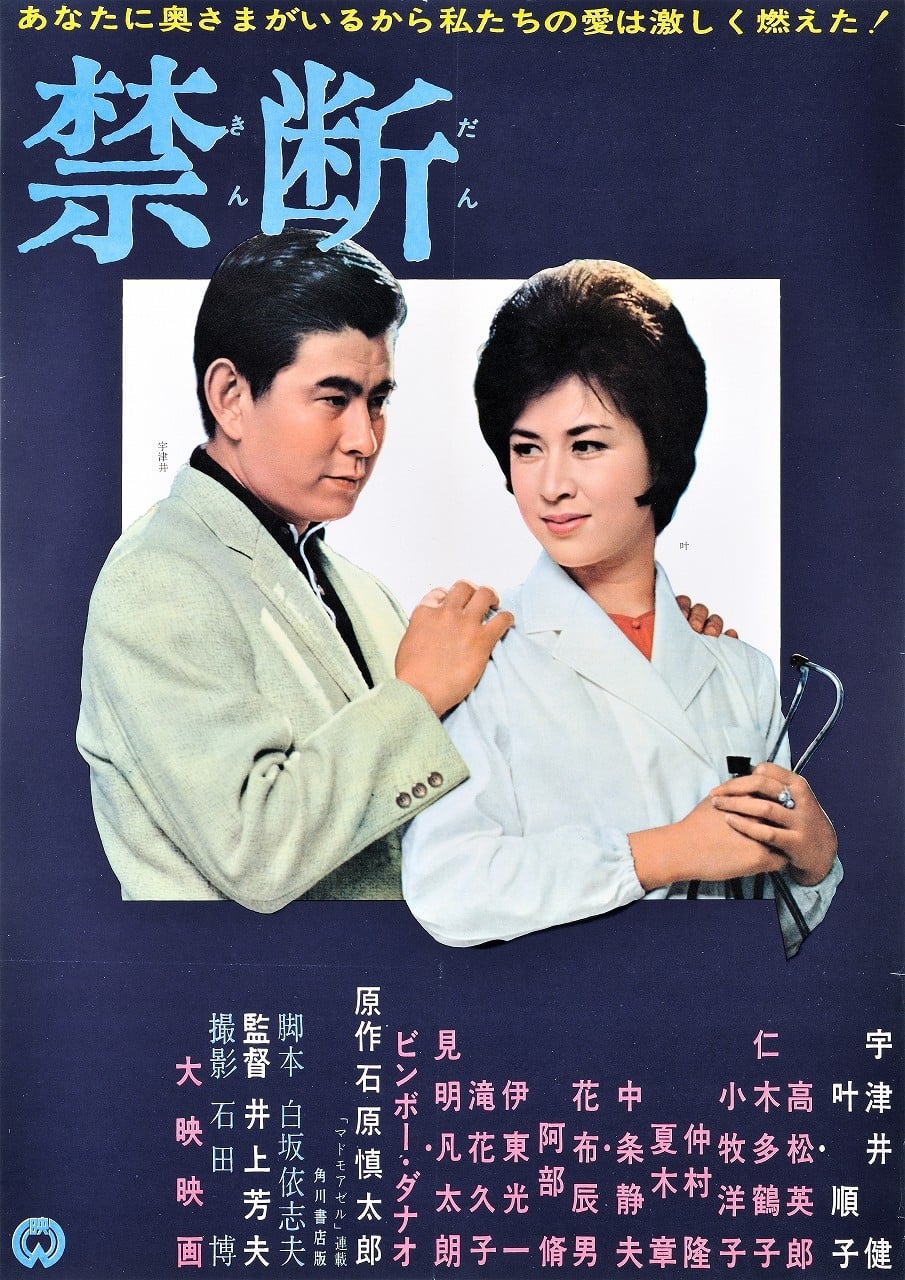
Yukiko Shiba, a doctor, and Akira Sakai, a composer and musician, are lovers. Their love is a forbidden one. He is married, with children. She is a doctor with a bright career ahead of her.
Two brothers run a factory canning crabs. The elder brother Kotaro is righteous and insists on honesty. The younger brother is fixated on money. They are polar opposites. When a boat sails out looking for crab and does not return one day the brothers begin to argue over how to run their facility. They had just received a large order from a foreign country and had obtained a loan from a lender that needed to be repaid.
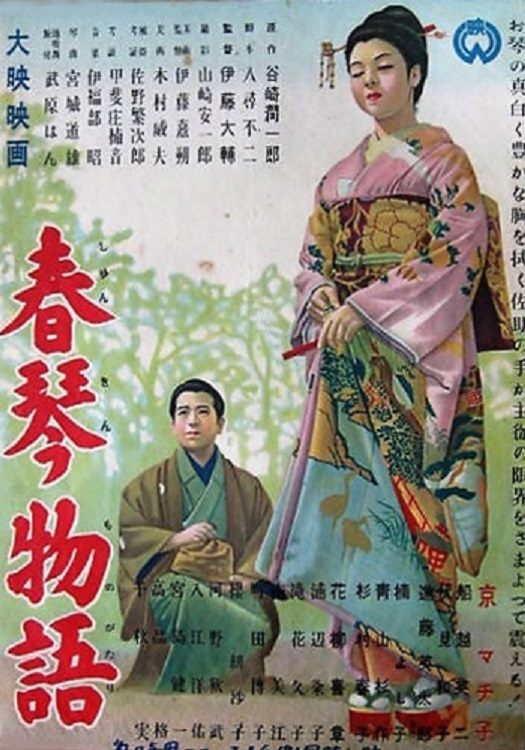
Based on the novel by Junichiro Tanizaki. Story of the beautiful blind daughter of a wealthy businessman who falls in love with a servant.
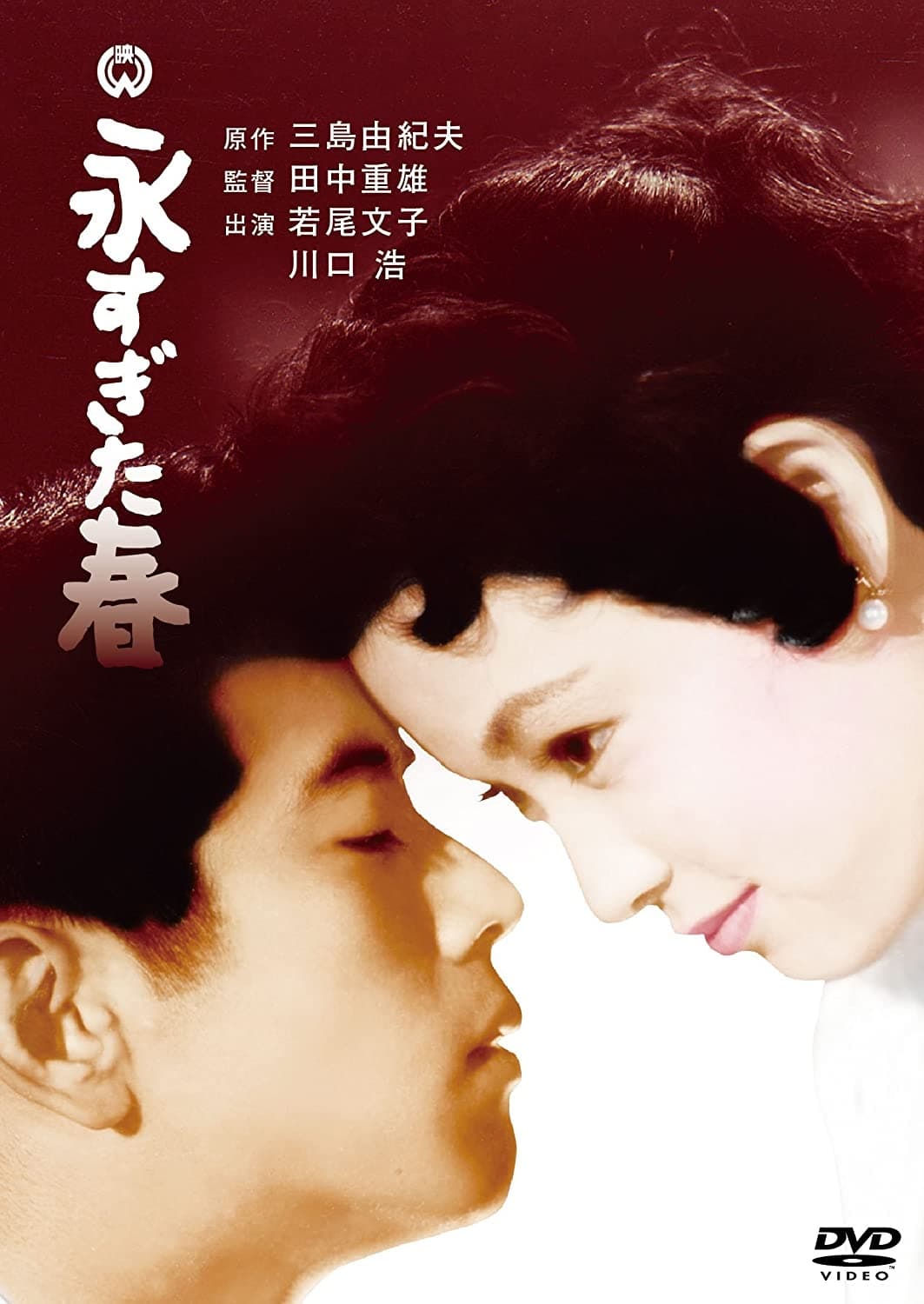
Adaptation of the Yukio Mishima novel.
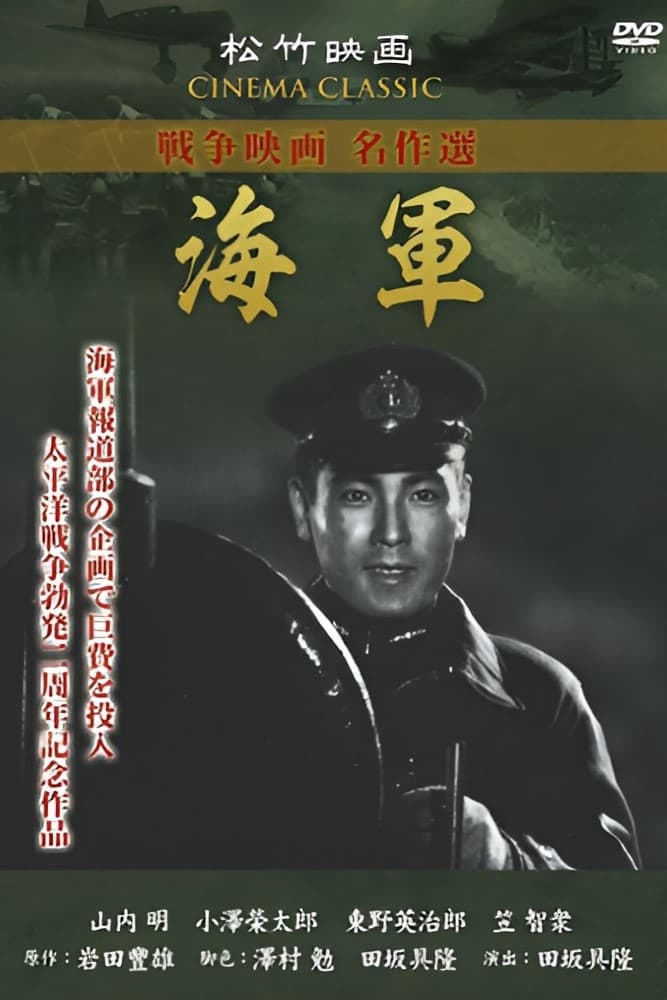
Japanese war film.
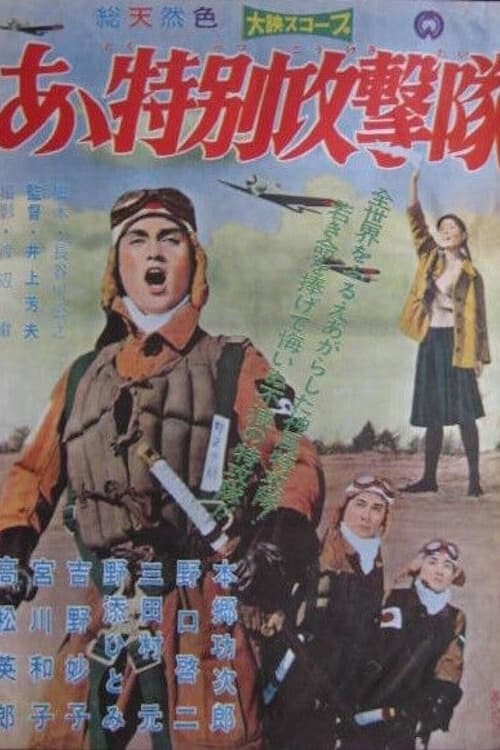
Depicts four cheerful, young former college students with promising futures who die tragic deaths as pilots in the Kamikaze Special Attack Corps.
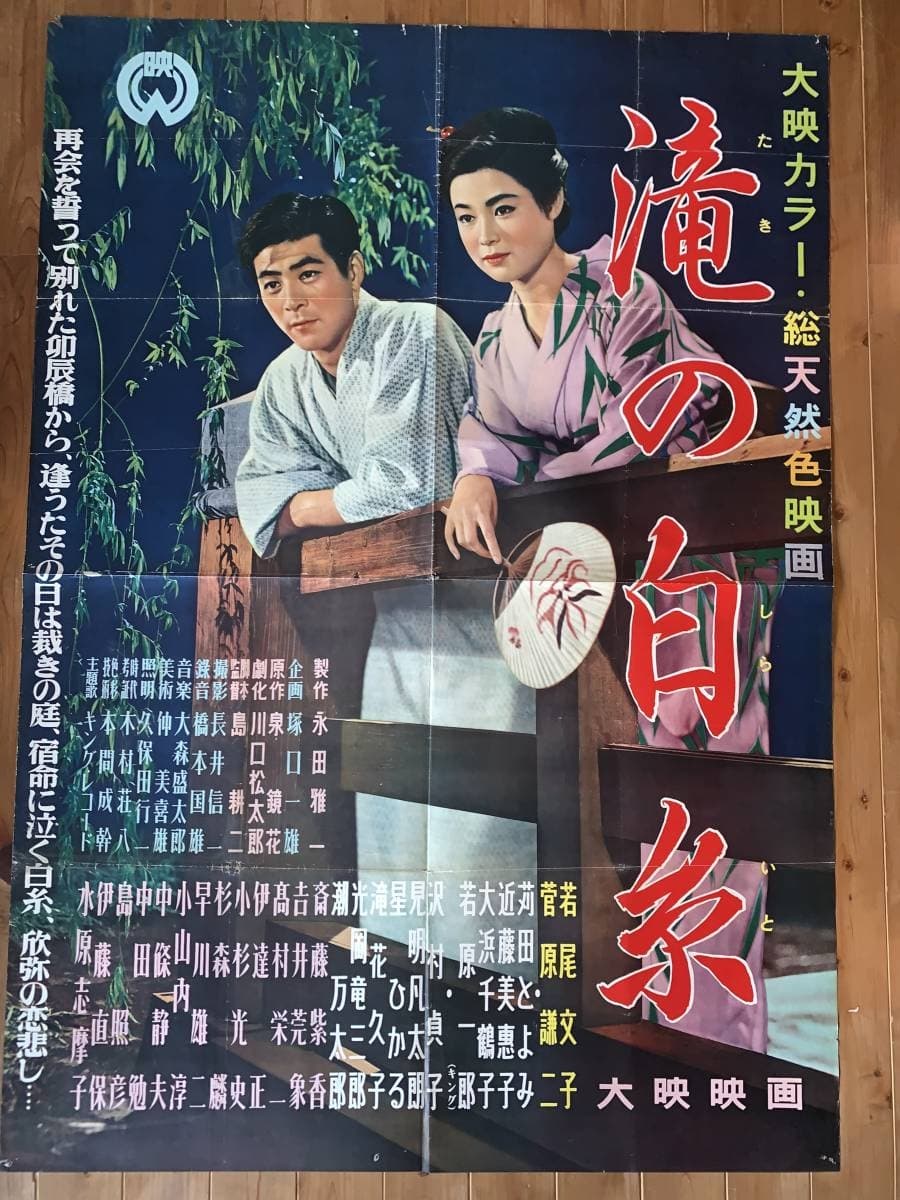
The middle of the Meiji period. Tororo Goro, a Nanjing expedition hit the first time to join the white thread at the water entertainer waterfall, thought that he would go to the Kanazawa in the first place of the year and try to interrupt the white thread. Tororo Goro troupe crossed the Yabe gawa River and tried to borrow a carriage at a carriage company on the other side of the river, but he was forced by Jinya murakoshi, a charter, and started with jinrikisha without stopping.
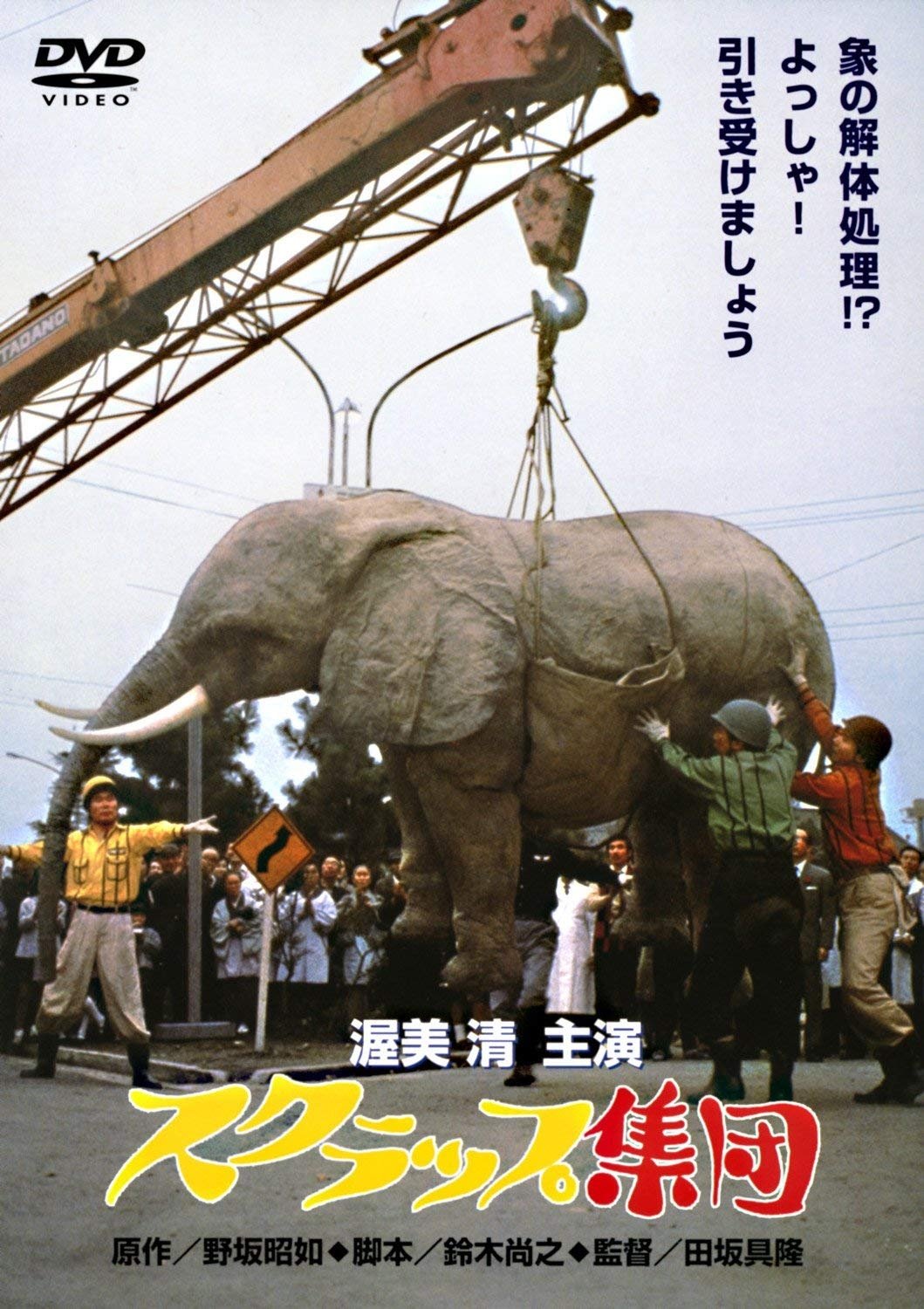
Based on a story by Akiyuki Nosaka.
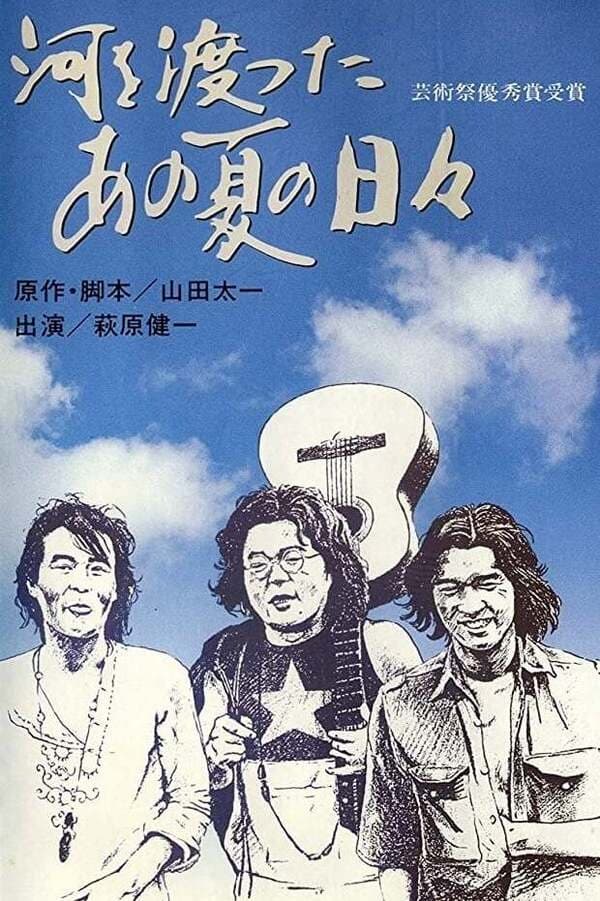
Set in Tsukuda Island, Tokyo, this drama SP depicts a misunderstanding between an old man with old-fashioned spirit and a young tenant.
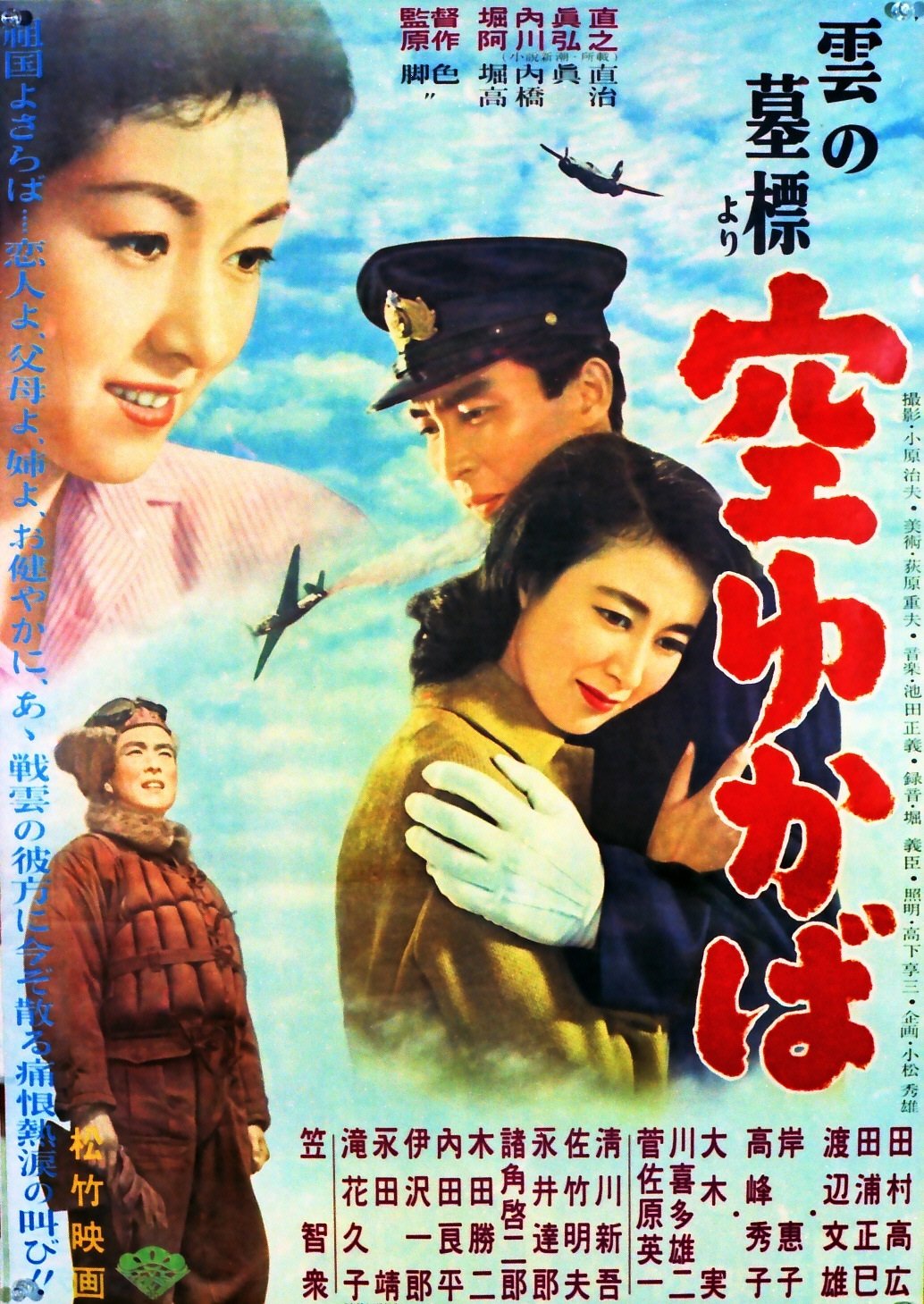
The movie depicts the youth of kamikaze pilots who scattered young lives in the sky.
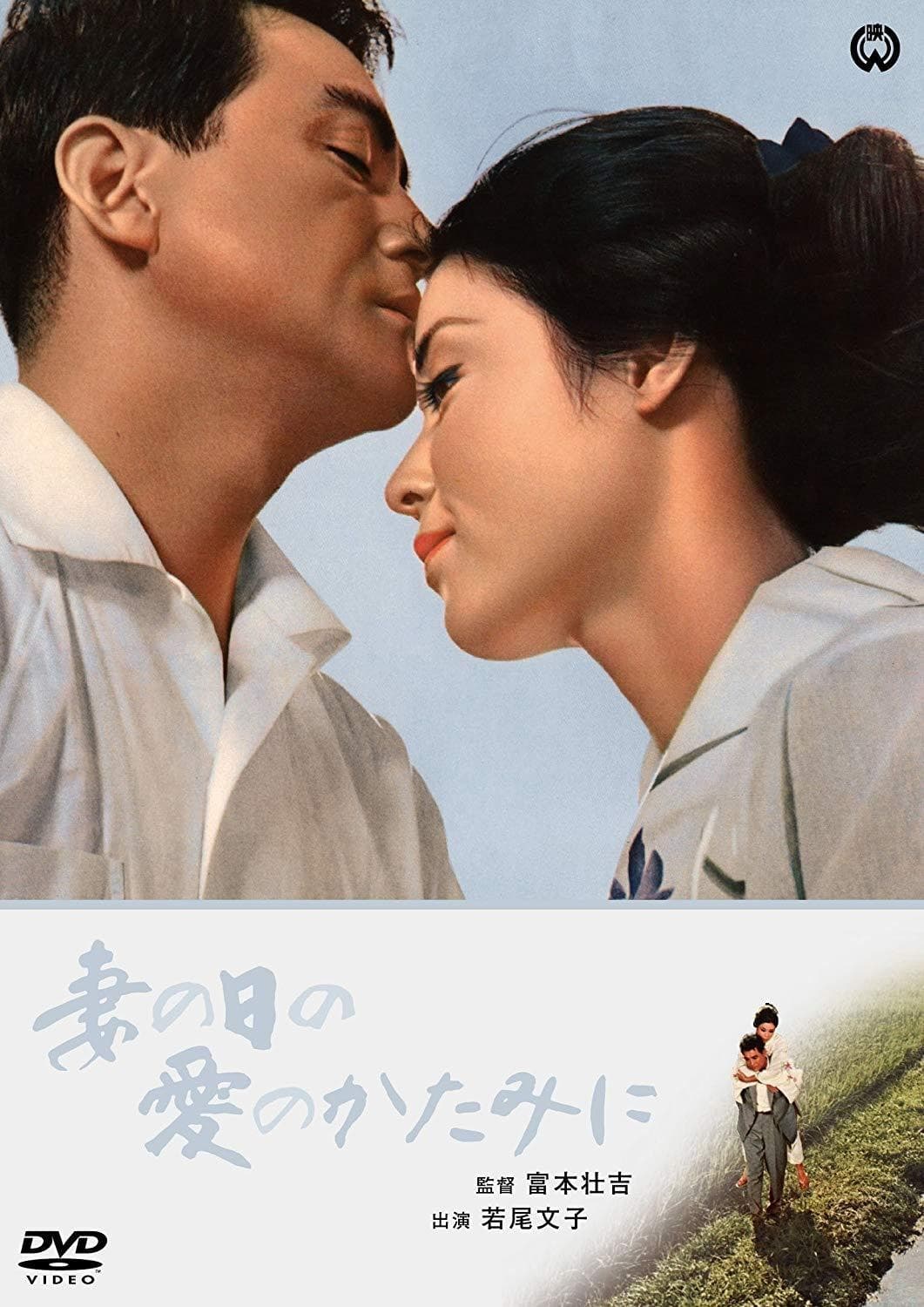
A wife is diagnosed with an incurable disease at a young age. Her husband loves her, supports her, and tries to stay with her. However, the wife is tormented by the fact that she is ruining her husband's future, and decides to divorce him as the only thing she can do for him.
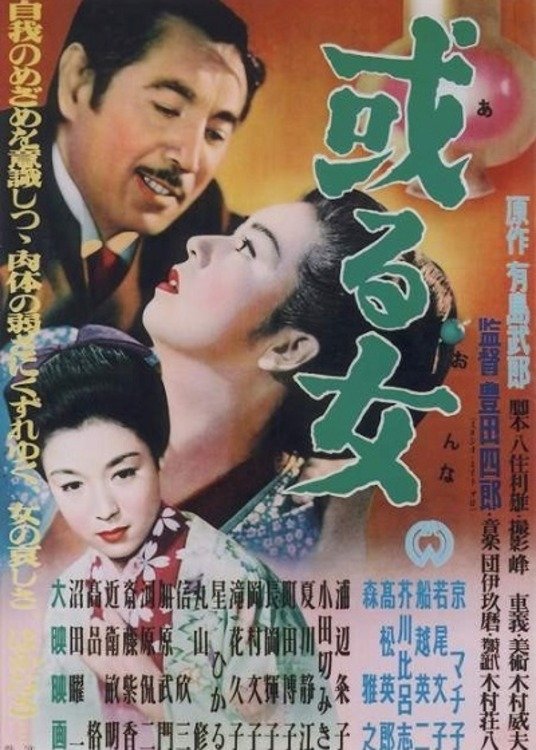
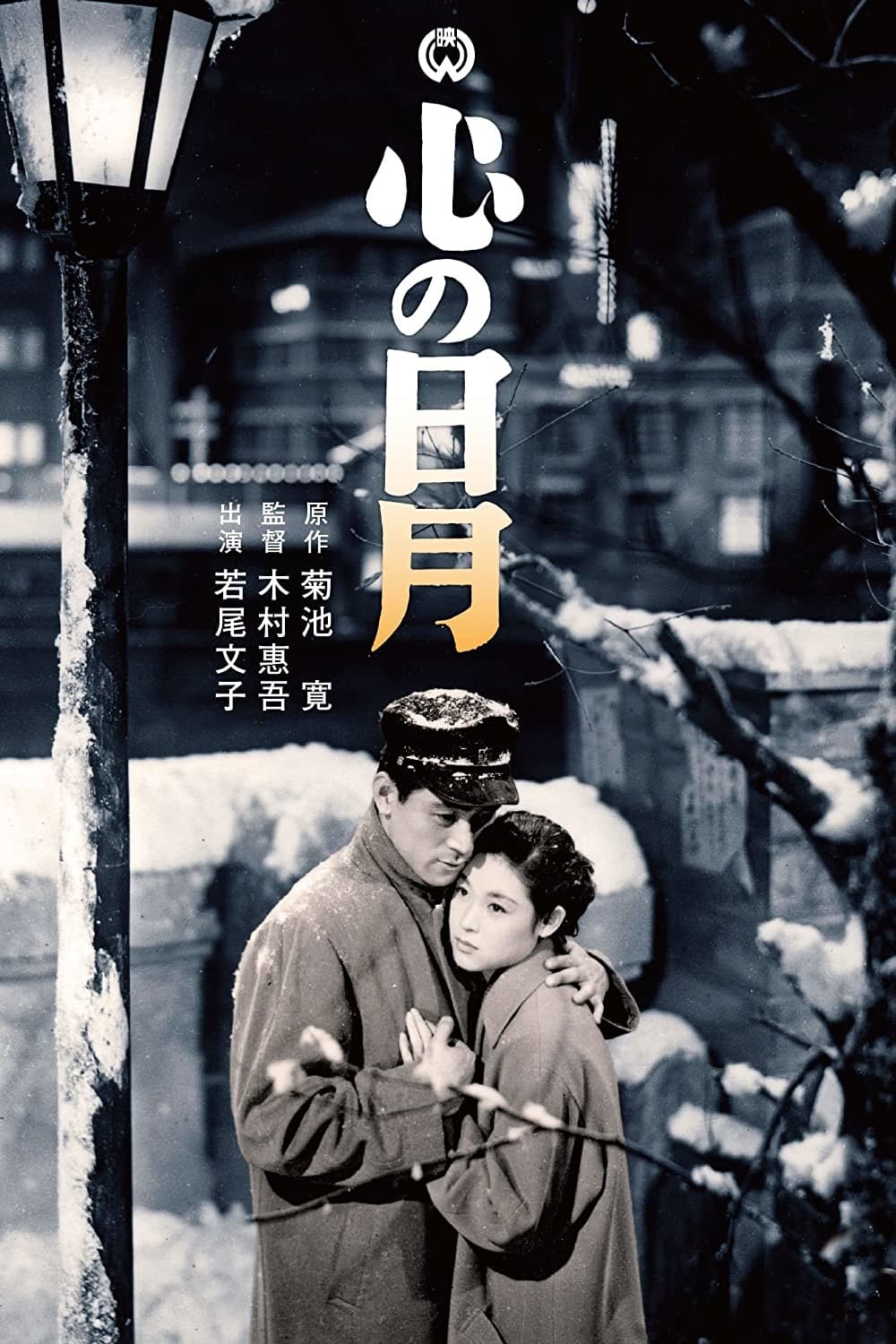
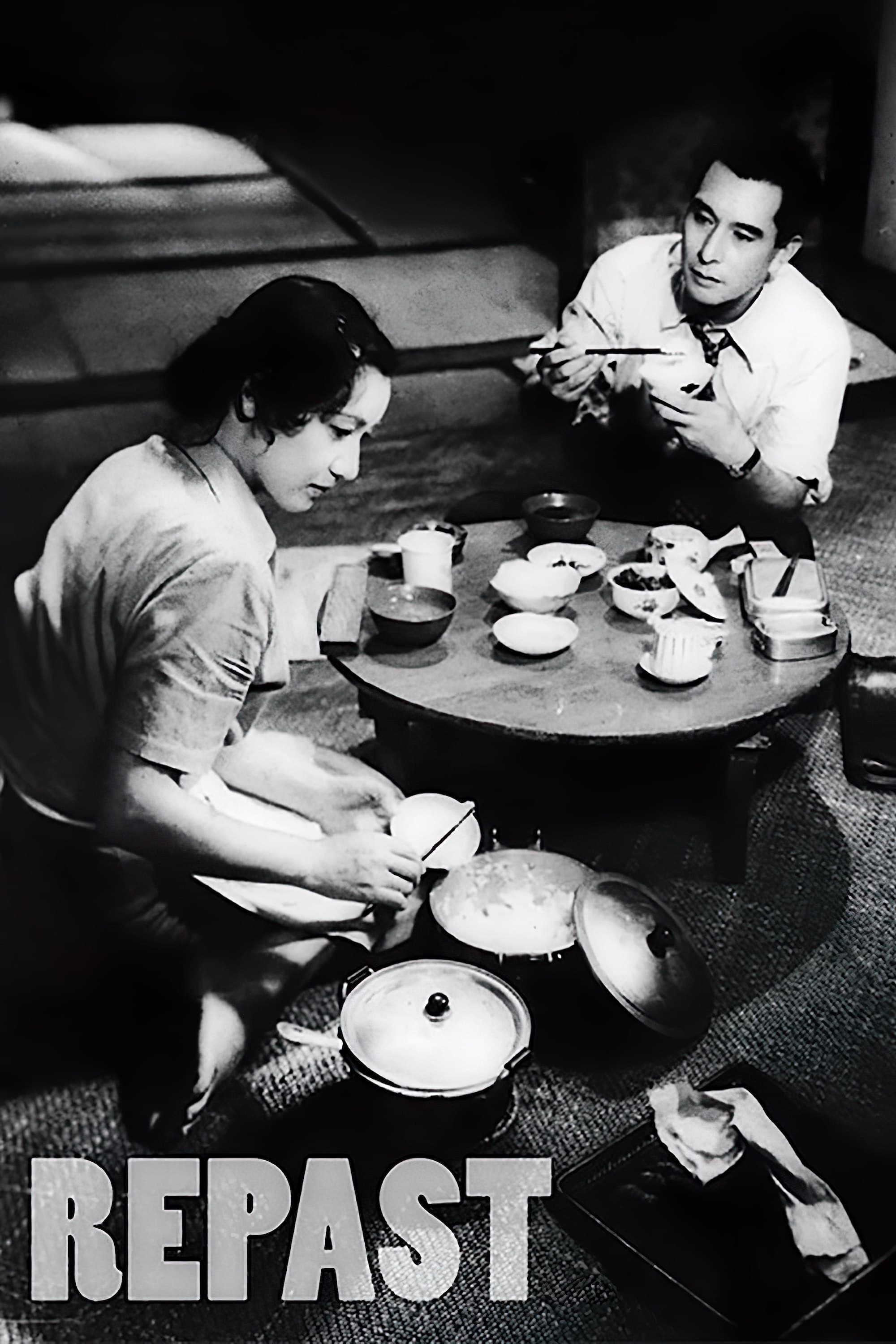
Michiyo lives in the small place Osaka and is not happy with her marriage; all she does is cook and clean for her husband.

The story of Kiyoko, a young woman who has successfully managed to make a break with her dysfunctional family who have been trying to arrange a marriage for her with a disagreeable man whom she has rejected.
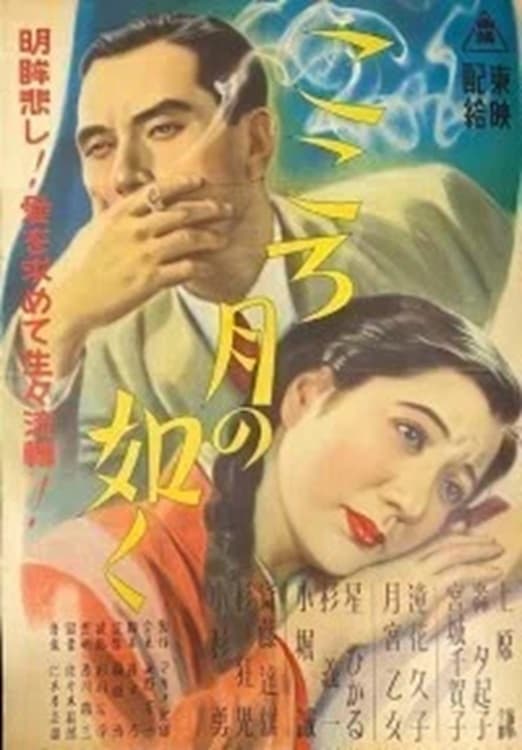
1947 Japanese movie
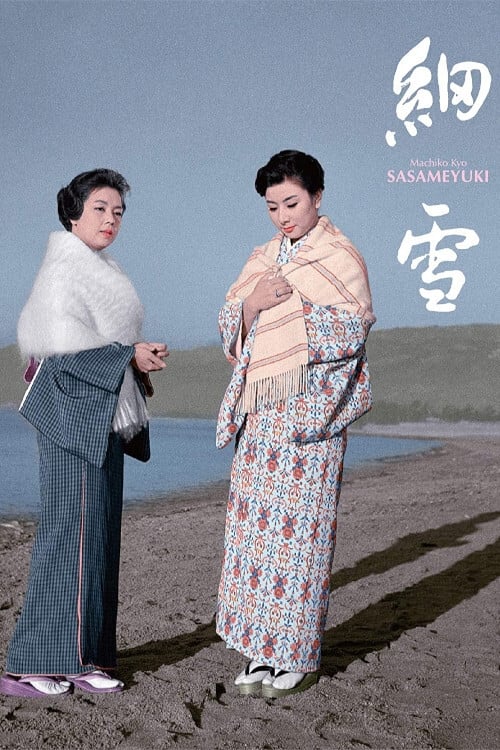
Based on the famous novel by Junichiro Tanizaki, this is a story of the four sisters of the ancient and reputable Makioka family of Osaka.
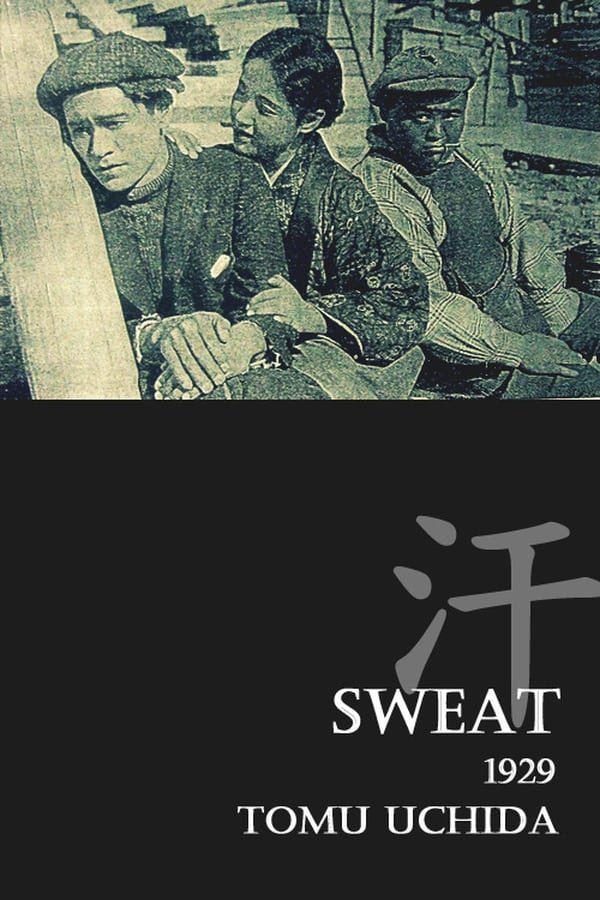
Sweat (1929) is a slapstick riff on tendency-film themes, as a bored young millionaire has his clothes stolen by a tramp; dressed in the tramp’s clothes, he has to accept work as a labourer. As the hero ends up building the mausoleum he had himself commissioned.
A twice-remade ironic comedy about a writer's encounter with a female thief.
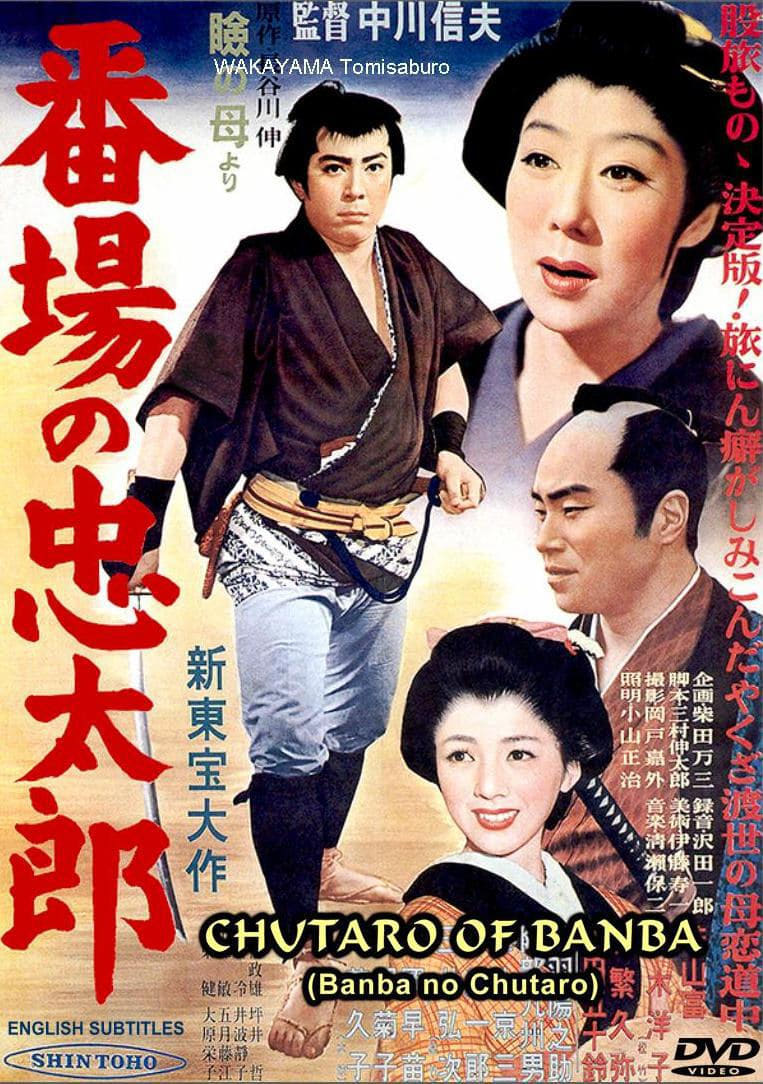
Based on the play ”Mabuta no haha” by famed author Shin Hasegawa, this is the first major starring role for Tomisaburo Wakayama. This heartfelt story concerns a wandering gambler from Banba by the name of Chutaro. Set during the Tenpo Period, Chutaro runs afoul of Boss Sukegoro of Iioka. Pursued by vengeance seeking swordsmen, Chutaro displays his phenomenal martial art skills. Abandoned as a child, he seeks to find his long lost mother, while at the same time fighting off numerous attacks by Iioka’s men.
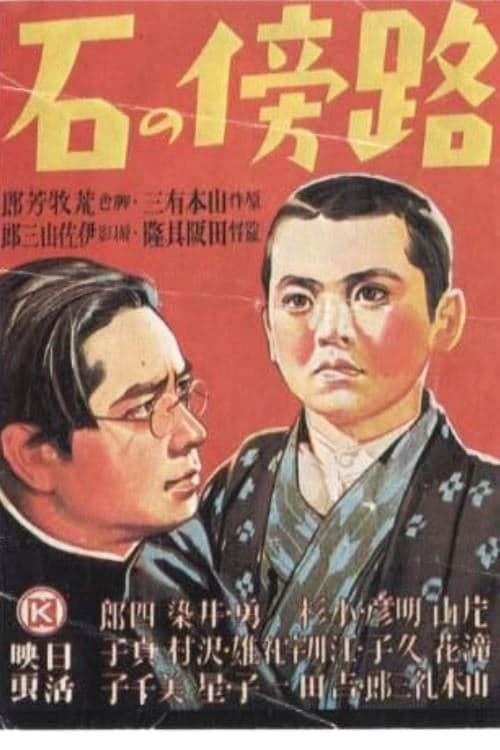
Tomotaka Tasaka's A Pebble by the Wayside (Robo no Ishi), made in 1938 and taken from a Yuzo Yamamoto novel, takes place around 1902, was about a young boy brought up entirely by his mother since his drunken father is never home. An intelligent teacher wants to send him to middle school, but instead the father apprentices him to a clothing store to which he is in debt. The mother dies and the boy is forced to quit work when his father insults the store owner. Later the boy goes to Tokyo, but only to continue his hardships. First he is forced to do a maid's job at a boarding house and later is used by an old woman to steal at funerals. Finally he is rescued by the teacher, whom he meets in Tokyo.
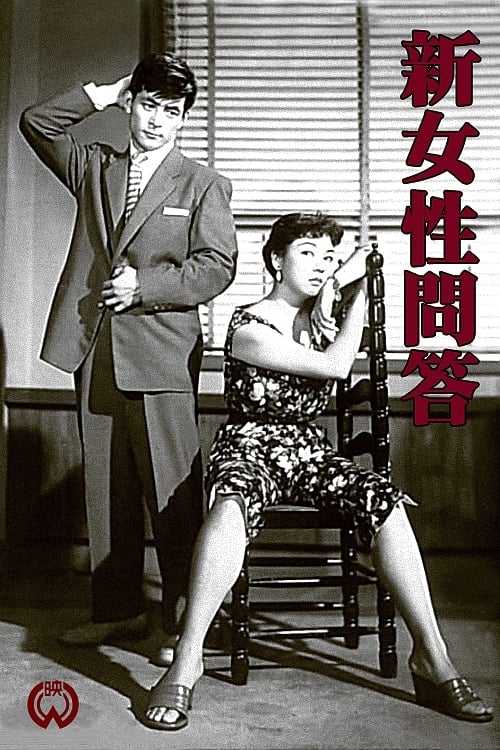
A young female president of a company who hates men and a new male employee who hates women: a one-on-one fight in which sparks fly! A cheerful youth film!
Adaptation of a novel by Yojiro Ishizaka, originally released in two parts.
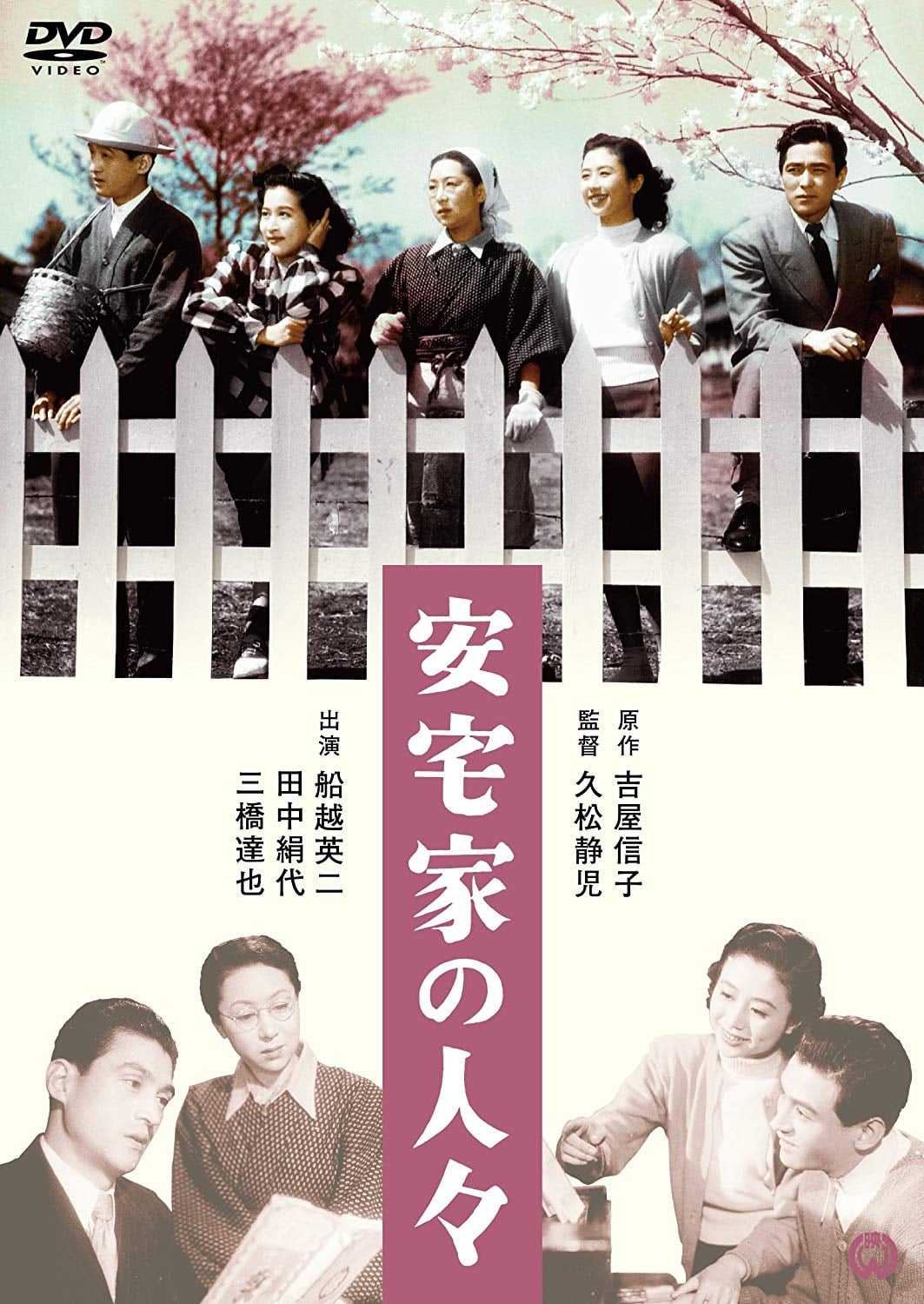
Soichi Ataka is the eldest son of Ataka family. Although mentally challenged, he's a person with a gentle heart. Soichi's wife, Kuniko is devoted to her husband and together the couple runs the family farm. Their happy family life comes to an abrupt halt when Soichi's half-brother, Joji returns with his wife Masako after failing in a business.
Shinkichi, a peasant employed as a cloth-dyer, has a dream: in the midst of the civil war which ravages Japan, he hopes to revive the long-banned custom of the Kyoto Gion Festival, and by doing so, bring together the warring clans and rampaging brigands in peaceful celebration.
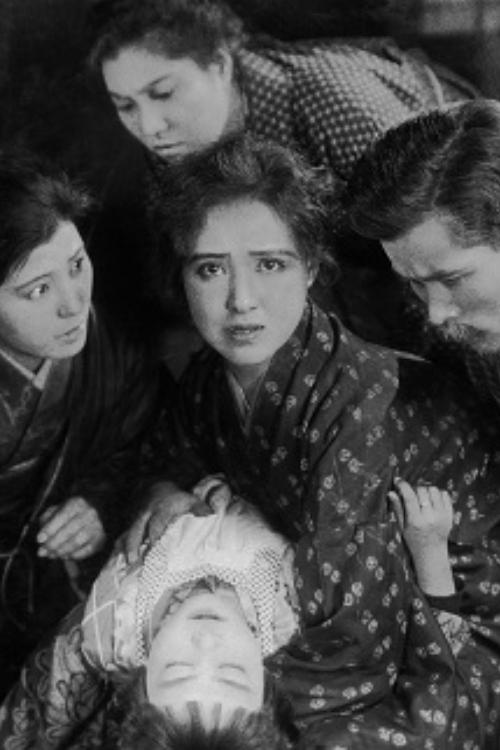
Directed by Tomotaka Tasaka.
A young woman decides to leave school in order to help her sister.
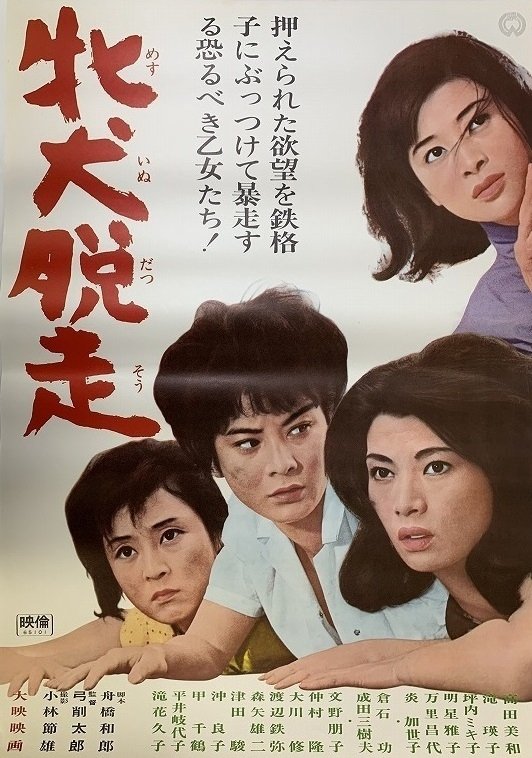
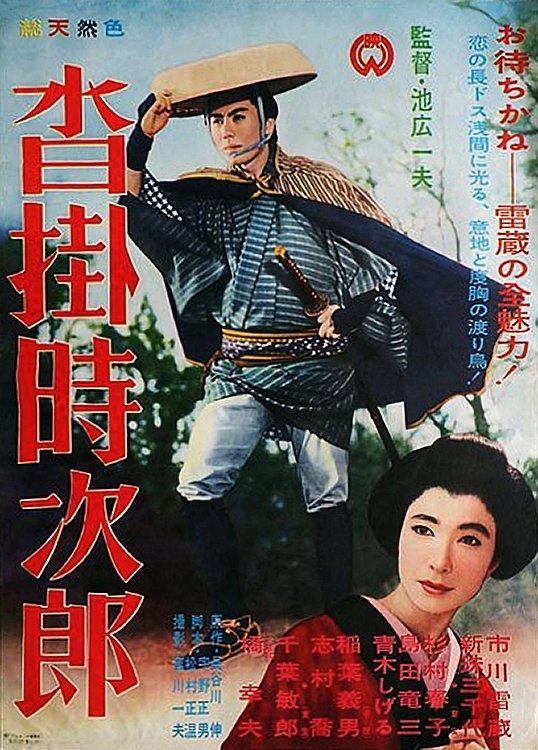
One of Japan's most popular stories is the tale of Kutsukake Tokijiro, a traveling gambler who finds that he must take care of the wife and child of a yakuza he had been forced by the code of the gamblers to fight man to man. In a brilliant performance from super-star Ichikawa Raizo, with strong support from two of the greats from Toho, Shimura Takashi (7 Samurai) and Aratama Michiyo (Sword of Doom) the heartfelt story reaches new heights. Tokijiro, having learned the true nature of the boss to whom he was obligated for having spent a night and eaten at the gang's headquarters takes up arms against them in a running battle fought across the back roads of the entire nation. Another powerful rendition of this superb story, it is not to be missed!
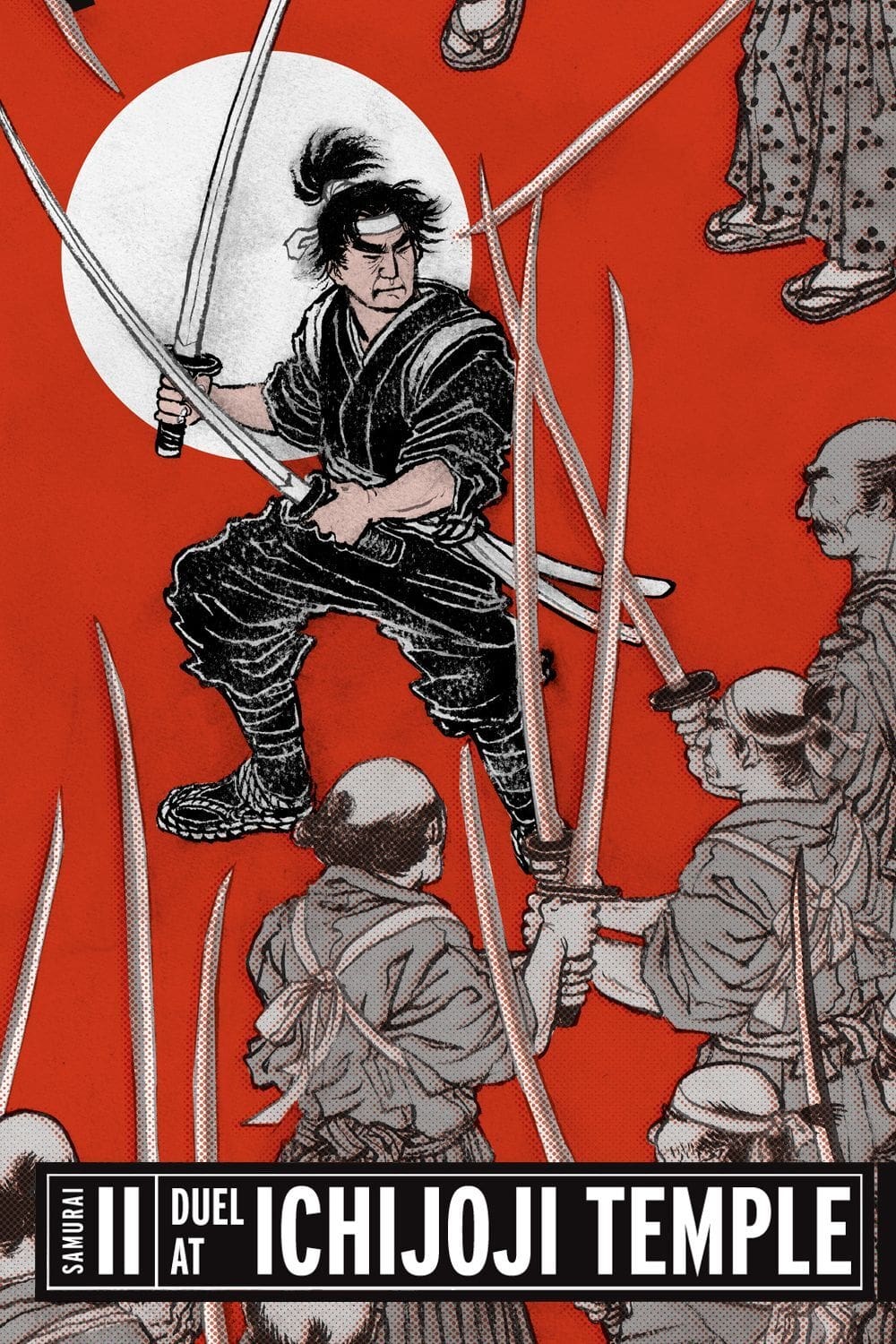
After years on the road establishing his reputation as Japan's greatest fencer, Takezo returns to Kyoto. Otsu waits for him, yet he has come not for her but to challenge the leader of the region's finest school of fencing. To prove his valor and skill, he walks deliberately into ambushes set up by the school's followers.
Based on the comic by Kaoru Akiyoshi
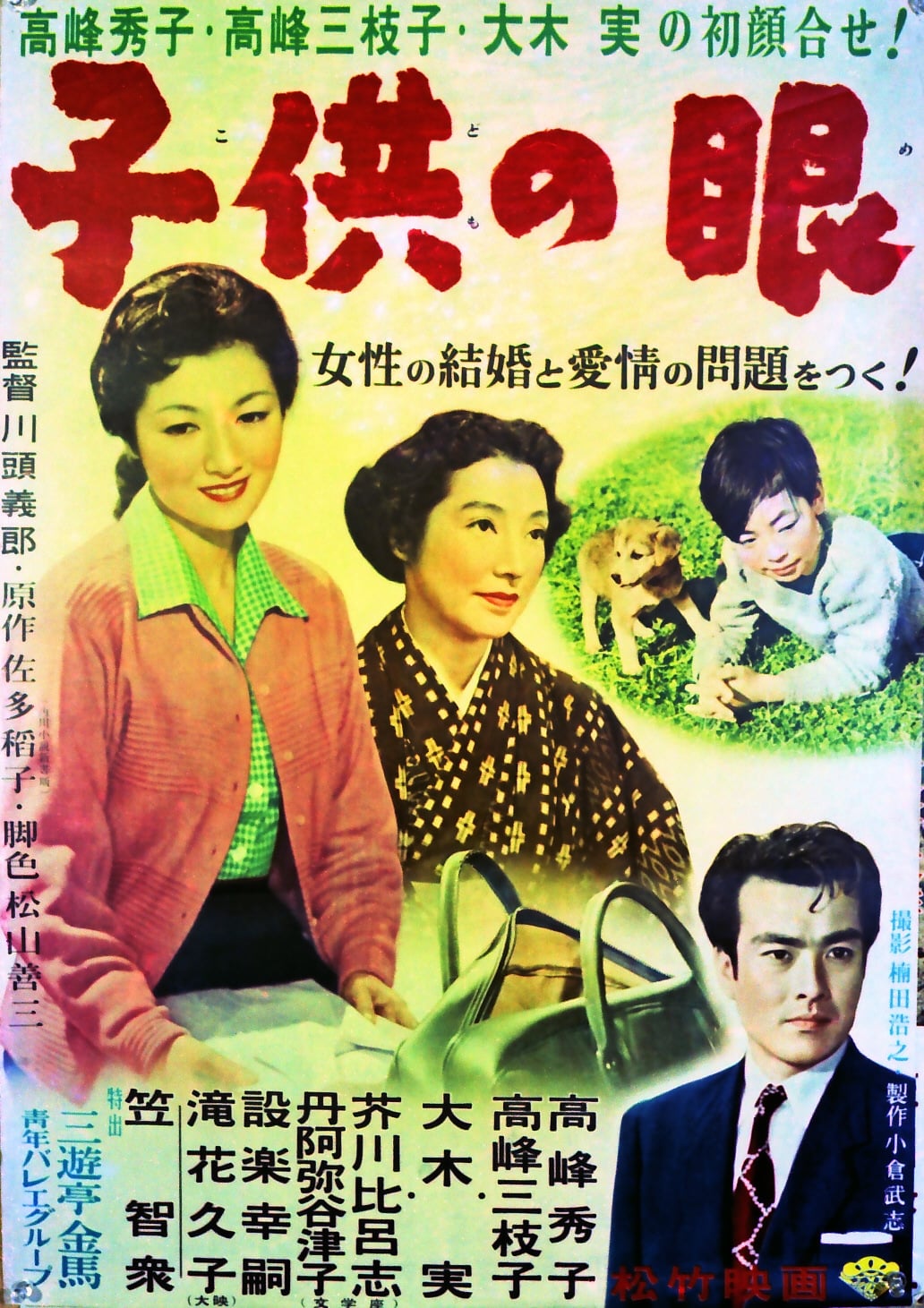
A man is found dead of an apparent suicide but there is speculation that he was murdered. An investigation reveals that he and his wife were at odds over the treatment of his daughter, with accusations that he abused the little girl. A sensational trial ensues in which the lawyer becomes a defendant, and secrets from childhood fester even into adulthood.
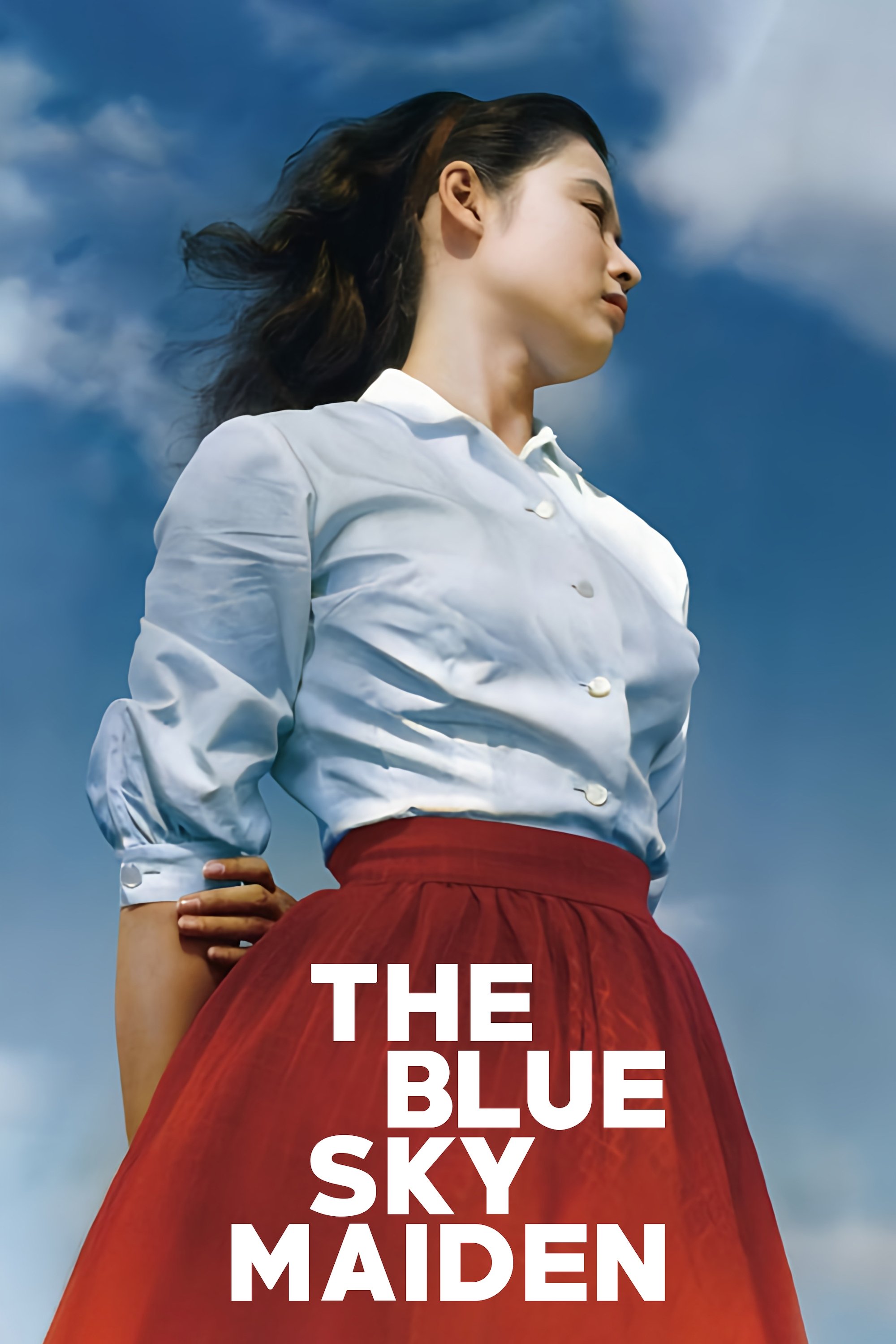
Yuko is sent to the coastal regions to be raised away from the rest of her sophisticated family where she finds out from her ill grandmother that she is not who she thought she was.
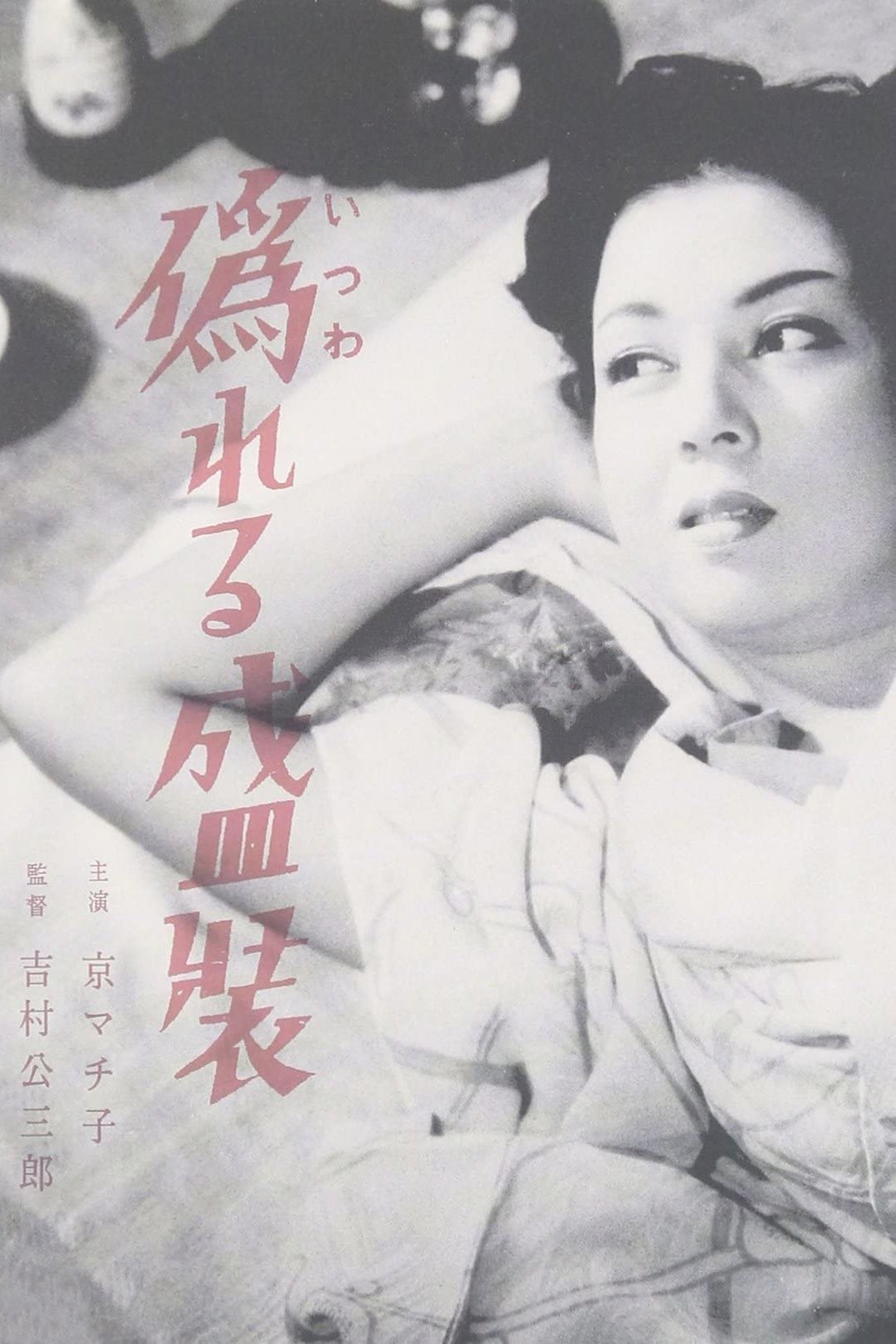
The story of two sisters in post-war Japan. One is a geisha and the other works for the tourist board.
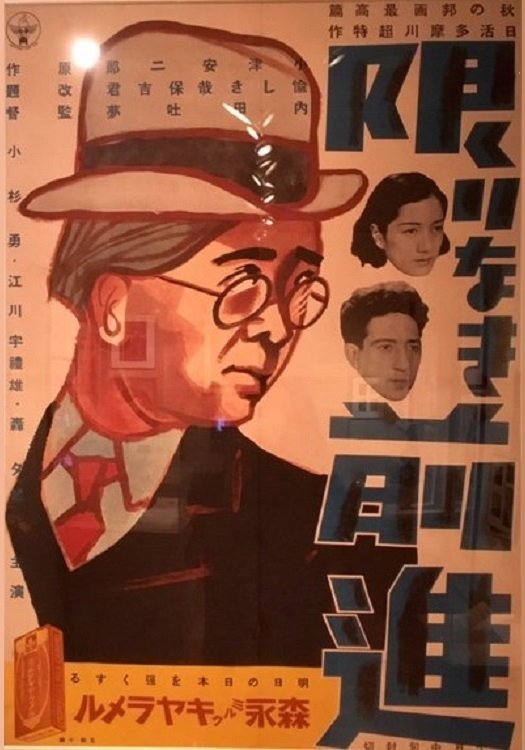
One of Uchida’s early sound films, Unending Advance is based on a curious story by Yasujiro Ozu, in which an examination of the quotidian problems of a middle-aged salaryman and his family segues into an idyllic dream of an implausible future. The surviving print, although incomplete, offers an essential glimpse into Uchida’s prewar period, when he was associated more with realist dramas than with the period films that dominated his work after the war.

Fascinated with women from an early age, Yonosuke had his first sexual encounter at the age of seven. From that day on, he recklessly and forwardly pursues women, feeding his fascination and experience. As Yonosuke's salacious behavior brings much cause for shame to the family, his father eventually breaks relations with him. Expelled from the family, 19-year-old Yonosuke embarks on a pilgrimage of lust, traveling far and wide to acquaint himself with women of all walks.
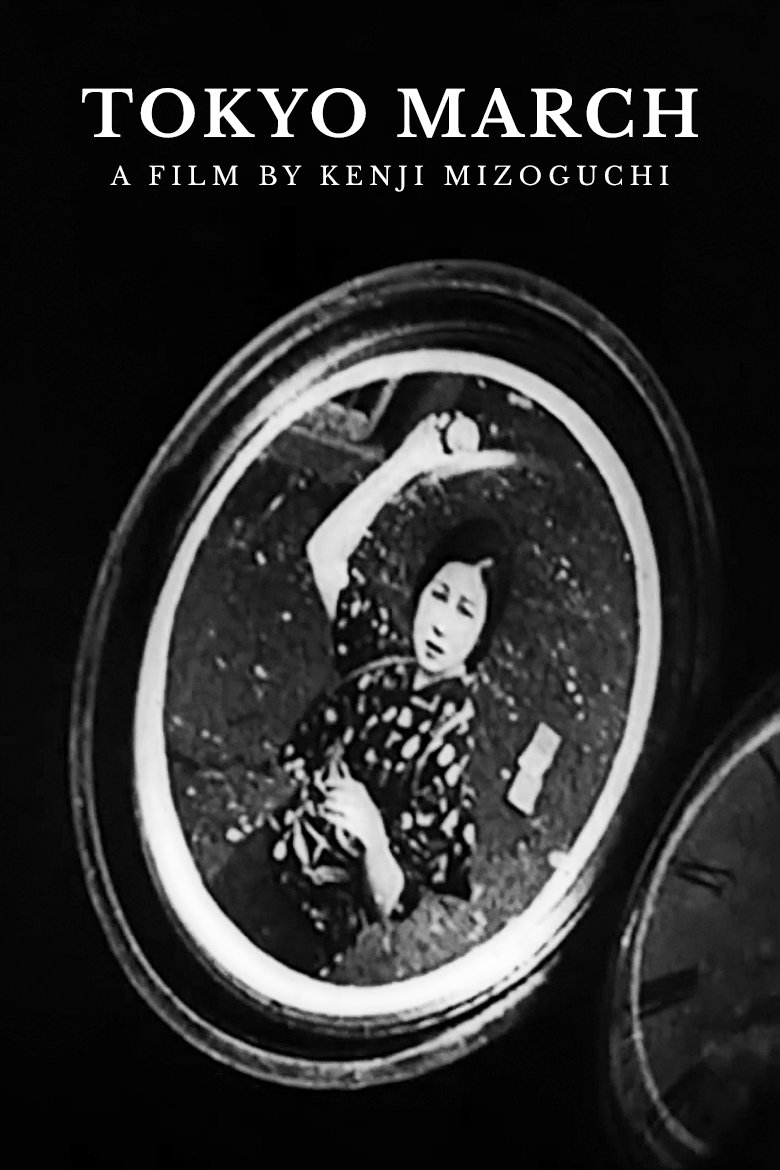
A classic melodramatic love tragedy addressing social inequality in Taishō-era Japan, The nostalgic scenes of 1920s Tokyo provides a valuable visual experience set against the background of the title song, "Tokyo March." (Sadly, less than a half hour of the footage has been recovered and restored.)
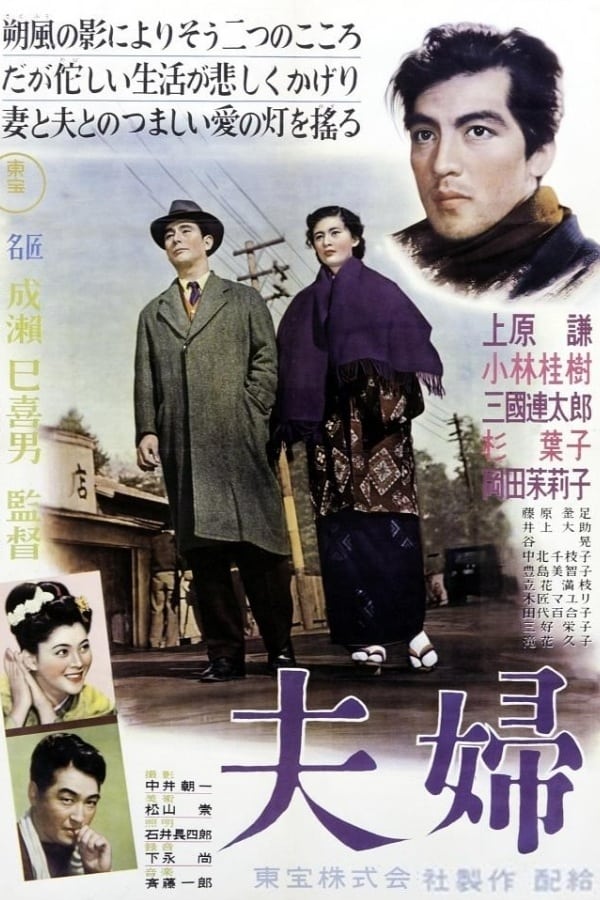
A married couple looking for an apartment move in with the husband's co-worker, a widower. The husband becomes jealous of the widower and his wife.
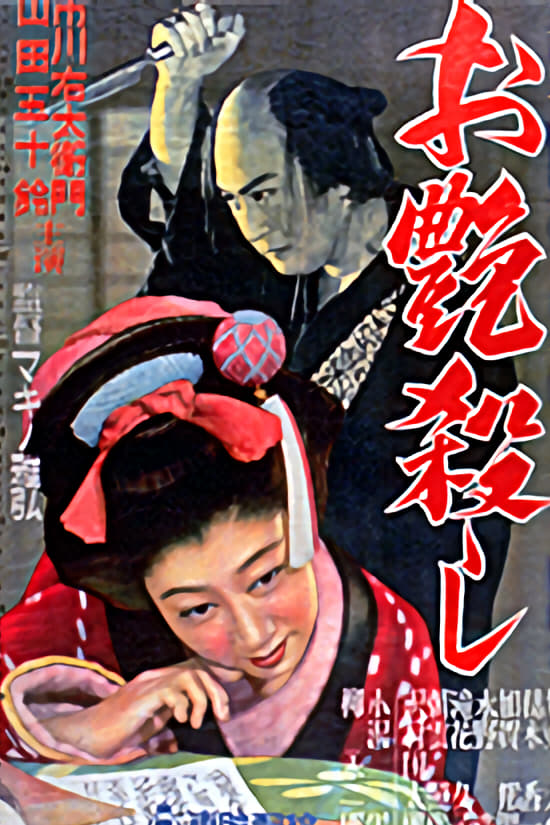
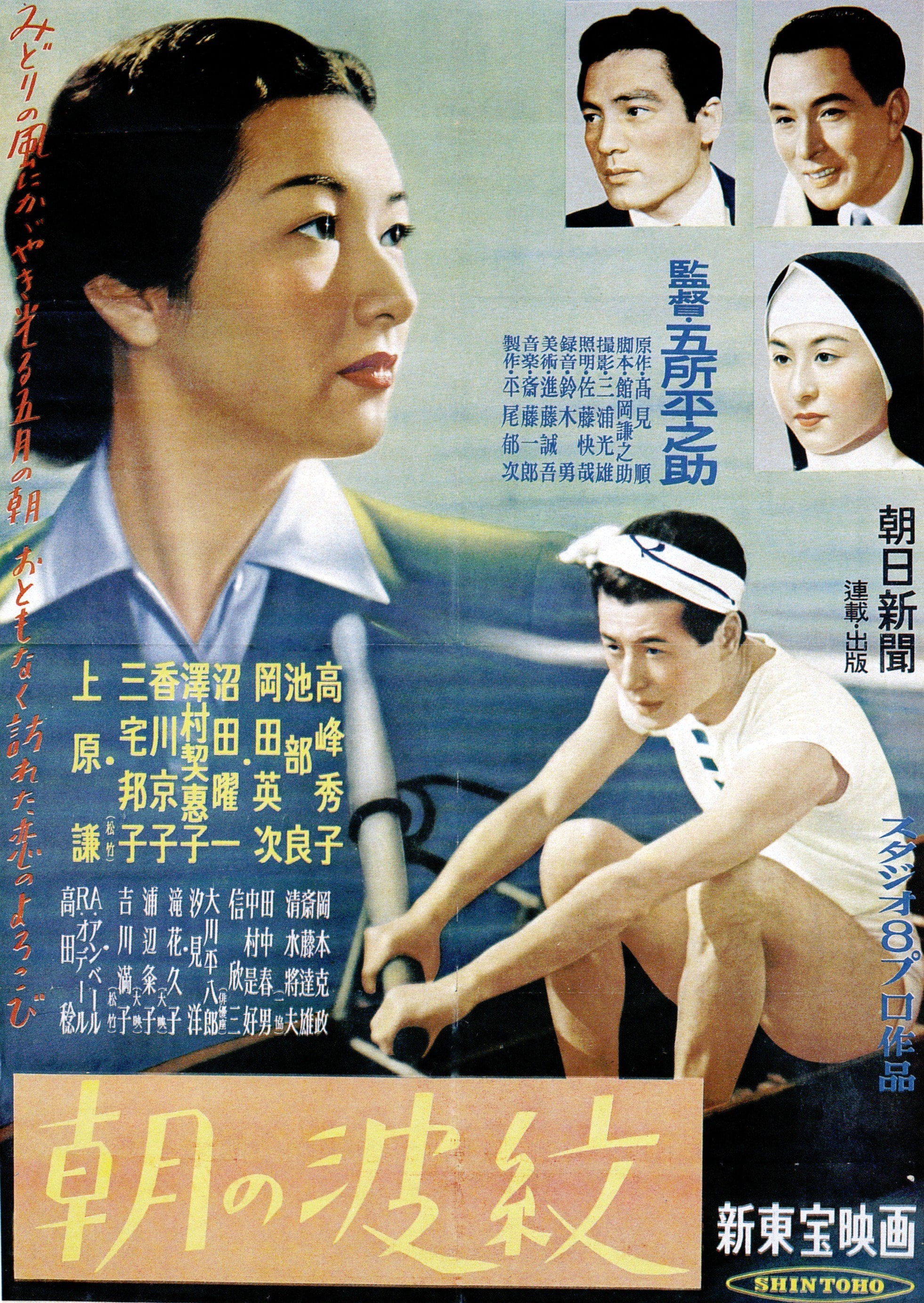
Atsuko is an office secretary who is also her family's primary source of income and caretaker in postwar Japan.
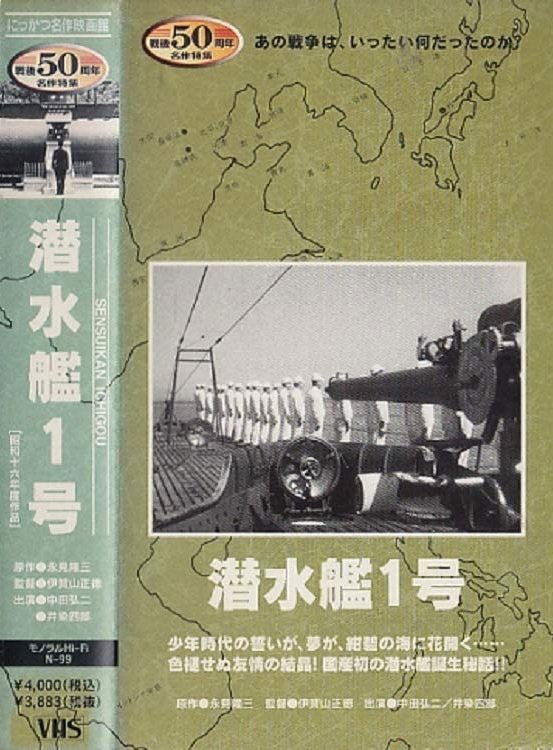
This film begins with a teacher describing to his students how brave the crew was which died as result of Japan's first submarine accident. The film then follows two of the pupils, one becomes a submarine captain and the other designs submarines.
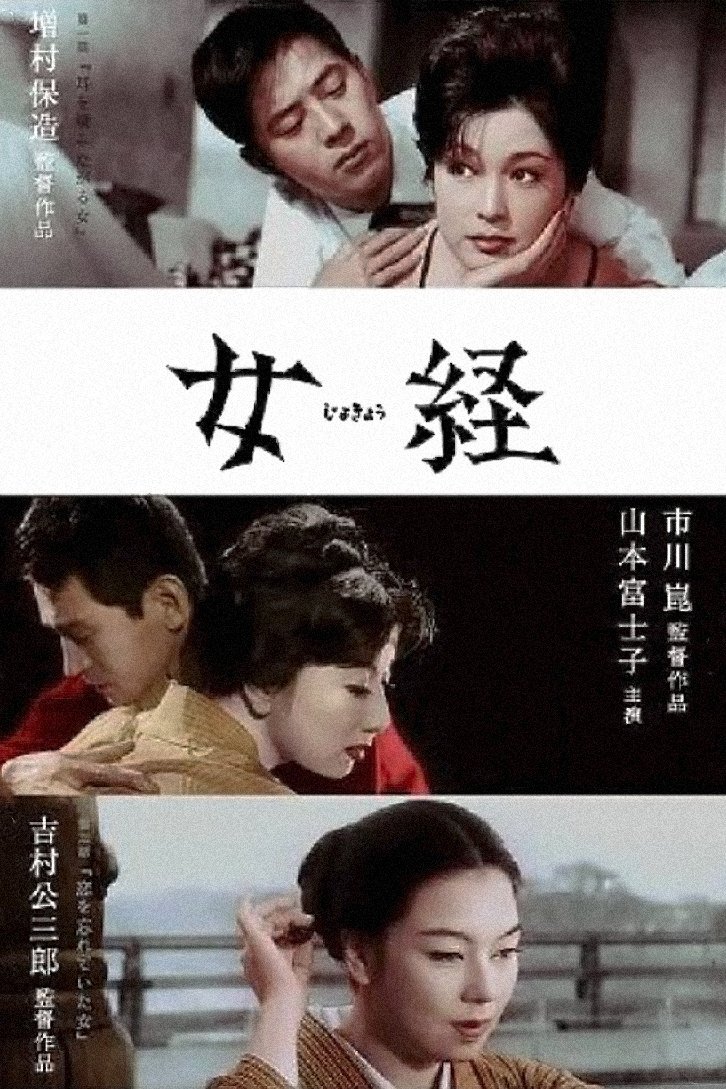
The first story concerns an attractive young woman who works in a Tokyo nightclub. Her plan for a solid financial future has a double whammy. In the second story, a beautiful young woman is employed by an unscrupulous real estate agent to convince male clients to invest in worthless property. The last story is about a widowed geisha who has no real financial worries and who falls in love with a forger.

When a corrupt magistrate rapes Oshima, Masa (Raizō Ichikawa) avenges her by killing the officer, becoming thereby a fugitive, haunted and grief-stricken by the fact that Oshima committed suicide. Going underground in the gambling world, perpetually hiding from the law, Masa eventually meets a young woman named Onaka, who looks exactly like Oshima. Tales having two look-alike heroines are a commonplace in Japanese period films, a plot affectation inherited from the kabuki theater. Based on a novel by Shin Hasegawa, Nakayama shichiri was already twice filmed in 1930, one version directed by Namio Ochiai, and from which less than 40 minutes survive, the other directed by Kyotaro Namiki. Both are silent films, preserved by the Makino film institute.
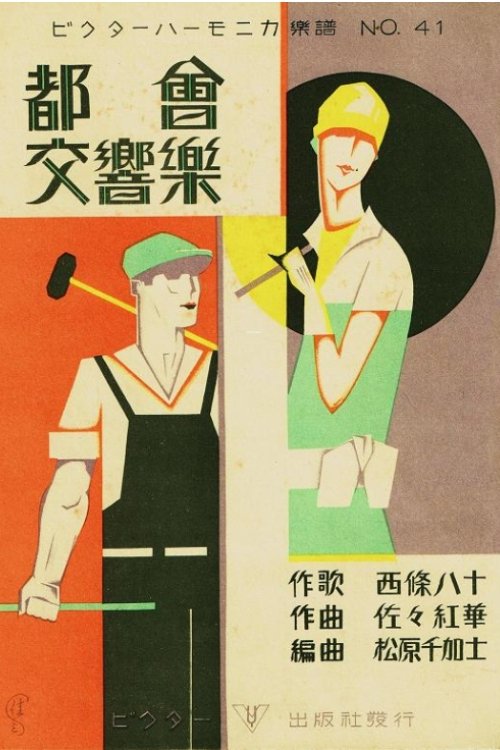
A young woman seduced by a rich man, takes revenge on him with the help of a young idealistic worker. Considered a lost film.
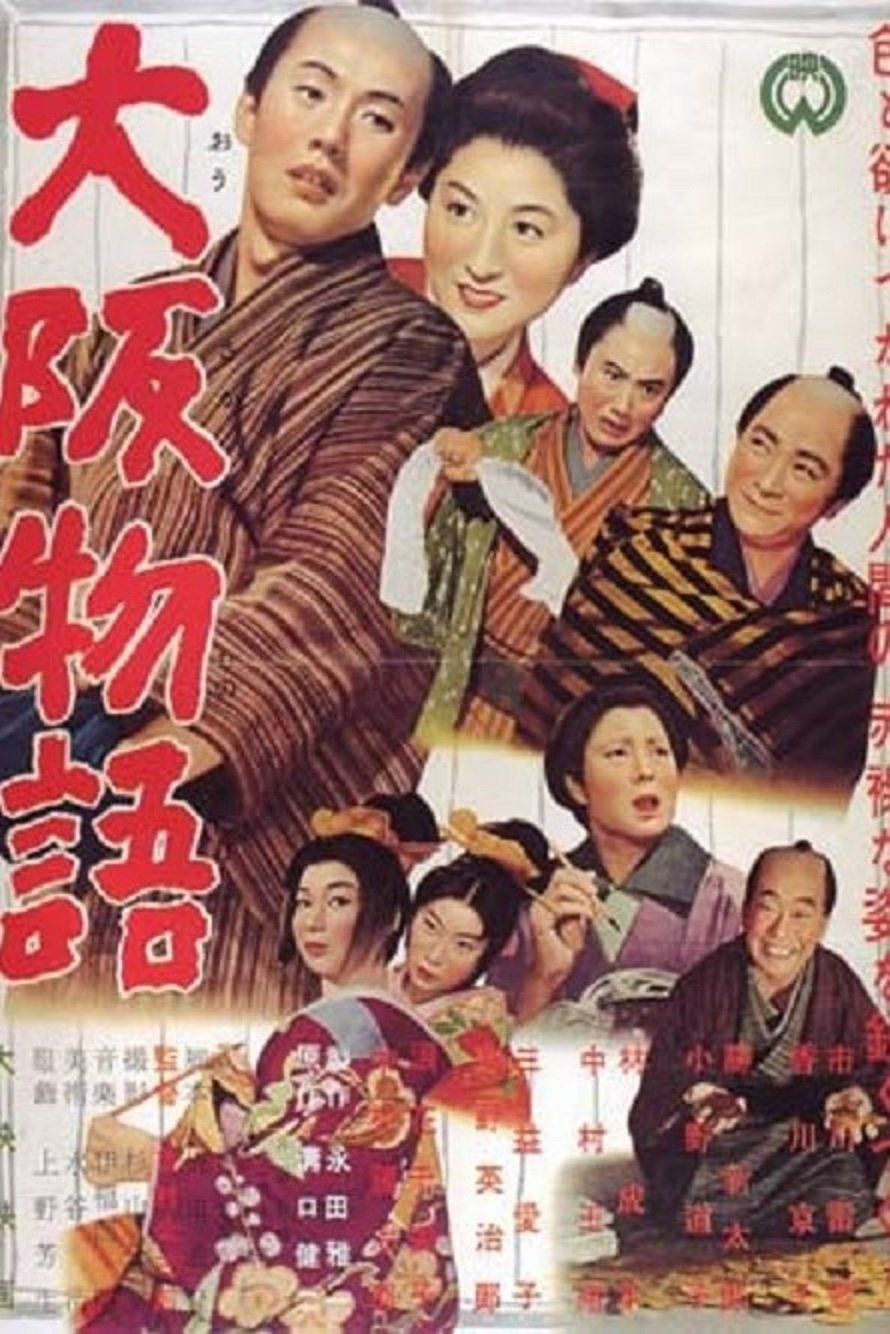
A poor peasant, after years of scraping, becomes a rich and powerful Osaka merchant. Mizoguchi Kenji's final project; he died before completing it and directing duties turned over to Yoshimura Kozaburo.
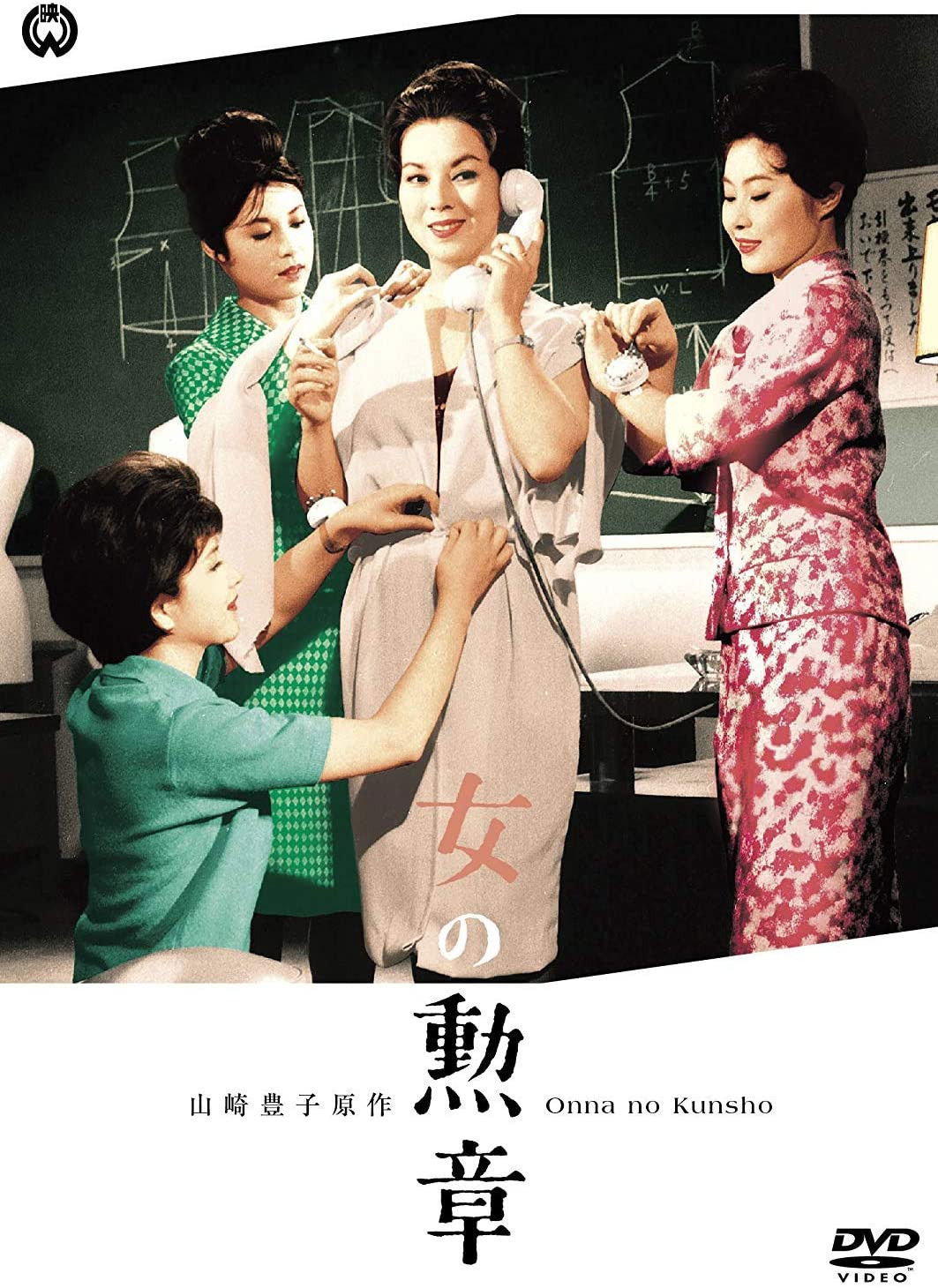
Shikiko Oba is nimble with her fingers and teaches dressmaking and designing. Among her pupils are Rinko, Katsumi and Tomie. Ginshiro, who is as shrewd as the shrewdest of the older generation of dyed-in-the-wool Osaka businessmen, steps into picture and Shikiko soon feels that he is indispensable to her. But the advent of a man in their midst breaks up the harmony that has existed among the four women, as gradually he forces himself on them with promises of love.
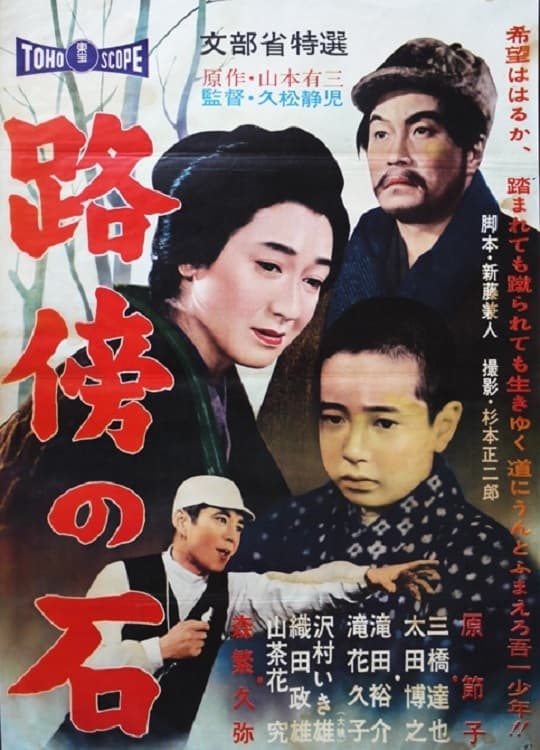
In Meiji era Japan a sixth grade boy is smart, likable and confident and owing to his academic success liked by his teacher. Things are not going well at home, however, where his father does not work leaving the mother to toil . With the boy's family having no money he cannot progress his education and has to drop out of school. A neighbour, who is a bookstore owner, offers the family money to allow the boy to continue his schooling, but the father is too proud to accept and rebuffs the offer forcing the boy to work.
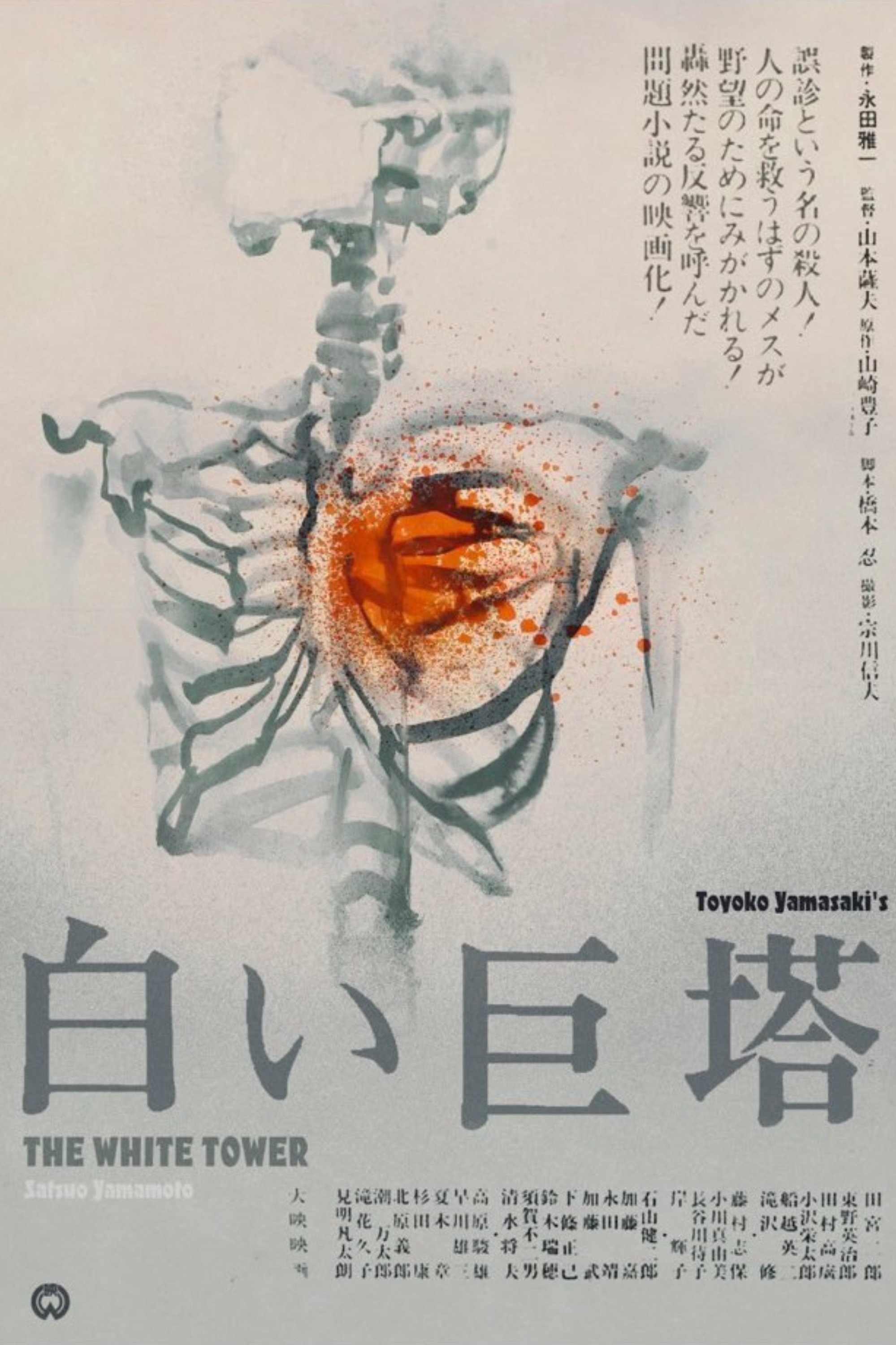
The story contrasts the life of two doctors, former classmates and now both assistant professors at Naniwa University Hospital in Osaka. The brilliant and ambitious surgeon Goro Zaizen stops at nothing to rise to a position of eminence and authority, while the friendly Shuji Satomi busies himself with his patients and research.
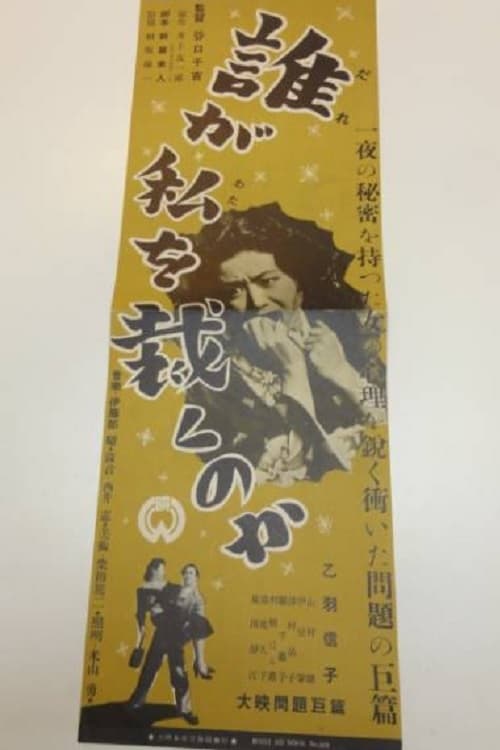
Directed by Senkichi Taniguchi
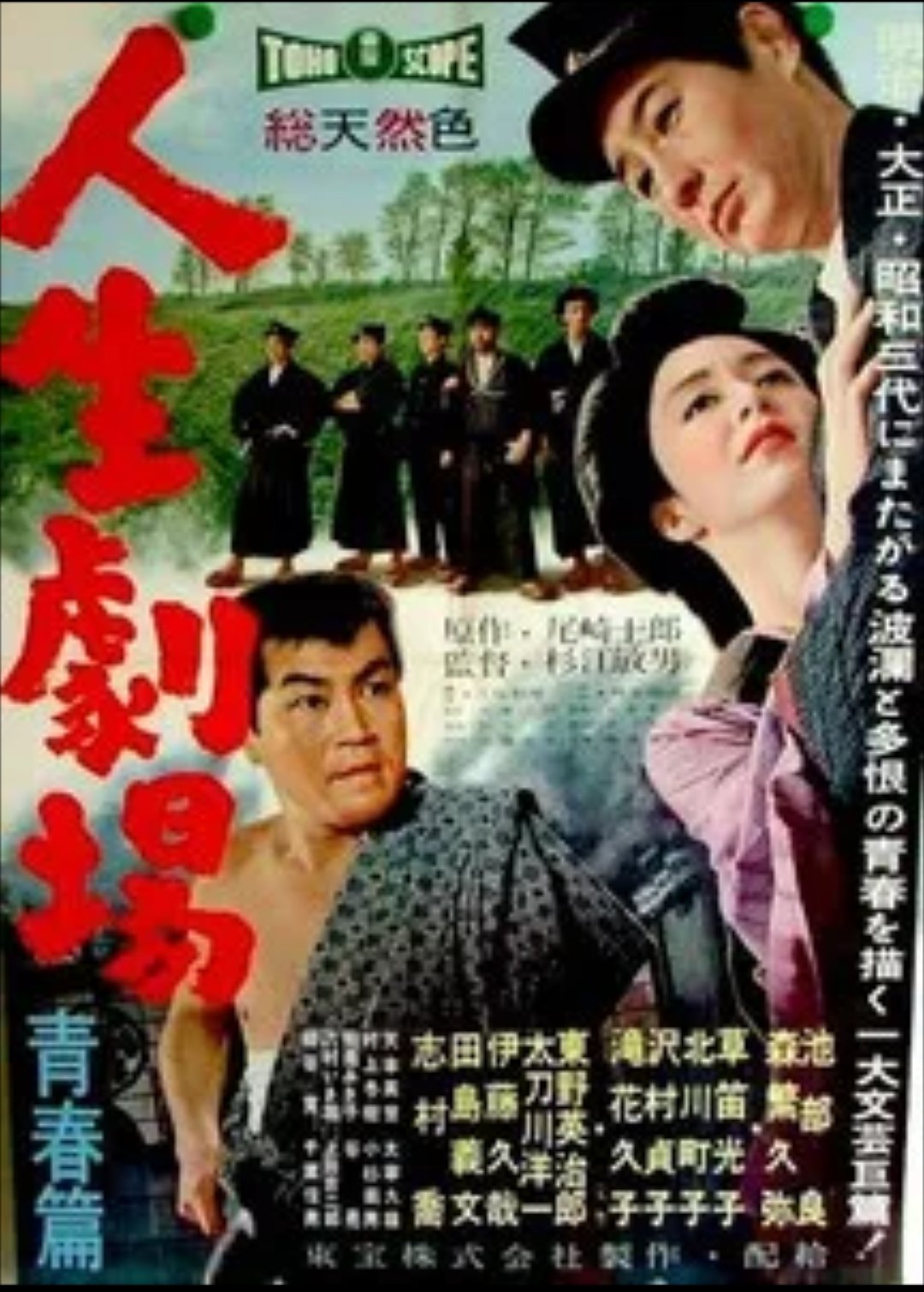
1958 Theater of Life adaptation.
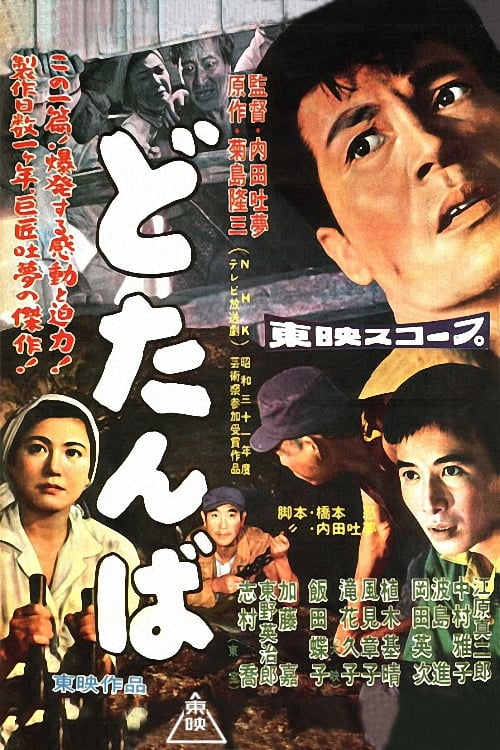
Based on a 1956 television feature on Japan’s national network, NHK, this is one of Uchida’s rarest films. A socially conscious drama with a contemporary backdrop, Dotanba focuses on the attempts to rescue a group of trapped miners. The title is a figure of speech — (essentially “last minute” or “eleventh hour”) — that refers to a situation of peril. The film boasts a script co-written by Uchida and Akira Kurosawa’s frequent screenwriter, Shinobu Hashimoto, and stars Kurosawa’s frequent star Takashi Shimura.
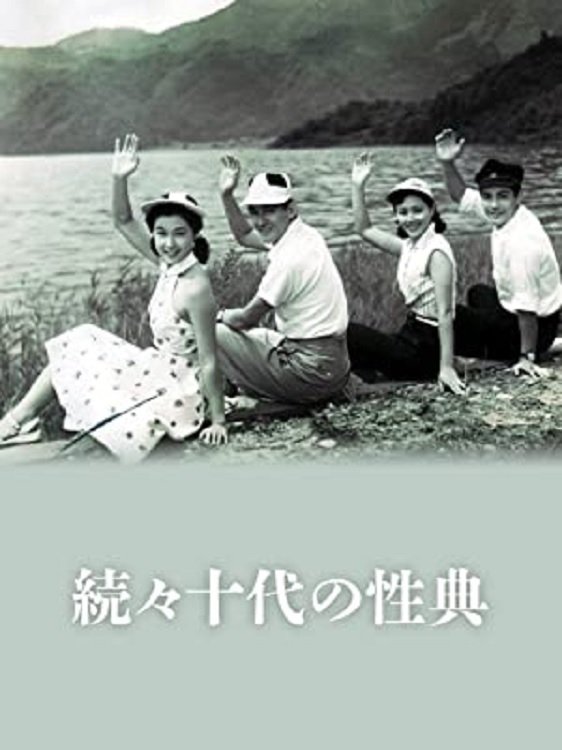
Film directed by Eichi Koishi and starring Wakao Ayako
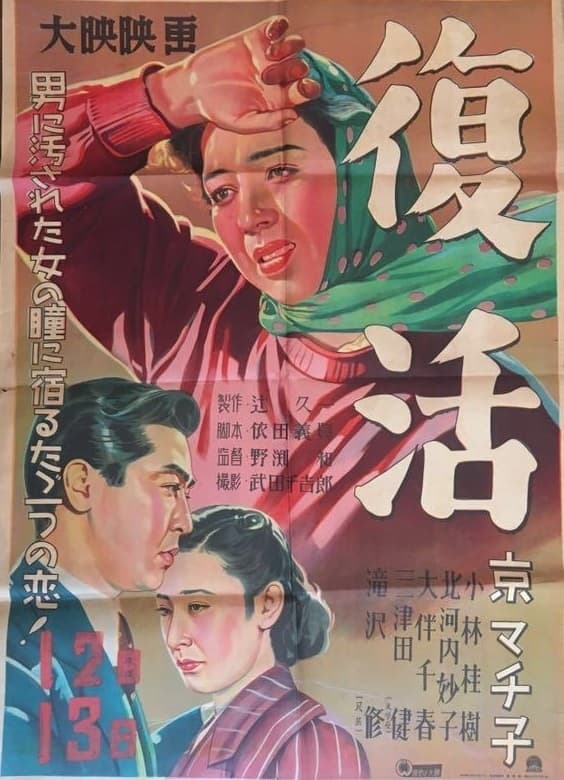
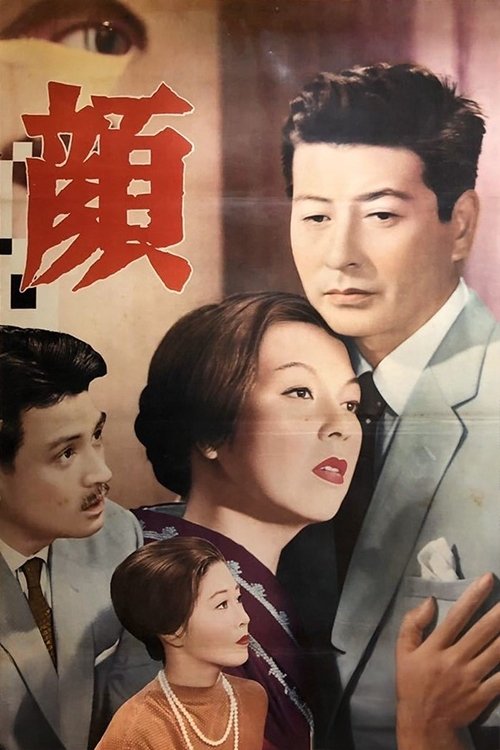
A girl marries her elderly employer but in reality is in love with his son.
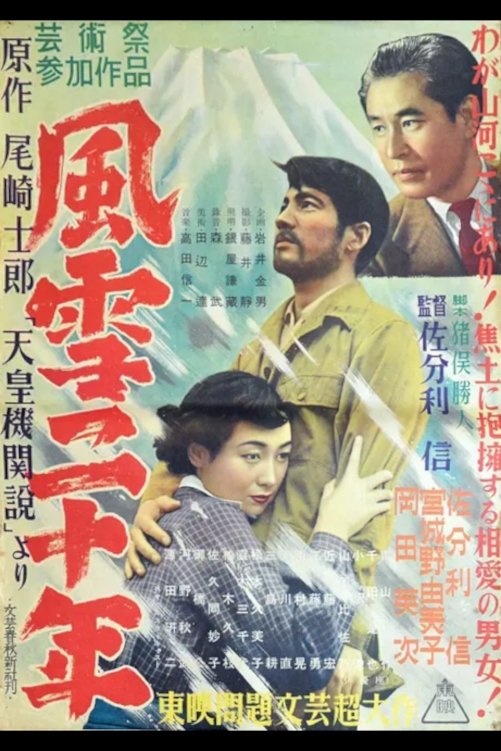
The Stormy Era of Twenty Years
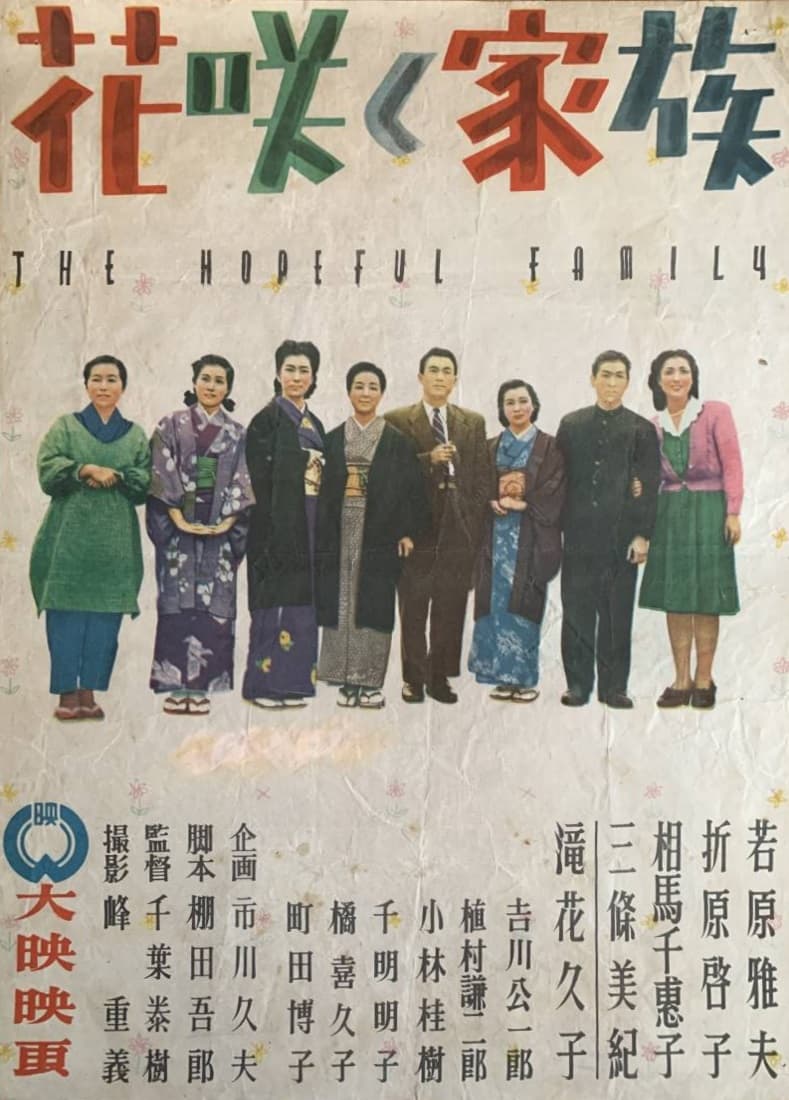
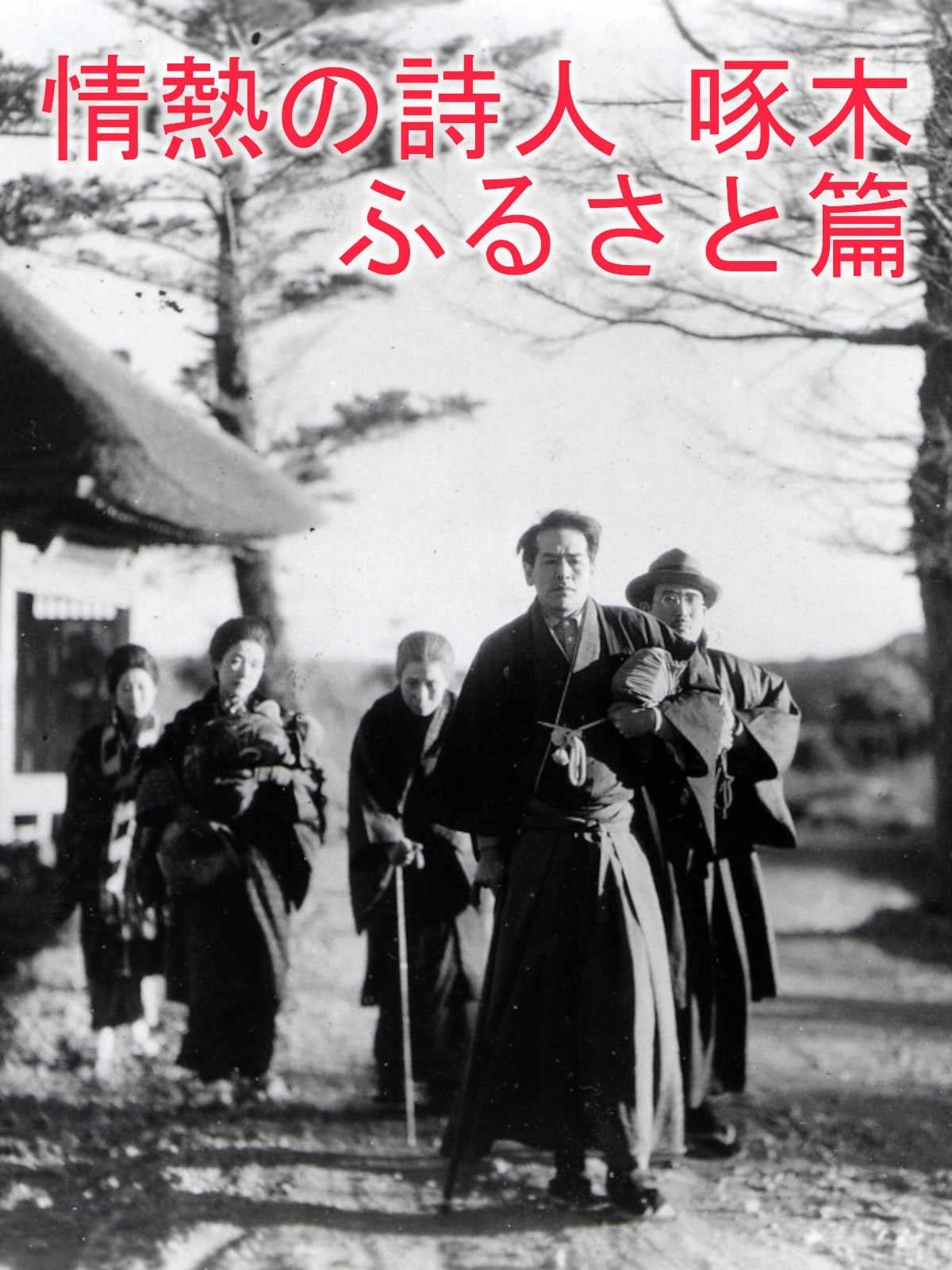
Film about poet Ishikawa Takuboku
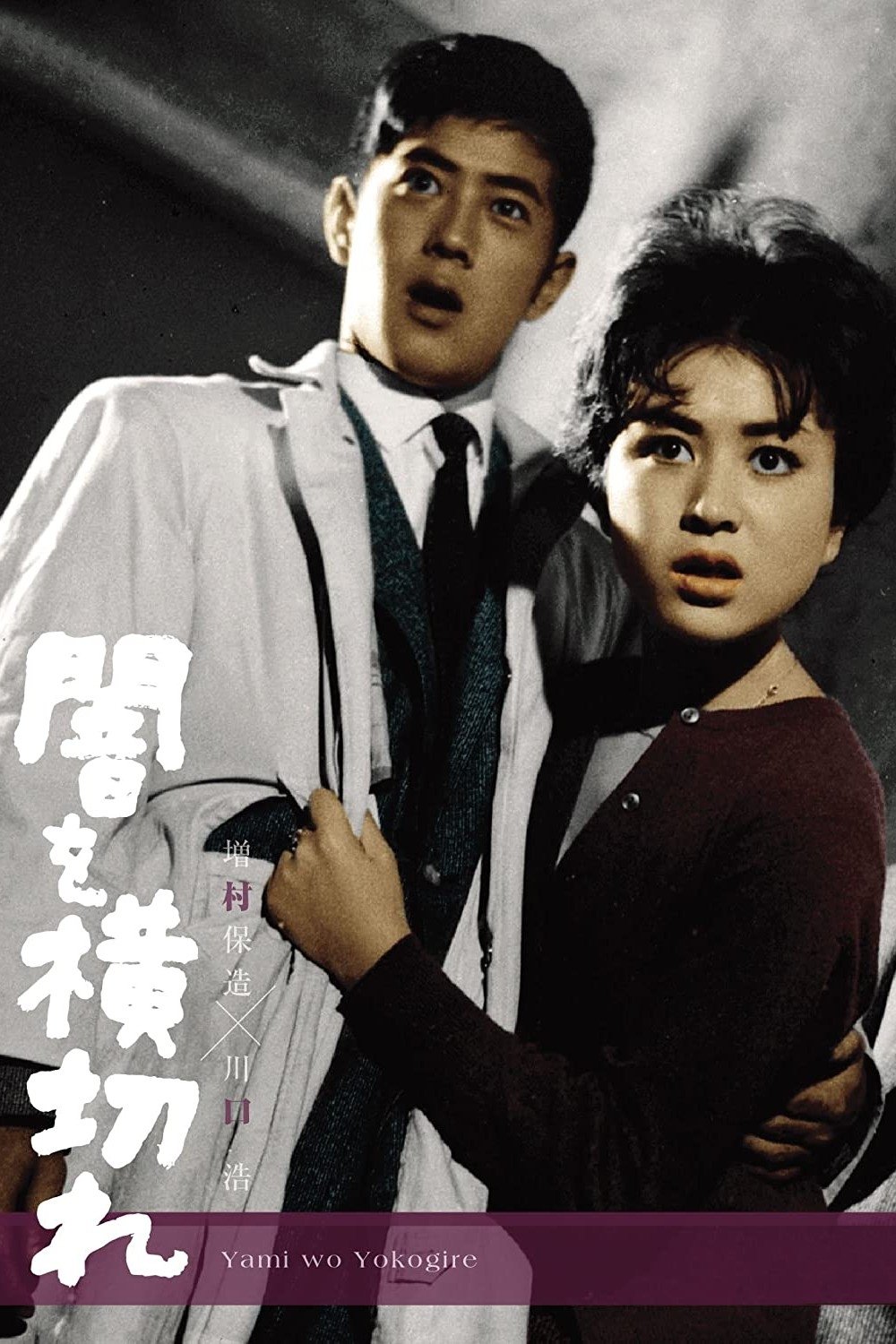
A journalist decides to do his own investigation after a series of strange murders are committed during a local election campaign.
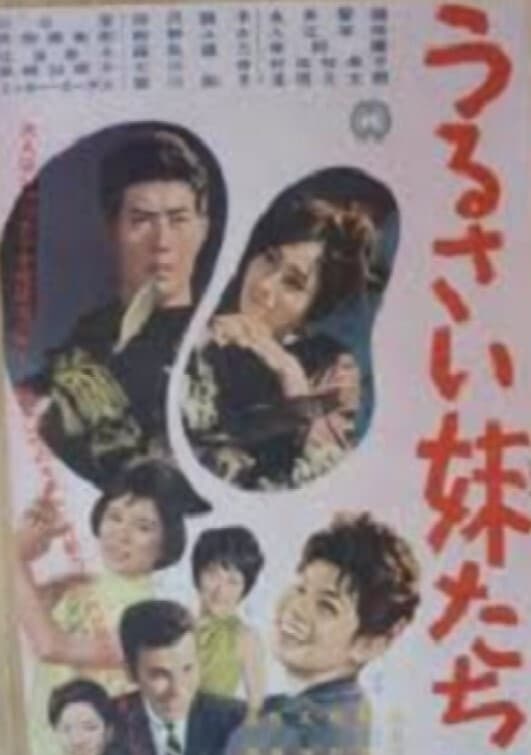
Obscure Masumura film shot in 1961.
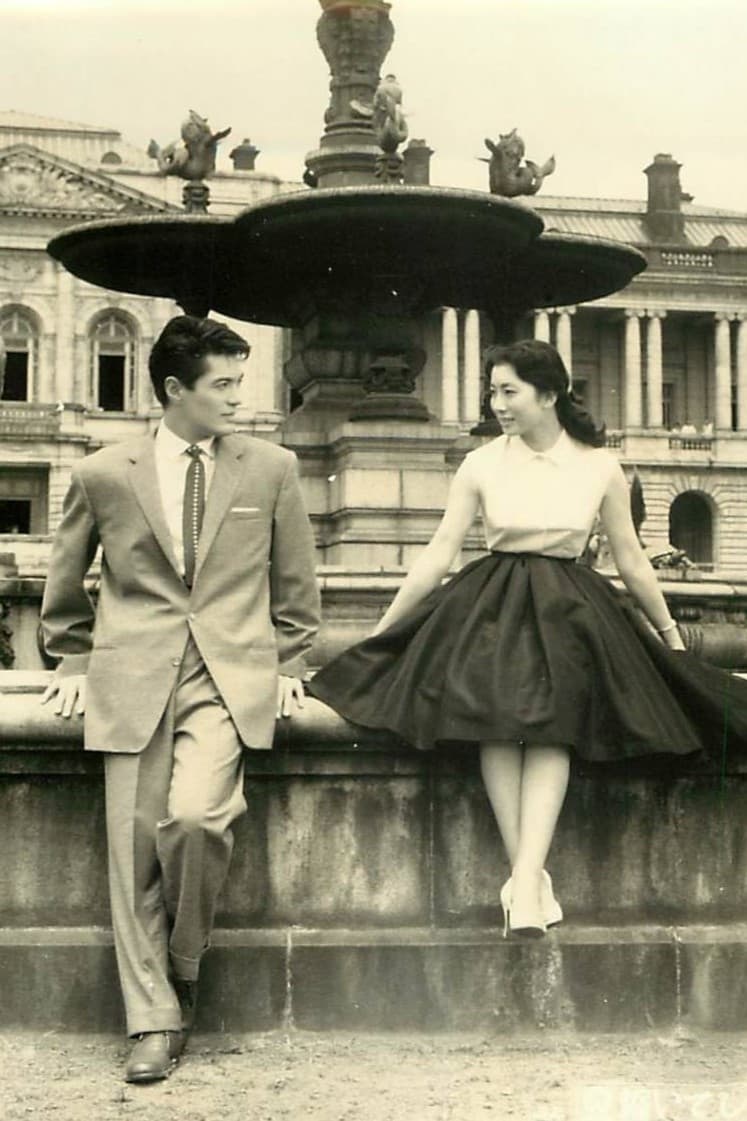
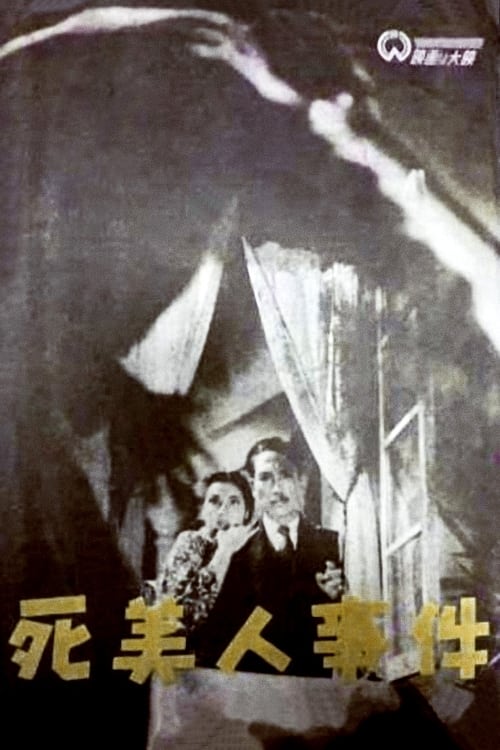
A dead beauty is found in the trunk. Kubota (Miaki), Okayama (Kawazu) and Tsuji (Funakoshi) begin investigating this mysterious crime at the investigation headquarters. Since the cause of death was poison gas, he asked Yusaku Tominaga (Tsukigata), a now retired drug crime specialist, to cooperate. Kubota and his friends soon find the house of the murdered beauty and upon entering, they are surprised to find another corpse, this time of a man…

The biopic of Shigenobu Ōkuma, one of the main Japanese leaders at the turn of the 20th century, a supporter of rapprochement with the United Kingdom, and who brought his country into the Triple Entente against the German Empire.
Tradition and modernity clash when a young woman inherits a sweet-making firm in Kyoto.
A bright and cheerful story about a young girl who comes to Tokyo from the countryside, relying on her aunt to become a maid, and willingly aspires to become a maid and lives a healthy life despite the hardships she encounters with people from all walks of life. Ririko Tachibana moved to Tokyo in reliance on her aunt Motoko, who lives in Tokyo. When Ririko leaves her classmate Chizuko Misawa, who says she is going to rely on jazz singer Michi Nozoe, and arrives at her aunt's house, she is disappointed to find that a job has been arranged for her as a nanny. Her dream of attending night high school was dashed, but Ririko made up her mind to do her best to do as much as she could. The Honbashi family, where she was employed, lived alone with the widow Shinae, and Mrs Shinae was asked to go to her daughters' house to help out...
1956 Japanese movie
1956 Japanese movie
Genji, the illegitimate offspring of a Japanese potentate, goes by the philosophy of "love 'em and leave 'em" as a matter of course. Only when his heart is broken by Awaji does Genji realizes how much pain he himself has caused.
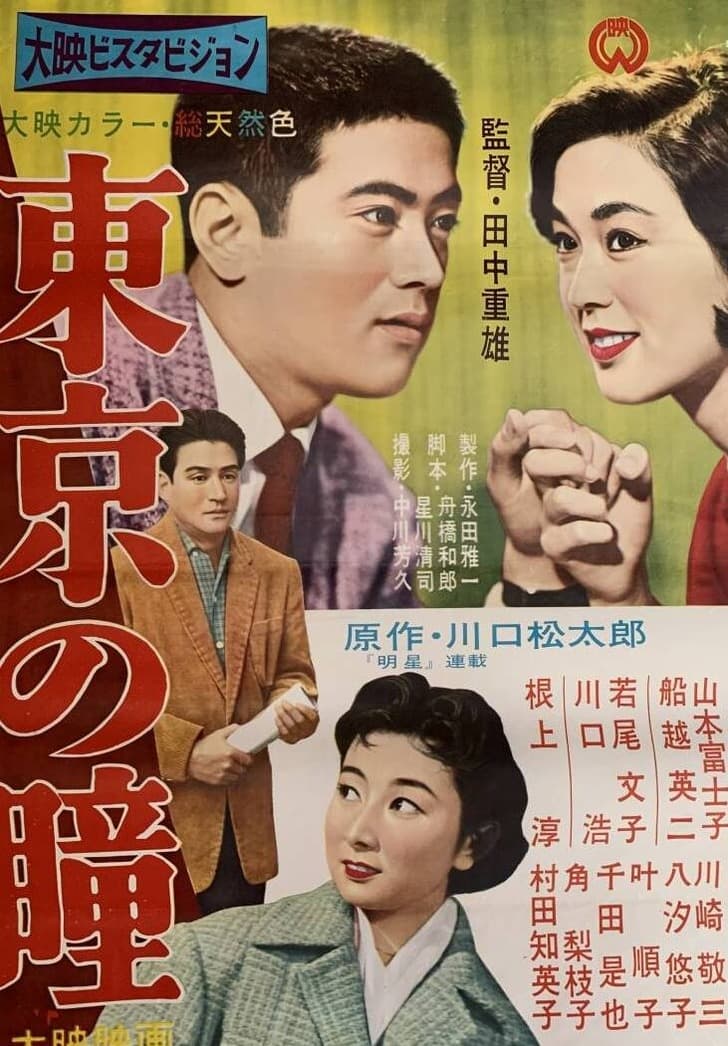
A beautiful older sister and her younger brother, both designers who paint the dreams of young hope, are paired with an innocent young artist and the daughter of a company president, creating a miniature picture of the youth of Tokyo that revolves around these four characters.
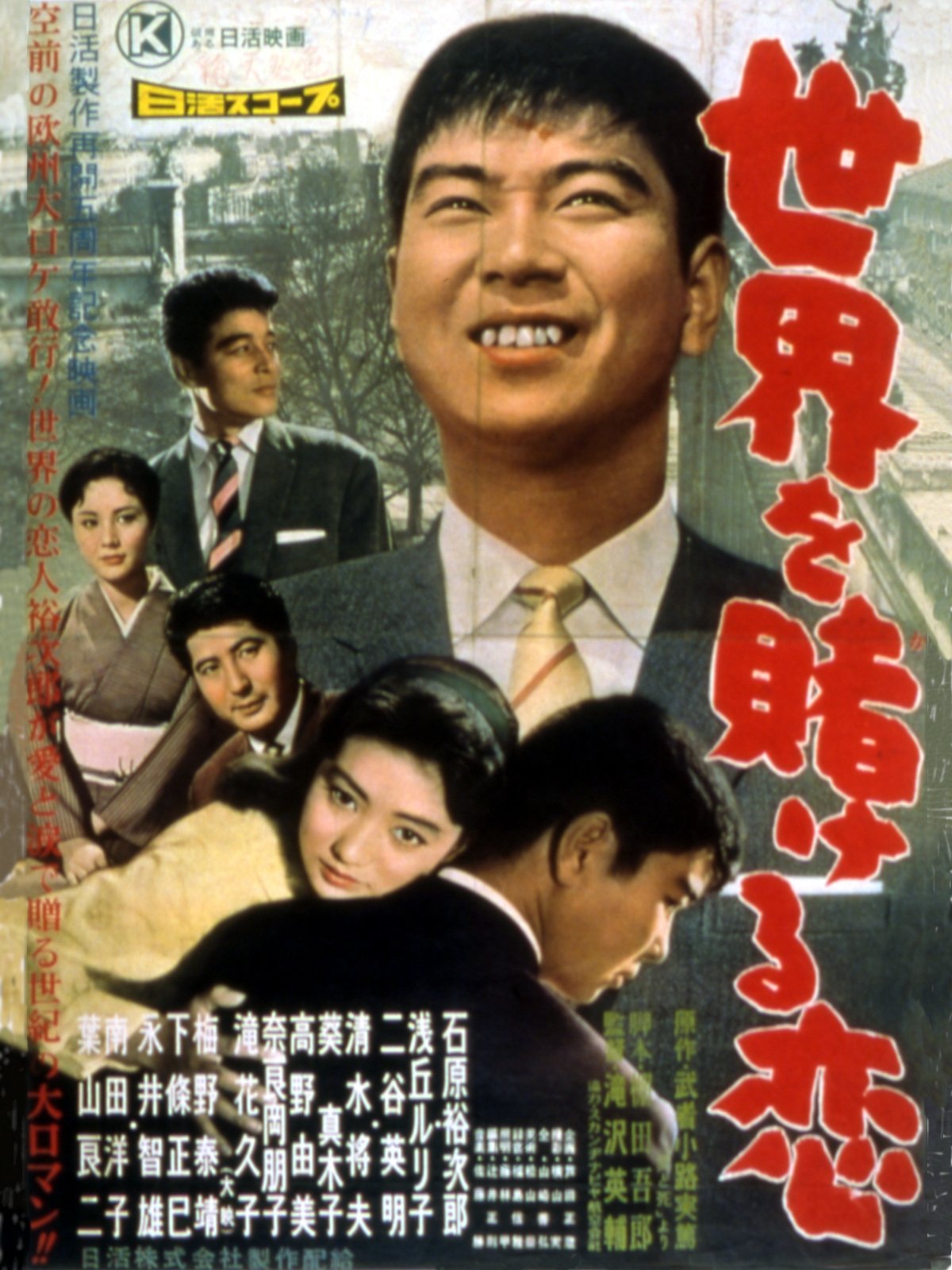
The first time that up-and-coming architect Yuji Muraoka (Yujiro Ishihara) met Natsuko (Ruriko Asaoka) was at a contemporary art exhibition at the Ueno Museum of Art. At the time, he didn't feel anything special about her, other than being impressed that she was the younger sister of the respected Nonomura-san. Later, at Nonomura's birthday party, some people who were jealous of Yuji's talent tried to embarrass him by forcing him to perform a hidden talent show, and Natsuko quickly came to his rescue. This incident caused the two of them to become much closer...
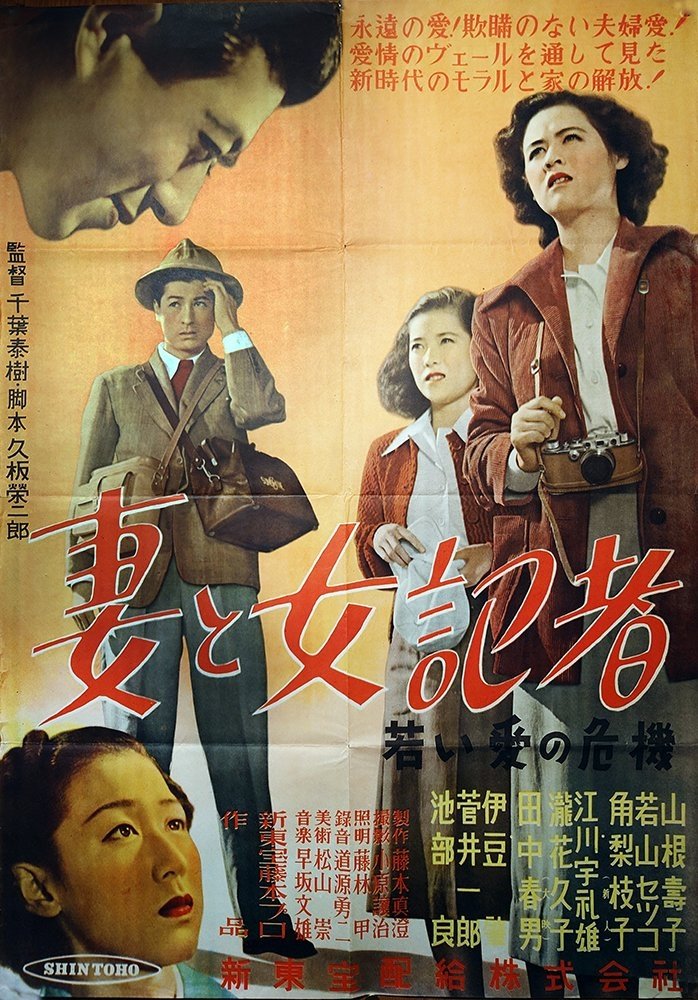
Even a peaceful married life has its dissatisfactions. Then a female reporter appears, and love takes a complicated turn!
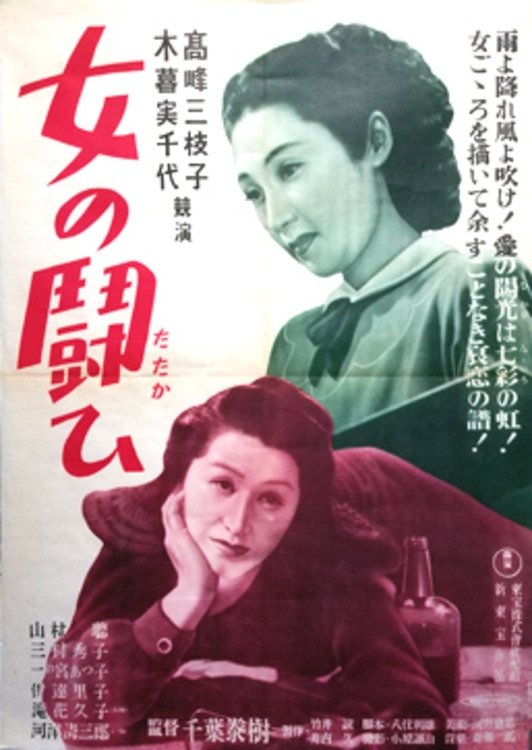
Yumiko, the president's daughter, meets a suspicious woman after her wedding ceremony with Tamio.
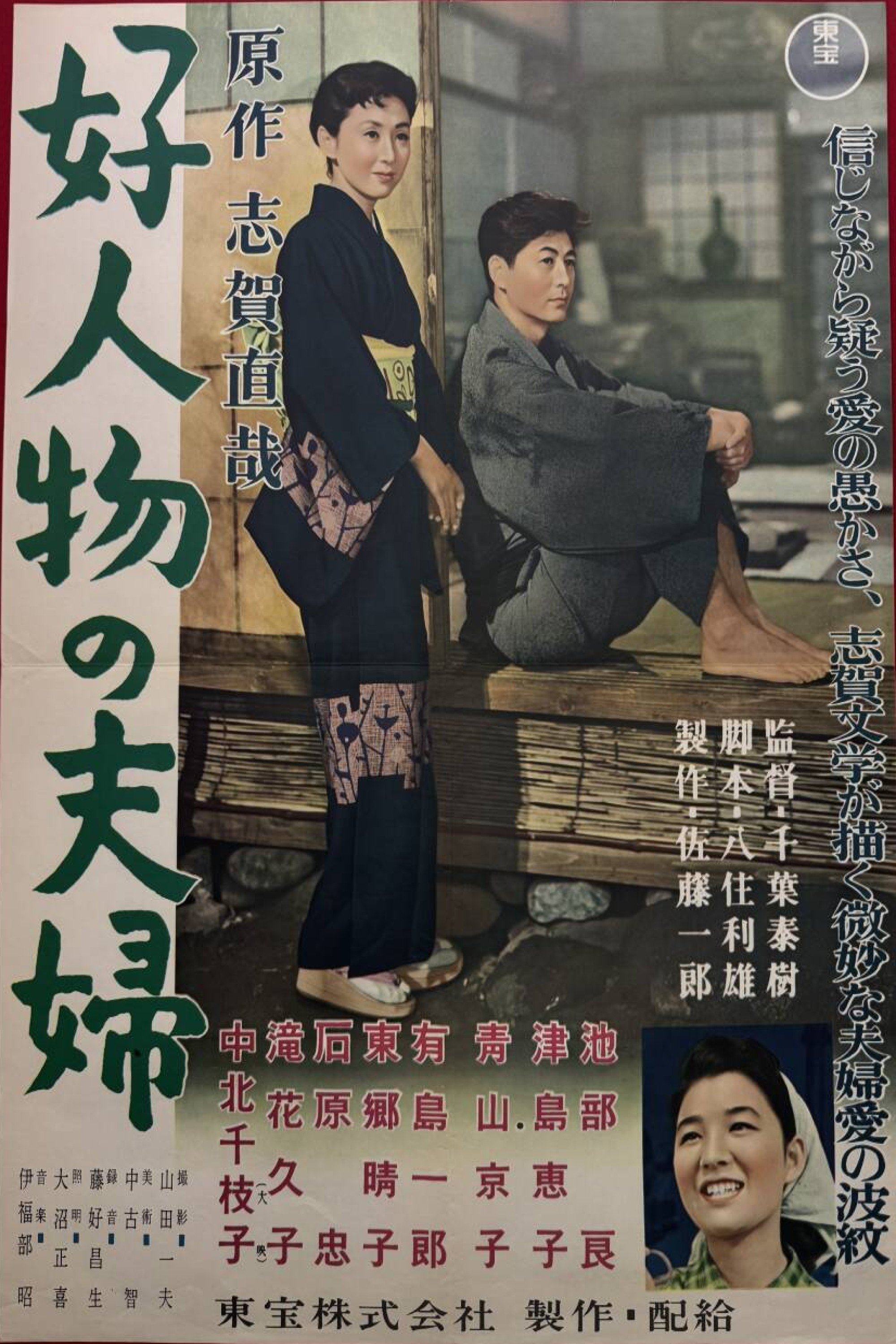
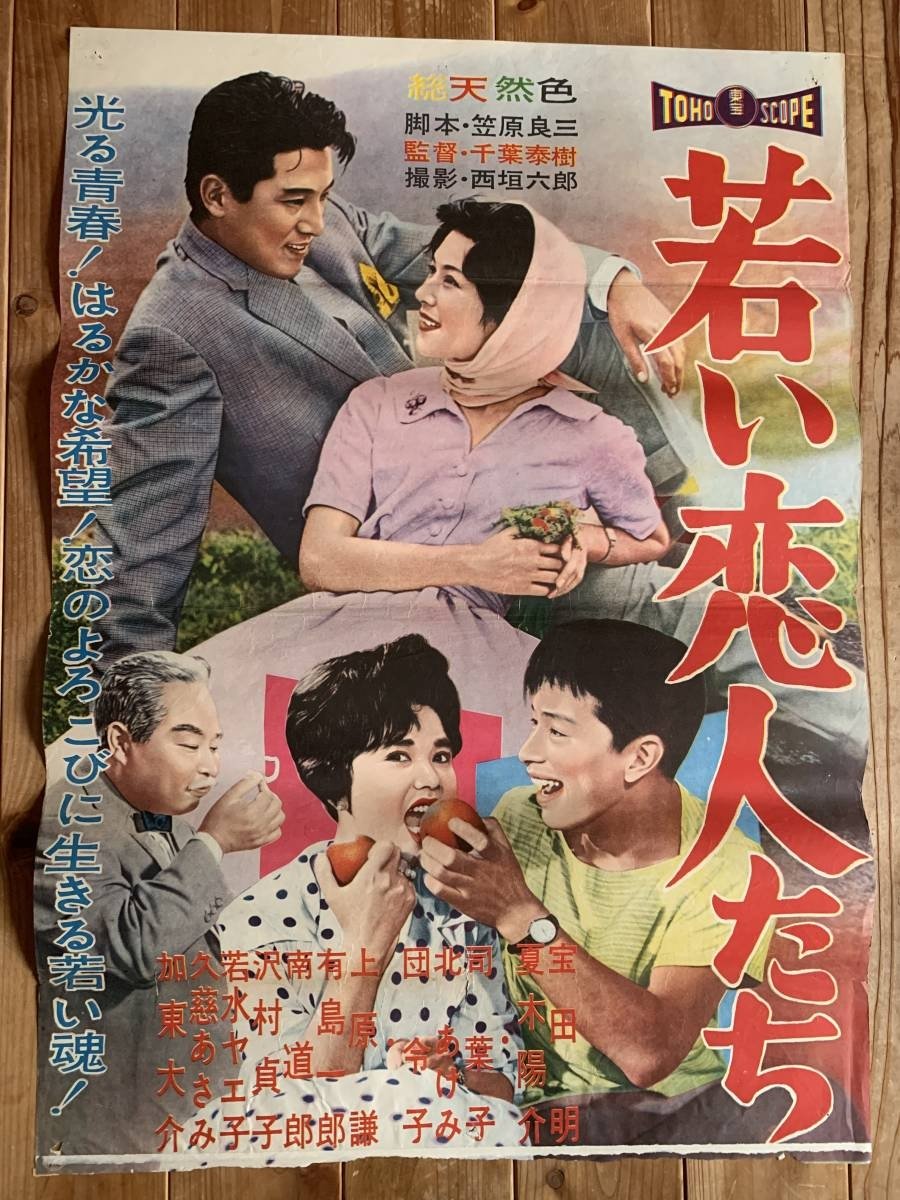
Engineer Shuichi defies his wealthy family to live with bar hostess Kazuyo, whose loyalty to her struggling family complicates their love. As class, pride, and temptation test them, true affection proves stronger than circumstance.