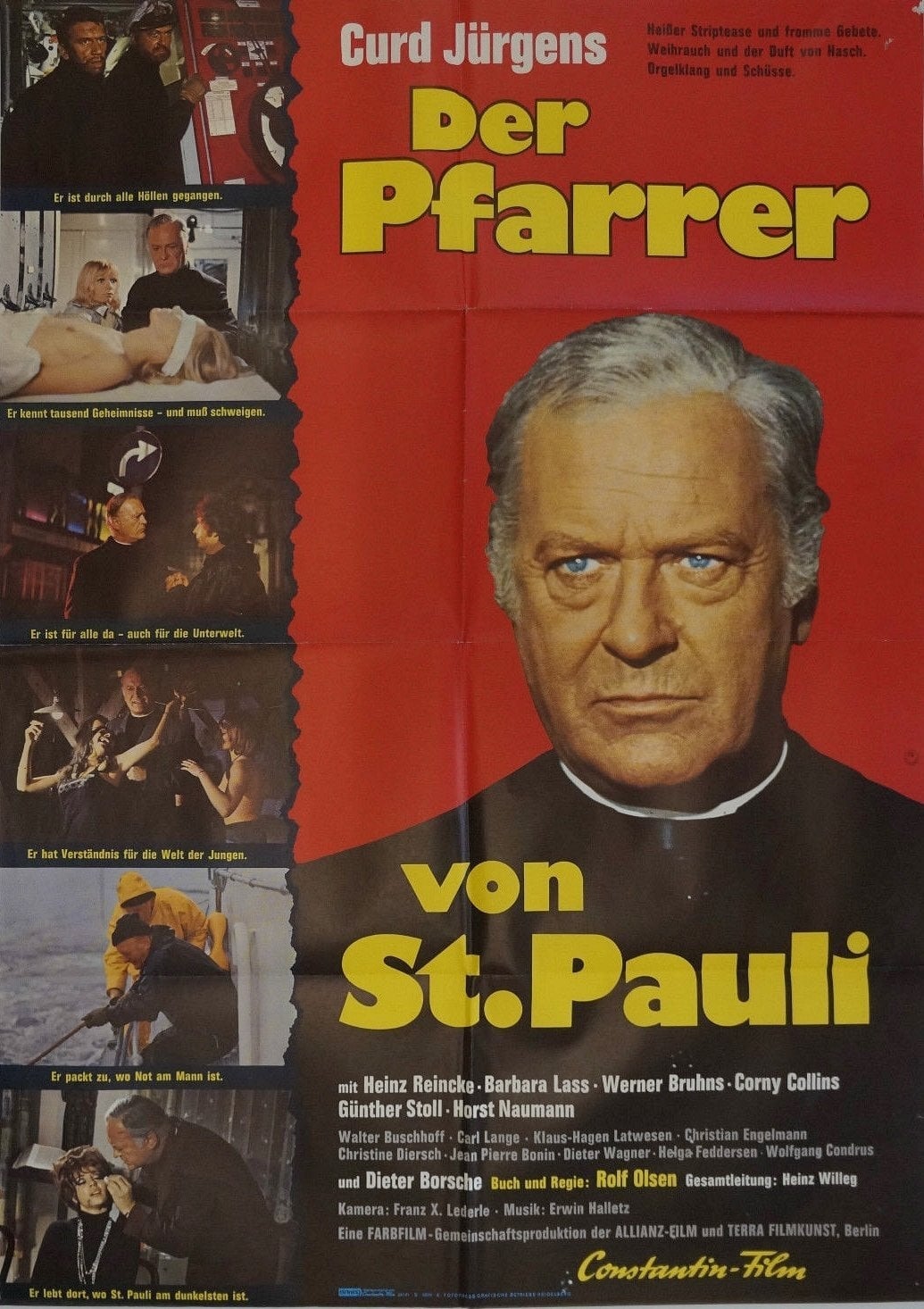
A former U-boat commander becomes a pastor to ease the suffering of young Hamburg women in trouble.

Several employees on a nobleman's estate show up at a former abbey, reputed to be haunted, to search for a hidden treasure. Howver, a mysterious hooded figure begins killing off those who may have figured out where the treasure is hidden.

A good doctor is out to stop his evil doctor brother from blackmailing his patients.

When a villain named "Der Schut" terrorizes the constituents of Albanian country, which he rules, heroic Kara Ben Nemsi and his sidekick are the only ones who can stop him.

A disfigured killer with glazed-over white eyes is doing the dirty work so that an insurance agent-doctor can get the victims' insurance money.

A lord’s servant, Ali Baba, is sent to retrieve a slave for his master, but ends up on an adventure filled with gold, mischief, love, and forty famous thieves instead.

A masked killer is stalking and killing Londoners outside a nightclub.

In the second half of the 18th century, the young shepherdess Emma accidentally catches the eye of the English painter George Romney. She becomes his model in London, where she also has several love affairs. After she is temporarily forced to work as a prostitute, she marries the much older Lord William Hamilton, who is stationed as British ambassador in Naples. There she meets Admiral Nelson again, whom Emma, now Lady Hamilton, had met years before...

The spirit of the evil Dr. Mabuse takes over the body of a famous professor. The professor/Dr. Mabuse then begins a new crime wave that terrorizes the city.

After dealing with the Shut in the Balkans, Kara Ben-Nemsi ('Karl the German') receives a firman (precious passport) from the padishah (Ottoman sultan) before he continues his travels through Kurdistan. Achmed El Corda, the son of Halef's Hadedhin Beduin tribe's sheik Mohammed Emin, has been captured by the machredsh (Turkish governor) of Mossul for resisting water seizure by his Turkish troops. Kara takes charge of the rescue.

Kara Ben-Nemsi, friends and rescuers set out to free a young relative of the guardian of the treasure of the Chaldaeans (Christian sect), who is captured for that fabulous ransom.
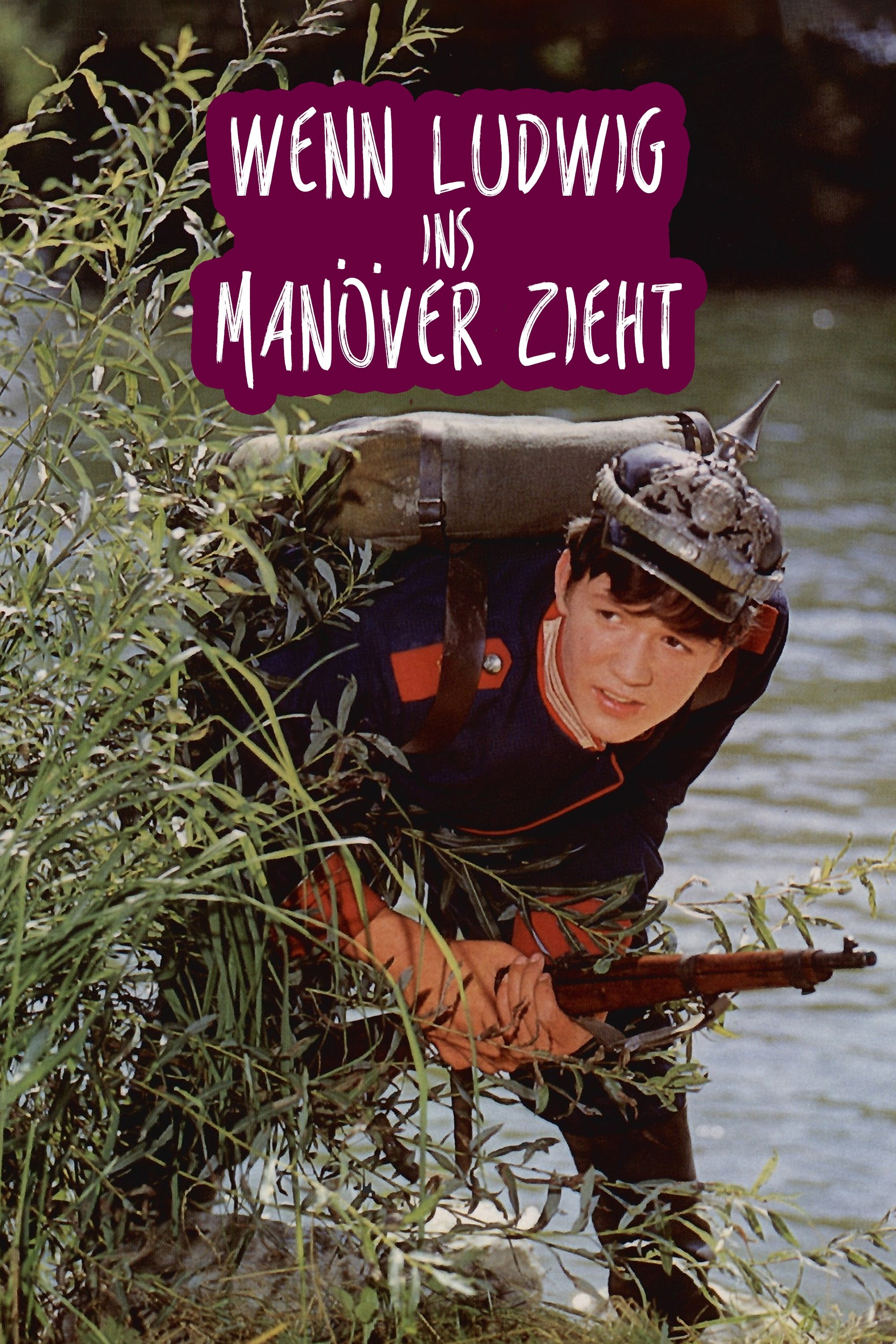

A German soldier home on leave falls in love with a girl, then returns to World War II.

A serial killer is on the run, after escaping a mental institution. He befriends a woman and her child, but the urge to strangle women with red necklaces still haunts him.

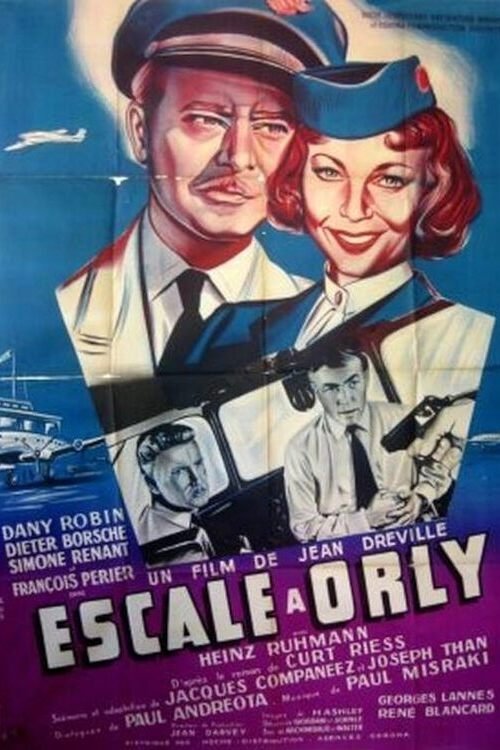
Michèle, an employee at the airport, is in love with American pilot Eddie Miller who regularly flies the route from New York to Paris, but problems arise when he is transferred to the Tokyo route. Meanwhile Michèle's uncle Albert who works in the freight department sets out to tackle a drug trafficking outfit.

A woman with a troubled past connects with two refugees while working at a homeless camp after World War II.


Two out of work musicians put on drag to get work in an all girl band. Inevitable comical romantic complications ensue.

A doctor marries his seemingly incurable patient to fulfill her last wish. A serum he develops saves her, and the union born of compassion develops into a loving marriage.
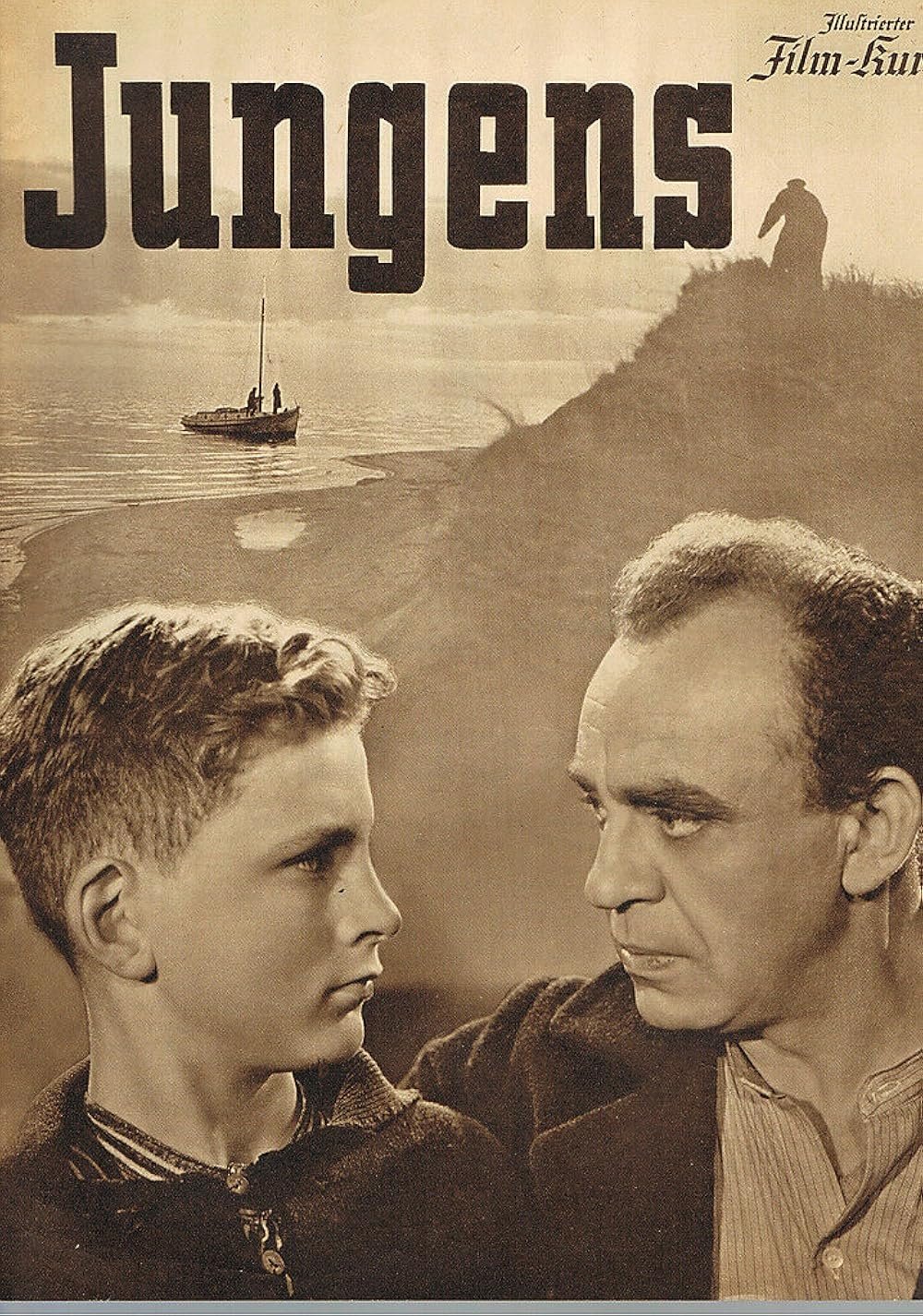
The keywords for this film are comradeship and trust among the youth of a small village on the Baltic which is firmly under the control of an innkeeper, Ottokar Waschke. Waschke owns the only tugboat in town, which the town's fishermen, who make up the majority of the employed, need to transport their catch. So he forces them to sell their fish for a pittance, which Waschke then re-sells at an enormous profit. In the meantime, a big-city teacher, Helmut Grundel, comes to the village and discovers Waschke's little game. Grundel wants to form a collective, so that the fishermen can become independent from Waschke and this makes Waschke into a dangerous enemy. When the young Heini, son of a dune-patrolman, discovers that canisters of liquour are being smuggled into Pommern under Waschke's watchful eye, Waschke threatens Heini, that he'll turn his father into the police, with the baseless accusation that daddy is behind the smuggling operation.

An American heiress in Europe falls in love with a German prince, but he is required to marry someone else for reasons of state convenience.


Melodrama set during wartime.
The Thorwald family is well-off and contented when a tragedy strikes: the father is killed in an accident. Miss Thorwald takes over the raising of her children, four girls and two boys with the youngest already fifteen years old. She manages to keep them together in spite of the fact that their economic situation deteriorates after World War I. Never one to look too critically upon her brood, the woman undergoes a moving and gradual transformation as the adult activities of her children bring home the fact that none of them are what she had once imagined.
A young man practices medicine without a licence.

Based on the novel by Friedrich Gerstäcker, the film, set entirely in the state of Arkansas, tells of the conflict of interests between the local townspeople and homesteaders on the surrounding land, miners arriving during the gold rush, cowboys and cattle thieves who cause problems in the area, and the native tribes of the region. Two adventurers arrive in town and try to restore peace to it and its inhabitants.

Directed by Harald Braun and told from the perspective of Bertha von Suttner, the first female to receive the Nobel Peace Prize, The Alfred Nobel Story - No Greater Love chronicles the life of scientist, inventor, and businessman Alfred Nobel. Nobel built a massive fortune throughout his life, and while much if it was amassed by his inventions--dynamite being perhaps the most notable--he was also revered for his discoveries within the fields of science and economics. Upon his death, Nobel decided that his fortune was simply too great to continue in the form of an inheritance or single charitable donation, opting instead to use the money as reward for the greatest contributors to physics, chemistry, medicine, literature, and, of course, peace.
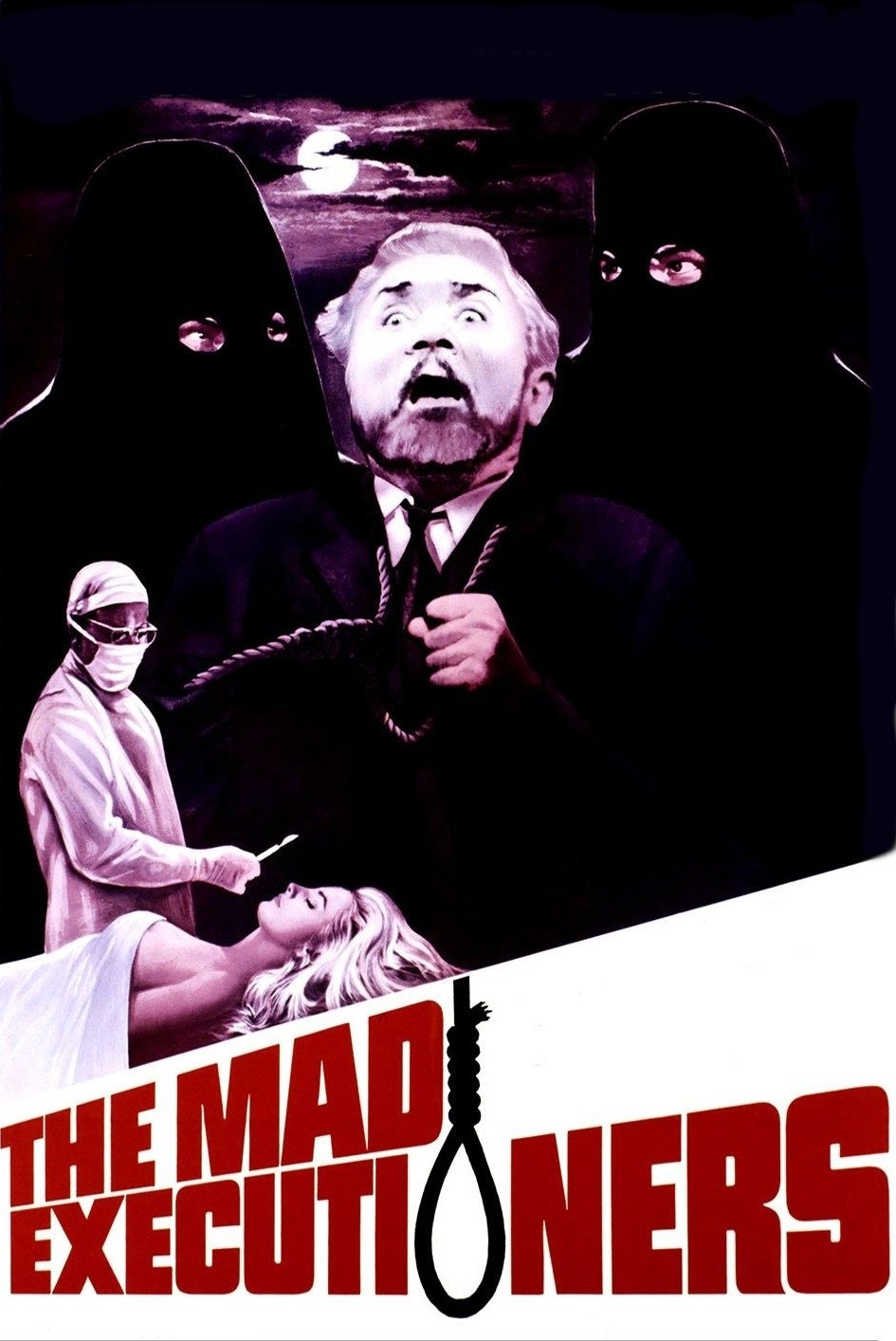
A group of hooded vigilantes hang wrong-doers with a rope stolen from Scotland Yard's Black Museum.


The inhibited, uptight Irene Wagner must take over running the seedy dance club the Green Cockatoo or lose her classic dance studio to creditors.
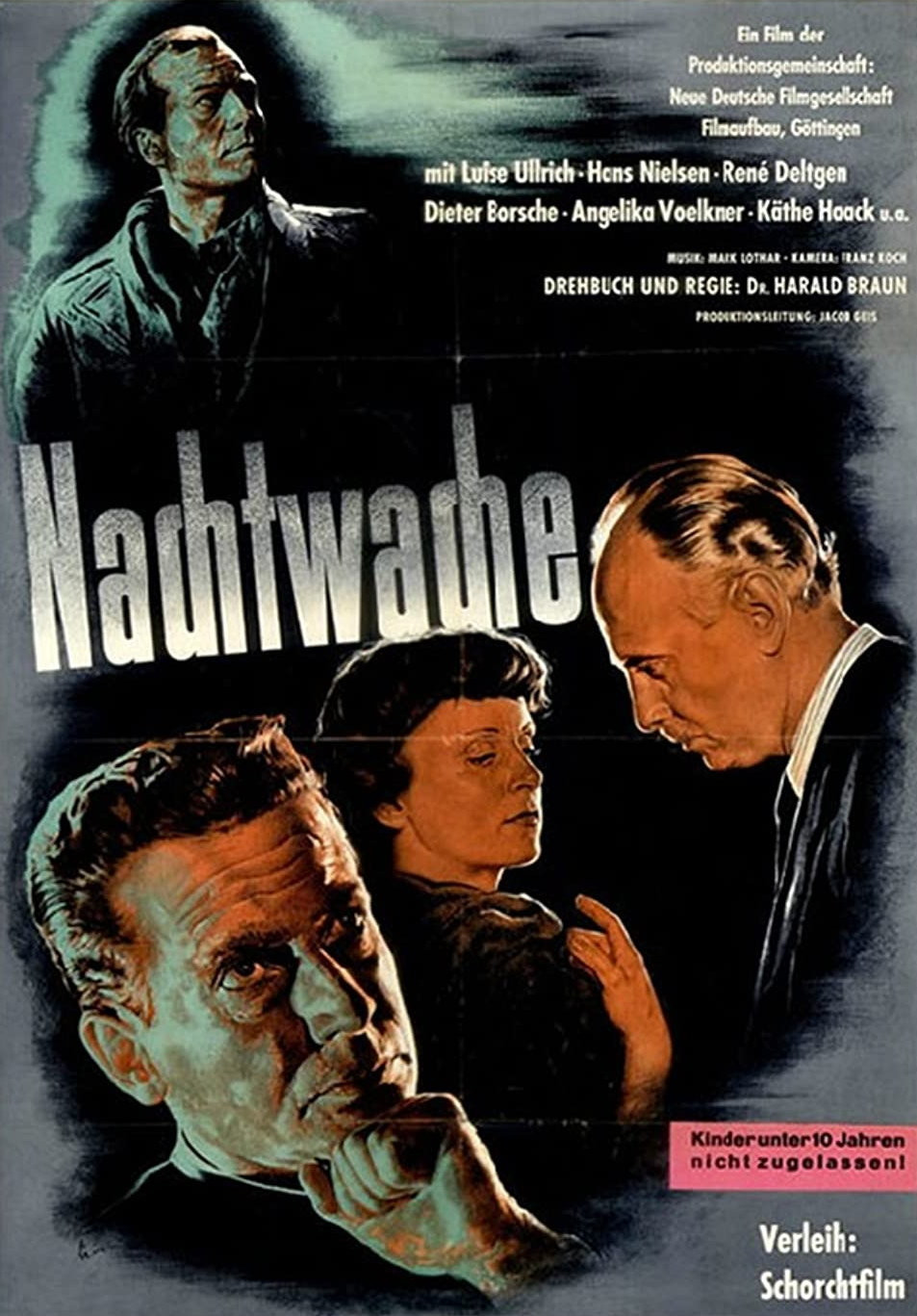
In a hospital, the Protestant pastor Heger and the Catholic chaplain von Imhoff are responsible for pastoral care. Cornelie, a senior doctor, has lost her faith in God after the death of her daughter in the war. One day, Cornelie's former lover and father of her deceased daughter, the actor Gorgas, turns up to visit his friend von Imhoff. During these days, Gorgas invites Heger's ten-year-old daughter to visit him at the fairground, where she has a fatal accident on the swing boat. Hegers seems to be broken by this stroke of fate, but finds support in von Imhoff, who even gives him the strength to stop Gorgas from committing suicide. Cornelie regains her faith and stays with Heger.

The film depicts the love affair between William I and Elisa Radziwill.

Poet Hermann Lons is turning 40. On his birthday, his childhood love, Rosemarie, unexpectedly to visit her cousin (who just happens to be Hermann's wife). Rosemarie and Hermann walk through the Luneburger Heide every day and it isn't long before their old love flares up again. Hermann is rather annoyed about that and asks the woman to leave. His decision, however, brings him no joy. Luckily, he's able to deal with his grief by writing poetry, which brings him some success. But now his life is one big, melancholy drama, punctuated by too much alcohol. When Hermann eventually learns that Rosemarie has gotten engaged to Hermann's hunting buddy, Prince Niko, he realizes he wants to ask his wife for a divorce and chase after his former lover. Luckily(?), Rosemarie puts the brakes on the whole thing saying it's too late for them.



The son of a British racehorse owner conspires with a bookie to ruin the odds of his father's thoroughbred winning an important event.

In 1939 German U-boat captain Günther Prien receives orders to infiltrate the British Royal Navy base at Scapa Flow and sink British warships.

A boy returns home from school, goes upstairs into his father's room where he steals sugared and dried figs out of his dad's chest of drawers. In spite of some remorse, he does not confess it to his father.

The country estate of Count Claudieuse is located near Paris. One night in 1871, it goes up in flames. Two shots are fired, the count is critically injured, and the countess and her children escape the flames with the help of the feeble-minded Cocoleu. Cocoleu accuses Jacques von Beaucoran from the neighboring estate of being the perpetrator. Jacques protests his innocence.



Jack Manningham tries to drive his wife Bella out of her mind with cunning heartlessness. He hides things he previously gave her for safekeeping, makes household items disappear only to find them in the most unlikely places, and puts words in Bella's mouth that she never said. All to convince her that, like her deceased mother, she is suffering from a split consciousness and delusions of persecution.Jack Manningham has his reasons. He doesn't want Bella to realize that he returns via mysterious paths over the rooftops to spend hours searching for treasure in the carefully locked upper floor. Fate has linked Jack to the old house since the day he committed a murder in it. The gas light, whose glow diminishes when a lamp is lit in the house and brightens when it is extinguished, puts Bella on the trail of the strange connections for the first time.

The landowner Fried von Barring marries the beautiful but extravagant Gerda von Eyff. Fried’s father, who was initially opposed to the marriage, seems to have softened his stance, until he is proven wrong. Without her husband’s knowledge, Gerda carries out costly renovations on the house, throws lavish parties, and seizes every opportunity to spend lavishly. Fried is forced to take out loans, and arguments between the couple become increasingly frequent, to the point where even a new pregnancy can no longer resolve their differences.
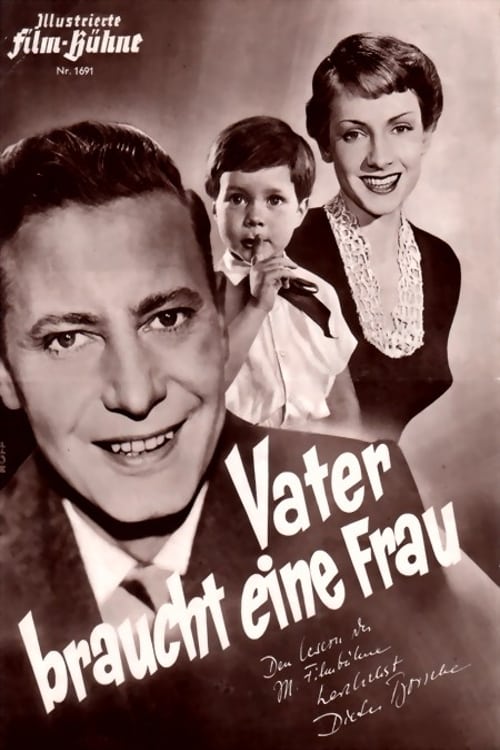
A widowed father advertises for a new maid, but his children secretly seek a woman to be his new wife.
Verona in the 1950s. Don Stefano, the chaplain of San Lorenzo, was once a passionate race car driver and tennis player. Deeply affected by his wartime experiences, he decided to become a priest. He has given up racing, but now and then he still plays a game of tennis, preferably with the wealthy art dealer Catani, whose family he is friends with and in whose home he is a frequent guest. His connections to the Catanis have also enabled Don Stefano to place his protégé, Gilda, a young girl in need, with them as a housekeeper. However, Signora Catani gradually becomes suspicious of the fact that Gilda wears a new yellow rose on her dress every day. She believes the girl receives the flowers from her husband; that he is her secret lover. This leads not only to a heated argument between the couple but also to a confrontation between the lady of the house and the maid.
The musician Peter Paul Müller (Dieter Borsche) lives for his job. So much so that he also forgets the circumstances of the Nazi dictatorship. In the years between 1930 and 1946 he was only allowed to perform in small clubs, but after he met the pretty singer Marion (Vera Molnar), the big breakthrough came. But with the many appearances, the relationship with his wife Annemie (Kristina Söderbaum) threatens to break up.

1900: Much to the chagrin of Baron Uhlendorff in Schoneberg, the city of Berlin is expanding. But what is much worse is that his son George is in love with Traute, the daughter of the master carpenter Schradecke. So the son must leave for South America as a diplomat and Father Schradecke has to intercept his letters to his daughter. Traute is inconsolable; 1913: The early days of the small artisans have now given way to them becoming big businessmen. Traute continues to wait for George in spite of the stubborn proposing by the carpenter Paul Buttner.
The feisty boss of a chain of cafes wants to push the youngest of her daughters off on a husband, who would be well-suited to take over the business one day. And although the widow Bohler causes a lot of confusion in her struggle to find happiness for her daughter, everything ends up working out well in the end.


After the mysterious crash of a millionaire's private plane, scientists secretly harvest the dying man's brain and keep it alive in a laboratory in order to communicate via telepathy.

The supposedly naive owner of the castle, Louise Strothmann von Auerheim, advertises that the entire family estate is for sale. This not only attracts the attention of her money-hungry relatives, but also a whole host of potential buyers, from porn factory owners to a retirement home company.

A serious Swiss melodrama/documentary about abortion, marketed as a sexy exploitation movie in the US. The film contains real medical footage.

Film about young smugglers.

In a town in Connetticut in 1906, newspaper publisher Miller has problems with his sixteen-year-old son Richard, who reads Wilde, Shaw, Swinburne and Ibsen. Richard loves the neighbor's daughter with touching naivety, which the neighbor finds sinful. The problems of puberty are solved idyllically with a great deal of understanding and bourgeoisie. The everyday life of an average family with small disasters and small victories oscillates between heart and sentimentality and the wilderness of awakening love is nothing more than a teasing maze.

Her only foray into science fiction—about the havoc wrought on society by a television that satisfies every human craving—The Last Days of Gomorrah was a favorite of Sanders-Brahms, who brought feminist politics to the New German Cinema movement of the 1970s. It is a forceful piece of capitalist realism, critiquing working-class alienation and commodity culture.
The film deals with the revolutionary actions of Max Hölz during the March battles in central Germany in 1921.


In 1932, this crime moved the whole world. Colonel Lindbergh, the immensely popular Atlantic flight pioneer, had his son kidnapped and killed, although the parents met all the blackmailers' demands. A manhunt unparalleled in the history of the police remained unsuccessful for a long time. None of the many clues led to the perpetrator. Then the research assistant, Dr. Bernstein, had an ingenious idea...
Pavel Rusanov is admitted to an overcrowded cancer ward.
The historical background to the story is the transfer of 269 executed women to the Berlin Anatomy Department in the years 1939-1945. The corpses were misused for experimental purposes.
A love story between officer von Warp coming from a wealthy family and salesgirl Therese. When the social rules of the time would force the officer to resign from service in order to marry Therese the situation becomes tense.


Pierre Laurent, a former doctor, has established himself as a renowned healer in Brittany. A young girl, Isabelle, who follows his results with admiration, declares her love for him and becomes engaged. The reactions of his former colleagues bring Pierre before the courts. A misunderstanding with Isabelle thwarts the wedding plans. Later, the young girl, suffering from a brain tumor, allows herself to be cured by the healer. Pierre does not cure her, but leads her to her death without suffering.