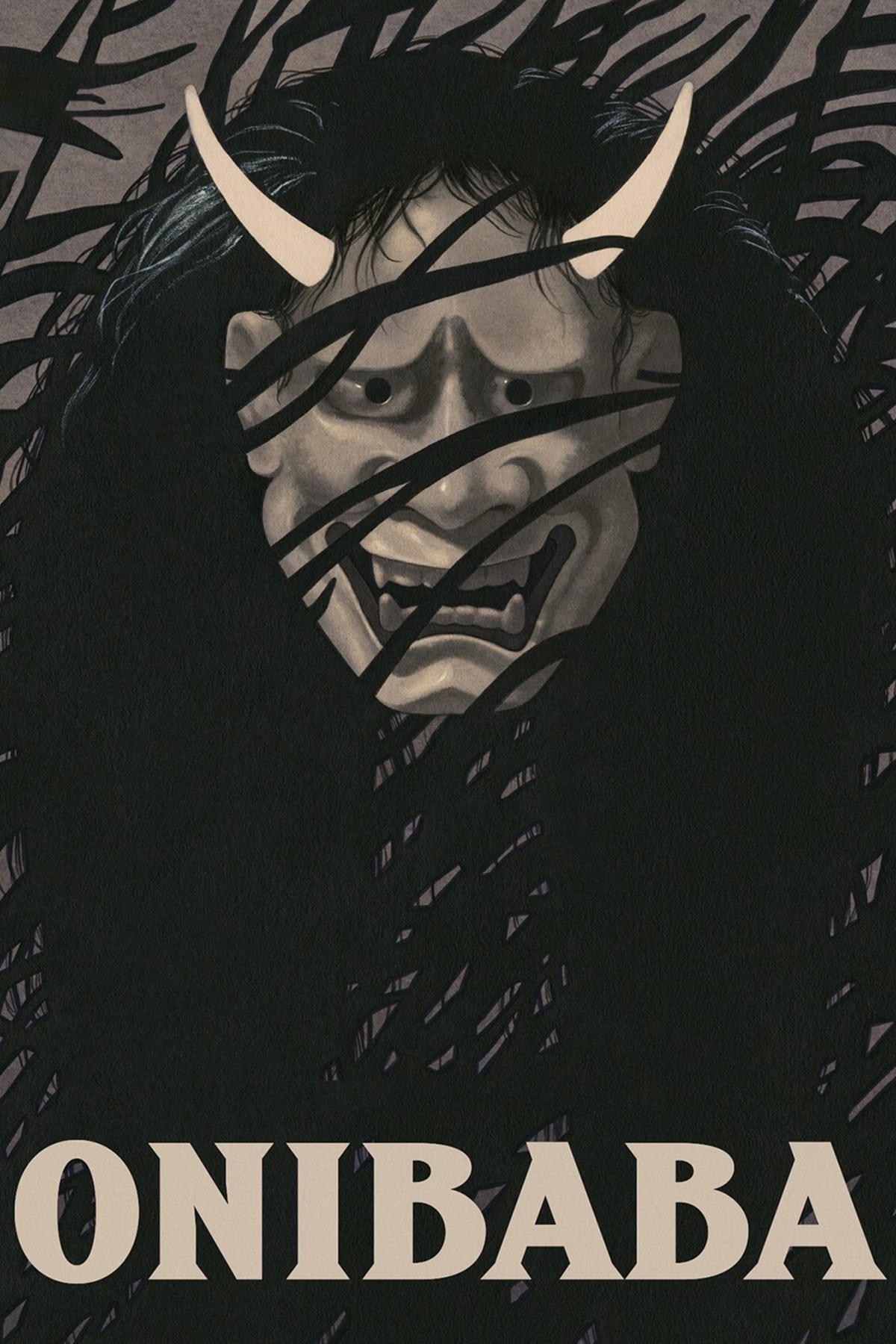
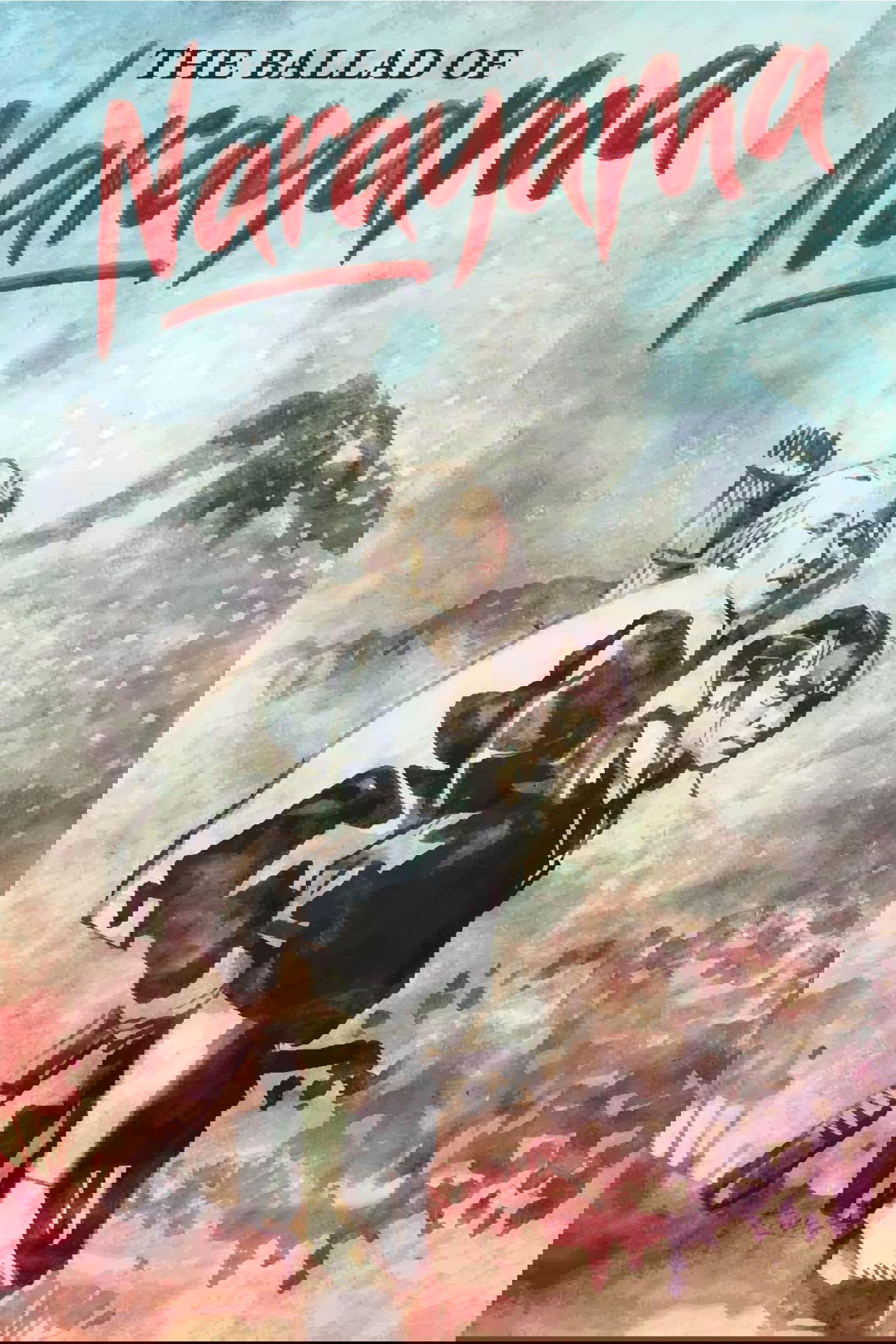
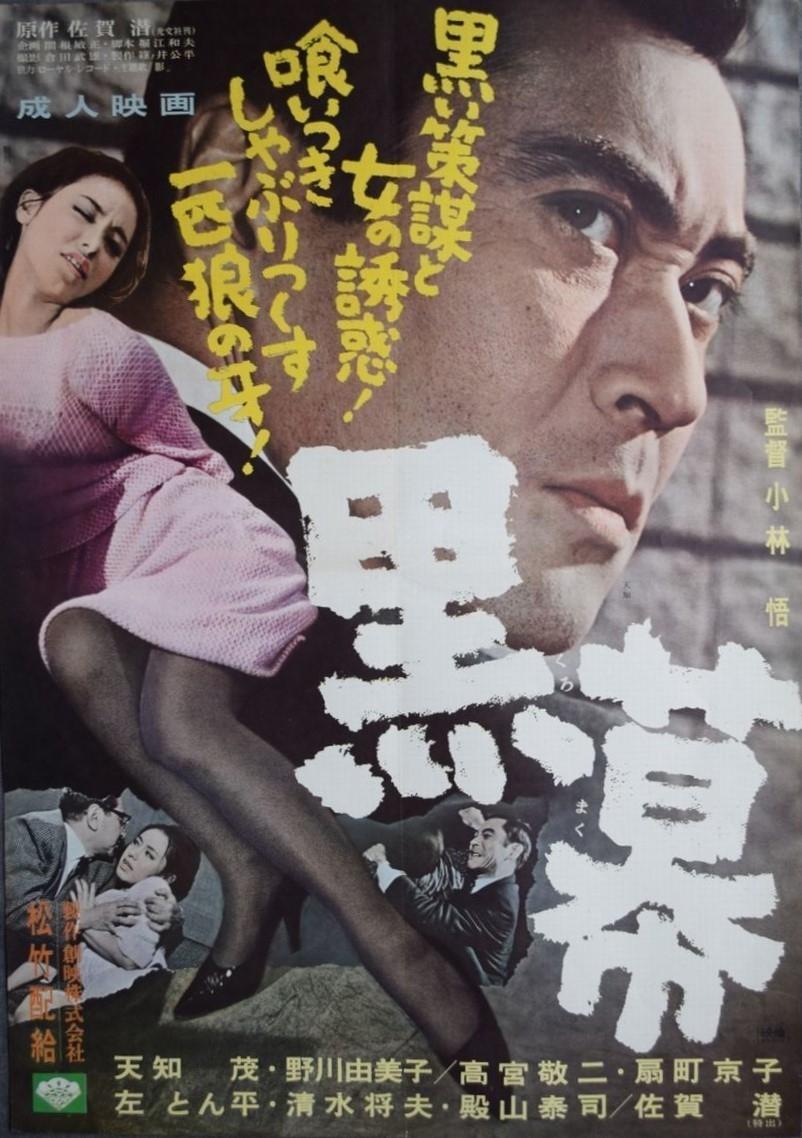
While her son, Kichi, is away at war, a woman and her daughter-in-law survive by killing samurai who stray into their swamp, then selling whatever valuables they find. Both are devastated when they learn that Kichi has died, but his wife soon begins an affair with a neighbor who survived the war, Hachi. The mother disapproves and, when she can't steal Hachi for herself, tries to scare her daughter-in-law with a mysterious mask from a dead samurai.
A family of four are the sole inhabitants of a small island, where they struggle each day to irrigate their crops.

When a broadcasting company takes away its financial support from a symphony orchestra, some of the members refuse to admit defeat. The first violinist returns to his home and manages to get the orchestra back together for a grandiose performance, saved at the last minute by their original conductor -- and boding well for the future of the die-hard musicians.
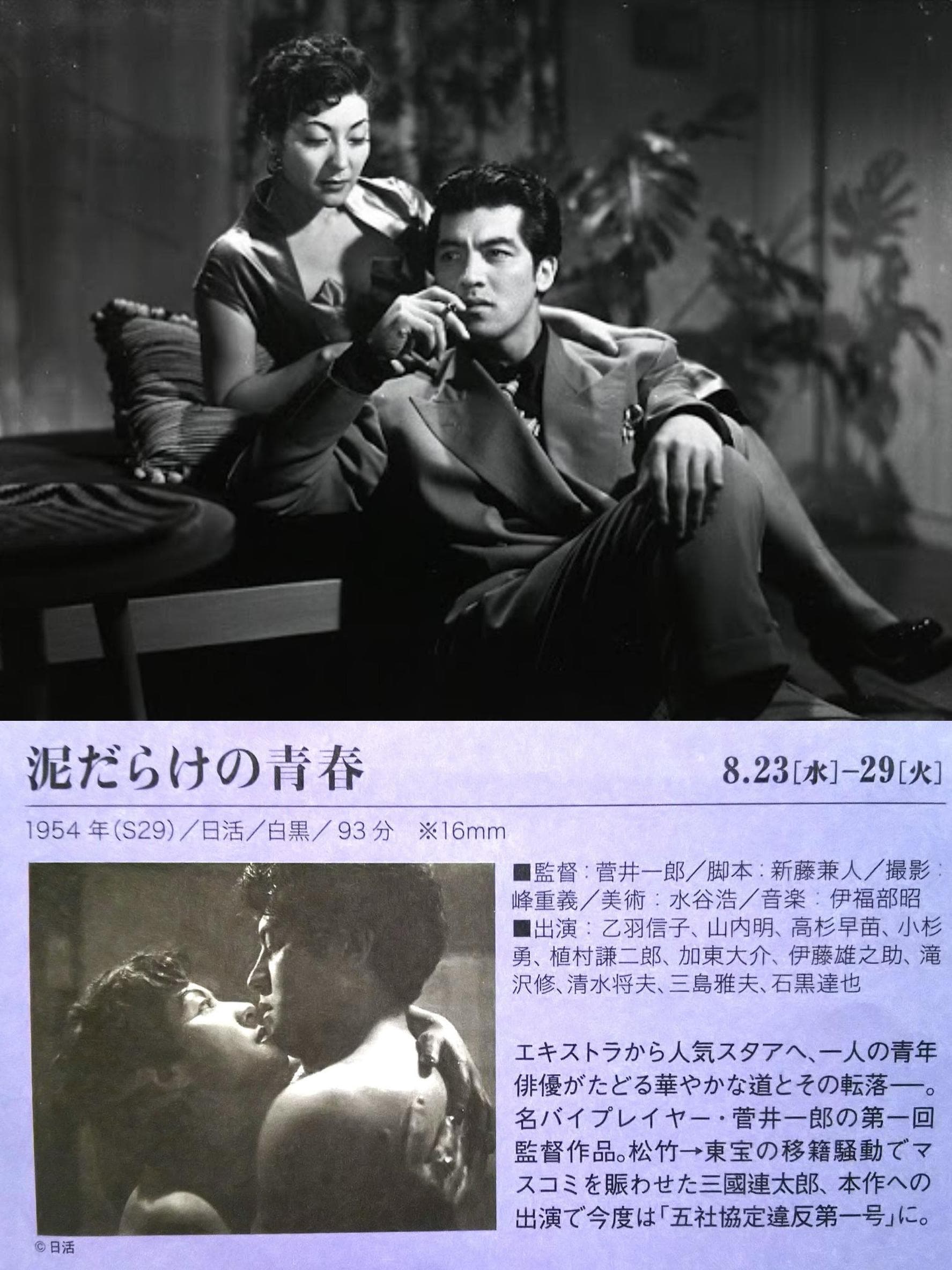
Shigeki Kachi, Tosuke Satomura, and Nanako, who belong to the theater company Vuanbert around Dosa, withdrew at the indignation of the chairman Hayashi and seeked their own careers in the film industry.
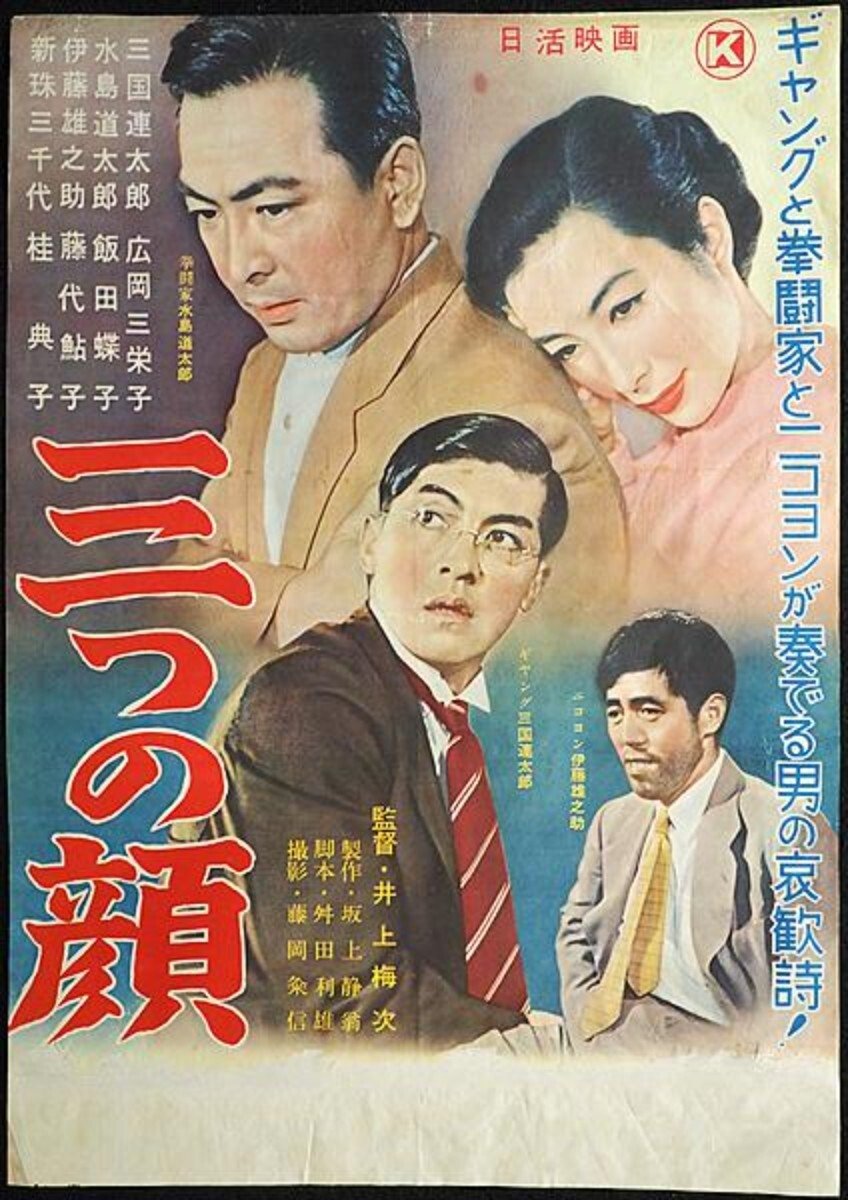
Five years have passed since the three comrades who saved their lives on the Burma Campaign-Kenichiro Kishi, Eiji Shiga, and Daizo Kobayashi promised to meet again five years later at the platform of Shinagawa Station, which was crowded with repatriates. , The day of reunion is approaching.
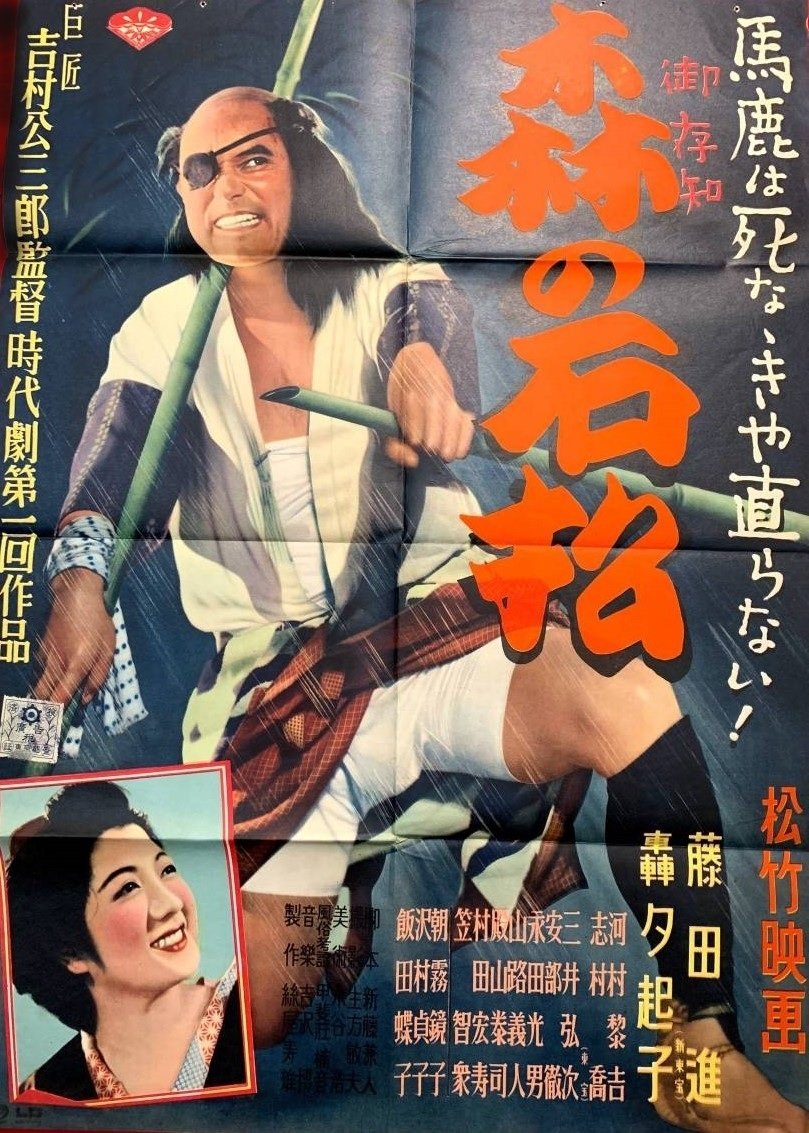
The tale of a feudal swordsman who cynically takes no responsibility for anything, relegating it to others, and then taking the credit.

The tragic, true story about Hachikō, an Akita dog who was loyal to his master, Professor Ueno, even after Ueno's death.

In postwar Tokyo, a blunt, alcohol-soaked doctor diagnoses a swaggering young yakuza with tuberculosis, forging an uneasy bond that’s tested when the gangster’s ruthless former boss returns and drags him back toward the swampy underworld he can’t escape.
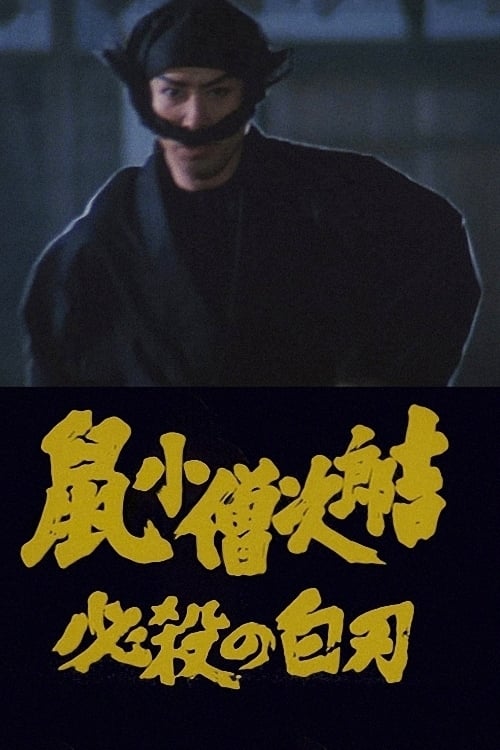
A gripping and entertaining historical drama that follows the actions of the thief Nezumi Kozo Jirokichi during the Edo period.
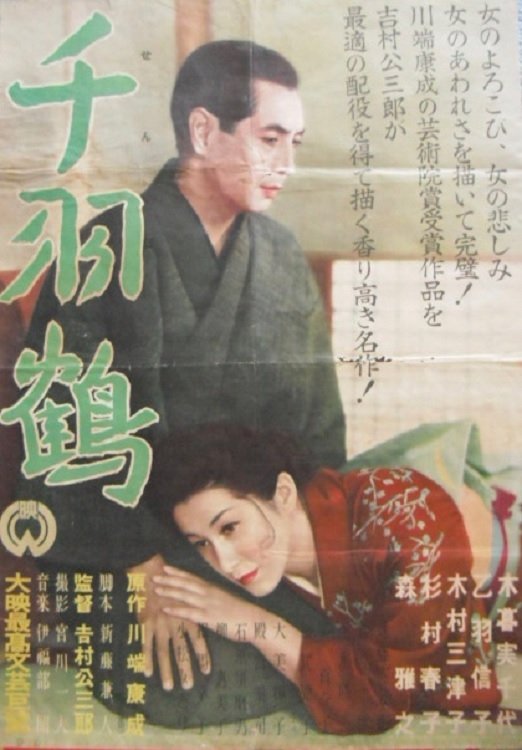
Kazuo Miyagawa’s prizewinning black-and-white cinematography draws out the moral shadings of Nobel laureate Yasunari Kawabata’s 1952 novel Thousand Cranes, a quietly devastating story of a young man, orphaned during the war, who stumbles into a passionate yet tragic relationship with his late father’s mistress and her daughter.
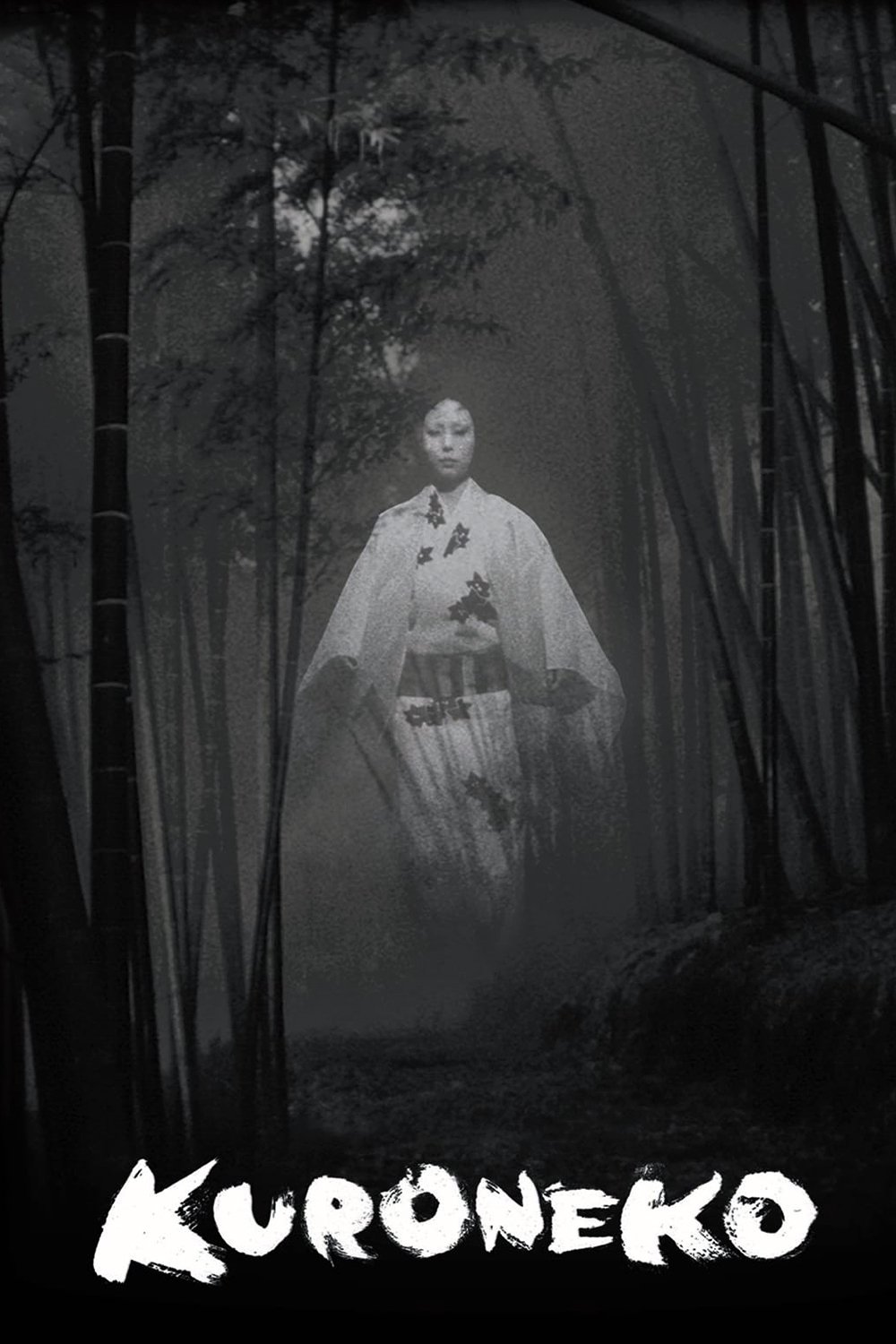
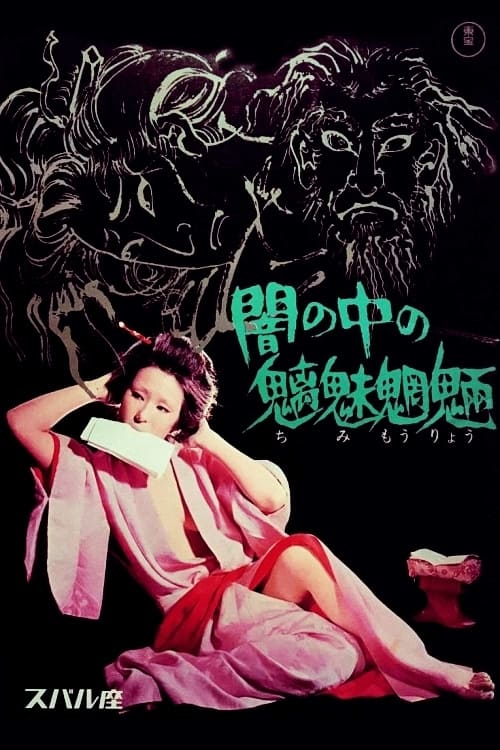
In the Sengoku period, a woman and her daughter are raped and murdered by soldiers during a time of civil war. Afterwards, a series of samurai returning from the war through that area are found mysteriously dead with their throats torn out. The governor calls in a wild and fierce young hero to quell what is evidently an Onryō ghost.
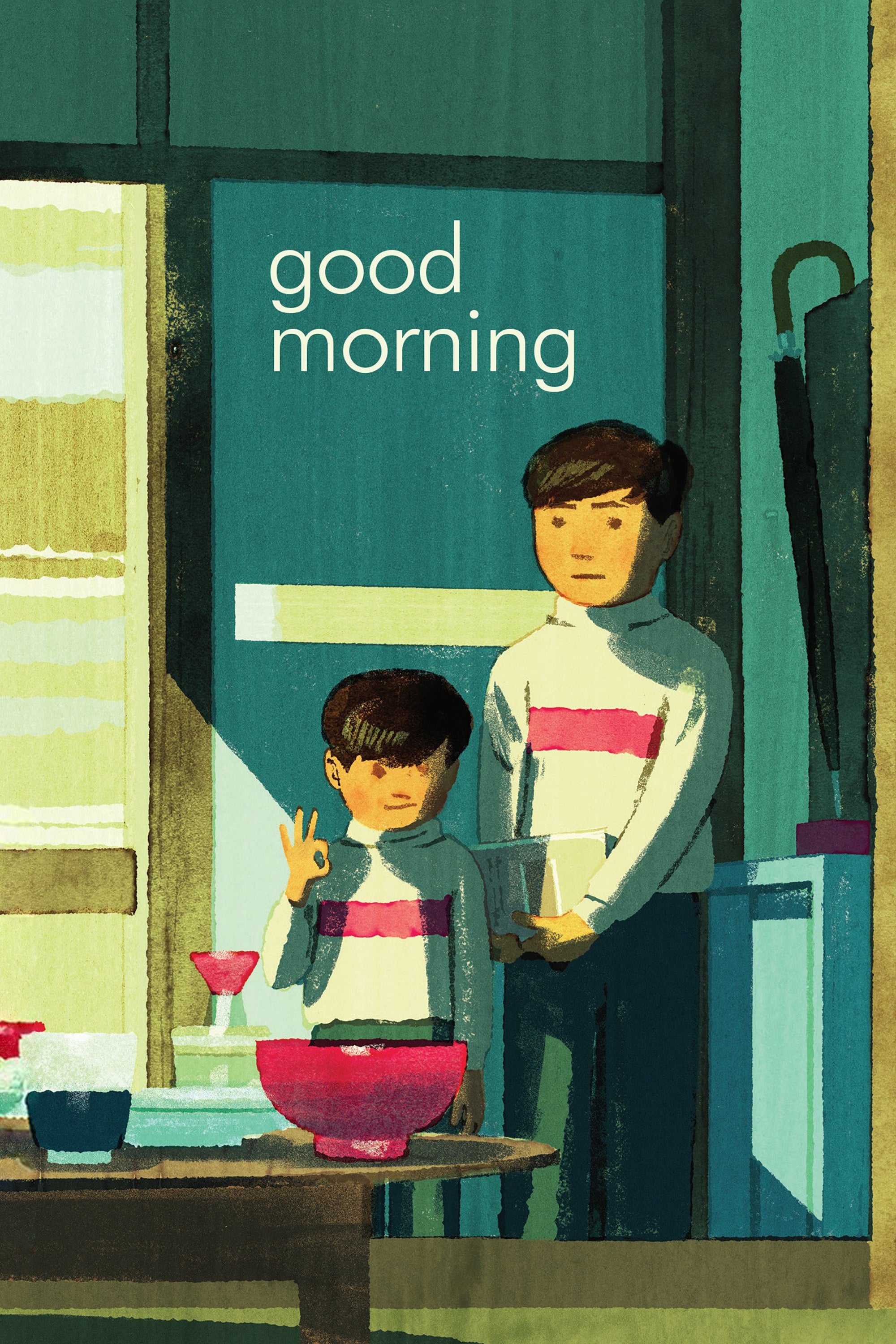
A lighthearted take on director Yasujiro Ozu’s perennial theme of the challenges of intergenerational relationships, Good Morning tells the story of two young boys who stop speaking in protest after their parents refuse to buy a television set. Ozu weaves a wealth of subtle gags through a family portrait as rich as those of his dramatic films, mocking the foibles of the adult world through the eyes of his child protagonists. Shot in stunning color and set in a suburb of Tokyo where housewives gossip about the neighbors’ new washing machine and unemployed husbands look for work as door-to-door salesmen, this charming comedy refashions Ozu’s own silent classic I Was Born, But . . . to gently satirize consumerism in postwar Japan.
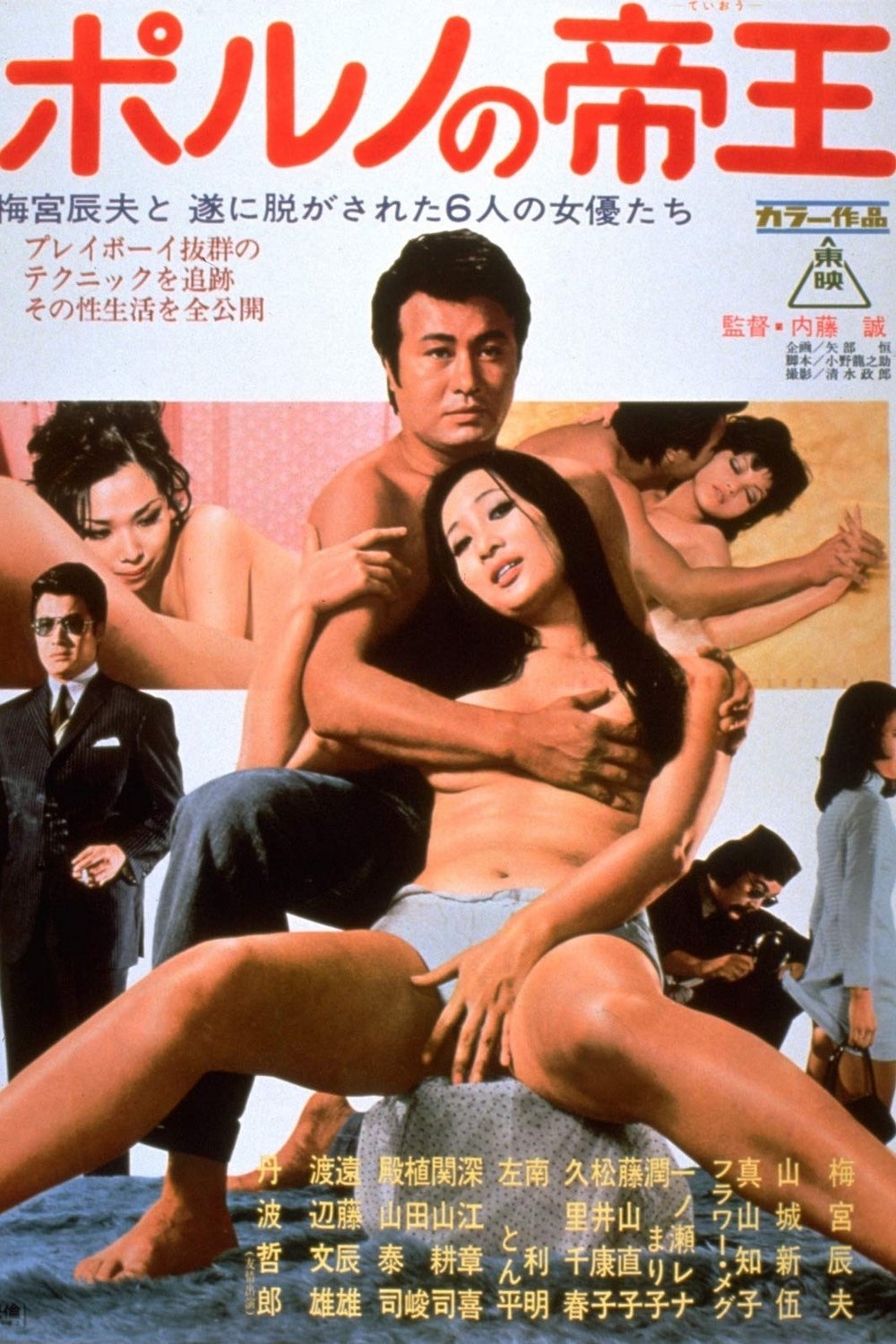
Dumb Tatsuo Umemiya / Shingo Yamashiro comedy about a young bloke whose dick grows to inhuman dimensions (obviously a role tailor made for star Umemiya's ego). He visits a doctor, impresses ladies and opens a porn shop before running afoul with yakuza...
In a small village in a valley everyone who reaches the age of 70 must leave the village and go to a certain mountain top to die. If anyone should refuse they would disgrace their family. Old Orin is 69. This winter it is her turn to go to the mountain. But first she must make sure that her eldest son Tatsuhei finds a wife.
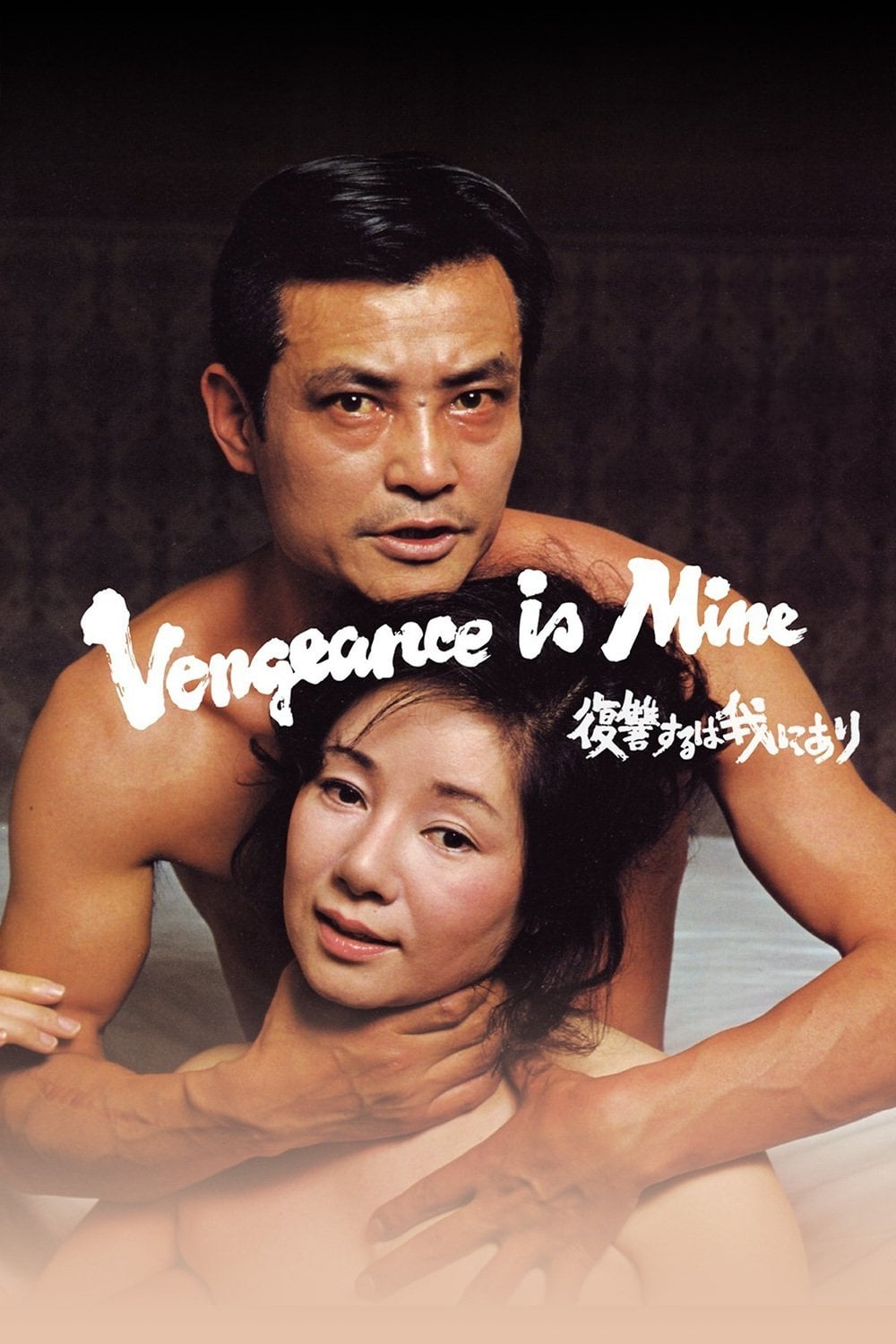
A thief, a murderer, and a charming lady-killer, Iwao Enokizu is on the run from the police.
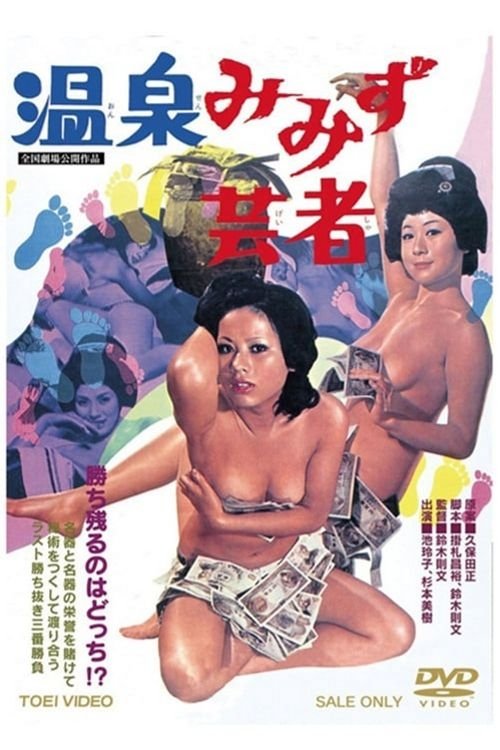
Many persons visit the hot springs resort to try out Reiko's famous vagina with quivering walls, "the sensation of worms wiggling about"... that won her her nickname (Mimizu = earthworm).
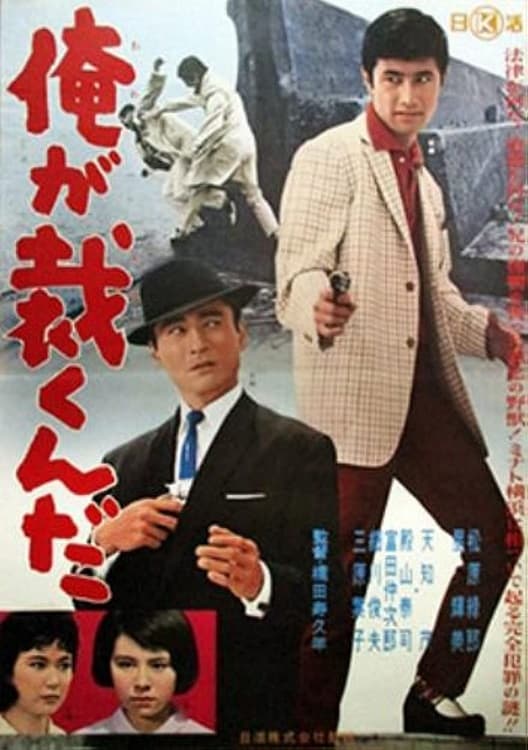
1962 Japanese movie
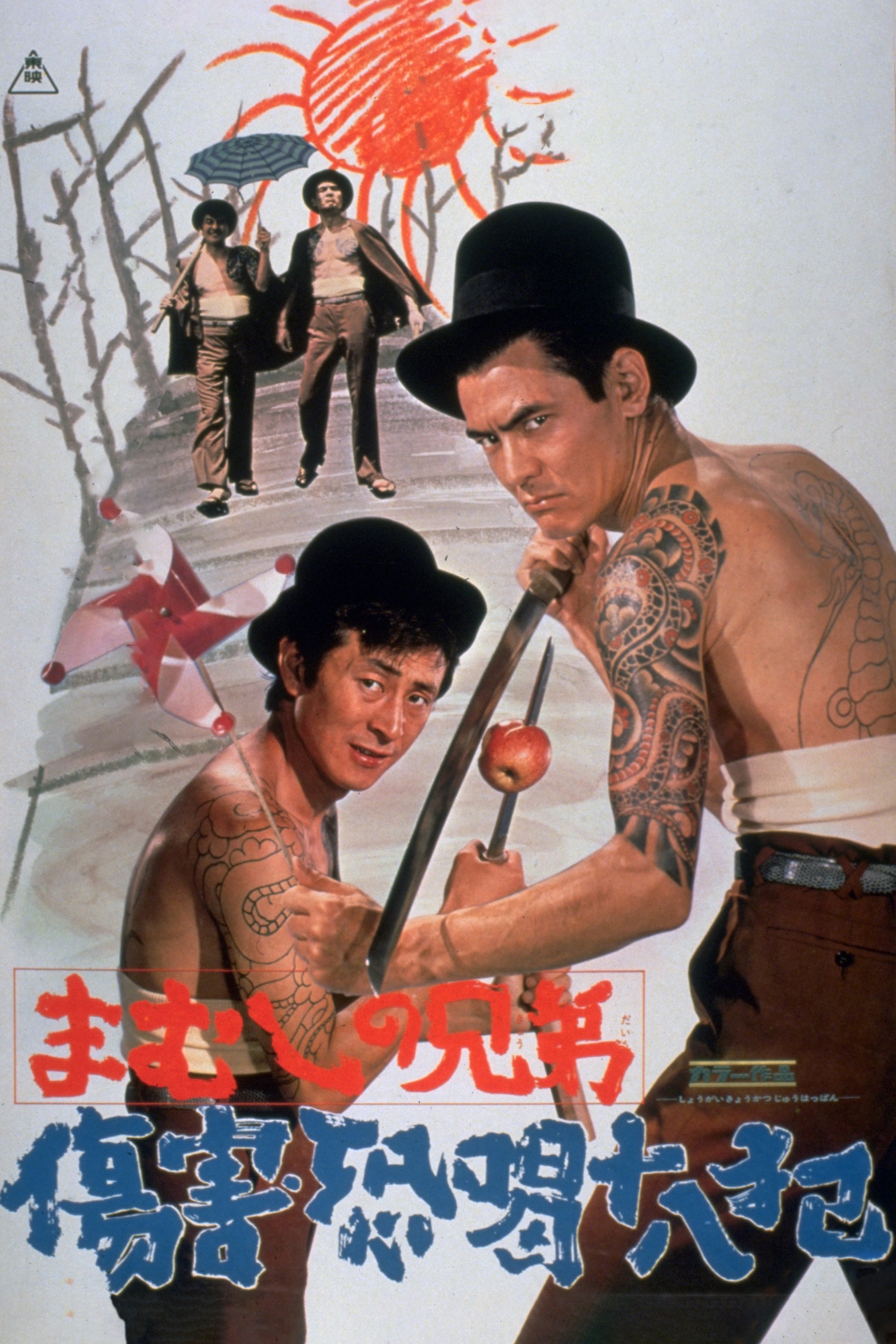
Part 4 in a long running (8+1 films) action/comedy/melodrama series about a pair of short tempered, amoral, but not evil chinpira (Bunta Sugawara and Tamio Kawachi) thinking too big of themselves. Sugawara tries to overcome a traumatic experience of getting in bed blindfolded with a girl who turned out to be an old granny. Later he and Kawaji try to settle down in a neighbourhood harassed by businessman yakuza Bin Amatsu.

Two young women must come to terms with the fact that a man they're deeply linked to is a murdering rapist.
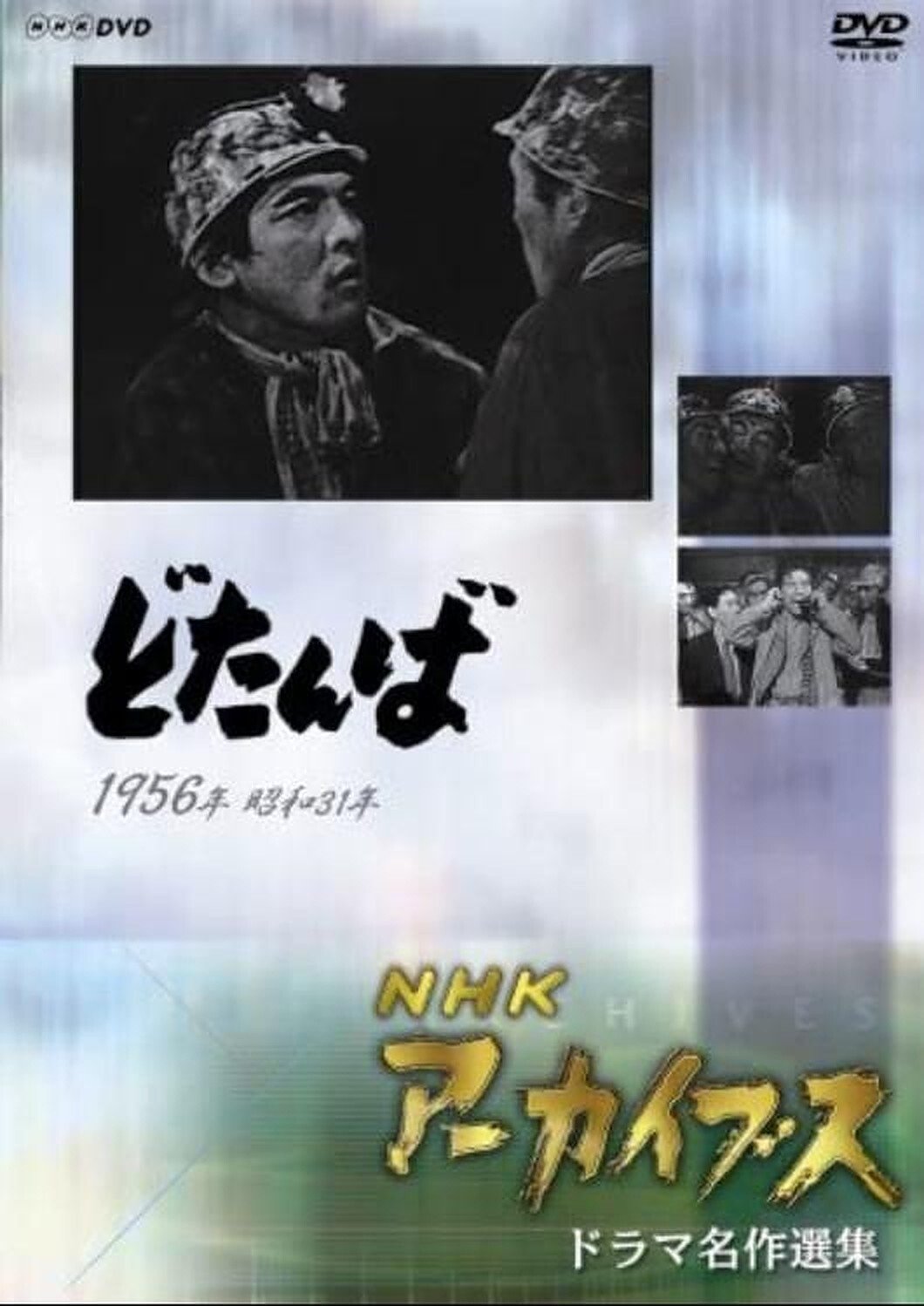
Based on a 1956 television feature on Japan’s national network, NHK, this is one of Uchida’s rarest films. A socially conscious drama with a contemporary backdrop, Dotanba focuses on the attempts to rescue a group of trapped miners. The title is a figure of speech — (essentially “last minute” or “eleventh hour”) — that refers to a situation of peril. The film boasts a script co-written by Uchida and Akira Kurosawa’s frequent screenwriter, Shinobu Hashimoto, and stars Kurosawa’s frequent star Takashi Shimura.
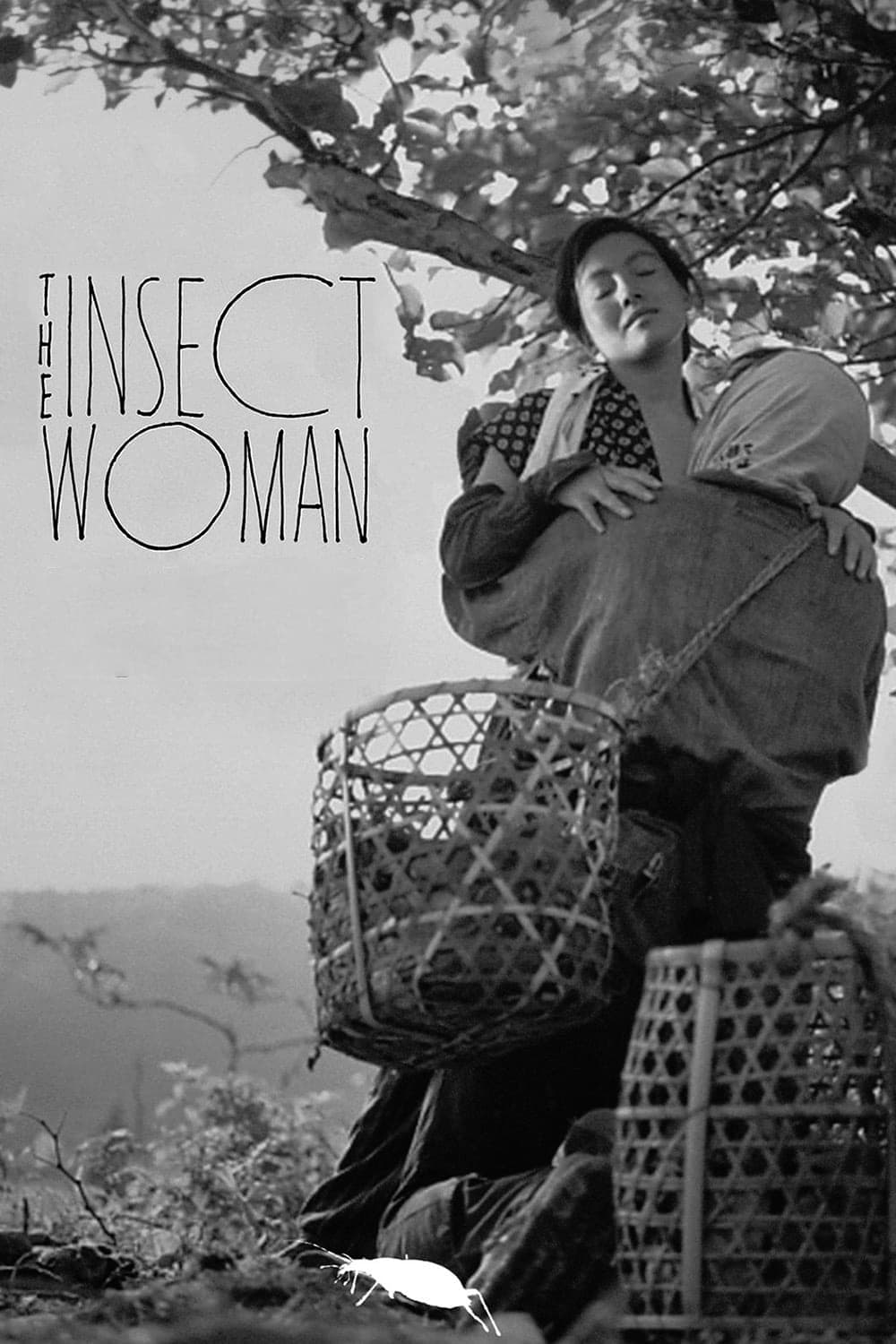
A woman, Tome, is born to a lower class family in Japan in 1918. The title refers to an insect, repeating its mistakes, as in an infinite circle. Imamura, with this metaphor, introduces the life of Tome, who keeps trying to change her poor life.
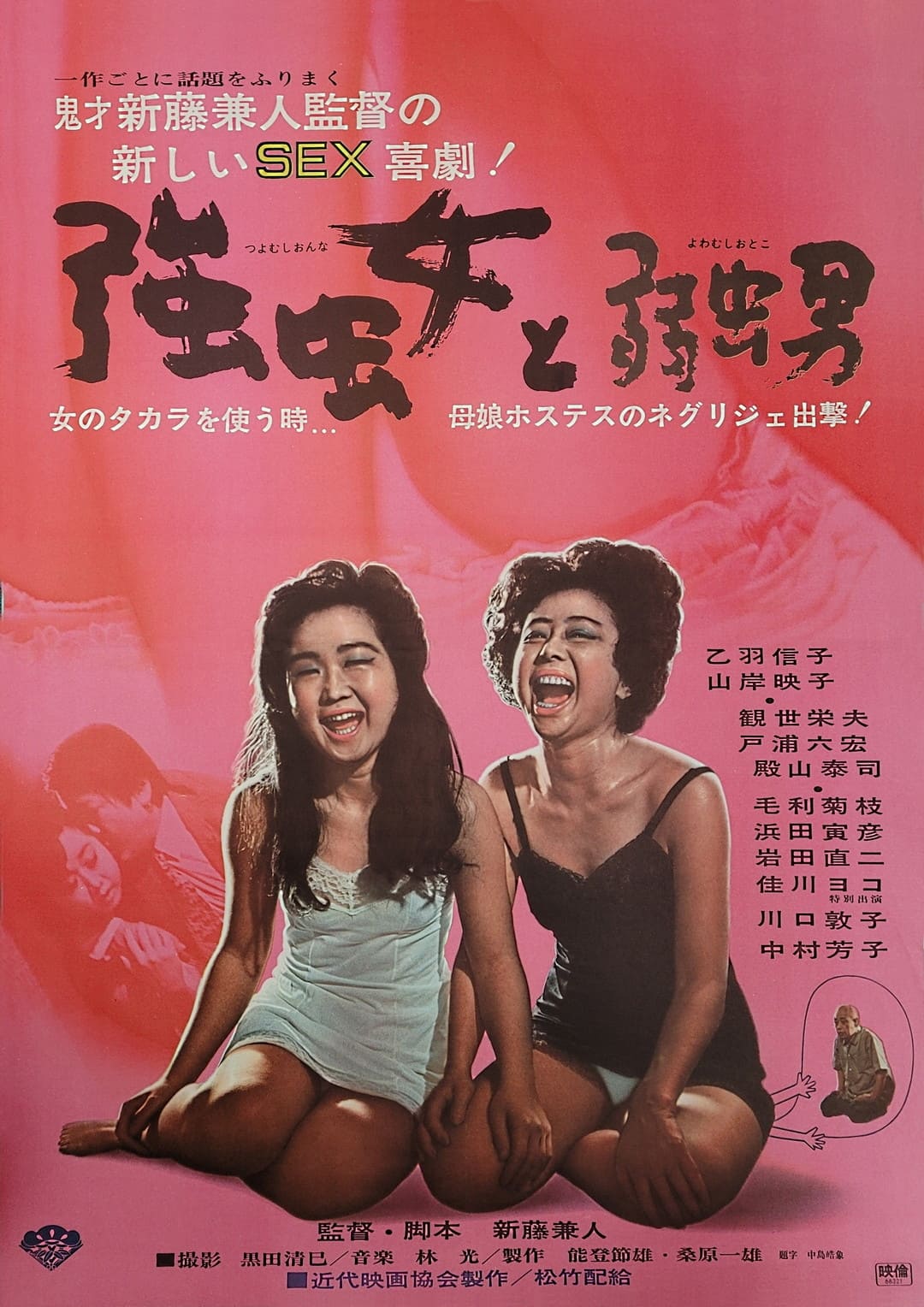
After the closure of a coal mine leaves her husband unemployed, Fumiko travels from Kyushu to Kyoto with her daughter Kimiko, and they become hostesses at a cabaret.
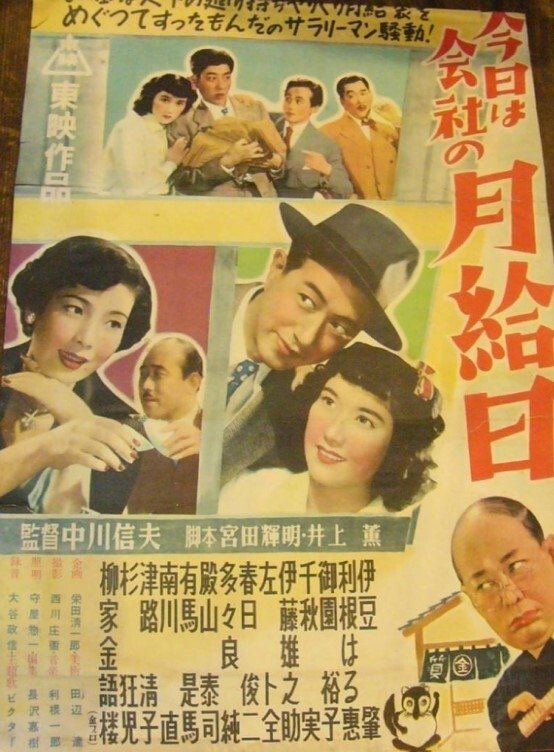
Office worker comedy by Nobuo Nakagawa
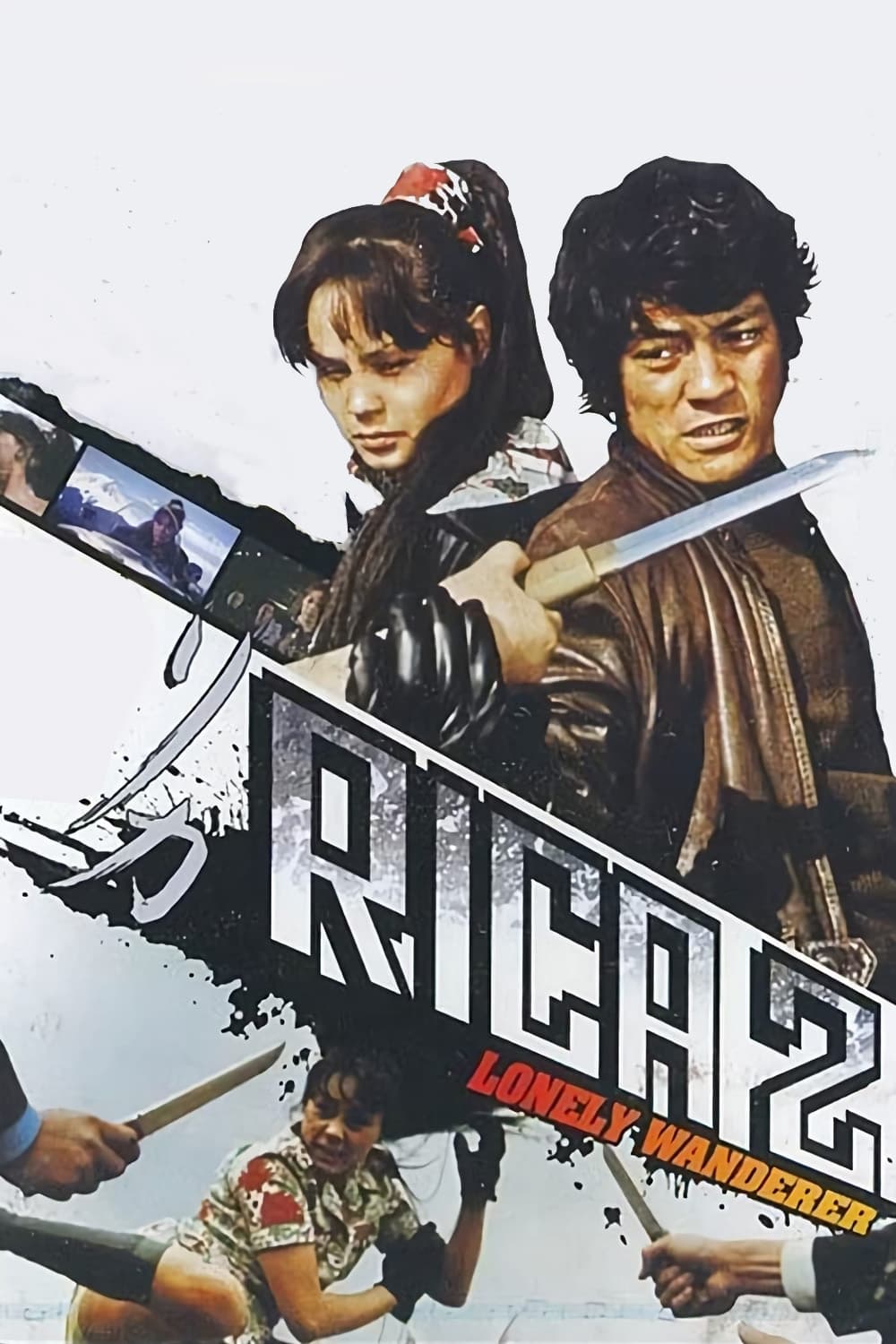
Rica wanting a fresh start leaves her friends and past life behind or at least that is what she thinks as trouble always seems to find her. Rica's looks into a ship that exploded and everyone who survived this disaster who comes in contact with her dies. Rica only chance of solving the mystery of the sunken ship is if she can locate a old friend of hers who just happened to be on that ship the night it blew up.
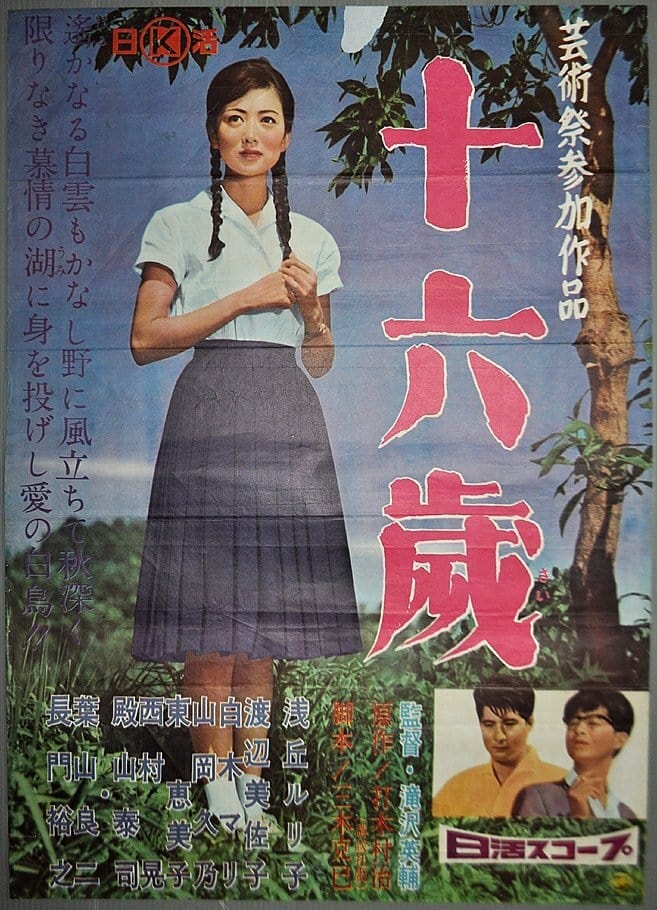
Senko Tamagawa is a third-year junior high school student, and she is the captain of the badminton club. Her father, Kinzo, remodeled her barn and lent it to her only Mikayo. Senko was somehow envious of her flashy life... In a tragedy with a girl living in the base as the main character, Katsumi Miki of "Life like a weed" adapted the original story of Muraji Uchiki and directed by Eisuke Takizawa of "Ajisai no Uta".
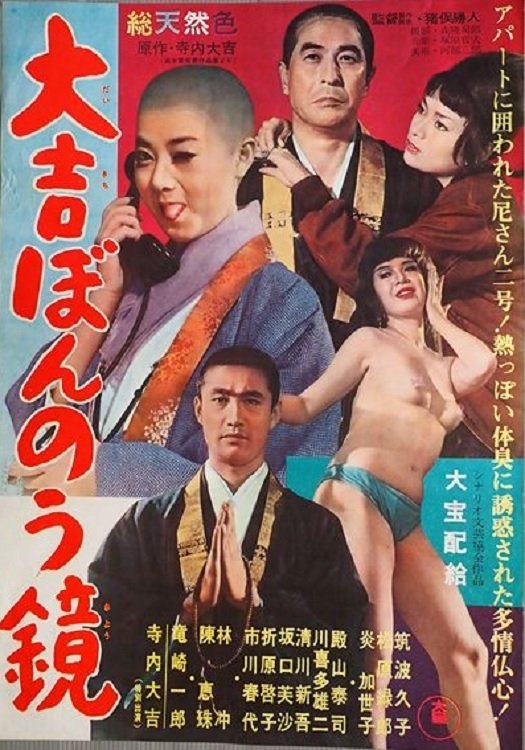
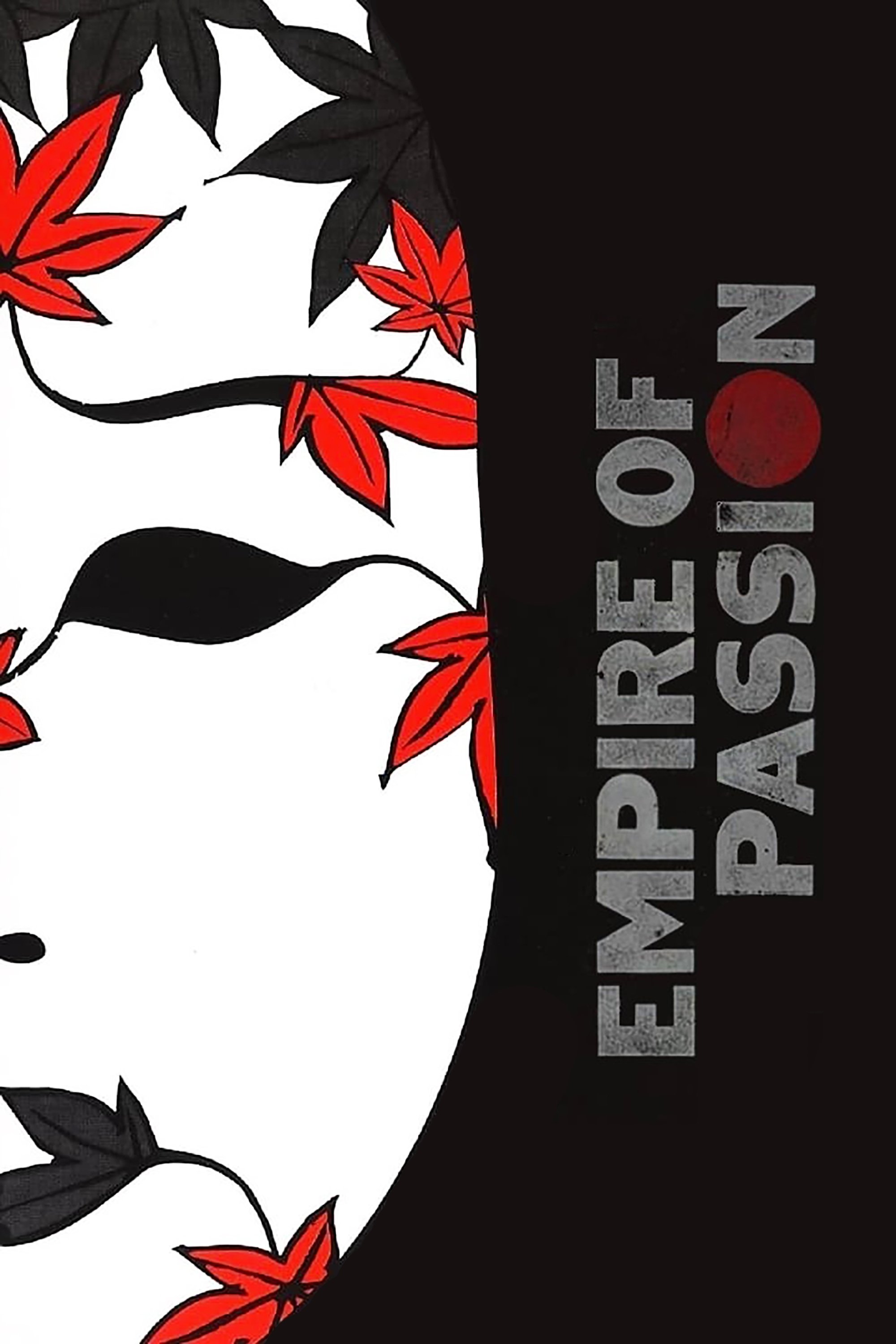
In a small Japanese village at the end of the 19th century, a rickshaw driver's wife takes on a much younger lover and the two conspire to murder him.
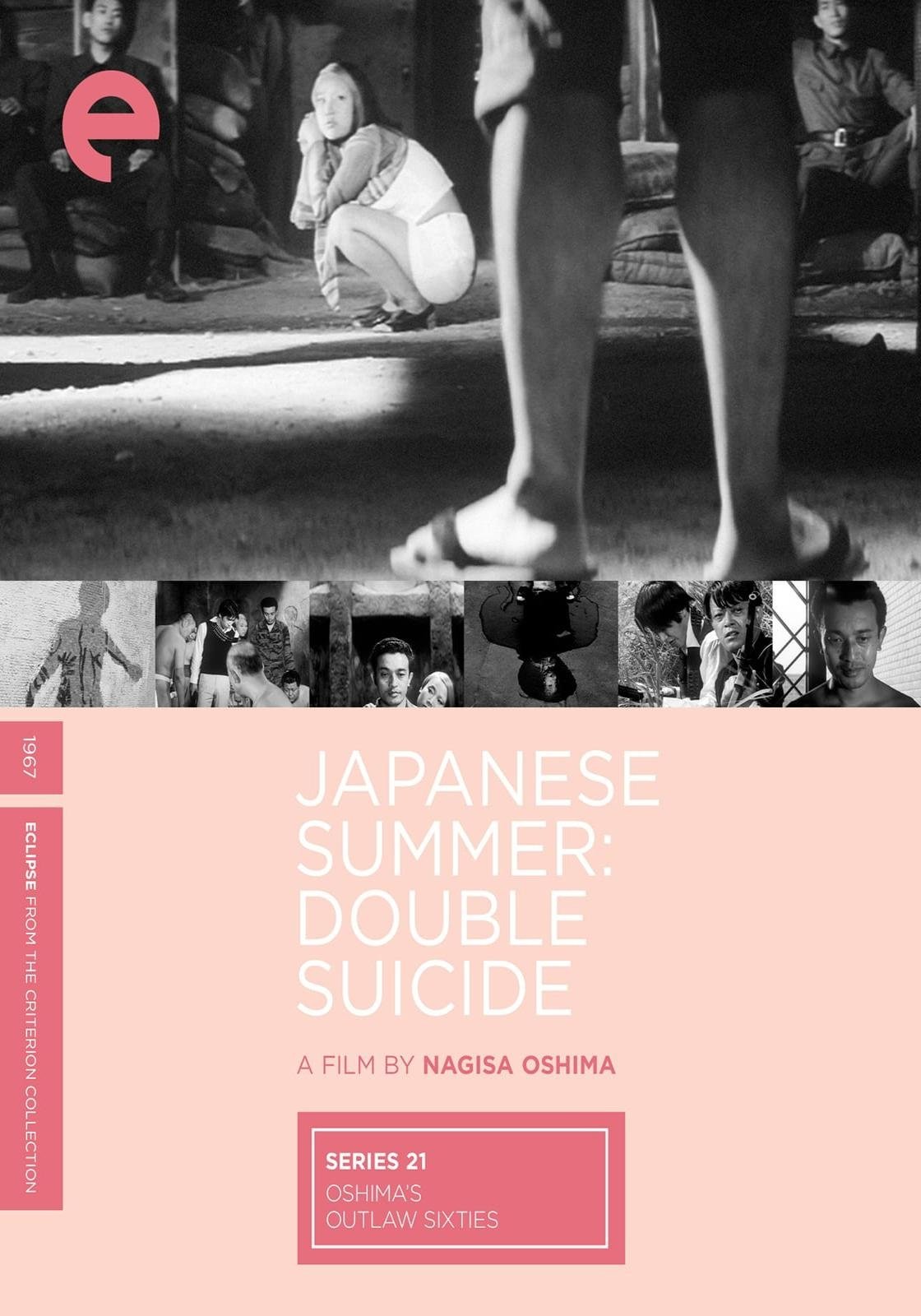
A sex-obsessed woman, a suicidal man she meets on the street, and a gun-crazy wannabe gangster become trapped in an underground hideaway.
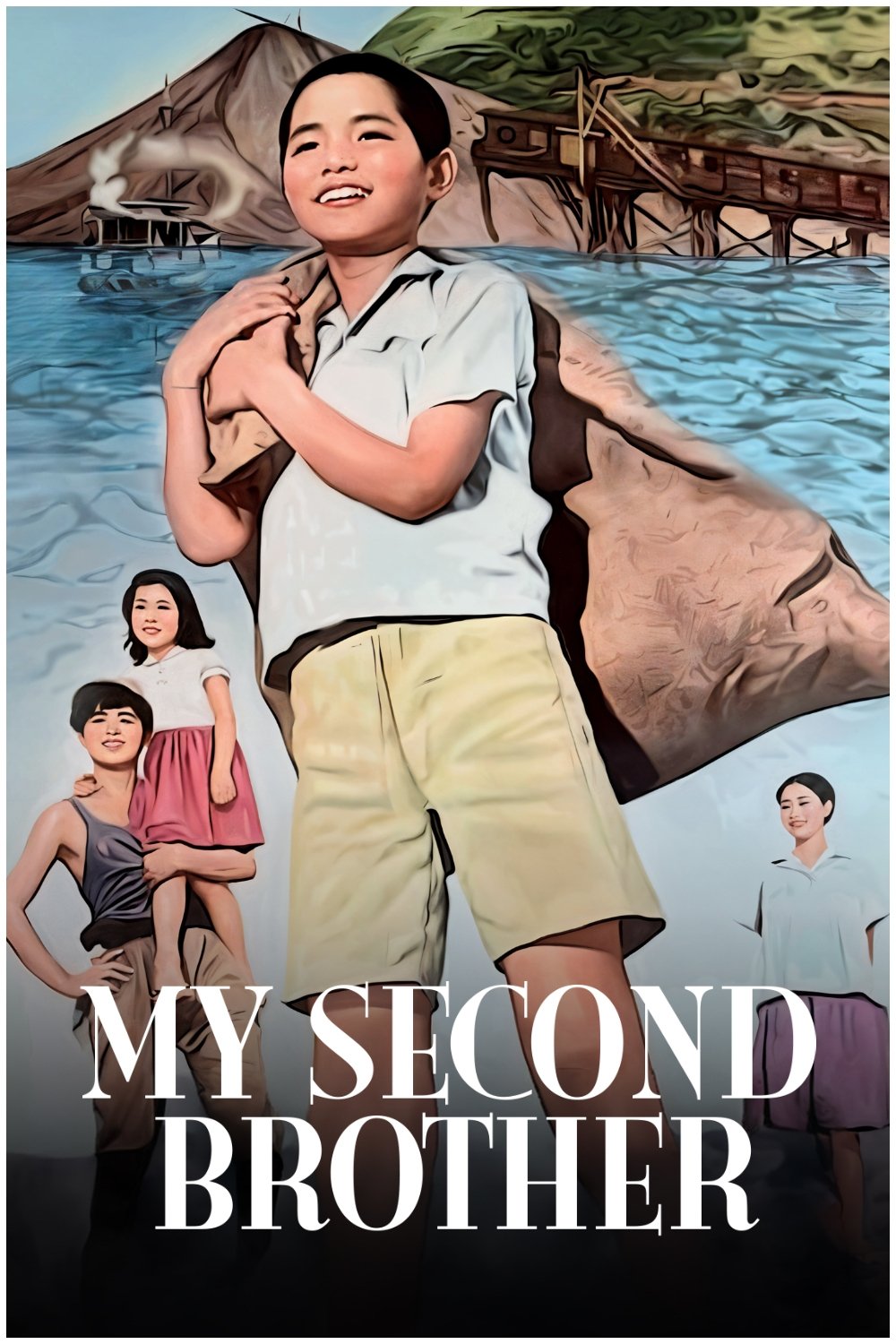
The film tells the story of four orphans living in an impoverished mining town. An adaptation of a best-selling book based on the diary of a ten-year-old zainichi (ethnic Korean Japanese) girl, it was one of the first films to deal with the subject of zainichi identity and struggles in Japan.
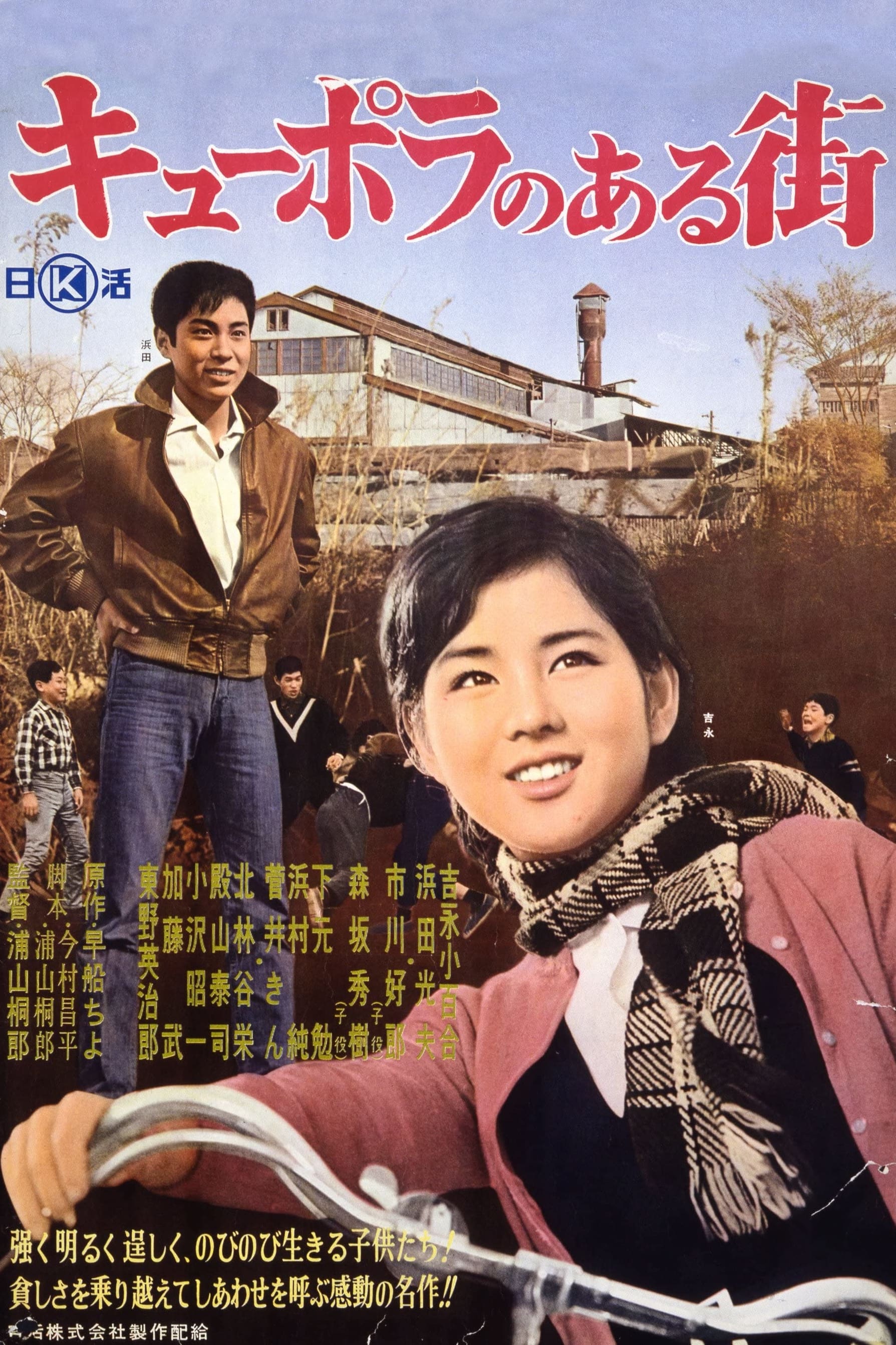
Set in Kawaguchi in the early 60s, this simple story chronicles the lives of foundry families and one girl's dreams of higher education.
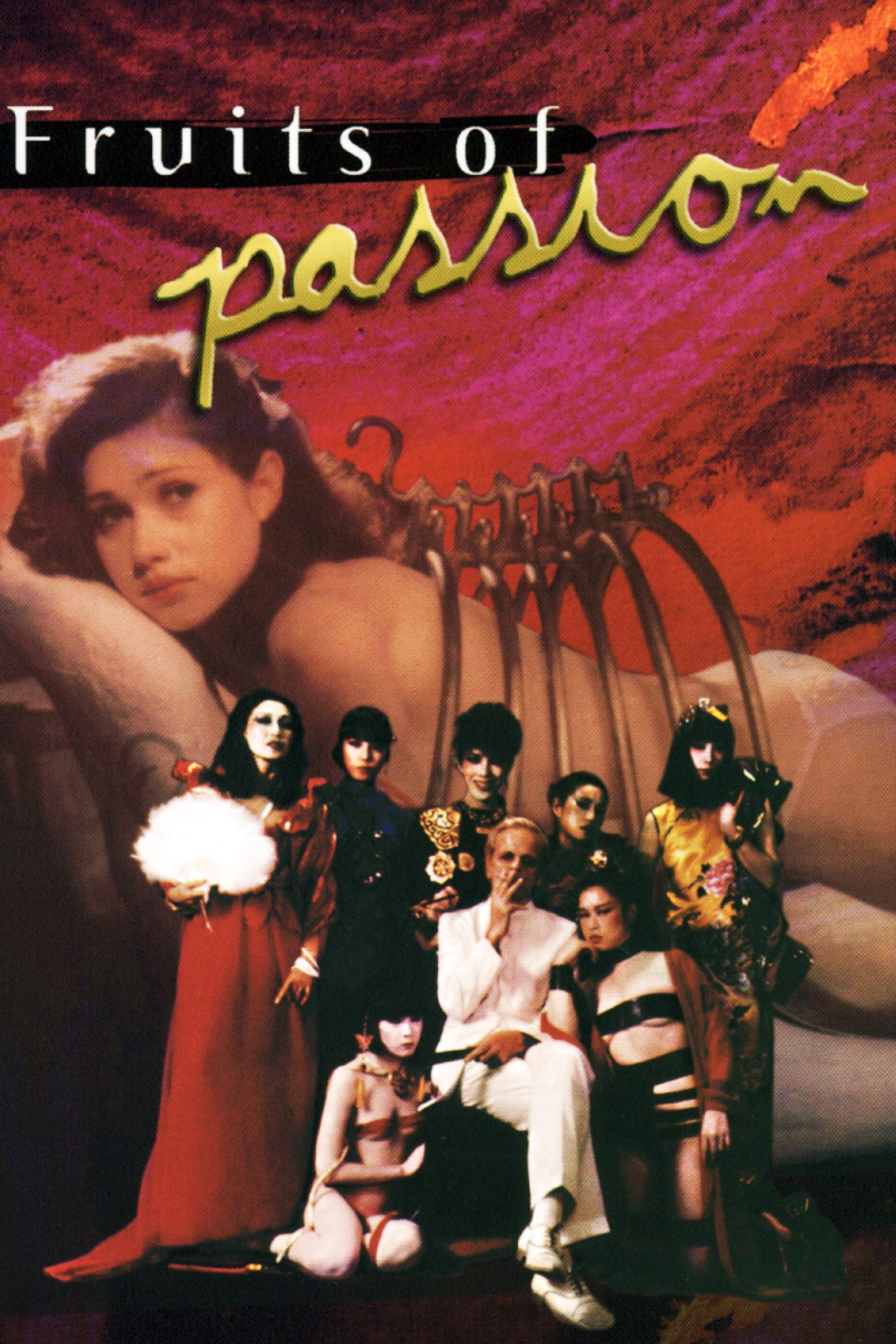
A girl named O loves a rich, and much older man. She is subjected to a variety of humiliating experiences to prove her unconditional obedience to him in a Chinese brothel. A poor boy sees her and falls in love with her. To get the money needed to sleep with her, he takes part in rebellious acts.

Third film of the yoidore hakase series
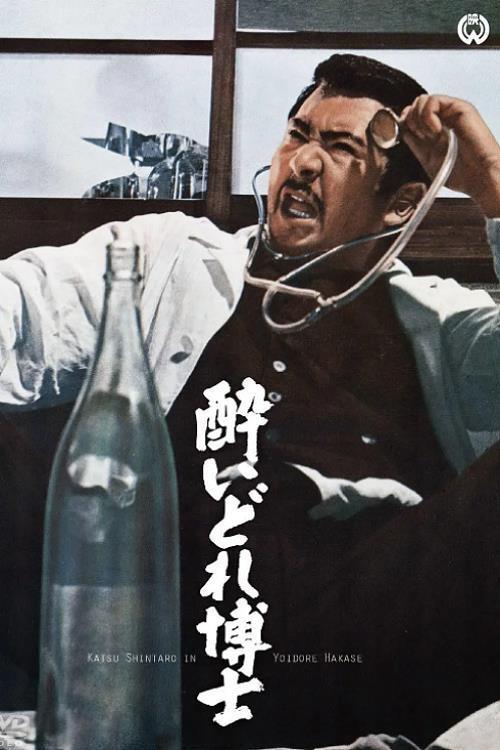
Film by director Kenji Misumi
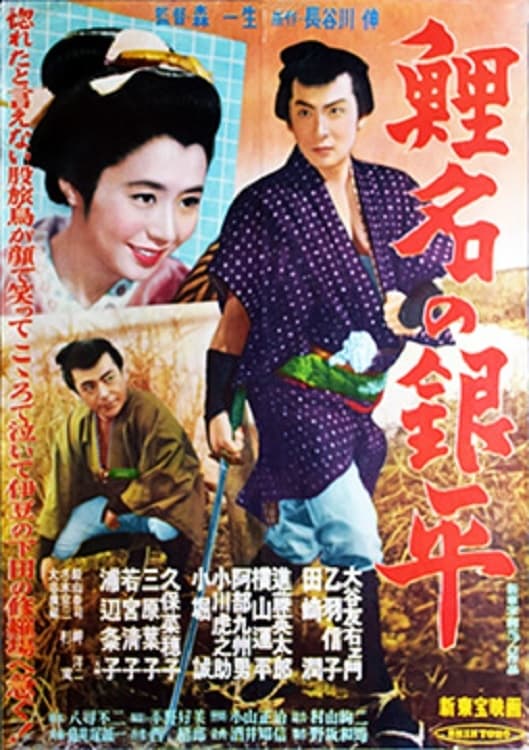
1954 Japanese movie
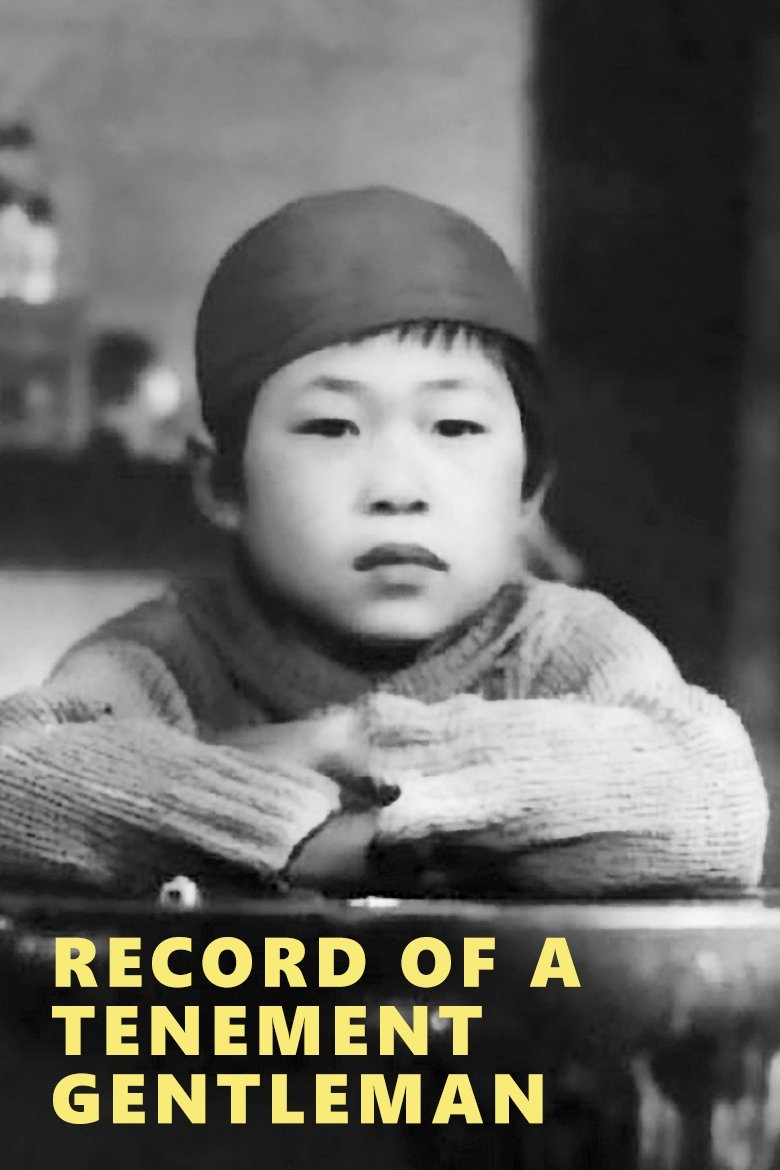
A hard-hearted old woman in a bombed-out Tokyo neighborhood reluctantly takes in an abandoned boy, leading to a heartwarming bond between them.
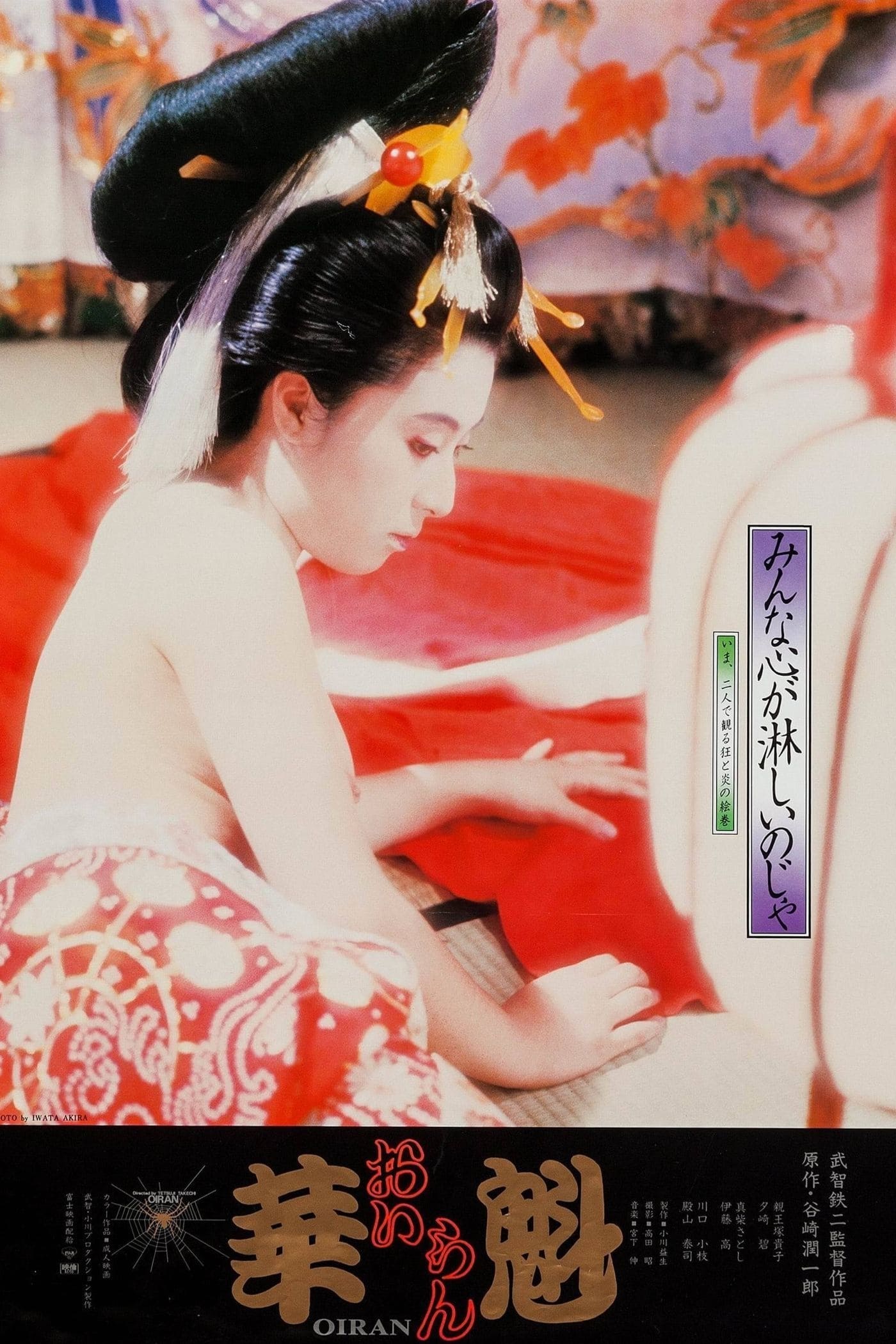
Ayame, a courtesan, attracts the attention of street vendor Kisuke and decides to run away with him to America. Unfortunately, a crazed tattoo artist is obsessed with Ayame's perfect skin as a potential canvas, so he kills Kisuke to keep Ayame in Japan. Later, Ayame is sold to a brothel in Yokohama. Kisuke's ghost possesses her, causing his image to appear tattoo-like on her skin whenever she has sex.
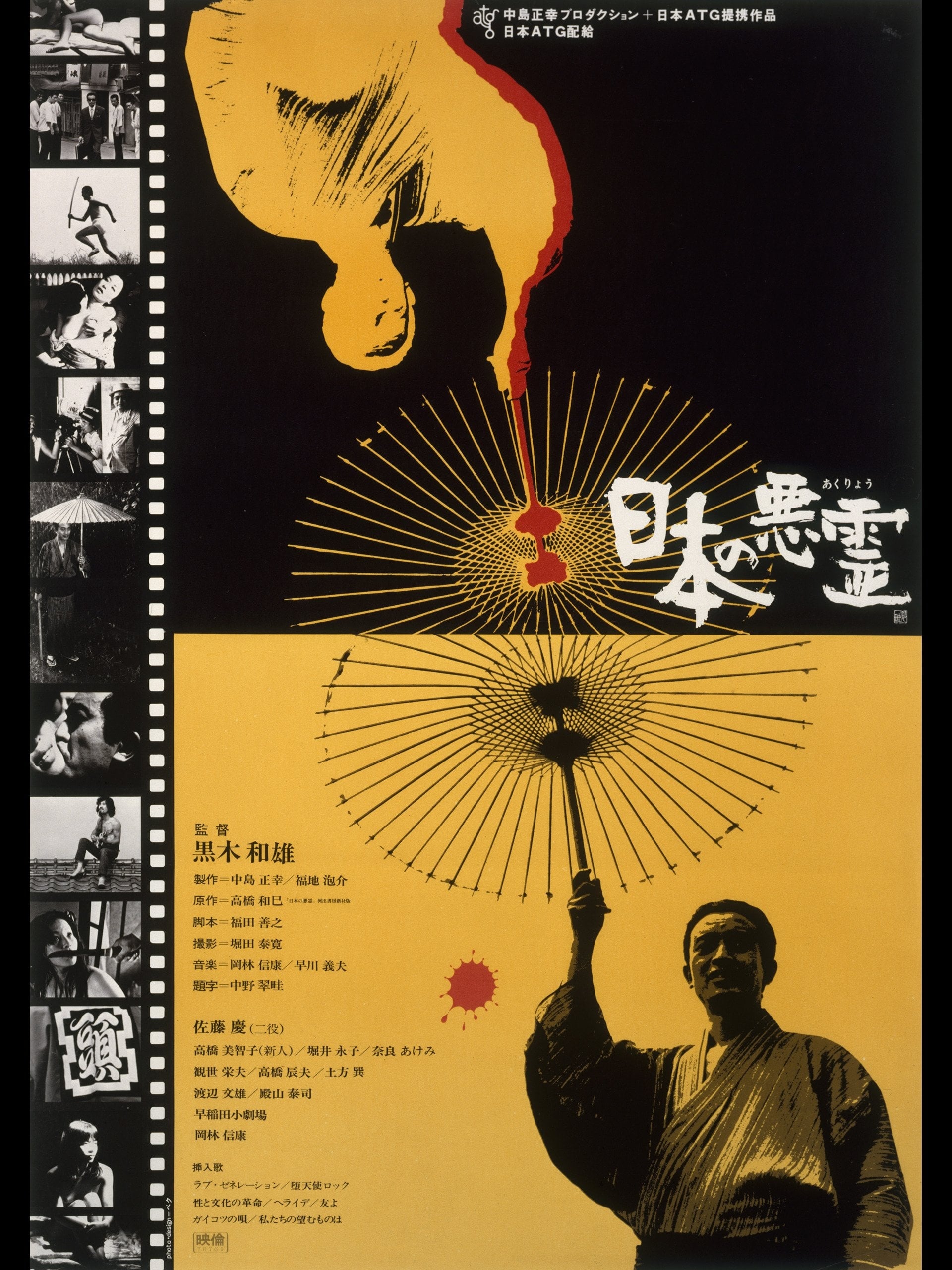
Murase is a bodyguard of yakuza group. Ochiai is a police officer who once was a student activist. When they meet, they are surprised how identical they look.
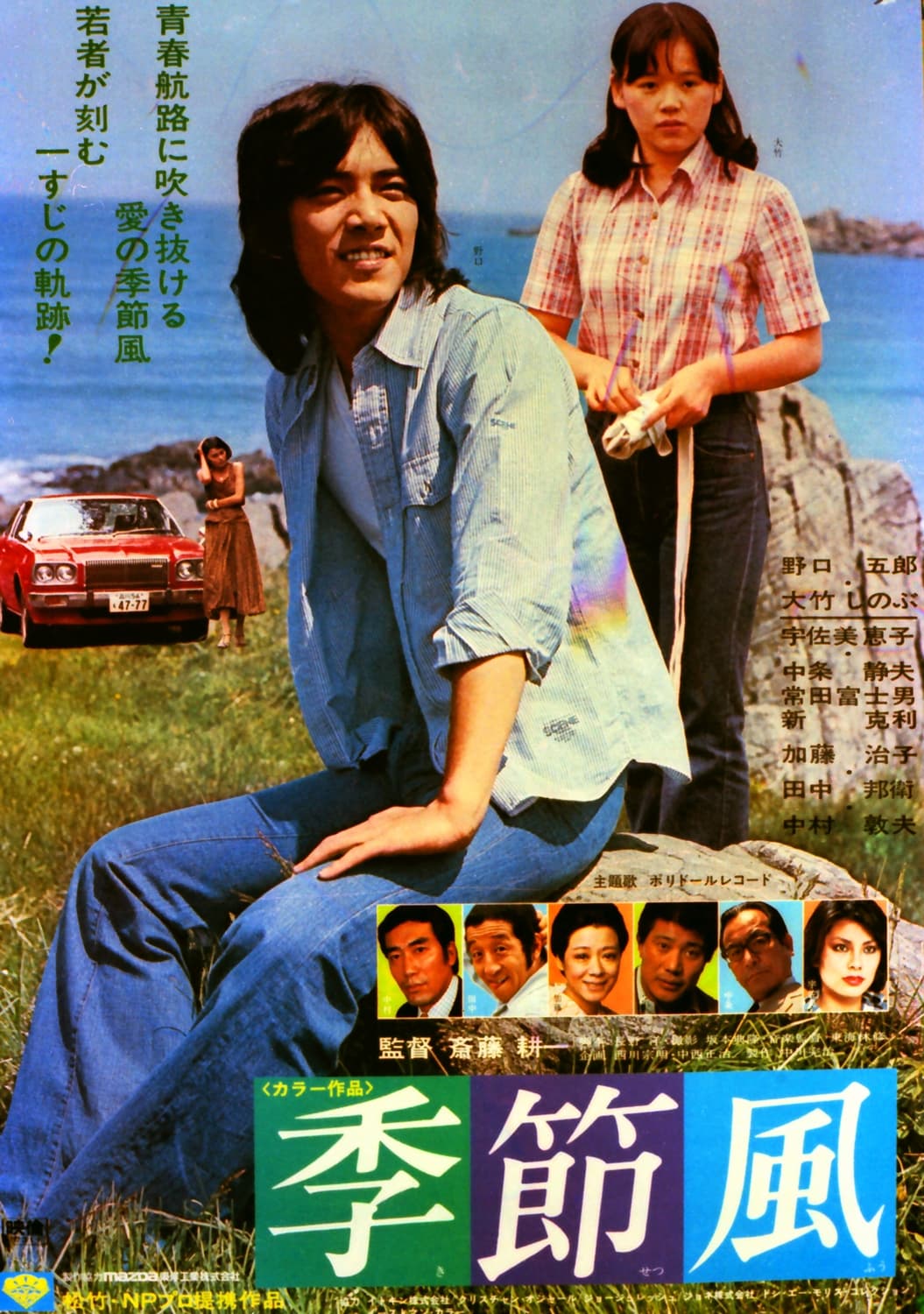
Shinji, a young man who accidentally met a successful model, moves to Tokyo because of his admiration for her. However, a harsh reality awaits him in Tokyo. As a result, Shinji returns to his hometown to start life anew. A romantic drama inspired by the hit song of the same name by Goro Noguchi.
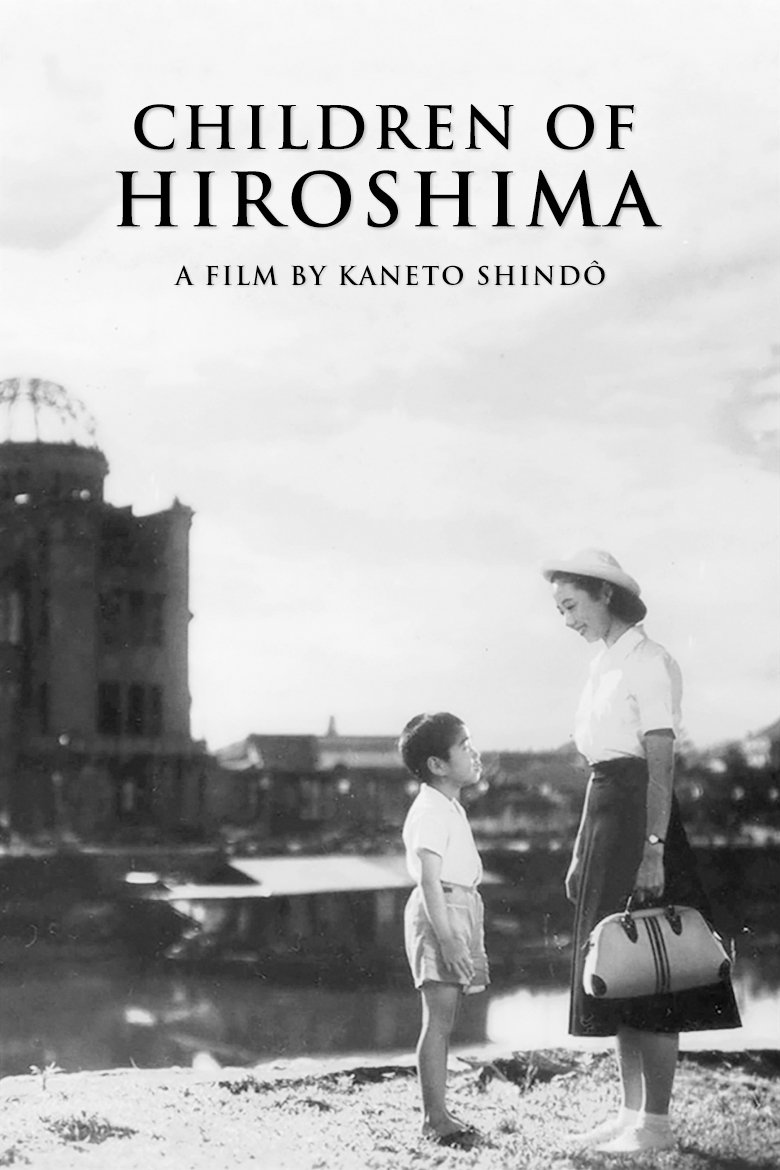
Shows the devastation caused by the atomic bomb, and by use of a fictional storyline, portrays the struggle of the ordinary Japanese people in dealing with the aftermath.

The world-famous woodblock artist Hokusai (1760-1849), a widower in need of a steady income, lives with his daughter Oei in the house of his friend Bakin.
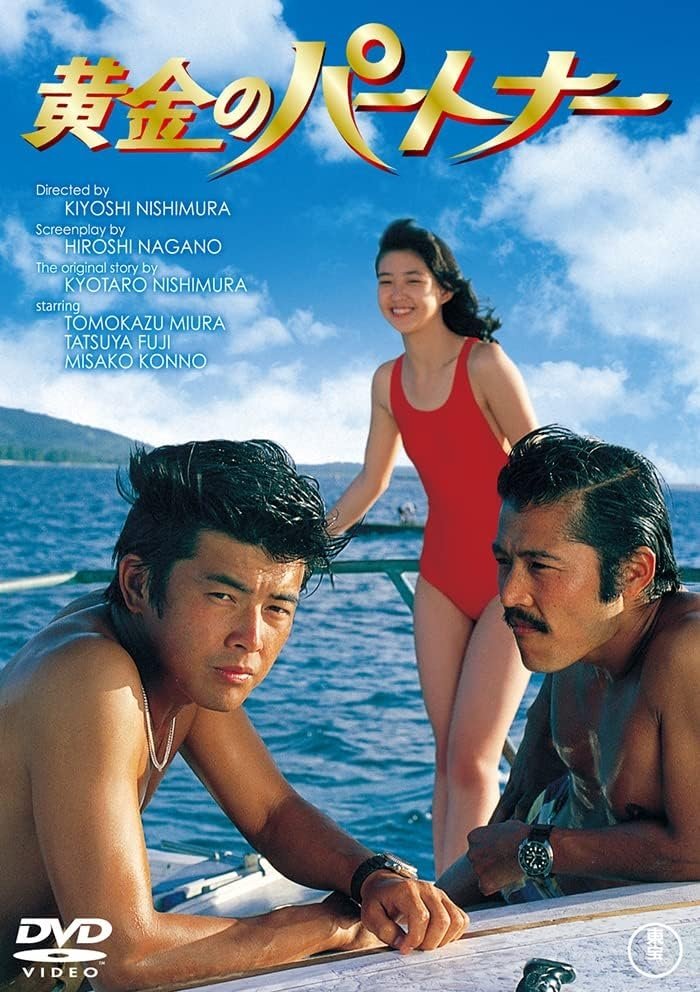
A motorcycle cop and a freelance photographer, having learned the location of 1 billion yen's worth of the Imperial Navy's gold, team up to salvage it.
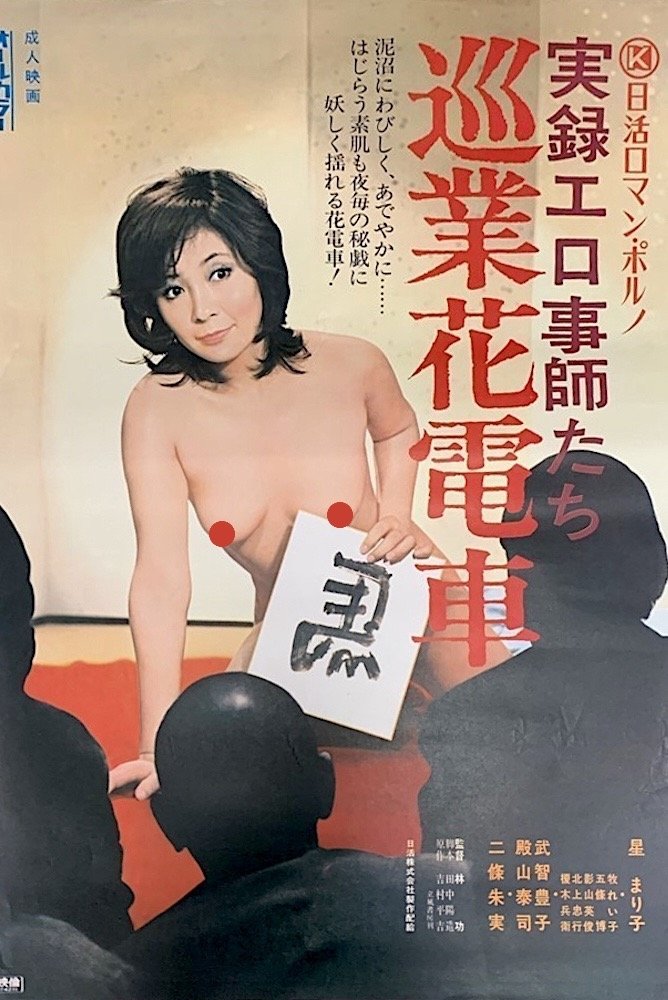
Fresh out of prison a manager of live sex shows decides to take his show on the road. He persuades one of his former performers to join his troupe and she learns new tricks of the trade.
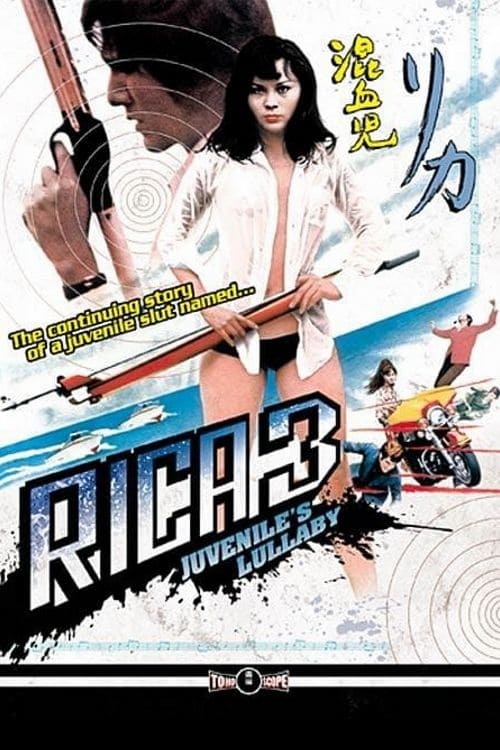
Reform schools are a way of protecting society by ridding it of lawless juvenile delinquents. But who's protecting the juvenile delinquents from corrupt reform schools? Rica could be considered a bit of an expert on reform schools, having spent most of her early life in and out of them. When Rica is dragged back once again, she gets a severe beating and is finally sent off to a mental hospital with the intention of selling her and her pals into a slave trade. A trader takes Rica's friend Jun to a mountain cottage where she's pegged for the lead in his clandestine porno film operation. Once again, it's up to tough-as-nails Rica to bust up this corrupt racket once and for all!
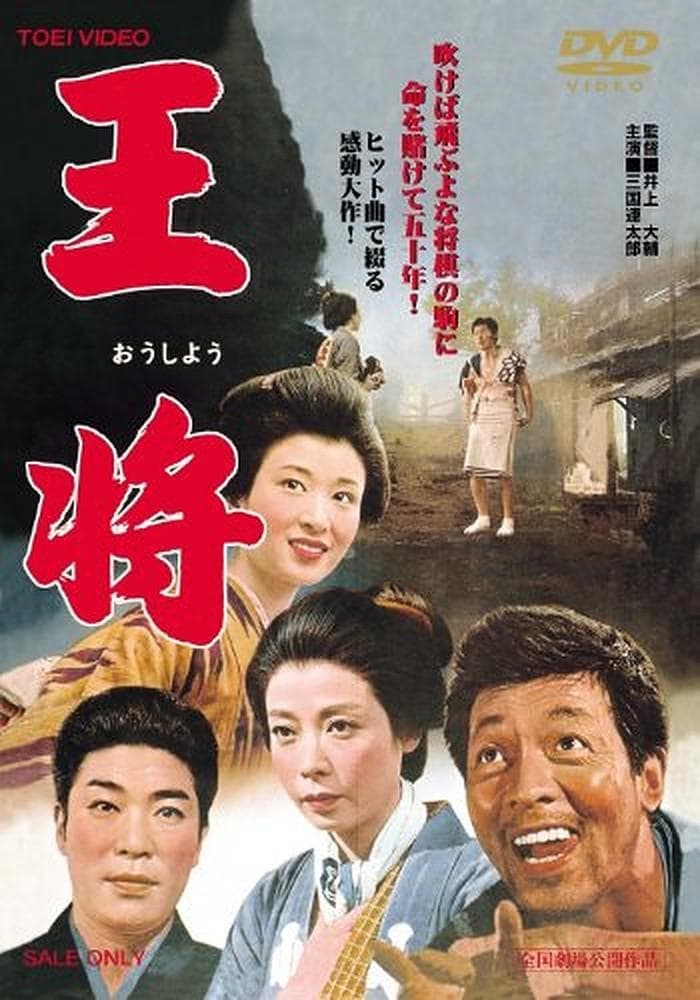
The film takes place at the junction of the two eras of Meiji and Taisho. Sakata Sankichi, an uneducated zori sandal maker, becomes a professional shogi player through his genius shogi skills and lives a fanatically devoted shogi game supported by the love of his family. This is the 3rd adaptation of Hideji Hojo's famous play.
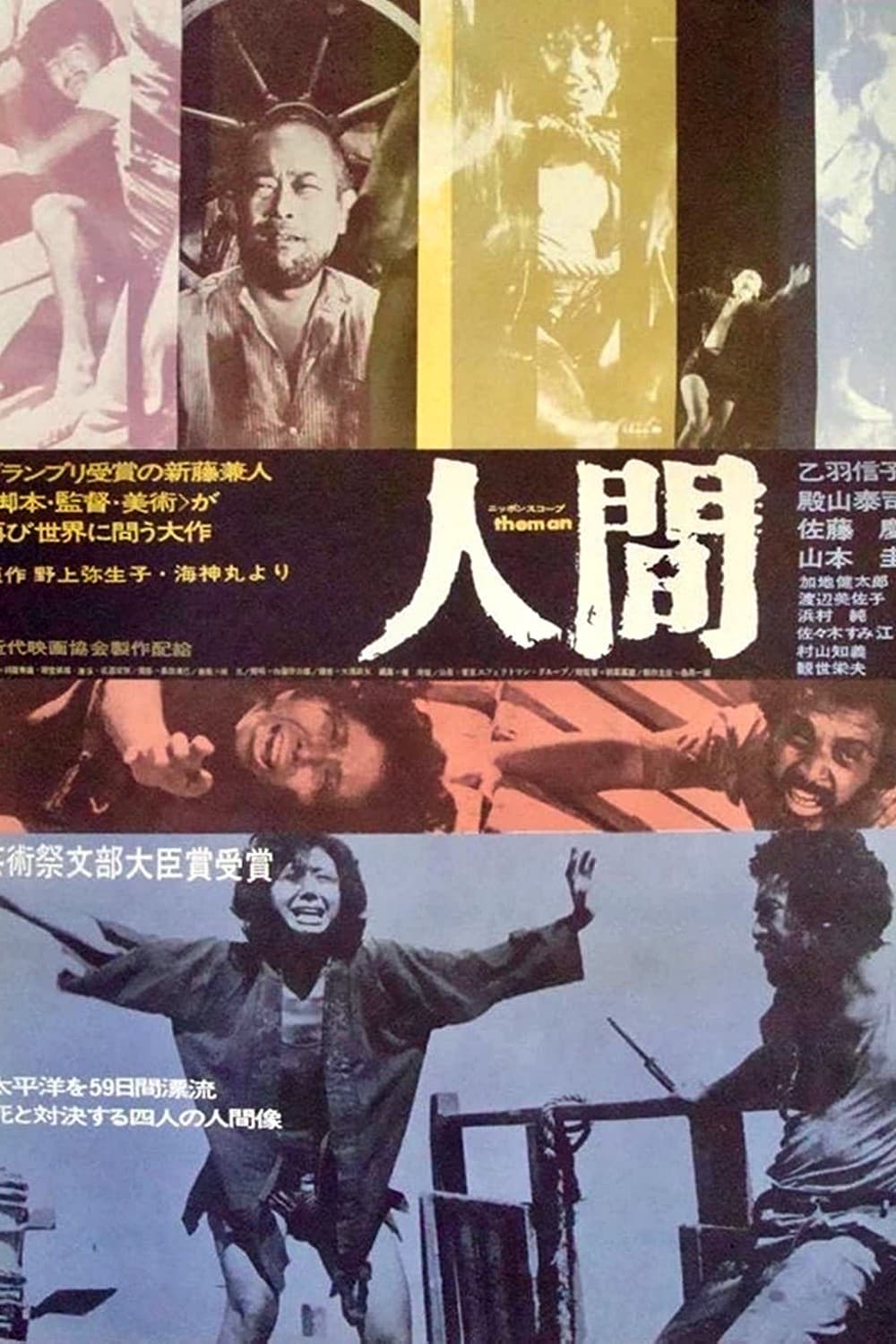
The ship Kaijin Maru is left adrift after losing all means of navigation in a storm. The four people on the ship are becoming increasingly desperate as food and water run out.
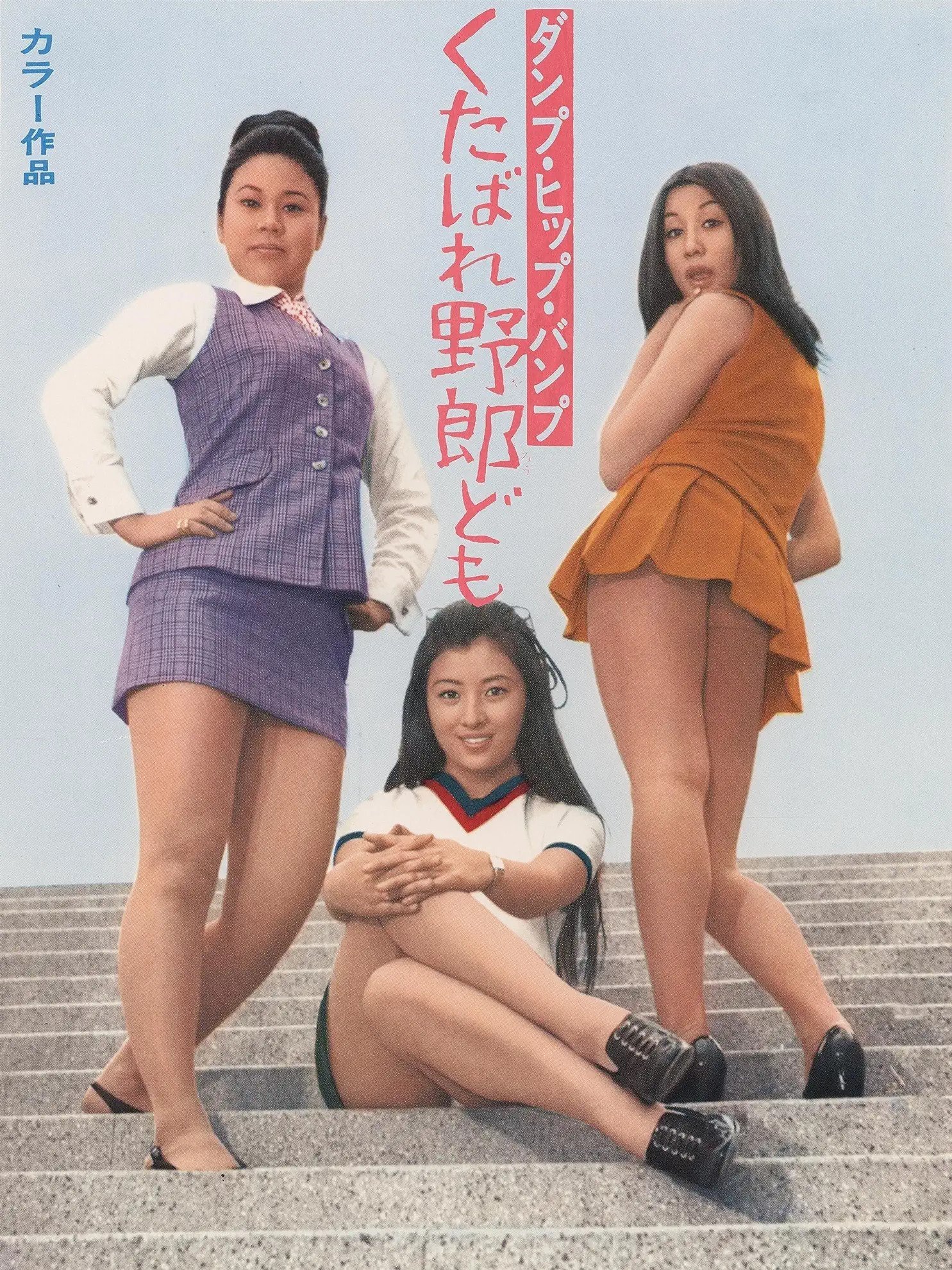
In this sizzling escapade, three irresistible vixens—Dump, Hip, and Bump—deliver a daring, alluring masterclass in mischief. Dump, a martial arts maven, combines lethal moves with an untamed sensuality, while Hip captivates with her razor-sharp wit and magnetic allure. Meanwhile, Bump’s sultry charm turns even the staunchest hearts to mush. Under Masako Sakamoto's provocative orders, they plunge into hedonistic debauchery at the “Dream National Assembly.” First, they seductively manipulate sauna sirens into high-stakes bets that pay off handsomely. Next, they incite wild, erotic revelry at a ghostly bar, unleashing an intoxicating tide of risqué abandon. Finally, their provocative presence ignites a deluxe key club with unbridled, seductive intensity, transforming scandal into a lush celebration of desire.
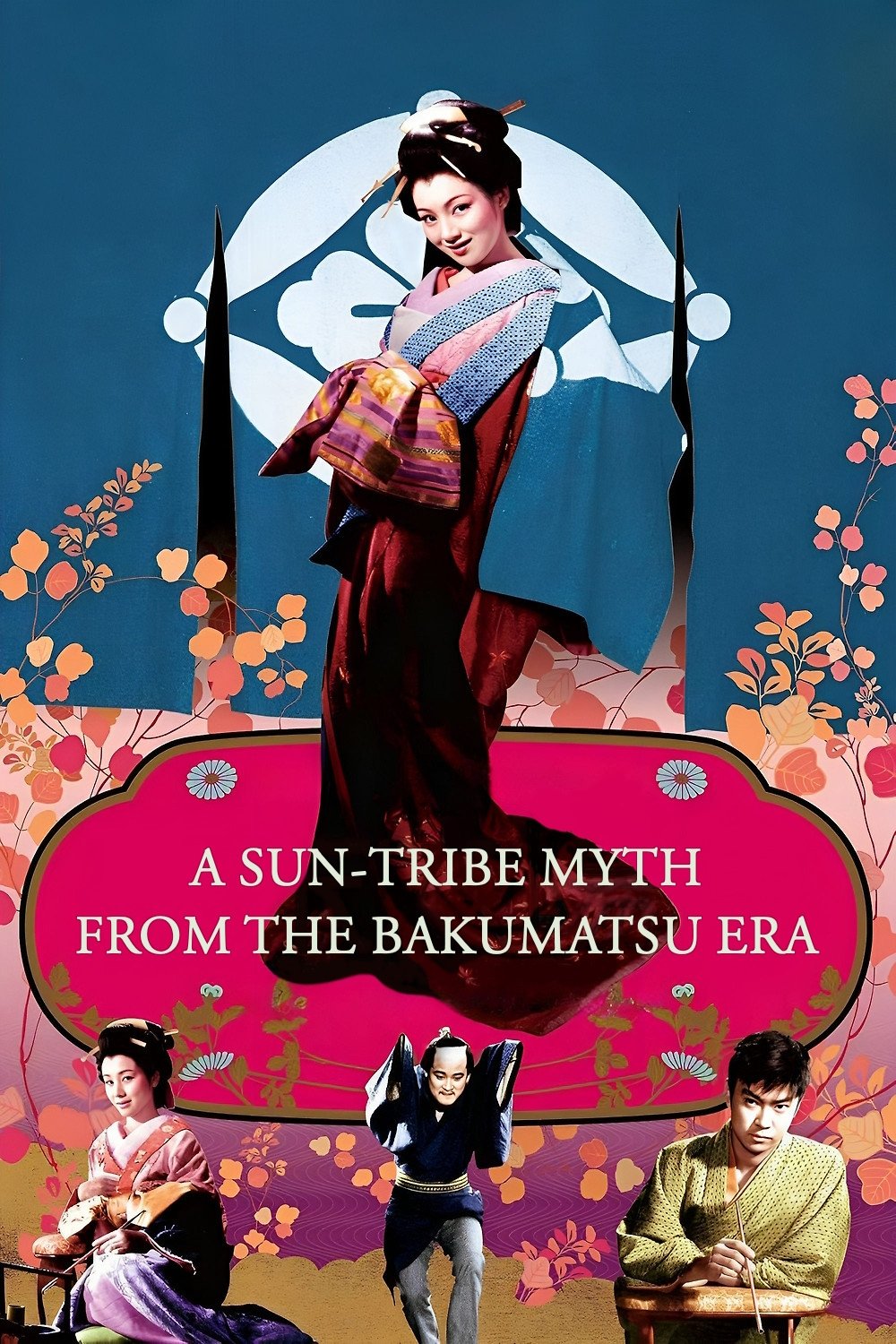
Saheji, a man-about-town, gets stuck at a high-class brothel when he can’t pay the bill. He makes the best of his situation by performing various tasks amidst the tumult of the end of the shogunate—but always by making sure to get a “commission” for his troubles.
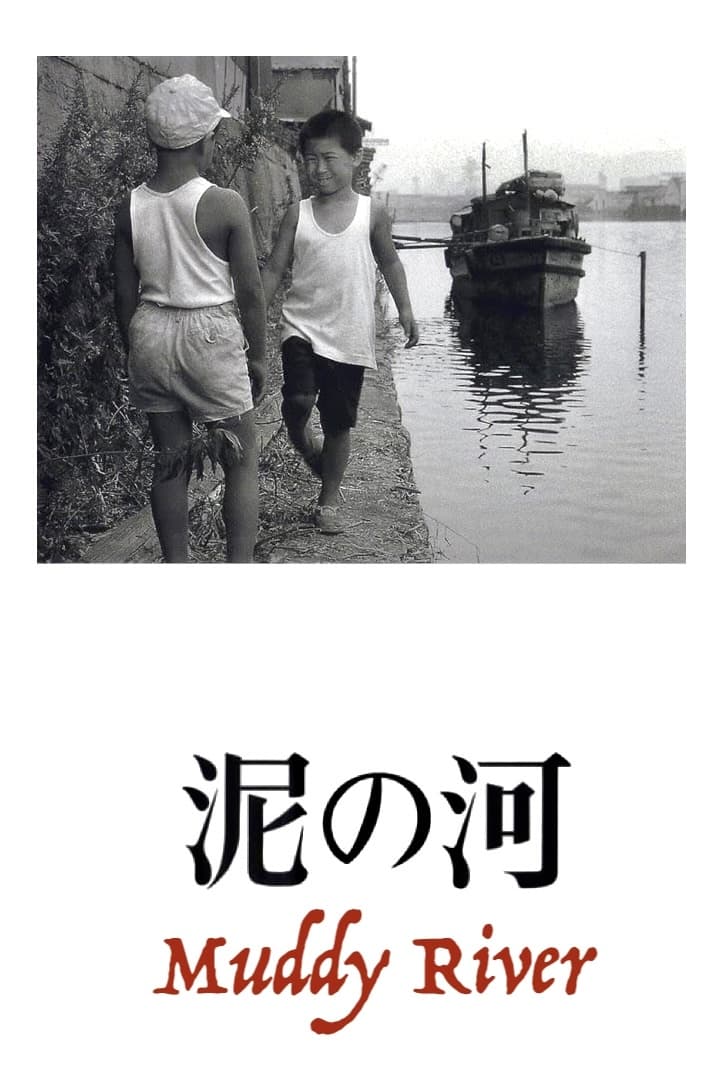
Two boys, whose parents ply their trade by the mouth of a muddy river in Osaka, become close friends.
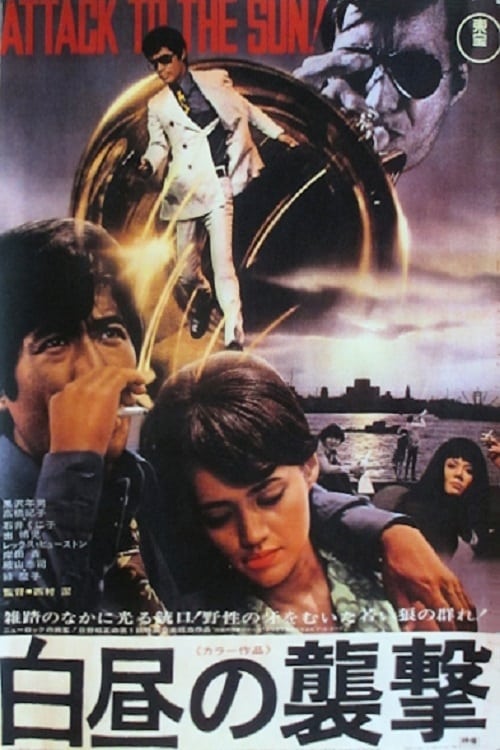
A truck driver is reunited with friends from his youth in a seedy bar and gets drawn into a web of crime.
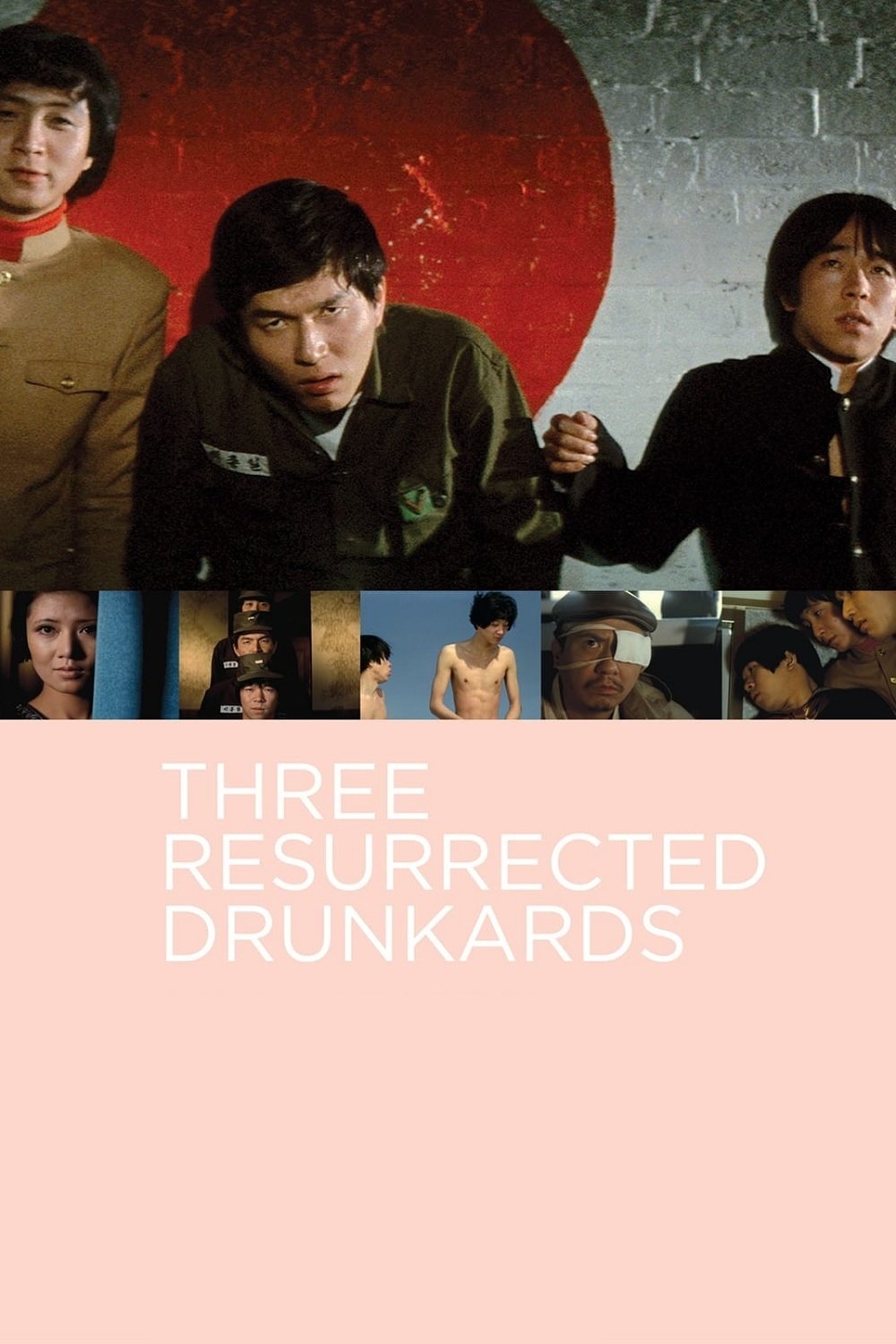
Three students spend their holidays at the seaside where they are mistaken for Koreans, a minority which is looked down on in Japan. The action develops into a crime story.
1956 Japanese film, originally released in two parts.
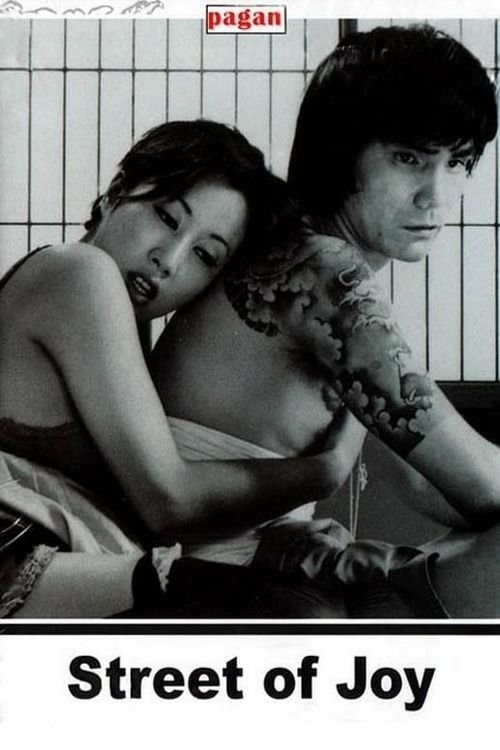
It's the evening before the day all brothels must be shut-down, according to the new law, in 1958. At the Kofukuya's (literally, the house that sells happiness), five prostitutes decide to celebrate the day. Eroticism, drama, and comedy mix as each hour a different event passes, in which all the women's stories come to the surface.
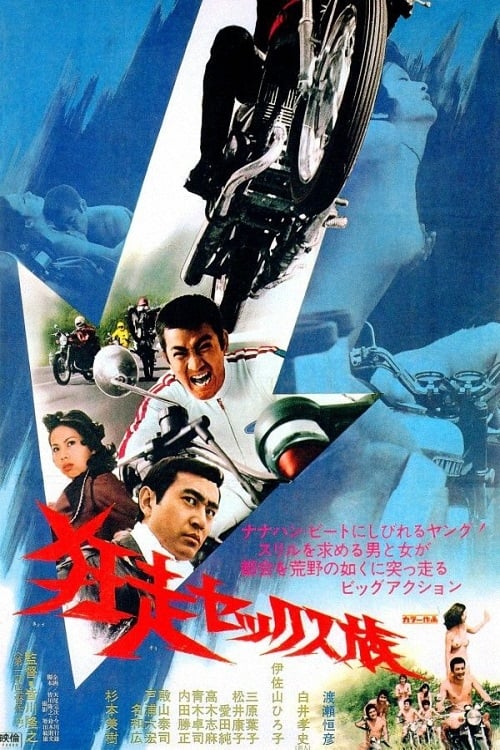
The rich punk Junya has only one thing in mind: to race with the police on his motorcycle. That makes him unpopular, not only with the police, even with his Bosozoku buddies, who slowly but surely distance themselves from him. Junya falls in love with the equally speed-hungry Hiroko.
Two detectives are tasked to investigate the murder of an old man, found bludgeoned to death in a Tokyo rail yard.
A blind traveling musician is abused and oppressed wherever she goes, even as the modern world imposes change around her.
Film about a car dealer who gets into financial trouble.
Shipwrecked African-American slaves arrive in the midst of Bakumatsu-era Japan; they soon carve out a niche in the market with their musical talents.
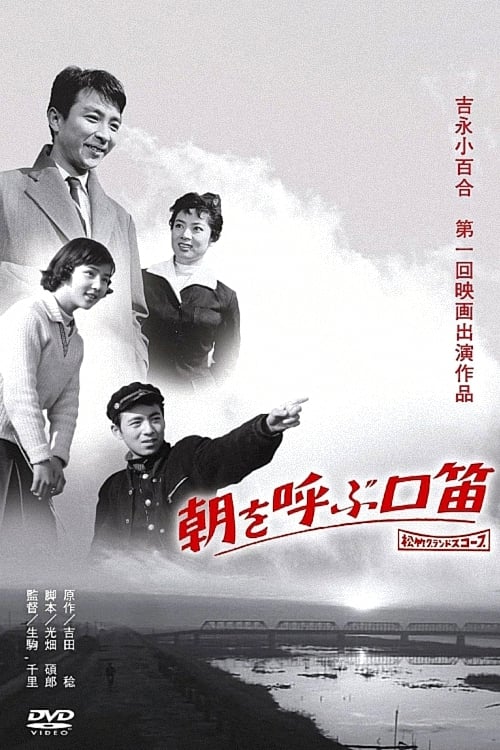
Minoru delivered newspapers to earn money for high school, but when his mother came down with illness he decided to use this money for her doctor's bill and gave up going to high school. His friends heard about this, and they donated money to his mother. So, Minoru goes to high school and yet he delivers newspapers cheerfully whistling every morning. A memorable film debut by Sayuri Yoshinaga, a representative of the Japanese film industry.The film adaptation of "Newspaper Delivery" by Minoru Yoshida, who won the Minister of Education Award at the national small and Medium student essay competition.
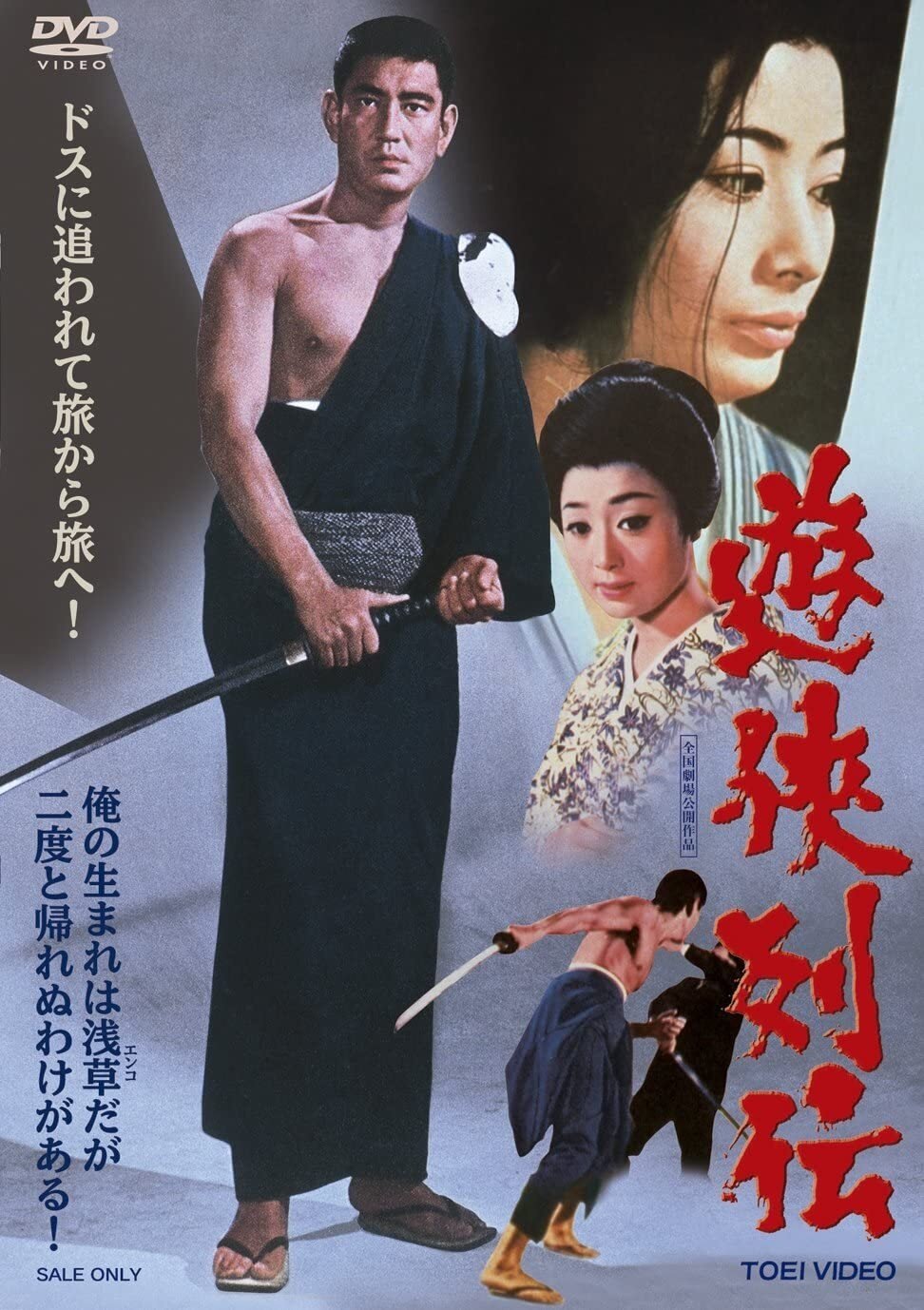
A street vendor who eloped with his girlfriend and injured her brother loses her to illness, and now has to confront the brother and some dirty local yakuza.
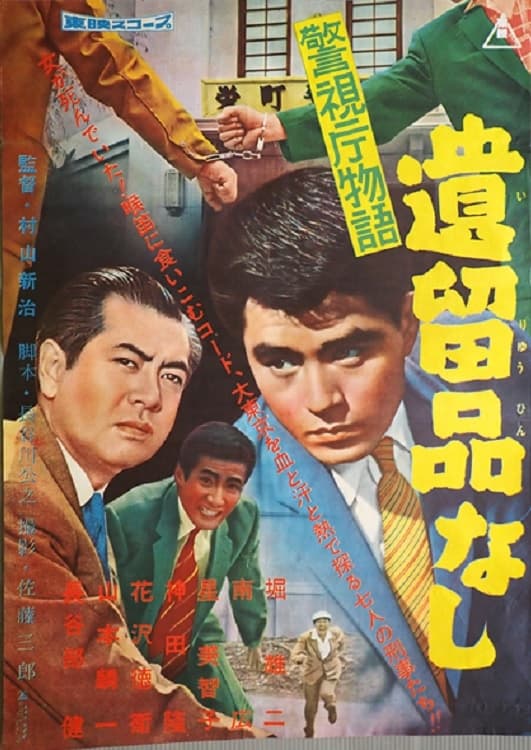
A man who uses marriage as bait goes from woman to woman, and then a horrific murder is committed for money. Seven police man chase the vicious criminal who disappeared into the vortex of the big city.
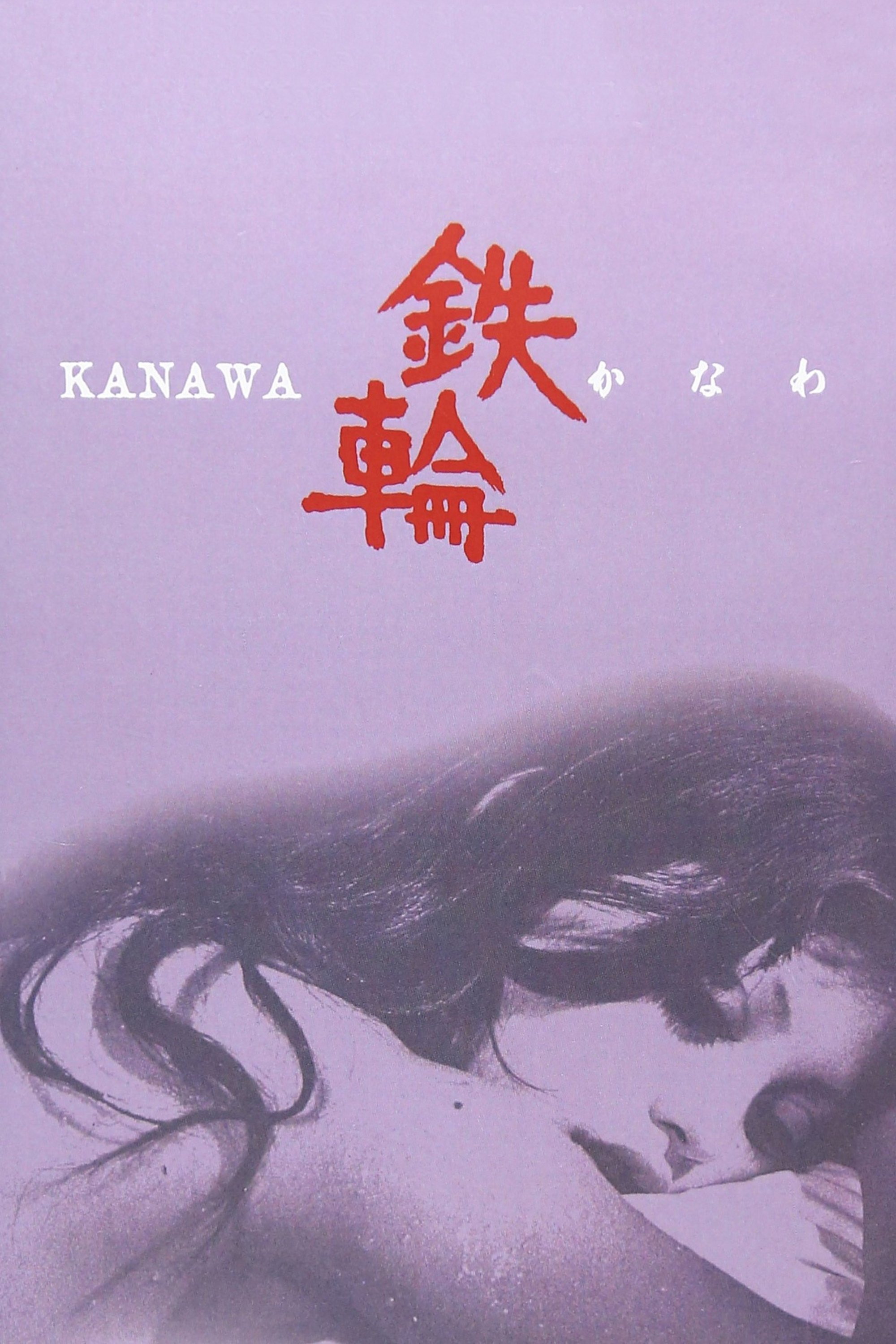
A woman takes revenge on her husband after he leaves her for a younger woman by harassing the couple with unwanted phone calls at night.
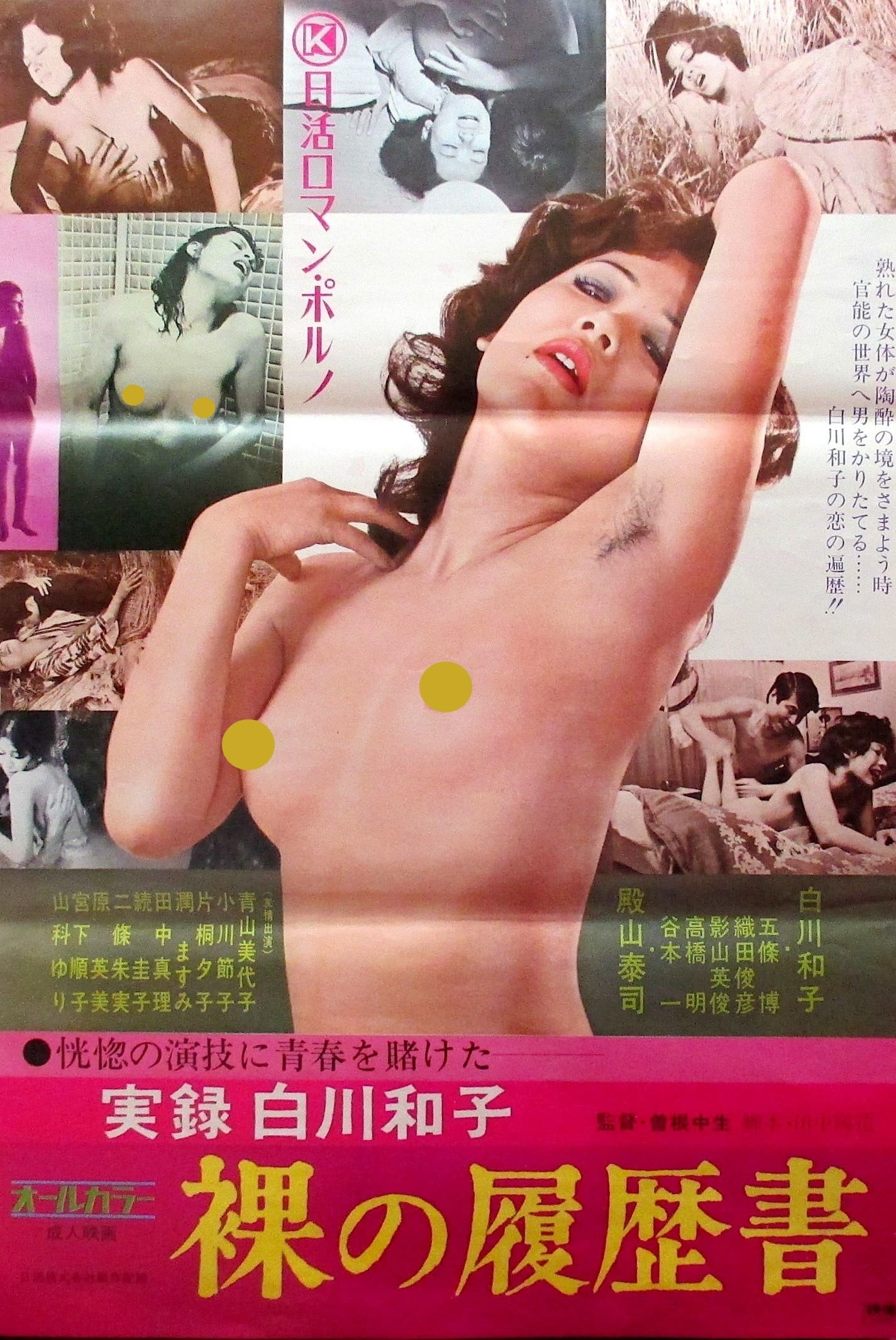
Kazuko Shirakawa plays herself as a student who is scouted by a pink film producer. She leads a chaotic life until finding success at Nikkatsu studios.
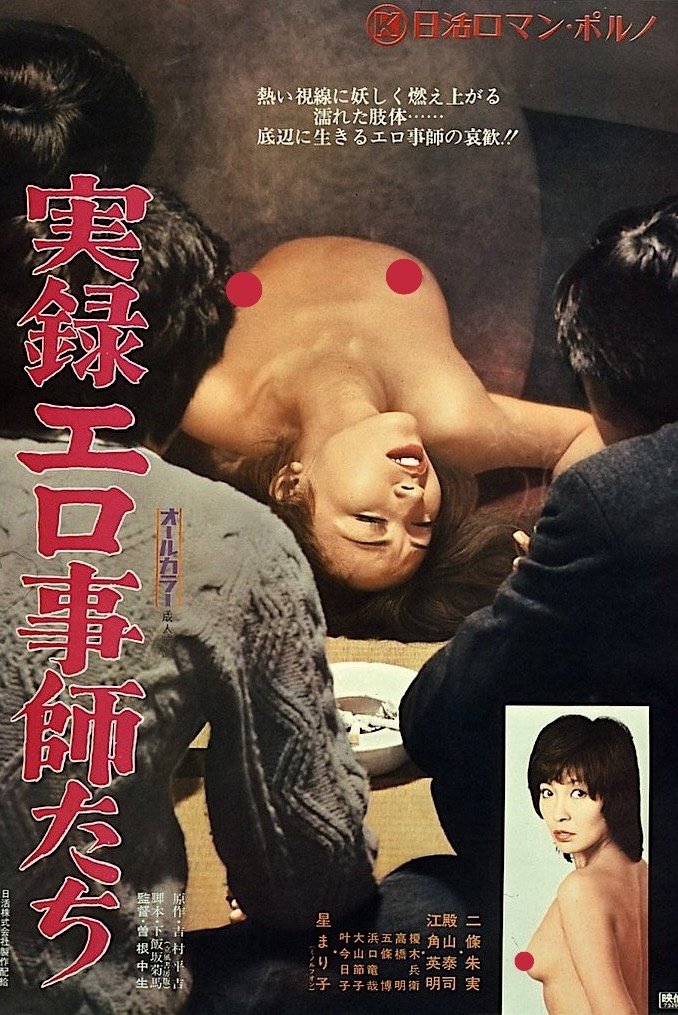
The world of secret sex performers is shown through the lives of a husband and wife team. Their manager must contend with pesky customers and a determined detective.
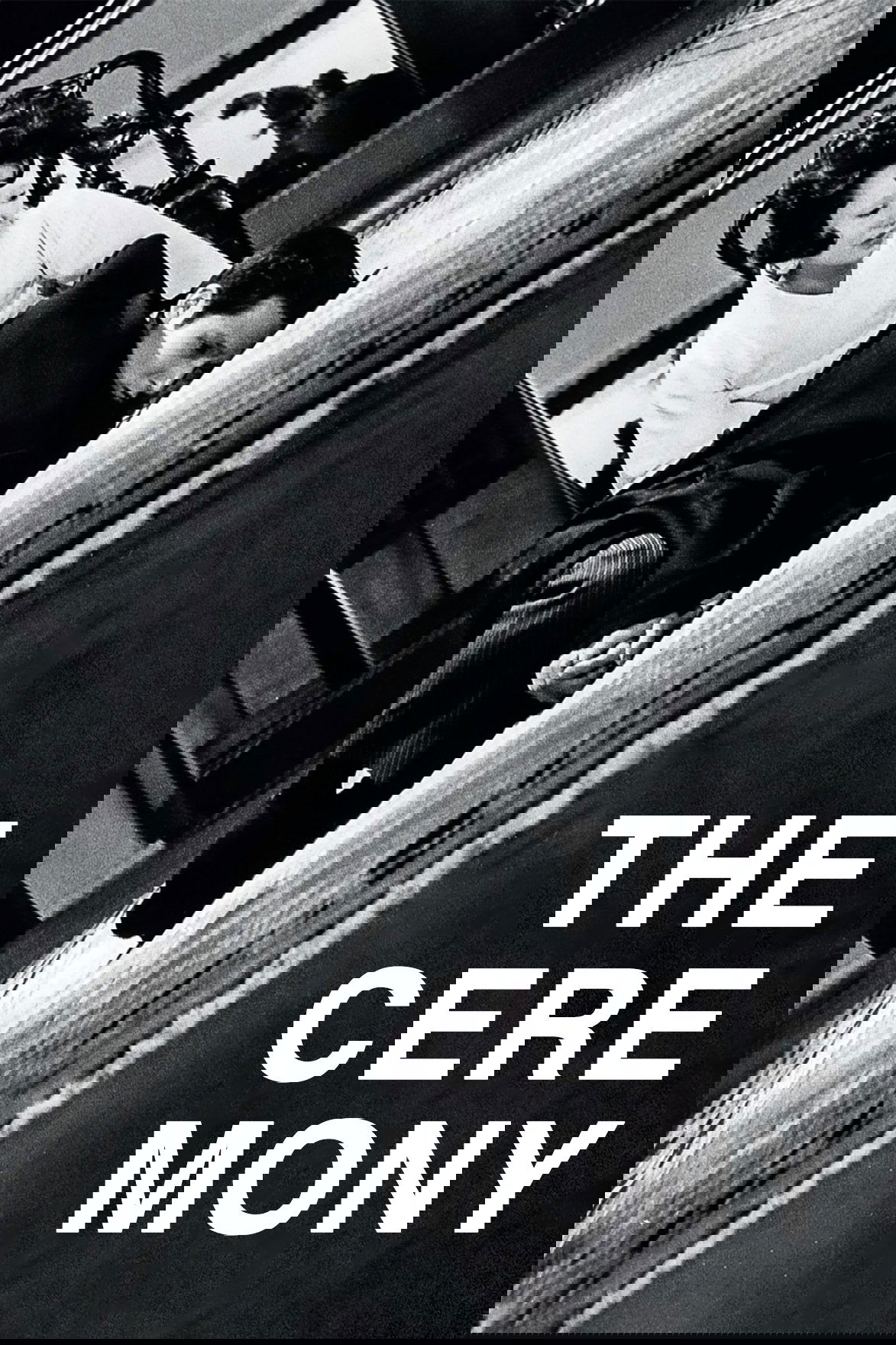
Oshima’s magisterial epic, centering on the ambivalent surviving heir of the Sakurada clan, uses ritual and the microcosm of the traditional family to trace the rise and fall of militaristic Japan across several decades.
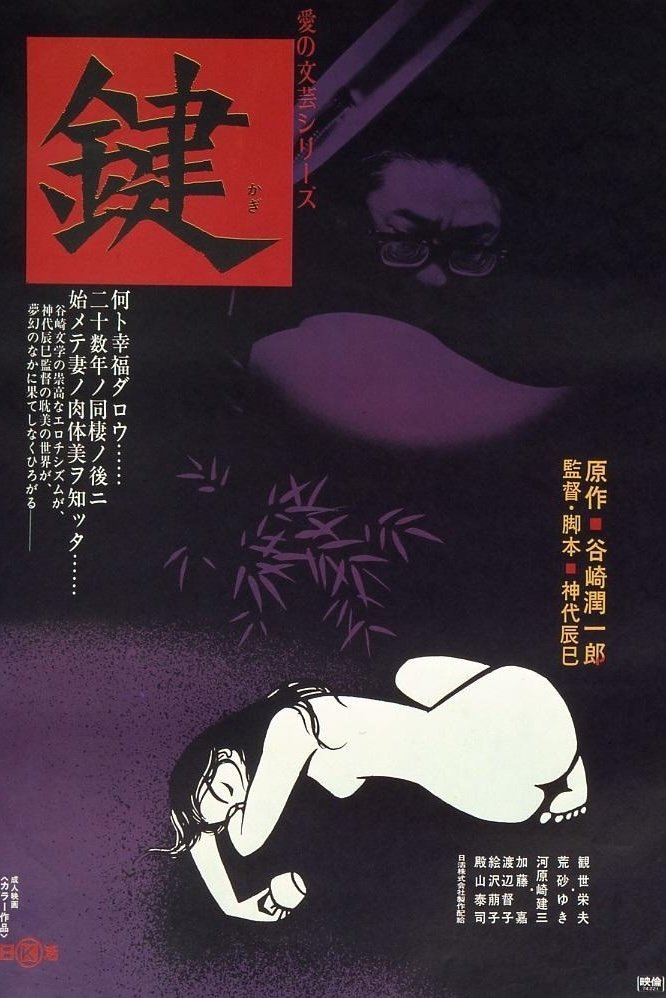
A college professor wants to bring the joys of sex to his frigid wife. He convinces his son in law to sleep with her because the idea arouses him, while also making him insanely jealous. The professor keeps a journal of his fantasies in a locked cupboard and hopes that his wife will find the key and read it.
Noyuri lives in Fudōsō, a dilapidated apartment building in downtown Tokyo. The owner of Fudōsō is Noyuri's father, Harukichi, but he lost his house and property due to his gambling and womanizing, and is now living with a young woman. Noyuri manages to make ends meet by running the remaining Fudōsō and a small oden shop. One day, Harukichi shows up with a young sexy woman named Shinako. He says she's run out of money and is in debt, so she wants to stay in Noyuri's room for a while. Noyuri initially refuses, but eventually gives in and decides to stay at the oden shop...

A sly gangster hatches a plot against his own wife, who works at a brothel-cum-bathhouse, with the help of the bathhouse owner’s wife.
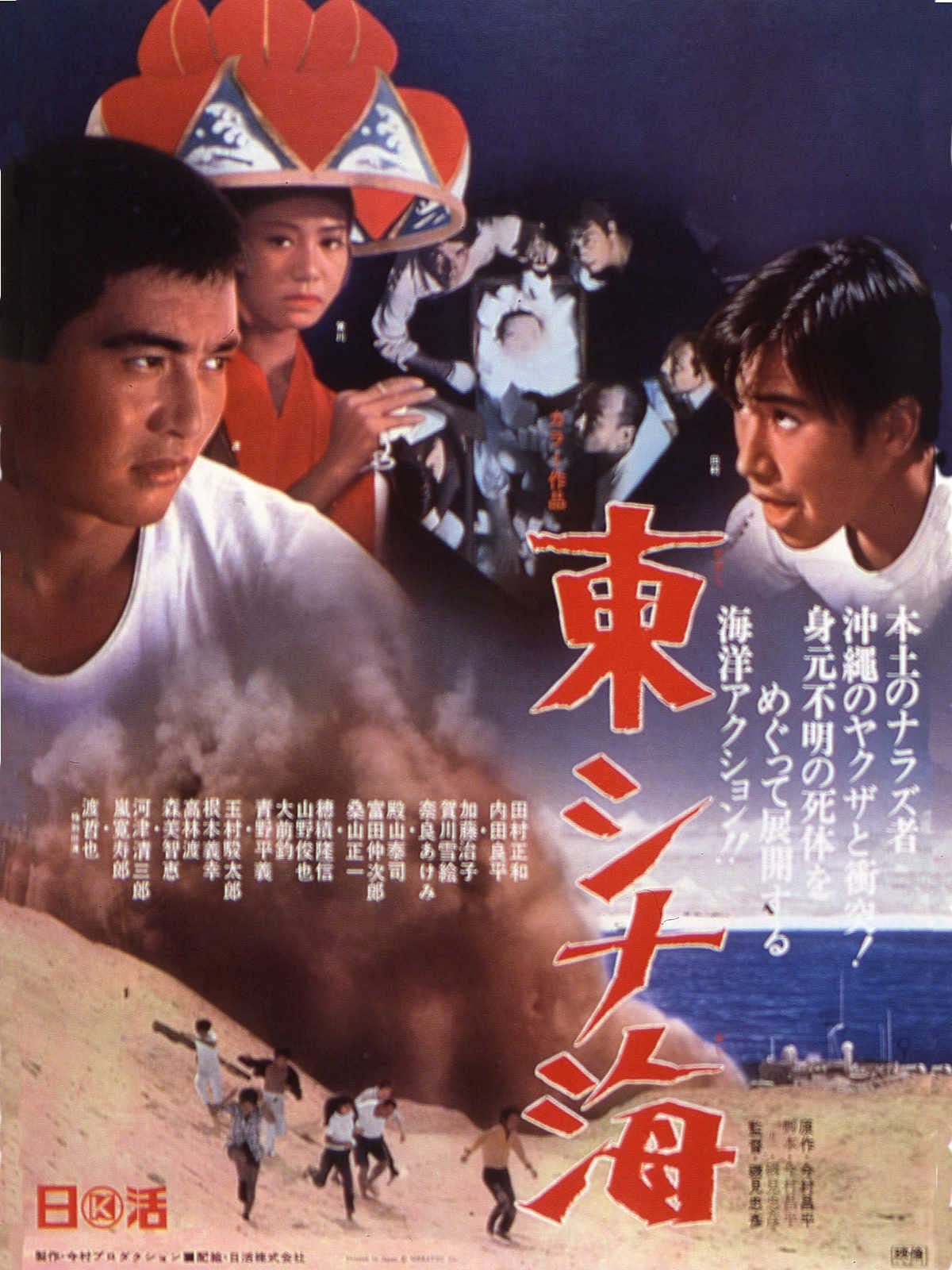
Rokurō starts a part-time job on a fishing boat, but the ship has an engine failure in the middle of the Pacific Ocean.
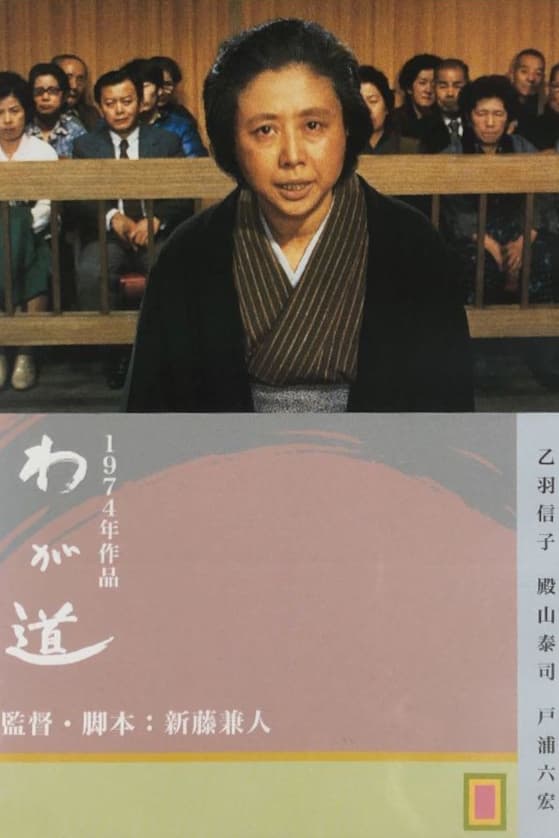
Based on a true story, an elderly woman resiliently spends nine months attempting to retrieve her husband's dead body, fighting government bureaucracy and indifference all along the way.
A family of Kyoto textile workers struggles after tragedy.
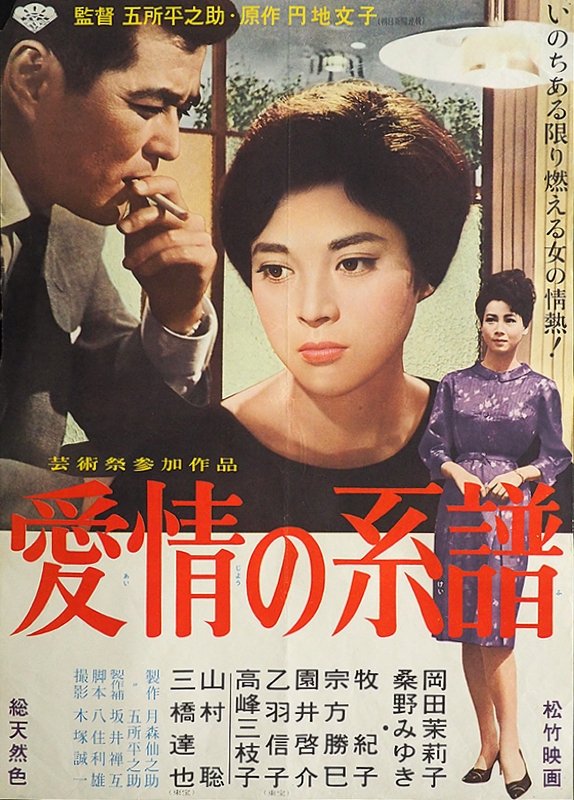
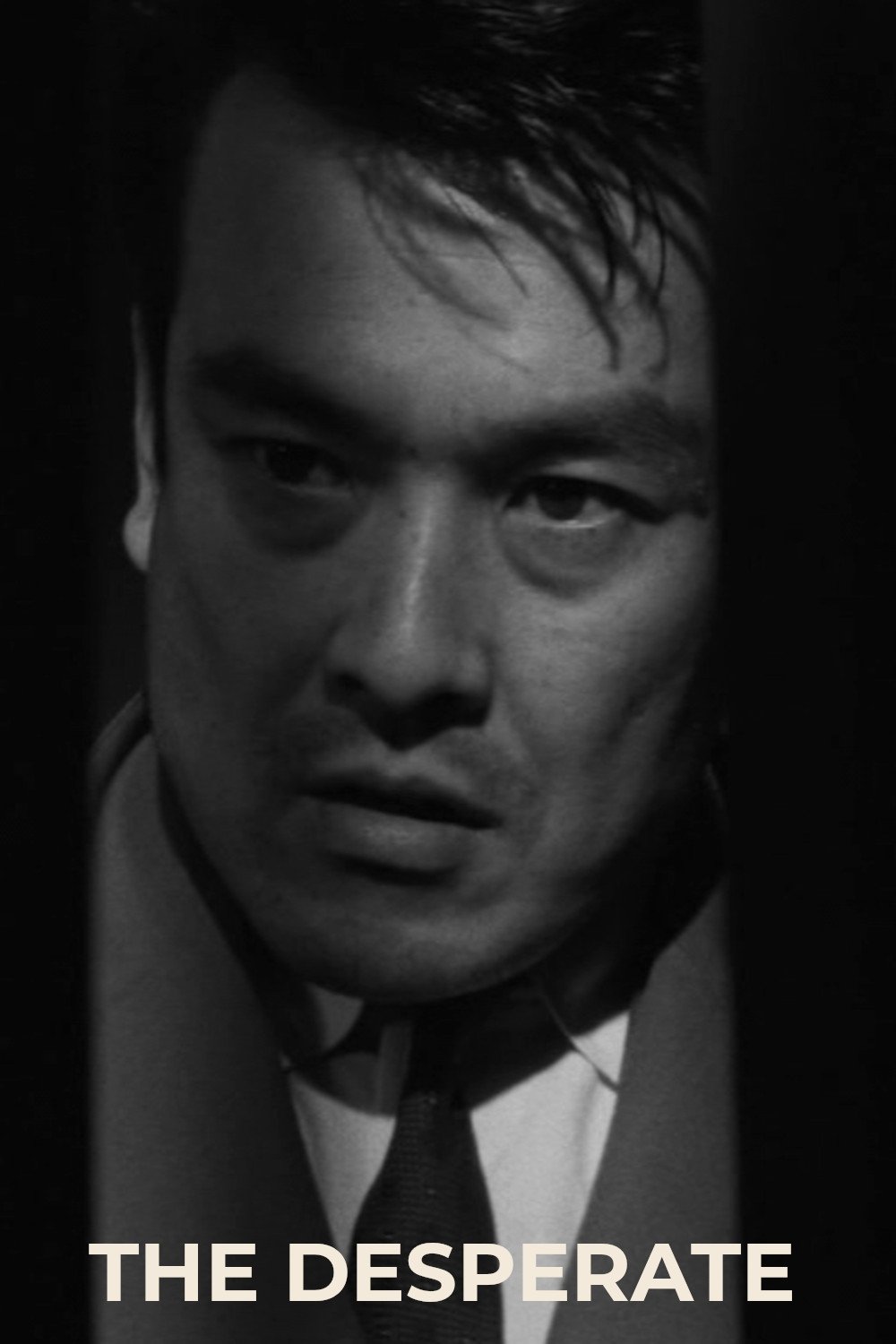
A noir drama depicting the downfall of a veteran detective who hates evil and falls into its depths. Ace detective Sugai pursues Chiyo, the mistress of a man who was arrested for extortion, and takes advantage of her weakness. However, as his colleague Tokumochi and others regard him with suspicion, he is tormented by remorse.
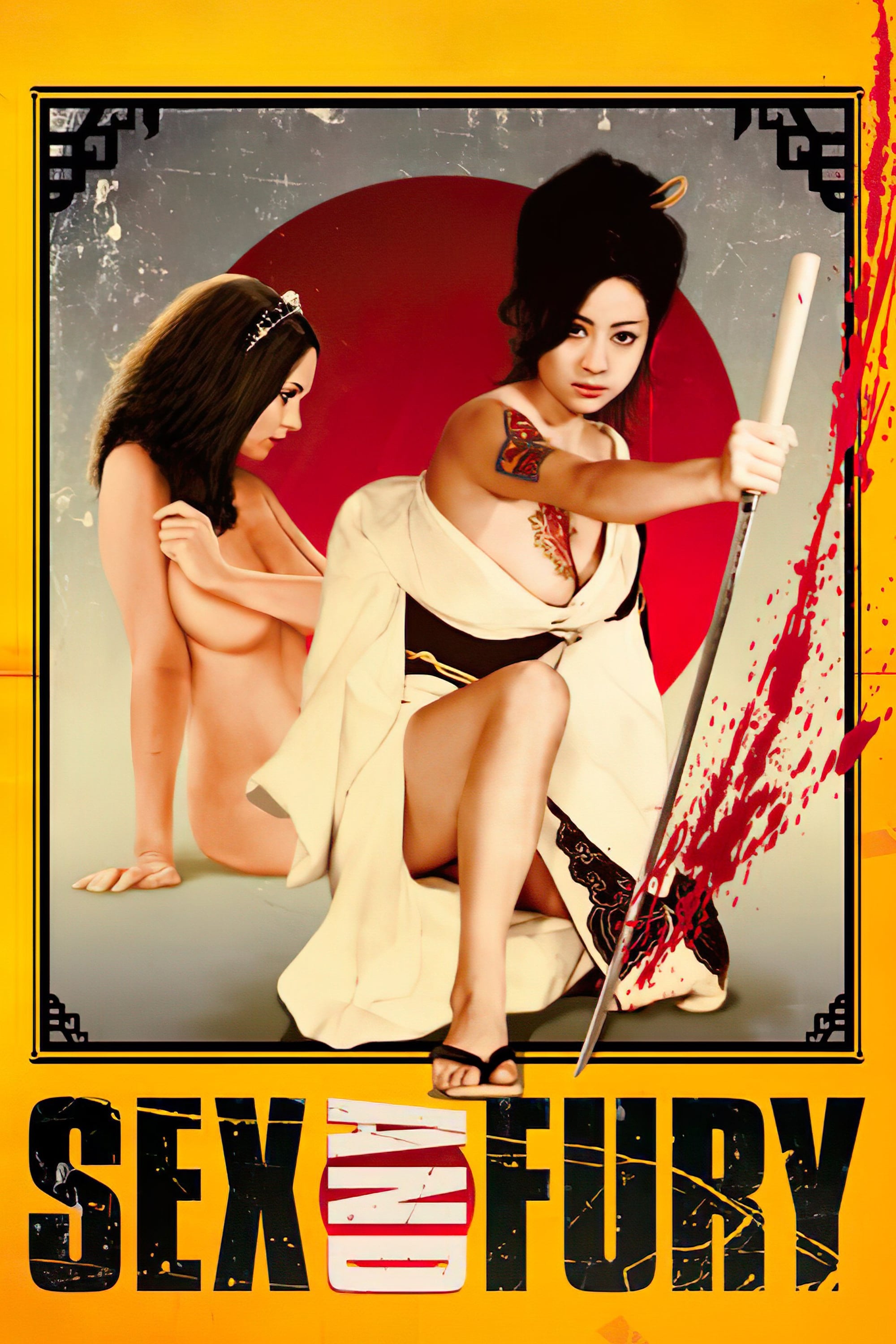
Sex & Fury chronicles Ocho's exploits as she searches for her father's killers, each identified by unique tattoos on their backs (a deer, a boar, and a butterfly). Along the way, she also crosses paths with Shunosuke, a radical set on murdering prominent politician Kurokawa, and Christina, an American spy posing as a gambler.
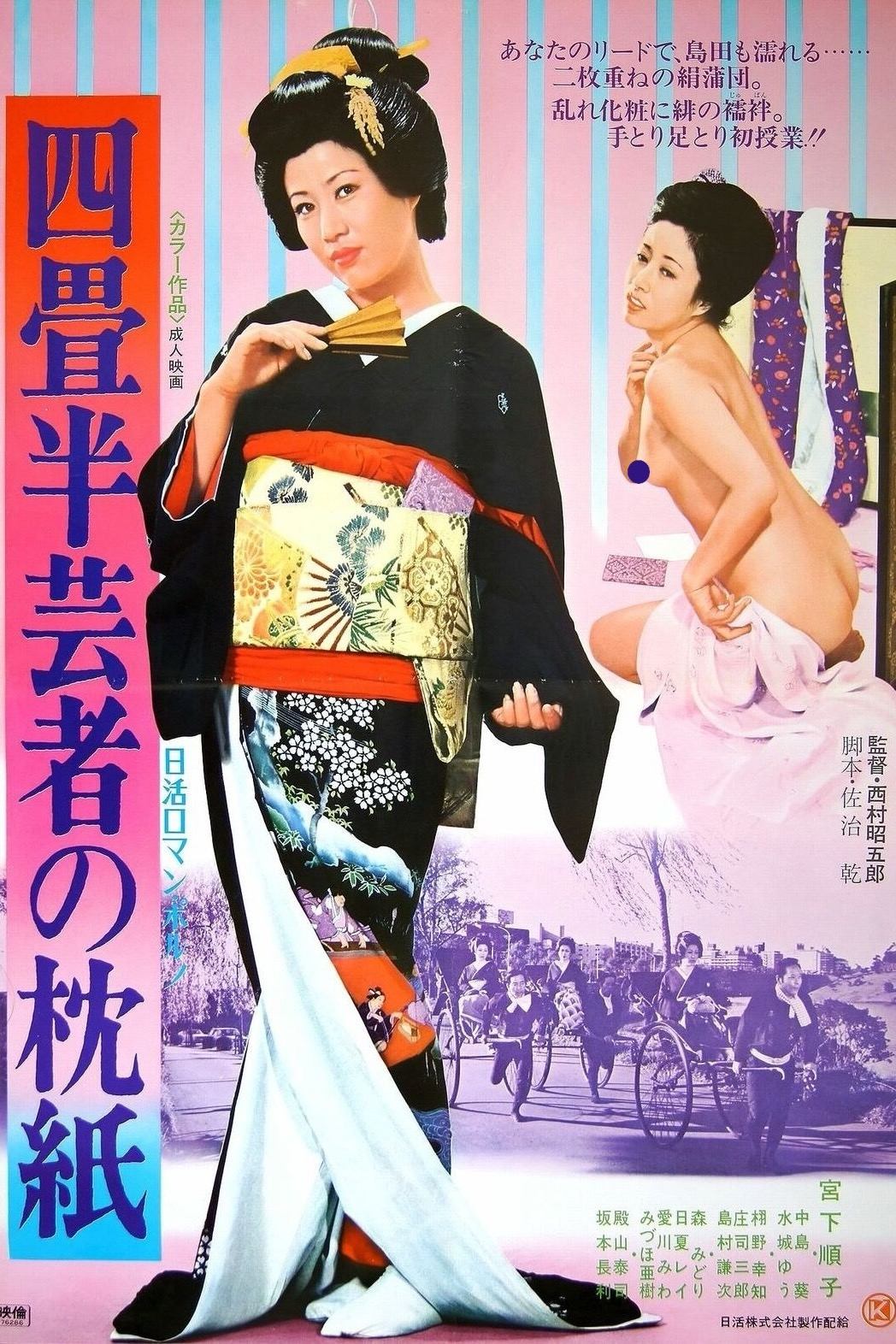
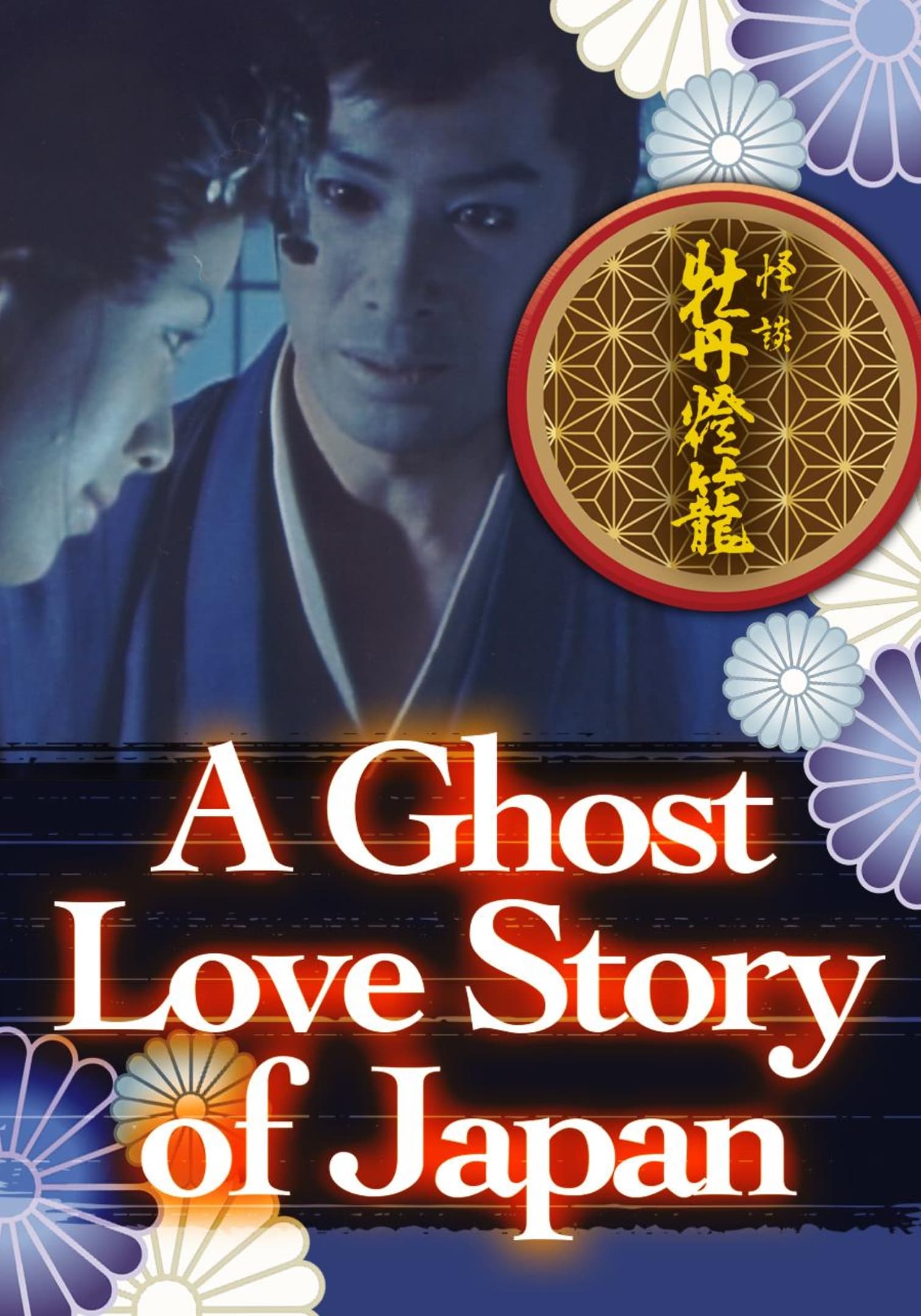
A daughter of Hatamoto (high-ranked soldier) Otsuyu (Akiko Kana) and a Ronin living in Choya (cheap apartment) Shinzaburo Hagihara (Yoichi Hayashi) fell in love with each other. They could not see each other for a while, but Otsuyu visited Shinzaburo's place late at night, led by a servant Oyone (Shoko Yagi). Tomorrow night and next night as well.
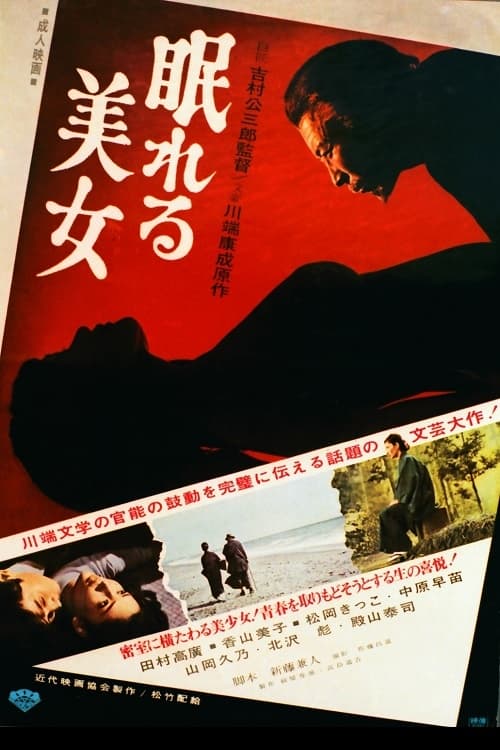
About an establishment where old men pay to sleep besides young girls that had been narcotized and happen to be naked, the sleeping beauties. The old men are expected to take sleeping pills and share the bed for a whole night with a girl without attempting anything of bad taste like putting a finger inside their mouths.

No matter who holds me, the only thing that resides in my body is the strong taste of that man's body... A deeply emotional, humanistic romantic porn film that made Junko Miyashita's name super famous! This is a masterpiece! Directed by Kazunari Takeda.
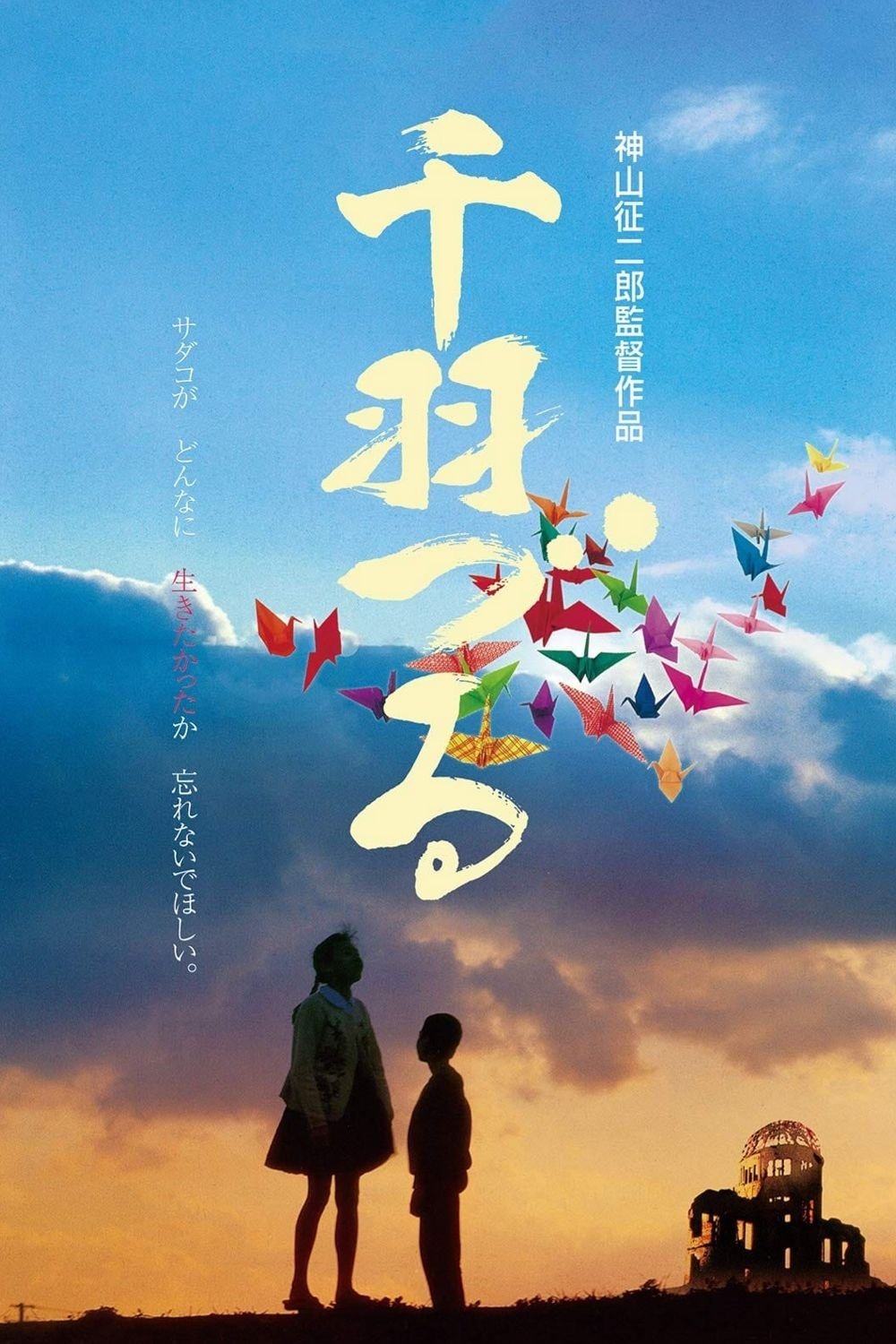
April 1954. 12 year old schoolgirl Sadako thinks her main problem is being unable to pass the baton in relay races. But just as her team starts winning, she starts getting tired more easily. She is sent back to the American Base Victory Hospital, where the diagnosis is lymphatic leukemia. And she has no more than a year left to live. Her parents agree with the doctor that Sadako should not be told, but will she find out anyway ?
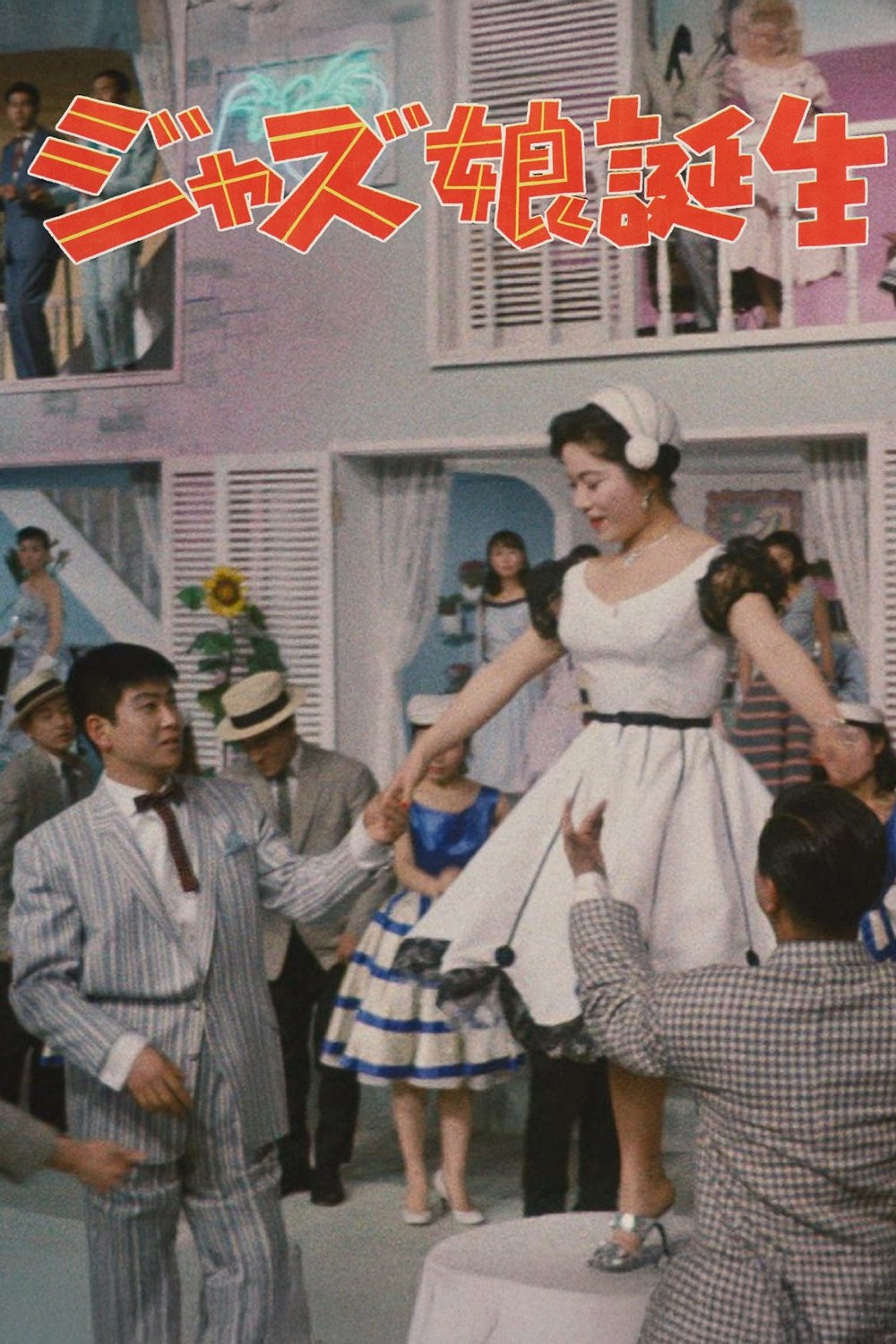
Kawai Midori's father left the family a long time ago and since her mother passed away, she has taken care of her younger siblings by herself by working with a group of itinerant camellia oil peddlers. While she is In Izu selling camellia oil, she meets a young student, Katō Yutaka, who asks her to let him take her picture. The peddlers also meet a jazz band, and when Midori sings a song, teased by the band's star singer Nanjō Haruo, the band members are enraptured by her beautiful voice. She eventually joins the band and quickly becomes a popular jazz singer.
Japanese Drama film about the female experience during the war years.
A villager's family is ostracized after he makes an accusation of rigged elections
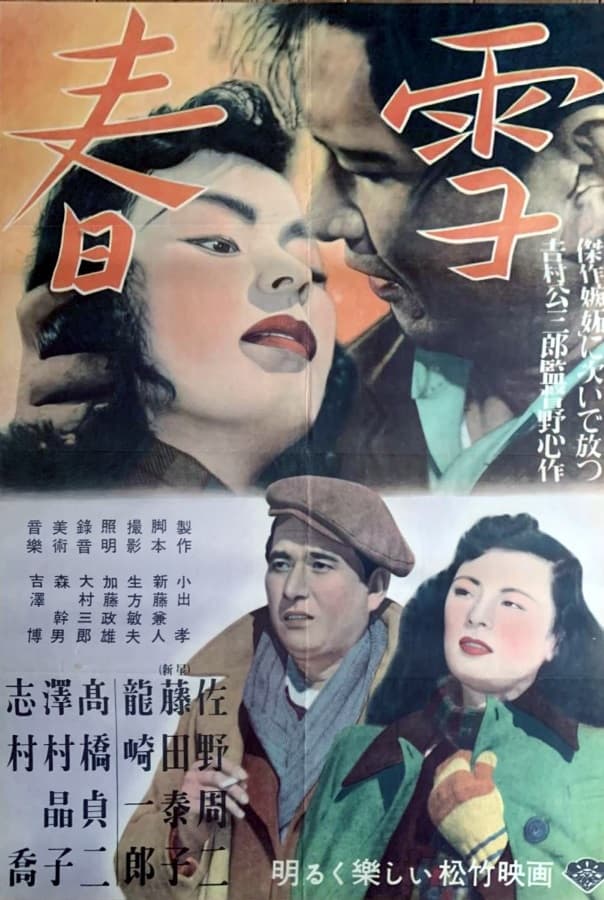
The Yoshikawa family is a typical small town family. With only the father's and daughter's salaries to support the family's six members, life is not easy.
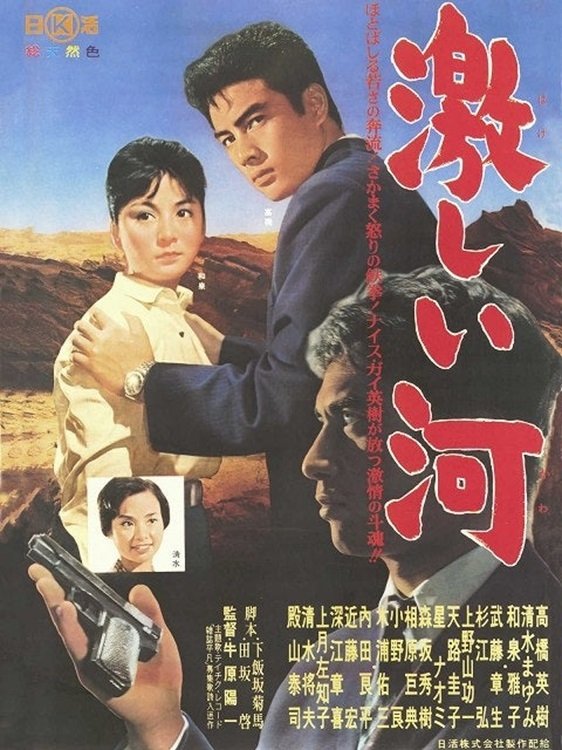
1962 Japanese movie

A woman believing to be a legendary immortal nun attracts people looking for answers to their life struggles.
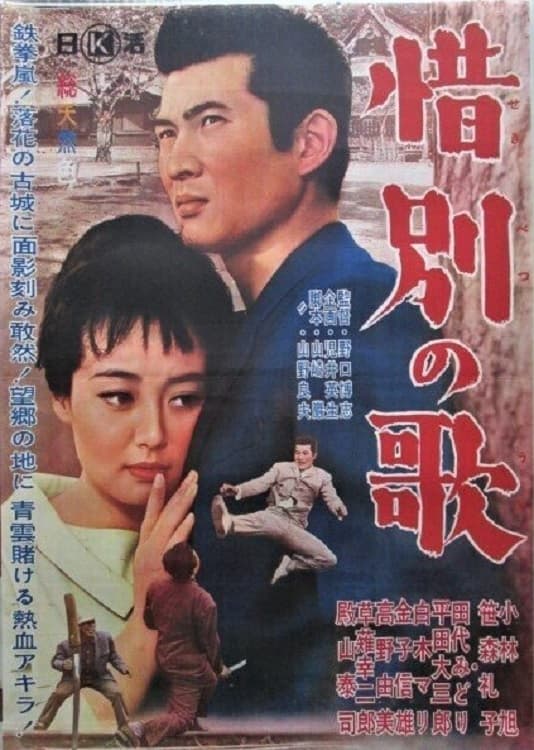
A crime film released in 1962
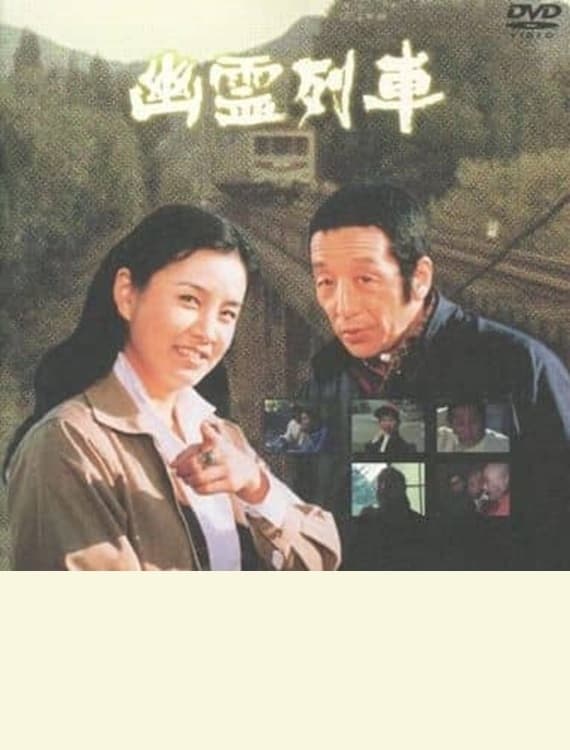
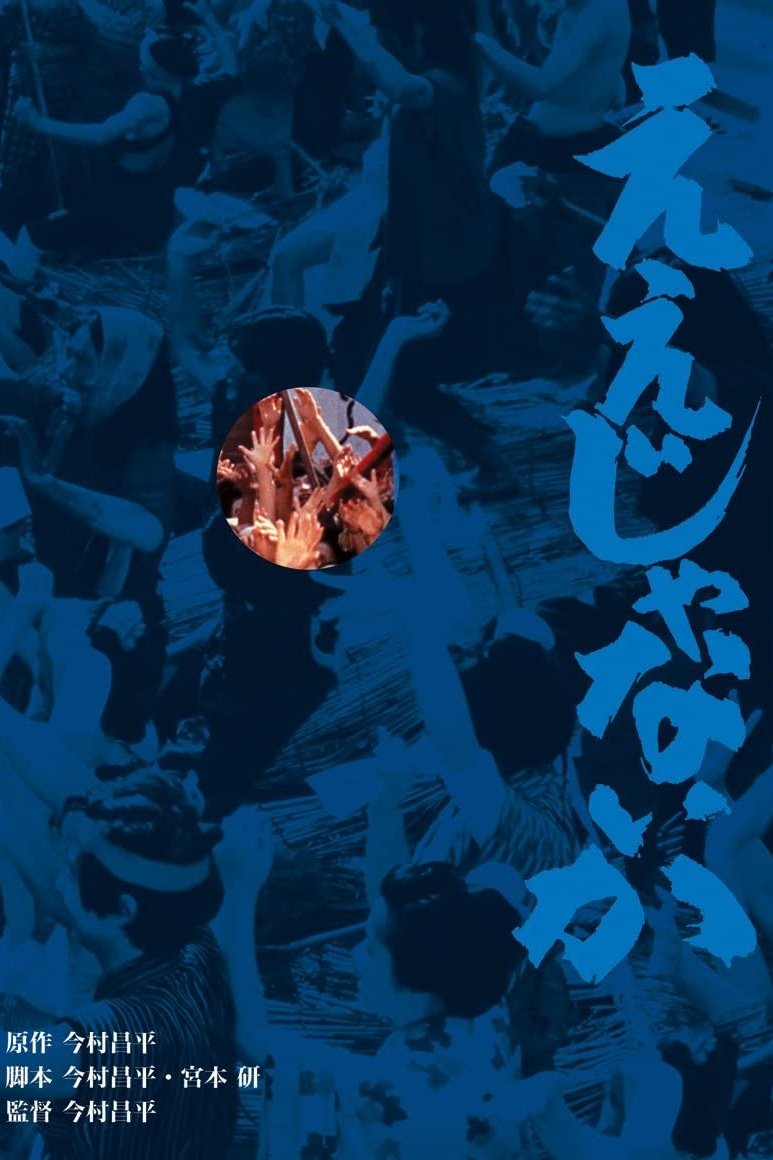
The film depicts carnivalesque atmosphere summed up by the cry "Ei ja nai ka" ("Why not?") in Japan in 1867 and 1868 in the days leading to the Meiji Restoration. It examines the effects of the political and social upheaval of the time, and culminates in a revelrous march on the Tokyo Imperial Palace, which turns into a massacre. Characteristically, Imamura focuses not on the leaders of the country, but on characters in the lower classes and on the fringes of society.

Is it the sin of a woman's heart that casts ripples unexpectedly among peaceful people? In the bustling streets of dazzling colors, where revelry abounds, a tale of love and chivalry blossoms into a beautiful flower of emotion.
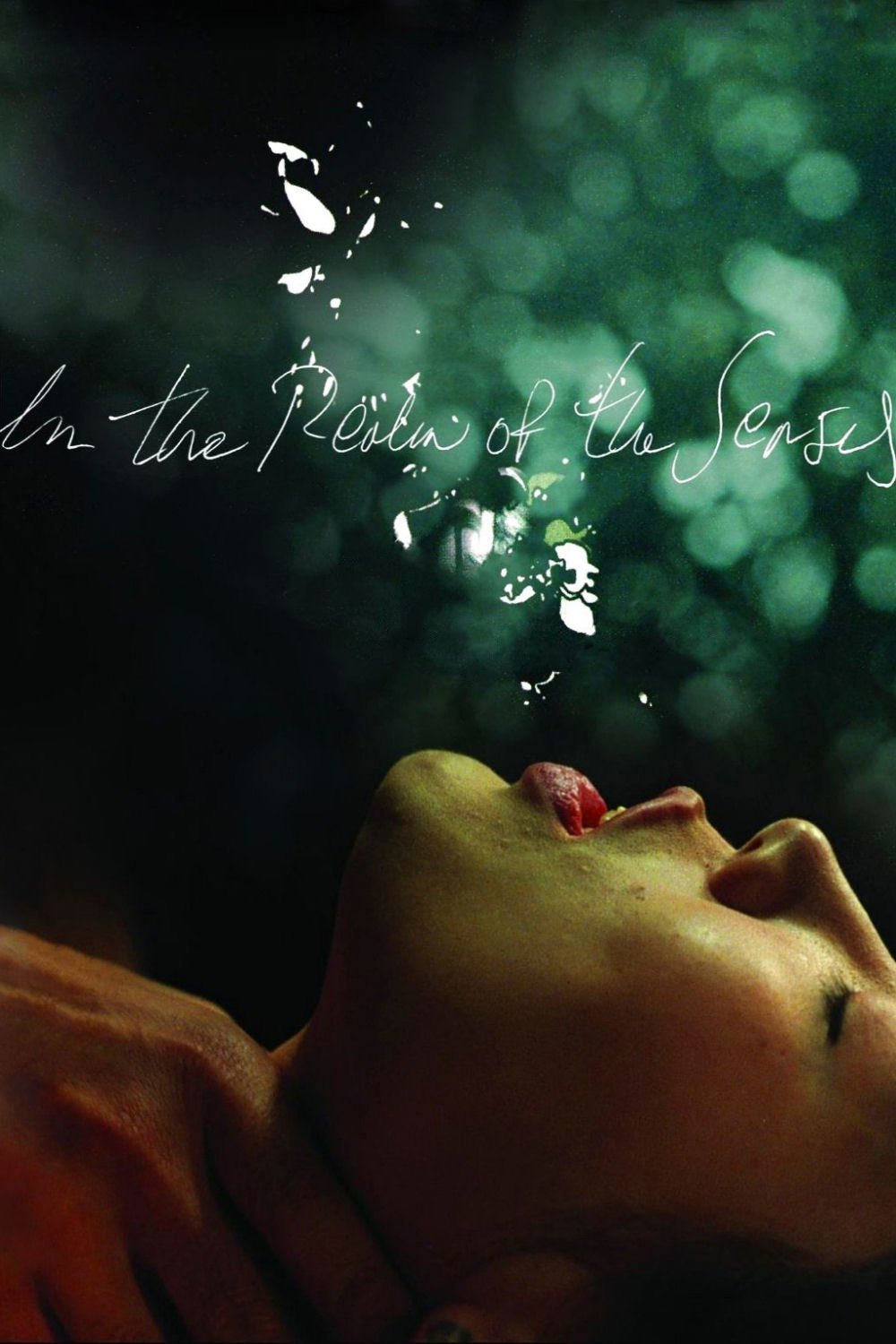
A passionate telling of the story of Sada Abe, a woman whose affair with her master led to an obsessive and ultimately destructive sexual relationship.
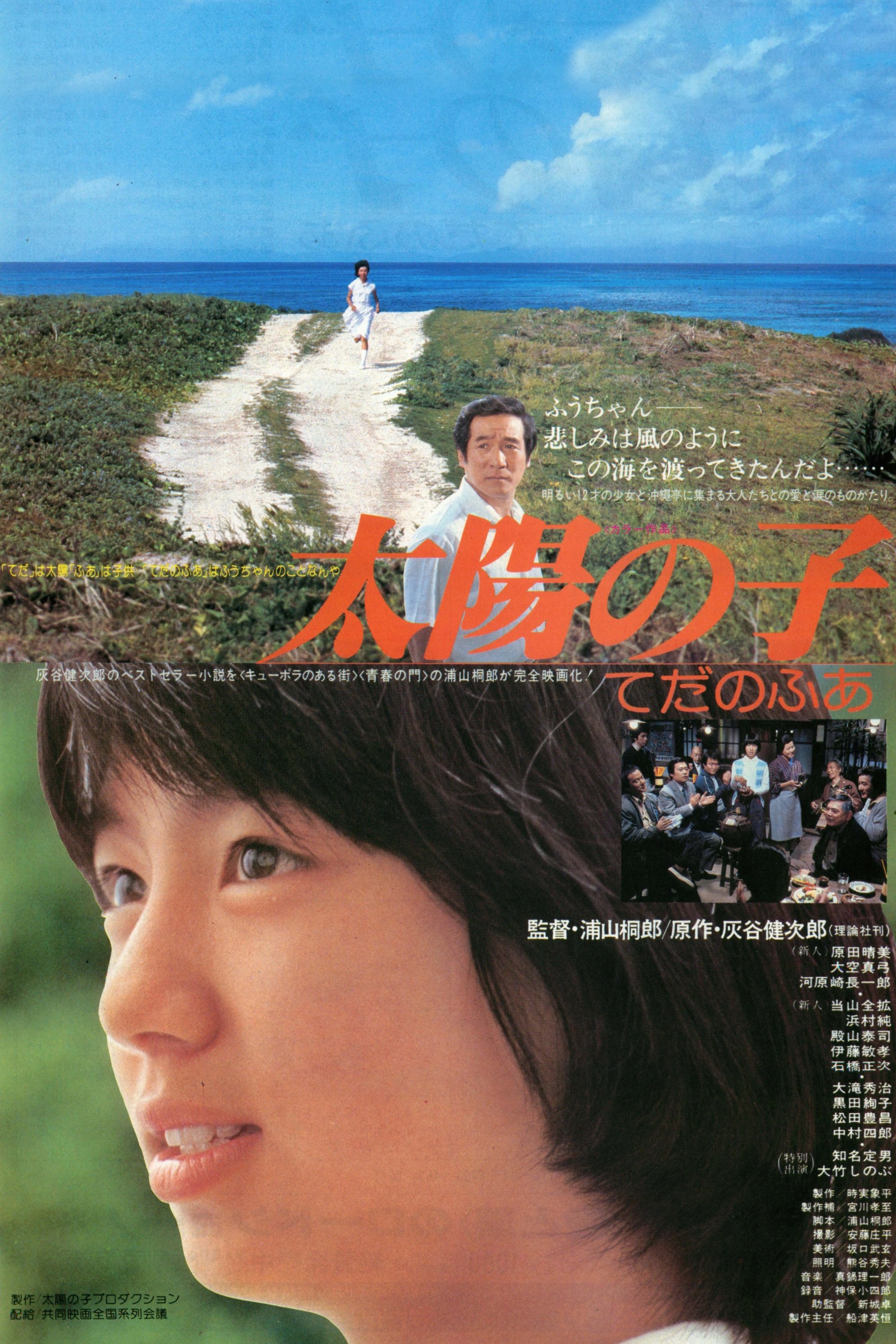
A couple originally from Okinawa run an inexpensive restaurant in Kobe, with their grade-school daughter, Fuuchan. The movie depicts the warm interaction between her and adults that grew up with the rough history of Okinawa and discrimination from the mainland. Shots partly on location at beach of Itoman, Yogi Park and Hateruma Island. This is the movie version of the well-known novel by Kenjiro Haitani.
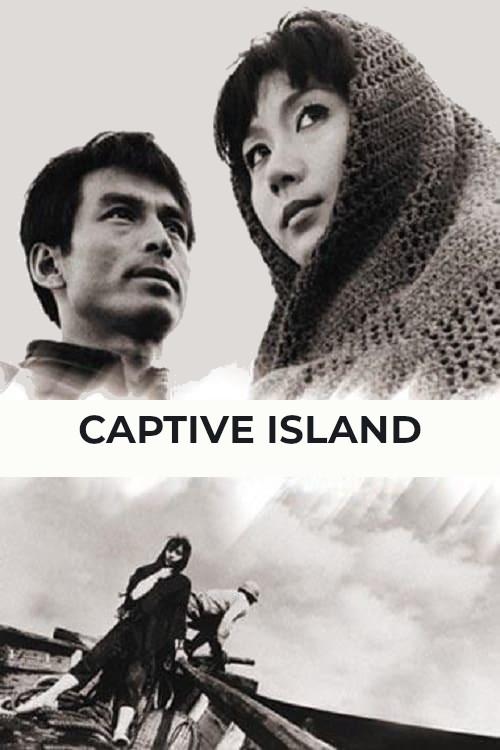
Seeking revenge against the guard who tormented him, a young man returns to the island where he was imprisoned in reform school. But his plans for vengeance are disturbed when he encounters a strange and beautiful young woman.
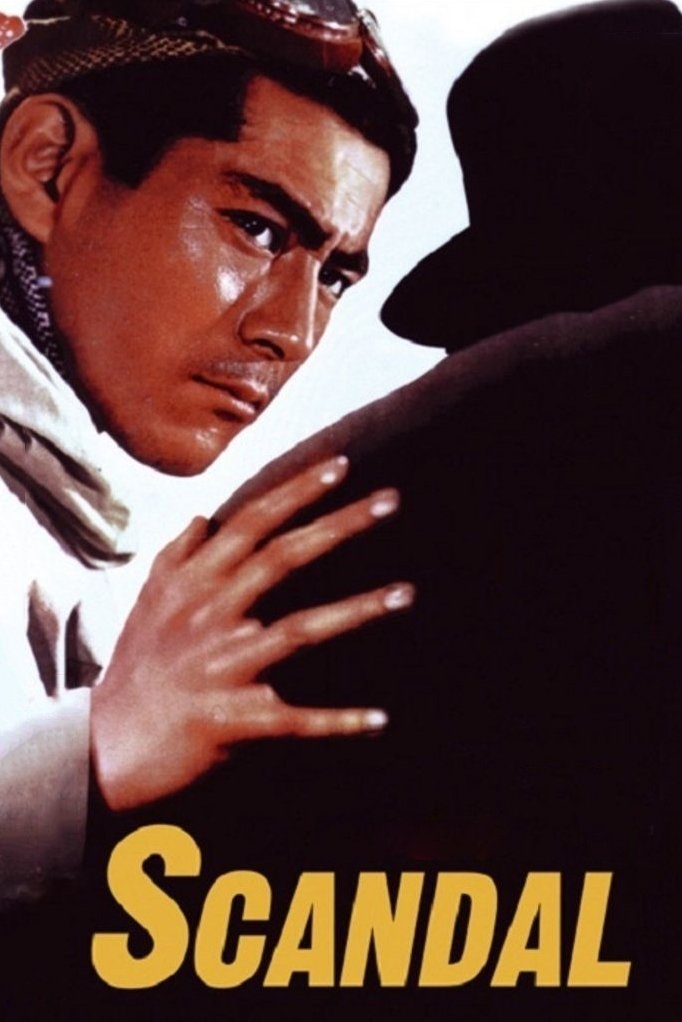
A celebrity photograph sparks a court case as a tabloid magazine spins a scandalous yarn over a painter and a famous singer.
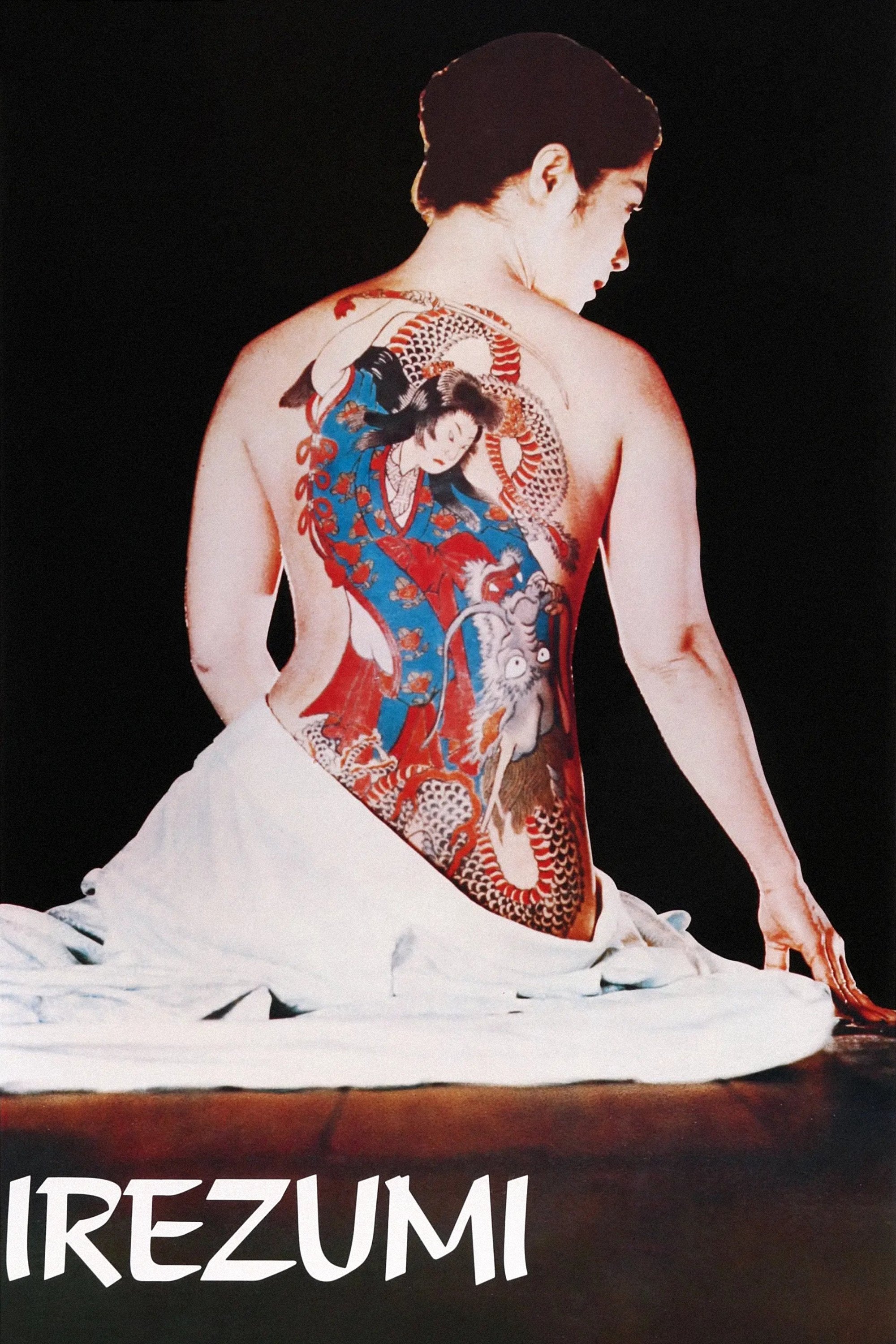
To satisfy her lover's fetish for tattooed women, Akane agrees to have her body covered in eloborate tattoos by Kyogoro, an old craftsman. Kyogoro has developed a special technique, by which his assistant, Harutsune, keeps Katsuko's mind off the pain while Kyogoro does his work. After the work is done, Harutsune makes the shocking discovery of how Kyogoro mastered his technique.
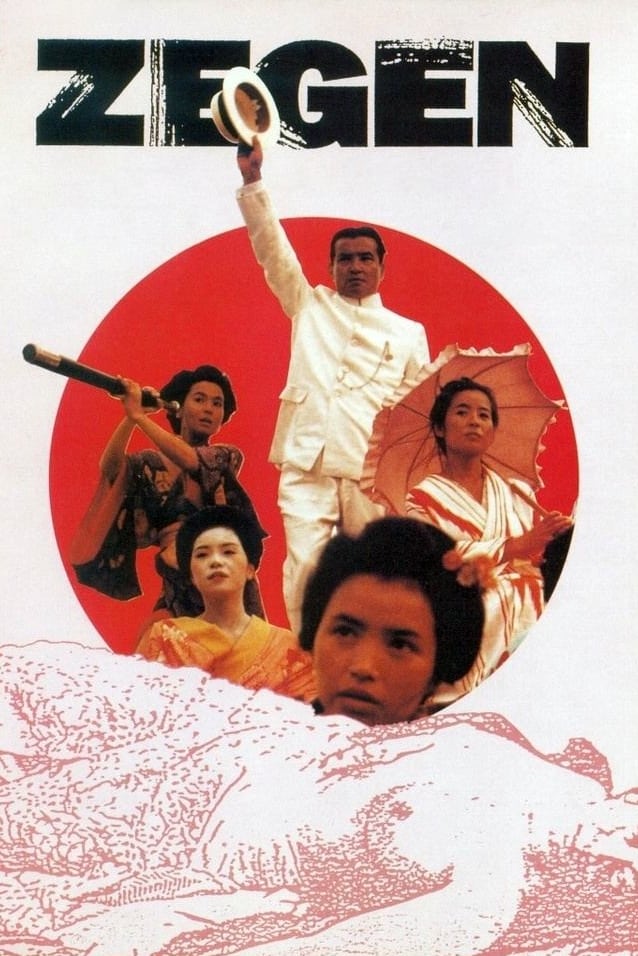
At the time between the World Wars, Japan is involved in empire-building throughout East and Southeast Asia. After a brief career as a low-level military adventurer, Iheiji sets up chains of brothels throughout Asia. As Japan's power in the region grows, so does Iheiji's prosperity and patriotism.
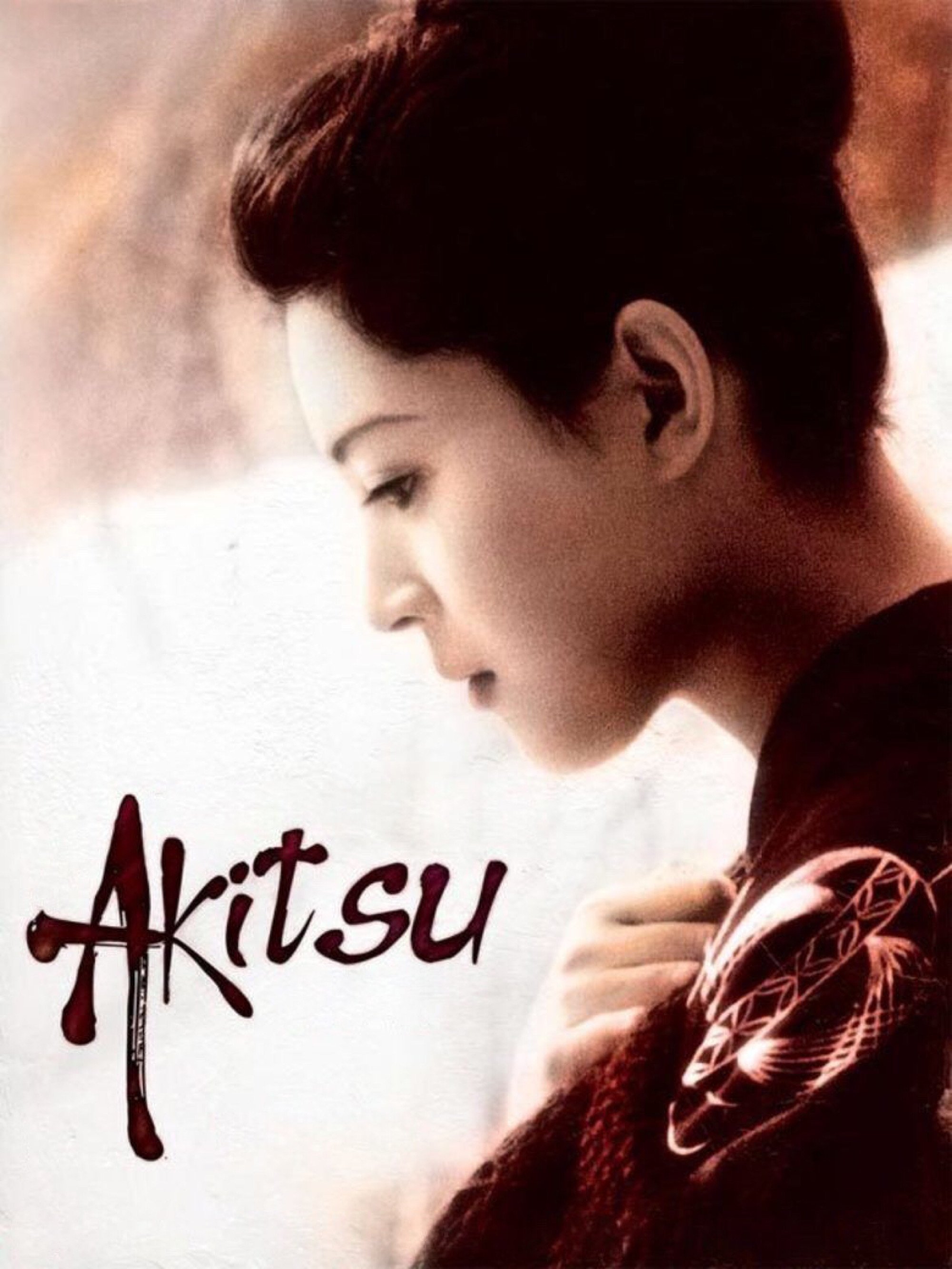
Just after WW2, a romance between an innkeeper and a man with tuberculosis unravels near a thermal spring.

Saotome Mondonosuke is Hatamoto (a high-class warrior who is allowed to see the Shogun in person) who has a crescent-moon-shaped scar on his forehead with flashy clothes and a handsome face, and is proficient in all the military arts and called Bored Hatamoto. Mikijiro Hira acts as such a hero in history. Mondonosuke is secretly ordered to look into the suspicious movement in Nagoya castle by the Ometsuke, and he found out about the misconduct and sole it. This is a period movie about the hero!
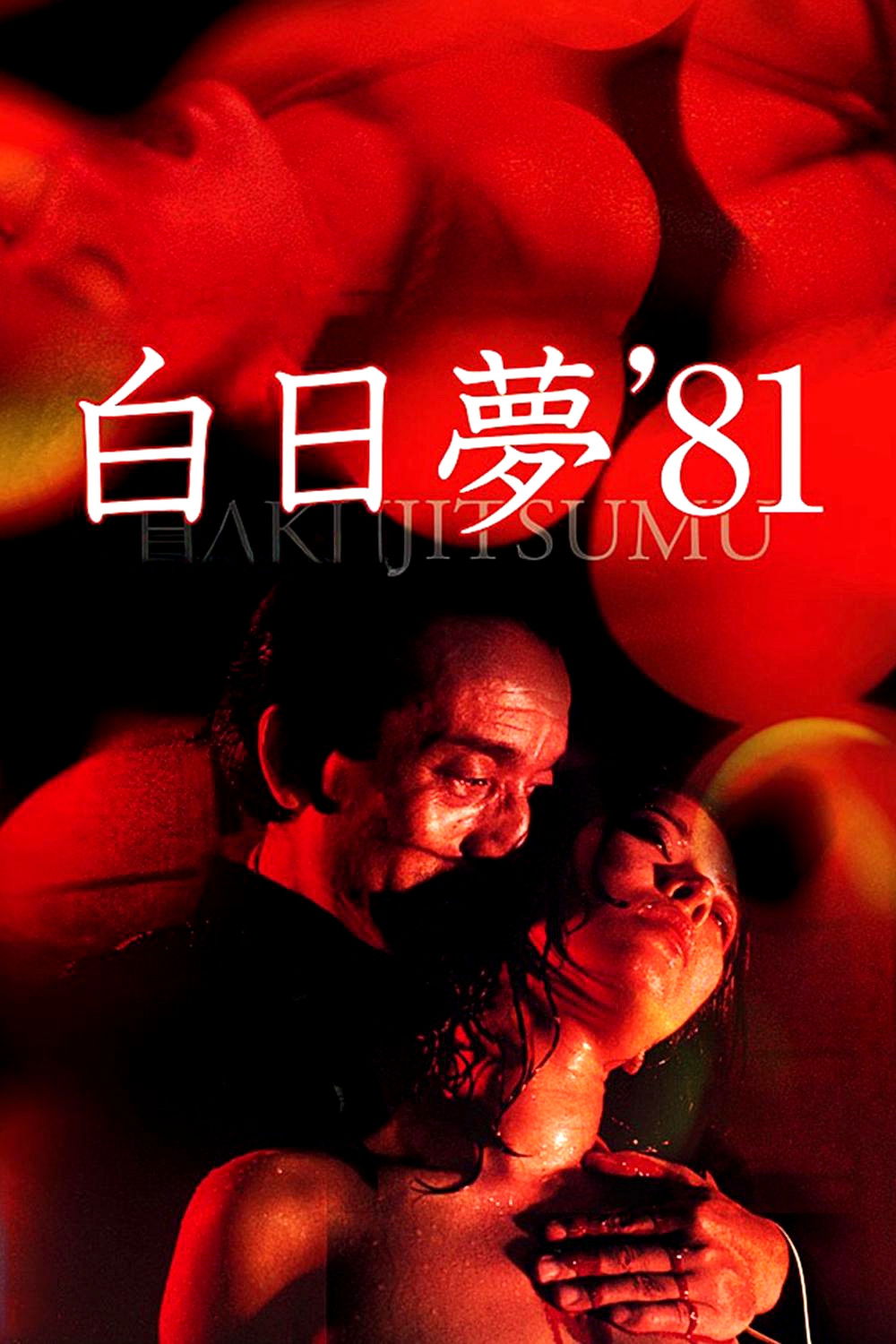
Loosely based on a 1926 short story by Jun'ichirō Tanizaki, the film opens as an artist and a young woman are in a dentist's waiting room. Though he is attracted to the woman, he says nothing to her. They are later in the same examining room. When he is given an anesthetic, he begins to imagine a series of scenes in which the woman undergoes various forms of sexual abuse, including rape and torture. When the artist recovers from the anesthetic, he finds clues showing that he may not have been hallucinating.
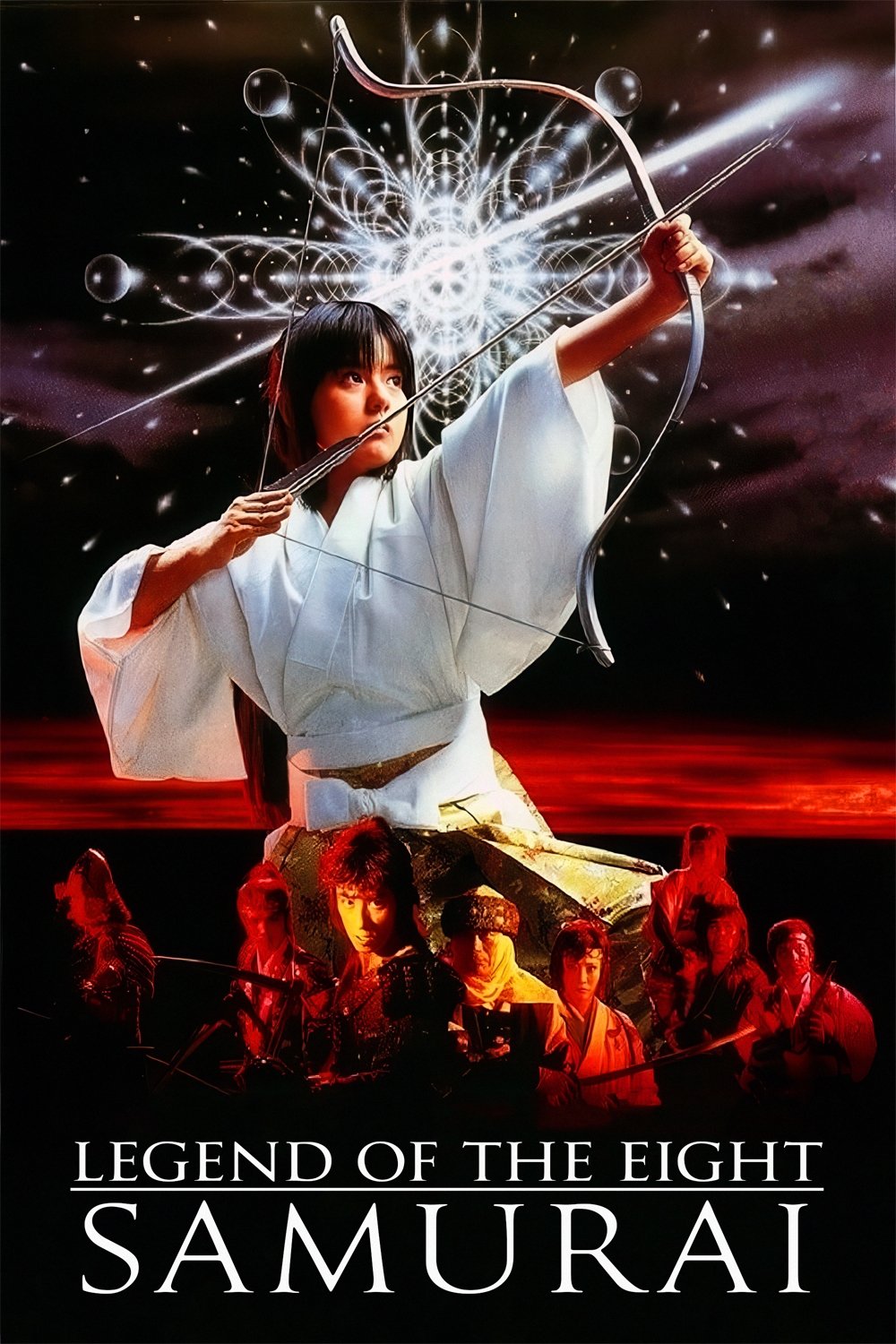
The evil Hikita clan rises from the dead to fulfill a curse on the Satomi clan by restoring the face of their warlord by using the skin of Princess Shizu. In the process of trying to capture her, the clan murders her entire family, but Princess Shizu escapes their clutches. She enlists the aid of eight samurai warriors, possessors of powerful magic crystal, led by Dosetsu (Sonny Chiba!) to help rescue the remaining members of her court and revenge her family. Along the way, they must fight undead warriors, evil spirits, poisonous beauties and a giant centipede.
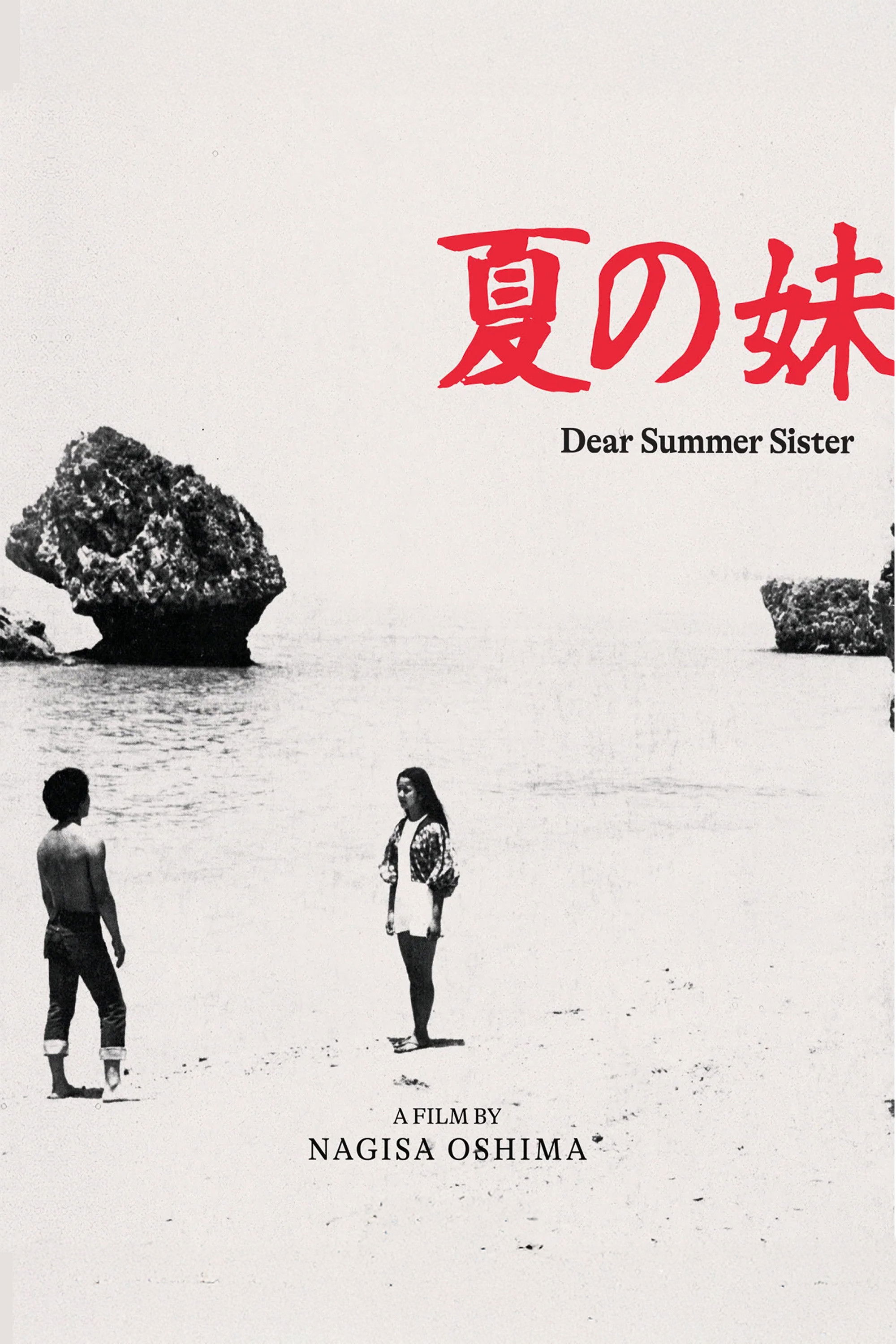
14-year-old Sunaoko travels from Tokyo to Naha, Okinawa, with her father’s young fiancée Momoko in search of her half-brother whom she has never met. Their guide, a beer-guzzling ex-soldier, takes them to the locale’s tourist attractions, quickly delving into the underlying scars of the island’s wartime history.
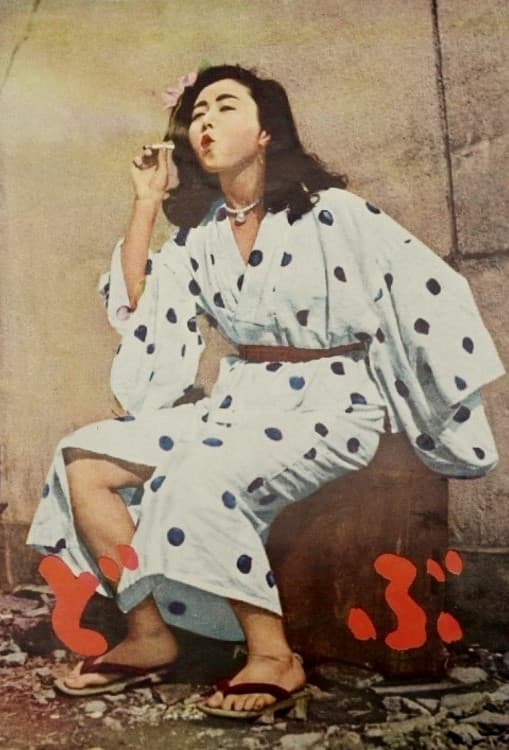
Postwar Tokyo. Pin and Toku live in the squatter area of Kappanuma. Pin and Toku are avid gamblers. They take in Tsuru, a slightly demented woman who has run away from a geisha house.
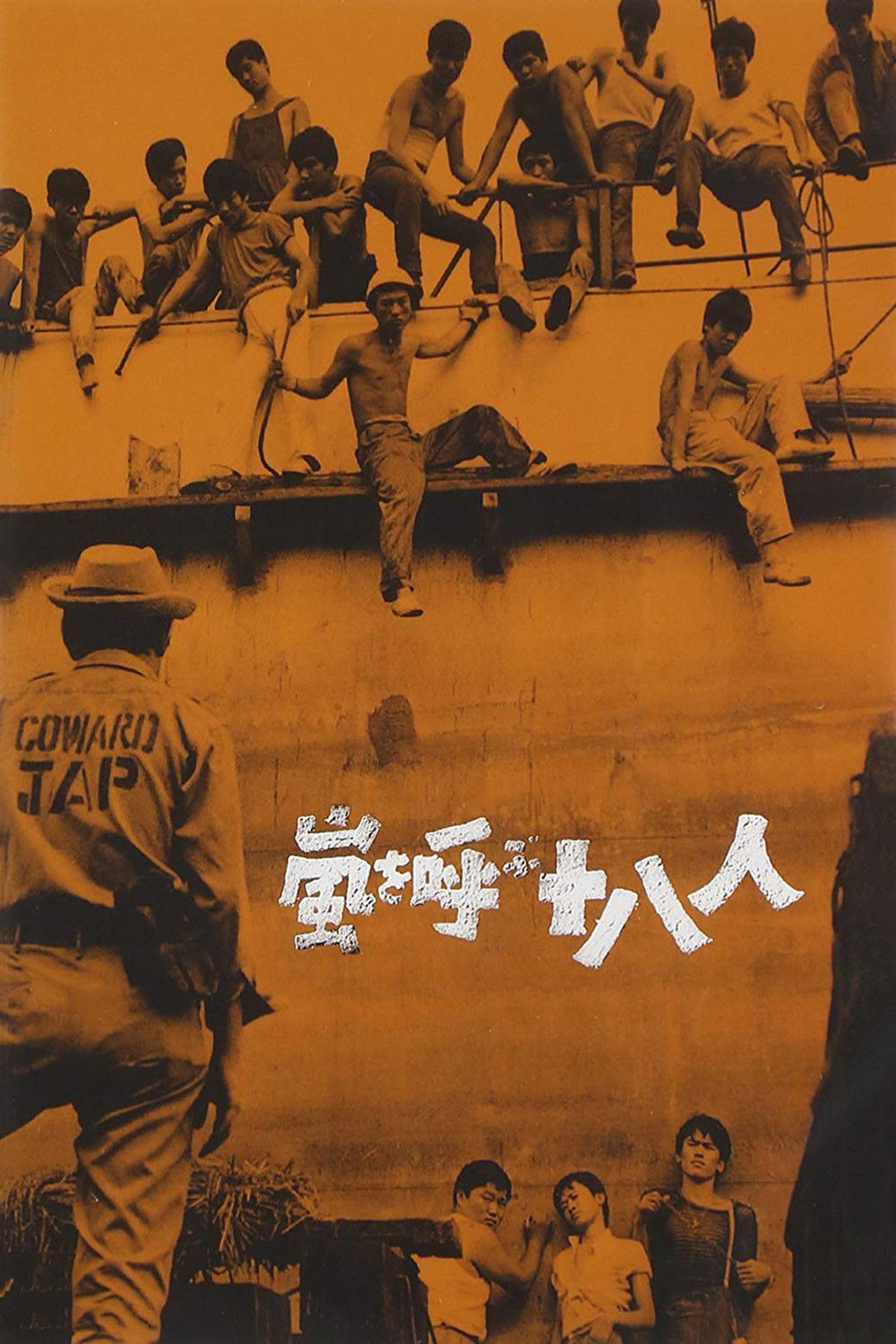
Experienced shipyard worker Shimazaki gets an offer of free lodging from his employer in the company seaside rest house if he agrees to see to its running. After moving in, Shimazaki finds out that this will also mean taking care of a flock of youngsters, and he soon becomes their none-too-successful warden. At work the boys are disciplined, as soon as they return to their dormitory however they turn into an unmanageable mob.
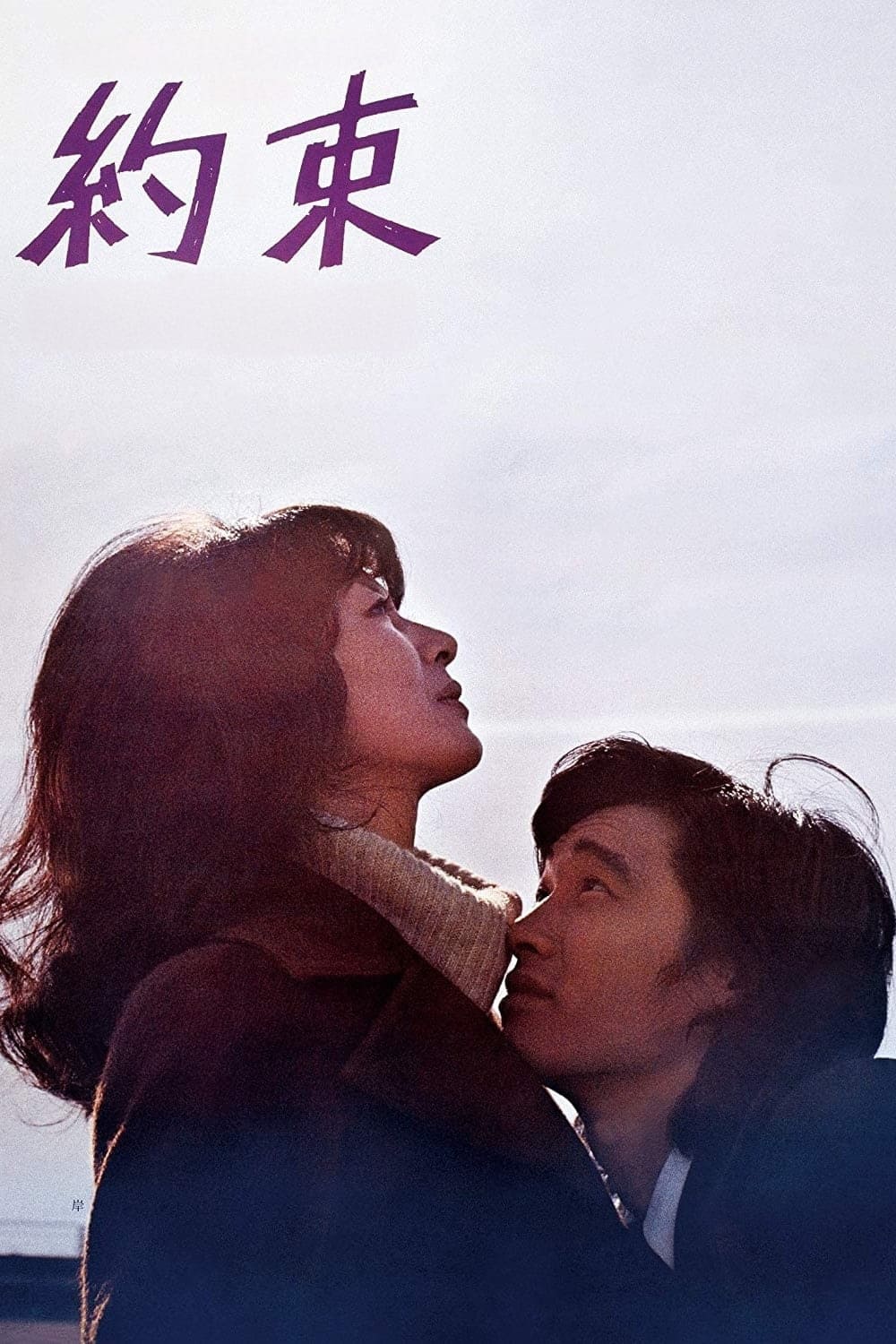
The brief love story of an attentive young man and a beautiful woman who meet, fall in love and part during the course of a train ride.
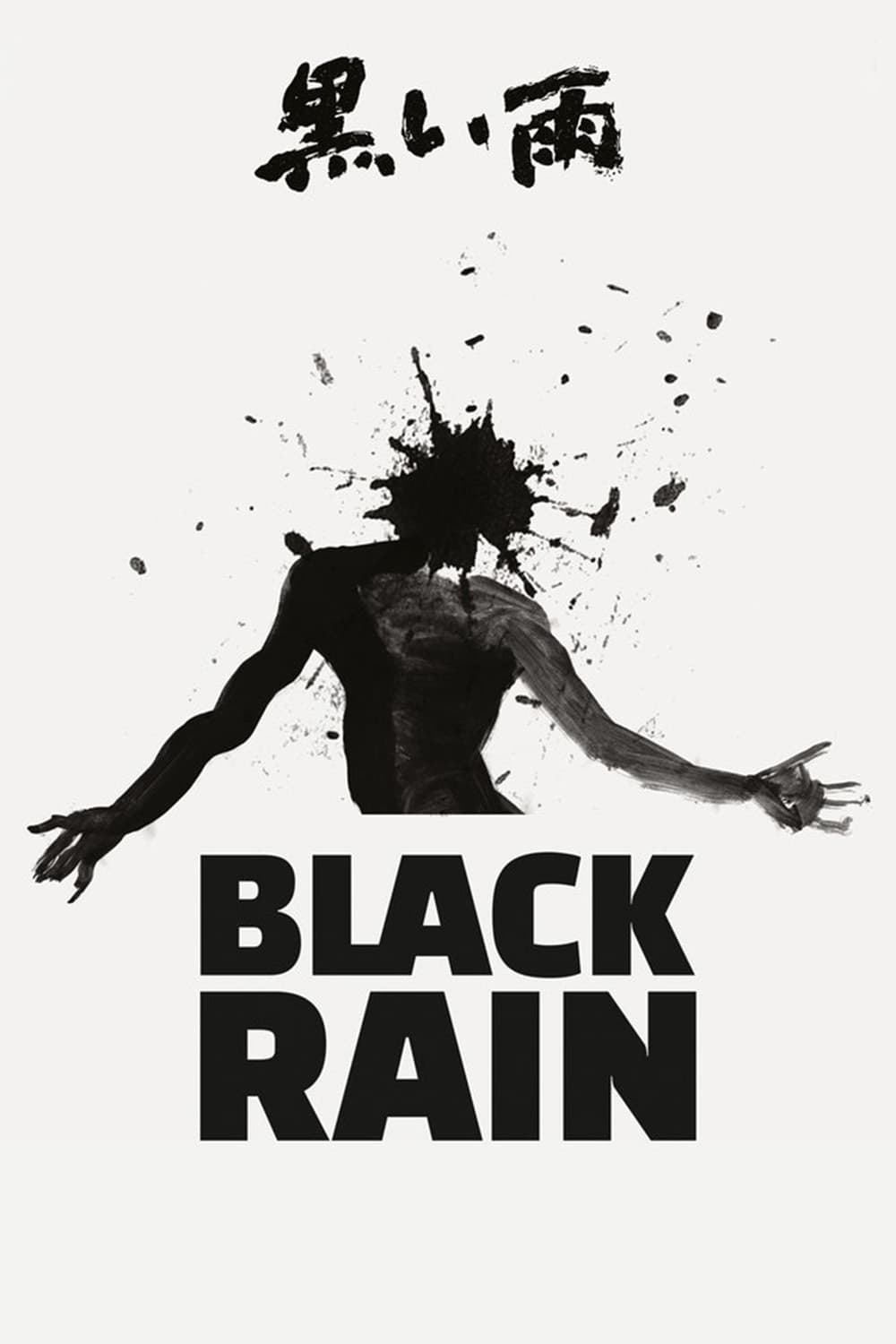
Shigematsu Shizuma, who lives with his family in a village near Fukuyama, was in Hiroshima with his wife and niece just after the devastating atomic bombing, a tragedy that cruelly took the lives of thousands of people and forever marked the harsh existence of the survivors.
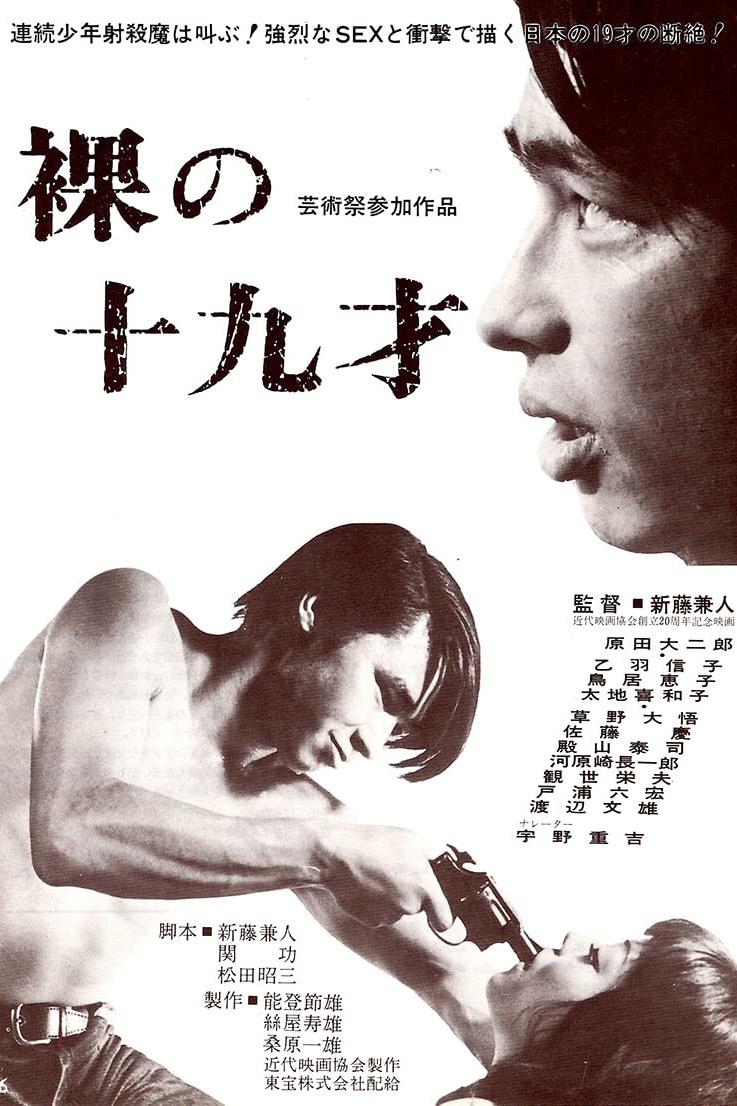
Michio Yamada, a recent school graduate, is sent to Tokyo to work as a fruit-packer in a department store as part of a government programme. He takes a gun from a house on an American base and uses it to kill several people. The scene changes to Yamada's childhood. Yamada is born the child of a reprobate and a weak-willed woman. As a boy Yamada, experiences poverty and the rape of his sister at first hand.

After handing in a report on the treatment of Chinese colonial labor, Kaji is offered the post of labour chief at a large mining operation in Manchuria, which also grants him exemption from military service. He accepts and moves with his newlywed wife Michiko, but when he tries to put his ideas of more humane treatment into practice, he finds himself at odds with scheming officials, cruel foremen, and the military police.
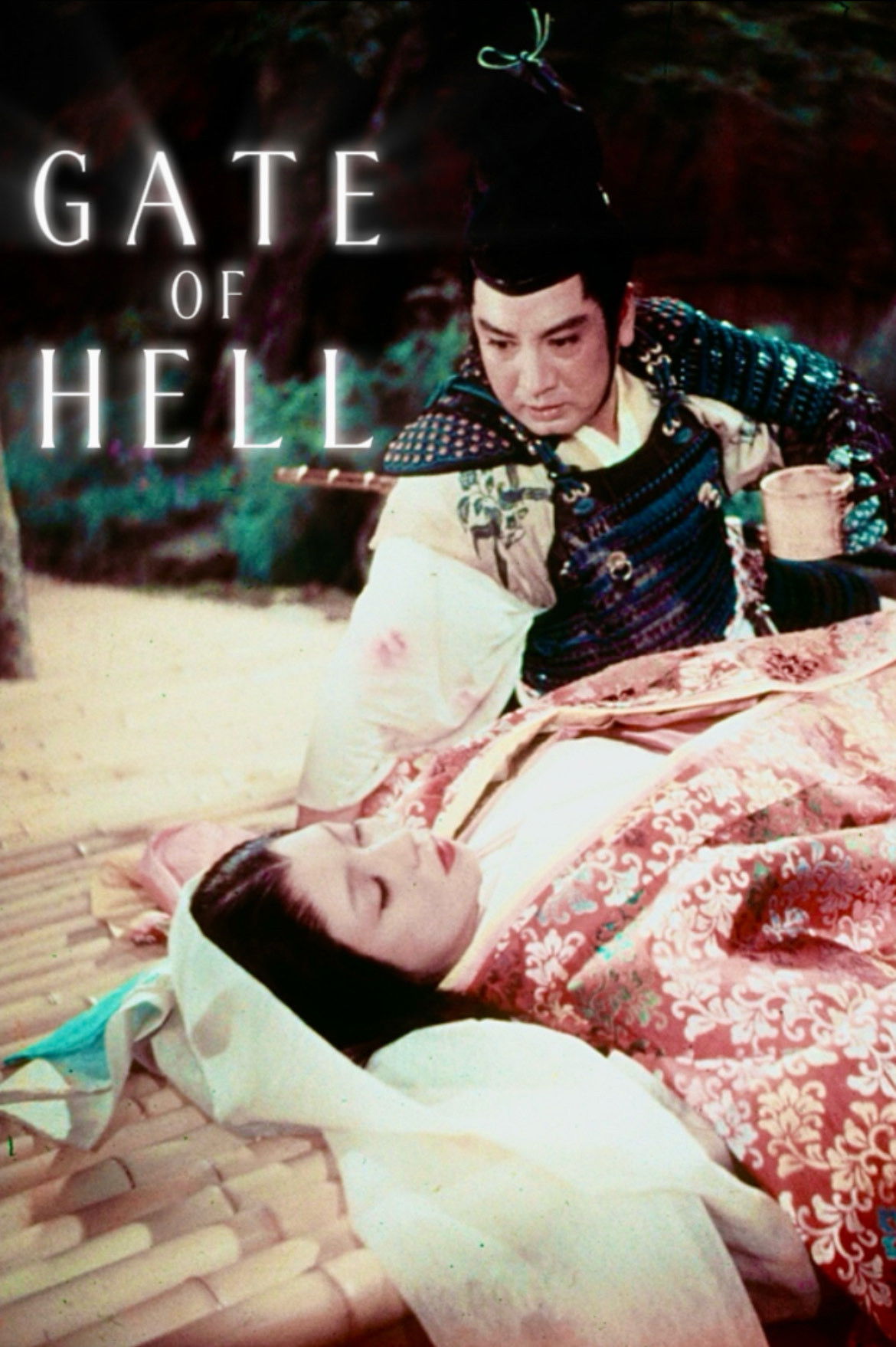
Japan, 1159. Moritō, a brave samurai, performs a heroic act by rescuing the lovely Kesa during a violent uprising. Moritō falls in love with her, but becomes distraught when he finds out that she is married.
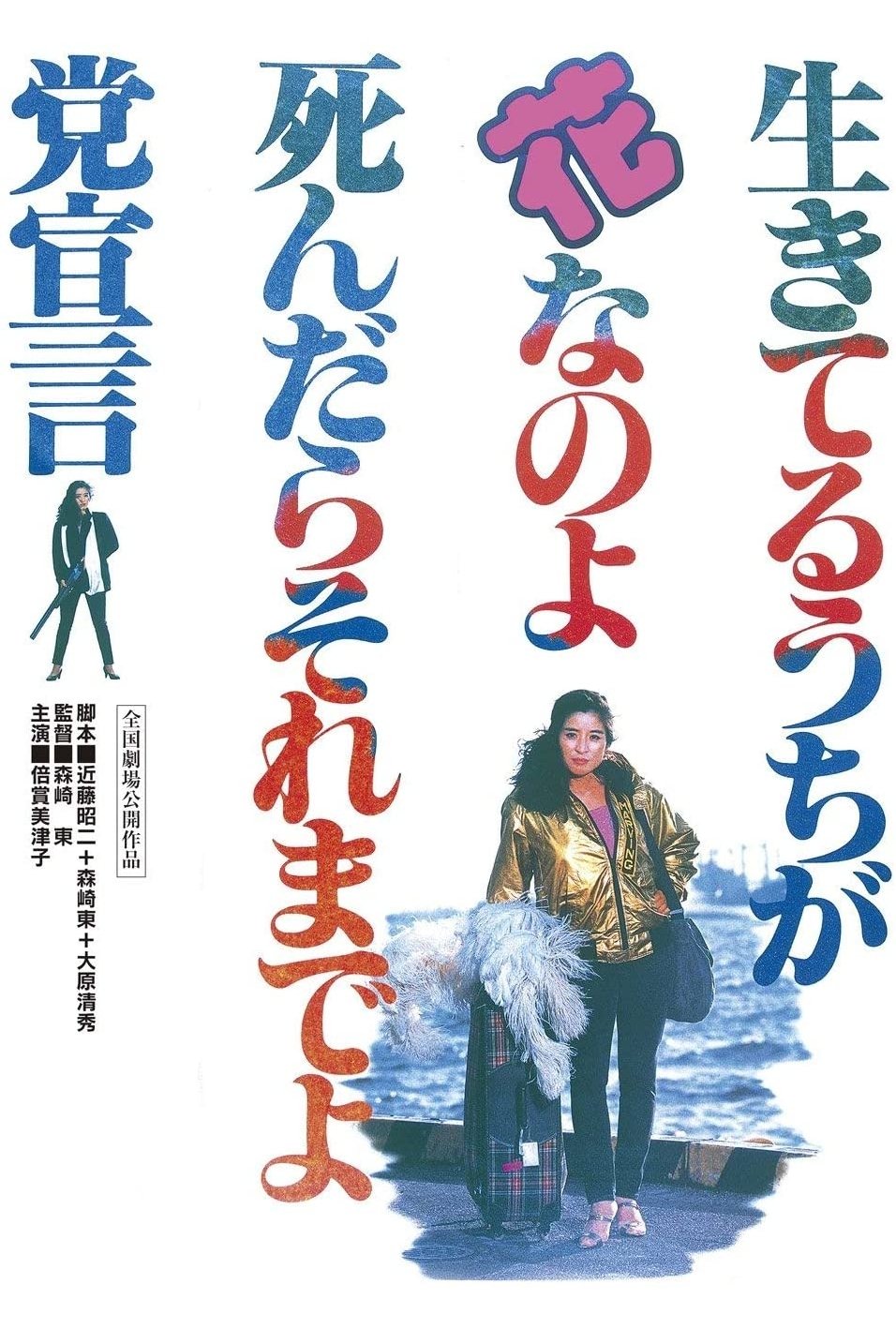
Barbara, a dancer, is coming home to Nagoya after a long absence. She lives above a bar in an area whose inhabitants are mainly from Okinawa. Upon her return, Barbara faces problems beyond her control. Her brother and two friends take one of their teachers hostage to extort money to go on a school trip. Miyazato, the man who loves Barbara is there, but not Aiko, her best friend. Miyazato, a yakuza and manager in a nuclear power plant has forced Aiko into prostitution for the workers of the plant. Barbara plans to help her escape from this hell. Aiko has been sent to Mihama. Without even thinking for a moment, Barbara decided to go see her friend.
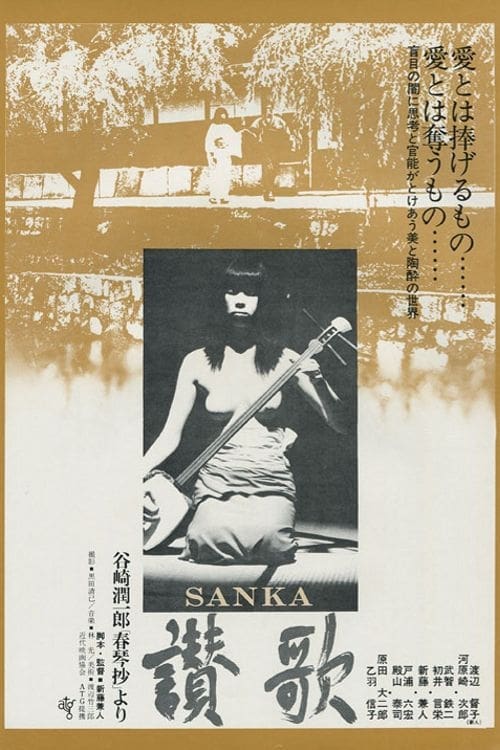
The story tells of the adoration of Sasuke for his mistress, the blind samisen-teacher Shunkin, who treats him imperiously and subjects him to cruel beatings.
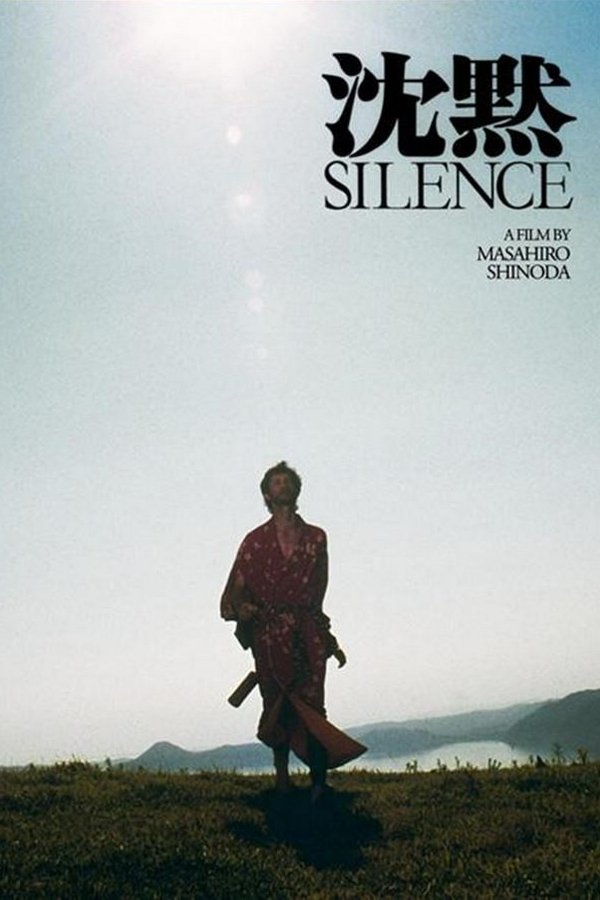
Two Jesuit priests encounter persecution when they travel to Japan in the 17th century to spread Christianity and search for their mentor.
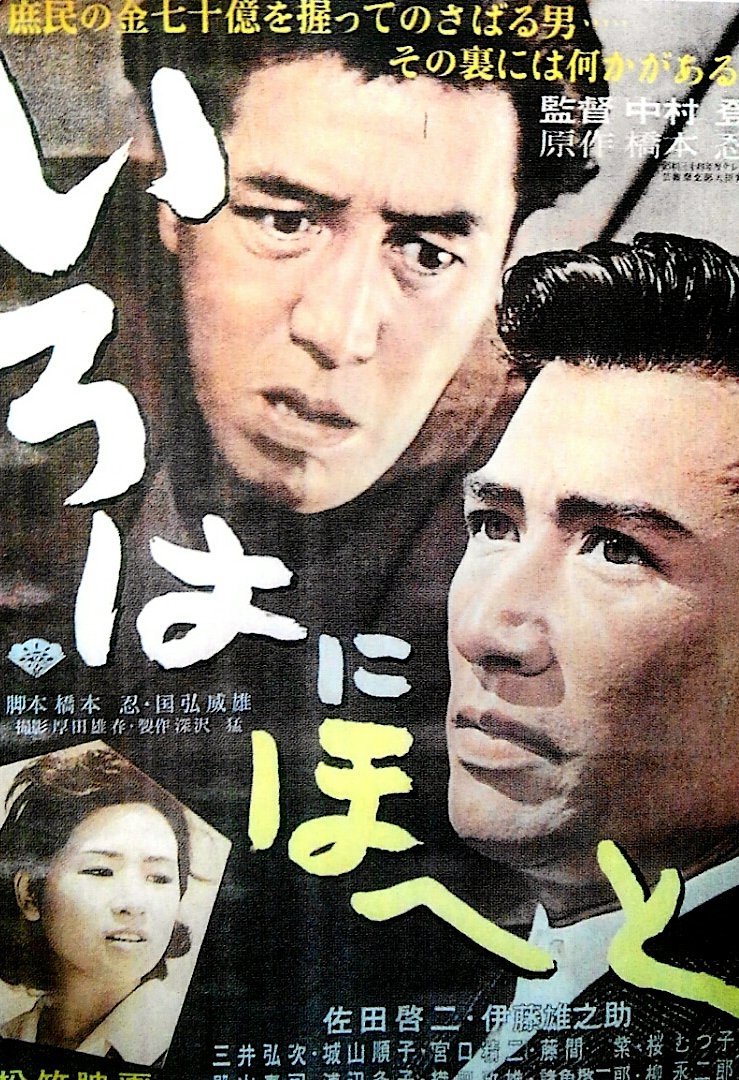
The anonymous partnership Investment Economic Association, led by its president Ryuichi Amano, collected money from many ordinary people and paid out large dividends, making it famous as "Japan's only investment bank for ordinary people." On the other hand, Detective Muneharu Matsumoto of the Metropolitan Police Department's Second Investigative Division has suspicions about this organization, and has been spying on the business association for many years. However, Matsumoto was having a hard time getting any solid proof of the nature of the incident...
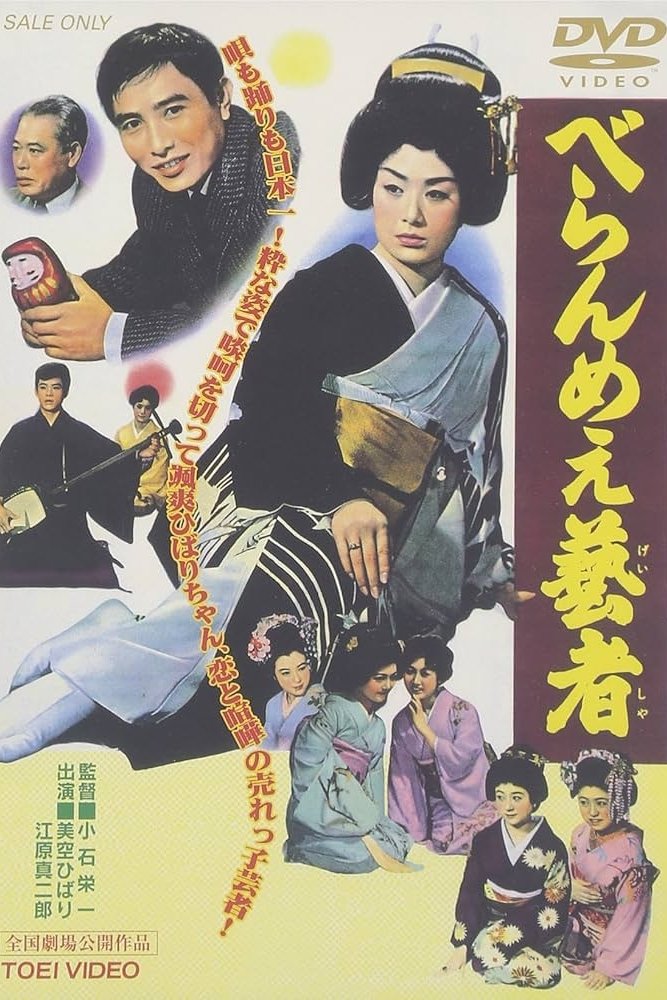
Koharu, a young geisha, is in love with Kenichi, an apprentice carpenter to her father Masagoro. Their love life comes to a sudden halt after an argument between their two fathers. Can their love survive in spite of the bitterness between their two families?
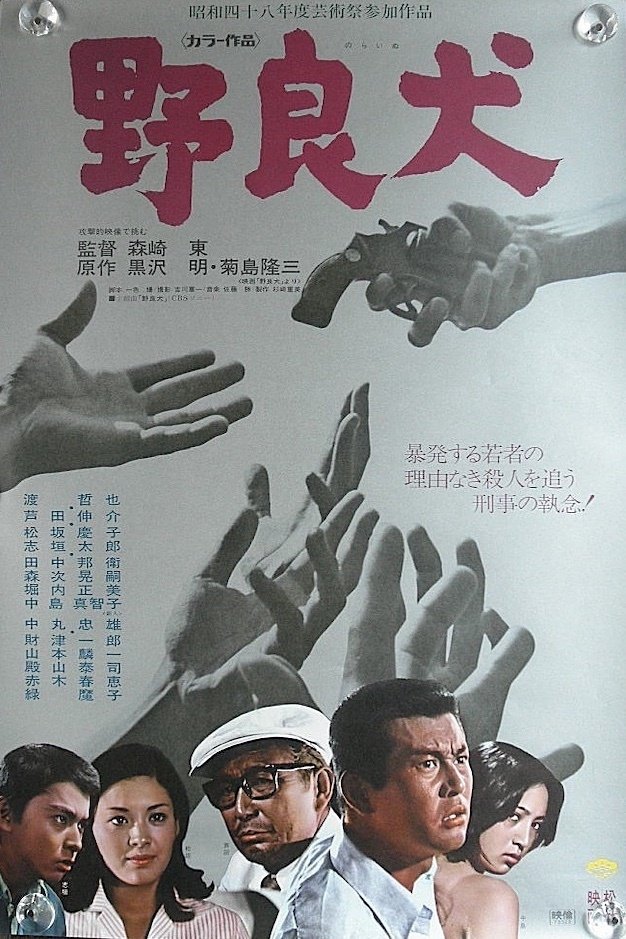
When his pistol is stolen, police detective Murakami is humiliated, especially when the gun is later implicated in a crime. Working with his superior, Chief Detective Sato, Murakami works feverishly to trace the location of his pistol, ultimately clashing with a gang of youthful Okinawans.
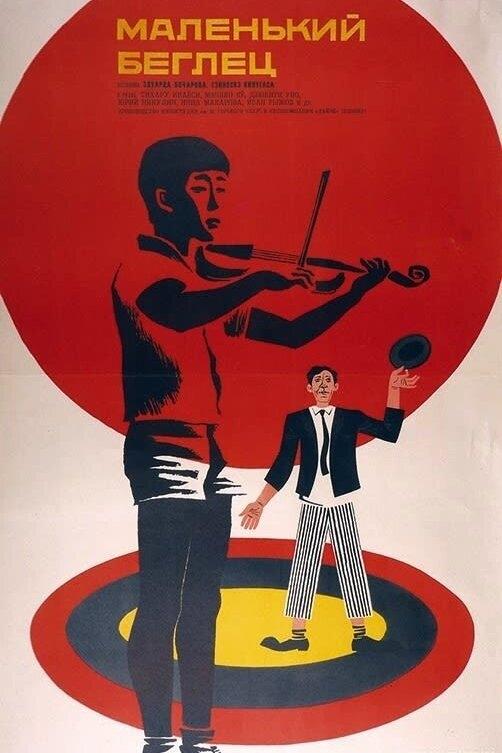
During a Soviet circus tour in Japan, a small street musician, Ken, meets a clown, Yuri Nikulin. Upon learning that his sick father is being treated in the Soviet Union, Ken sets off in search of him. The friendship of the great clown and the boy continues in Moscow.
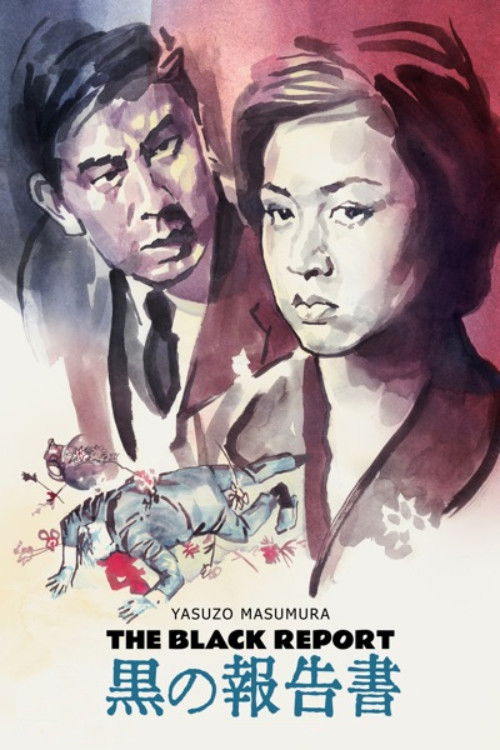
After a businessman is murdered, an investigation identifies a suspect who is then put on trial for that crime.
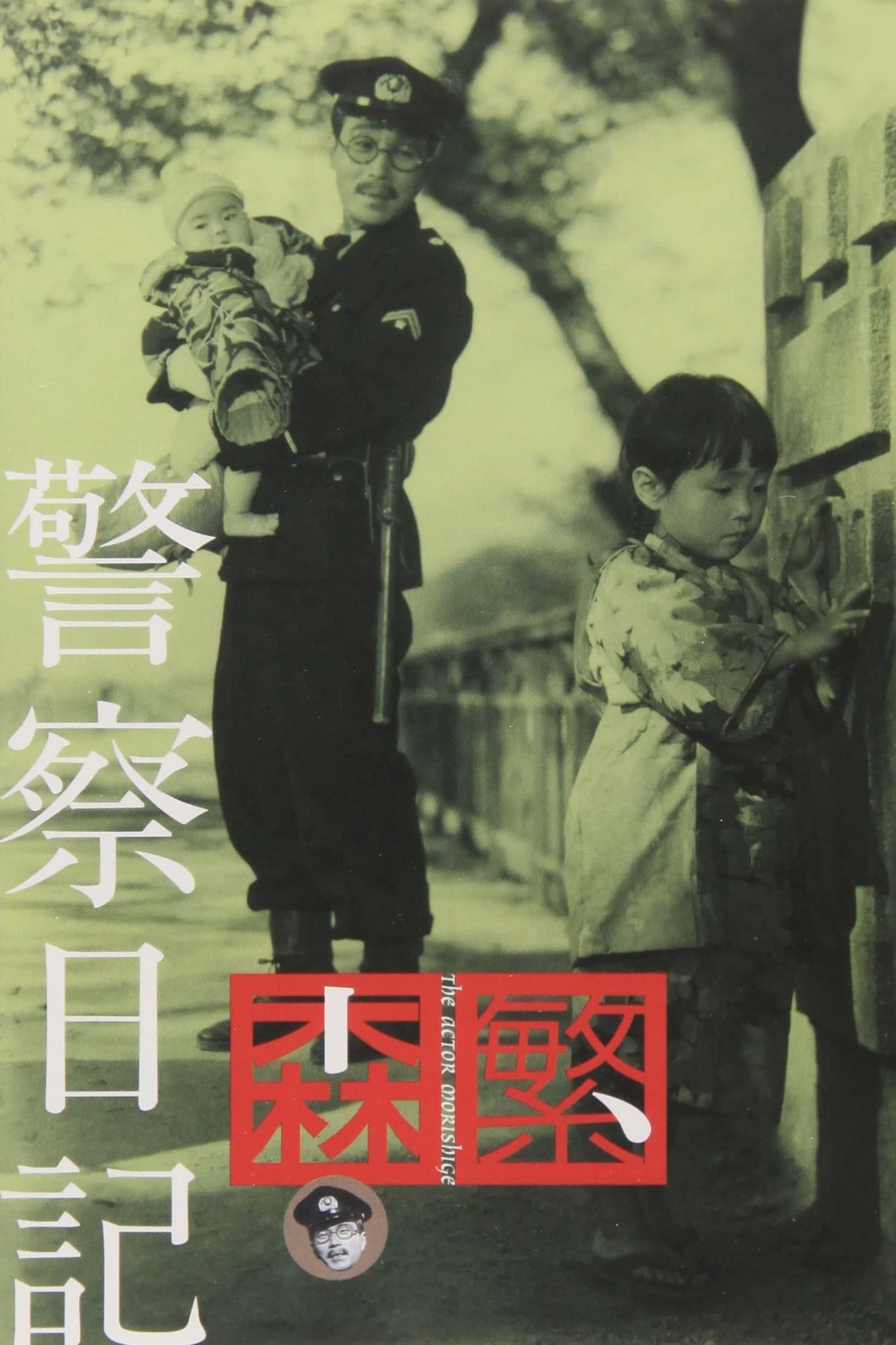
Lending money, job hunting for civilians and babysitting. All these things are usually not listed on a policeman's job description. But for the officers of this local police station, it‘s part of their daily routine. One day, patrolman Yoshii (Hisaya Morishige) finds an abandoned baby and a six year old girl standing in front of the station. When he's declined by the welfare office, orphanage and local health clinic to take them in, he decides to take care of them himself.
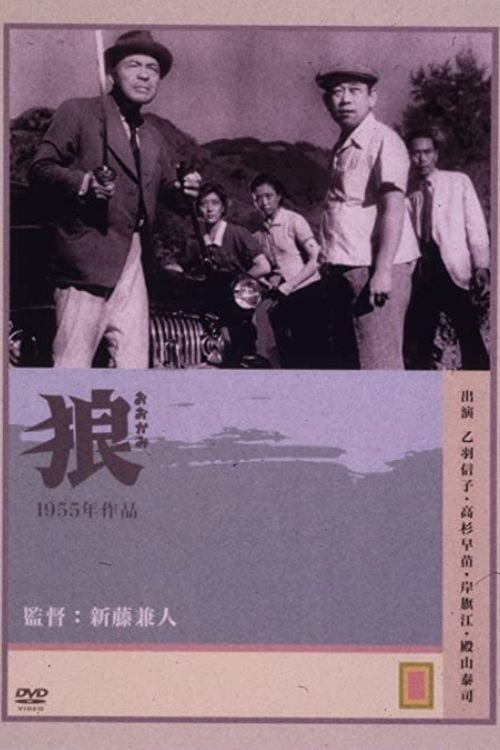
A group of five rookie insurance salespersons, driven to desperation by the impossibility of their work in Japan's failing postwar economy, form a plan to rob a cash delivery truck in order to provide for their families.
The film marked Yōko Mihara's debut as the star of Shintoho's series of ama films, a role she took over from Michiko Maeda.
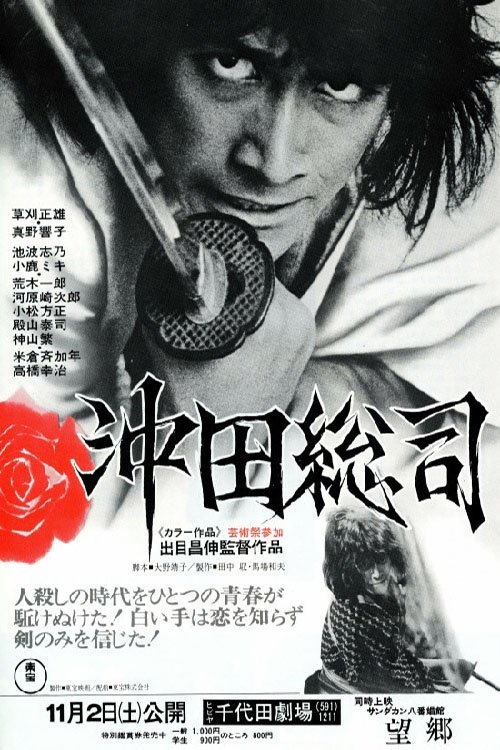
Personal tale of Okita Soji who fights to survive in a world without pity in the merciless era of the downfall of the Tokugawa Shogunate.
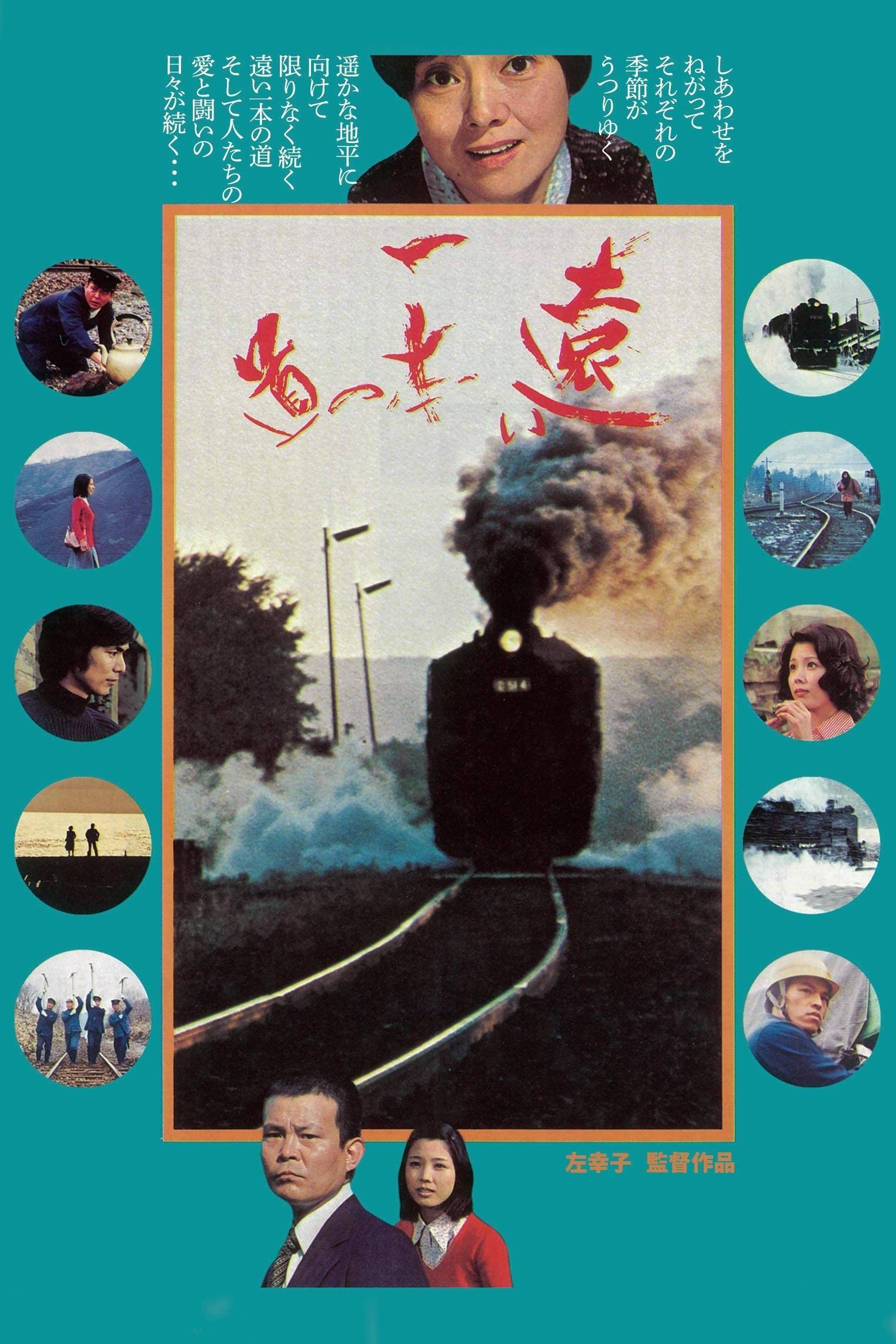
Set in the time of steam locomotives and covering a period of almost 30 years, this sensitive film tells the story of the wife of a railroad worker in the northern part of Japan. The ferocious local class restrictions work to keep her husband in his place, as does his lack of education.
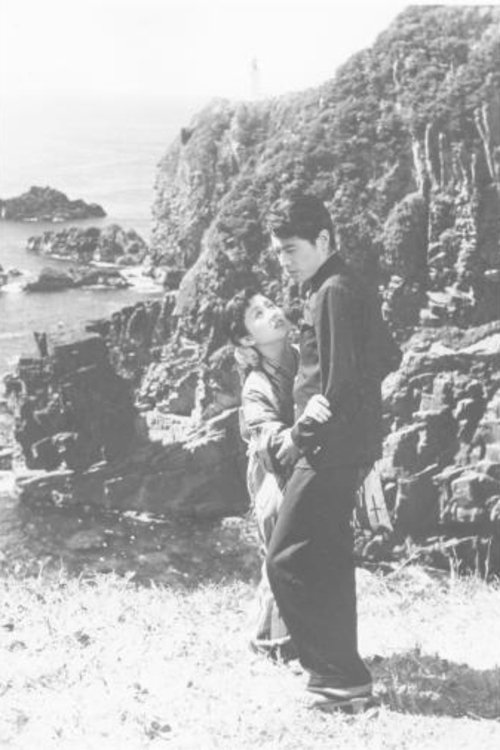
Among Yoshimura’s complex and political works, this episodic film, set in the early 1930s, follows the life of a young left-wing student activist disenchanted by the increasingly hawkish state of Japanese society.
“Quit working as a nurse!” “All right, I will!” thus began the married life of Yasuo and Keiko. But the reality is harsh. Keiko even had to work on the first night after her marriage. Ten years later, the married couple is still at it. Yauso tends to the house and their children, while Keiko sacrifices family life for life as an overworked nurse. One day, after Keiko comes home utterly exhausted and dejected from her work, Yasuo makes up his mind and writes a letter of resignation in her place. Upon learning of this, Keiko angrily declares that nursing is what she lives for and she will keep on working. Realising that that is one battle he will never win, Yasuo sends a letter to a newspaper -- “Nurses’ husbands, aren’t you having a hard time? Get together nurses’ husbands. Contact me.” There is a tremendous response. This leads to the formation of many unions of nurses’ husbands throughout the country.
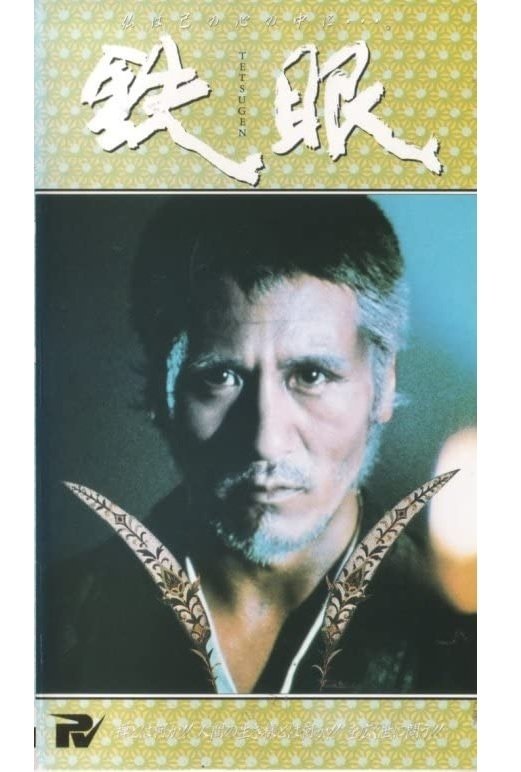
Japanese film based on the life of Zen Master Tetsugen Doko.
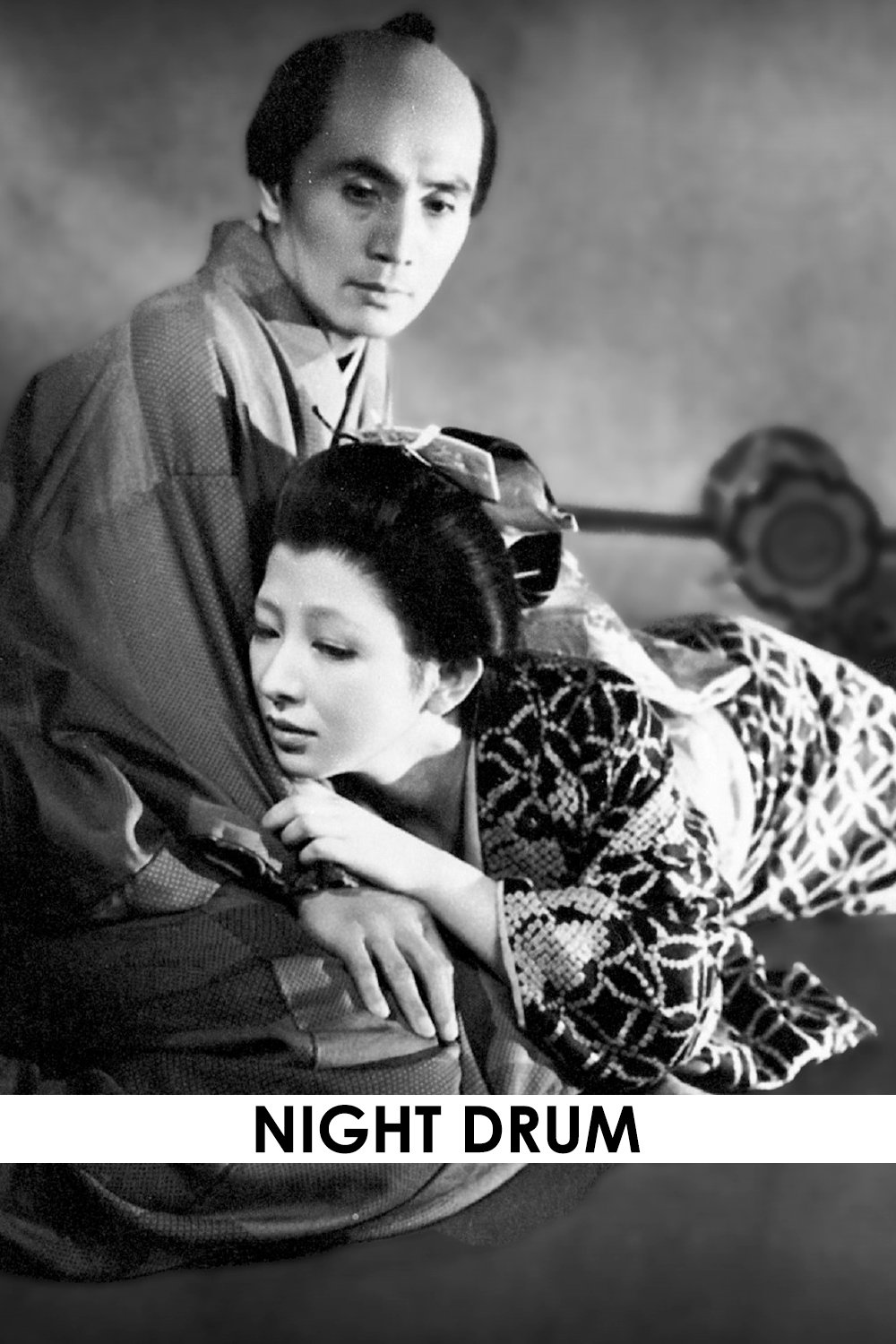
Following a yearlong attendance upon his shogun in Edo, samurai Hikokuro makes a long-awaited return to his home and doting wife, Dane. Initially greeted by the effusive welcome of his family, spiteful whispers also reach his ear about an adulterous affair carried on, in his long absence, between his wife and a famous drummer. With Hikokuro’s honor imperiled by rumor, his family insists on a formal investigation into the veracity of the gossip. Through the combined testimony of many witnesses, a tale unwinds around the visits of a traveling musician hired to tutor the family heir, the spurned attentions of the man who started the rumor, and the ultimate truth behind the accusations. The conclusion of events prove as much an indictment of bushidō as it is of the reluctant parties involved. Adapted from a 1706 play by Chikamatsu Monzaemon and based on a true case.
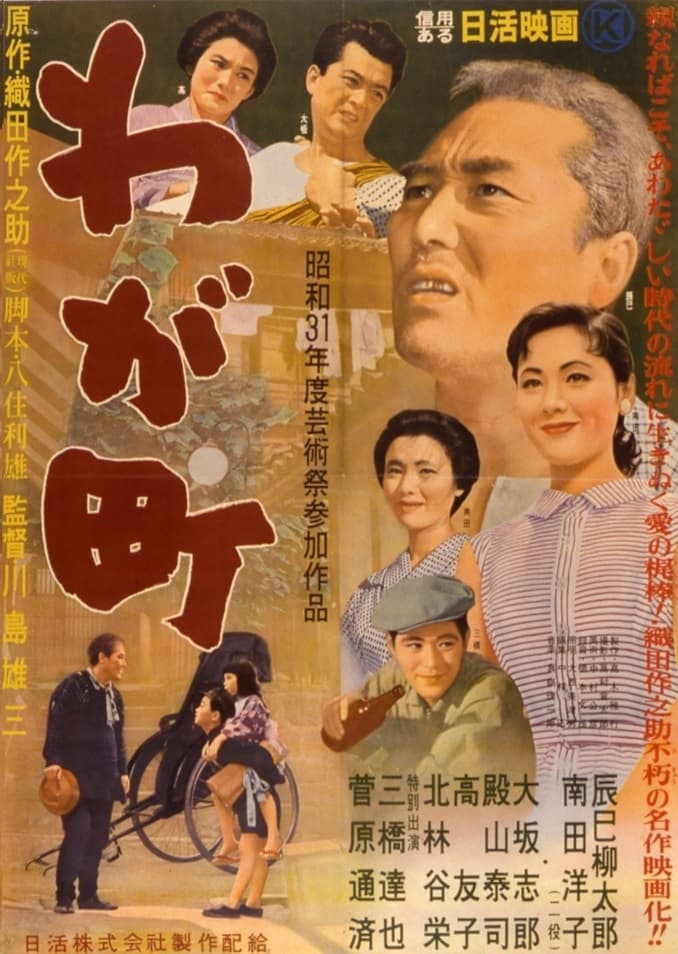
In 1906, after finishing a tough migrant job in the Philippines, Takichi has returned to Japan. He starts to work as a rickshaw driver, but his lover had died of an illness, leaving a baby girl, Hatsue. Hatsue grows up beautifully and falls in love with Shintaro. But Takichi objects to their relationship...
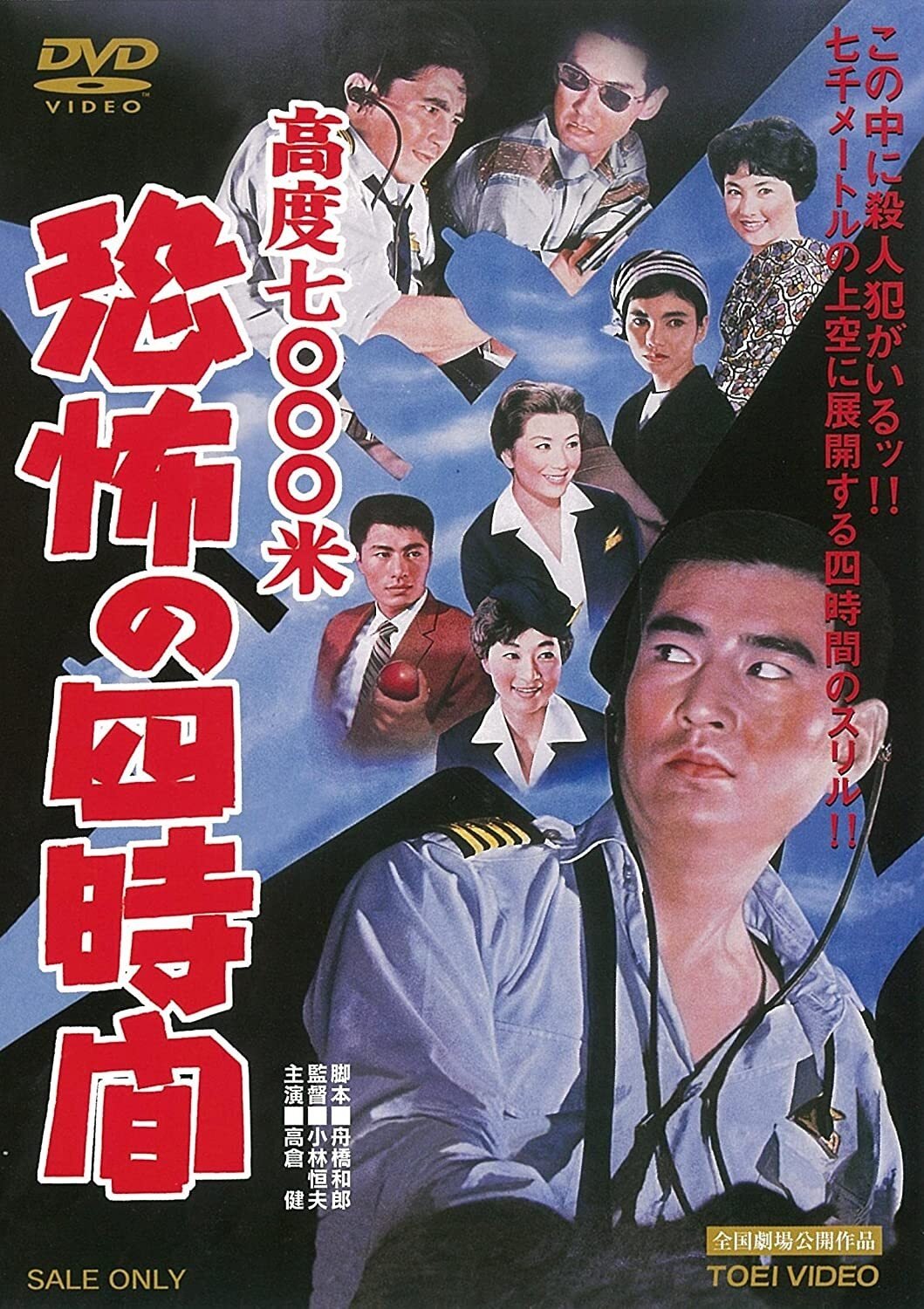
Airline captain saves passengers from a brutal murderer on a plane during four hours of terror.
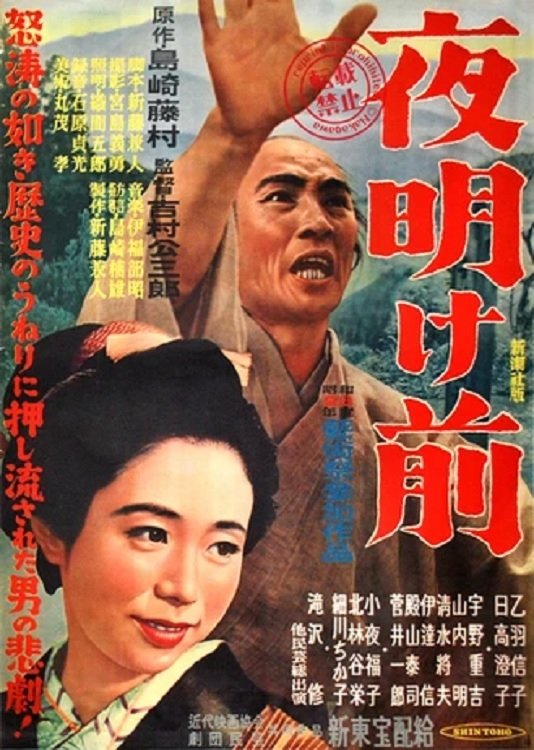
The film depicts the youth of Kinzo, a heretic painter who worked in Tosa during the late Edo period, and the hurricane-like inner side of his life.
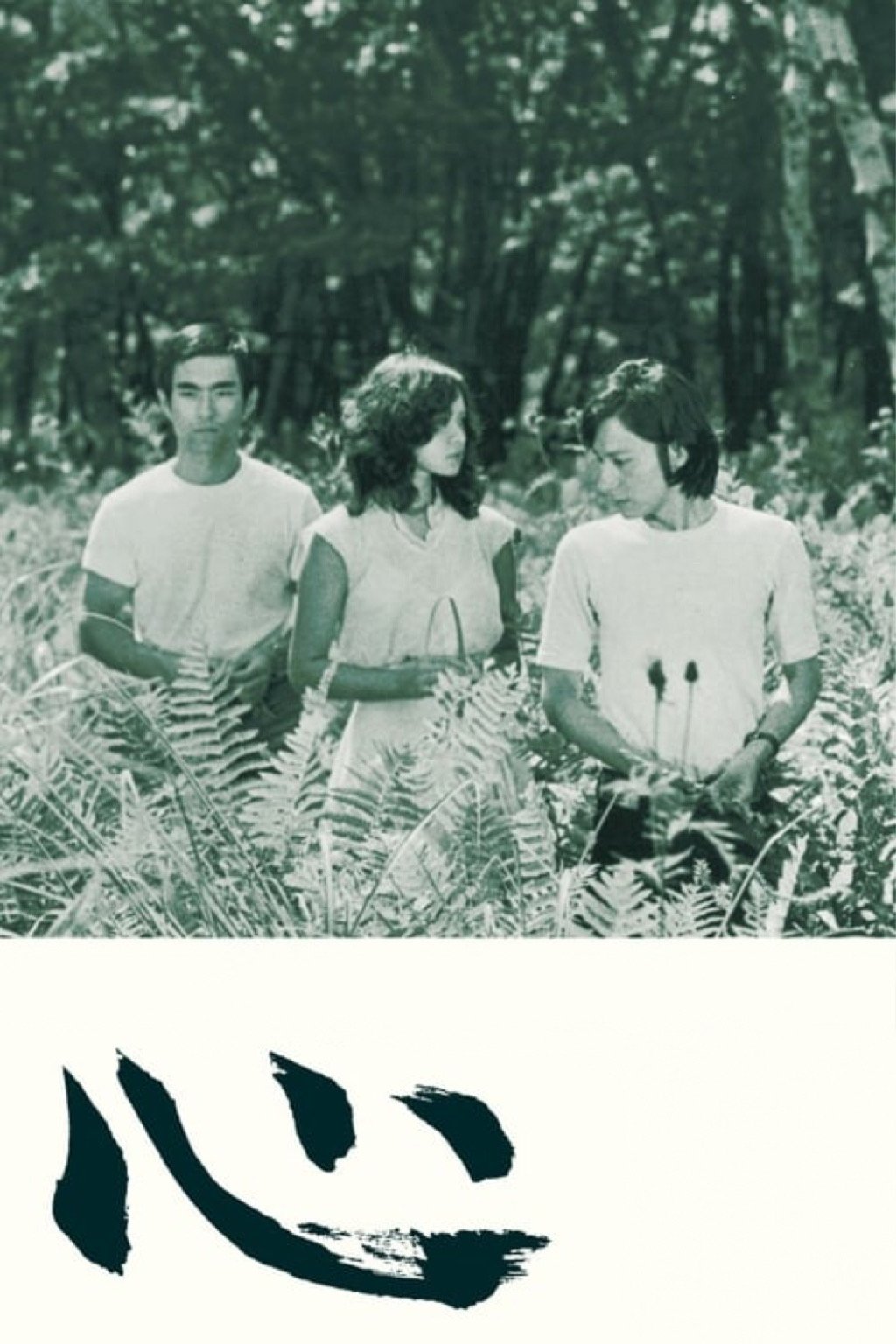
The relationship between a rich young student and his lower class friend changes when they start to live both at a guest house. Both will be attracted towards Iko, the beautiful daughter of their landlady.
Model Reiko Higa is injured after being hit by a car pursued by motorcycle cop Tomishima. Tomishima's supervisor refuses his request to apologize to Reiko, as it would be an admission of police responsibility. Forced to give up her career, Reiko leaves Tokyo to return to her hometown on Okinawa, travelling by road up to Kagoshima, and Tomishima pursues her in order to apologize.
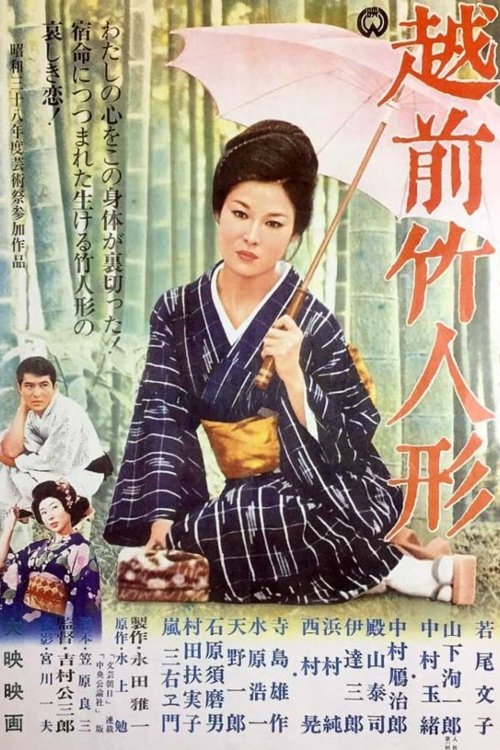
Kisuke, a young bamboo worker marries Tomoe, a courtesan who was once involved with Kisuke's late father.

Shinko Terasawa was always considered to be the odd ball of the bunch. At a time when romance was against school regulations, Shinko was the first to take a bite out of the forbidden fruit. Expelled from her former school, she finds herself in an all-girls school in Jokamachi, where rumors fly. One day, Shinko delivers an anonymous love letter addressed to her English teacher, Ms. Shimazaki. Convinced that the students are playing a prank, Ms. Shimazaki is adamant about getting to the bottom of this "problem”.
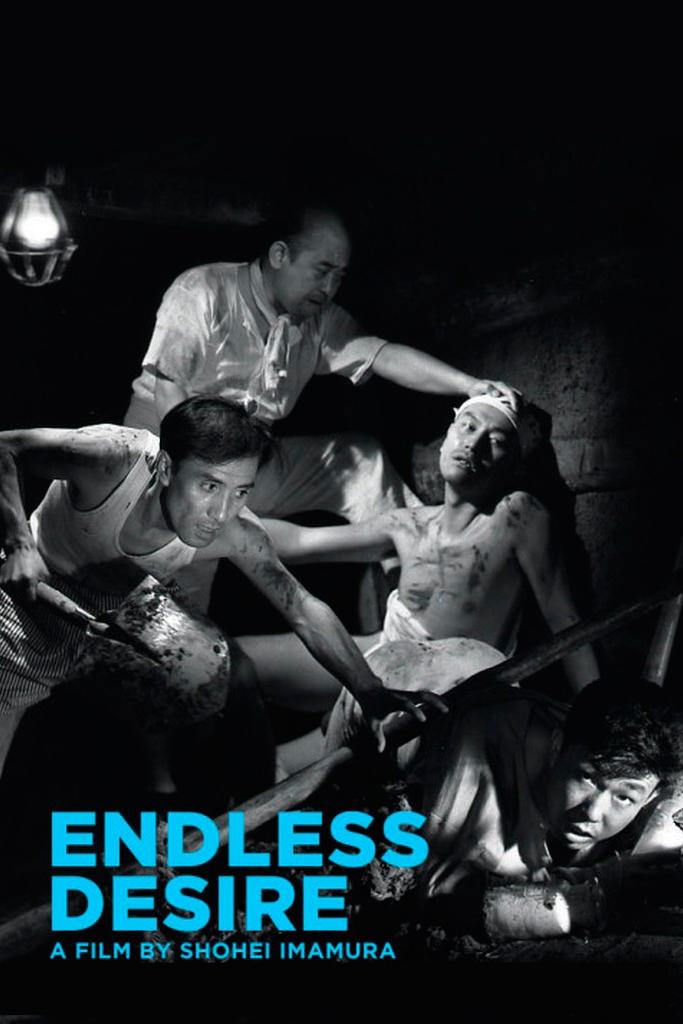
Set in post-war Japan, a group of five, four men and one woman, gathers in the basement of a butcher shop to dig up a cache of morphine buried during the war. A grimly humorous tale of twisted relationships as one by one each of the group is eliminated.
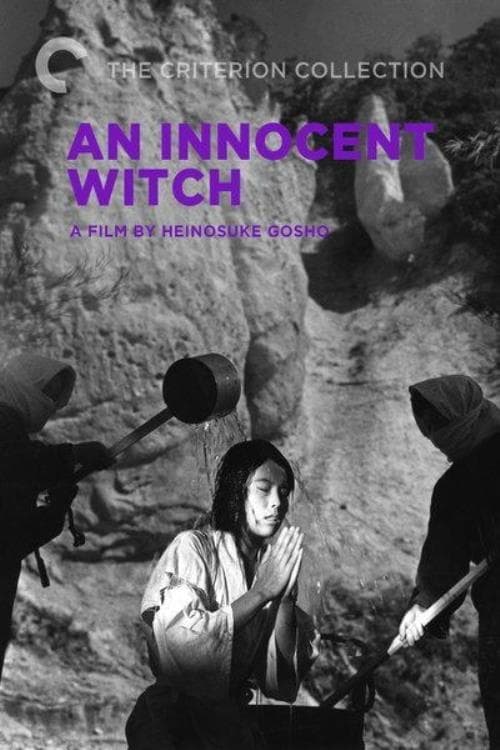
Ayako, a young woman from a rural fishing village, is sold by her family into a brothel when her father takes ill. There, she is quickly stripped of her innocence and illusions.
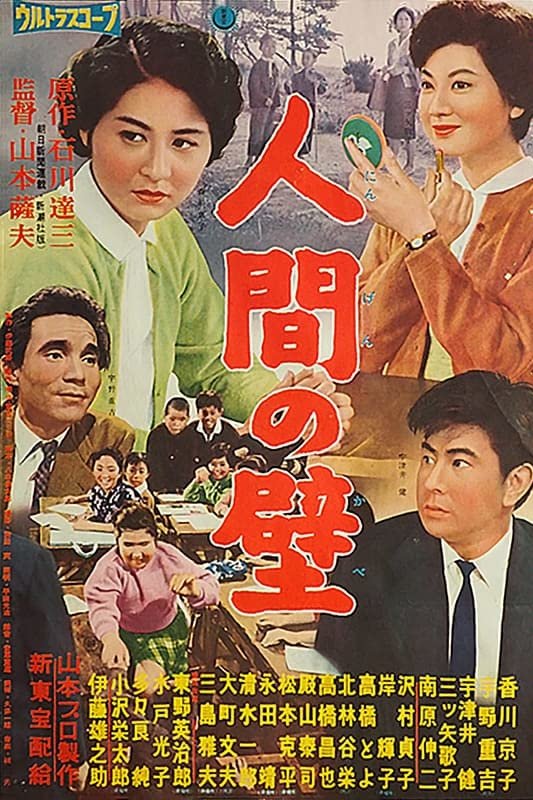
Drama which shows the struggle of Fumiko, a female teacher, at work and at home.
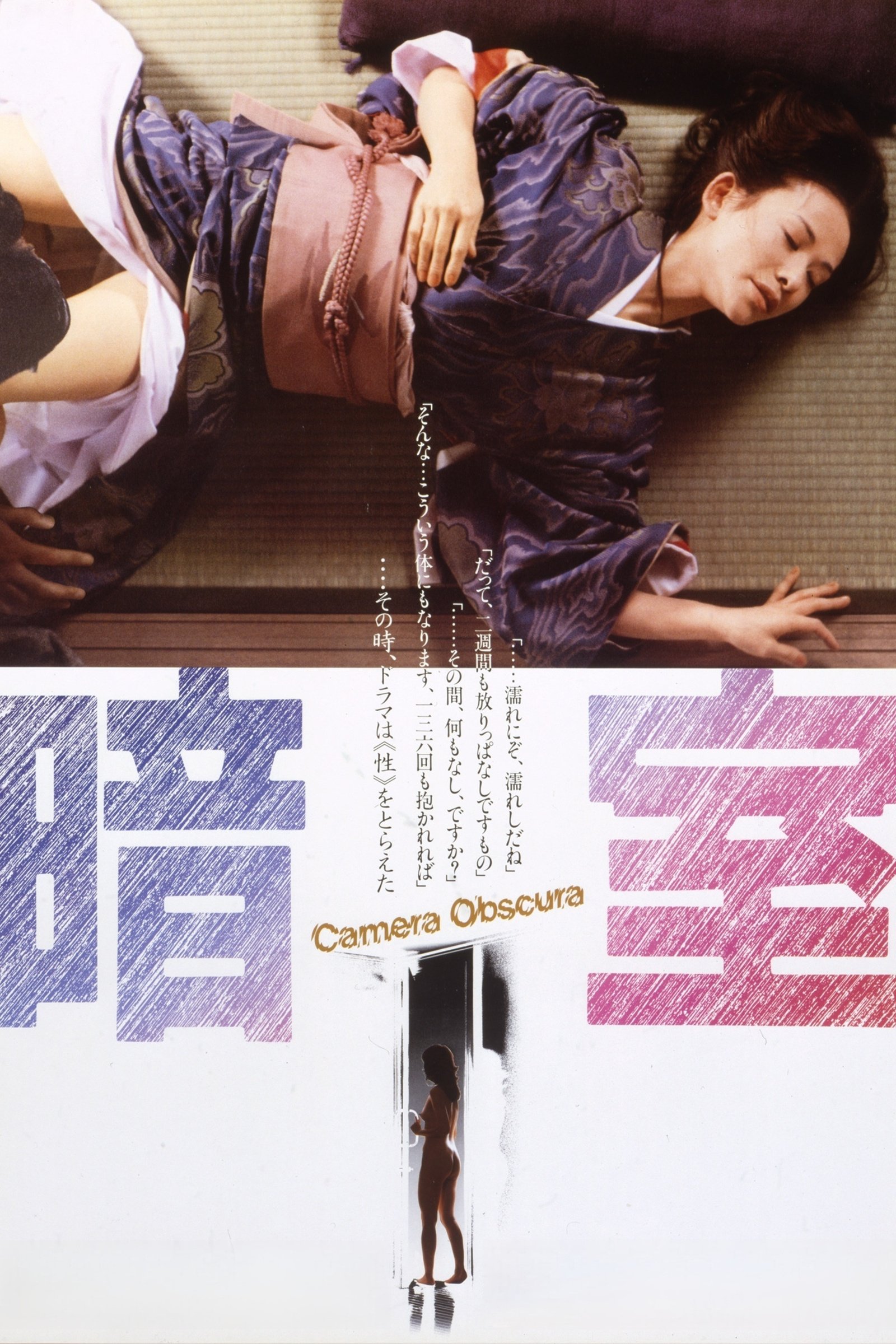
A writer haunted by the death of his wife and threatened by the imagined infidelities of his lovers uses his affairs for the subjects of his novels.
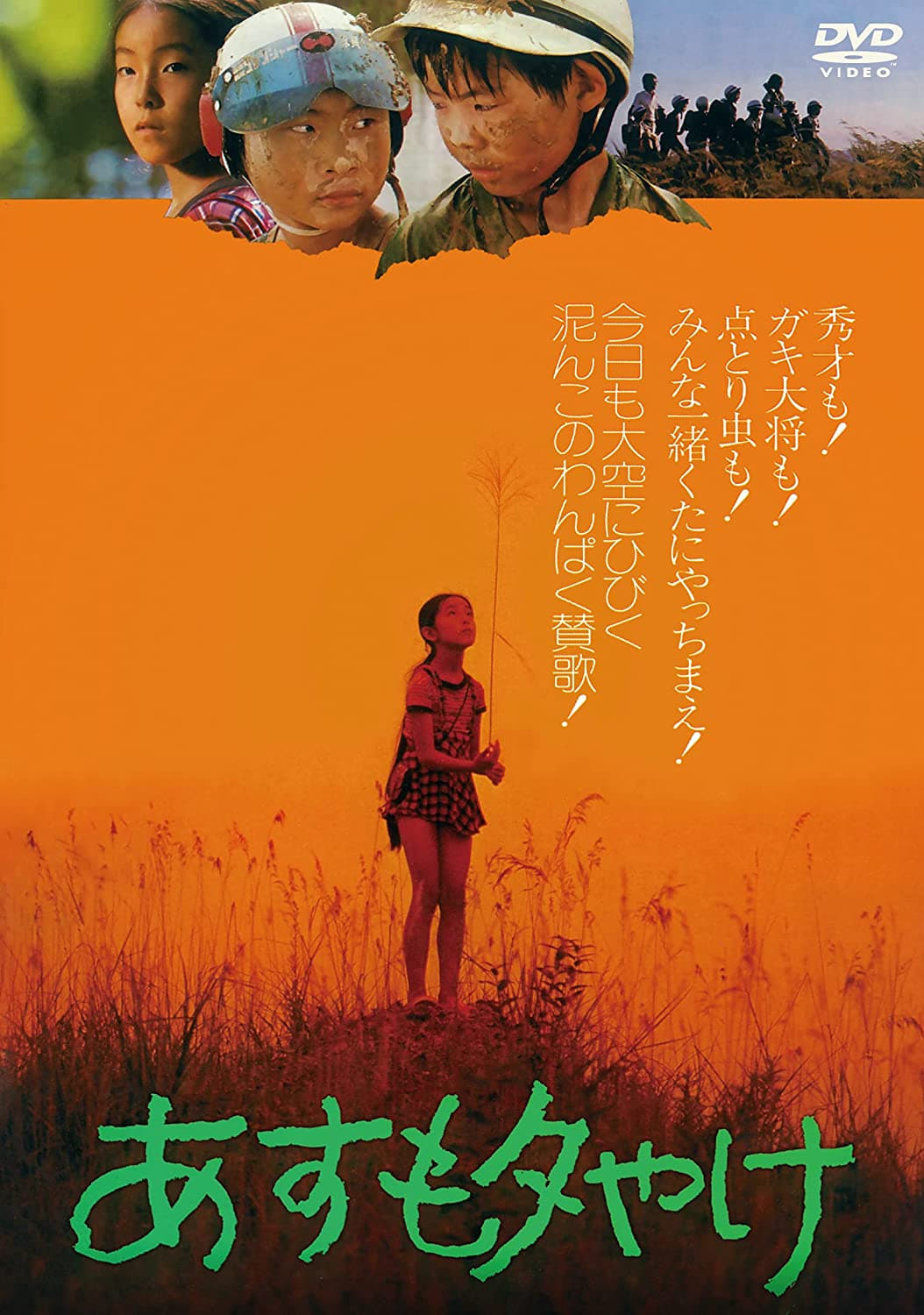
Ayako is a 7-year-old girl with a dark, tanned face and a somewhat mysterious expression on her face. She shows up at the elementary school and acts strangely, but the children don't know her name and just call her "that girl". There are two groups of children at the elementary school, and the conflict between the groups intensifies...
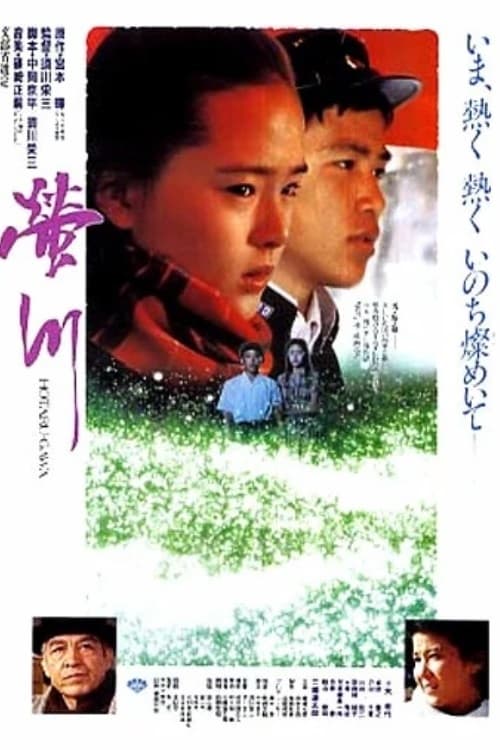
During the winter in Toyama in 1962, Tatsuo Mizushima is fretting about his feelings for his classmate Eiko Tsujisawa while agonizing about his upcoming high school examinations. When he was little, he and Eiko had heard that in April of a year when the winter has been very harsh, any couple finding fireflies together needs to get married. However, his family's situation does not allow Tatsuo to continue his worrying about such things for very much longer.
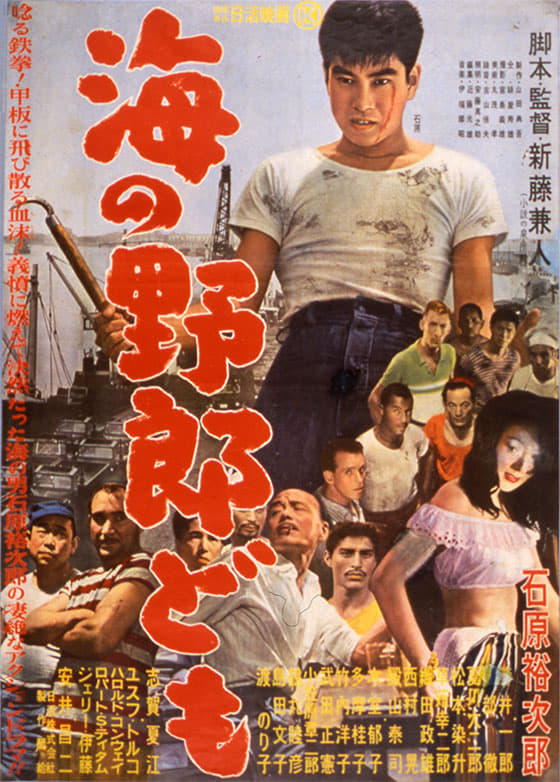
A scrap iron carrier arrived at Tokyo bay. The ship swarmed with the stevedores, the souvenir seller and the hookers. The crews of ship were oppressed by arrogant captain and his officers. The crews caused an uprising. A manager of stevedore ordered his employee leader to suppress an uprising...

A young rock singer is not appreciated by her band, and gets a postcard from Japan saying "wish you were here". She takes what little money she has including ex-boyfriend's rent money and goes to Tokyo. She has numerous cross-cultural adventures and ends up singing with a Japanese rock group looking for a gaijin gimmick.

Story of a Beloved Wife is an autobiographical work based on Shindo's first marriage. Jūkichi Uno stars as a struggling screenwriter, and Nobuko Otowa stars as the wife who supports him through his early struggles.
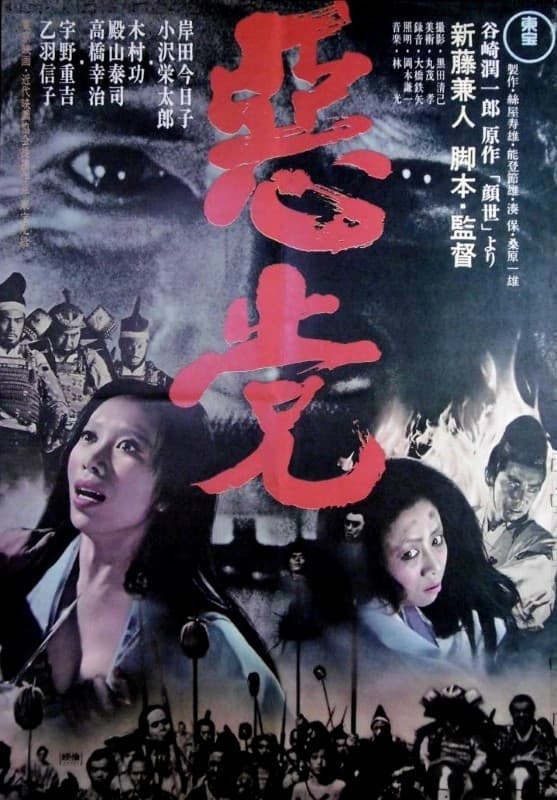
Provincial 14th century governor Moronao, attracted to the wife of a court magistrate, tries to seduce her and when she rejects his advances plots to send her husband into battle.
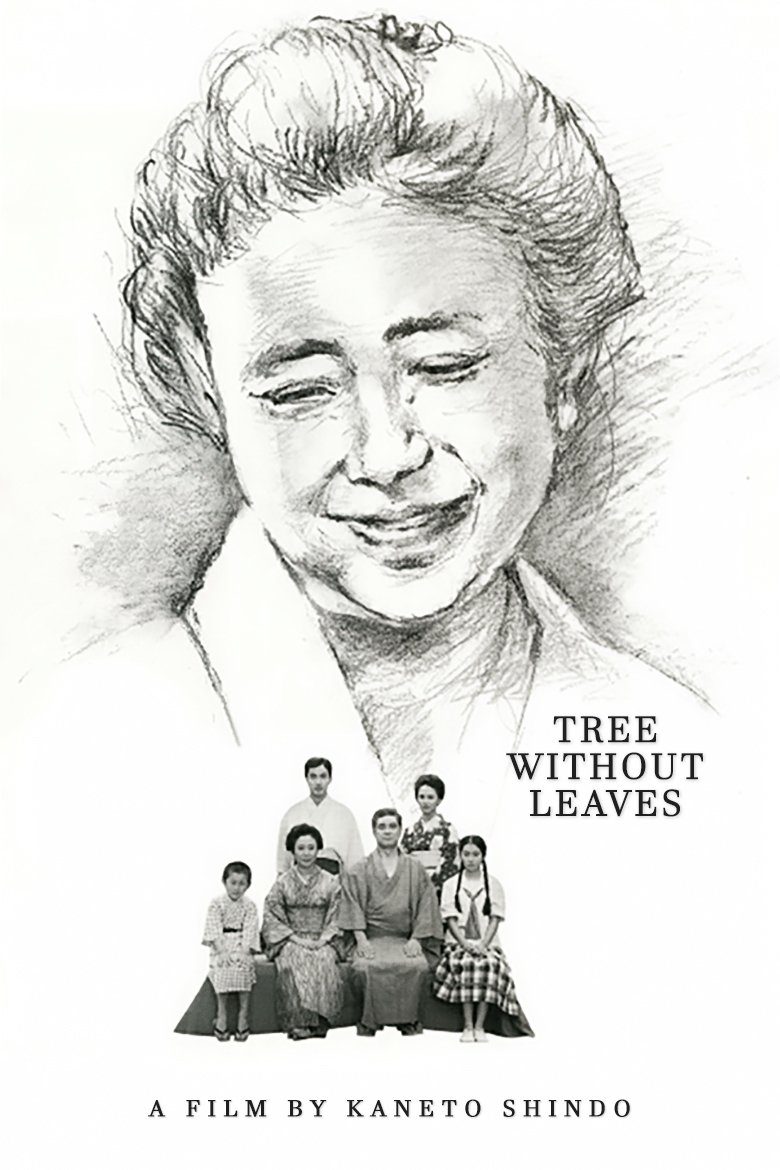
Haru, an aging scriptwriter, has isolated himself somewhere in the woods of Nagano to work on his first novel. As the last surviving member of his kin, he intends to chronicle the family he grew up in.
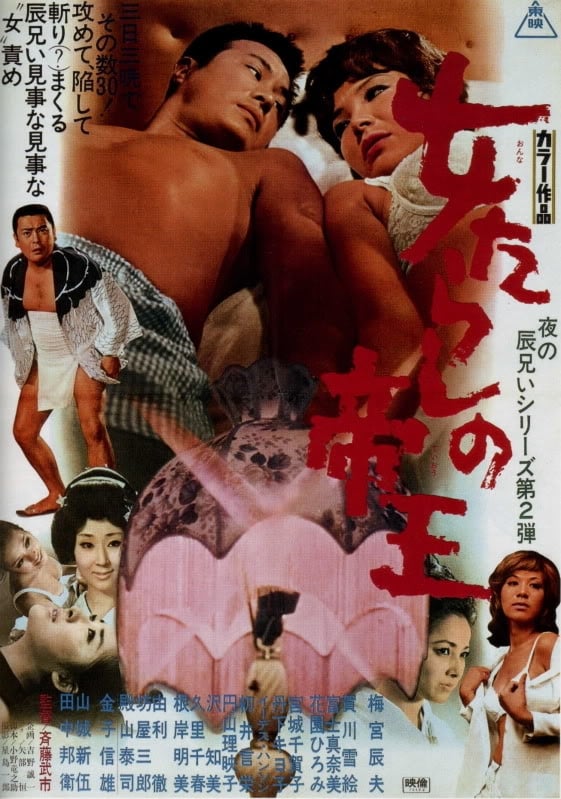
A man is inspired to build a hospital after his mother falls ill and becomes a host to swindle money out of women.
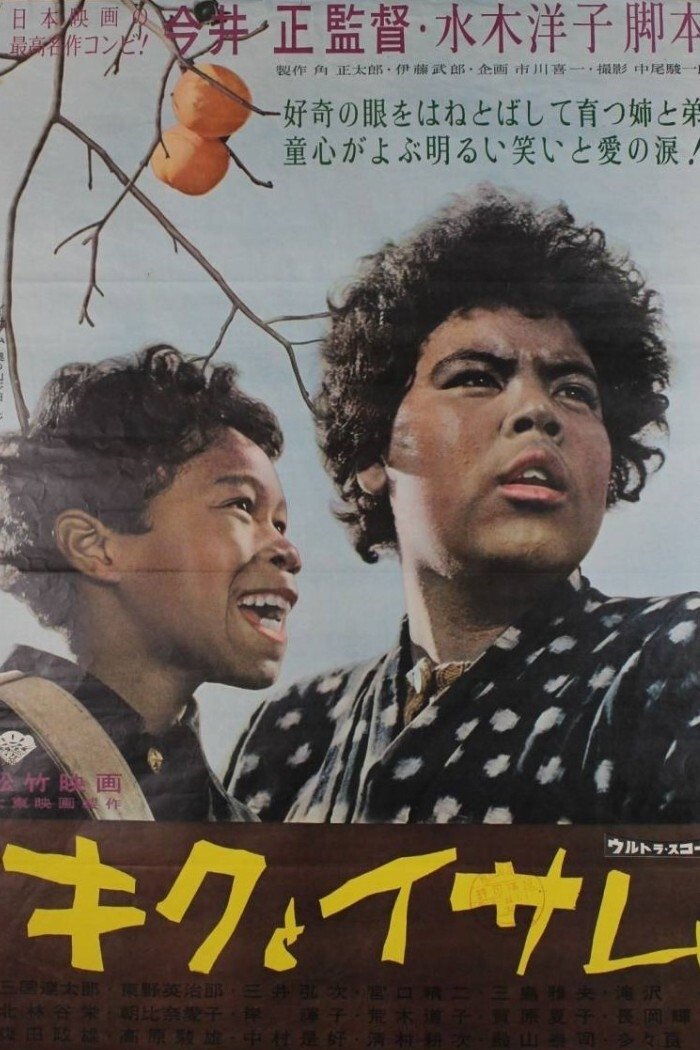
Kiku and her brother Isamu are social outcasts, children of a prostitute mother and black GI father, in postwar Japan.
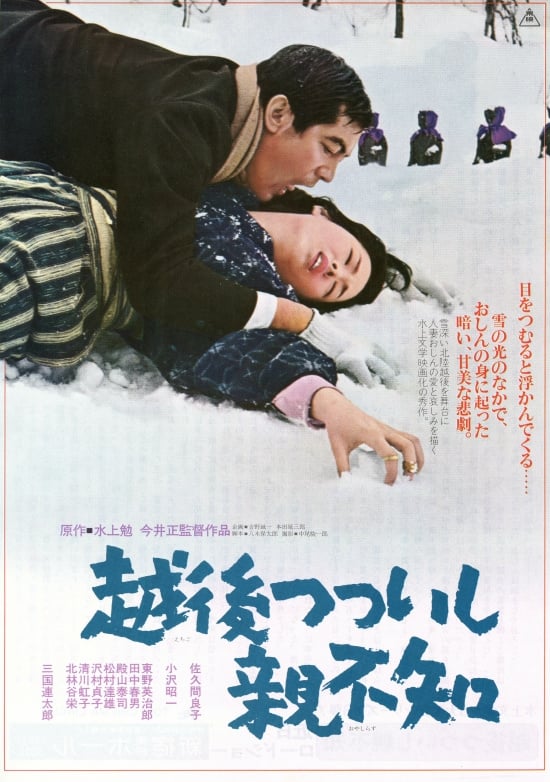
A sake factory worker on holiday returns to his home town, where he rapes the wife of one of his co-workers in the forest. The other man returns home to find his wife changed and suspects that she has been unfaithful.
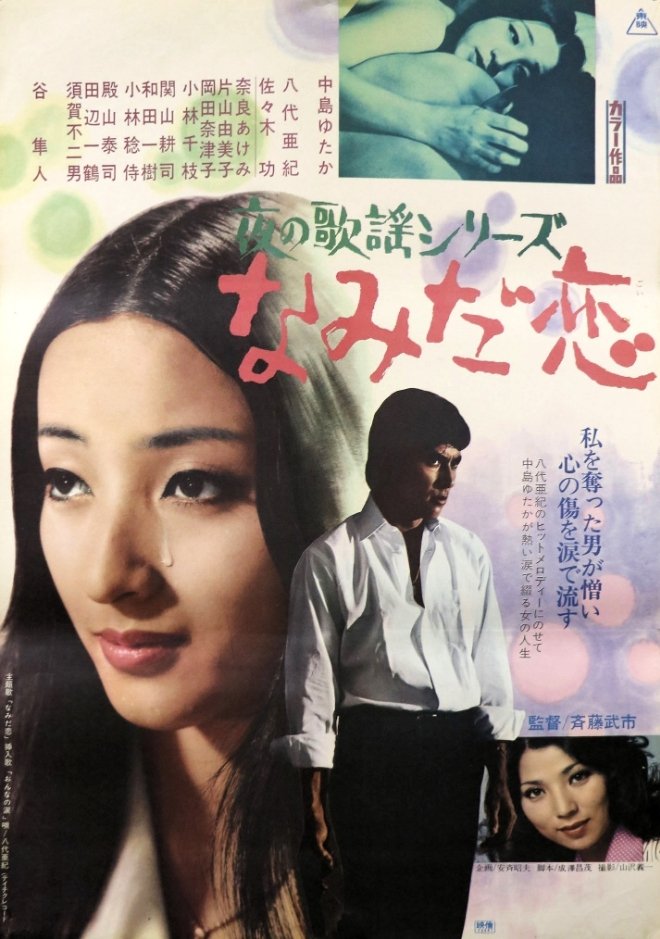
Japanese “kayo” film based on the song by "Namida koi" by Aki Yashiro.
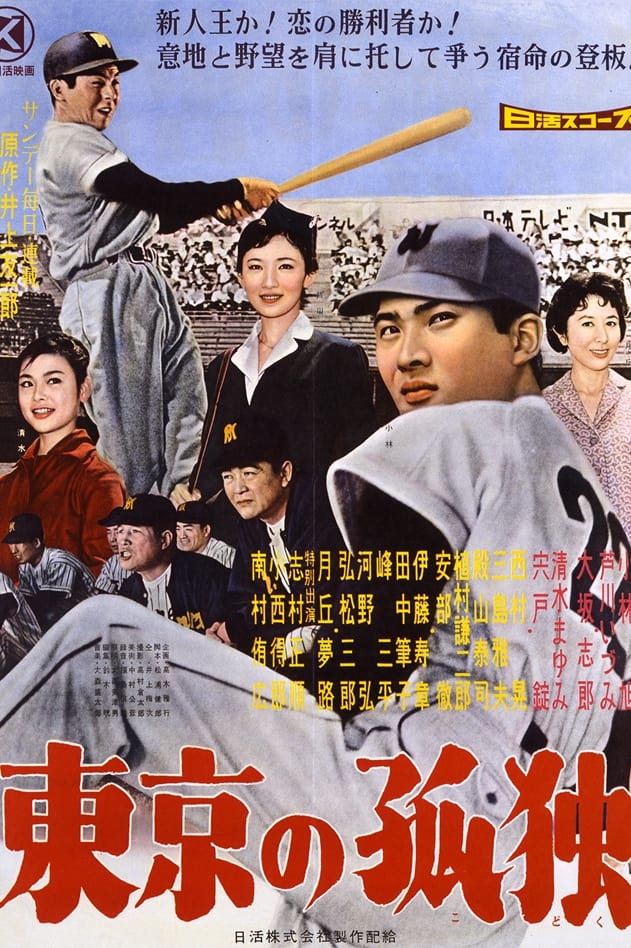
A coming-of-age story about two newcomers to the world of professional baseball who compete for Rookie of the Year honors and love.
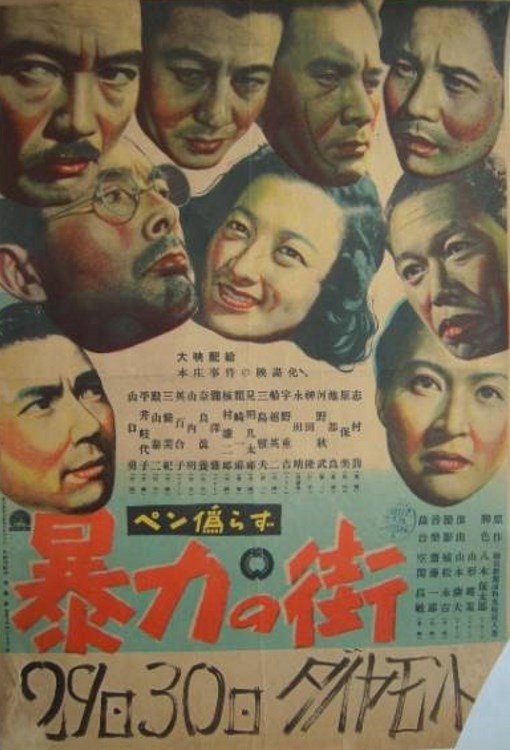
An attempt is made to suppress a journalist's investigation of collusion between a rural police chief and the local gangster bosses.
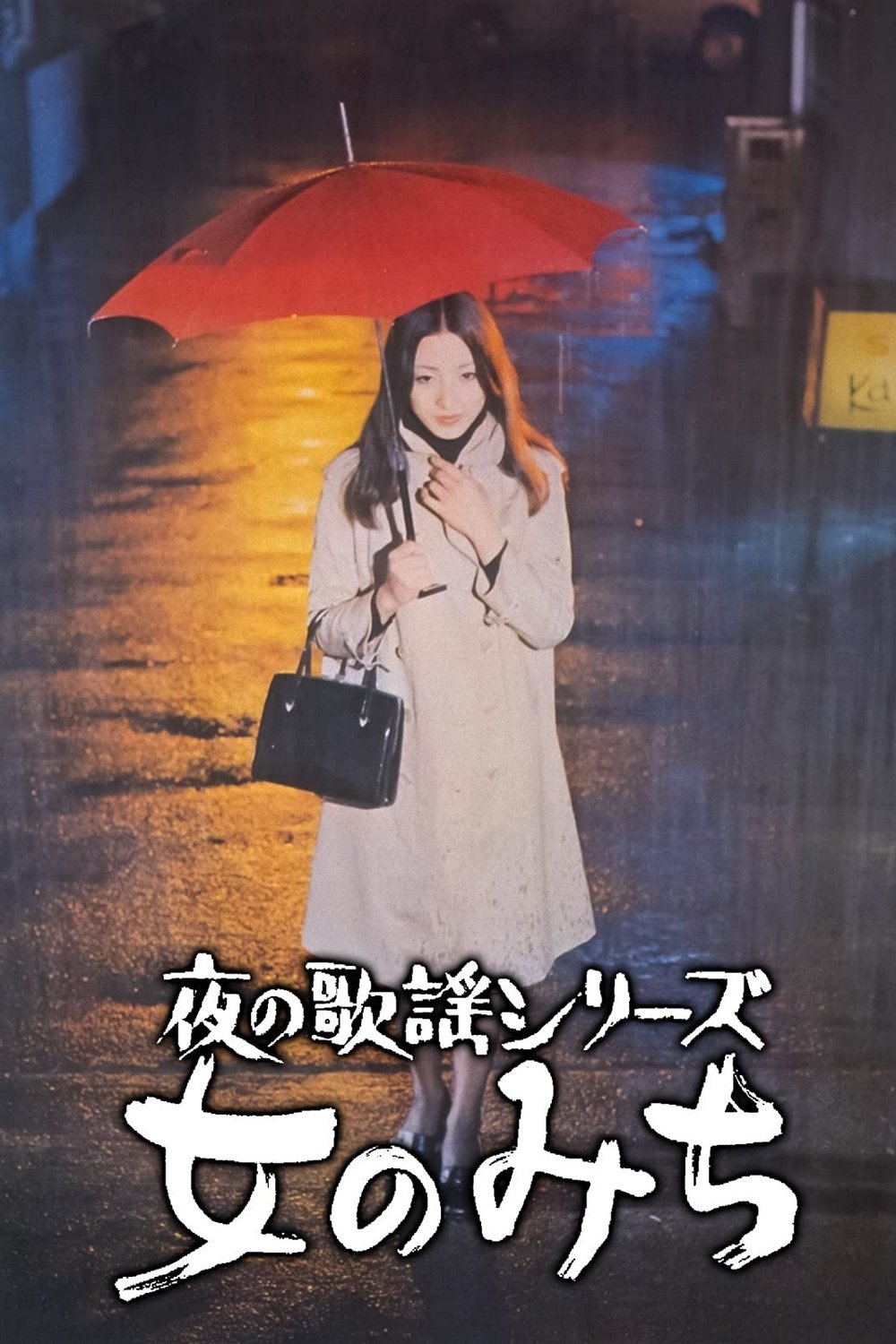
Poor Yoko knows she is getting played and used by a playboy, but she loves him with all her heart and soul.
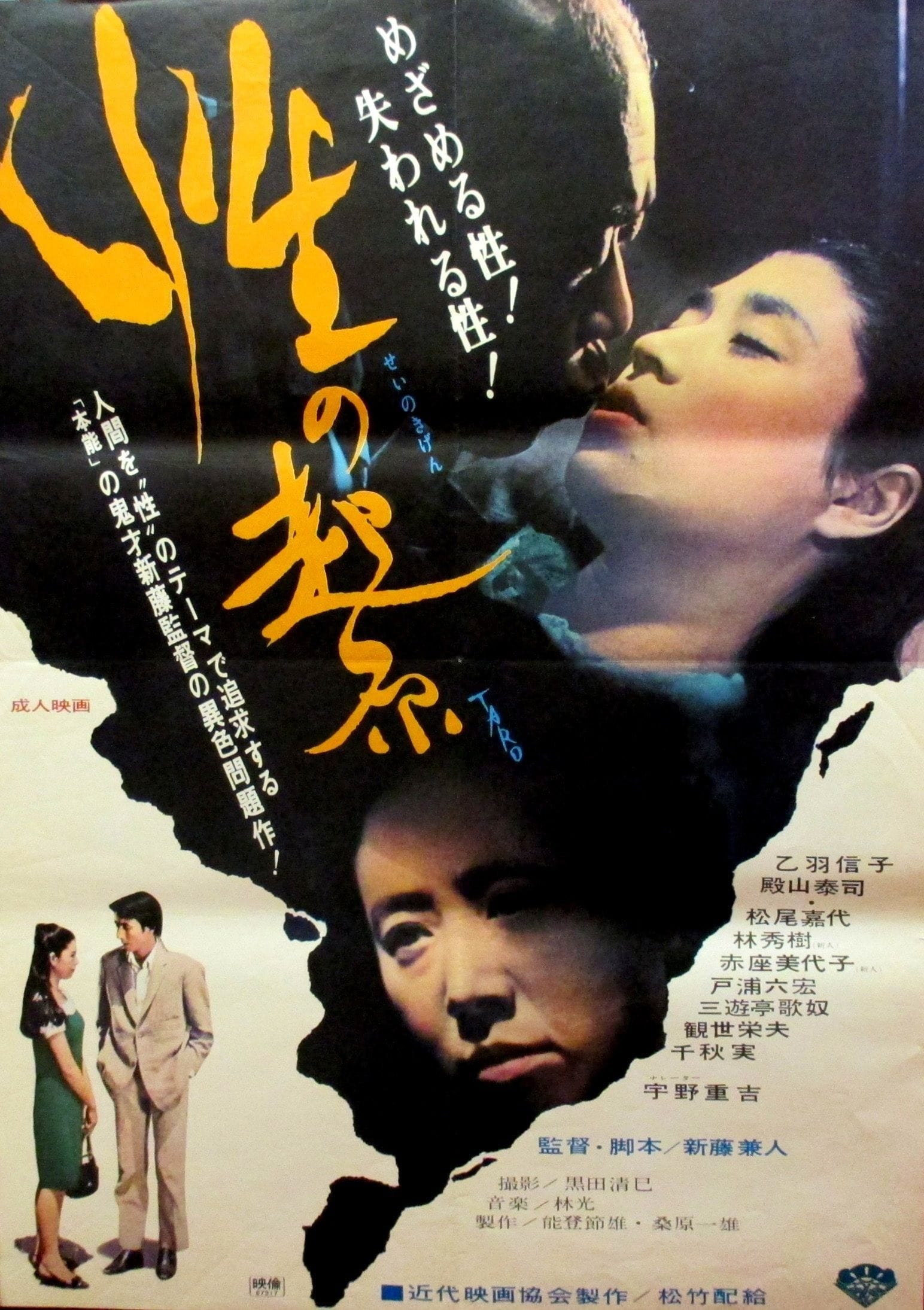
After an elderly man is discharged from a hospital following a misunderstood, life-affirming impulse toward a fellow patient, he finds himself caught between his wife’s empathy and his children’s judgmental scorn. As his health wavers, he and his wife attempt to reclaim their intimacy and vitality during a seaside getaway, even as their son becomes entangled with the same young woman from the clinic.
Live-action adaptation of Yoshiro Kato’s manga.
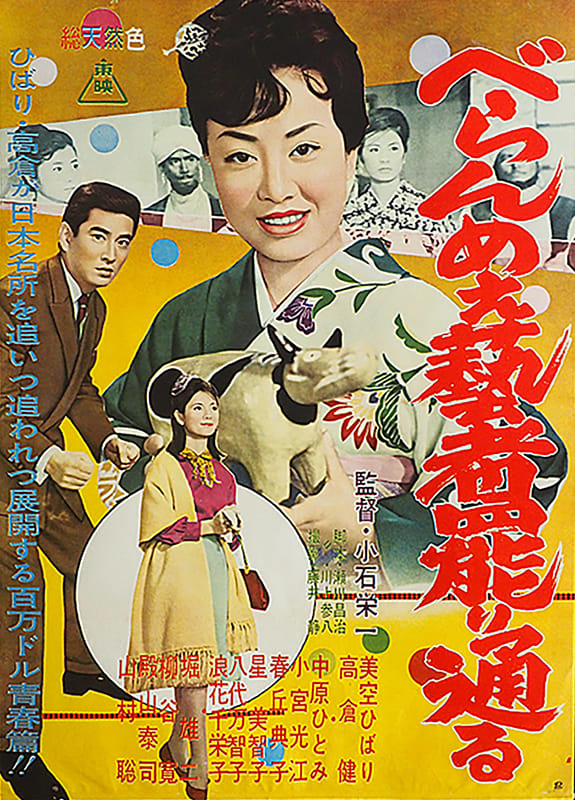
A comedy of a high-spirited geisha, Koharu, who is at risk of being trapped in a conspiracy to take over a lucrative diamond mine business.
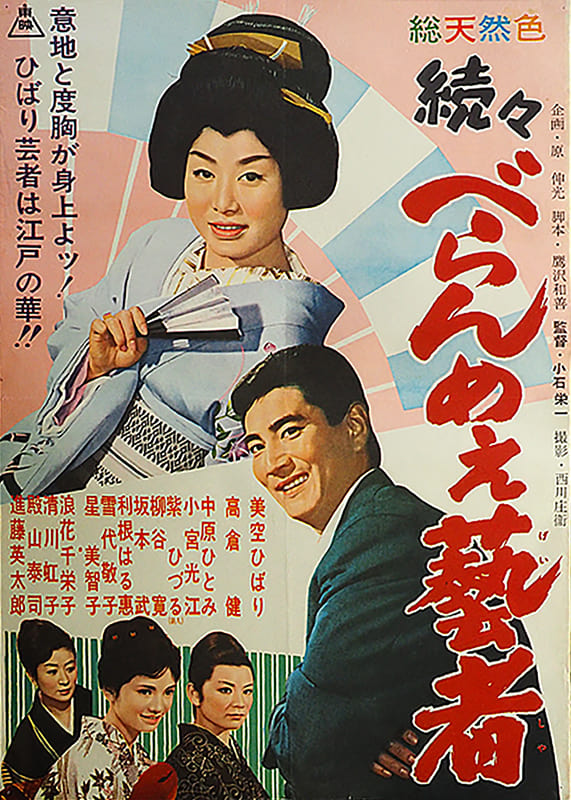
Popular geisha Koharu suspects that Yusaku, a handsome stranger she falls in love with, is involved in a robbery of precious diamond.
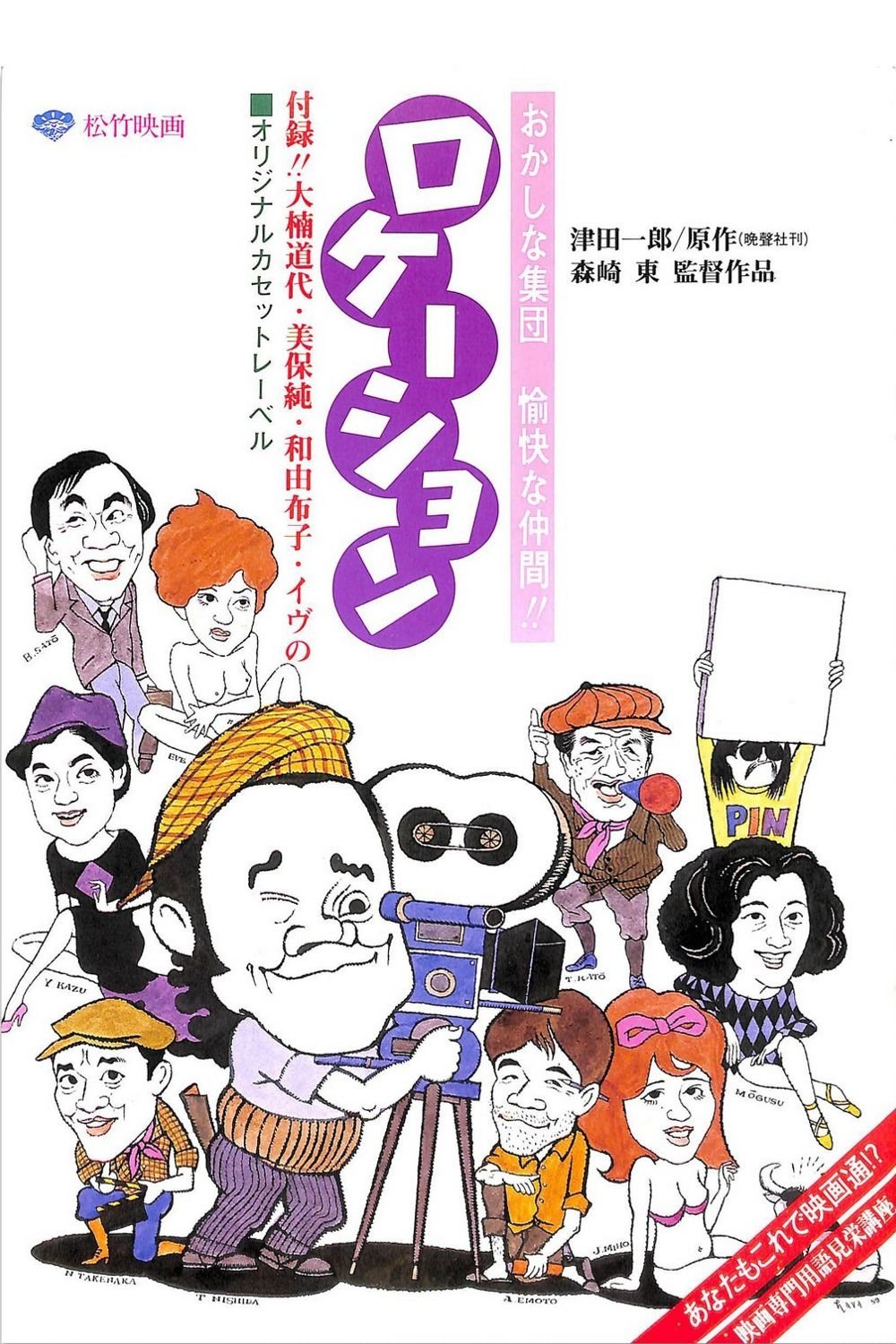
The melodramatic story of a pink crew’s tragi-comedic adventures on location. A fictionalized adaptation of set photographer Ichiro Tsuda's 1980 book The Location (Za Rokēshon), an illustrated 229-page document about the cameraman’s experiences with pink cast and crew on the sets of several films produced in the late 1970's.
A 1948 Japanese film.

After Japan's defeat in the war, the Anjo family lose their peerage and wealth. Since their mansion is due to pass into the hands of a creditor, the family holds one last ball before leaving.
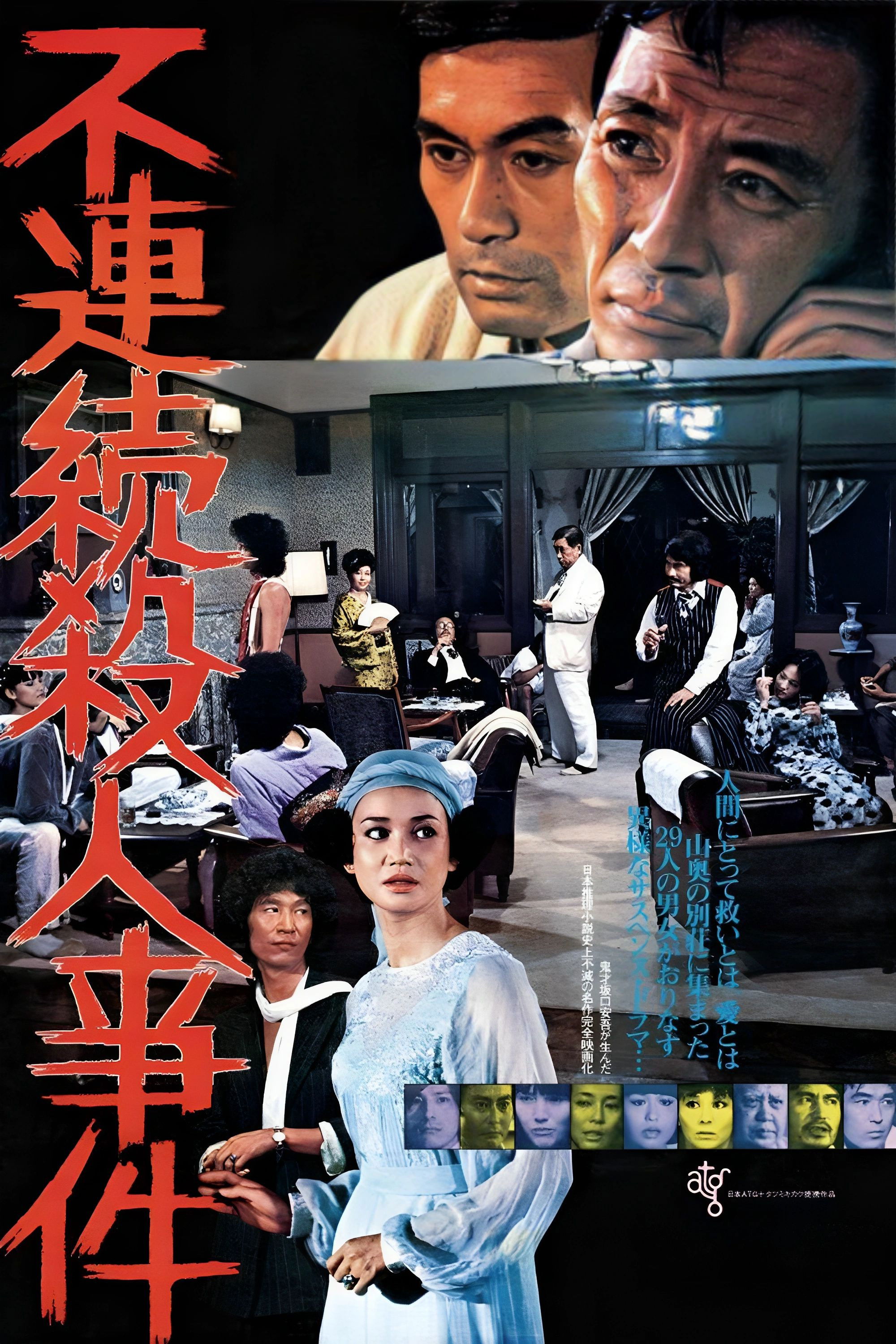
In the summer of 1947, various men and women gather at a mansion in the countryside at the invitation of Kazuma Utagawa. They are artists, novelists, poets, painters, playwrights, actresses, etc. Then the murders begin, one after another. The incident seemed to have no continuity...
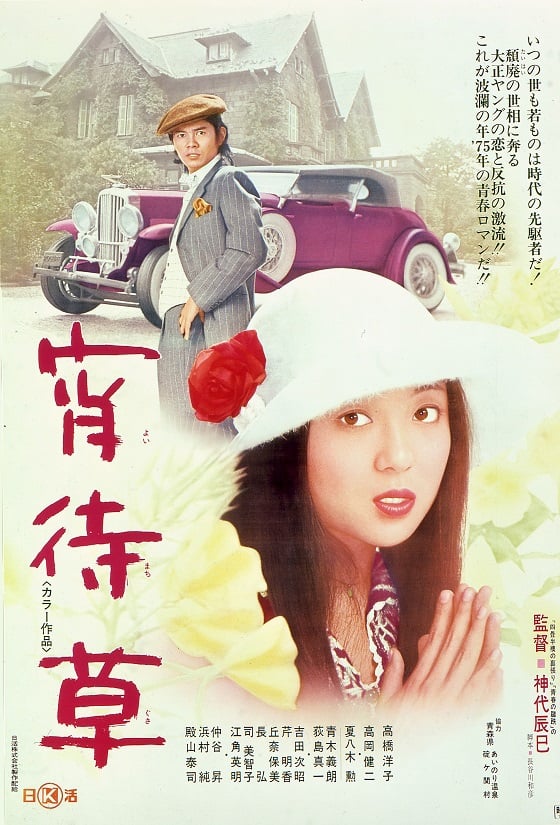
The Taisho era was a time of turbulence in Japan. From new marks of modernity to full-blown riots, a sense of revolution filled the air. The Dam Dam Group is a small anarchist organization lead by Daijiro, a silver tongued "Benshi", a performer who provides narratives for silent films, playing multiple roles. In other words, he was a master at the art of deception, a handy talent when it came to 'doing jobs' for his group. His revolutionary ideals attracted many to his squadron, but among them was a young girl who was oblivious to his group's activities. Her name was Shino.
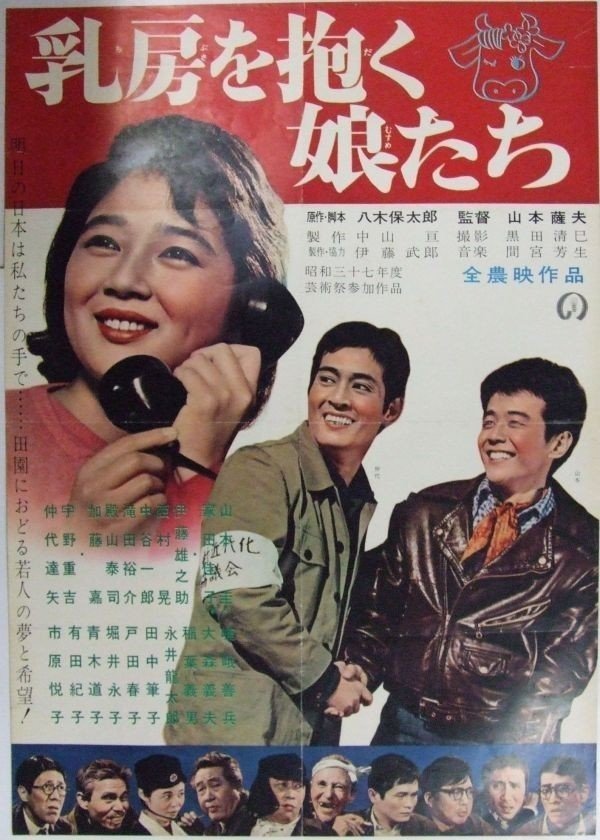
Japanese drama.
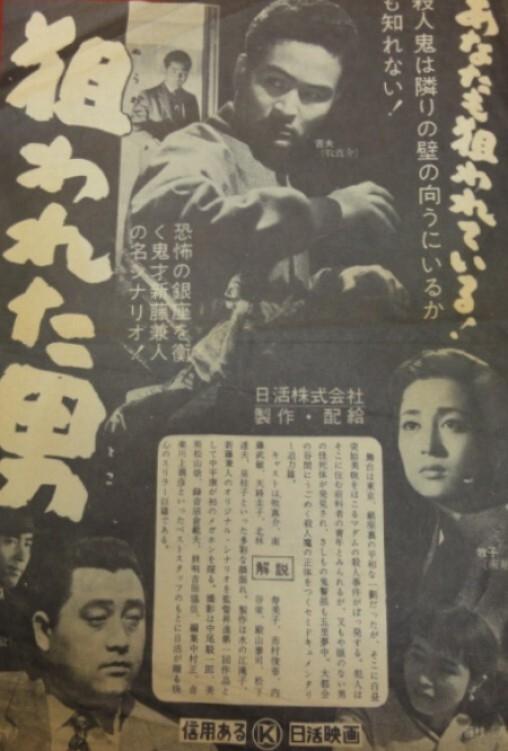
In the backstreets of Ginza, the boss of a hairdressing salon is found dead, killed by strangulation. The detective on the case soon hears rumors about the murder.

On the eve of the Russo-Japanese war at the beginning of the 20th century, small-town girl Okane has married an old wealthy man to escape a life of poverty.
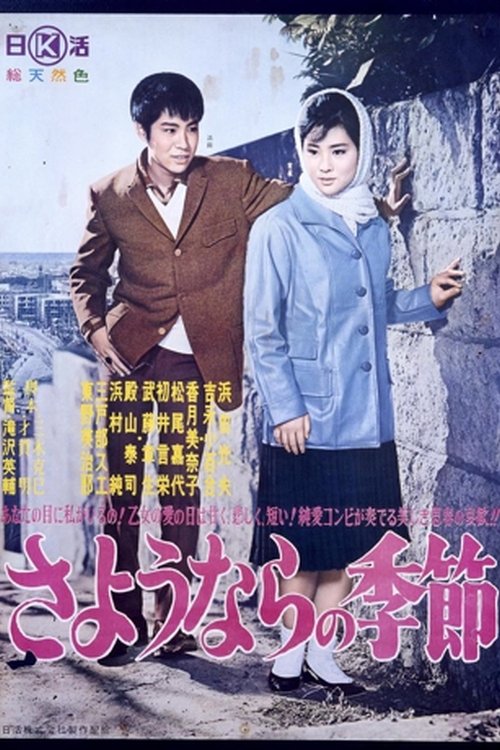
A touching story of a girl who sails away from her love to keep her family together.
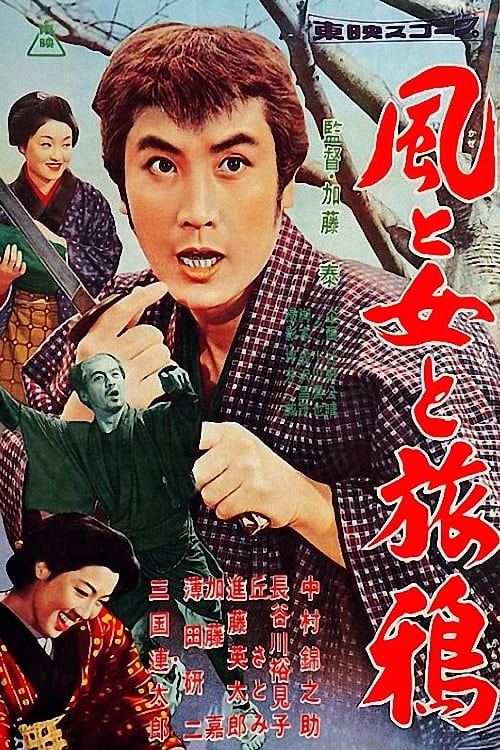
A chance meeting between two traveling gamblers leads to a case of mistaken identity when the farmers transporting gold to the governor think they are about to be robbed as the two gamblers face off against each other swords in hand.
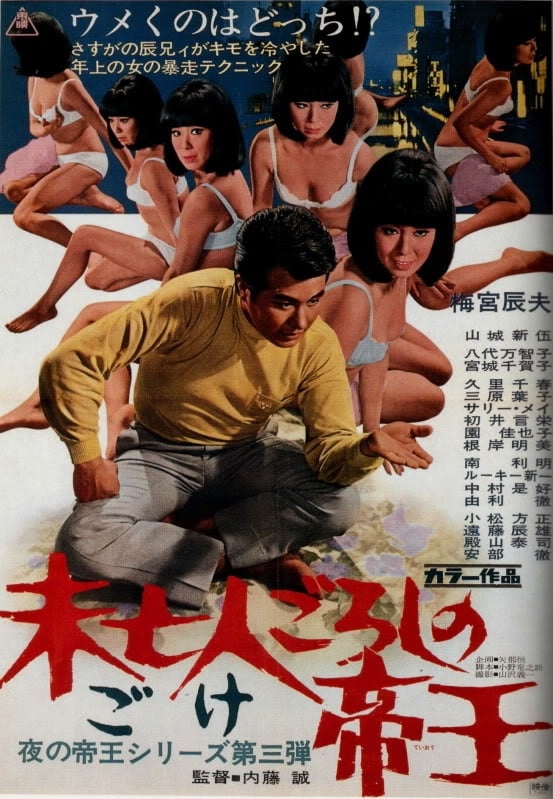
The third installment of the Emperor series, starring Tatsuo Umemiya as the man who rules the night world. Hiroshi rose through the ranks in Tokyo by fighting with women. However, when he returned to his hometown in Kyushu for his father's memorial service, his gambling partner Masa not only confiscated Hiroshi's store and bankbook, but was also saddled with debts in Hiroshi's name. Although Hiroshi was angry, he made a decision and decided to start over using his body. Starting with a female designer, he battles an antique art dealer, Master Nagauta, a female doctor, and many others, and finally battles a rich man's widow.
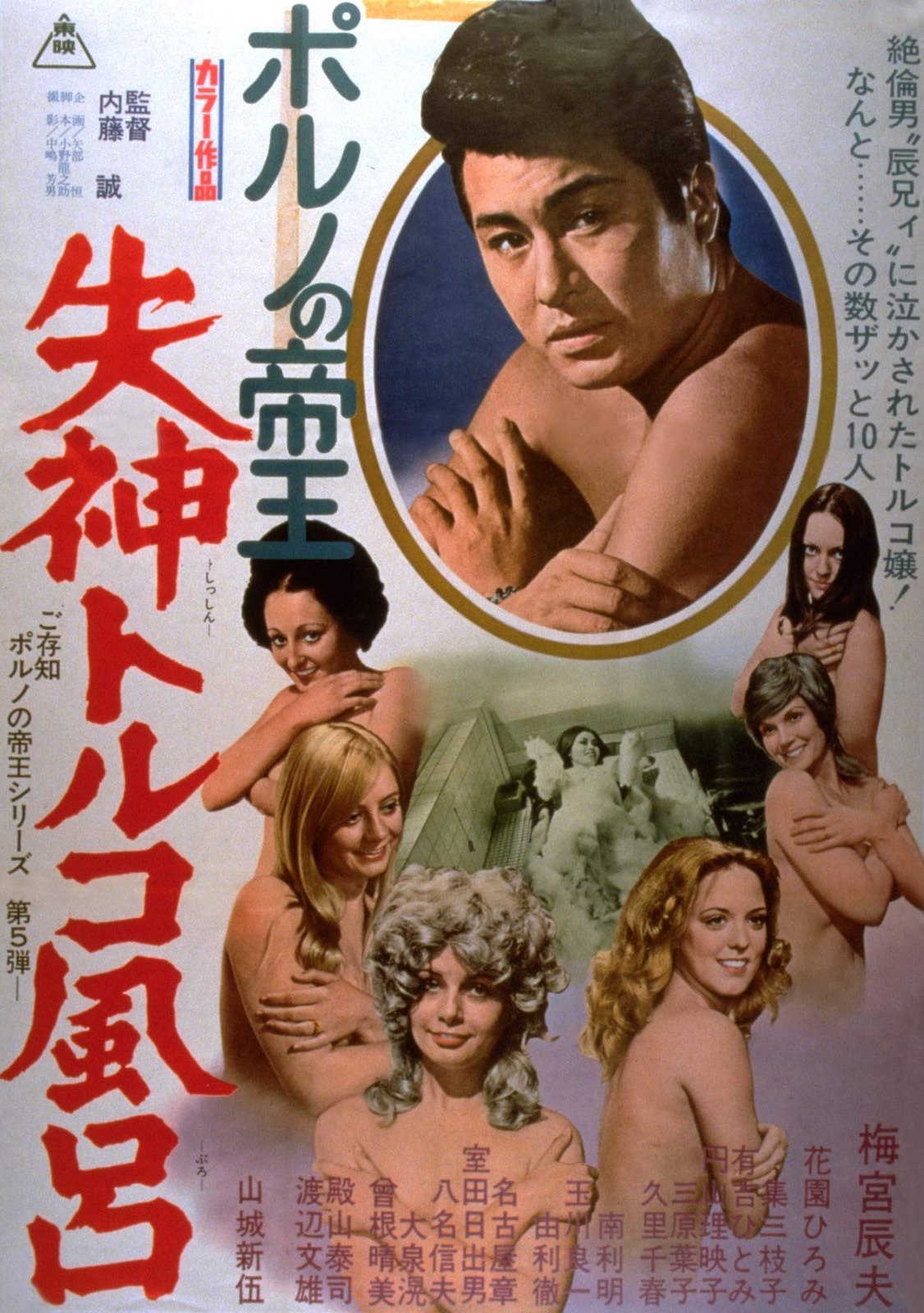
Hiroshi (Tatsuo Umemiya) has the biggest penis in all of Japan and everyone who touches (or is touched by) it, is blessed by good fortune. After buying his sister a washing machine for her wedding, he travels to Tokyo, where he must help his friend Masa out of a half-million yen debt. Among other hijinks, he becomes a penis god in the process.
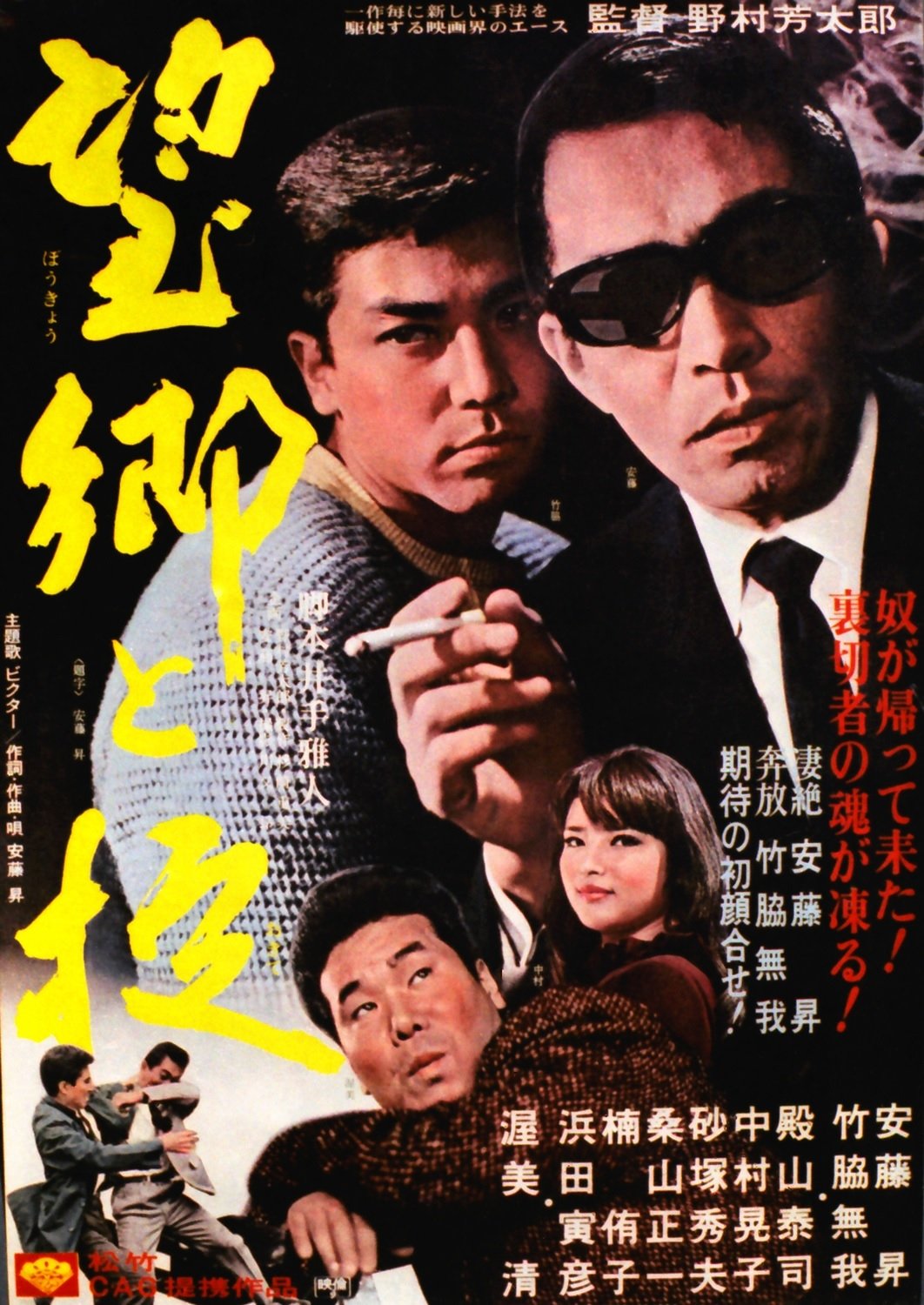
Shochiku's popular series of gang films, this one has the hero returning from prison bent on revenge. He runs into Chinese hoodlums, blackmailers and gold-smugglers. But he also aids and abets young lovers yet, despite his help, their love ends in tragedy and he tracks down his prey in Kobe.
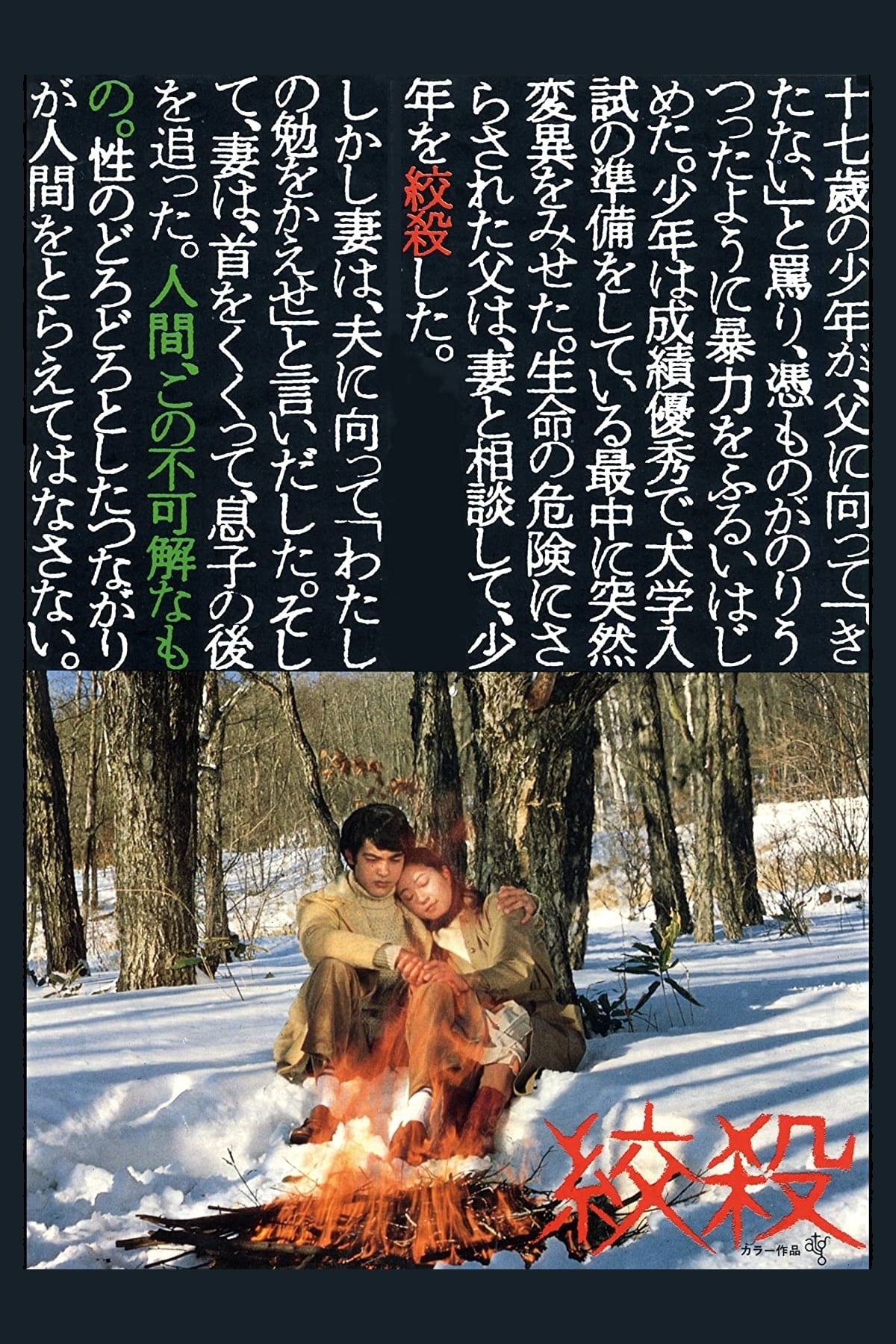
The men who surround and torment the young protagonist (demanding teacher, owner of the company that rapes his own daughter, despotic and uncompromising father) are opposed to women (victims of men) as embodiment of salvation.
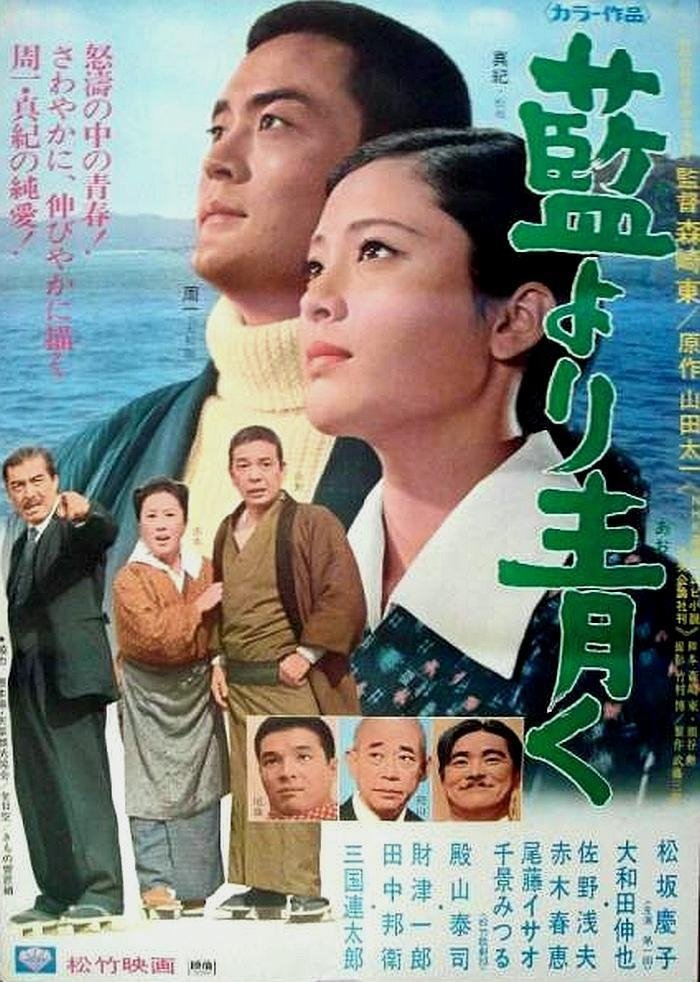
About a girl who marries in the middle of the Pacific War, is widowed at 18, and her unflagging struggle to survive during and after the war with her son.
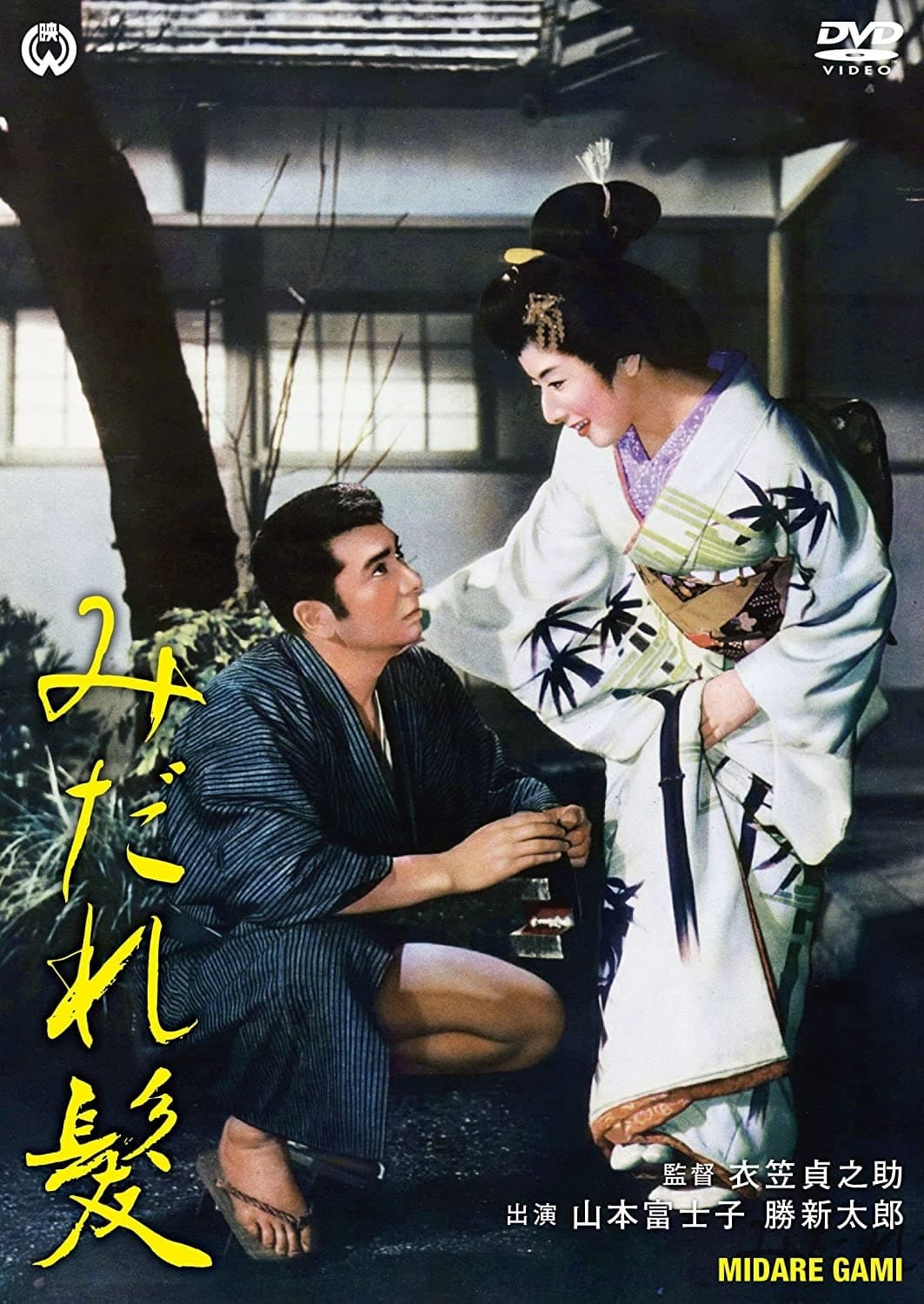
Late romance by acclaimed filmmaker Kinugasa Teinosuke.
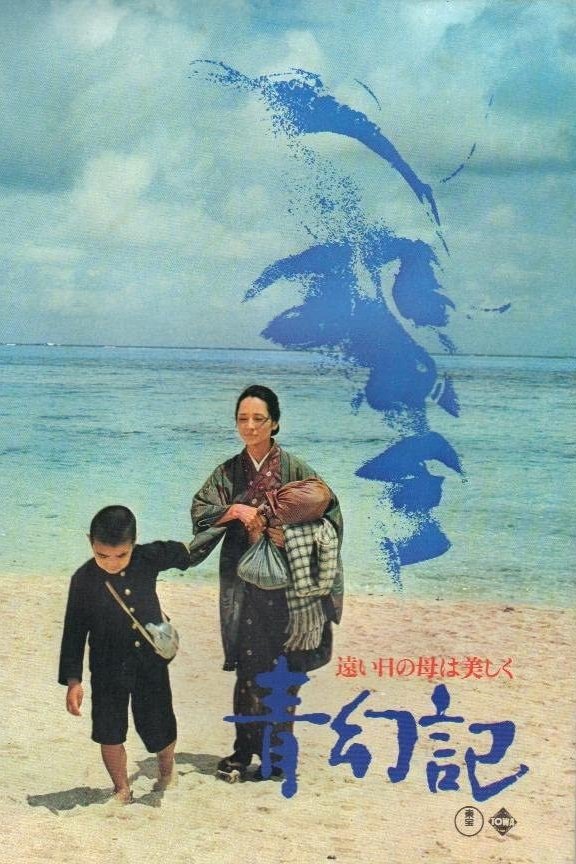
Minoru visits his home on Okinoerabu island for the first time in thirty years. Seeing the old man who used to be in love with his mother, Minoru recalls the old days spent on the island with his young, beautiful mother.
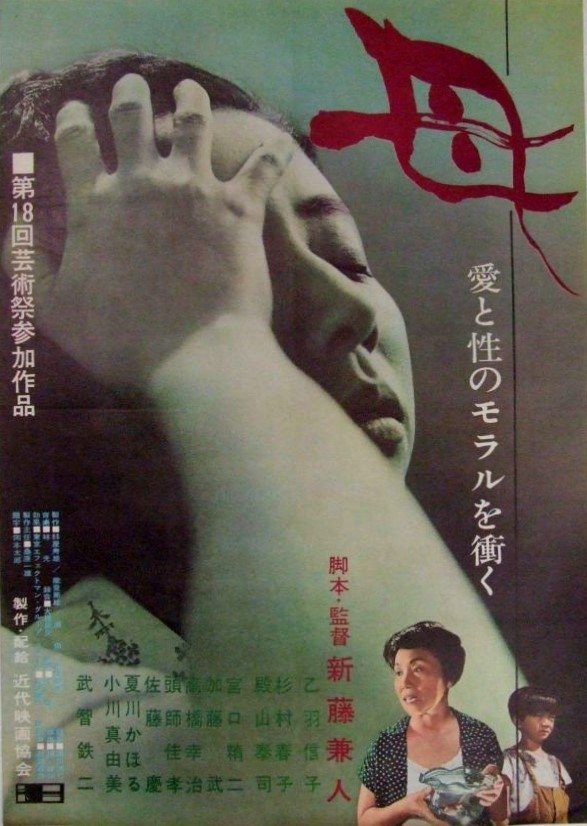
A divorced woman enters a marriage arranged by her mother in exchange for money to save the life of her seriously ill son.
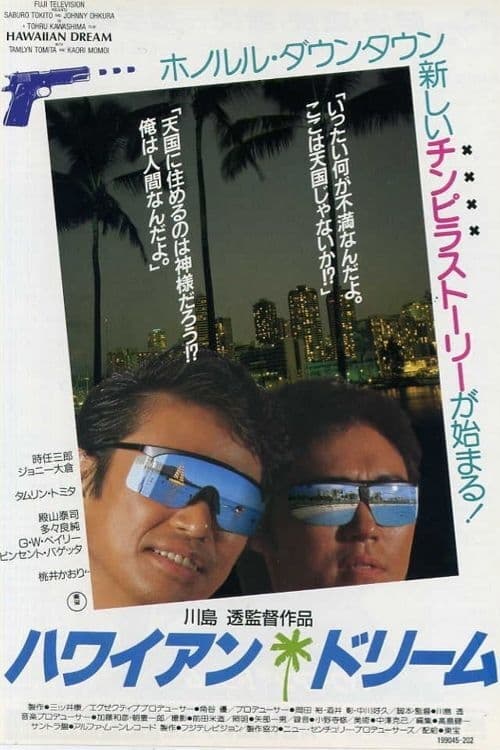
Tatsuhiko and Shofumi are hoodlums living in downtown Hawaii, having flown out of Japan and entered the country illegally for a reason. The two make a living by trafficking pakalolo – marijuana – under the pretext of selling tea leaves, but they are in a foreign land where they don't speak the language well. When they get busted by the chief of police, they're forced to make a deal and and help get a local crime boss masquerading as a benevolent celebrity arrested.
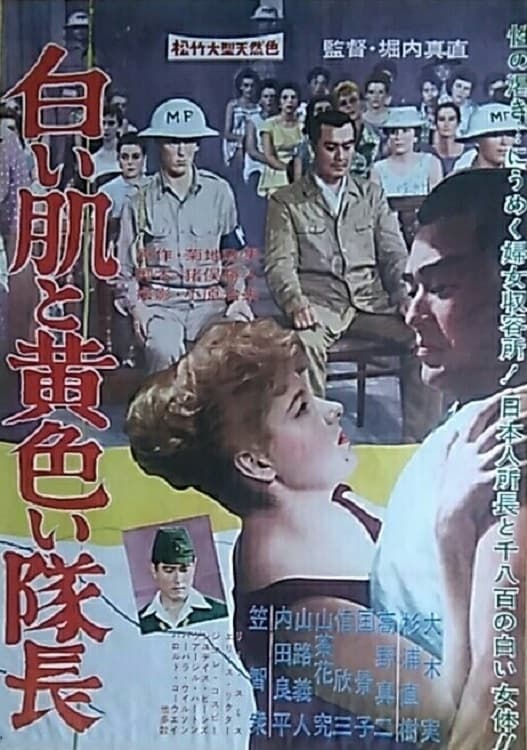
In the autumn of 1945, Petty Officer Tadashi Yamaji is among the numerous war crimes suspects facing death on the gallows for maltreatment of Allied women and children interned in camp Kampili. Kampili is located some ten kilometers outside Macassar on the island of Celebes. Eighteen-hundred Allied women and children were interned for the duration of the war. Yamaji's iron rule for camp administration is : No violence; hands off internees; He also endeavors to establish self-administration by internees while aiming at a self-supporting camp economy within six months. His ingenuity gains the camp numerous pigs to enrich their diet, and sewing machines with to make fatigue uniforms for the military. The internees are grateful for what little aid he can give them. As the tides of war changes, Allied planes bomb the camp in error. But the surrender of Japan changes everything, and the internees join forces to save their former camp commander from the gallows.

This epic depicts the battle between Uesugi Kenshin and Takeda Shingen. The focus of the story is the struggle by the unit leader in charge of the main supply wagons and the supply troops to transport materiel to the Uesugi army. To this are added episodes involving an itinerant woman.
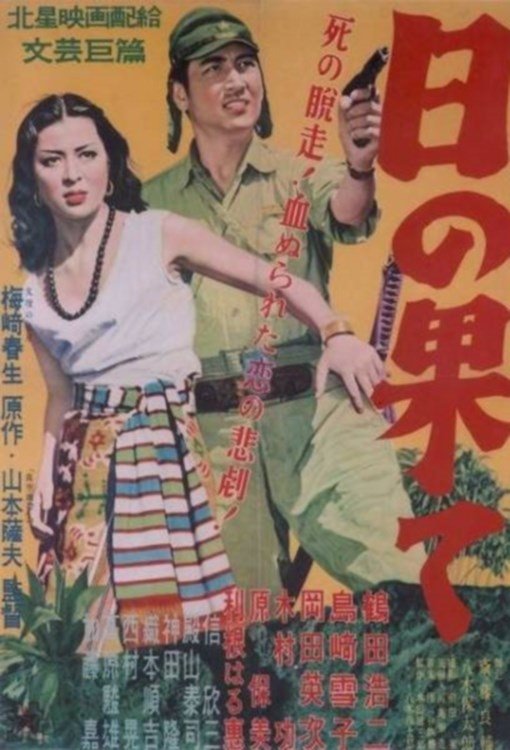
Military doctor Leutenant Hanada deserts during the war in the Philippines with a local girl. The officer in command orders Lieutenant Uji to shoot Hanada. Uji takes a sharpshooter called Takagi and tracks him. At first Uji cannot forgive Hanada but as Uji is isolated from the main force he too starts to think of desertion.
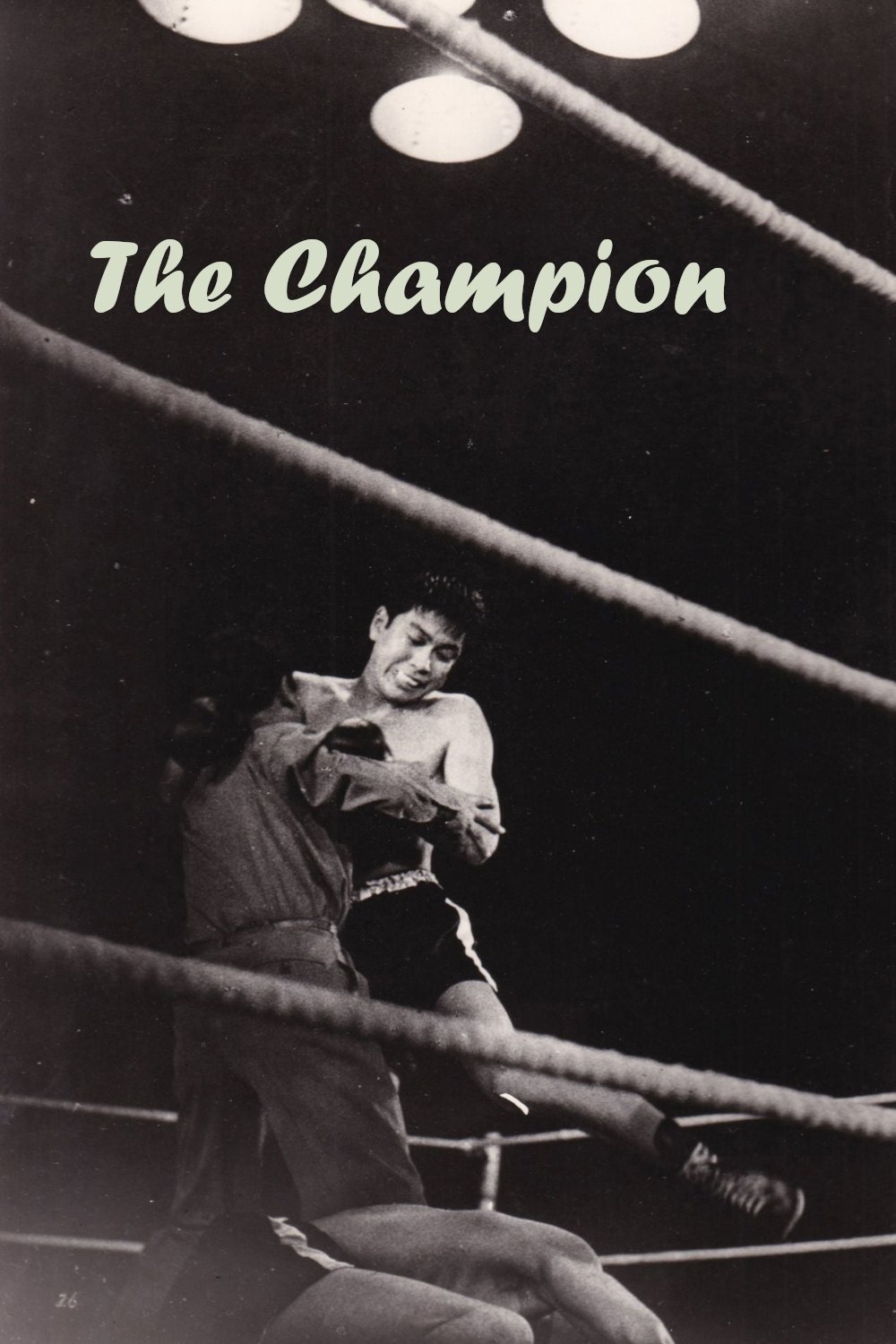
Eikichi Yamashiro, who is a former contender for the boxing title, works as a manager at a Club Champion owned by his fiancé Natsuko’s father. He lost a title match five years ago as he was besotted by Natsuko, but Eikichi actually cannot give up the dream of the championship. One day, he meets Shuntaro Fuma, who is a punk kid but a promising boxer, and realizes the dream that he himself could never fulfill. Then, they together start to train with the aim of the title. Mari Shiraki is an up-and-coming ballerina under the patronage of Eikichi as well. Eikichi forbids Shuntaro and Mari to be romantically involved with someone during their training, however, they start to go on a date.
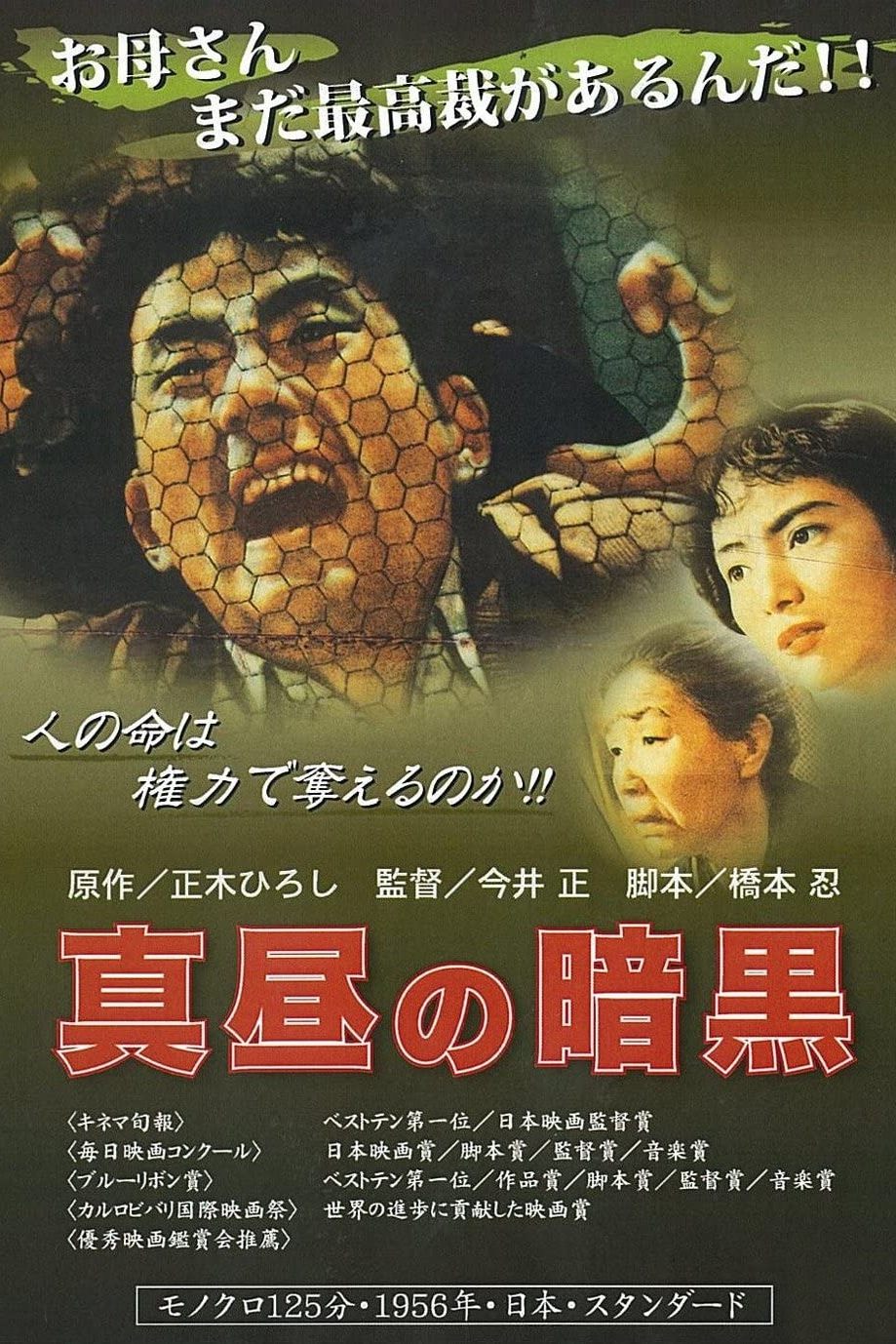
Police beat a murder confession out of four innocent men who are then sentenced to death. Based on a true story.
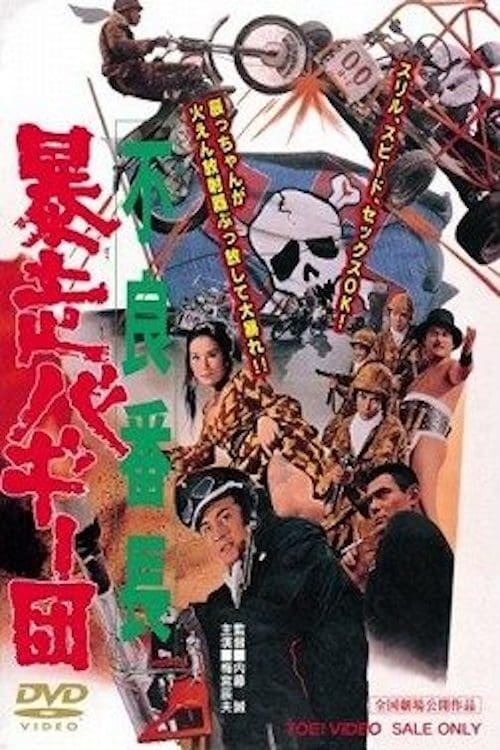
Rivalry between a hoodlum group and a gangster organization.
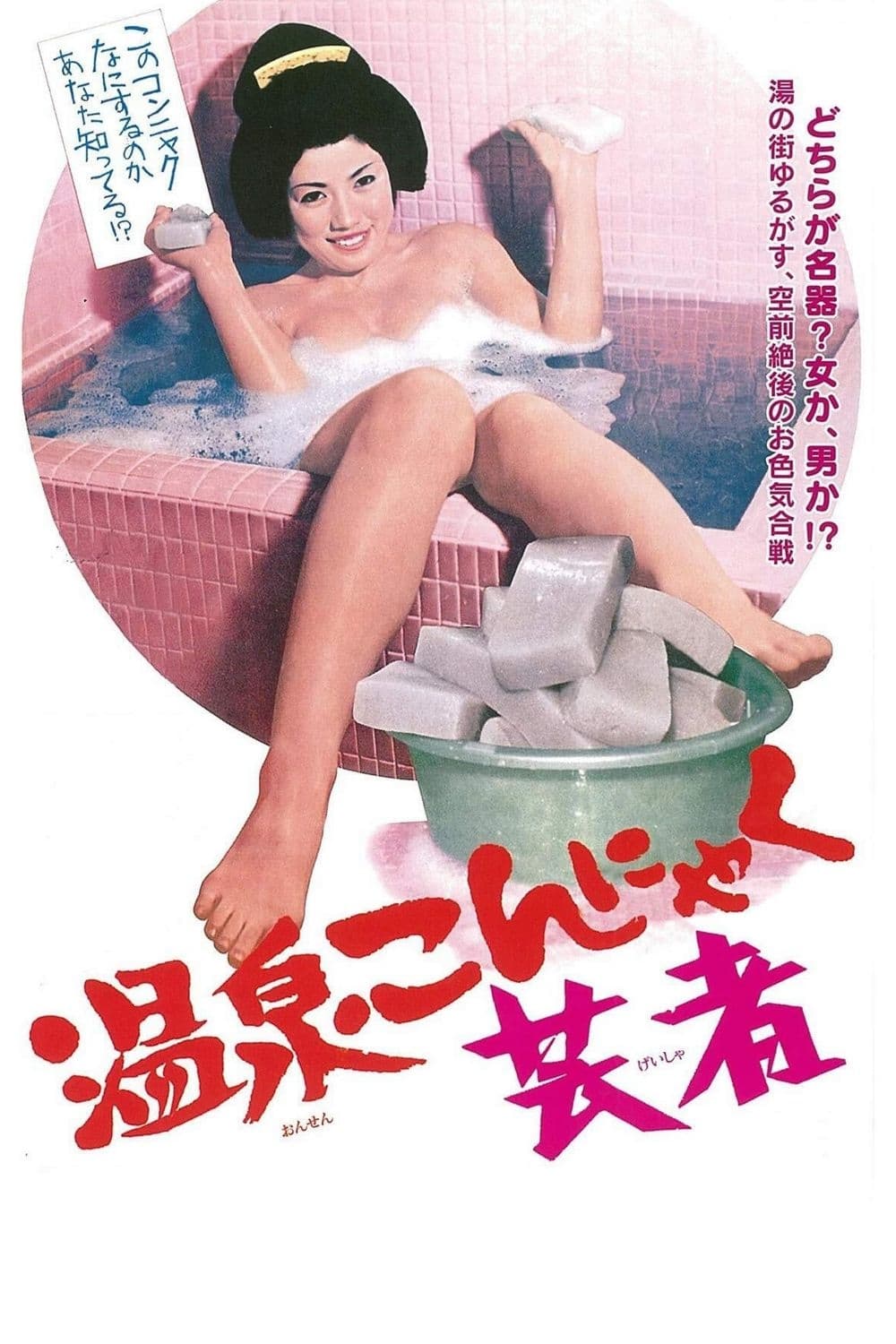
After the bankruptcy of her foster-father's condom factory, Tamae sets out to make a living on her own and ends up working as a geisha at a hot spring resort. After rising in popularity, a climactic sex battle is held to decide who gets to lay claim to her.

In the city of Yokosuka, Kinta and his lover Haruko, both involved with yakuza, brave the post-occupation period with a goal to be together.
Life and love in corrupt postwar Tokyo, as a young couple struggles against both the law and the mob.
Based on the novel by Torahiko Tamiya.
The story of two sisters in post-war Japan. One is a geisha and the other works for the tourist board.
Natsuko is so good at using that super-strong vagina of hers that she can fuck guys to death. In the end, she’s pitted against a sexual superman and a showdown ensues. There’s also a subplot about a mad scientist type who needs vaginal juices to create a potion designed to turn Japanese girls black.
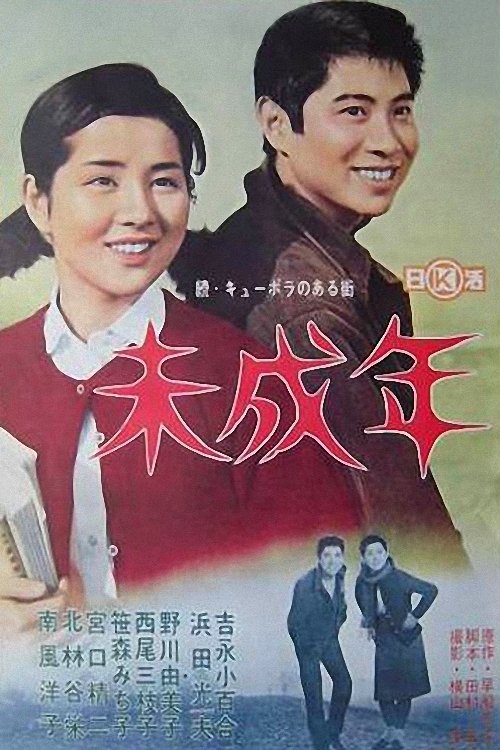
A young girl in an industrial town is saving her money to enter college. But her drunken father loses his job, her mother cannot make ends meet, and then the boy she likes loses everything when his factory fails. She takes all her savings out of the bank and offers them to him to make a new start. He refuses at first but eventually agrees and so she goes back to school to tell her teacher that she has decided not to continue college, that she is young and strong, and can make her own way in life.
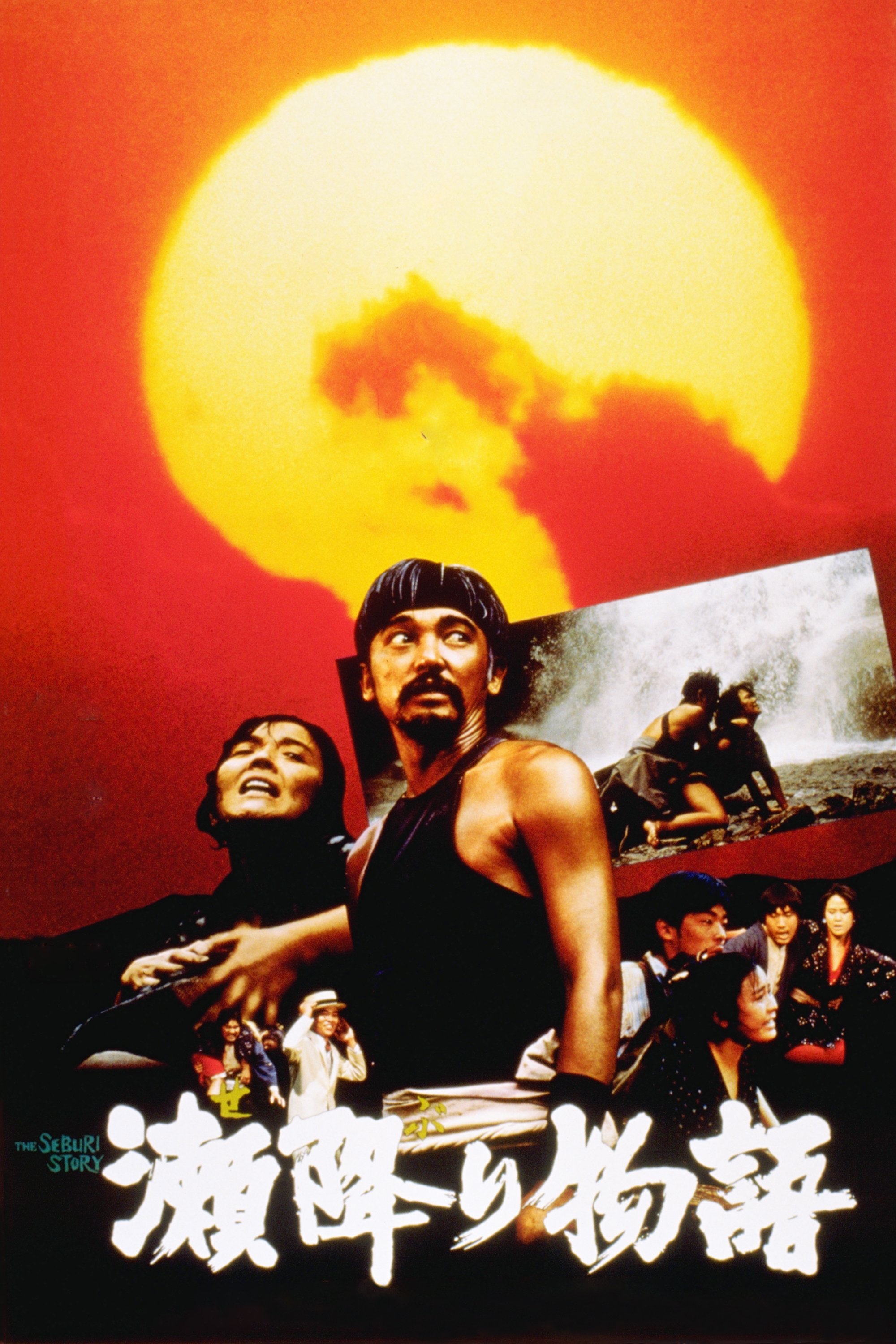
The culturally isolated, nomadic Seburi people of western Japan are the subject of this tragedy about a few of the community's members who especially experience difficulties as modern Japan encroaches on their world. The setting is World War II, and conflicts have already arisen when the military police come to take Seburi men away into the army. Still following their own customs that can be harsh at times, and are particularly cruel to women (women must give birth alone and unaided, a woman's adultery is punished by burying her up to her neck in the earth and then leaving her for days), the Seburi are mainly treated with fear and animosity by the non-Seburi townspeople of the region. Along with the hardships arising from cultural clashes, nature's own vagaries present other challenges to the Seburi -- who still lived in tents until the 1950s. Winter avalanches and snowstorms cause as much havoc as the tensions engendered by the slow encroachment of the modern world.
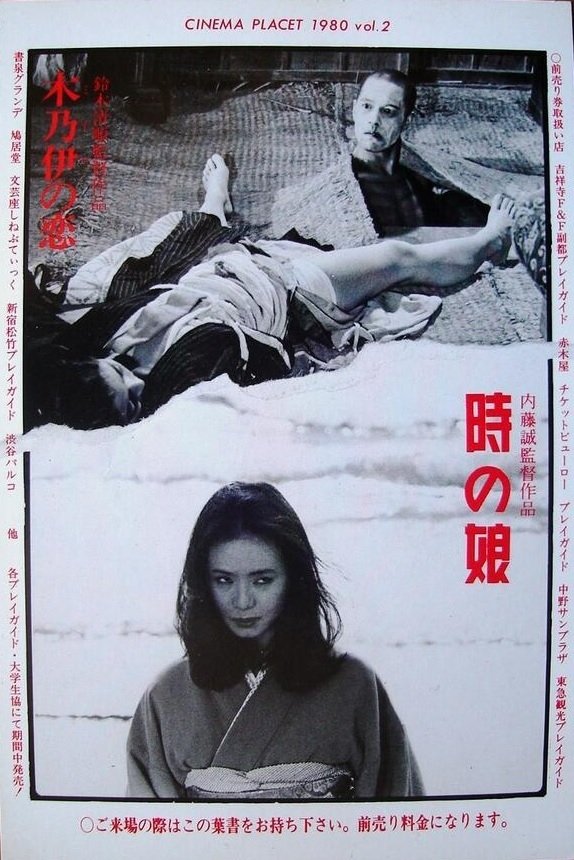
A member of the jieitai ("Self-Defense Force"; i.e. Japanese military) is on leave and finds a woman giving birth in a graveyard in the former Yoshiwara district. He takes her to an inn to gove birth, and stays on a few days as she recovers, but becomes fascinated with the strange people he meets there, particularly the owner, who visits a house in his courtyard every day to talk and give food to his mother. He says she is very sick and can't leave bed, but no one else has ever been inside or seen her.
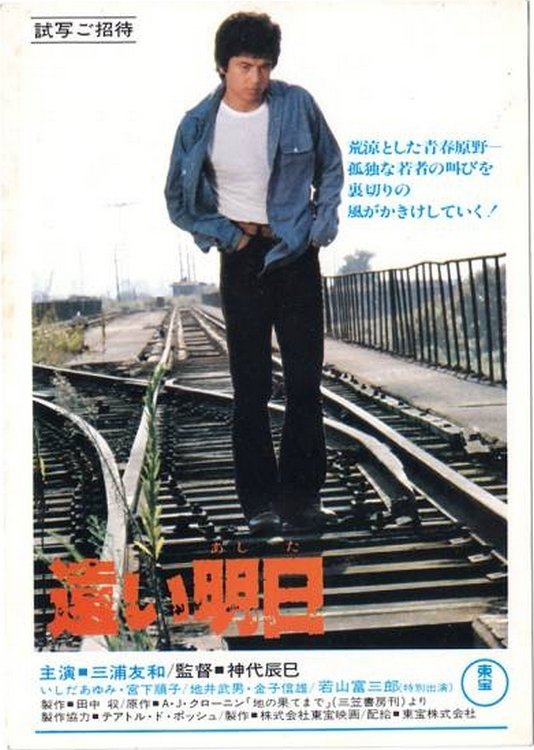
A young man walks through the streets holding a sign that reads, “The trial for the Tobata Incident 19 years ago was a frame-up!” He has taken up the fight alone on behalf of his innocent father, who is serving time for murder.
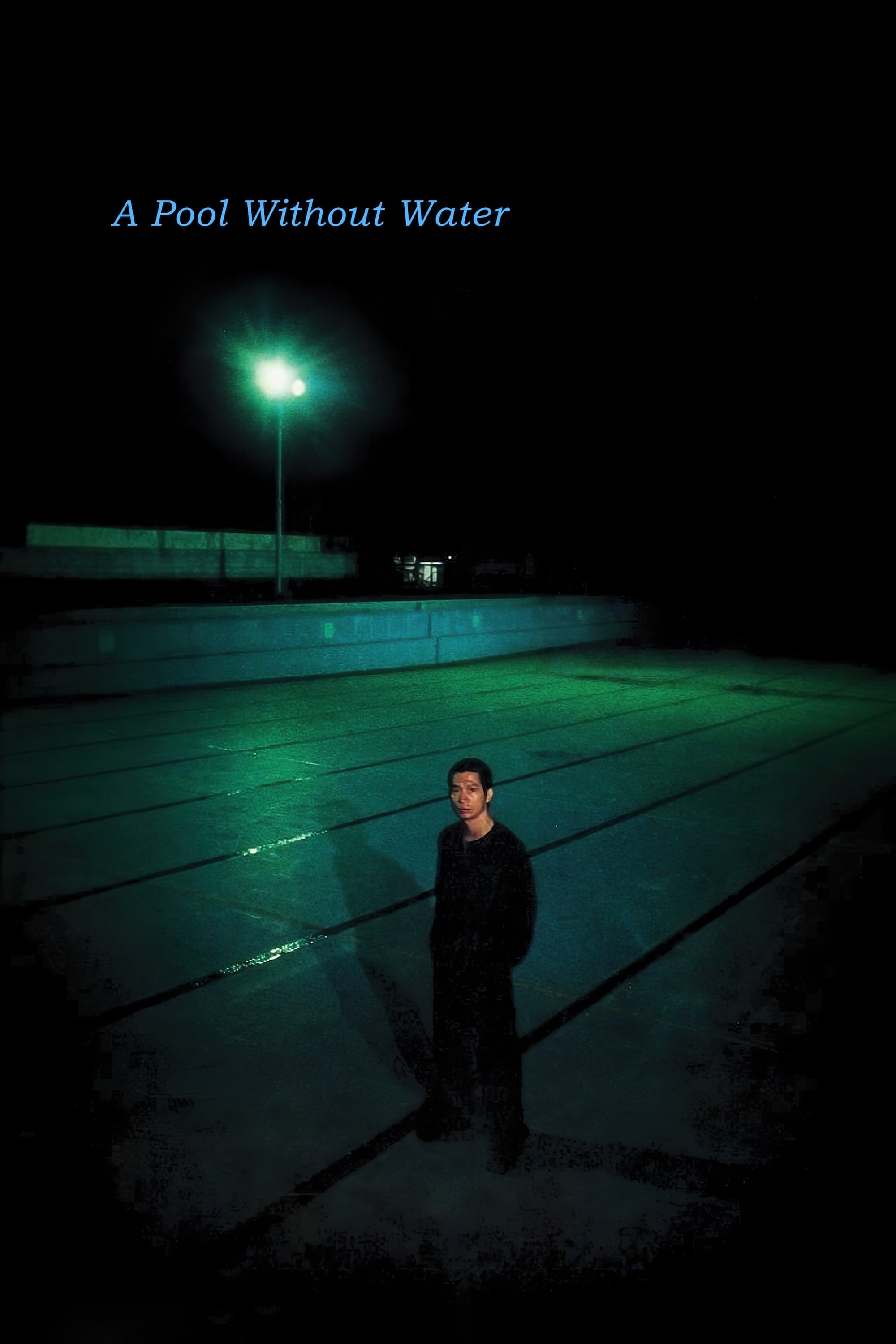
After saving a girl from rape, a bored rail worker finds out about a chemical that makes people sleep and gets carried away into a new, violent world of ideas.
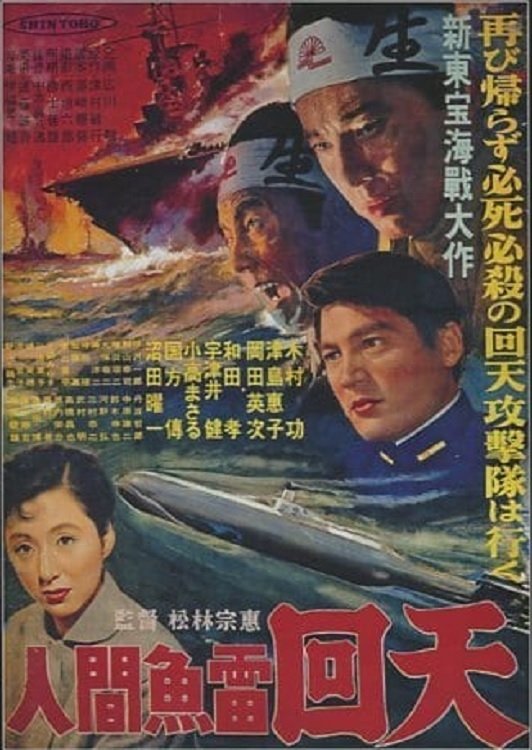
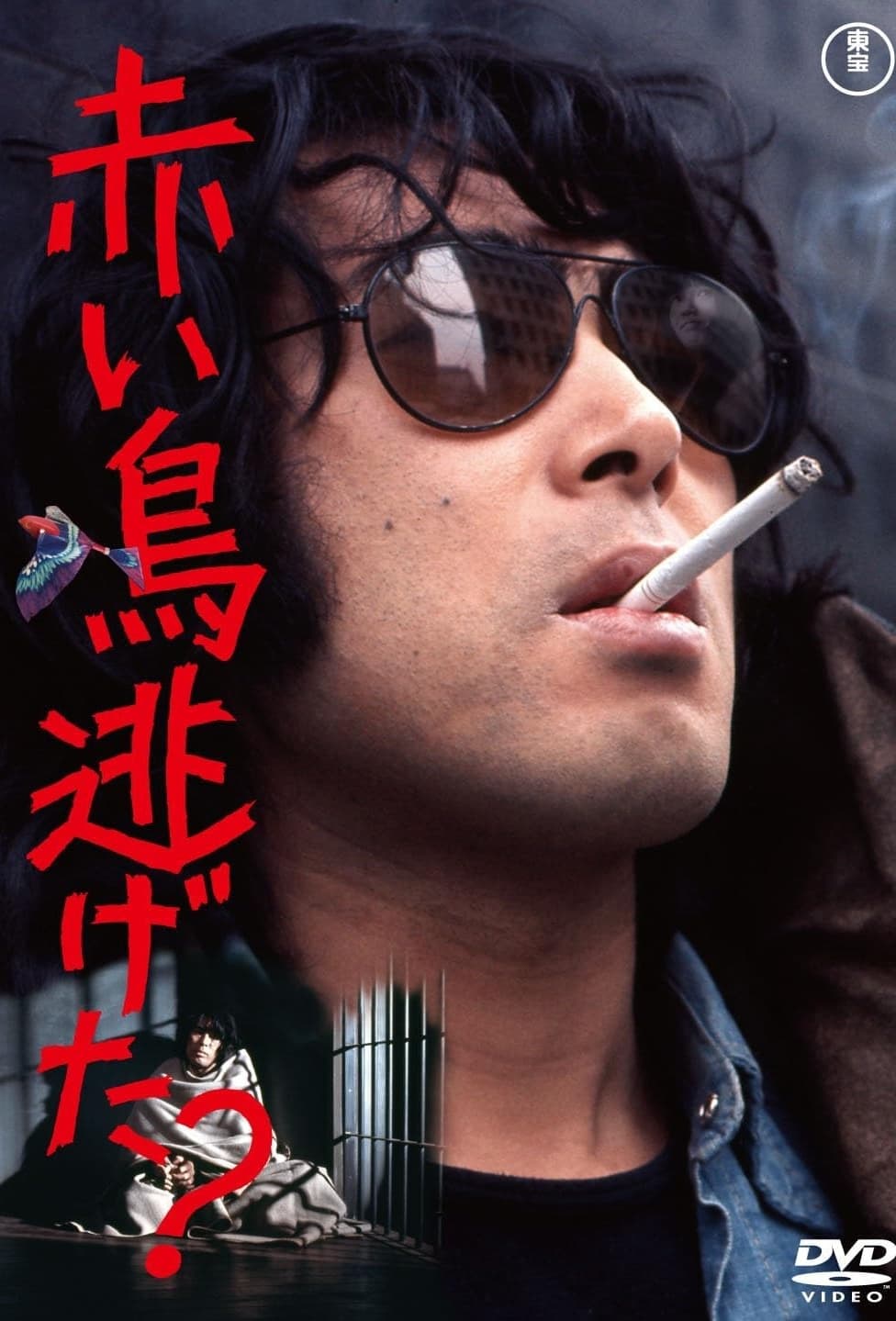
A young outlaw can’t escape his rebellious past despite connections to a well-to-do family.

High-end cabaret hostess Masuko discovers her long-term lover is actually married. Determined to secure her future, she aggressively manipulates him into divorcing his wife, only for their new marriage to be destabilized by the arrival of her young niece.
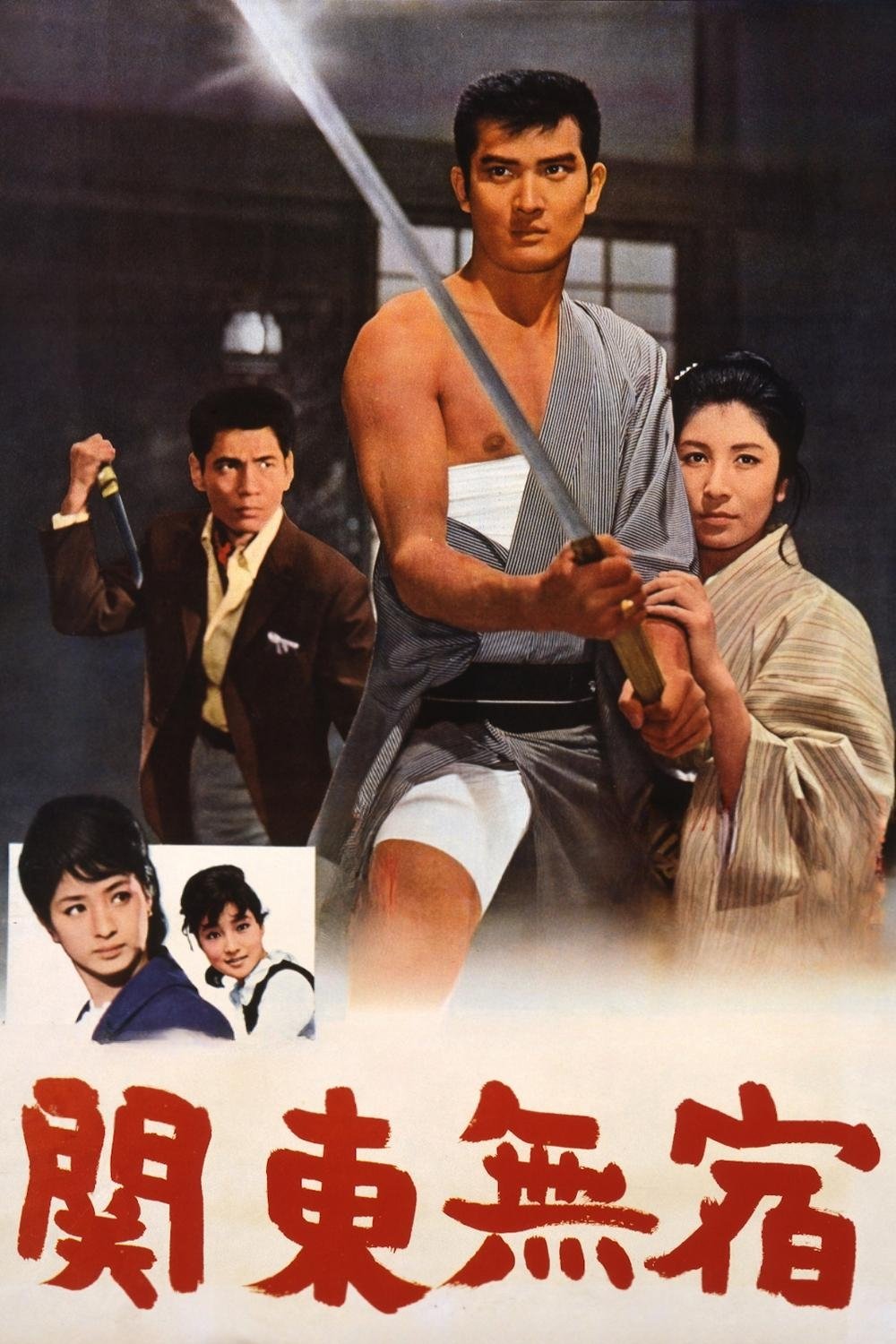
Handsome young Katsuta tries to follow the yakuza code, but even his boss doesn't believe in it. Diamond Fuyu is less ethical, and allows the idiotic Tetsu to trick a schoolgirl he fancies, Hanako, into a type of bonded prostitution. Because of gang conflict, the Izu family (to whom Katsuta belongs) has their last gambling den taken over, and he seeks revenge. This brings him back into contact with a former lover who is also a card trickster - she is also Diamond Fuyu's sister, and is now married to Okaru-Hachi, who has mastered a clever card cheating trick called Okaru, which involves the deft use of mirrors.
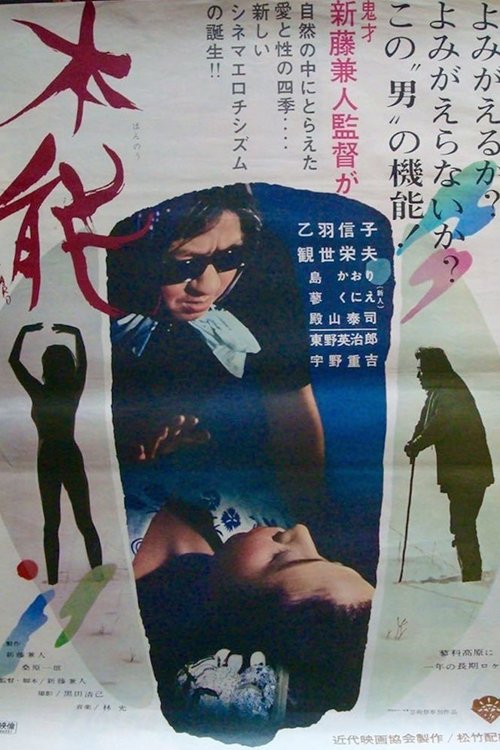
A well-respected drama teacher confesses to his housekeeper that the atomic bombing of Hiroshima has left him impotent. With the coming of spring, the sympathetic housekeeper suggests that the Master observe the Yobai , a custom in which the young men of a village steal into the bedrooms of susceptible women to have sex.
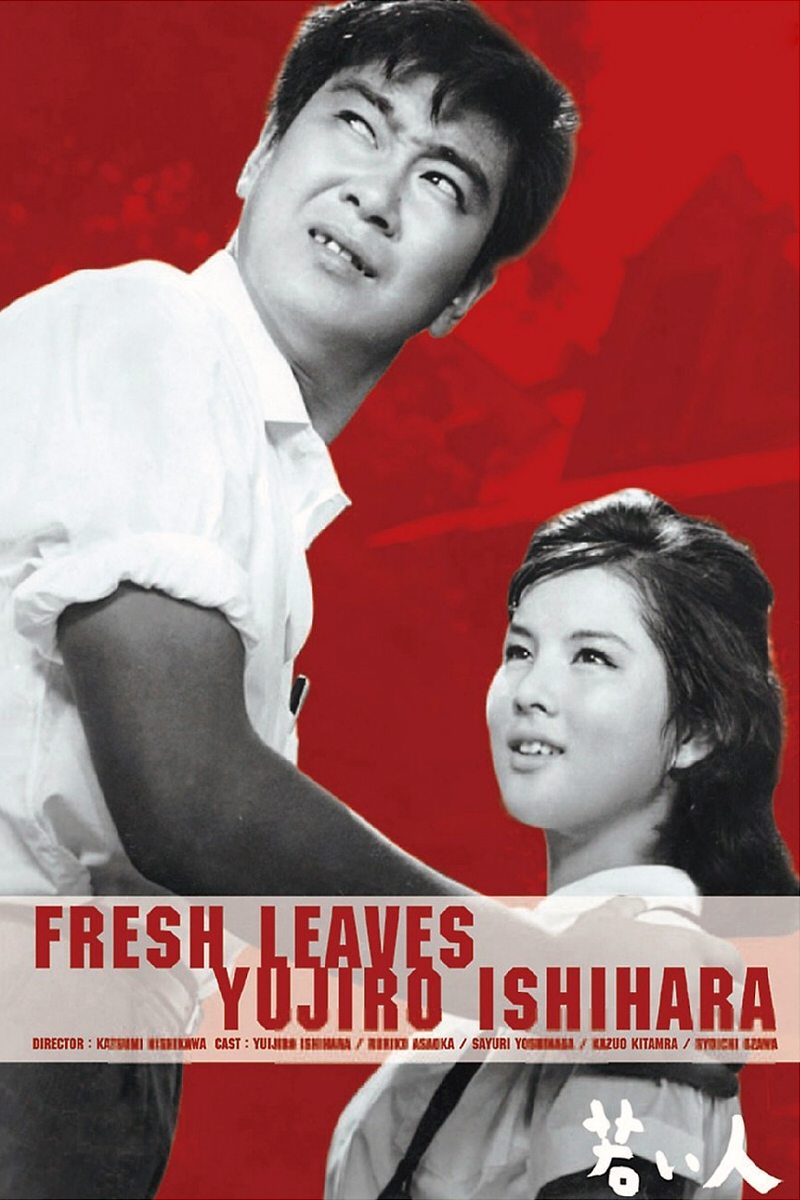
Keiko is pretty and intelligent but her home life is not a happy one. Never having known a father's love, she develops a possessive attachment to Mr. Mazaki, the new mathematics teacher.
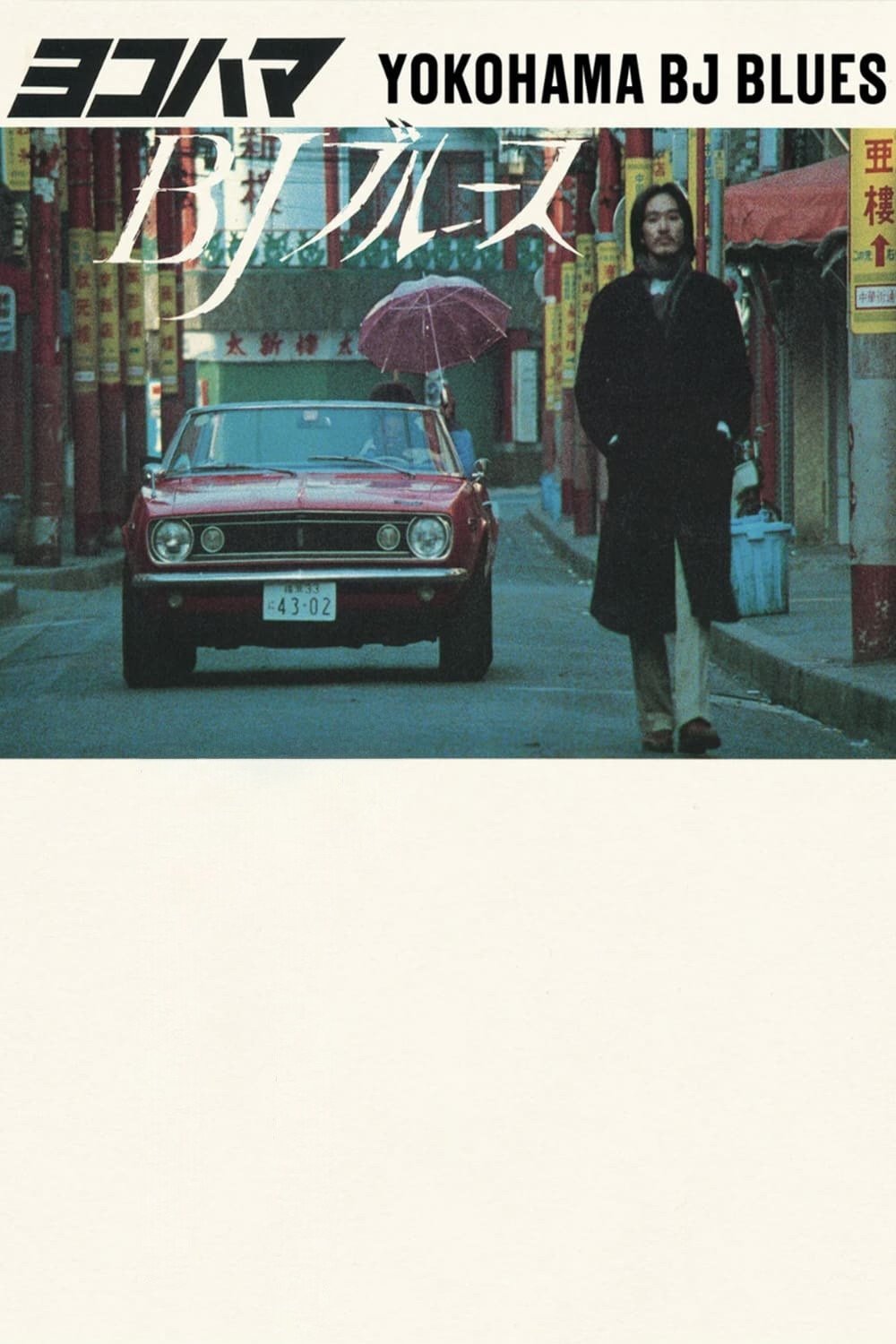
BJ is a relatively unknown blues singer who scraps some bars in Yokohama. He does not earn much with it and to make ends meet he also acts as a private detective.
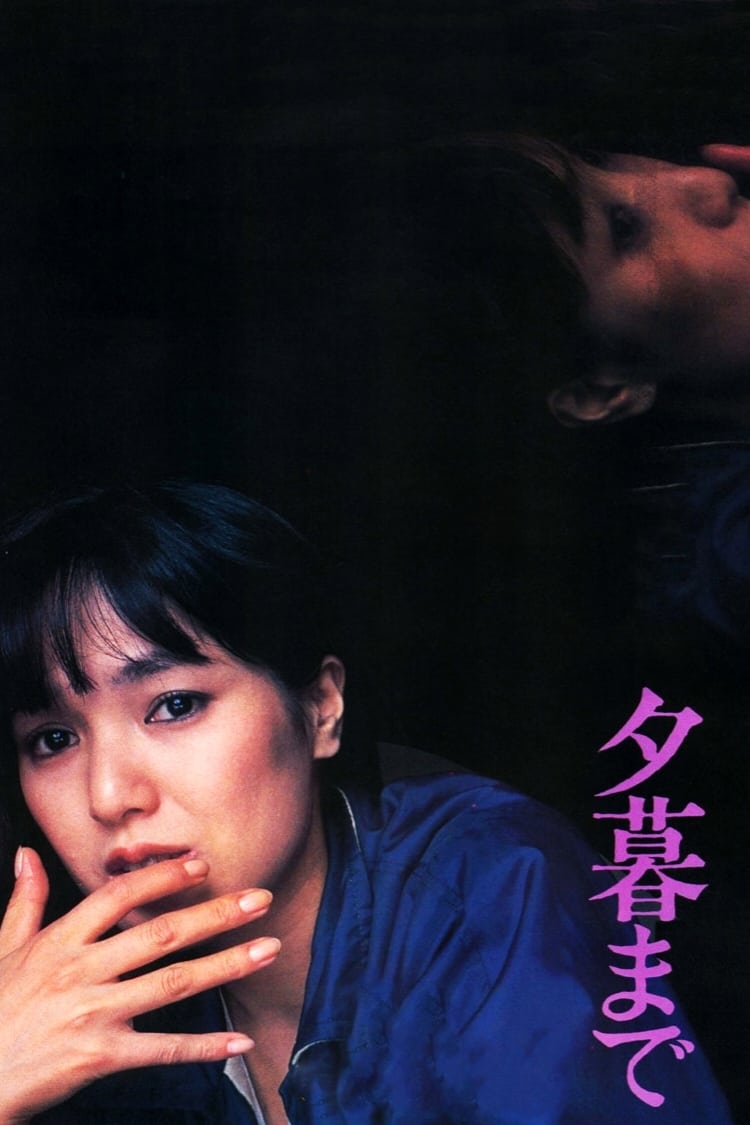
Intellectual collegue professor Sasa becomes obsessed with beautiful Sugiko, a virgin. Eventually, luring her to a love hotel.
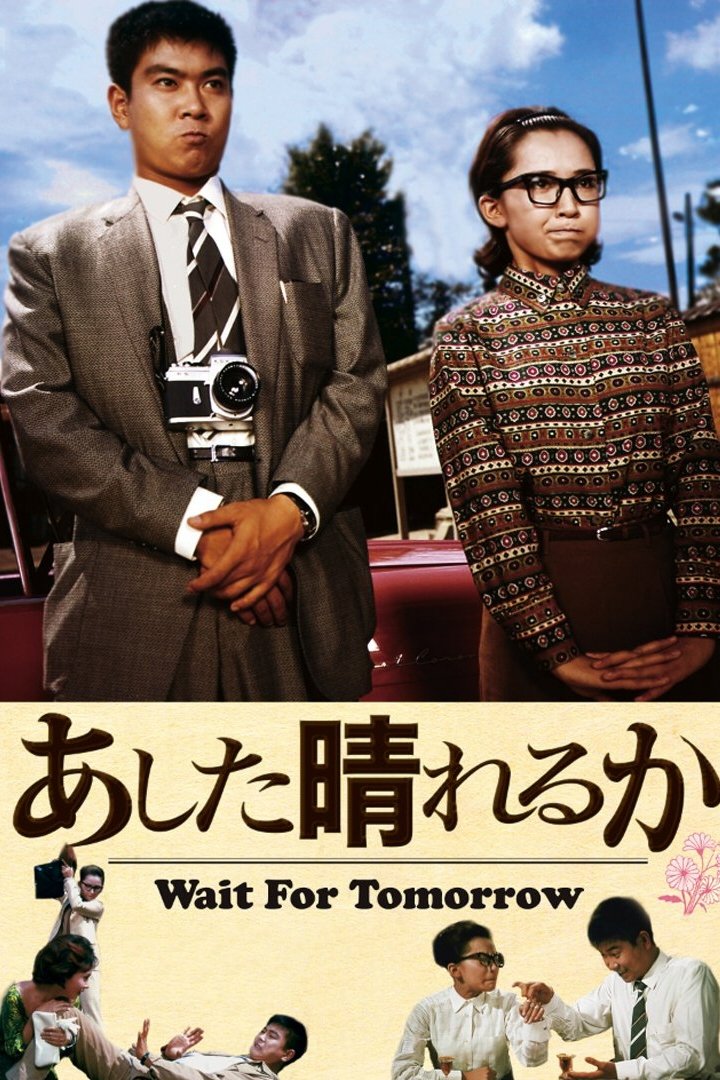
Kohei Misugi works in a vegetable market, but his ambition is to be a photographer. He is given his first opportunity to demonstrate his talent by the Sakura Film Company which offers him an assignment to "Cover Tokyo" with a camera. But he is disillusioned when he is told he must work together with Miharu, a good looking girl in the film company's publicity department. Then the fun begins.

The neglected common-law wife of a Japanese librarian is repeatedly harassed by a young man with a heart condition who seduces her with the prospect of a better life.
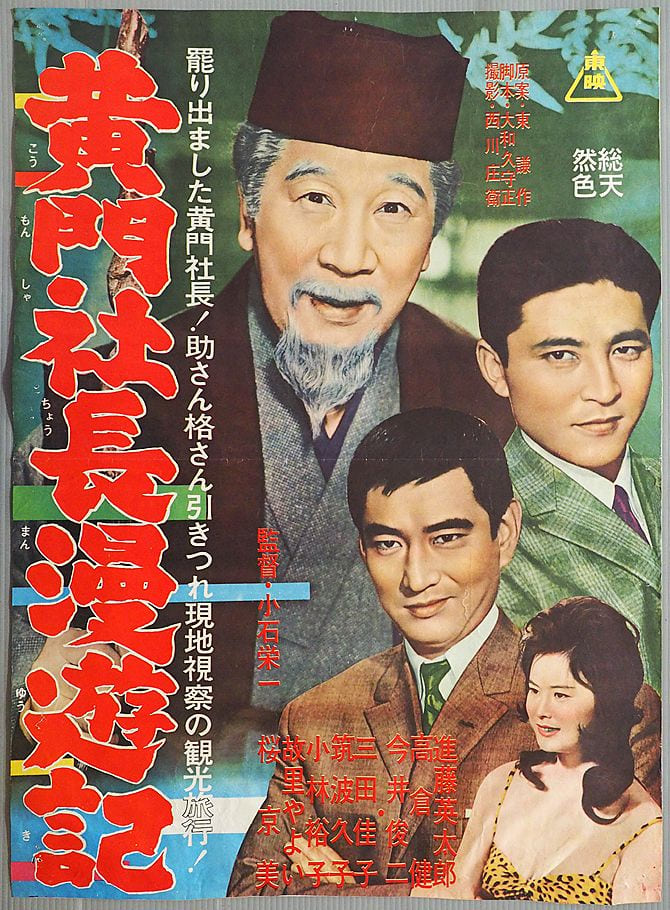
Mr. Mito, a former president of an instant food company, with two young men’s help, solves the quality problems and wins a big ramen contract with a large Chinese company.
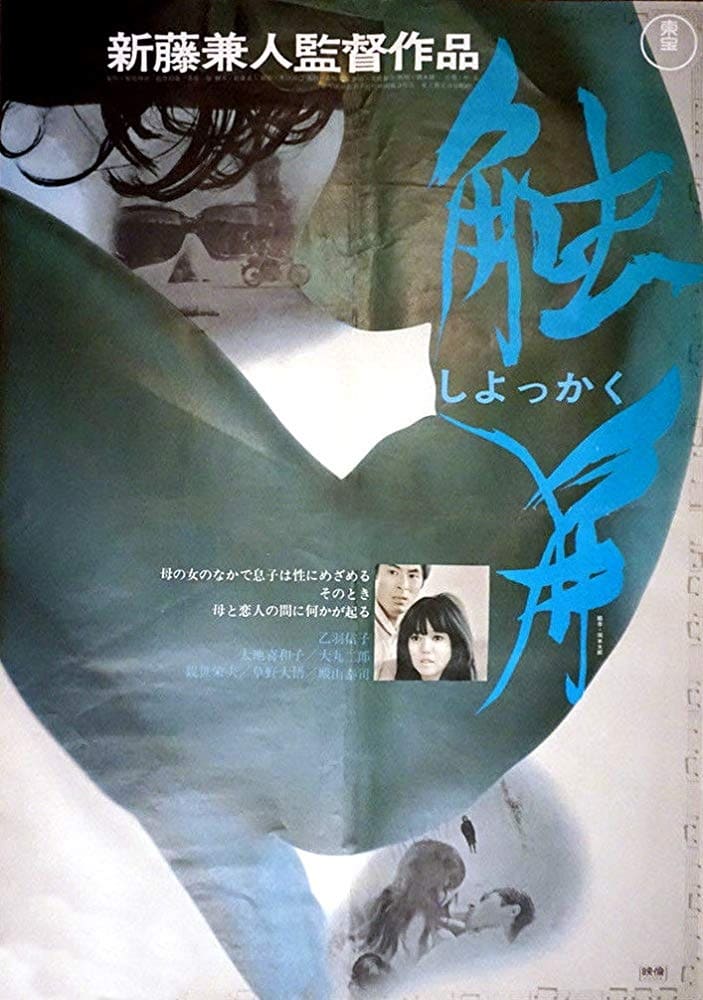
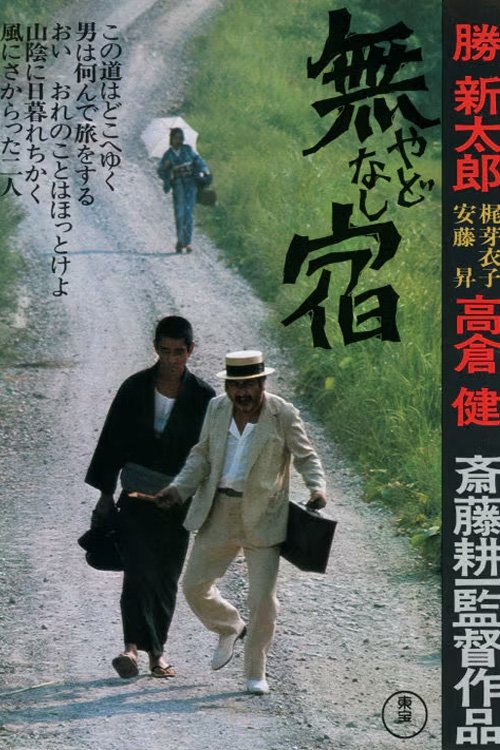
Two inmates are simultaneously released from jail, but go their separate ways, only to cross paths again in the nearest brothel. There they make the acquaintance of a would-be prostitute. They help her escape and decide to guide her on her quest for sunken contraband somewhere off the coast.
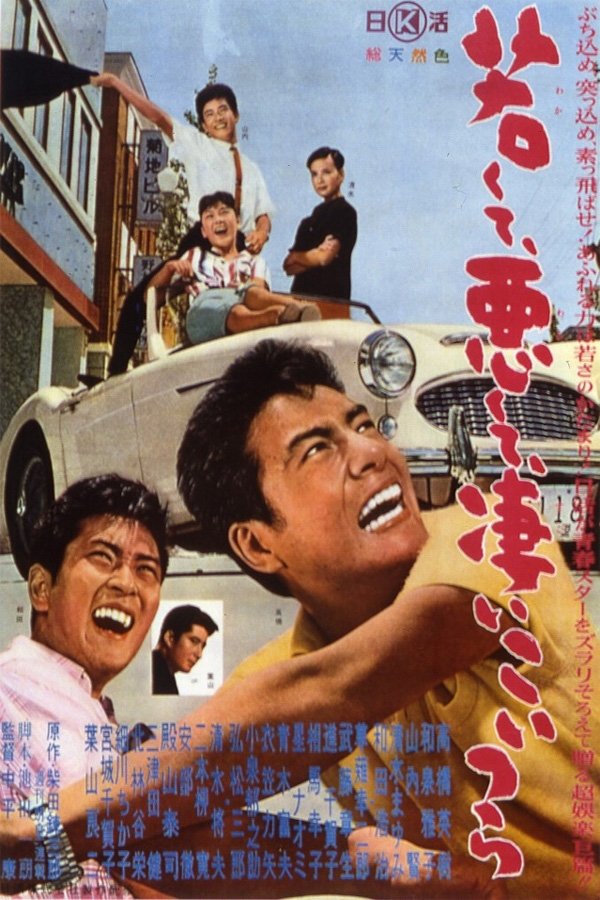
Not too long ago, Soichiro was considered one of the most powerful men in business. But his business had failed, his granddaughter had committed suicide. There was nothing in his life anymore that he could look forward to. Sochiro was ready to put an to it end to all. As he drives down the Usui Pass, headed toward his summer house in Karuizawa, a girl in red heels, wearing nothing else but a coat jumps in front of the car.
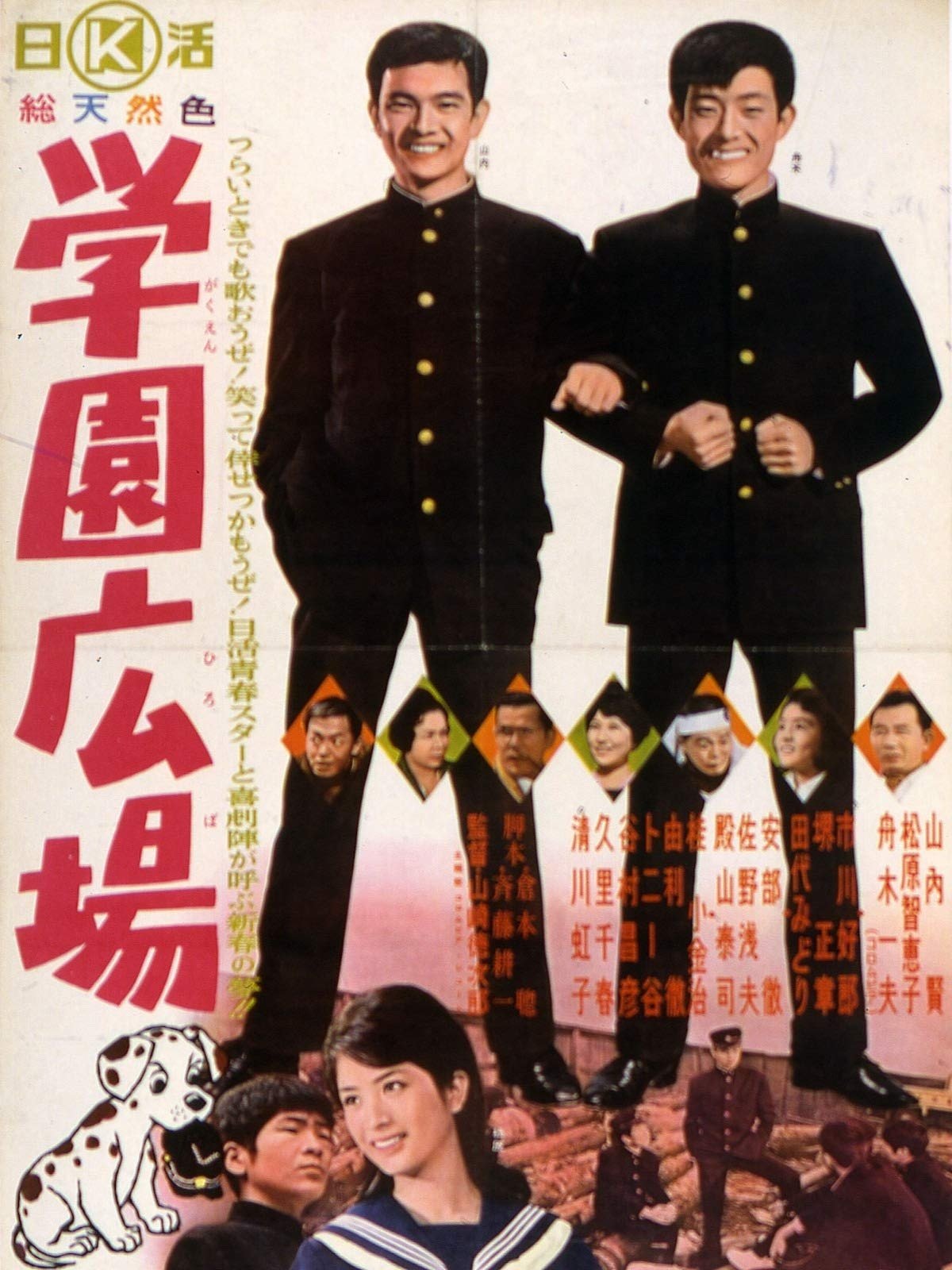
A Tokyo student transfers to a rural school and finds it difficult to adjust himself to its customs and traditions. One of the customs is the wearing of an old school cap by a senior. It is a symbol of courage and bravery and is handed down to a new senior each year.
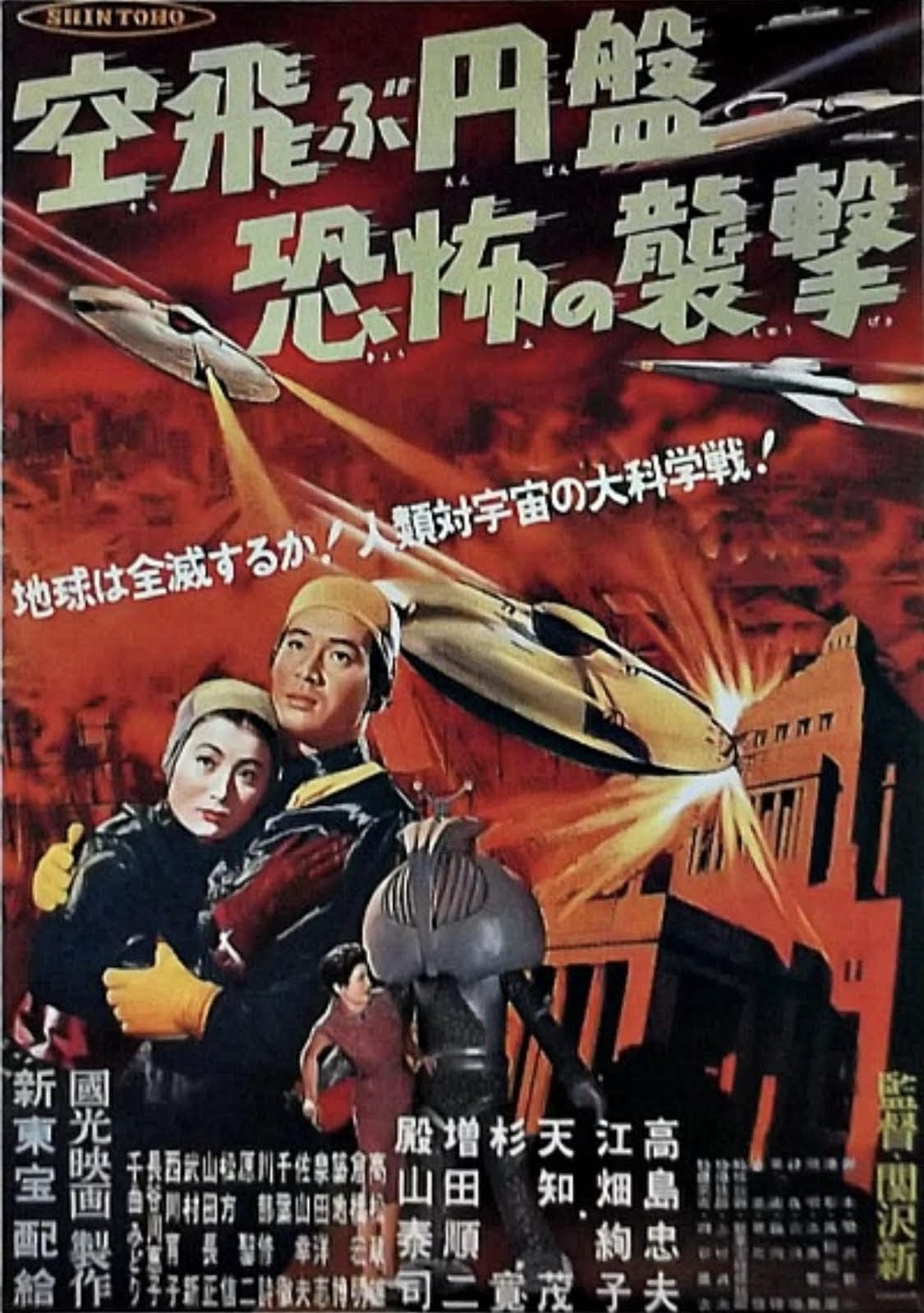
A 1956 alien invasion tokusatsu film directed by Shinichi Sekizawa, the screenwriter noted for his immense contributions to Toho's Godzilla series by providing the screenplays/stories for the majority of the original Showa films.
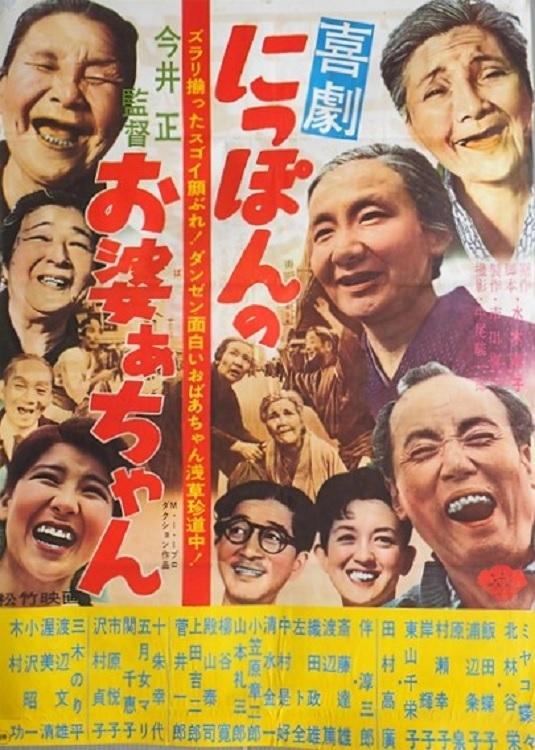
Two obaachans become fast friends listening to music in front of a record store. They both boast about their loving sons but in reality, one had just escaped a retirement home and the other was looking for an escape from her son and daughter-in-law. With nowhere to go, the two wander around, befriending a cosmetics salesman and a kind waitress who give them beer. This biting social satire starring two memorable grandmothers, scripted by Yôko Mizuki, picked up on Japan’s aging population problem far ahead of its time.

A group of Okinawan high school girls are drafted as nurses during the American invasion of the island. As the enemy army advances further, the situation for the girls becomes increasingly desperate as food and shelter run out and the number of injured climbs, leading to the film's tragic finale.

Ginko, a poor cobbler's daughter, becomes a geisha to support her family. She passes from one geisha house to the next, trying to find love and hope in the process. No matter how hard she tries, she just can't escape her sad fate.
High school student Keiko struggles with the pressures of college entrance examinations and a chaotic home life, ultimately succumbing to alcohol, marijuana, gang members and rape.
Nobuo is a hot-headed hoodlum fresh out of reform school who struggles to make a clean break with his tearaway past.
For a girl who works in a 3rd rate bar, Ayuko is full of vanity. Nomura, her patron, is besotted by her and it is their habit that they cannot reach a climax unless they peek at a couple, across the way, making love. Intent on climbing up in the world, Ayuko uses all her wiles to get her patron, who is putty in her hands, to move her from her grubby apartment house to a dreamboat of a place. She then tries to find a place to work more befitting her new home but all the elite night clubs will have nothing to do with her and with time heavy on her hands, the devil finds mischief for idle hands to do.
Mid 50s: the trials and tribulations of Shinsuke Ibuki, freshly arrived in Tokyo from Kyushu.
The female members of the family of the Minister of Health and Welfare, who has just proposed a program of birth control, become pregnant one after the other. - Nikkatsu
Picked up and raised on an island in the Seto Inland Sea, Yasukichi's only trait is his innate mischievousness. However, because his love for his hometown is exceptionally stronger than anybody's, he is trying everything he can to somehow help the inhabitants of the island which are going through a recession. He saddles himself with a debt to bring a cheap band onto the island and tries to market the underwater sightseeing ship on the island without regards for the Marine Act.
Sen Rikyu is a ceremonial tea master who advises warlord Hideyoshi in sixteenth-century feudal Japan. His daughter, the beautiful Lady Ogin, has an unrequited love for Lord Ukon, who has angered Hideyoshi by becoming a Christian convert. Ogin's father Rikyu also displeases Hideyoshi by opposing the warlord's plan to invade China and Korea. When the animalistic Hideyoshi is rejected by Ogin, he threatens her and her father with arrest and worse.
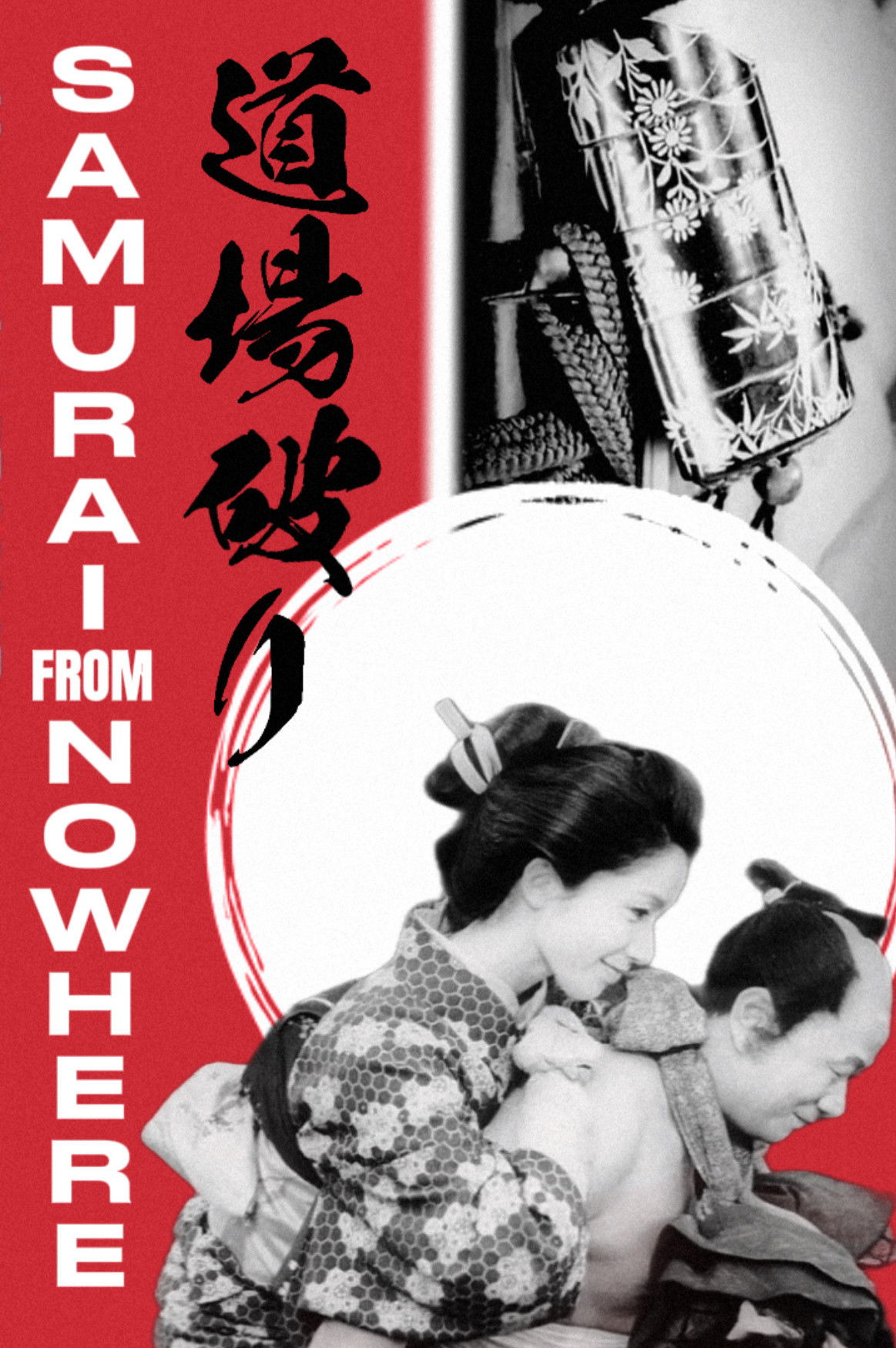
Misawa Ihei (Nagato) is traveling with his wife Tae (Iwashita Shima) who abhors the practice of sword fighting for prize money. Tae is the daughter of the clan's chief counselor who married the low-ranking Ihei to avoid becoming the clan lord's mistress. Into the mix comes Oba Gunjuro (Tetsurō Tamba), a mysterious ronin who will do anything for money. This leads to a fitting climax as the forces of hate and love converge while the couple attempt to break through the border!
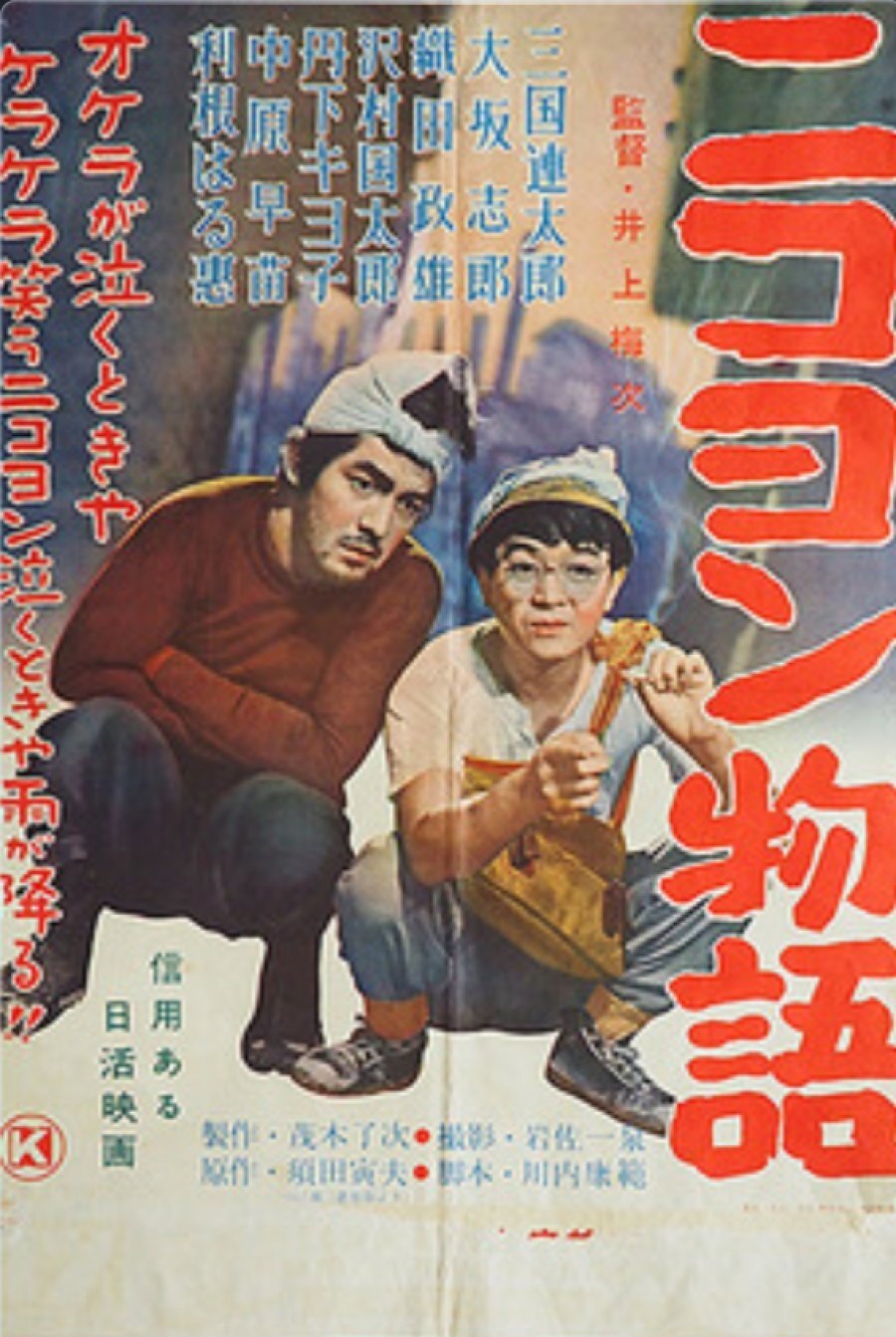
Japanese drama film.
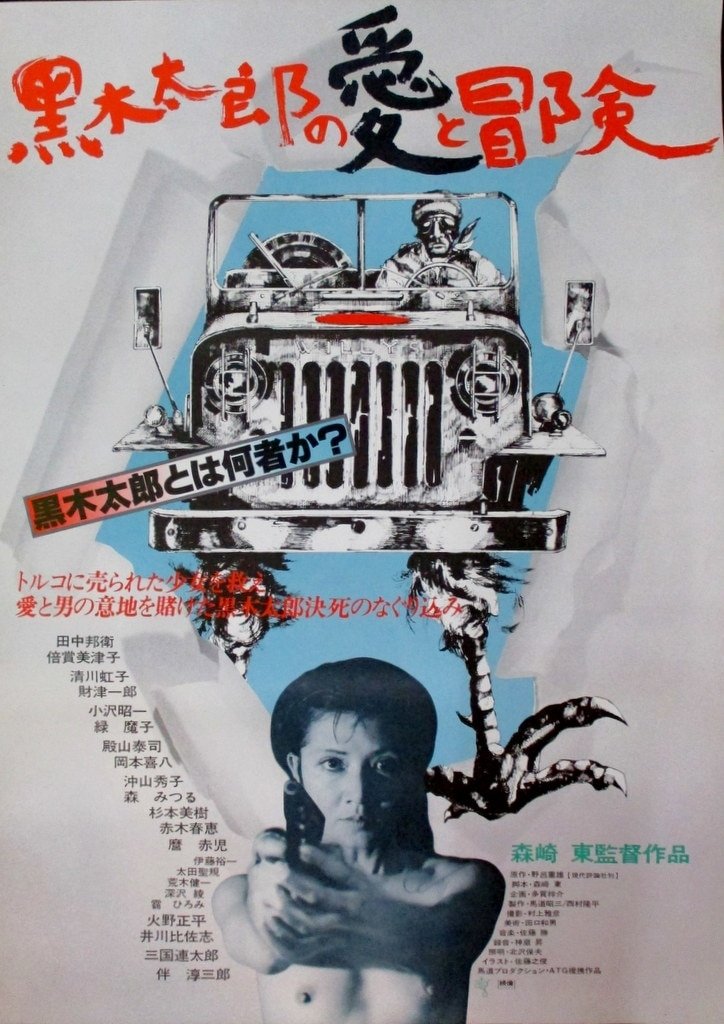
Taro Kuroki, 42, is a stuntman with a samurai's heart. He loves adventures, plays pranks with the police, tries to cure a cat lady by reversing her trauma, and finally, rescues his niece who is about to be lured into prostitution.
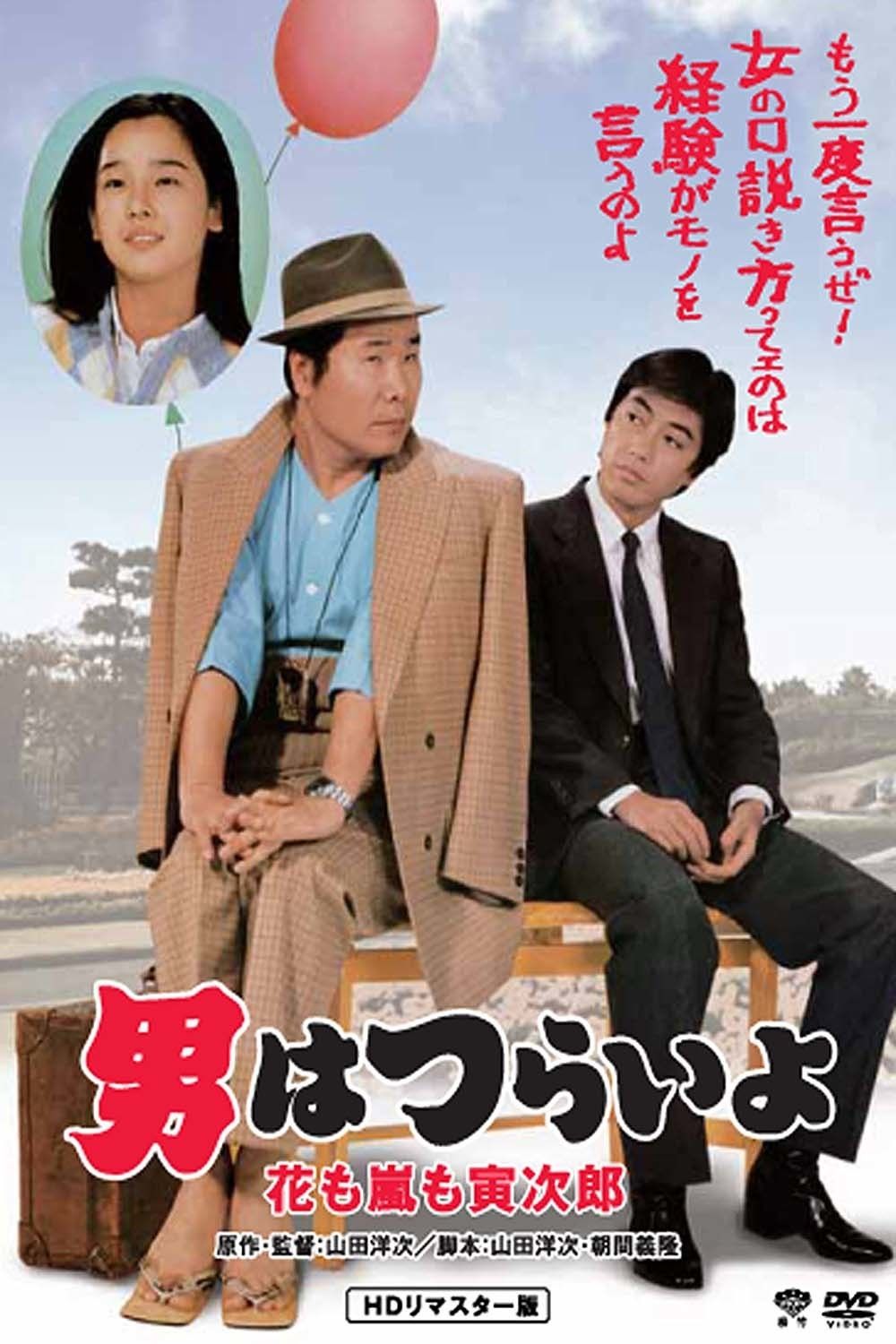
Tora-san gets into an argument with his uncle and sets out on the road again. In Kyushu he meets a young woman named Keiko and the shy zoologist Saburō, and attempts to play matchmaker between the two when they all return to Tokyo.
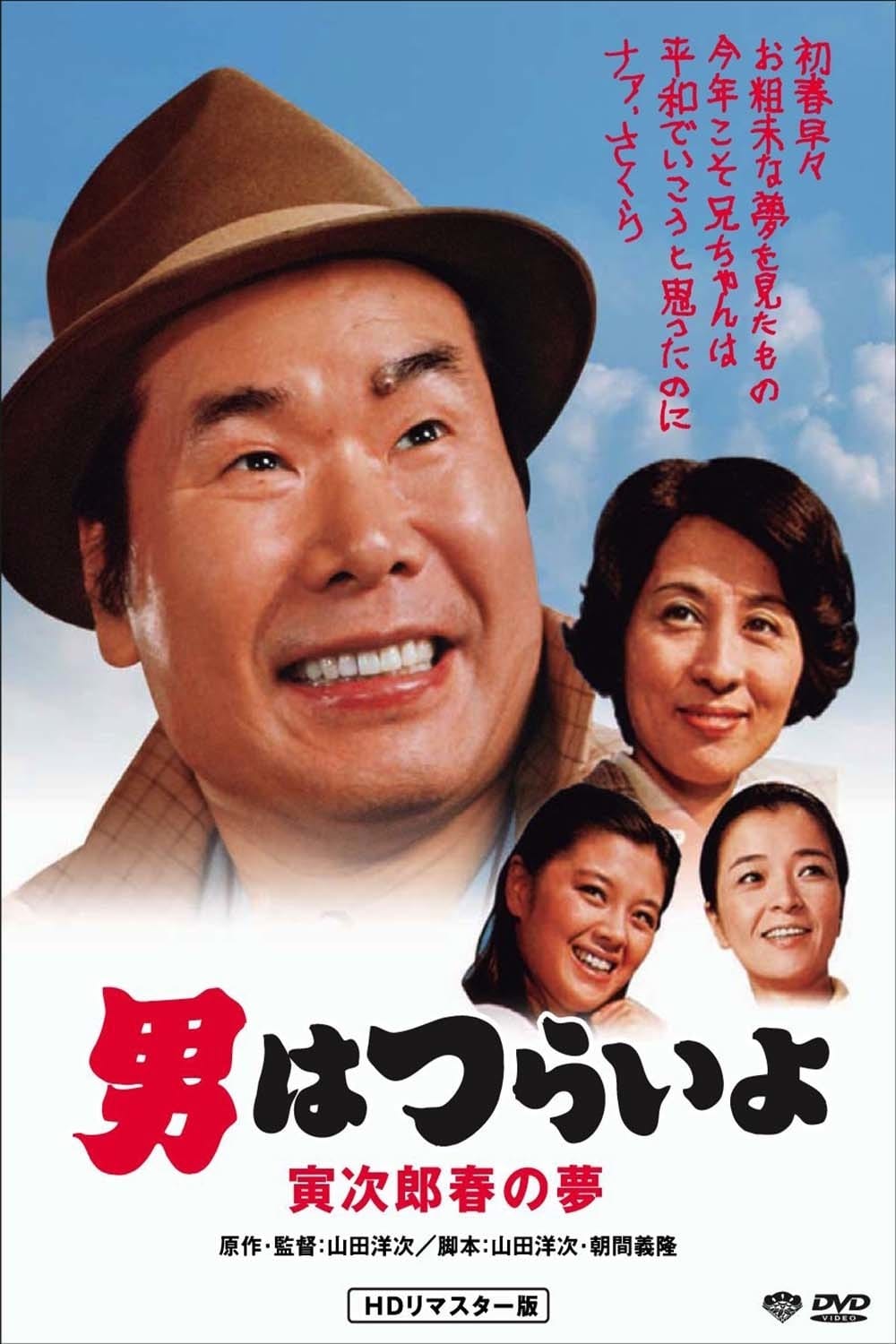
Tora-san's opinions about Americans get challenged when another wandering peddler Michael Jordan stops by Shibamata.
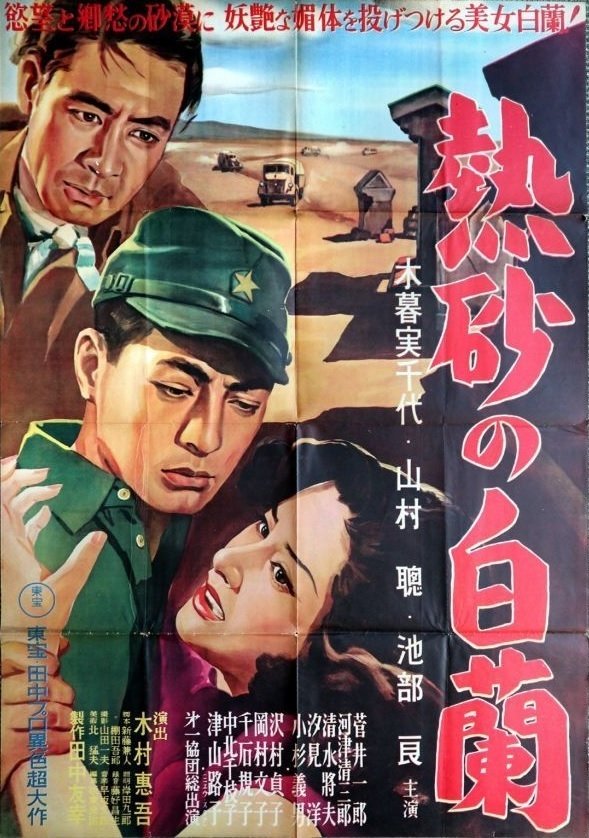
A Japanese adaptation of Guy de Maupassant's short story Boule de Suif, directed by Kimura Keigo
Directed by Senkichi Taniguchi

Kiyohime, a daughter of Tokugawa Ienari is married-off to Tadateru Ogura, the lord of a Kyushu clan. However, the lord's sexual inexperience and Kiyohime's strict morals lead to significant crisis in their marriage. To improve his sexual prowess, the lord is introduced to Sandra, a French woman held captive by usurer-smuggler Hatakaya. This results in the lord's choosing Sandra as his mistress. Kiyohime's attendants see this move as an insult and have Sandra beaten and imprisoned. Nevertheless, Sandra escapes with the help of Morita, a retainer of the lord. Out of bitterness and as some sort of revenge, the lord imposes a sex ban on his subjects.
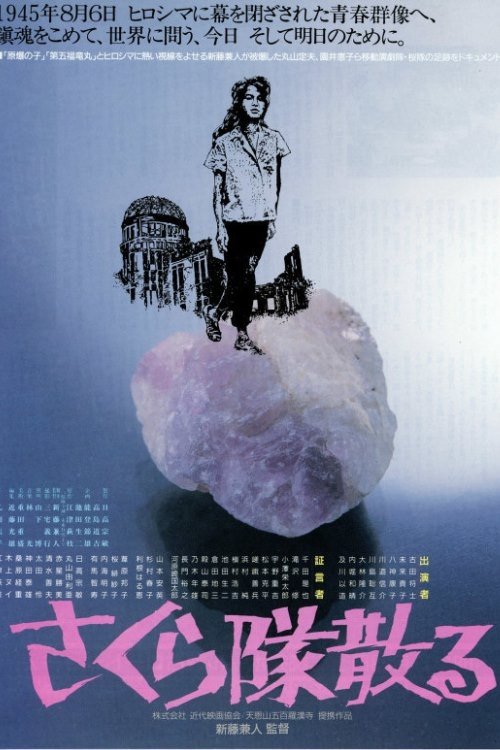
A documentary about the lives of actors in the Sakura-tai theatrical troupe, which had arrived in the island of Hiroshima to begin preparations for the staging of a play just before the atomic bombing.
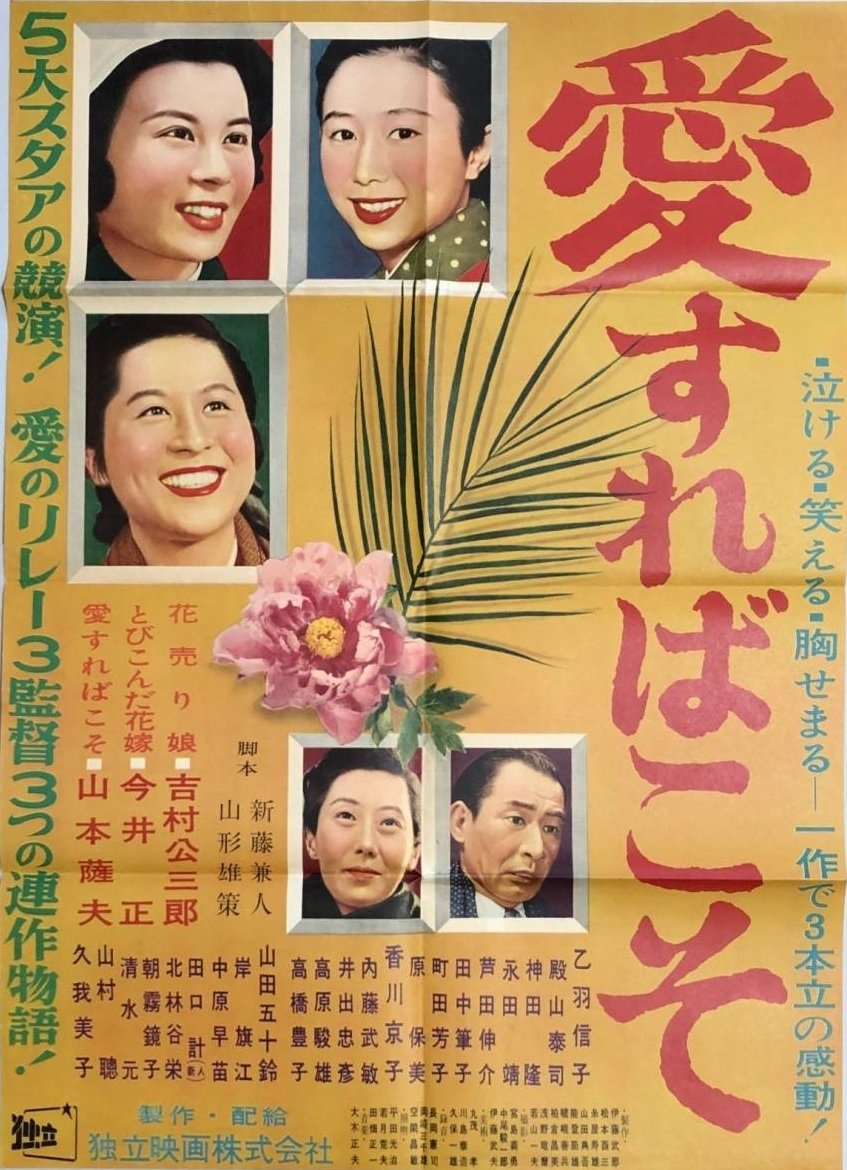
The film consists of three short stories. Tomiko, the heroine of the first story, "The Flower Girl" (dir. Kozaburo Yoshimura), is a little girl who bears the unbearable burden of caring for her family. Tomiko's father has been unable to find work for a long time, and her older sister is terminally ill—it is unlikely that she will ever recover. To feed her family, Tomiko runs around the city from morning until late at night selling flowers... The second novella (dir. Tadashi Imai) also depicts the lives of the poor. An unfamiliar girl brings young Kavano a letter from his mother. It turns out that the girl's name is Kuniko, she is very hardworking, but her family is dying of hunger. Therefore, her mother decided to send Kuniko to her son so that he would marry her. The short story is called "The Unexpected Bride." The third short story, which gave the film its title, is particularly interesting: "When You Love" (dir. Satsuo Yamamoto). It shows the family of a young peace activist.
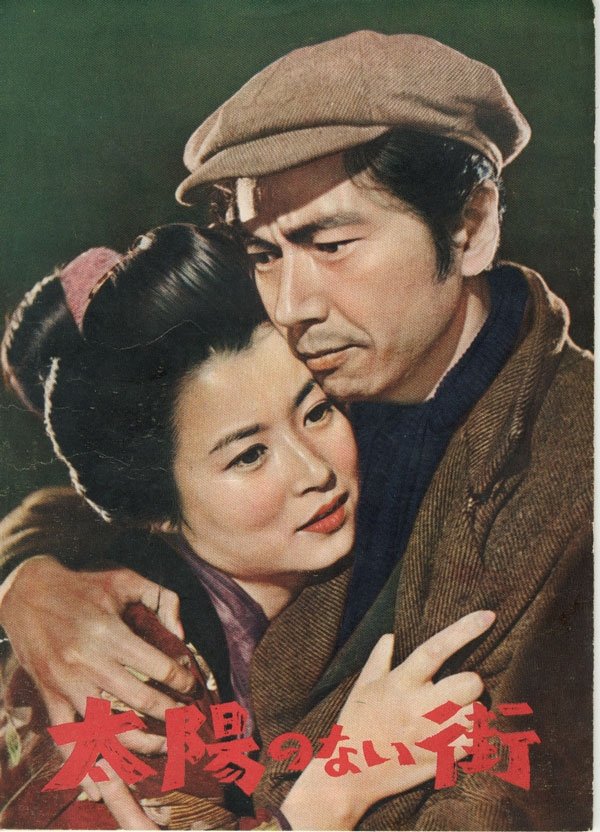
Based on the novel by proletarian writer Sunao Tokunaga. The story is about a long strike by workers at a large printing house and the strikers' steadfastness, which neither hunger nor violence could break. The heroine of this story actively participates in her colleagues' struggle against layoffs, oppression, and police brutality.
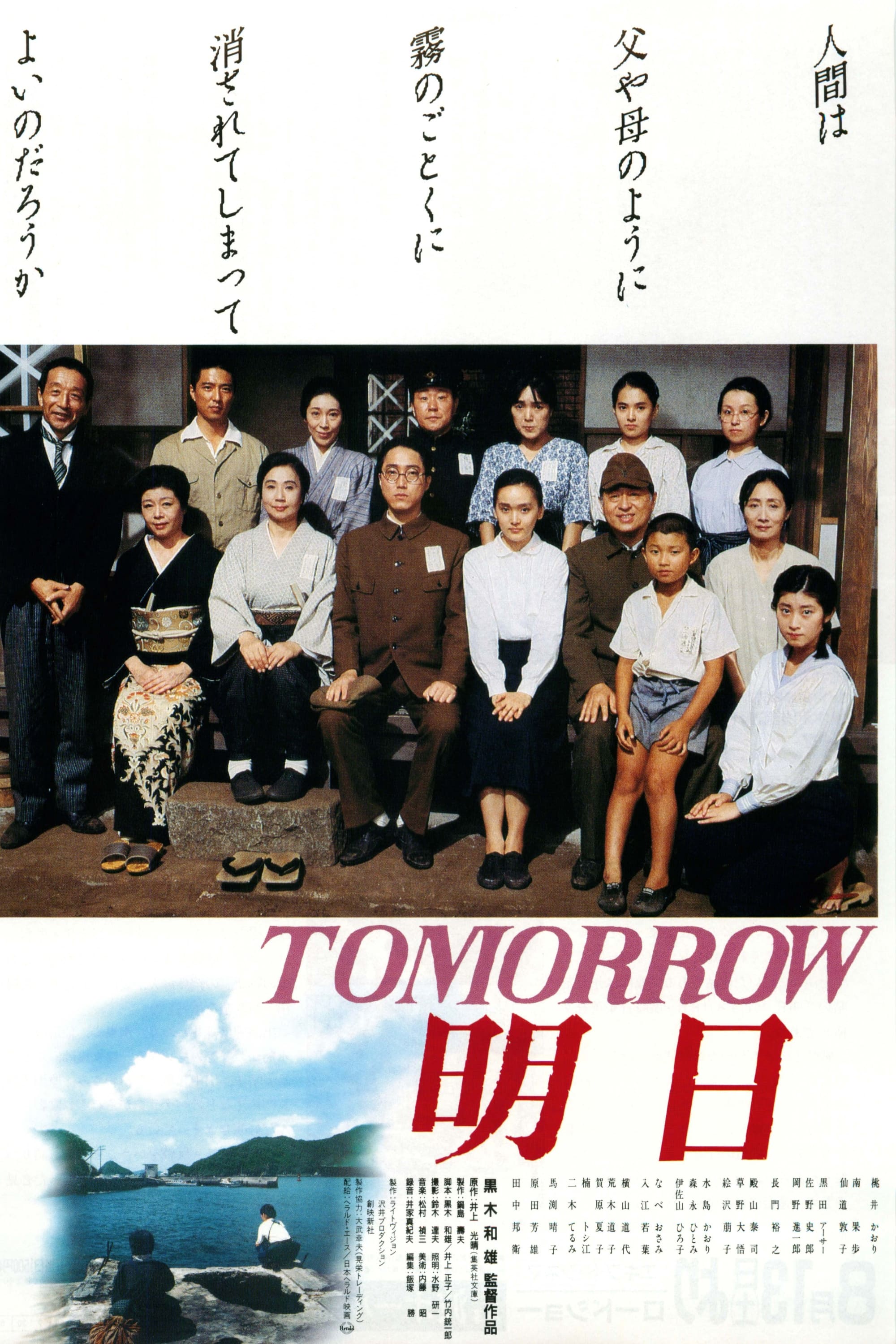
On August 9, 1945, the Americans dropped an atomic bomb on Nagasaki. This film, based on a story by Mitsukaru Inoue, describes the daily life of people in Nagasaki the day before that fateful event. It presents the human drama of people's lives, and their feelings of joy and sadness. These include a newlywed couple, an expectant mother, and lovers who must say farewell because the boy is called to serve in the army. Each of these people, like others in the city, hoped to live with their dreams for ‘tomorrow’. But tomorrow never comes for them, as their lives are brought to an abrupt and unexpected end. Knowing how the story ends, in this case, doesn't detract from it at all; rather, it enhances the emotional impact, which is further heightened by the poignant musical score from Teizo Matsumura. 'Ashita' is the first film in Kazuo Kuroki's 'War Requiem Trilogy,' which also includes 'Utsukushii Natsu Kirishima' (2002) and 'Chichi to Kuraseba' (2004).
Hoshino Bunzo raises up his orphan grandson, Keiji whose right leg gets paralyzed when he was an infant. Bunzo loves Keiji so much that he does every thing to protect his grandson. Sonoda Keiko, a new young teacher comes to the school when a new term starts. She wants Keiji to go back to school. After two years absence from school, Keiji tries to attend the class but he cannot continue. All pupils hold an exhibition of Keiji’s paintings in the village shrine to make him happy. He is very pleased and gives his paintings to them and to Keiko, he gives a painting entitled "Spring Pony". When this picture is awarded a prize in the National Friendship Painting Compettition, it is like a new beginning for Keiji’s family.
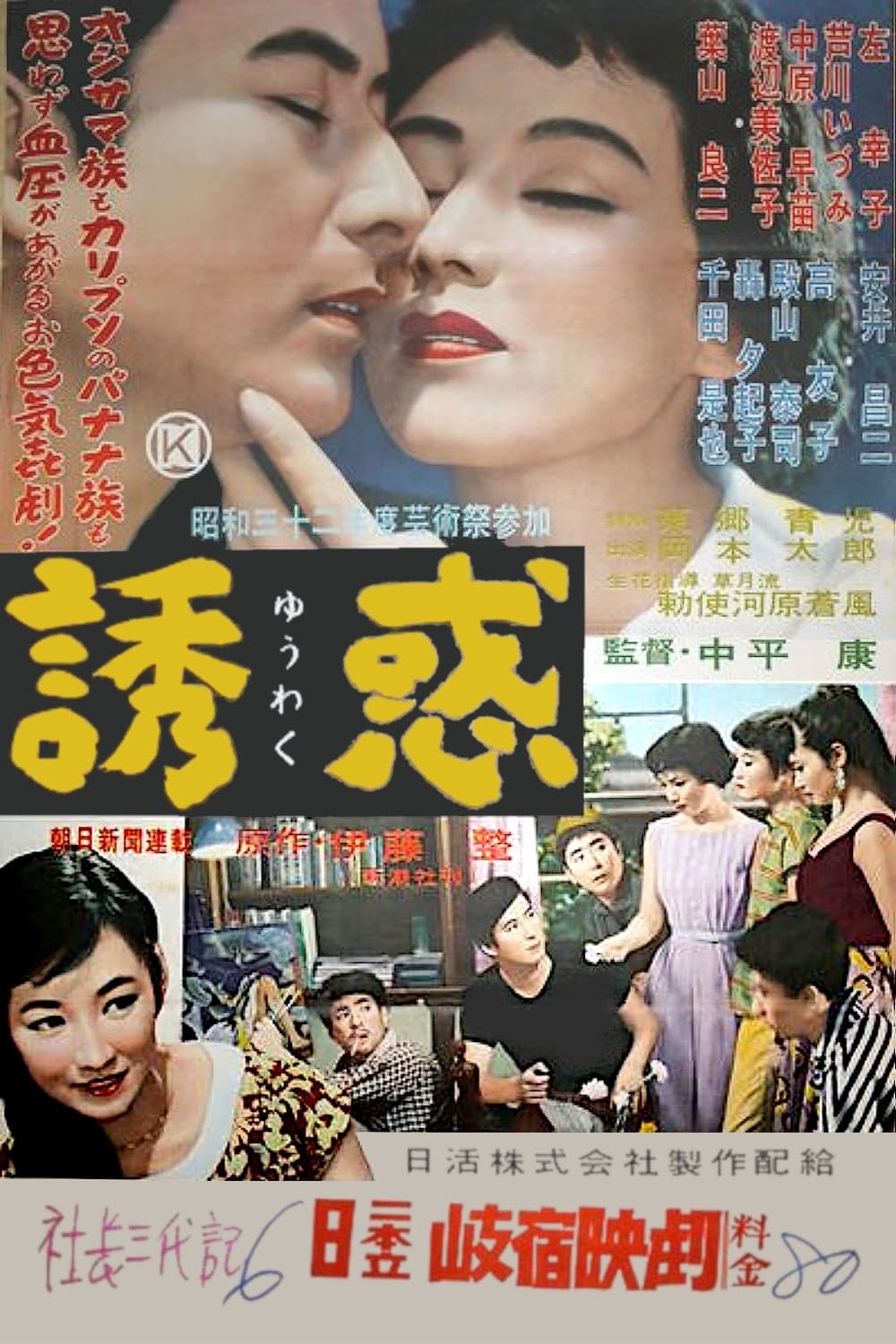
Shokichi, the owner of the clothing store, lives with his daughter Hideko and plans to open an art gallery. One day, Hideko led a handsome art student, Shohei and a poor painter, Sohei. Sohei’s painting was praised by a great printer at the completion ceremony of the art gallery. Since he became successful as a painter, but he looked quite indifferent. Around the same time, Shohei’s sister brought Sohei’s pictures to the gallery and Shokichi noticed that she was a daughter of his first love.
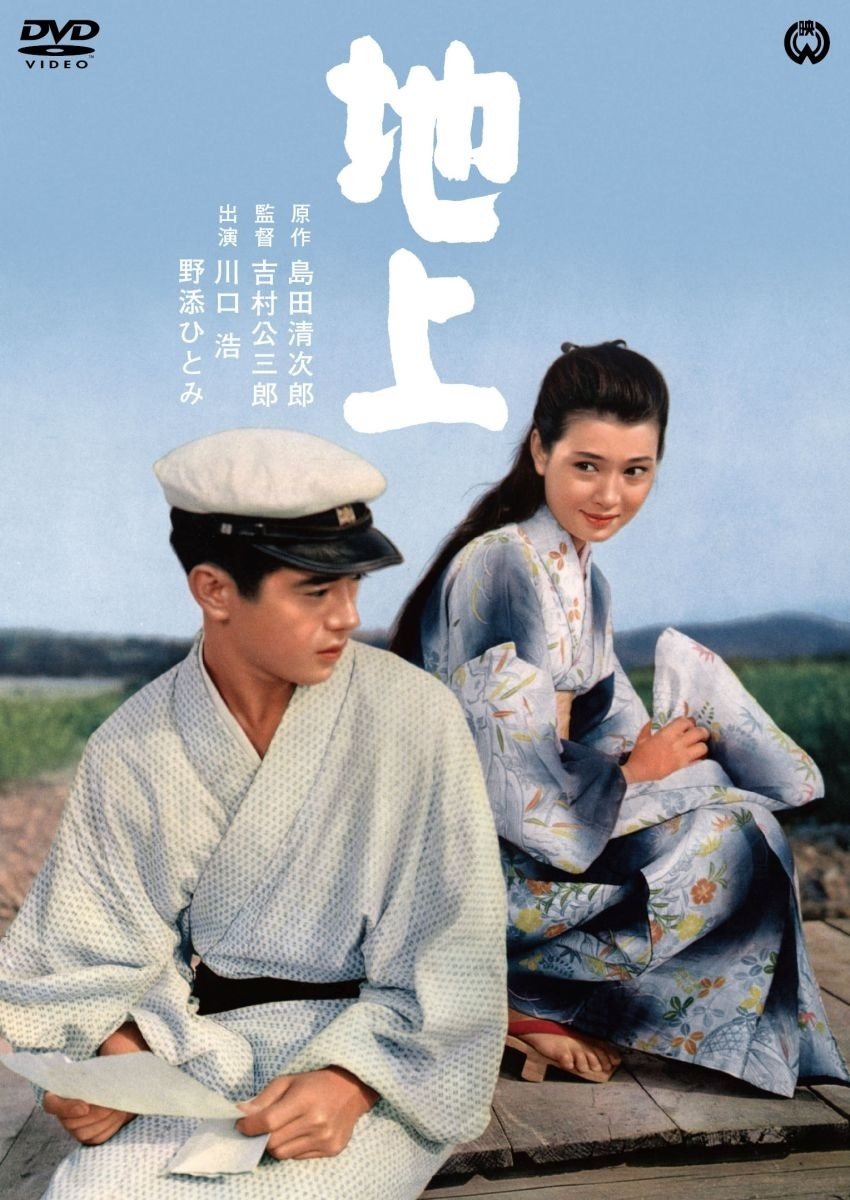
Ichiro’s family used to be a large landowner, but now he is living in poverty with his mother. His mother works hard to get her son through school. Under such circumstances, Ichiro meets Wakako, the daughter of a wealthy man, and they fall in love with each other, but they are opposed by those around them because of their different social status.
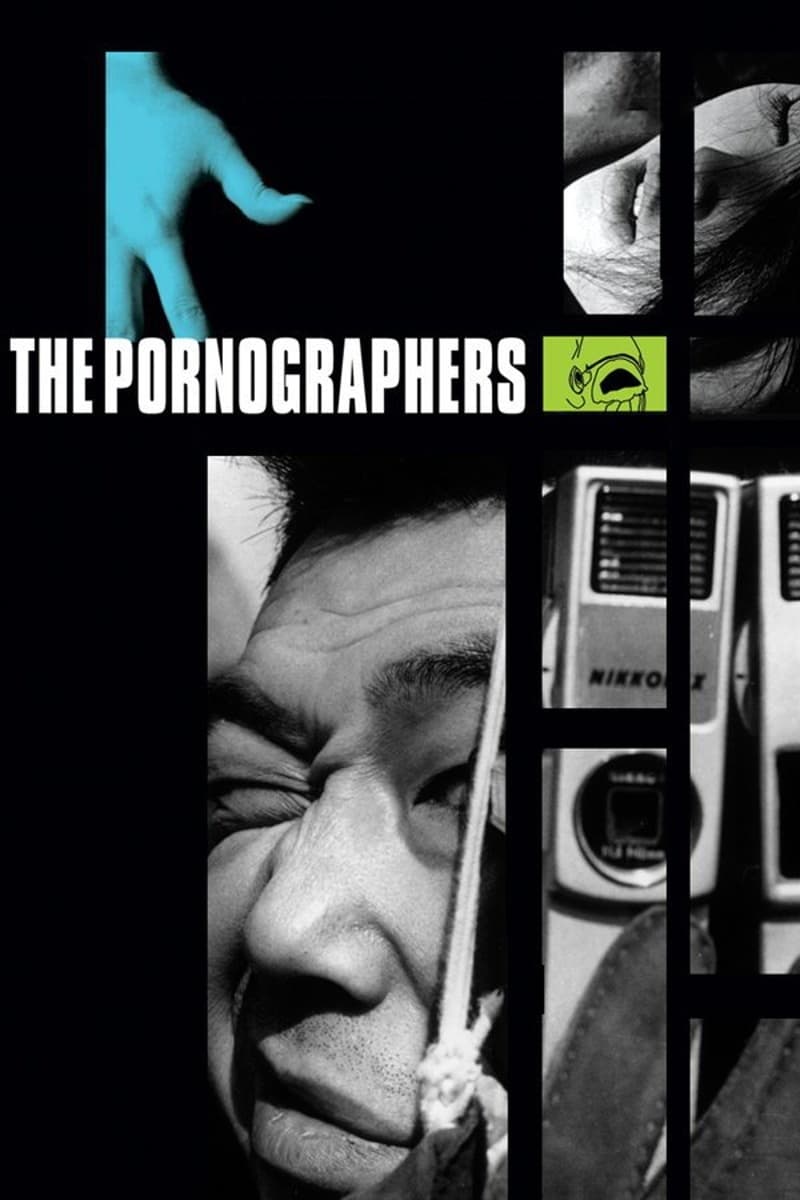
Subu makes pornographic films. He sees nothing wrong with it. They are an aid to a repressed society, and he uses the money to support his landlady, Haru, and her family. From time to time, Haru shares her bed with Subu, though she believes her dead husband, reincarnated as a carp, disapproves. Director Shohei Imamura has always delighted in the kinky exploits of lowlifes, and in this 1966 classic, he finds subversive humor in the bizarre dynamics of Haru, her Oedipal son, and her daughter, the true object of her pornographer-boyfriend’s obsession. Imamura’s comic treatment of such taboos as voyeurism and incest sparked controversy when the film was released, but The Pornographers has outlasted its critics, and now seems frankly ahead of its time.
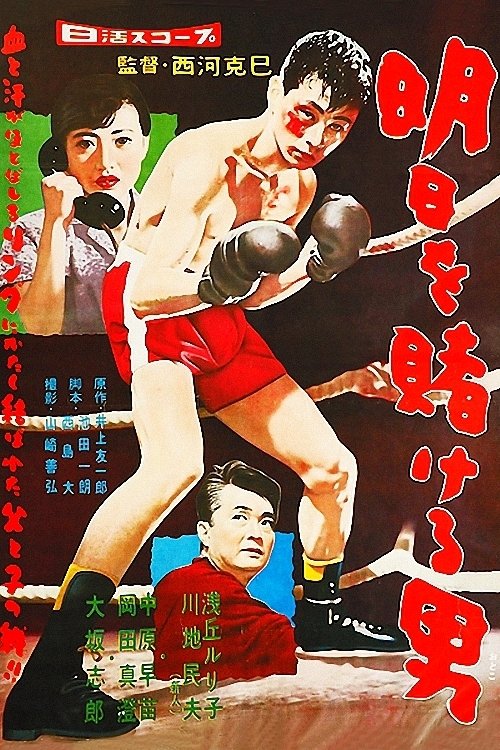
Former boxer Daishiro lost his wife, and his only son, Kaoru, went missing, it was a heavy blow for Daishiro. One day, Daishiro got a call from his relative Morihiko. He said he forgot the winning lottery ticket of 2 million yen at the hotel, so he wants Daishiro to go and pick it up. Morihiko used the hotel for secret meetings, so he said he couldn't go there himself because he was afraid it would become public. When Daishiro entered the hotel, the Yakuza, who learned about the lottery from the newspaper, threaten the hotel maid Noriko, and want to rob her. Daishiro helps Noriko and safely picks up the lottery, but a message arrives from his relative Seikichi from Osaka. His missing son Kaoru is said to be a boxer in Osaka. "My son... He has the blood of a boxer in him..." Daishiro is heading to Osaka in a hurry...
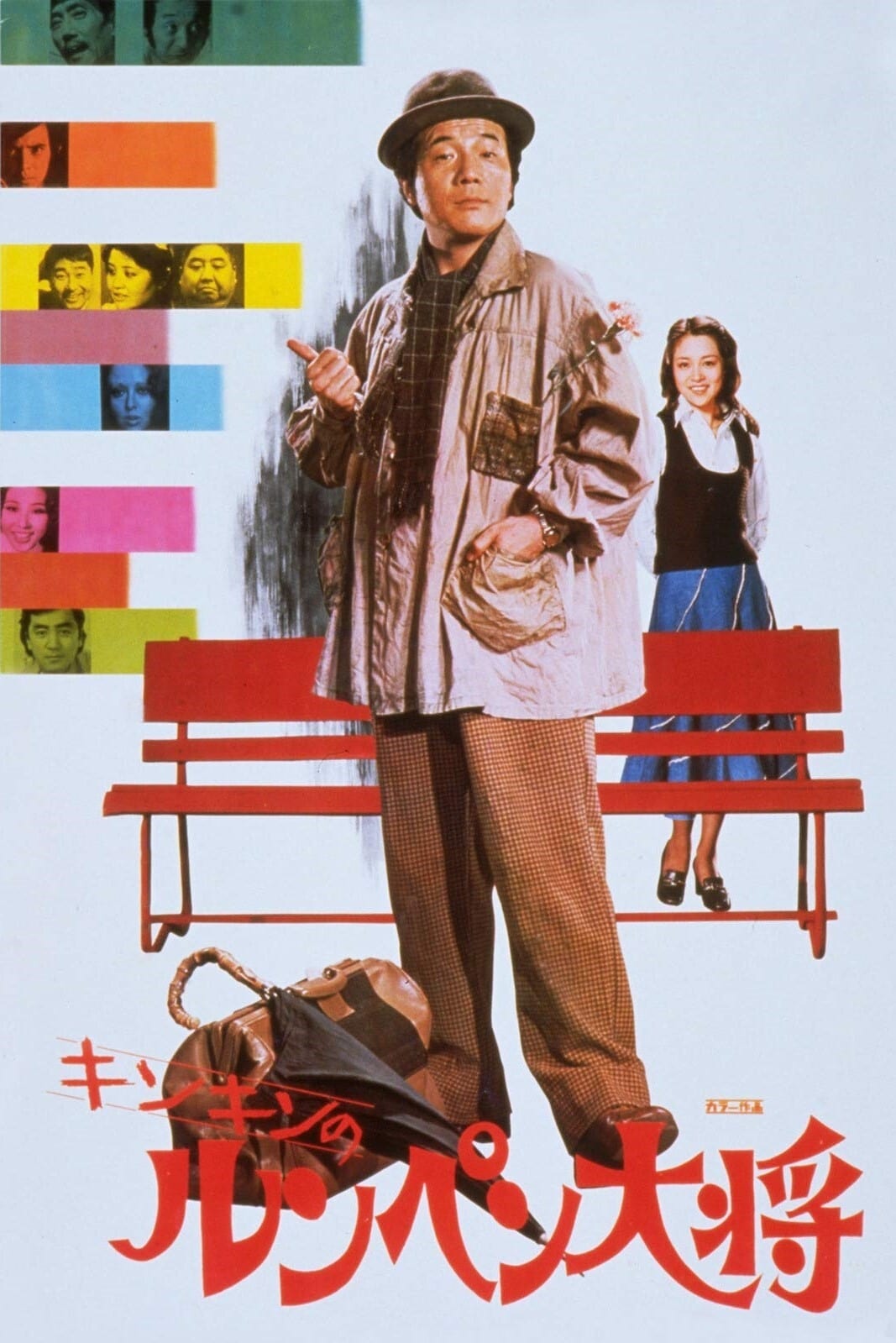
A young lawyer falls in love with the daughter of his former professor, whom he's hired to tutor his children.
The film depicts how the work to build the Great Buddha overcame a number of obstacles as proponents and opponents clashed over the construction of the Buddha. This work is based on a play by Hideo Osada, which was performed by the Shin Kyodo Theater Company in 1940.
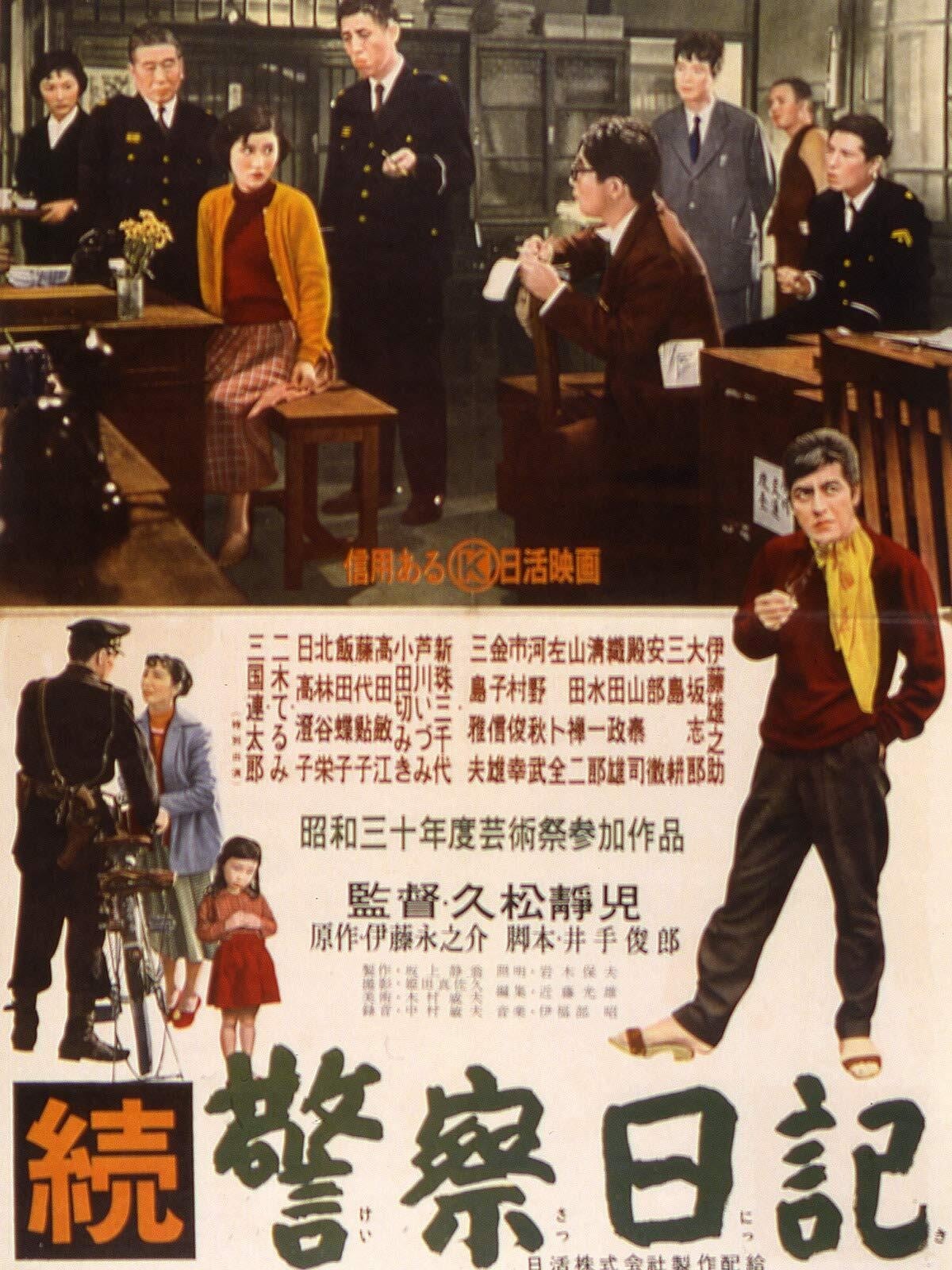
From runaway brides to a typhoon, the continued adventures of Ushikata police station.
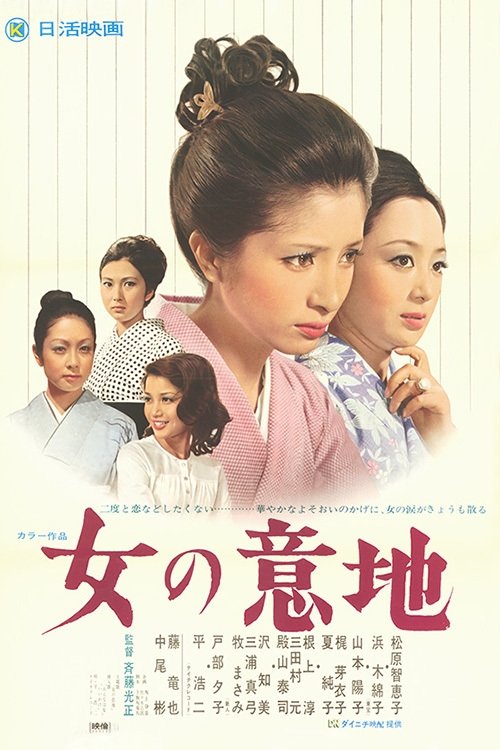
2 years ago, Kumi broke up with Shuhei and decided to forget everything about him for good. However, after being told that her younger sister, Junko, fall in love with a man and is currently living with him. She was determined to discover who was the man who won her sister's heart. But what will happen when she found out that the man in question is Shuhei, her first love?
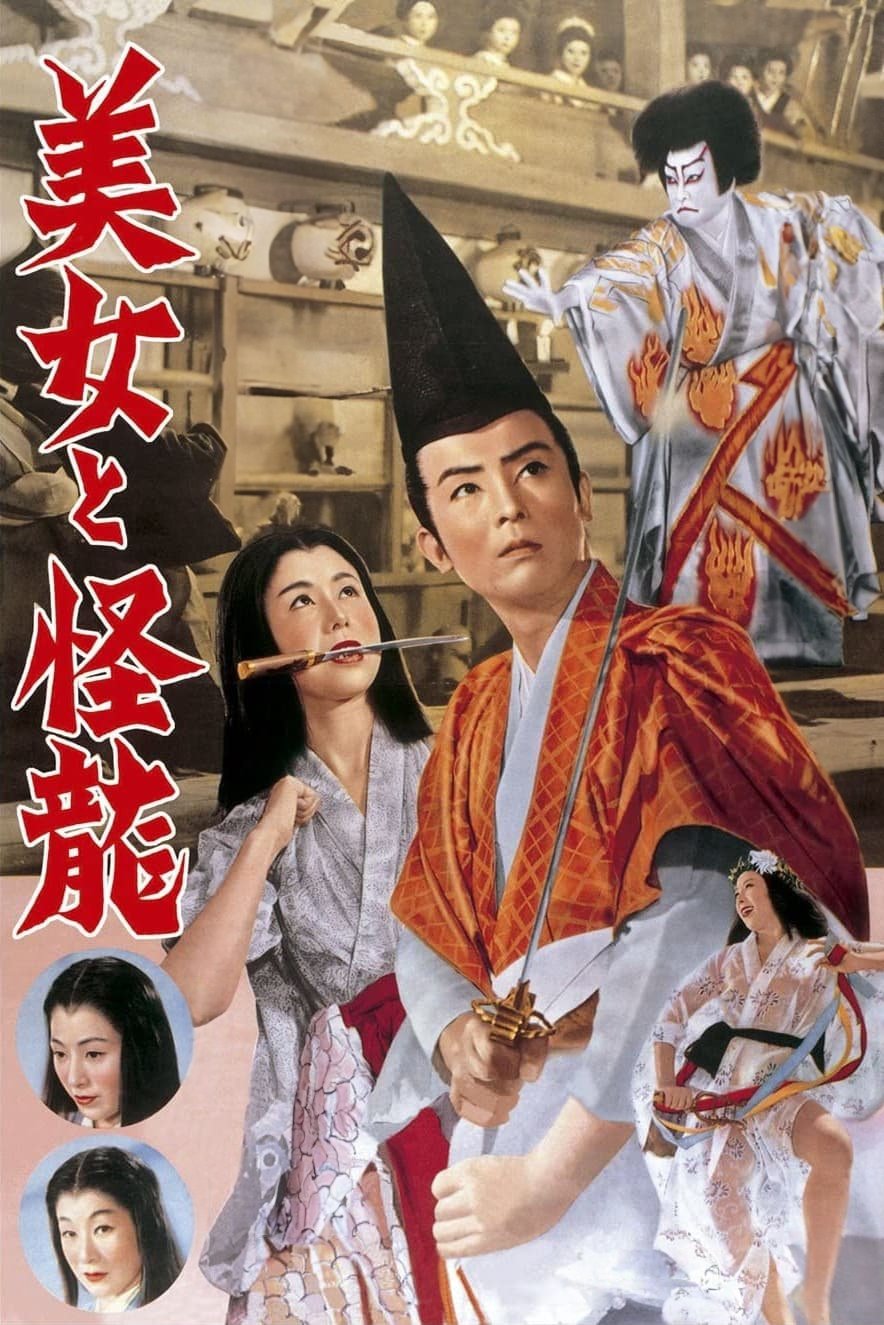
A powerful priest uses his magical abilities to imprison the rain gods within a waterfall, causing a devastating drought. The imperial court sends a princess to his remote mountain retreat to seduce him and break his spiritual concentration.
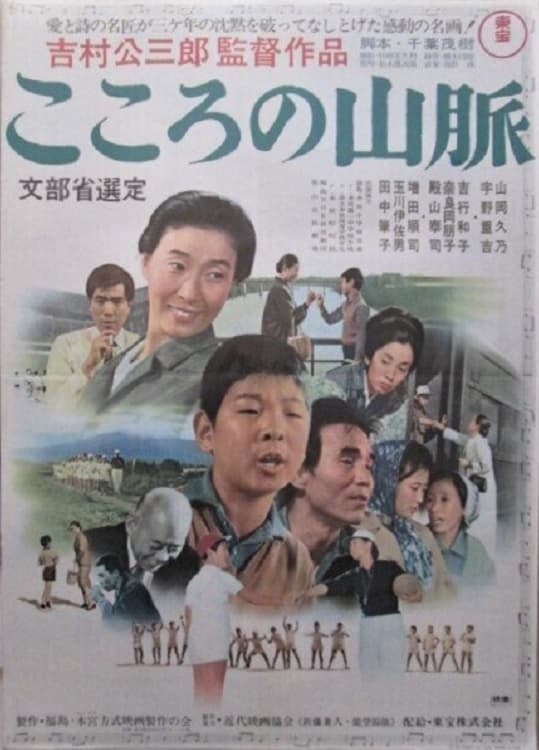
A film dealing with the trials and tribulations of a primary school before and after the Pacific War, set in Fukashima Prefecture.
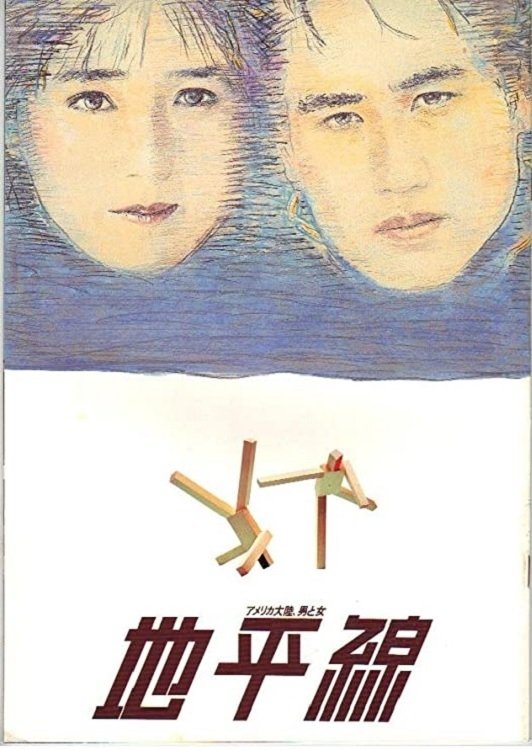
Hideo is sold in marriage to a Japanese farmer in San Francisco to settle her family's debt. Over the next 20 years, the couple works hard and raises 4 children. After Pearl Harbor is attacked, they are interned with other Japanese immigrants in a camp, losing both their land and their assets.
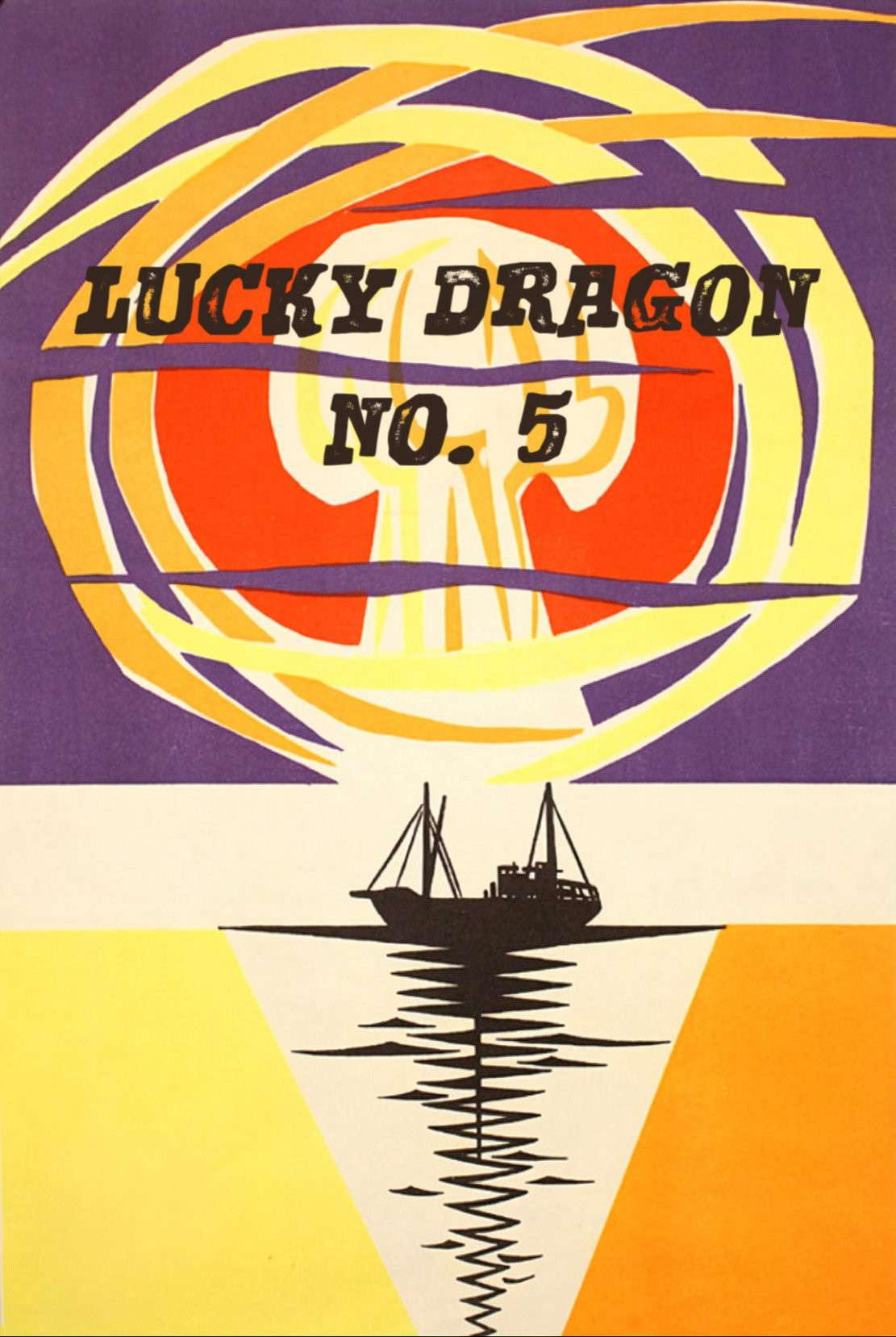
An ageing fishing boat, Dai-go Fukuryu Maru ("Lucky Dragon No. 5") sets out from the port of Yaizu in Shizuoka Prefecture. It travels around the Pacific line fishing. While the ship is near Bikini Atoll, the ship's navigator sees a flash. All the crew come up to watch. They realize it is an atomic explosion, but take time to clear their fishing gear. A short time later, grey ash starts to fall on the ship. When the ship returns to port the sailors have been burned brown. They unload the fish, which are then transported away. They visit the local doctor and then go to Tokyo for an examination. It turns out they are all highly radioactive. Their symptoms become worse, and the contaminated fish causes a panic.
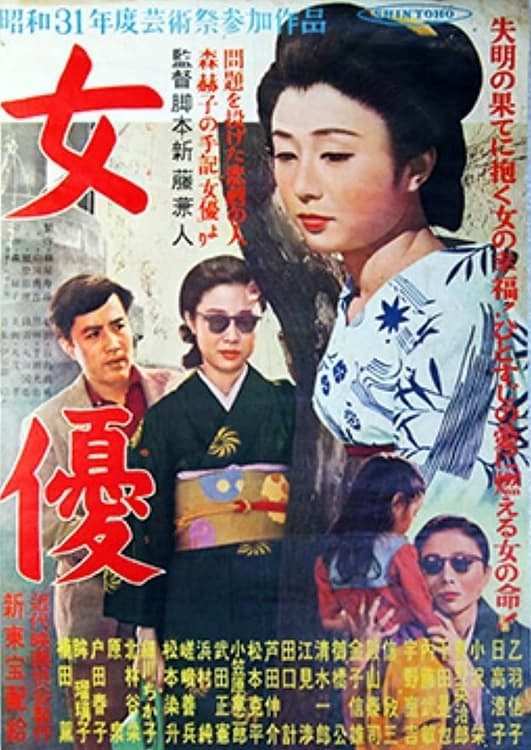
Based on Kakuko Mori's autobiography, about her life and retirement from acting due to her increasing blindness.
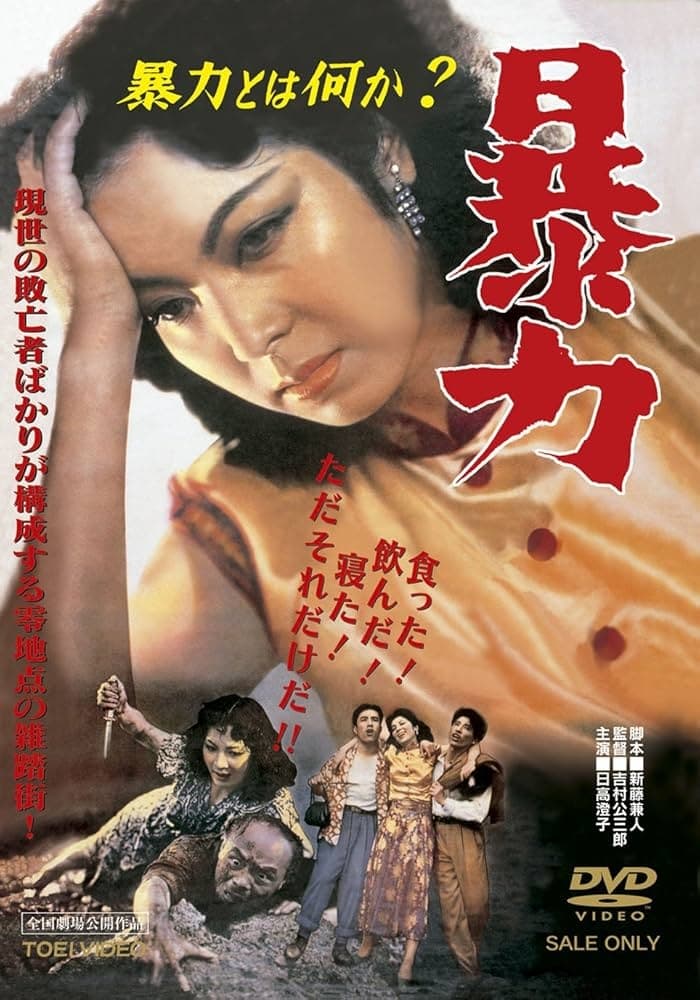
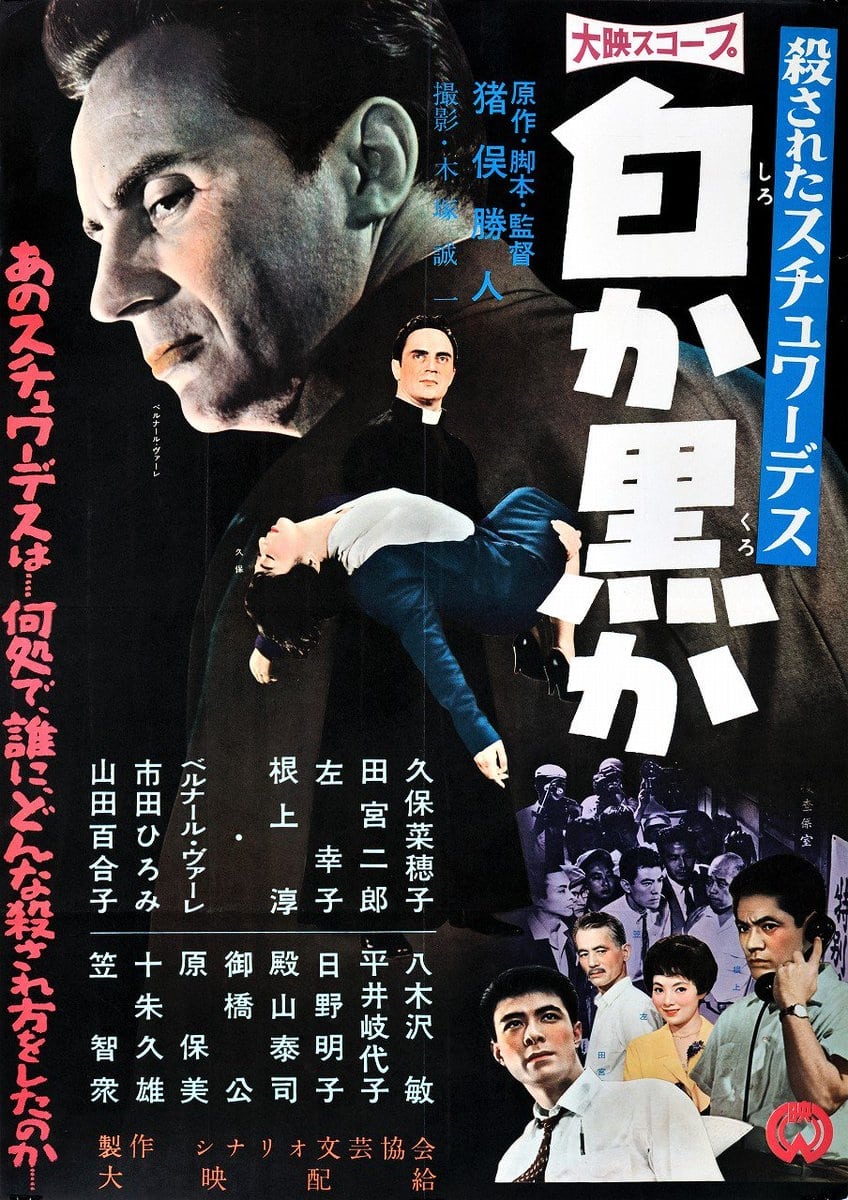
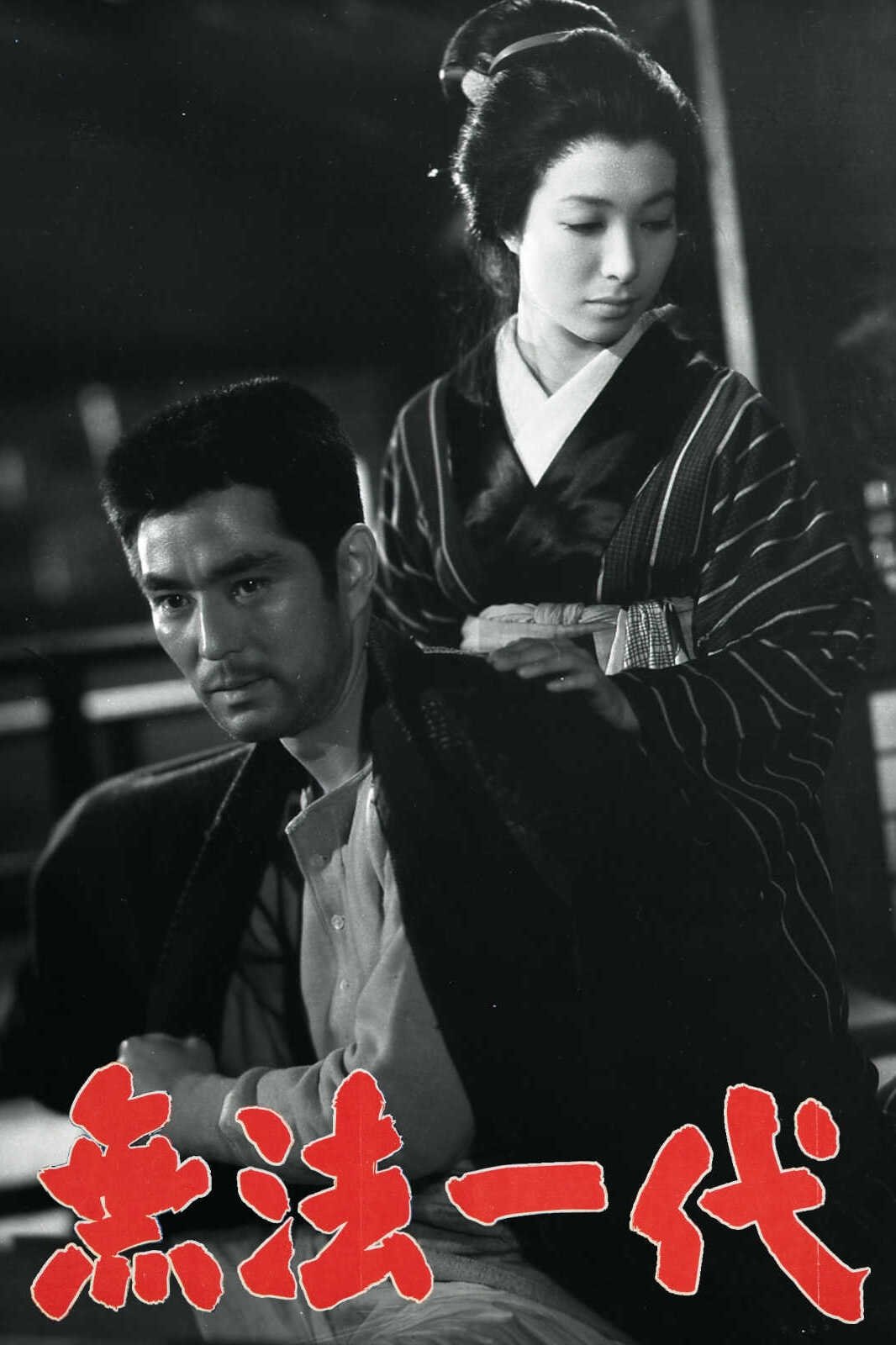
The movie is about a man who started a brothel to make money out of his poor circumstances in the late Meiji period.
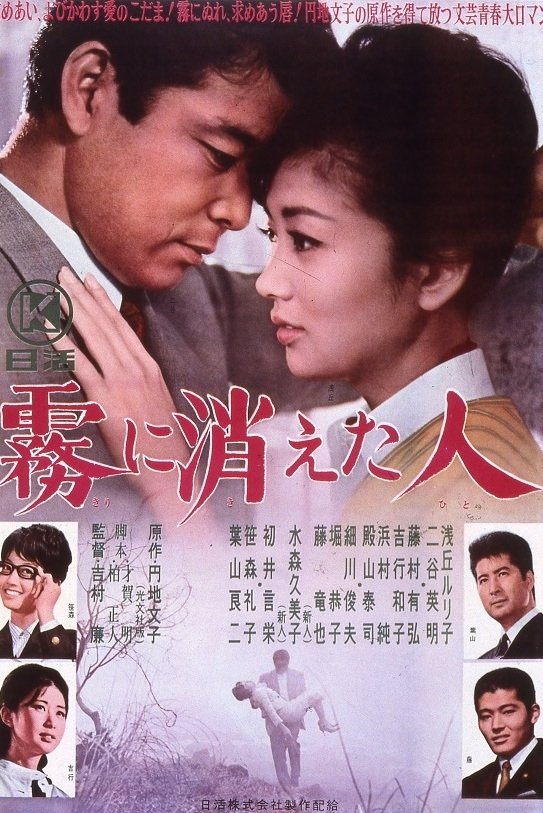
The movie depicts the complicated romantic feelings of a woman who is attracted to a man other than her fiancé.
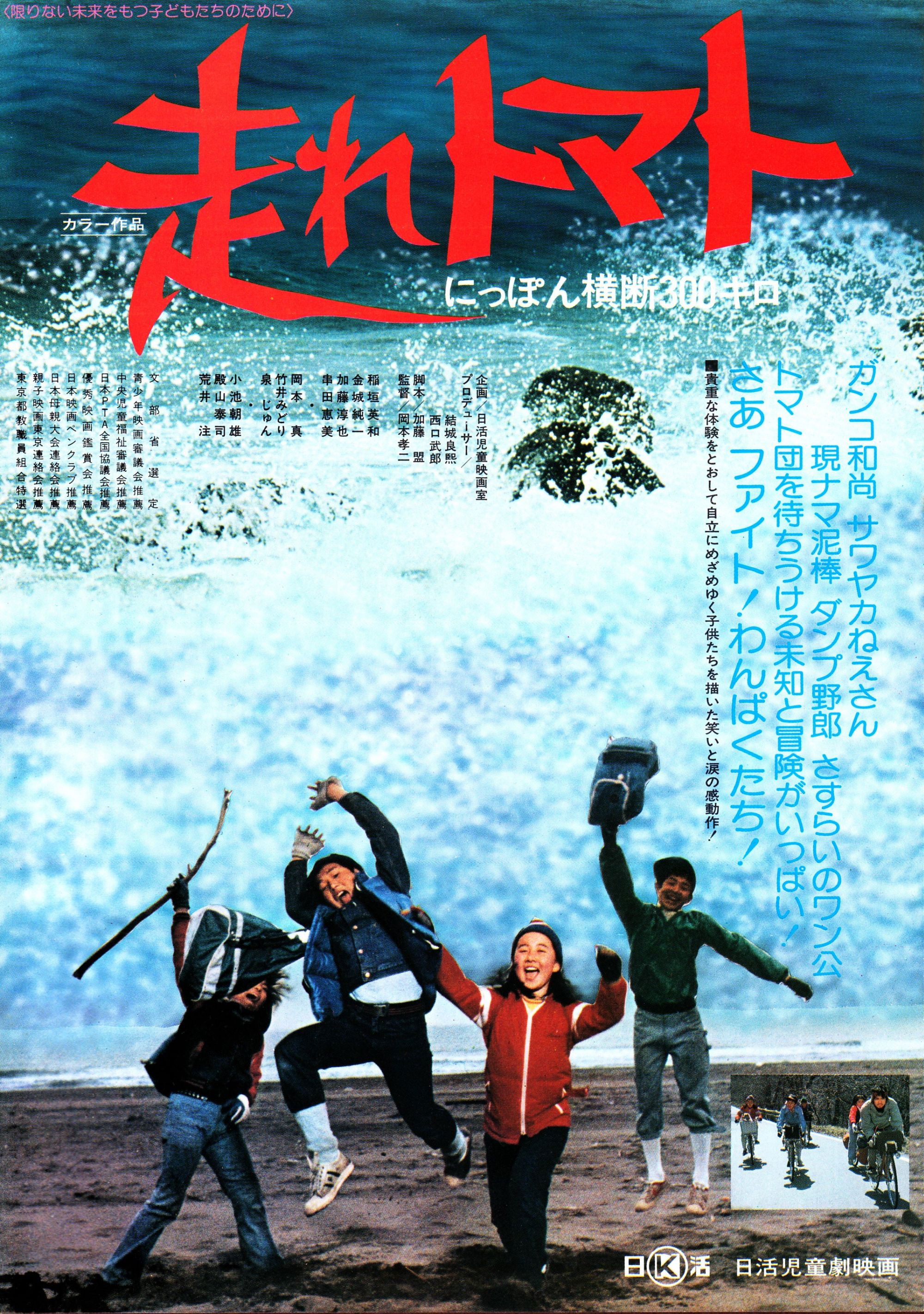
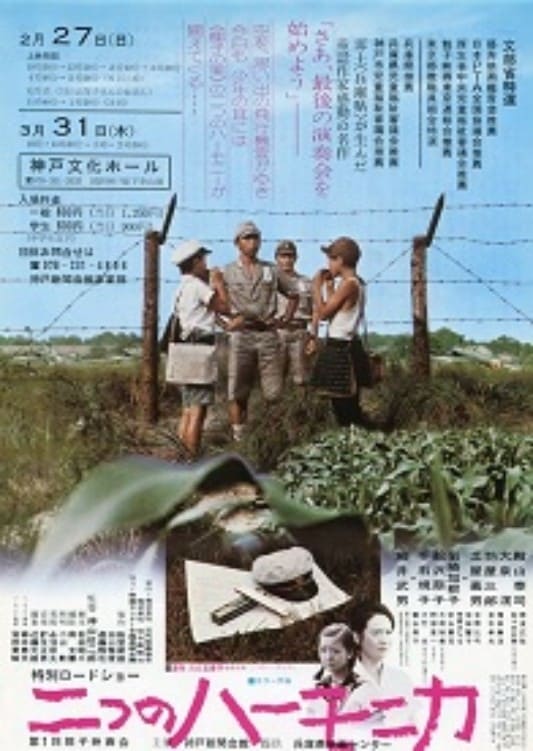
In 1945, a boy evacuated to Miyagi Prefecture befriends a local child, and the two begin to play harmonica near the local military base. Then, one day, they hear a soldier playing harmonica from inside the base, and begin to form a bond with him.
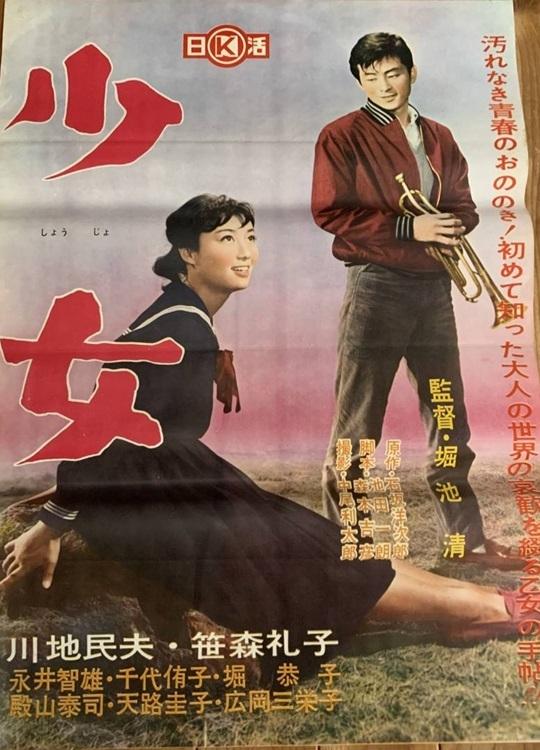
1961 Japanese movie
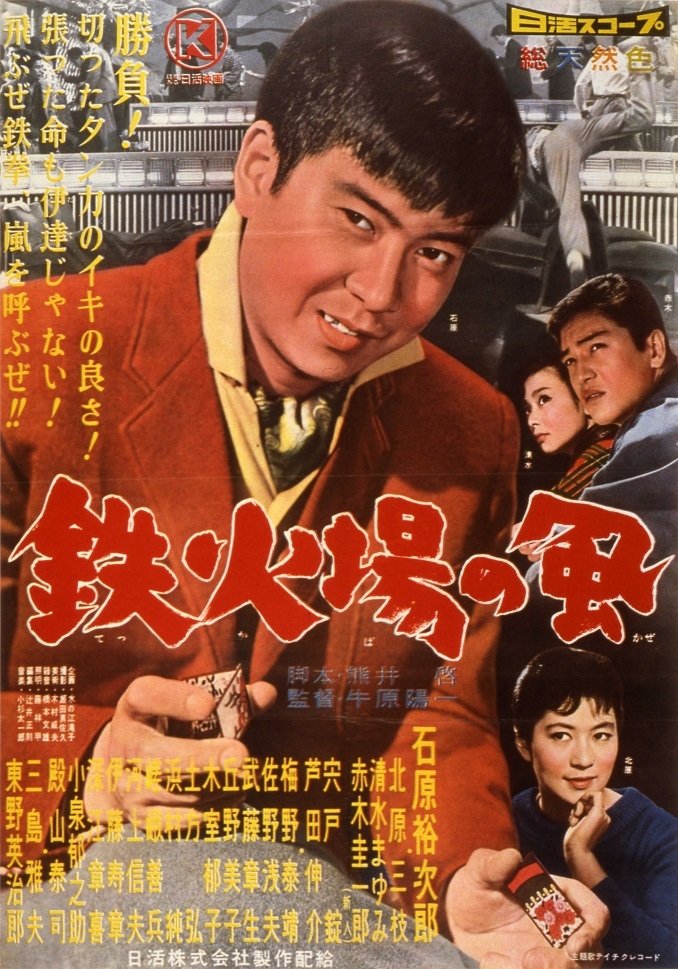
A 1960 crime film
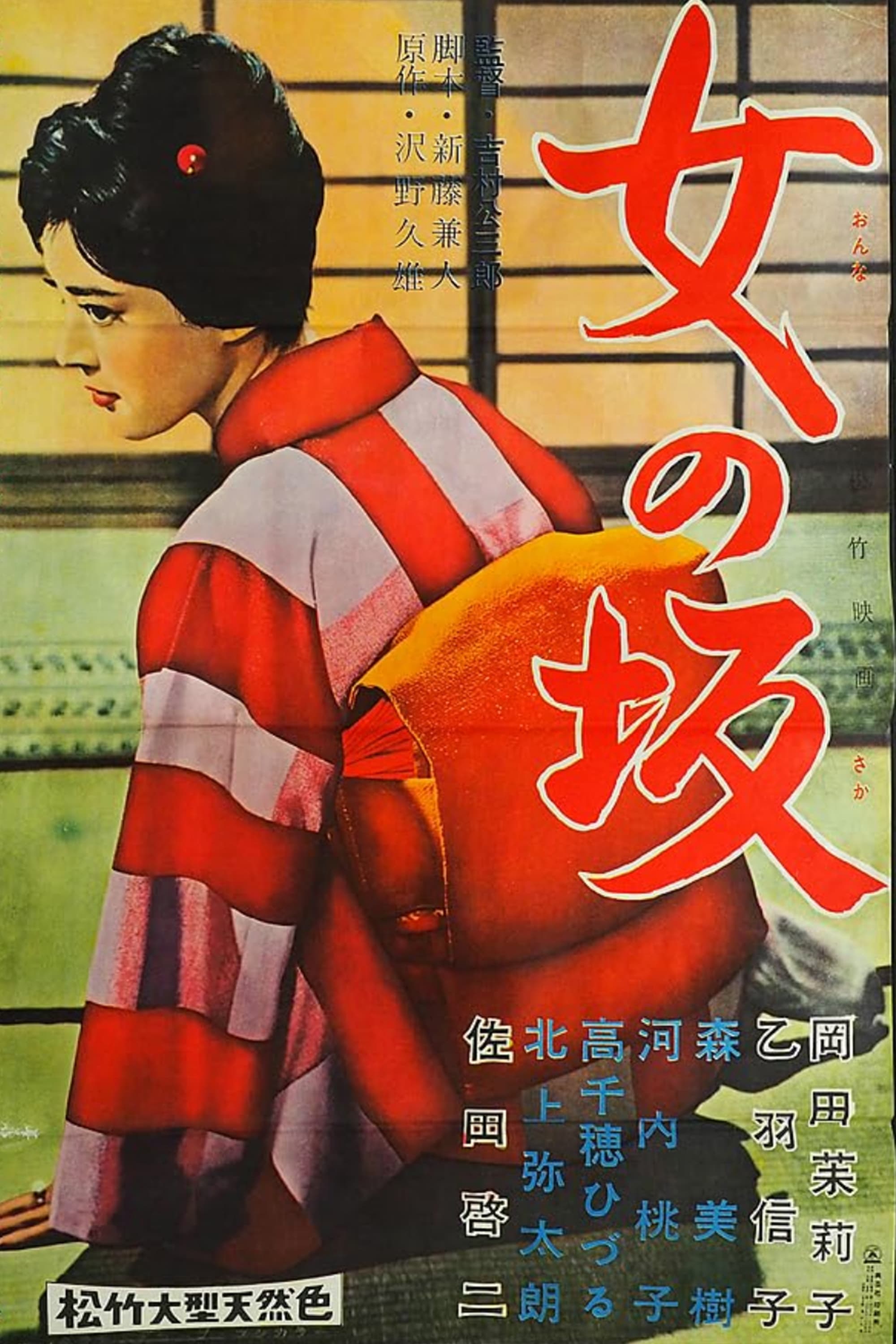
Tradition and modernity clash when a young woman inherits a sweet-making firm in Kyoto.
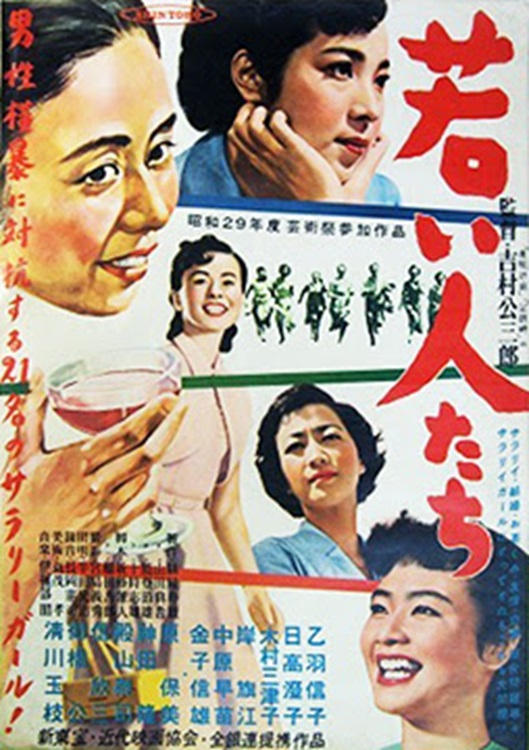
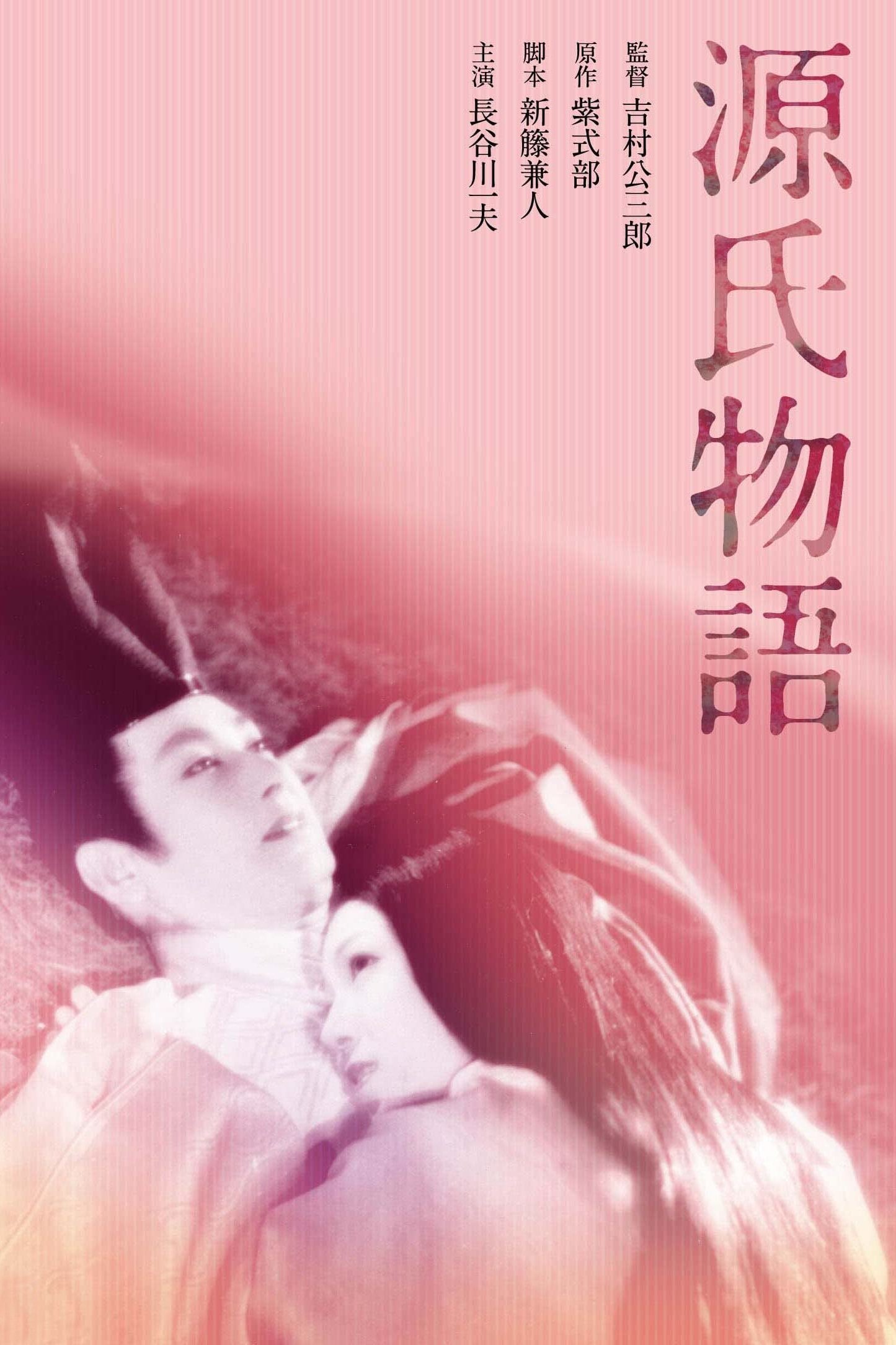
Genji, the illegitimate offspring of a Japanese potentate, goes by the philosophy of "love 'em and leave 'em" as a matter of course. Only when his heart is broken by Awaji does Genji realizes how much pain he himself has caused.
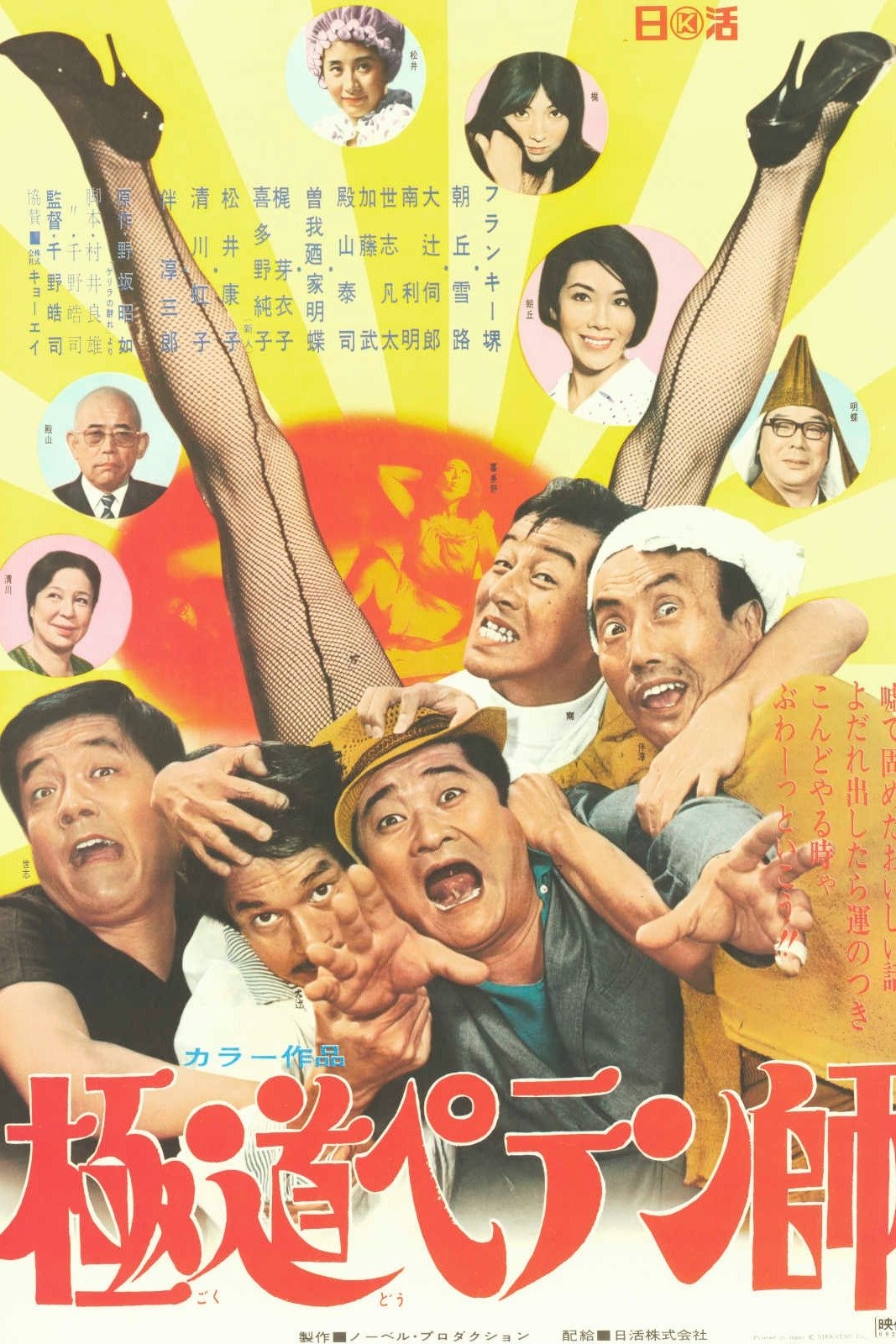
A group of one-hit wonder scam artists led by the troubled "Kanpai," dealing with impotence, embark on a lively and poignant societal comedy. They overturn the distorted trends and authorities of modern society through peculiar methods such as taking over temples and creating fake emerging religions.
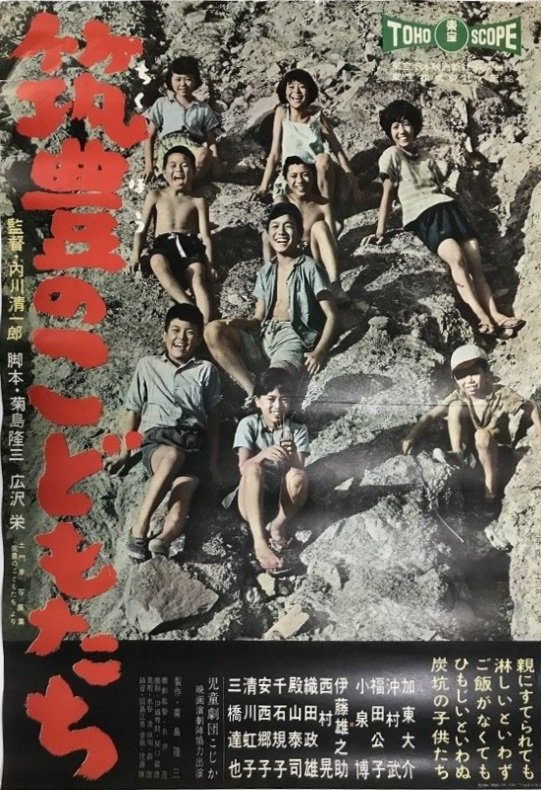
A drama film based on Ken Domon's photography of the children around the Chikuho coal mines.
Two pharmaceutical companies in Tokyo and Osaka engage in a fierce battle of wits over the sale of aphrodisiacs. Shigeru Amachi and Yumiko Nogawa, special sales agents known as "propers," operate in the shadows.
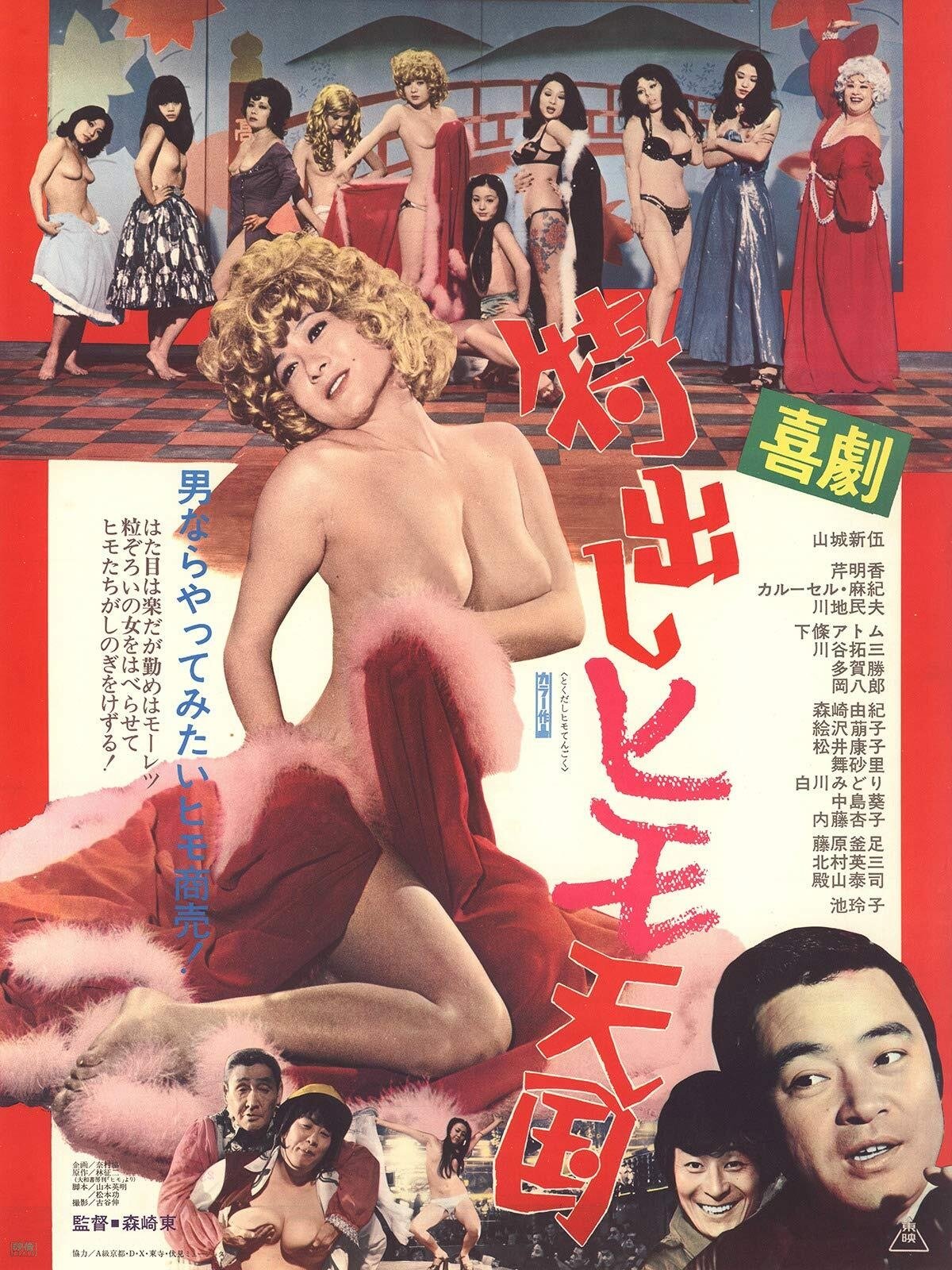
Class-A Kyoto, a strip joint in Kyoto, is raided by the police. Shohei, a salesman who happens to be there, gets caught in the middle of it and is fired from his job. Having nowhere else to go, Shohei reluctantly becomes the manager of the place... The film is a comedy full of pathos about the connection between strippers called "special delivery" and the "pimps" who hang on to them.
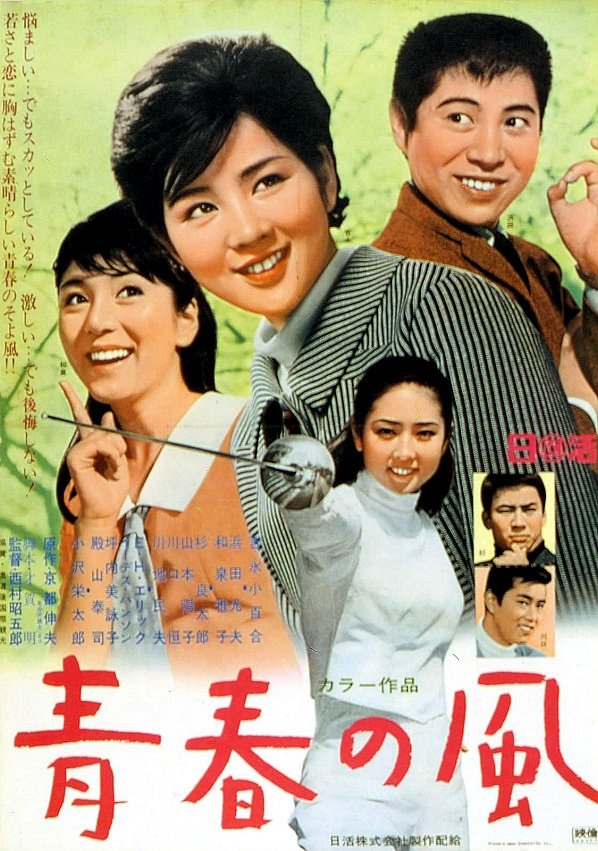
A romantic Nikkatsu youth film about three female friends.
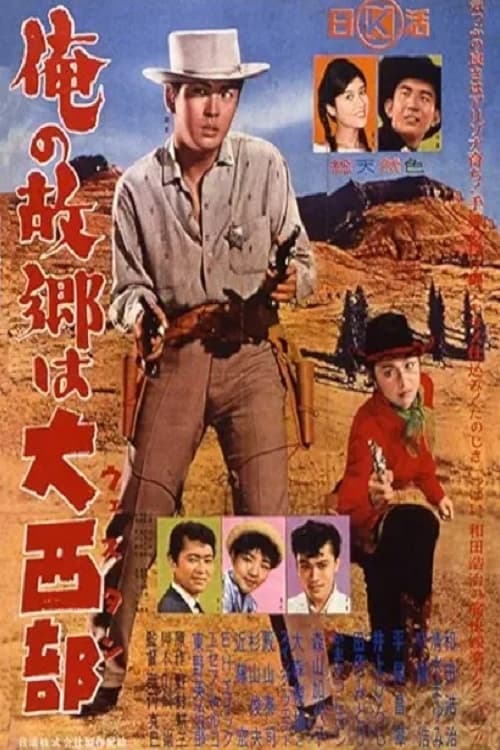
George Mihara was ordered by his grandfather Tom to go to Japan. The purpose was to deliver a $100,000 check to Matsuyama, a Japanese soldier who had helped Tom around the time of World War I, and to perform some act of kindness in Japan using $300 pocket money. This was to test whether George was a suitable boy to inherit Tom's YES Ranch.
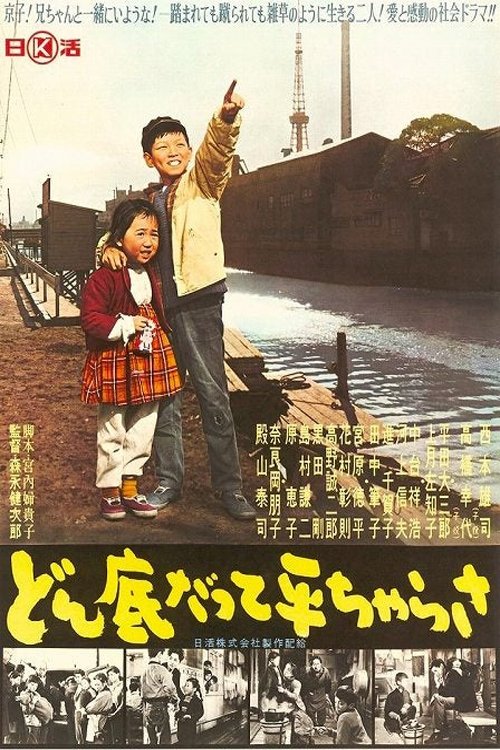
Ryota's house is a shack in a depression in the bank, with a dirt floor and a six-tatami room, but even though they are poor, Ryota is not above it. He is a good older brother to his younger sister Kyoko. But then something bad happens. His father runs away with another woman. This is a touching story about a boy who lives a tough life even in the depths of poverty and despair, and the strong love between his brother and sister.
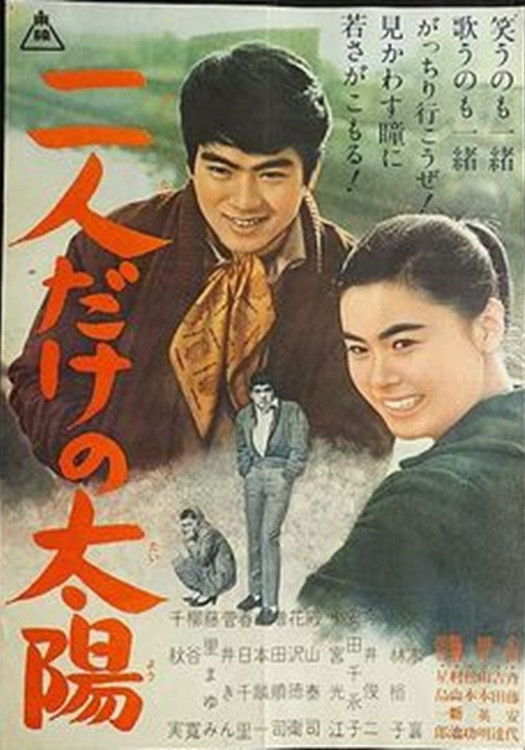
1961 Japanese movie
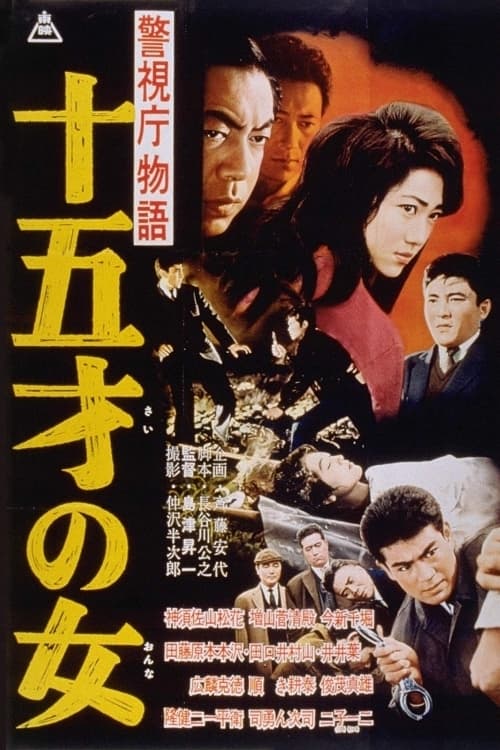
Detectives of the First Investigation Division are investigating the murder of a 15-year-old girl, whose strangled corpse was found in the bay of the Tama River. The ugly behavior of adults hidden in the name of social welfare is exposed by the investigation. 16th work from the popular series "Keishicho Monogatari".
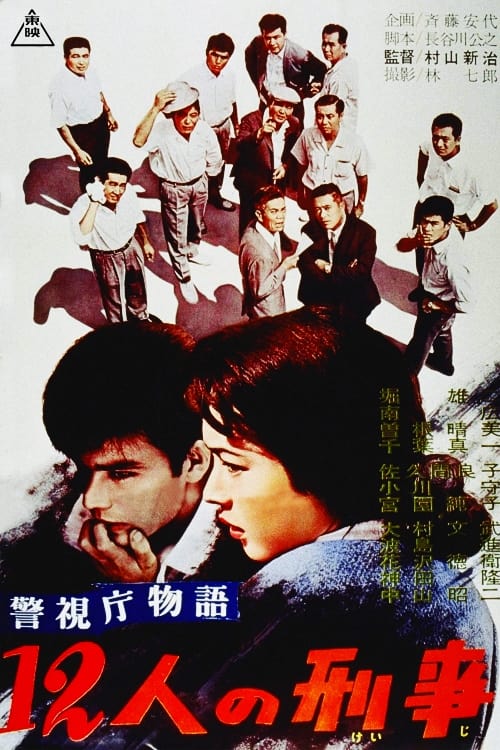
The murder took place at a hotel in Matsushima. The victim is a woman about 28 years old. The suspect is a young man who visited her the night before, and the evidence, in addition to shoe horns and handkerchiefs, is soap with the name of the tavern. When detectives at Shiogama Station followed the man's tracks, it turned out that he had come from Ueno.
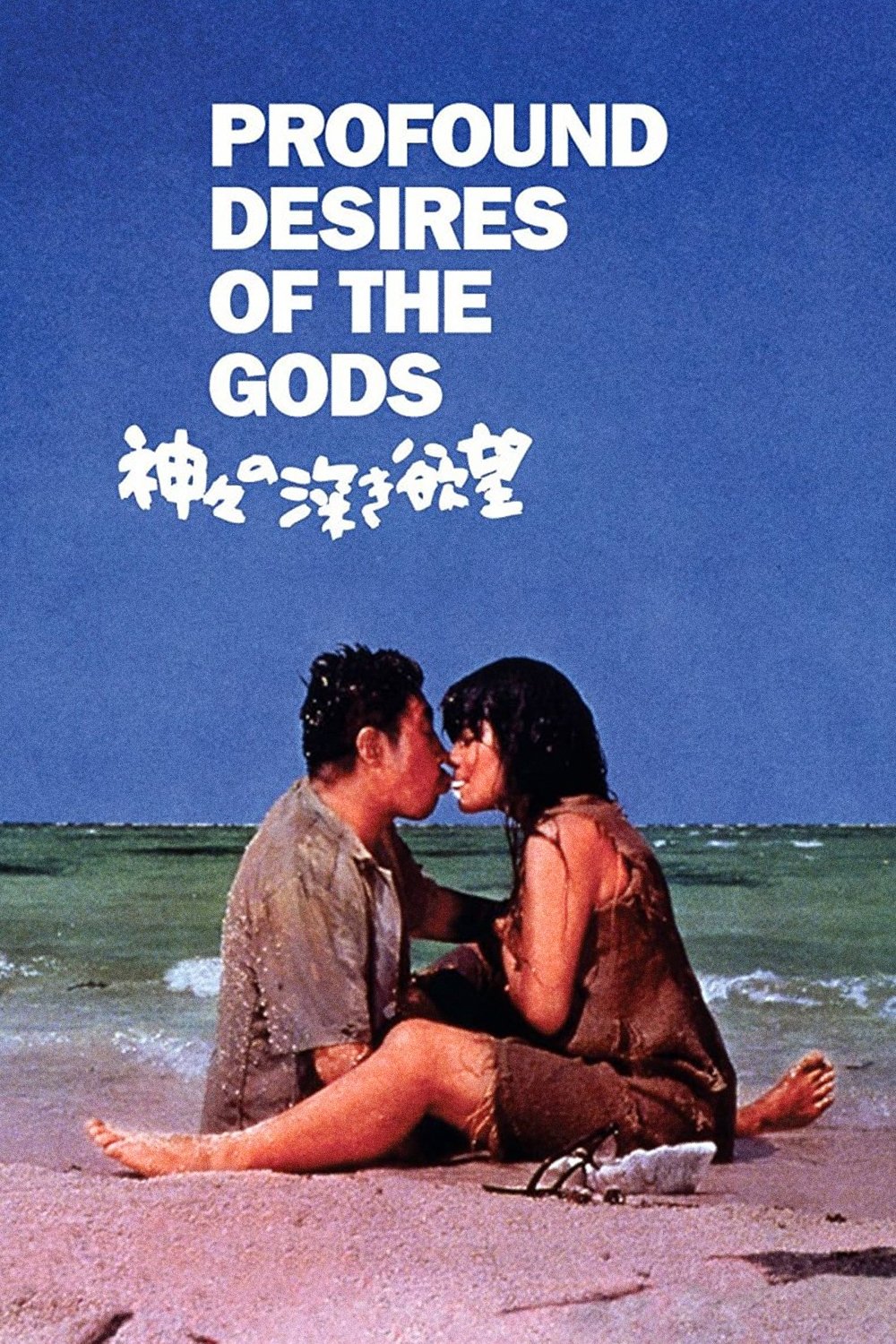
Tokyo engineer Kariya arrives on a primitive tropical island, where he interacts with the Futori clan, to drill a well to power a sugar mill.
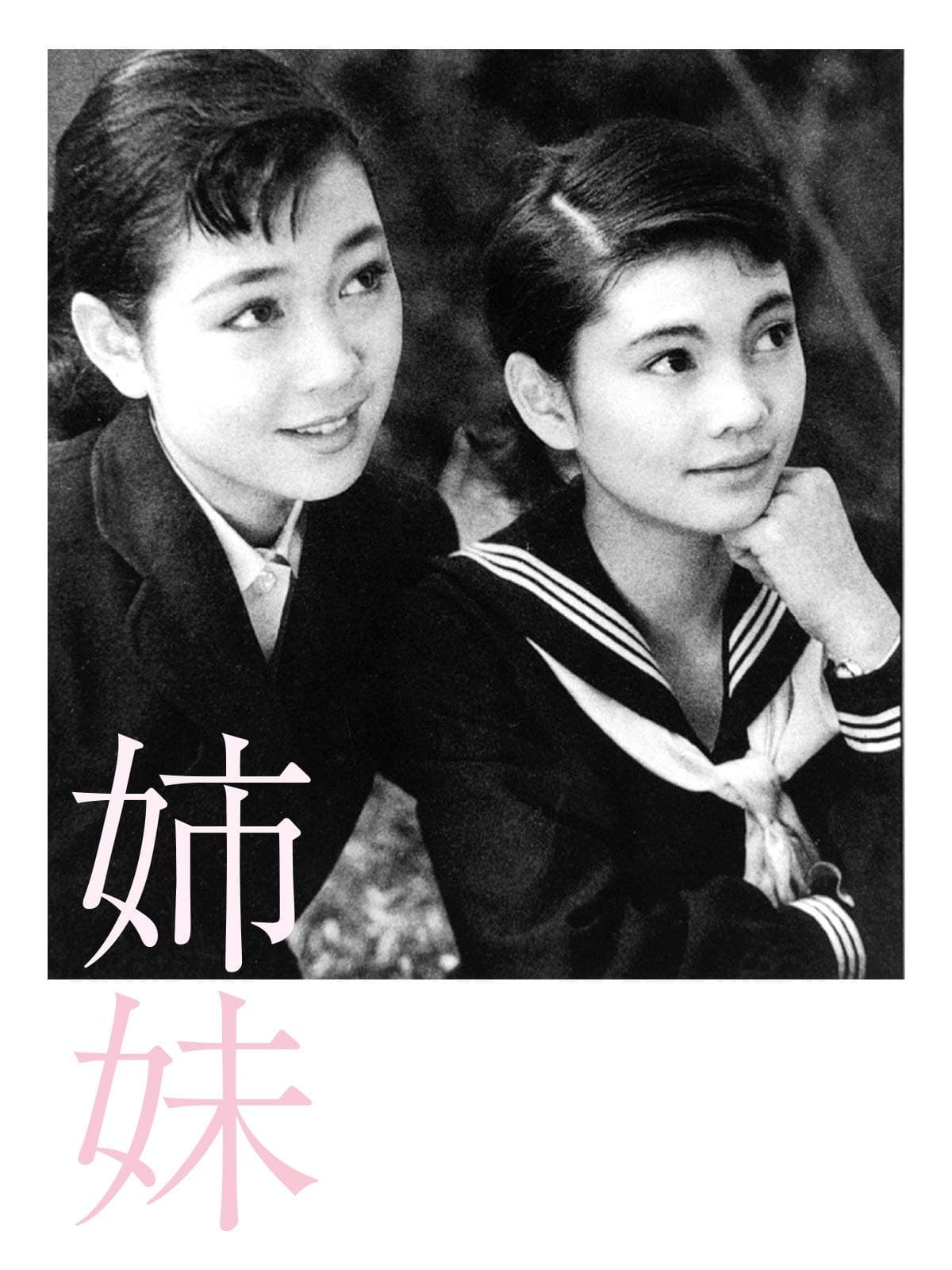
Keiko and Toshiko are sisters who leave their mountain home, where their parents live in a hydroelectric plant company house to study in the city. They stay with their kind-hearted aunt and her jovial but heavy-drinking carpenter husband. Keiko, the 17-year-old eldest of five siblings, is gentle and responsible, while 14-year-old Toshiko is lively and childlike, affectionately called "Konchi."
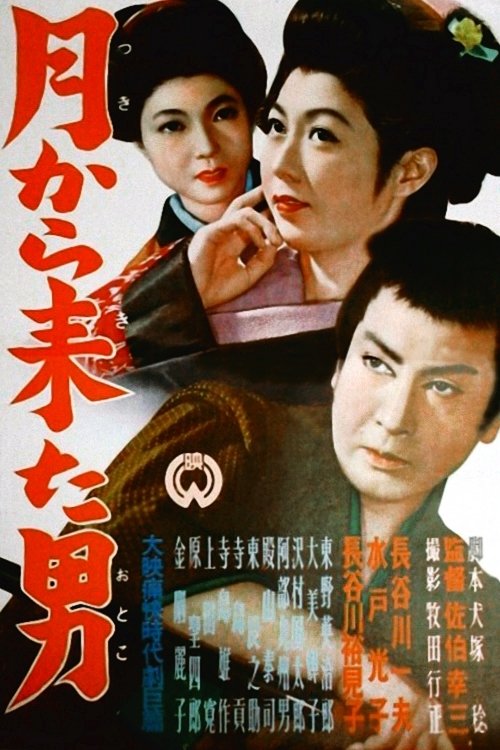
O-Kiyo (Mitsuko Mito), who had escaped from her boss, Shoden, who controlled the Sensoji Temple district, was desperately contemplating suicide when she was rescued by ronin Kojuro Tozawa (Kazuo Hasegawa), who hid her in a dilapidated apartment building. The Shoden clan desperately searched for O-Kiyo, but Kojuro found a huge sum of 50 ryo and ransomed O-Kiyo. Unable to accept this outcome, the enraged Shoden clan attempted to win the favor of constable Jinnosuke Nakayama (Kusuo Abe), seeking to demolish the dilapidated building and transform the area into a pleasure district. However, Kojuro thwarted their plans, bringing joy to the poor residents of the building. After demonstrating his remarkable skills, Kojiro revealed his true identity - he was a prominent hatamoto.
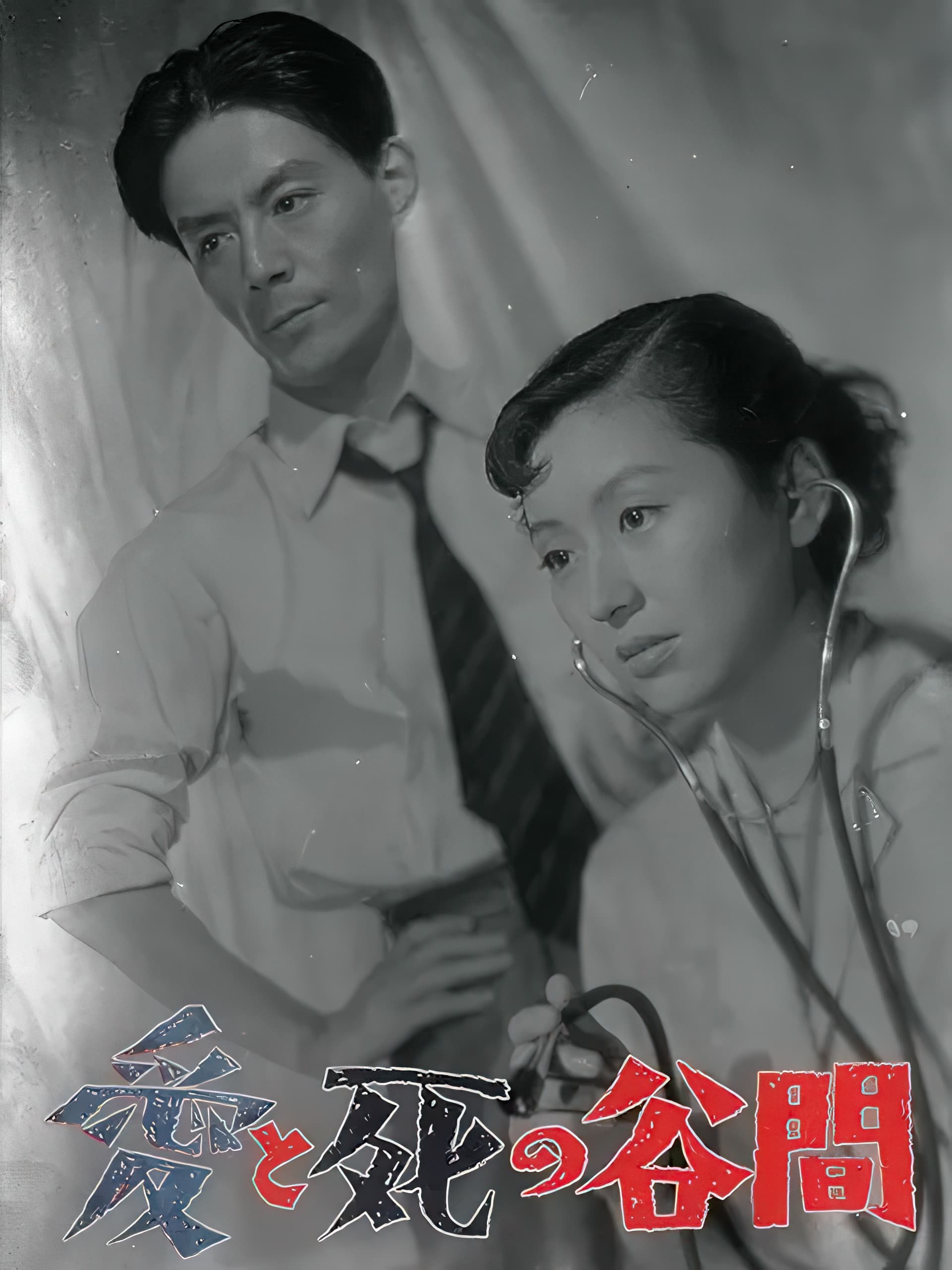
A great ambition to portray with sharp satire and humor the course of modern anxiety and love that is about to be driven to despair.
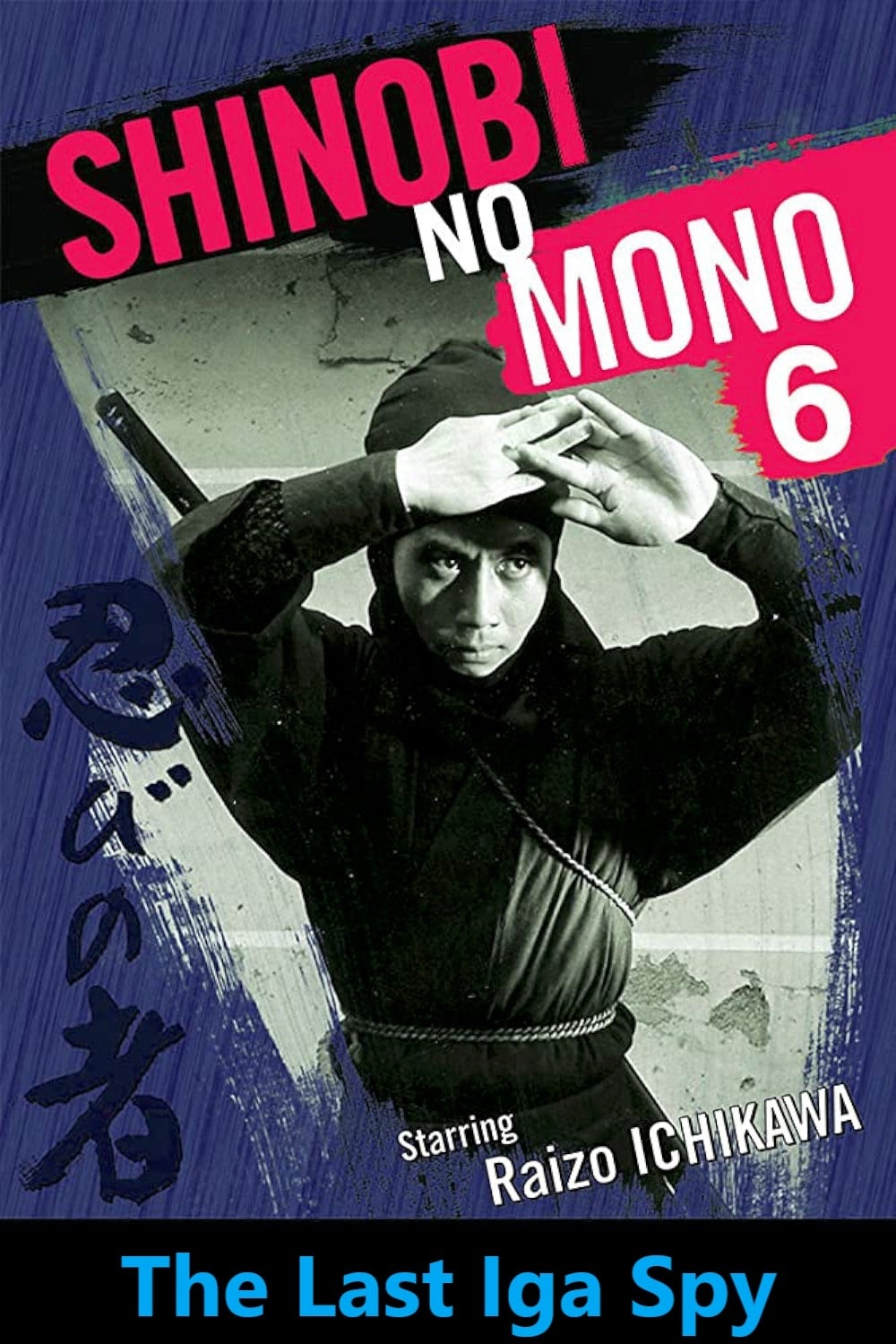
[Period covered: 1637-1651] This is one of the most complicated plots of any of the Shinobi no Mono films! This film tells the story of Saizo’s son, Kirigakure Saisuke, who after seeing his father die at the Battle Of Shimabara, grows up to be an expert ninja. Before he dies, “Mist” Saizo tells his children Saisuke, and Yuri that they are not really brother and sister. She, in fact, is the daughter of the late lord Sanada Yukimura, and must be saved from the shogun’s forces. In the chess match of spy versus spy, can Saisuke defeat the shogun’s chief strategist, Matsudaira Izunokami at his own game? Showing many exciting ninja tactics, it is not to be missed.
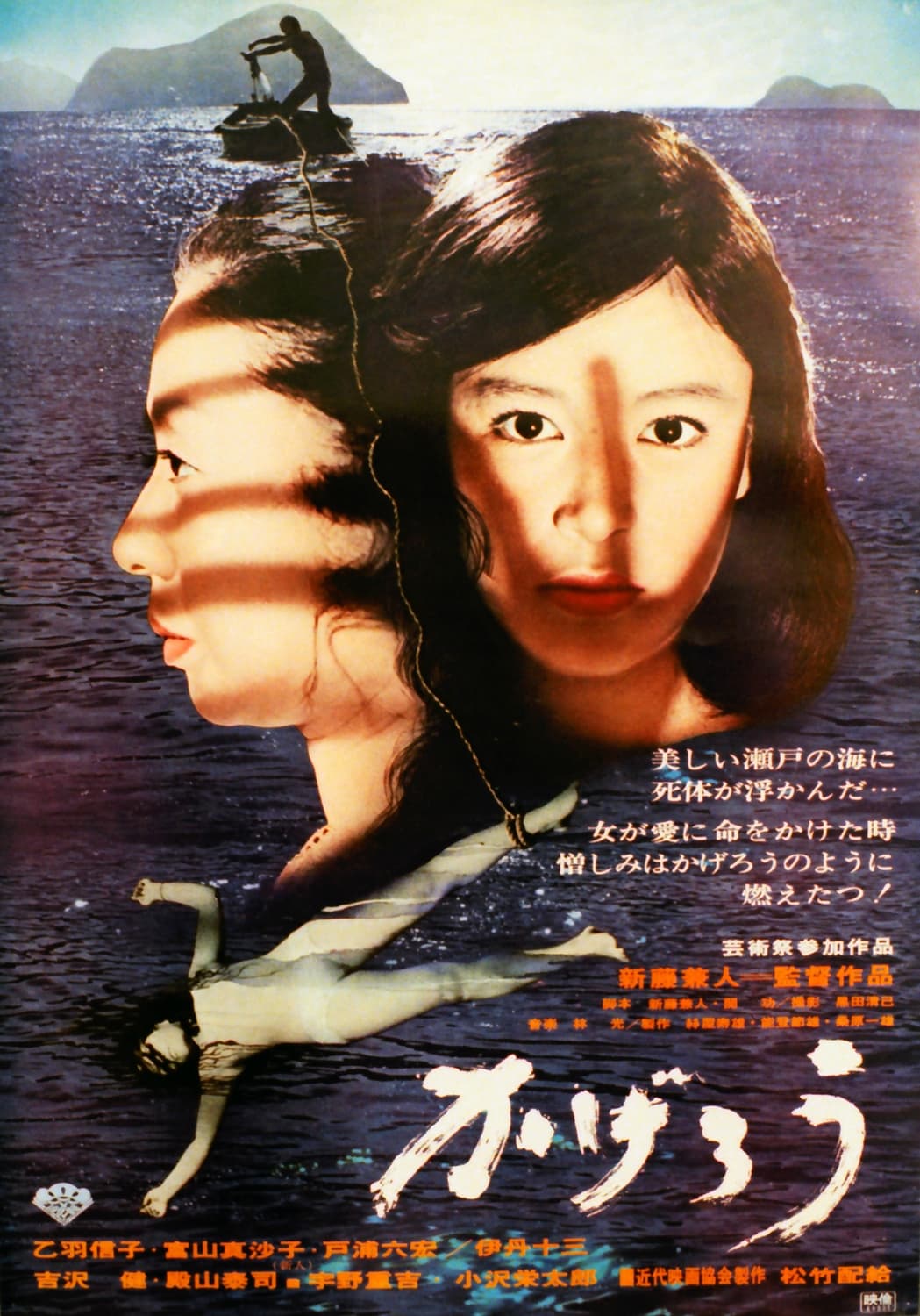
Nobuko Otowa plays a former Seto Inland Sea island farmer who has moved to the mainland in order to find work, but instead ends up dead. The film begins with the discovery of her corpse, which leads to an investigation that uncovers the narcotics, prostitution, and murder in which many poor farmers had found themselves trapped after World War II.
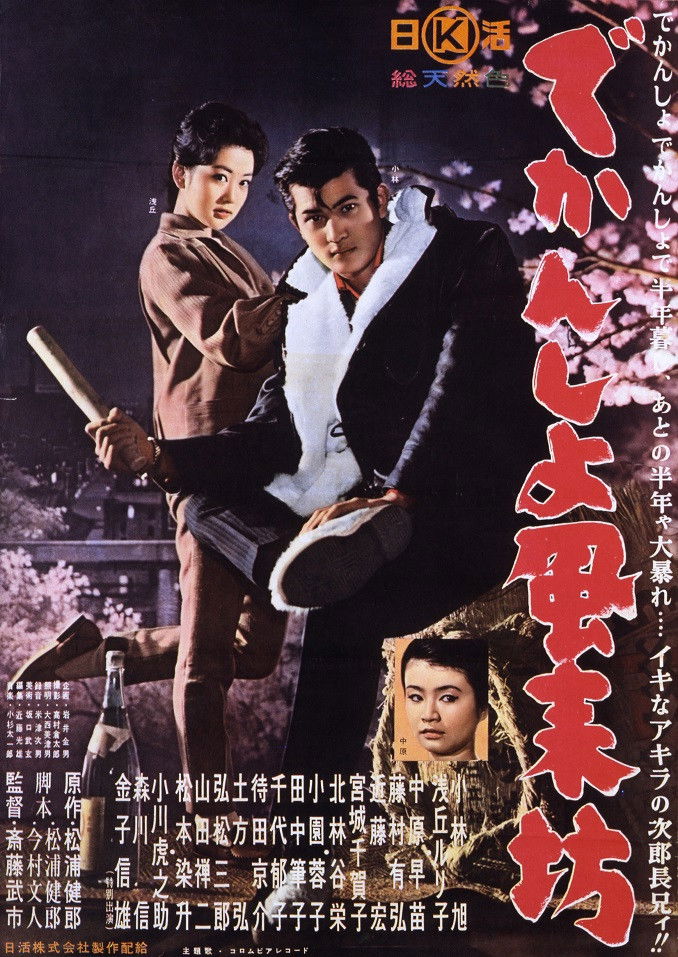
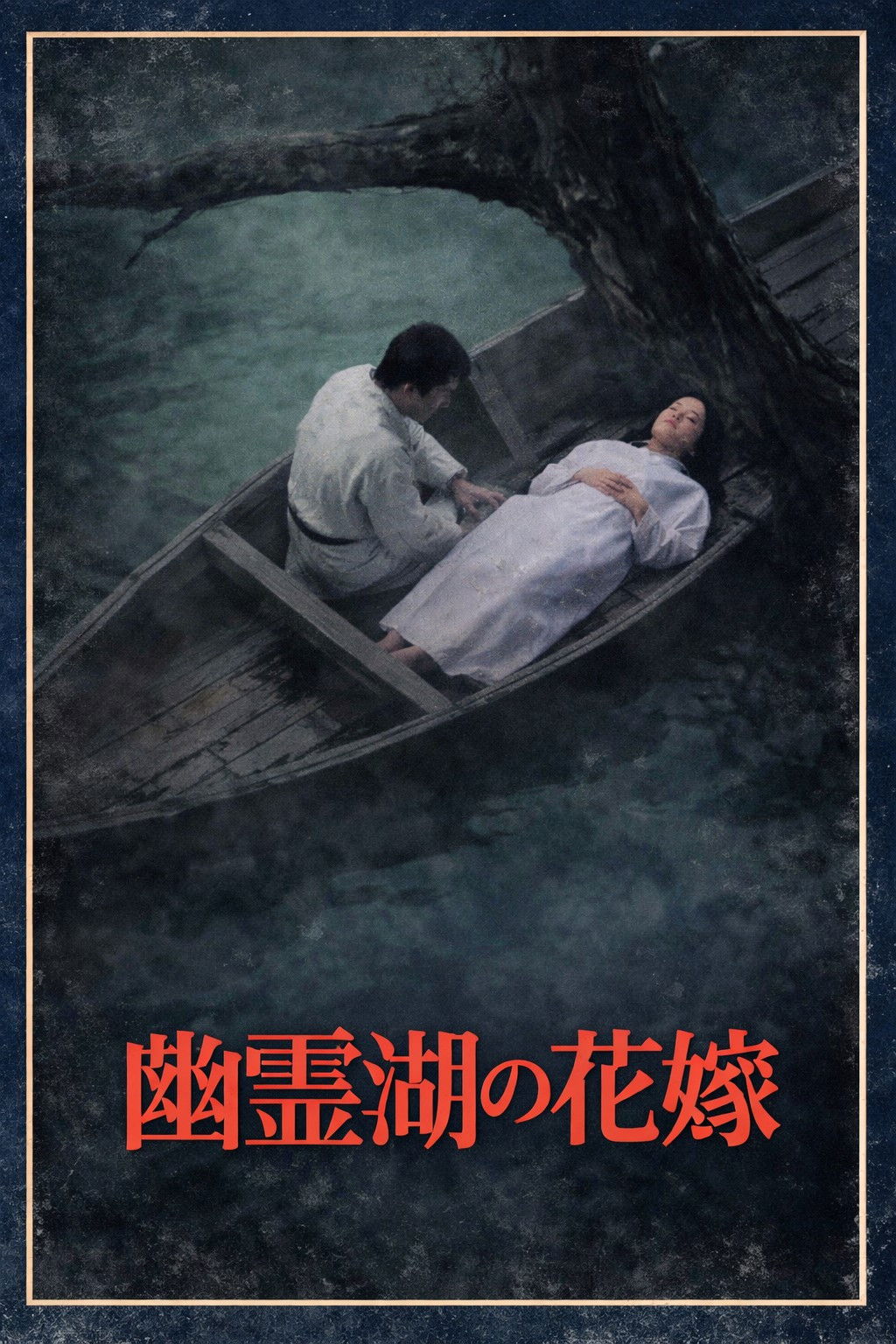
Inspector Uno and college student Yuko Nagai investigate another strange mystery.
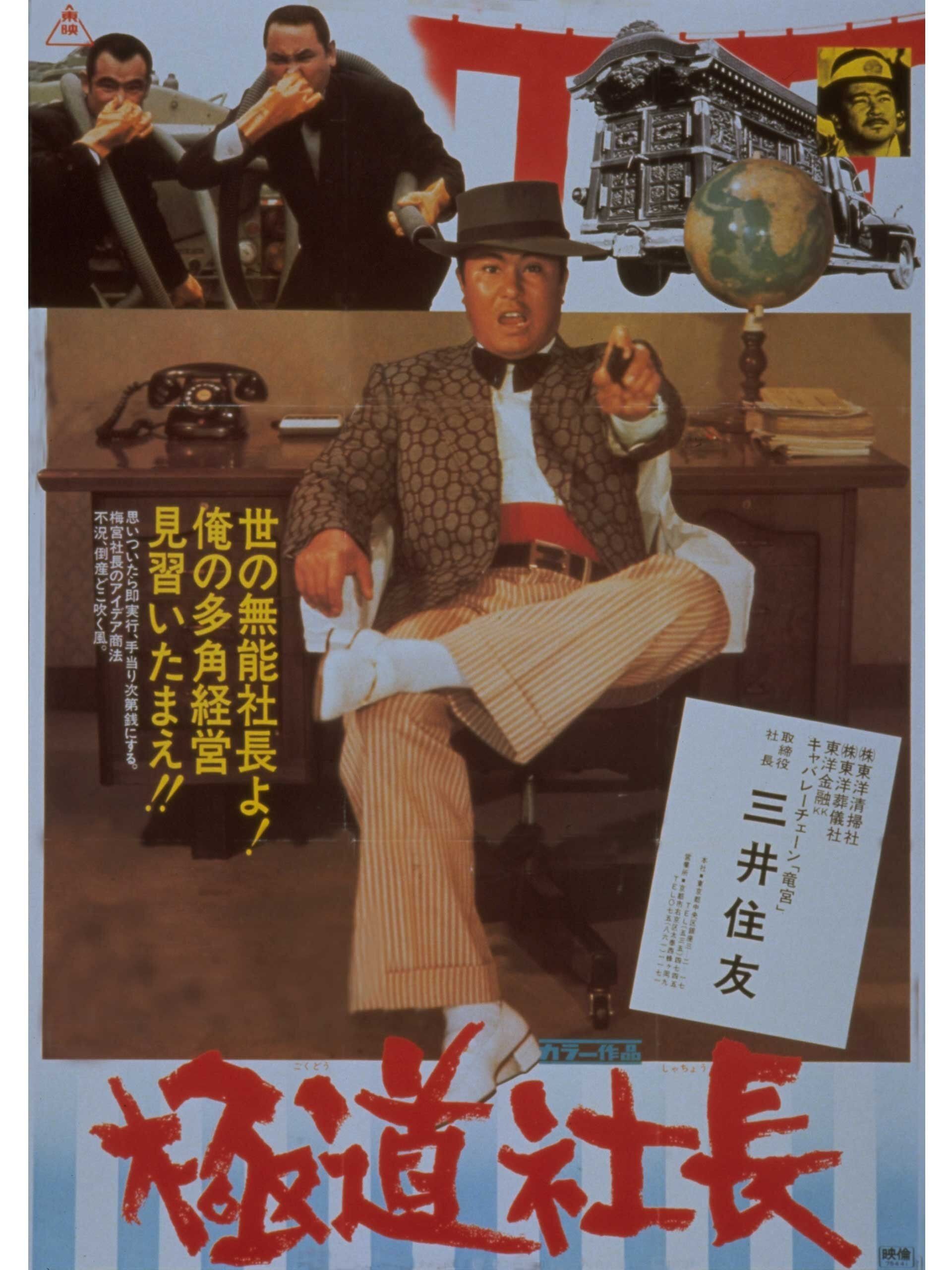
Daigoro Koiwa and Katsuo Rokujo, who met by chance, open a recession-resistant funeral business and a urinary treatment business, and put it on track, but each time, they are caught in the ploy of a money lender, Sumitomo Mitsui, who works a scam, and take over the management rights, and they are taken away, and they are satisfied with the employees of Toyo Kogyo led by Mitsui. Mitsui, who embarked on a multi-corner management, acquired the rights to the long-awaited cabaret "Ryokumiya" and led the store to a great prosperity by introducing the limited service "Jungle Bump". However, due to the informant of Yamawaki Kogyo, which runs a rival store, 'Ryokumiya' was suspended from business, and hostesses and boys were pulled out one after another.
A TV film based on the kidnapping and murder of 4 year old Yoshinobu Murakoshi.
This rare silent black & white and color Super-8 footage was shot with the camera of actor Kei Sato (Hachi in the film) during the production of Onibaba
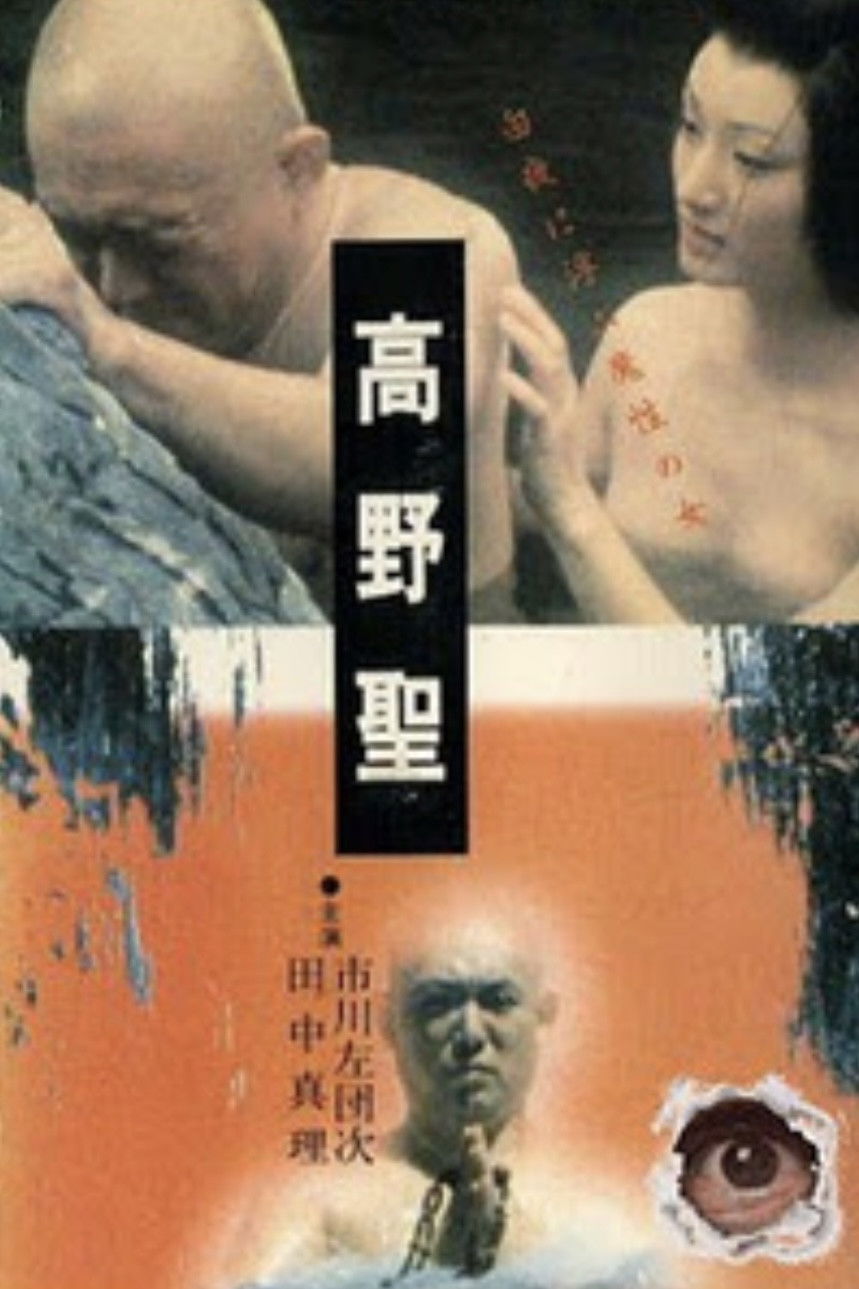
A young priest is on a personal pilgrimage for enlightenment through the snow covered trails of Mt. Koya in Wakayama prefecture, Japan. He is headed towards one of the many sacred gates/temples that are there. Misdirected by a local postman, the priest is sent straying off of the main road and onto the back roads which lead to a small secluded cottage. There he meets a beautiful but bewitching woman whose raw sexuality seems utterly impossible to resist. The woman subjects the priest to numerous carnal temptations in the hopes of breaking his sacred vows of celibacy. Over the next days, the priest's will is put to the test until eventually it breaks. His faith shattered, the priest goes mad when he discovers that the temptress that seduced him was the tortured spirit of a young woman who died horrifically with her lover in the Hiroshima atomic bomb attack.
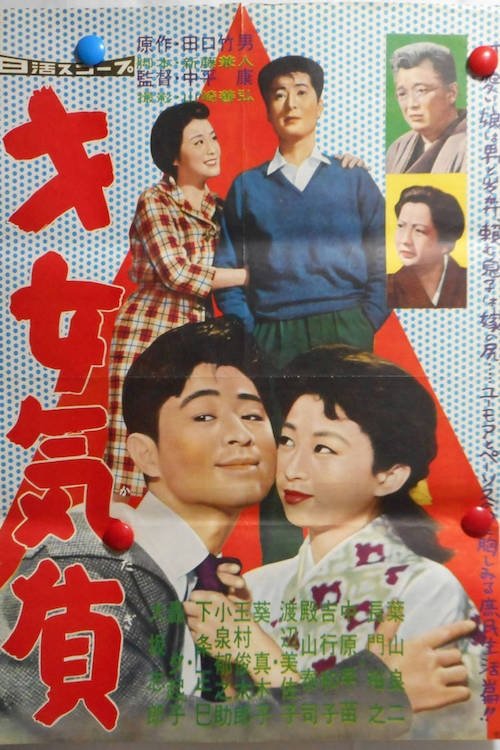
Set in an old merchant house in Kyoto, the film traces the passing of an era through the story of a parent and child.
1975 Toei movie.
1963 Toei film
1960 Toei war movie.
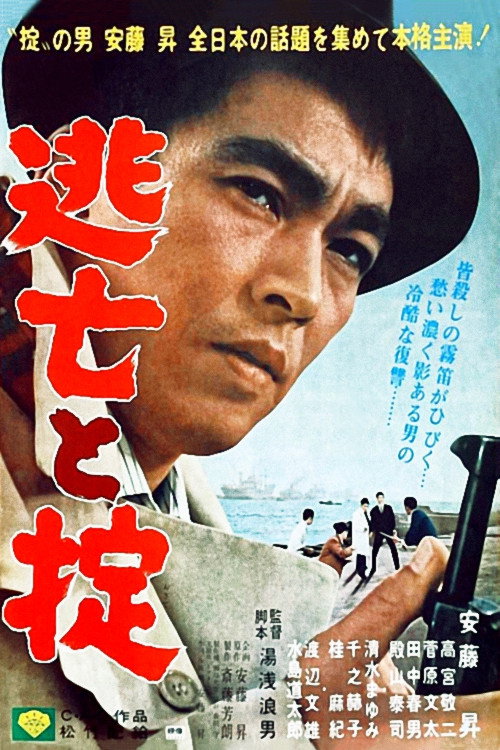
Minami Yoichiro is a gang member who has killed the boss of opponent clan. Before leaving Japan forever, he visits his sister's grave and becomes involved with a rival gang. He then discovers that his sister was murdered; also it becomes apparent that the pursuing detective has a personal reason for trying to capture him. In the end both he and the girl who was escaping with him are killed. The third film in Shochiku's series Law / Okite.
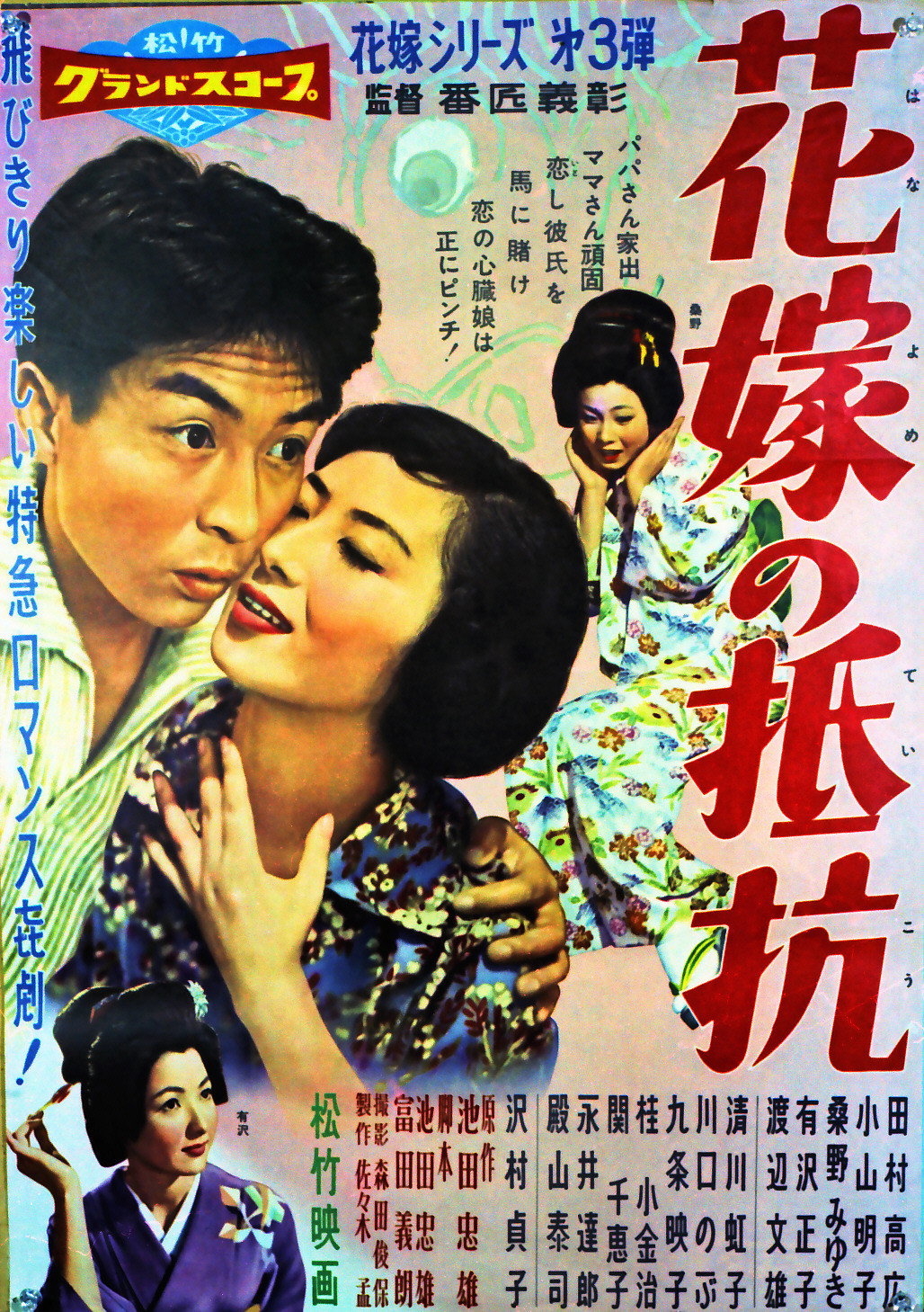
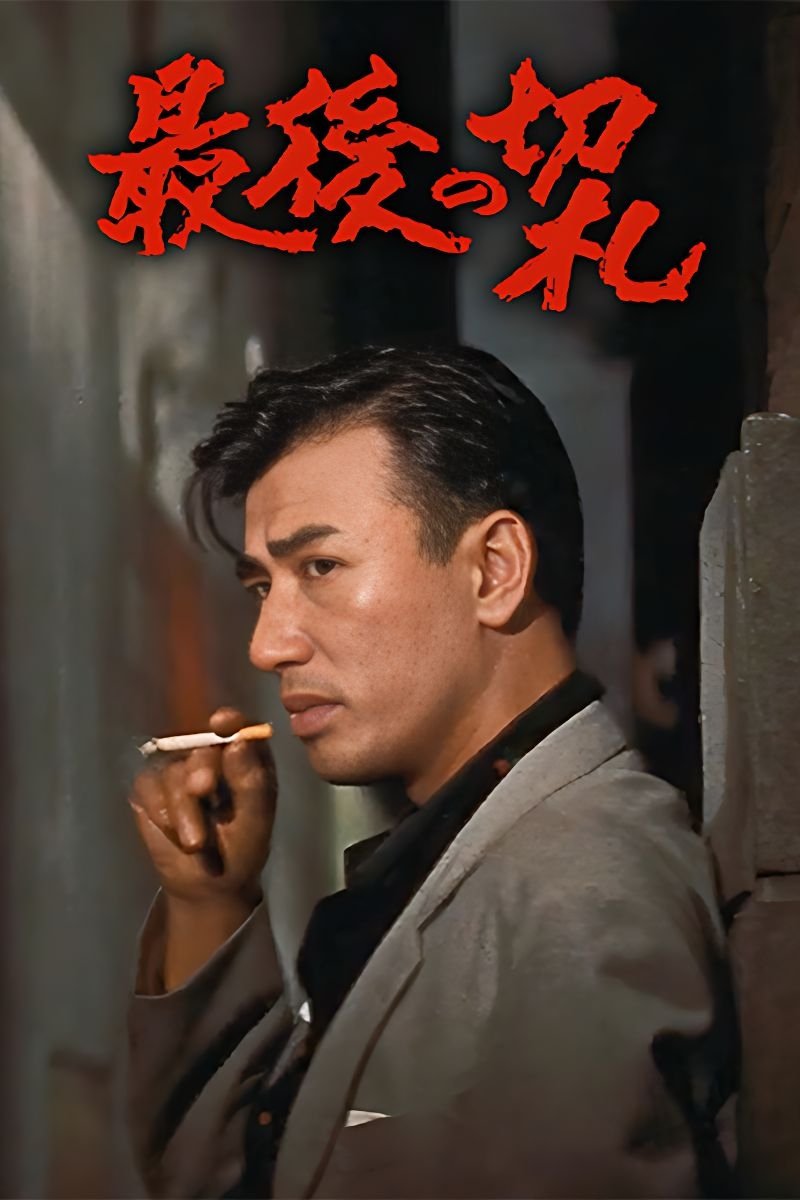
The actions and downfall of a man who lives a life of cold calculation, adapted from a Hideo Shirasaki novel.
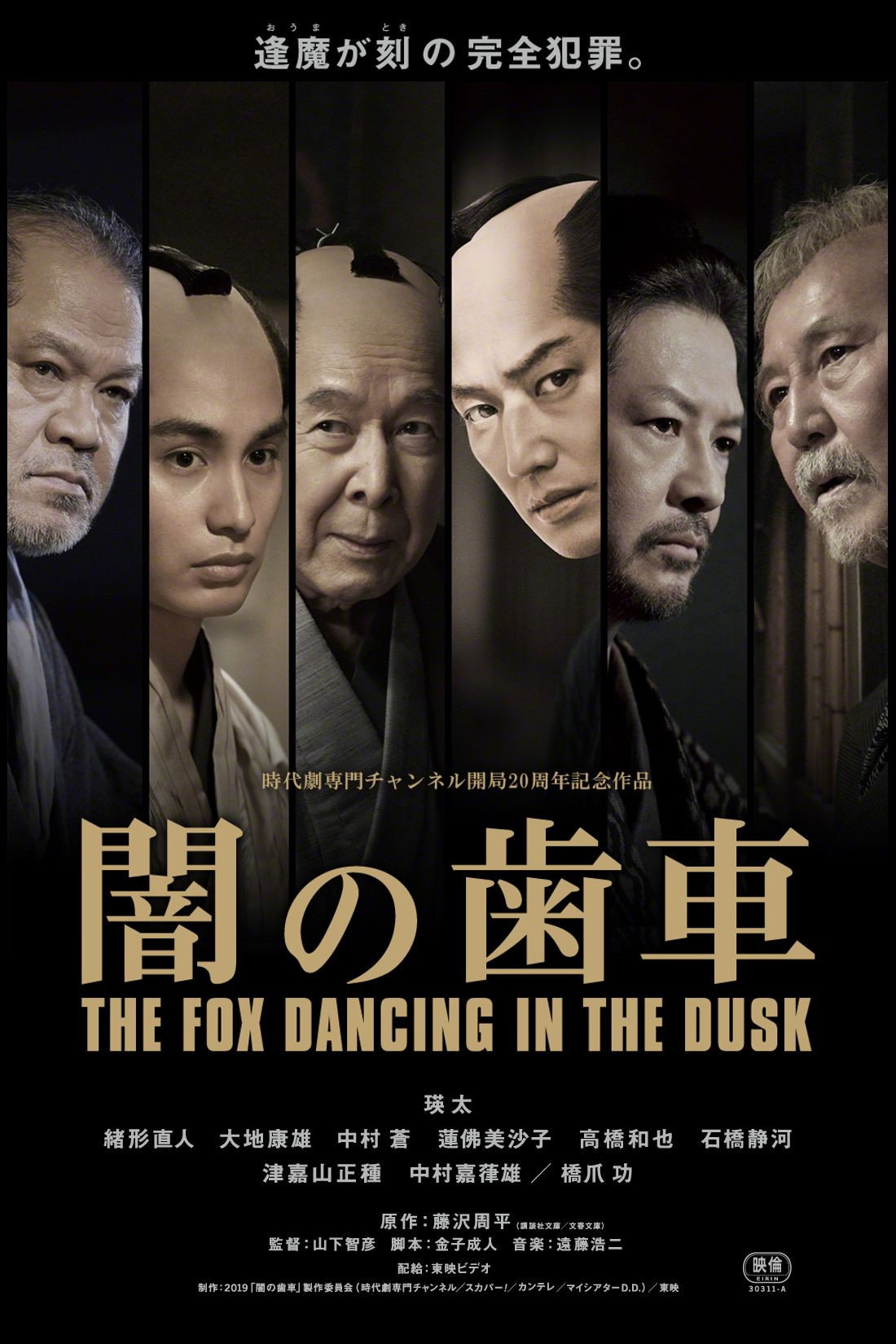
A heartfelt period drama that delicately portrays the joys and sorrows of a thief and the people living on the margins of society. Ihei, played by Tatsuya Nakadai, works as a painter by day. In reality, however, he is a skilled thief. To target the home of a moneylender’s mistress, he recruits a group of amateurs to join him. Men in need of large sums of money for various reasons begin to gather around Ihei, but…