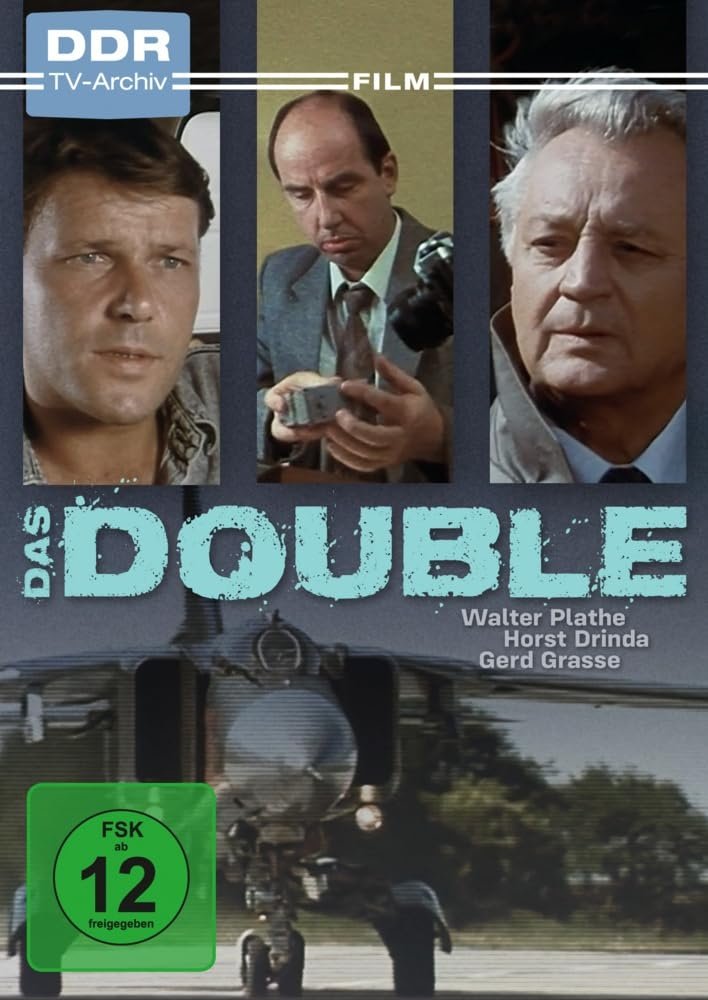
Helene Sonntag, 40, unmarried and a teacher. She has long dreamed of happy partnership, but things turn out as they should. In order to avoid the work overload caused by substitute teaching and vacation childcare, she is forced to make a move.

Two 17-year-olds, Werner Holt and Gilbert Wolzow, are pulled out of school and into Hitler's army. Gilbert becomes a fanatical soldier; but at the front, Werner begins to understand the senselessness of war.

Berlin in the 1930s - Adolf Hitler comes to power, communists and social democrats are persecuted, books are burned and Jewish citizens are ostracized. The outwardly shiny façade of Berlin, the capital of the Reich, reveals nothing of the unequal struggle of young people against the increasing oppression...

A young doctor has to spend a night in a lonely house near the transit highway. Unexpectedly, he witnesses East-West smuggling operations, which he manages to prevent at the last moment.

Early 1921: a man is on his way home. Gleb Chumalov, regimental commander, worker and Hero of the Order of the Red Banner, returns to his home town from the Civil War. The victory over the enemies of the Russian people gives him the conviction that a new, better time will dawn overnight. Gleb looks for his comrades from earlier years, but only finds people who are emaciated by their efforts. The cement works where he used to work has been plundered and abandoned. With great effort, Gleb and his comrades try to get the plant up and running again. The struggle seems to begin anew... It is the time after the victory of the “Great October Socialist Revolution“ and the time of building a new society.

It is the time before the First World War - in a fishing village on the Baltic Sea coast, the unusual love story of the young, ambitious lawyer Belling and the fun-loving actress Franziska begins. The young couple believes in career in the neighboring big city, would not be there the rich businessman of Elchem, who limits their love power of his money. Franziska has found an admirer and patron in the entrepreneur - a woman between two men who plays, but cleverly he makes the couple financially dependent on himself... The film adaptation of the novelle by Heinrich Mann describes the moral decay of a social layer fixed on success and money at the beginning of the 20th century.

Irene Klaussen, a brilliant, tomboyish Berlin student, falls for new classmate Peter Lemke. To prove herself, she follows him, first to a school dance in a borrowed gown, then to a year’s stint on a remote oil‐plant construction in Granow. Ostracized at first, she wins respect under FDJ secretary Anton by mastering every trade and helping him study for engineering school. After returning to Berlin, she discovers Peter’s infidelity and, disillusioned, goes back to Granow, finding true partnership and purpose with Anton.

The director of an art museum in Thuringia and an art dealer from Constance entered into an extremely lucrative business relationship. Director Trützschler illegally supplies Ms. Münzenberg with valuable works of art, which she smuggles into West Germany through an intermediary, abusing the transit routes. The business flourishes until they both fall into the CIA's intricate web. They are put under pressure and used to recruit a scientist from Jena. Will the GDR security forces succeed in thwarting the CIA's espionage operation...?
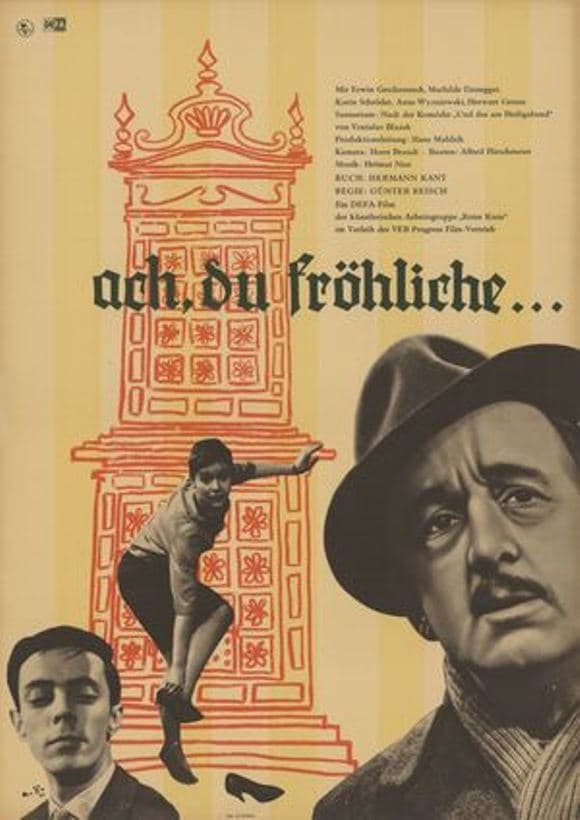
It was supposed to be a cozy Christmas evening with the family. Labor Director Walter Lörke was particularly looking forward to it. But then his daughter Anne surprised him with her future son-in-law Thomas Ostermann. And that's not all: Lörke is to become a grandfather. This doesn't suit him at all, especially as the young man clearly shows his critical attitude towards the state whose ideals Lörke has fought for all his life. An argument ensues - on Christmas Eve. Lörke leaves the apartment in a rage. But he is driven by unrest: He wants to know what kind of person his future son-in-law is and why he has such a negative attitude towards the state. It turns out that Thomas has had bitter experiences with the opportunistic attitudes of many adults and that, although he was the best student in his class, he was not admitted to university because of his critical opinions.

USA 1964: Three young men are arrested on suspicion of speeding. As it turns out, they are employees of a civil rights center in Mississippi who are fighting against the racist Ku Klux Klan. The disappearance of the activists leads to a political scandal in the USA. There are riots and demonstrations against the president's civil rights policy. Despite smear campaigns in the south of the USA, a trial is held in which the background is to be clarified. But the real perpetrators have their own laws...

1929: Marie Lehning, a farm worker from Warmsdorf on the Baltic Sea, falls in love with the fisherman's son Mingo. Both complete an apprenticeship in Lübeck. Marie wants to become a seamstress, Mingo a carpenter. After their first night of love, they swear eternal fidelity. But Marie has to return to the village, her mother is ill and her siblings are unprovided for. She starts working as a maid on a farm. Unexpectedly, she meets the young Kurt Meier from Berlin, whom she knows from before.


This elaborate two-part television film features a section from the life of communist worker leader Ernst Thälmann. It begins with the bloody riots on May 1, 1929 in Berlin, in which police officers shot at demonstrating workers, and ends with February 7, 1933, when Thälmann appeared as a speaker at the illegal meeting of the Central Committee of the Communist Party of Germany in goat neck. This period was marked by the struggle of the Communists against the ever stronger National Socialists and the rise of Adolf Hitler.

Maria is a record saleswoman by profession. She is lucky to have a job, because the year is 1930 and a major economic crisis has hit the world, accompanied by an army of unemployed people, especially in Germany. Maria is aware of her good fortune; in order to secure it, she has to do without many things. What business owner would employ an unmarried woman with a child in times like these? When Maria became pregnant, she, like many other women, had to become "active" and do something about this "misfortune". So she seeks "help" from a female doctor, trusting in her youth and hoping for better times when family happiness could come true for her.
In 1923, Judge Böhnsdorf and Inspector Dumke convict 22-year-old Fritz Bondersen of treason, accused of selling military secrets on the testimony of General Director Gotthardt, and sentence him to 15 years in a Zuchthaus. Despite his protestations of innocence, Bondersen can’t produce proof. Two years later, his fiancée Edith Volkmann, aided by journalist Günther Borchert, tracks down a French officer whose eyewitness account could discredit Gotthardt’s statement. Their quest to expose a massive fraud offers Bondersen a final hope for justice.
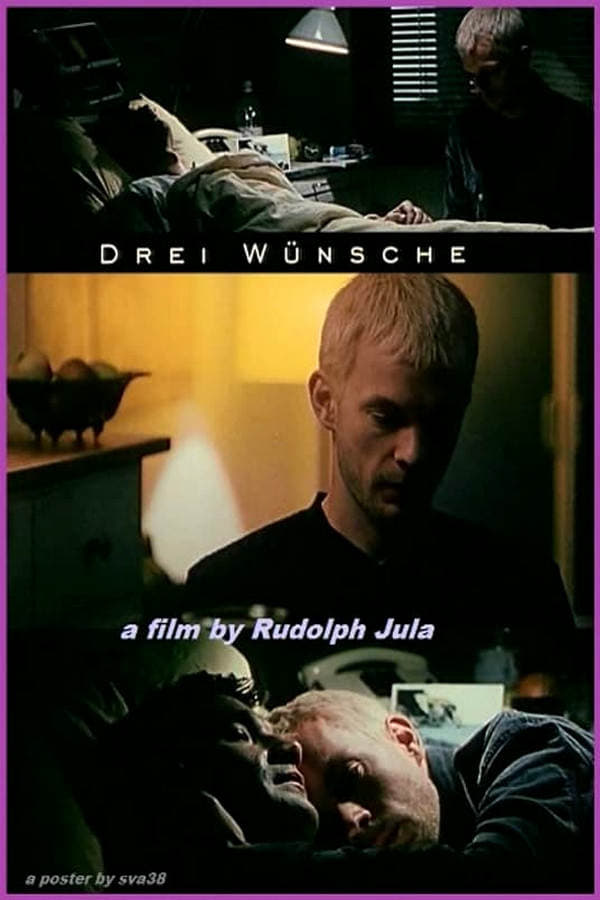
Before Martin dies, he asks Jan to carry out three wishes. Will Jan be up to making them happen? Sometimes, one can also be faced with other, unforeseen wishes.
Slovakian villagers towards the end of WW II are despairing as German troops fall back to their village.

Six episodes taking place the night the Berlin Wall came down.

Professor Wilkers saw the trip to Thailand as a welcome change. But already in Bangkok, the starting point of his research into the origin of the drugs whose abuse he is trying to combat as a member of an international commission, he encounters extreme contradictions. The Swiss doctor is tempted to solve them, as the claims of the rich silk manufacturer Tracy Blake sound truthful and bitter, yet extremely strange. Leo Wilkers decides to embark on a life-threatening venture: He moves into the mountains near the border with Burma. Up there, in the village of Muong Nan, whose headman is at the same time in prison in Bangkok worrying about who in the capital might be interested in his arrest, Wilkers learns about the necessity of poppy cultivation in these areas.

Götz von Bredow's elk-leather trousers have their own special meaning: whoever wears them cannot come to any harm. Only they must not be washed. The meticulous Mrs. Brigitte cleans them anyway - but they get lost because the squire Hans-Jürgen, who is guarding them, has to save the life of Eva von Bredow, who is floating in a wash barrel. Meanwhile, Privy Councillor Lindenberg has arrived at the Bredows' house and loses a large sum of money in the game that does not belong to him. He wants to make up for the loss with a robbery. Suspicion first falls on Bredow because his trousers were involved, but Lindenberg is convicted and sentenced to death. This throws the cavalry into turmoil, as robberies are an important source of income for them. The four of them march against the Elector, who is hunting in the Köpenicker Heide. But Bredow, who has his protective trousers back, comes to his aid.
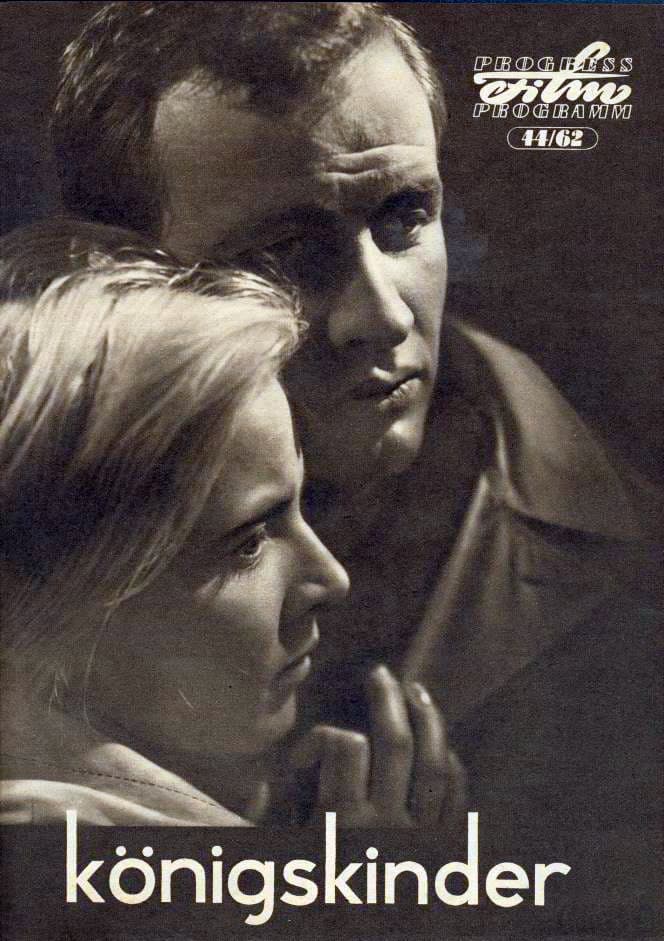
Magdalena and Michael have loved each other since they were children. But when the Nazis come to power, Michael rebels against the regime and is sentenced to fifteen years in a concentration camp. Magdalena, meanwhile, goes underground with the help of a friend and later immigrates to the Soviet Union. Michael, who has joined the Red Army, discovers on the way to Moscow that Magdalena is staying there. But when his plane lands, she is already on her way back to Germany. Michael hopes that one day, he and Magdalena will be reunited.
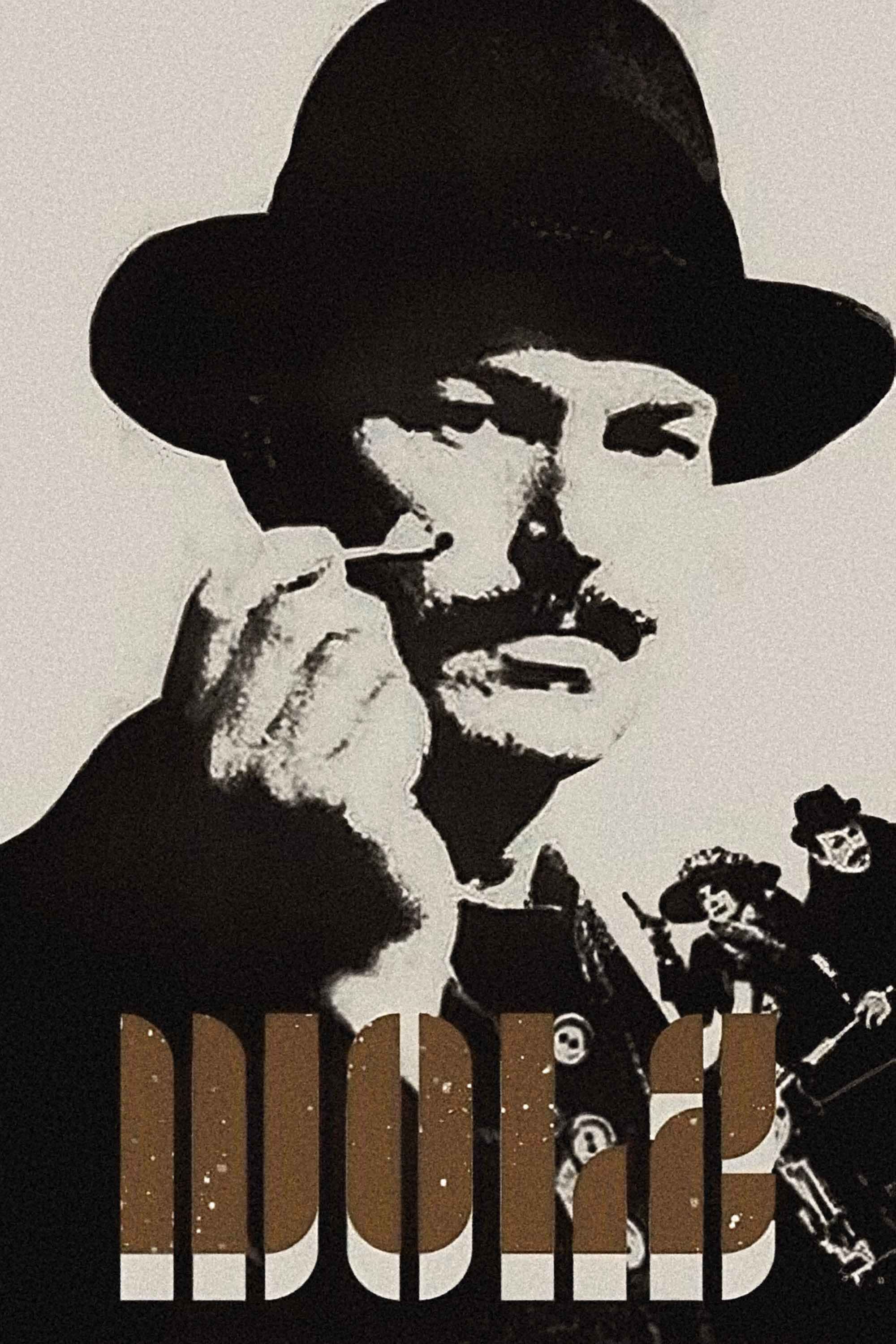
Soldier Ignaz Wolz returns from WWI with an immeasurable hatred of capitalist war profiteers. He decides to start his own revolution, but tries to stay away from the organized class struggle. He steals from the rich men and divides the wealth among the poor. One day, Wolz is arrested and sentenced to life in prison; seven years later he is released due to mass protests. More than ever, it is hard for him to fit in. He severs ties with his former companions, who reject his ideas, and leaves Germany.

In the communist Romania of Nicolae Ceausescu, a young Romanian woman marries a German citizen just to leave the country.

Dagny Juell was the doctors daughter who left Kongsvinger for Berlin to study music, and became famous painter Edvard Munchs mistress and model. Than she ran into August Strindberg. They had a brief affair but after a couple of weeks Dagny left him for Stanisław Przybyszewski.

Dentist Dr. Franke's selfless willingness to help is much appreciated by neighbors and acquaintances in the GDR. There is only one exception: Biggi, the beautiful coach of the ice hockey team that Dr. Franke looks after. Biggi thinks Dr. Franke is a particularly clumsy little man. But there's also Nurse Agnes, who once again has to stick her nose into matters that don't really concern her, and thus helps things along...

Dr. Gerd Thiessen, an experienced veterinarian, takes up a new job at a publicly owned manor. His research colleagues are less than thrilled about his ideas and modification proposals. Thus, the pretty and confident veterinarian Sabine Ladenbach becomes his only ally and soon they fall in love with each other. When Thiessen’s wife Eva notices that her husband is growing away from her, she starts to fight for him. Eventually, Thiessen realizes that Eva is the woman of his life, both privately and professionally. At the same time, he figures out that he needs the support of his team to achieve success in his field.
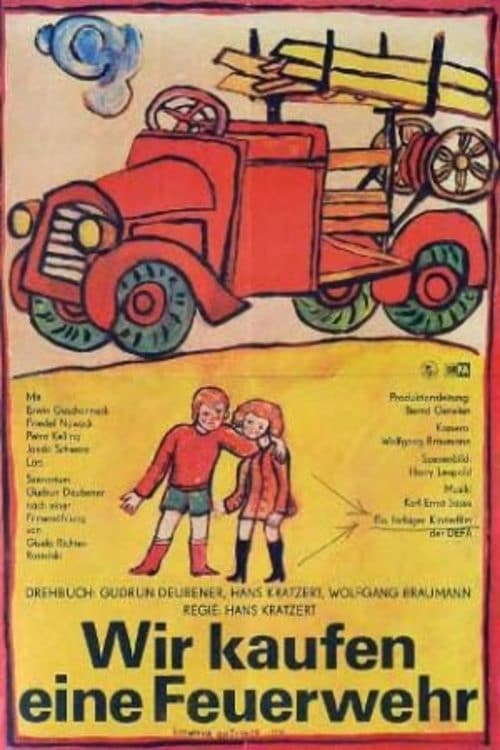
Little Matti and his friends are restoring the old abandoned fire truck .

After the accidental death of her mother, 12 year old Nicki must care for the family particularly her two young siblings.

Josef Neumann has always been an outsider to society, and at the age of 30, he has already lived an adventurous life when he comes to the GDR. He was raised as a foundling by nuns, made an apprenticeship as a construction worker, went to the Foreign Legion, and was a seaman and a tramp. Now, he is working at the Warnow shipyard. Brigadier Bruno has a lot of sympathy and patience with the unconventional Josef, but Josef cannot fall in line with strict orders and again and again acts against the rules.

The movie is based on a true story from the end of WWI, in Transylvania. A nobleman who owned some land in Transylvania returns home to find a part of his fortune burned to ashes during late 1918 when power was trasfered from AustroHungary to Romania. Looking for revenge, he ordered the killing of innocent Romanian peasants from a neighbouring village, which he suspected to be guilty for the losses he suffered. A Romanian officer from Romanian Transylvanian Volunteers Corp, decides to help the villagers to face the menace of the nobleman

Adam, Evchen, and Manni are looking at the moon through their home-made telescope. Evchen isn't interested, and dismisses the moon as a lump of cheese. Manni, who is a big fan of technology, sees satellites and a car driving over the moon's surface. But Adam hears the moon speak, and hears it ask for flowers to cover its surface. From then on, Adam is determined to breed a kind of flower that can grow on the moon.
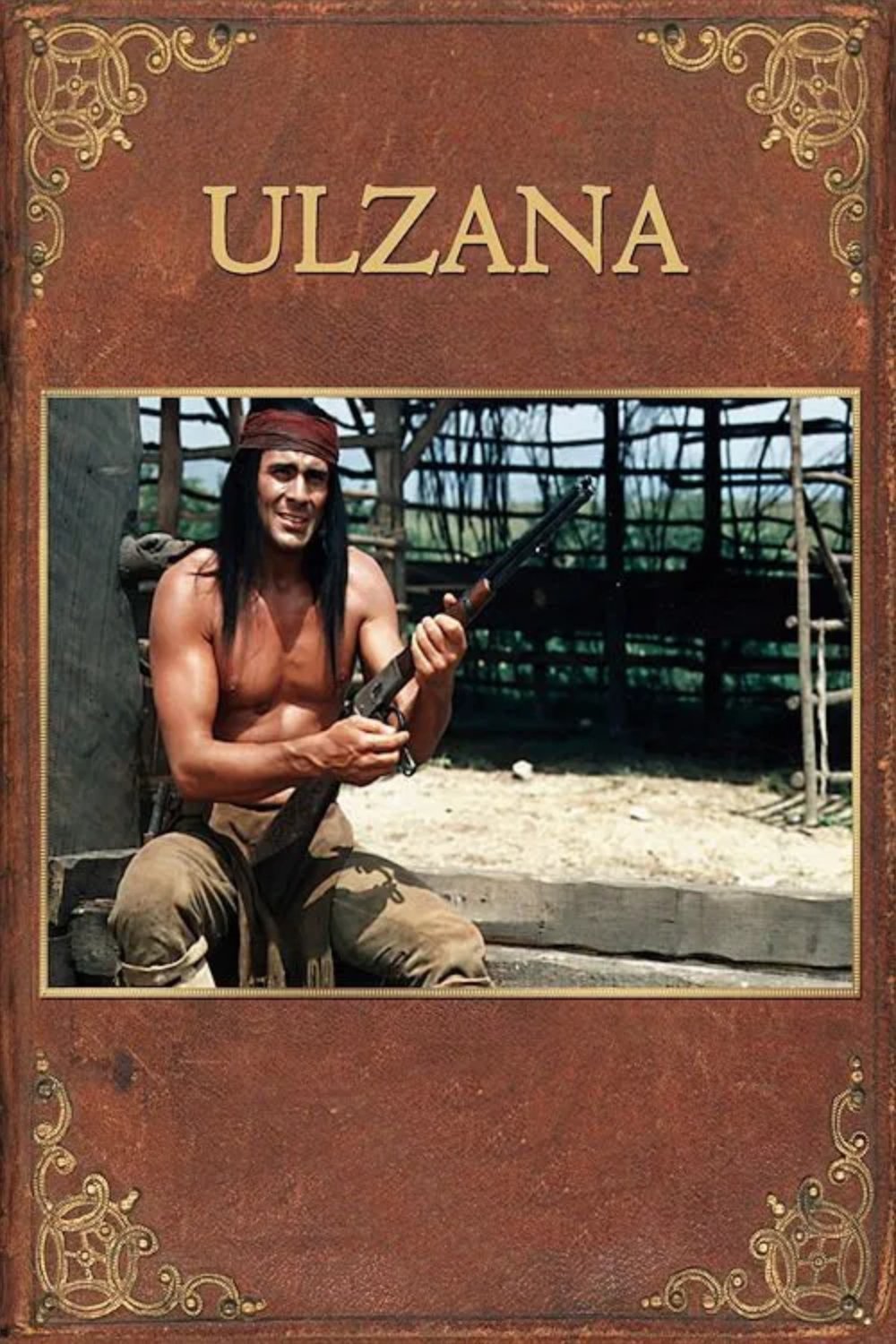
This rather unconventional Western movie is set in the middle of the 19th century in Arizona. The film portrays an Indian tribe, the Mimbreno Appacheans, who are celebrating their Thanksgiving, building an irrigation plant, carrying on commerce, and trying to settle down in a rather constricted territory. But the confrontation with the white Americans changes their situation as the mercantile "gentlemen" want to prevent the Indian tribe to become independent from the white men′s business practices. Thus, they destroy the irrigation plant and chase the Indian tribe in an inhospitable territory where they cannot survive. Led by their chief Ulzana, the Appacheans thus start a bitter fight to preserve their habitat.

1982: East German actor Erwin Gregorek travels to Hamburg to shoot screen tests for a film about the sinking of the ocean-liner Cap Arcona in 1945 - a catastrophe he himself survived as a concentration camp prisoner.

The six-part film series tells in impressive stages of the work of important doctors at the internationally renowned Berlin hospital in its medical and contemporary historical scope. The period spans the beginning of the 19th century to the Second World War, bringing the viewer close to the work of great medical professionals: Robert Koch, Ferdinand Sauerbruch, Rudolf Virchow and others. Film overview: • "The man from Jena" (Christoph Wilhelm Hufeland). • "The Little Doctor" (Rudolf Virchow) • "Krisis" (Robert Koch). • "Doctor in Uniform" (Theodor Brugsch and Georg Friedrich Nicolai). • "The seemingly impossible" (Walter Stoeckel) • "Die dunklen Jahre"(Ferdinand Sauerbruch)
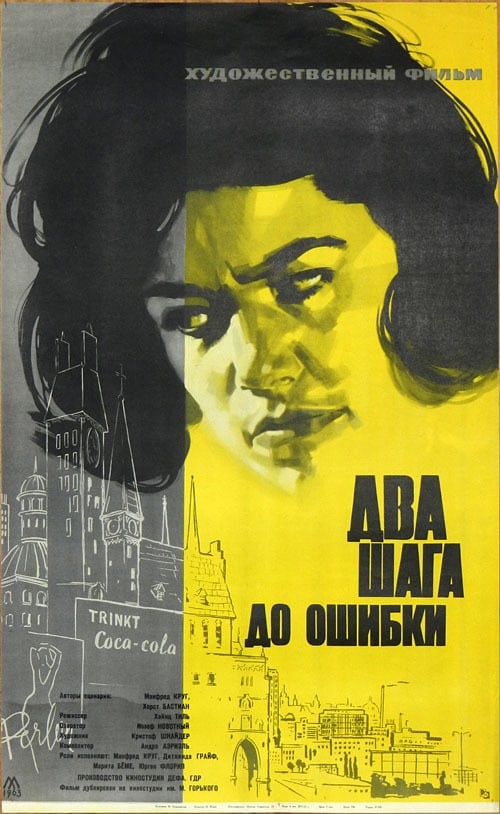
Carolin lives in the East and works in a West Berlin bar. After the building of the wall she tries to persuade Georg, a soldier of the border regiment, to let her cross over. He falls in love with her and defends her against a West German pimp with a punch to the jaw.

Civil engineer Berger is looking for his mother and learns that she has died and was last in a home run by the notorious construction company Huberty. When the company boss Huberty becomes the victim of an assassination attempt shortly afterwards, suspicion falls on Berger, but Huberty's death is linked to the fraudulent bankruptcy of the construction company. The boss's wife is found to be the culprit. An unpleasant surprise awaits Berger, a civil engineer from Hamburg, when he returns home after years of working in Mexico: his mother has disappeared. Her tracks are lost in a "retirement home" run by the Huberty Society. Berger suspects that his mother has been the victim of a crime. He hunts a murderer and becomes the hunted himself...
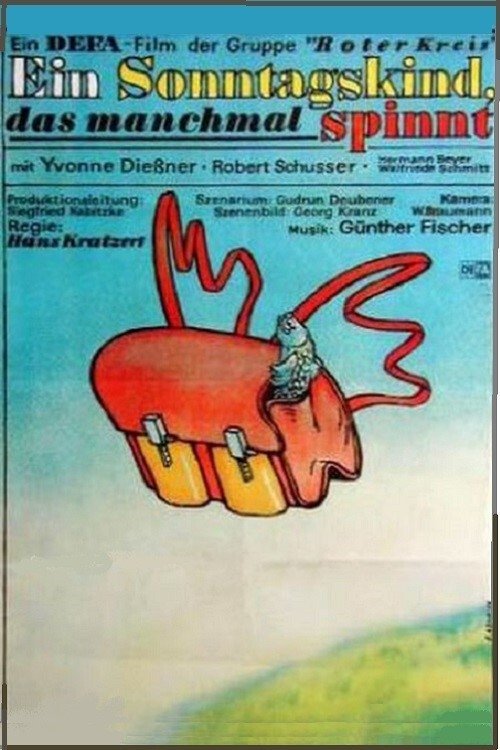
10-year-old Kathy Montag moves to a big city in Brandenburg. Before that, she lived in the Harz Mountains together with her father Peter. Her mother has died a few years ago. The girl finds her new home very exciting, and since Kathy takes an interest in everything she encounters, she keeps finding herself in peculiar situations such as a brigade party or the shooting of a historical epic movie. Her classmates consider her an oddball and even her father is unhappy about his daughter′s development.


Hannes Peters is delighted that he can escape his unloved job as a chef and join the navy. He is overjoyed to be assigned as a hydroacoustician. But then the cook falls ill and Hannes is transferred to the galley. He resists, serves inedible dumplings and oversalted coffee, but it doesn't help! For a while, he has to do his duty as a smutje and finally realizes that everyone in the navy is in the same boat.

The story of a young German boy and his father who befriend a Jewish family during WWII.
Aschenbrödel (Cinderella), the fairy tale, is a fantastic mixture of the miraculous and the everyday, based on the well-known folk tale by the Brothers Grimm. The film is based on the book of the same name by Evgeny Schwartz, who adapted the fairy tale. The miracles created by Grimm are transformed by Schwartz, who makes it clear that the greatest miracle is love.
The hunt for gold - that is the motive that leads different types of adventurers to the gold mining town of Dawson in Alaska. The main characters in this story based on Jack London’s story are Kid and Shorty. Their greed for the precious metal leads the adventurers into extreme ventures and wild speculation. The Kid and Shorty take advantage of this and start buying up land because they supposedly want to build a new town. Everyone else now believes that great gold discoveries are to be expected on this land. This gives Kid and Shorty their big coup; at the same time they take revenge on their adversary Wild Water, who had once cheated them in the "egg trade".