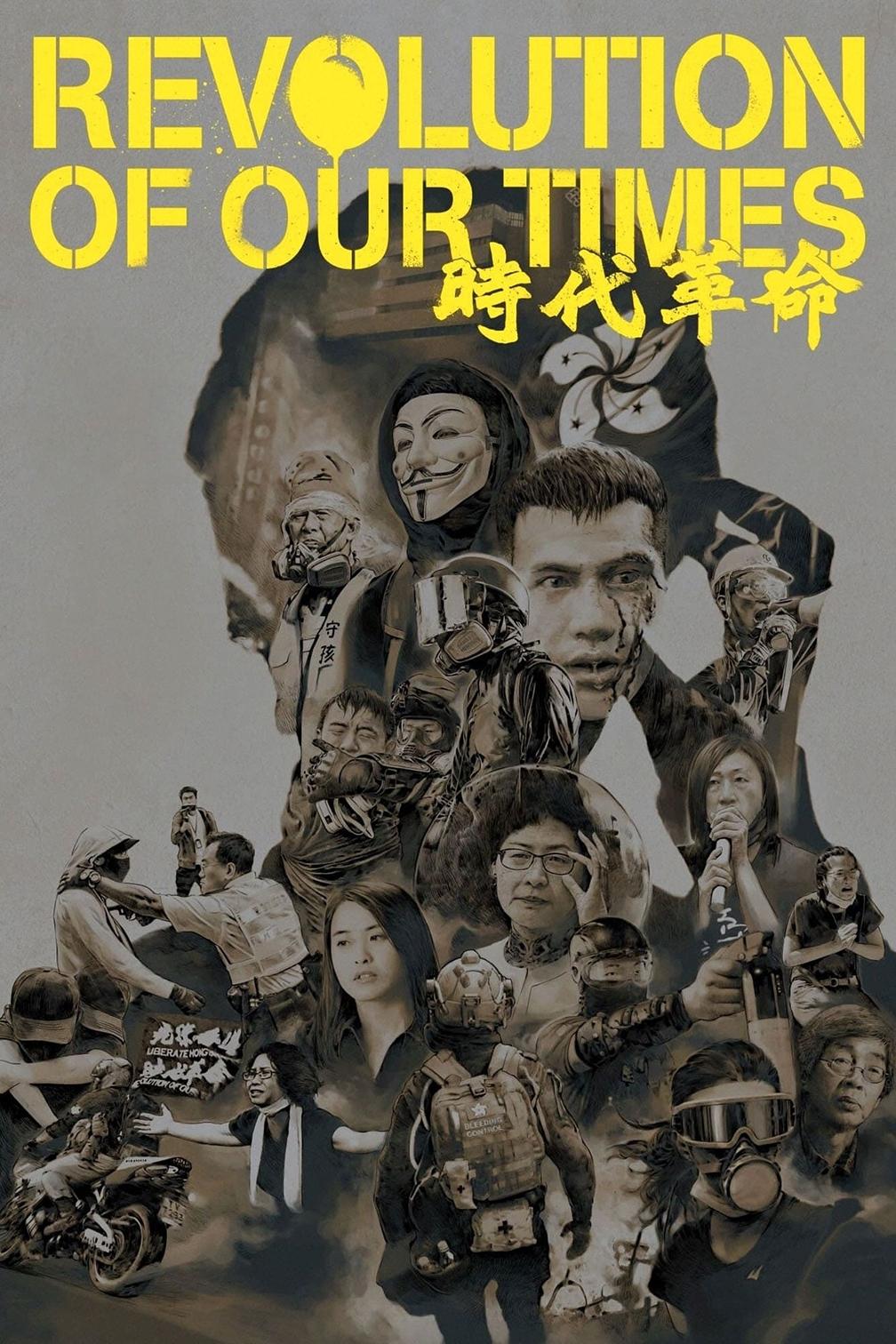
Throughout Hong Kong’s history, Hongkongers have fought for freedom and democracy but have yet to succeed. In 2019, a controversial extradition bill was introduced that would allow Hongkongers to be tried in mainland China. This decision spurred massive protests, riots, and resistance against heavy-handed Chinese rule over the City-State. Award-winning director Kiwi Chow documents the events to tell the story of the movement, with both a macro view of its historical context and footage and interviews from protestors on the front lines.
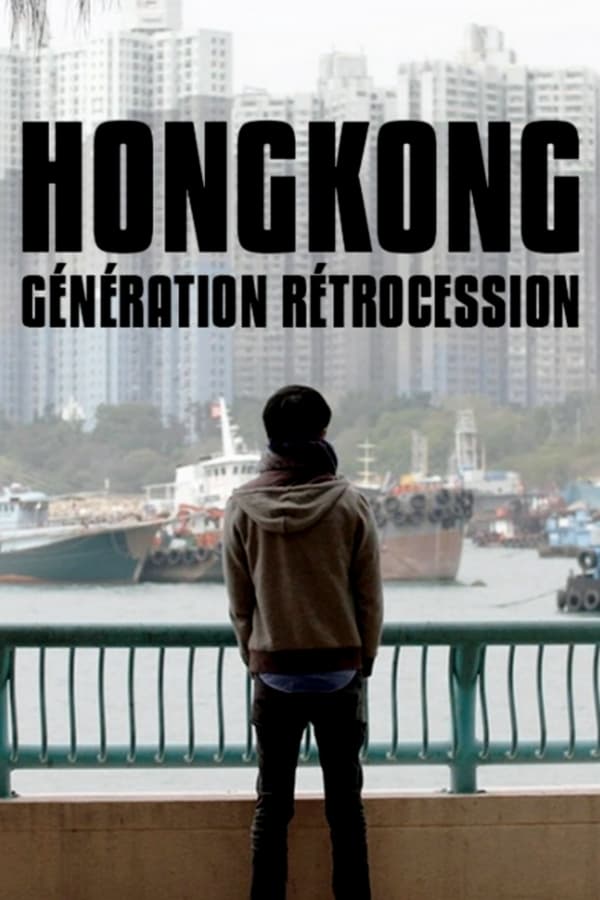
In 2017, twenty years after the British handed over Hong Kong to China in 1997, young people, more politicized than any previous generation and proud of their land, do not feel Chinese and actively fight against the oligarchs who want to subdue them to China's authoritarian power.
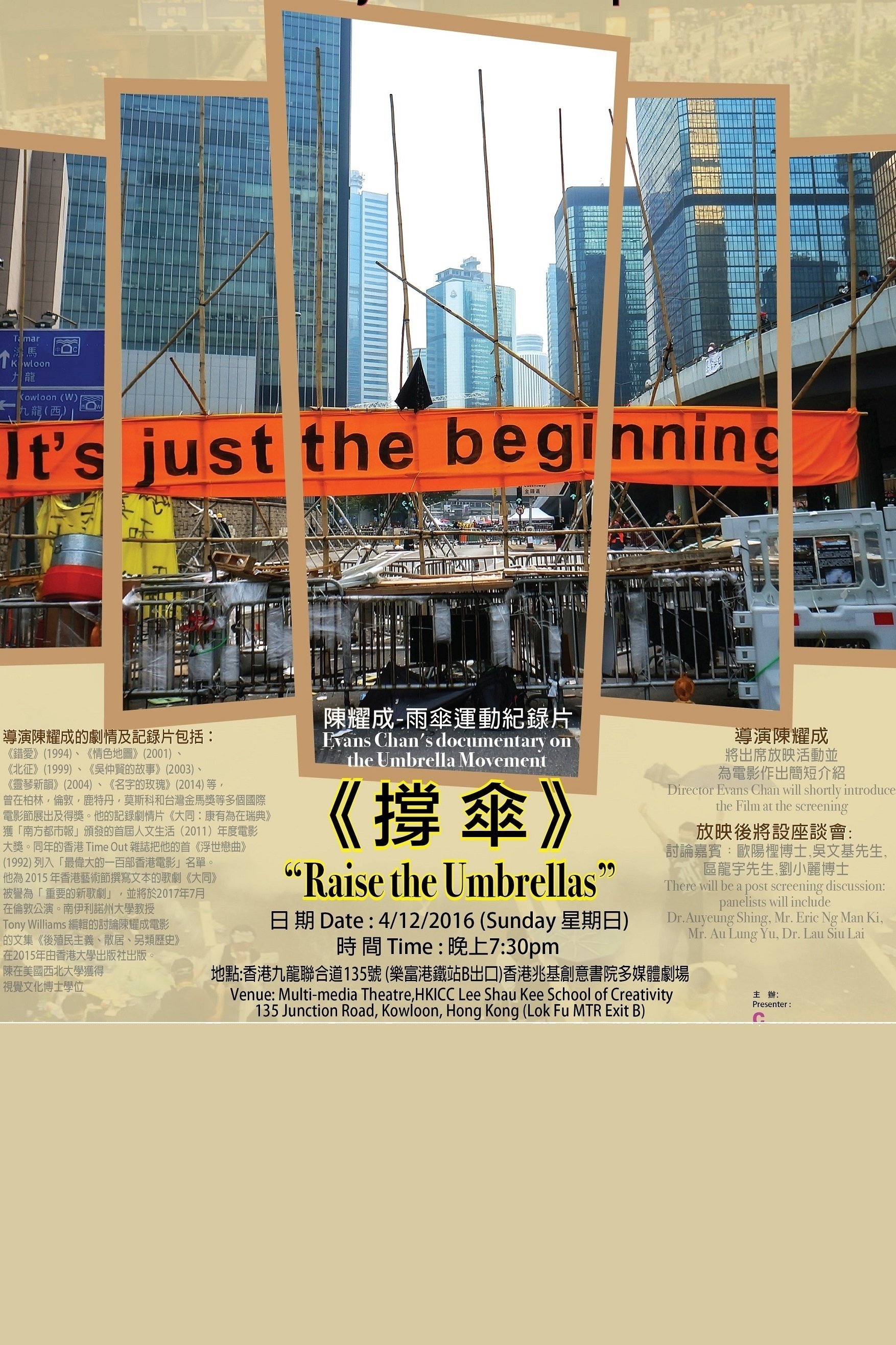
Four years later, Hong Kong’s 2014 democratic Umbrella Movement has been nominated for a Nobel Peace Prize, yet political backlash against protesters has intensified. Repeatedly the target of censorship*, Raise the Umbrellas traces the lineage of the massive Hong Kong protest to the global Occupy movement, 1989 Tiananmen, and its democratic struggles since British colonial days. Highlights range from the Umbrella Movement’s eco-awareness and its burgeoning aspiration for independence, to its empowerment of women -- “umbrella mothers” -- and the rainbow-bridging activism of LGBTQ iconic artists. Incisive and intimate, driven by stirring on-site footage in a major Asian metropolis riven by protest, Umbrellas includes anti-Occupy views that lay bare the sheer political risk for post-colonial Hong Kong’s universal-suffragist striving to define its autonomy within China.
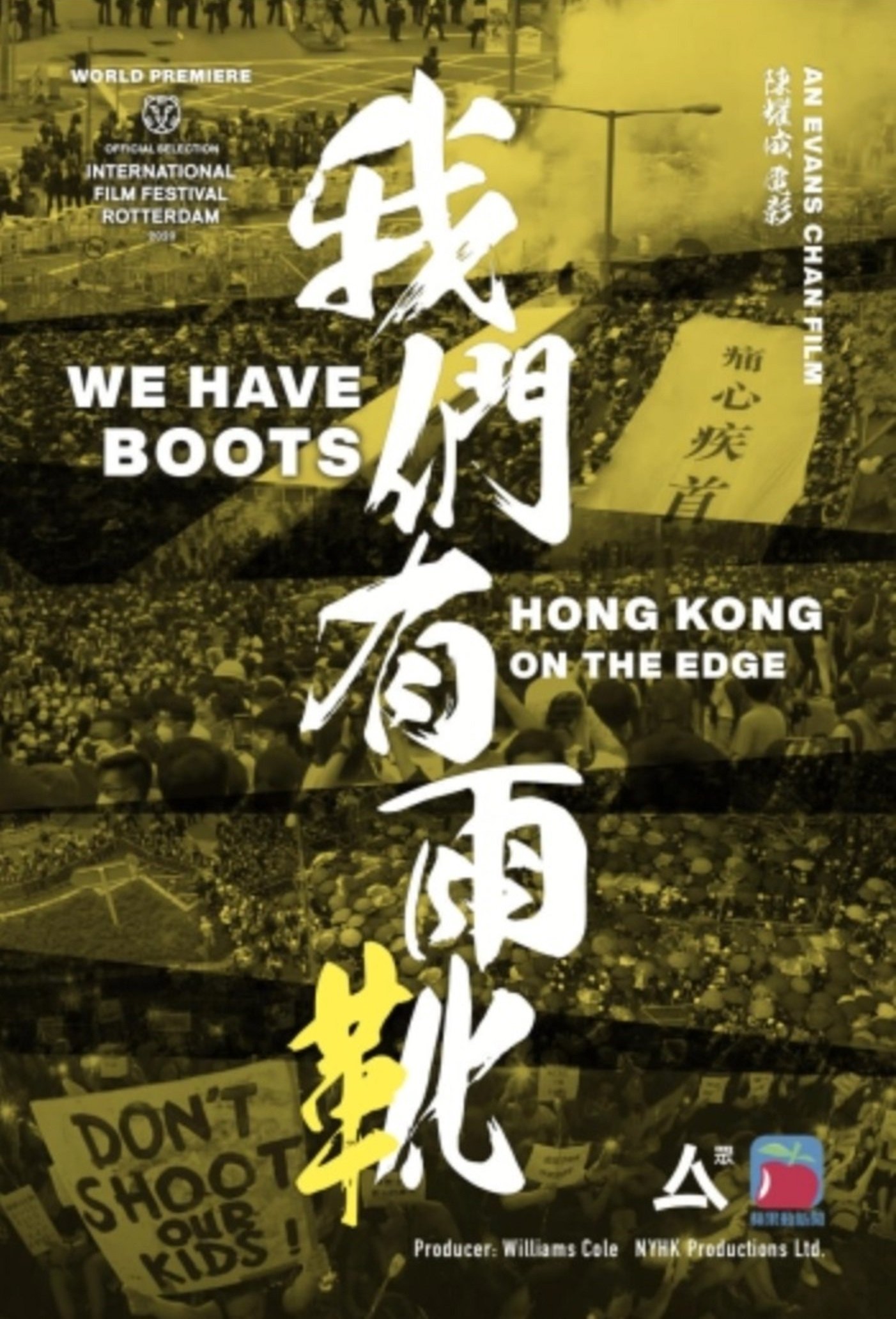
The Umbrella Movement of 2014, also known as the Occupy Movement, paved the way for Hong Kong’s current upheavals, but unfolded in significantly different ways. This creative documentary focuses on the intellectual, political, and discursive underpinnings of the social and political actions of 2014, before fast-forwarding to 2019. A range of thoughtful and engaged intellectuals, students, scholars, activists, and artists including Benny Tai, Chan Kin-man, Ray Wong, and Agnes Chow (many of whom are facing imprisonment for their democratic activism) articulate a range of philosophies, viewpoints and emotions, set against Hong Kong’s spectacular urban background of skyscrapers, night lights, and street-occupying mass movements.