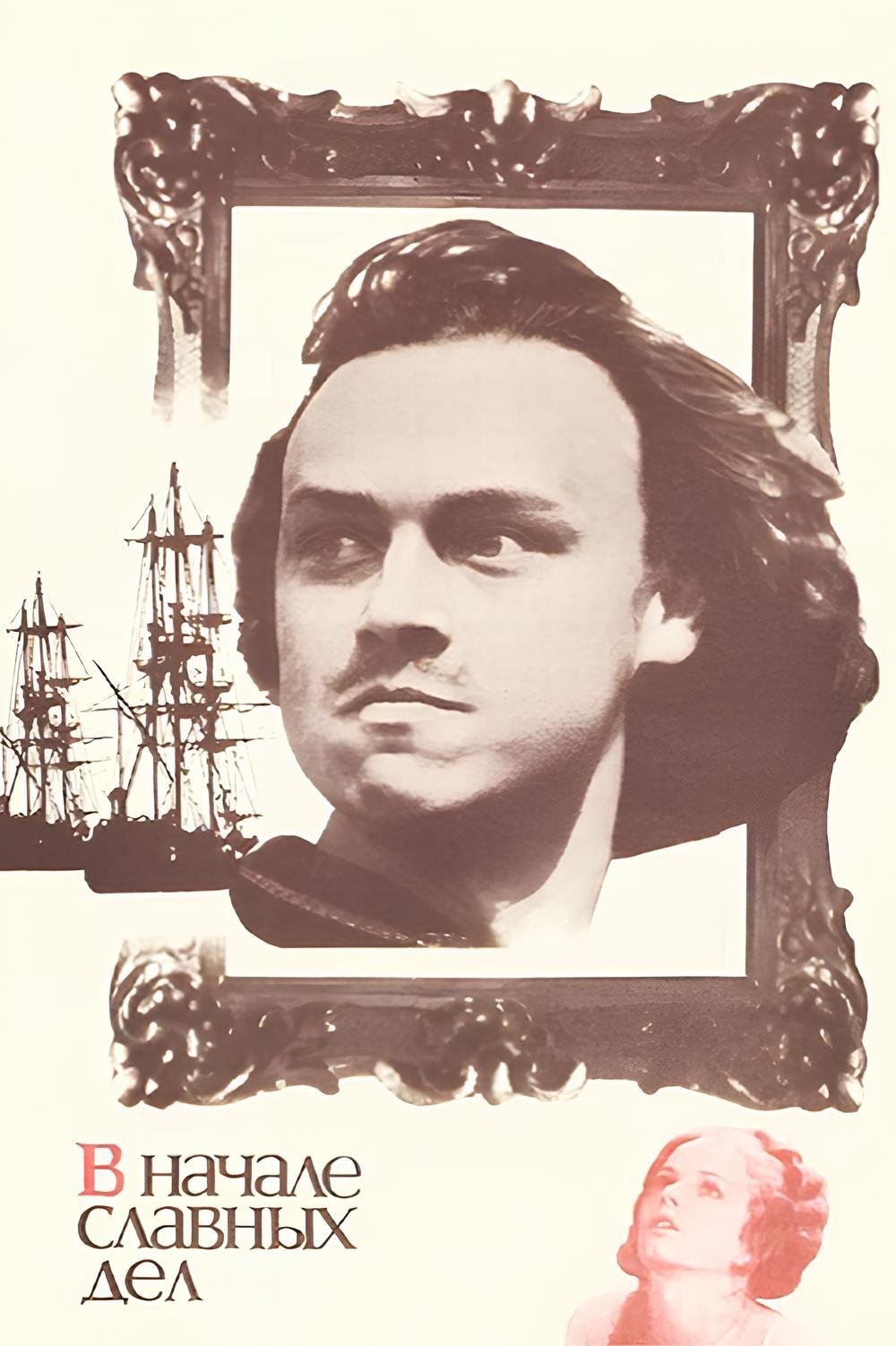
Two 17-year-olds, Werner Holt and Gilbert Wolzow, are pulled out of school and into Hitler's army. Gilbert becomes a fanatical soldier; but at the front, Werner begins to understand the senselessness of war.

GDR border guard Gunter Rist is a young man from humble homes. During a swimming competition he meets Penny, a professor’s daughter from a good family, and they fall in love. However, their different social backgrounds get in the way of their happiness: Penny’s friends make it obvious that they are not willing to accept Gunter in their group. Although Penny takes Gunter’s side, she doubts if love can overcome all obstacles. In this state, she falls for the advances of her ex-boyfriend Bob and joins him on vacation. In the meantime, Gunter has an accident and is hospitalized. In the hospital, he meets the nurse Li who seems to be perfect for him.

During the Napoleanic Wars, members of the Prussian Lützow Free Corps steal a French war chest from the house of collaborator Kerstinn, but their captain Friesen is captured and sentenced to death. But Friesen is saved by French Sergeant Fleuron and they flee the occupied city together. Kerstinn's daughter Marie is disgusted by her father's disloyalty and has also fallen in love with Friesen. When she learns about a trap that is being set for Lützow Free Corps, she sets out to warn them with the help of her father's clerk Püttchen, a Lützow sympathizer.

High-school senior Peter considers the adults around him to be hypocritical, self-congratulatory, and immersed in the past. He gets suspended for writing an essay that his teachers consider to be a challenge to the state. Just Don't Think I'll Cry became one of twelve films and film projects-almost an entire year's production-that were banned in 1965-1966 due to their alleged anti-socialist aspects. Although scenes and dialogs were altered and the end was reshot twice, officials condemned this title as "particularly harmful." In 1989, cinematographer Ost restored the original version, and this and most of the other banned films were finally screened in January 1990. Belatedly, they were acclaimed as masterpieces of critical realism.
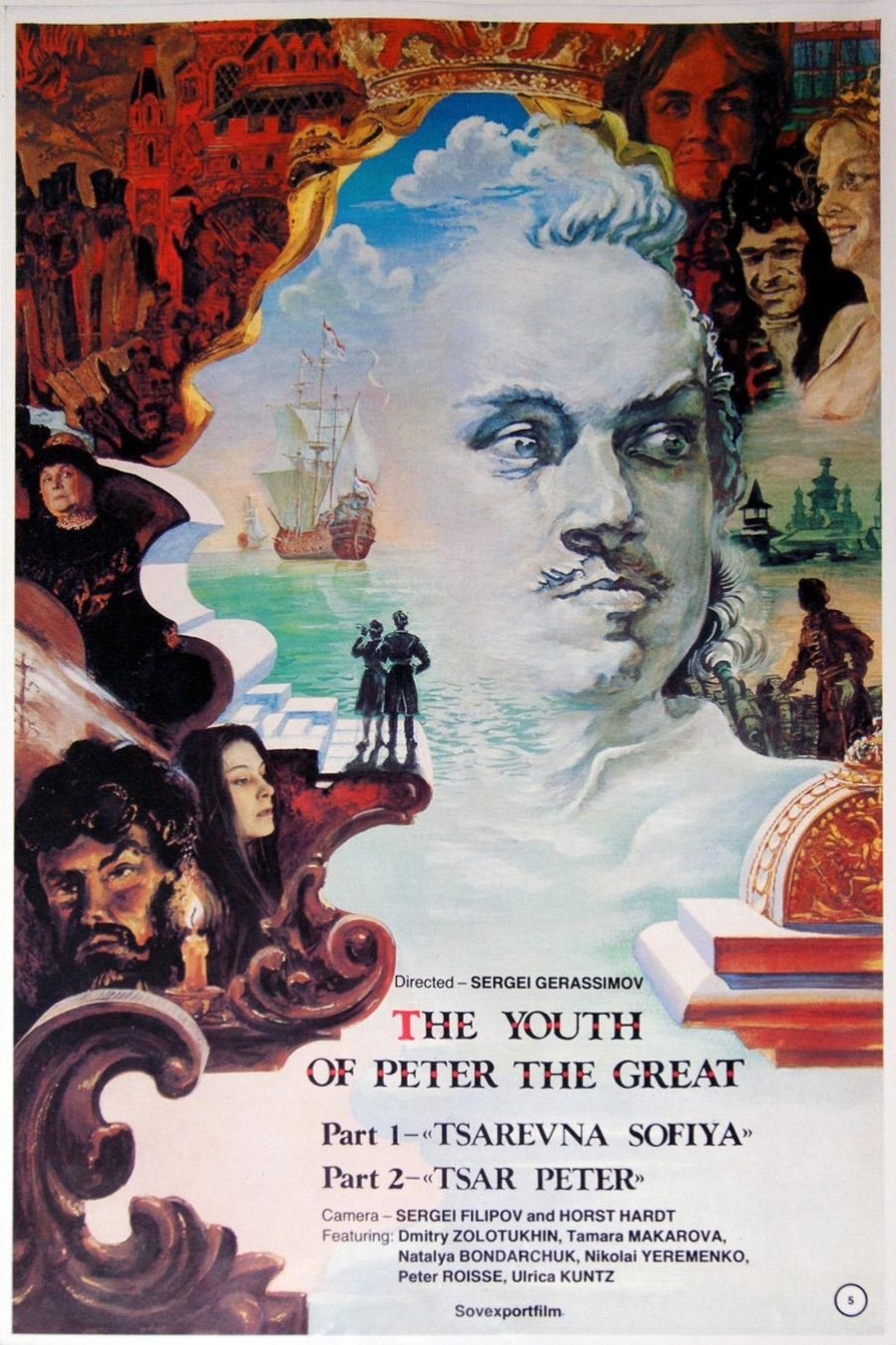
The years of the tsar’s adolescence and youth were permeated with deadly danger coming from some of the Boyars, the rebellious Streltsy and Tsarevna Sophia who aspired for power. But already at that early time Peter demonstrates a profound, bright intellect, a strong will and the sense of purpose, which help him disarm both his open and secret enemies.
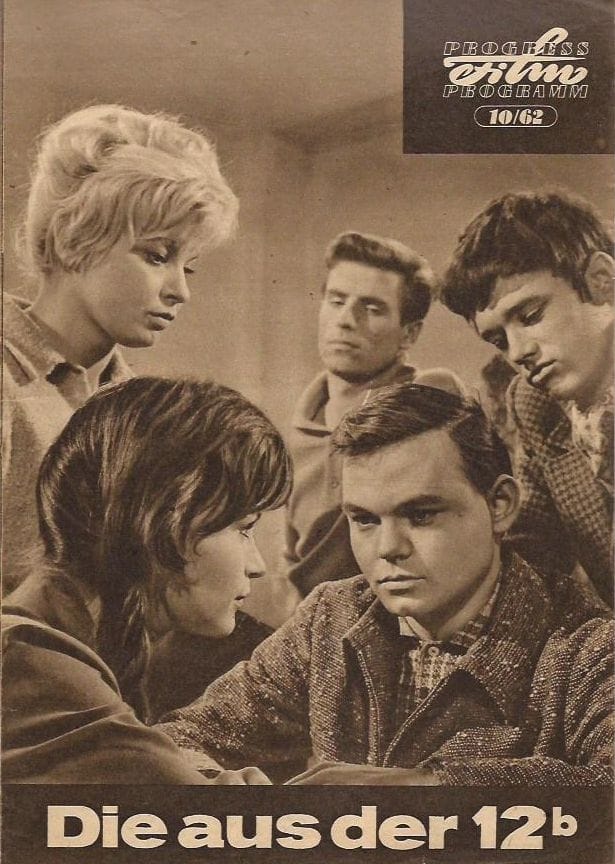
German teacher Miss Platzke starts working in a graduating class. Since she is young and inexperienced, the students soon consider her incapable of doing her job. Their disrespectful and harsh behavior makes Miss Platzke even more insecure, and she reacts with rigidity: On the last day before winter break she orders them to write an unannounced essay, thereby provoking a spontaneous strike.
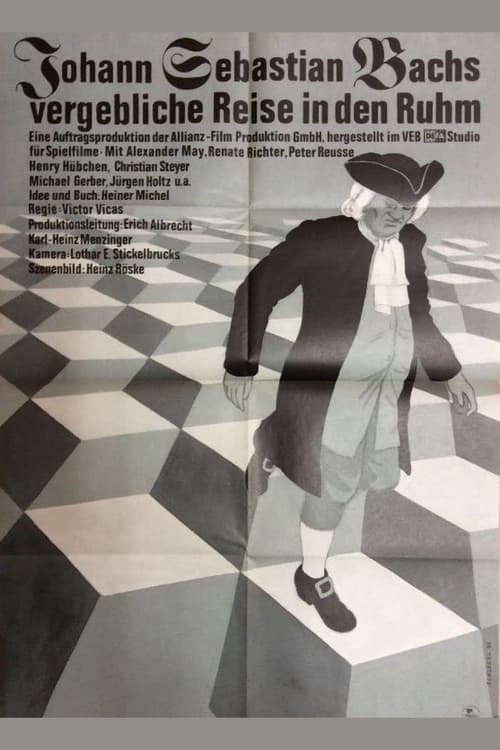
The last journey of Thomaskantor Johann Sebastian Bach leads from Leipzig to Potsdam. Already 60 years old, he hopes that an audition with the Prussian King Frederick II will not only bring him artistic recognition and renewed appreciation, but also an end to his grueling financial worries.
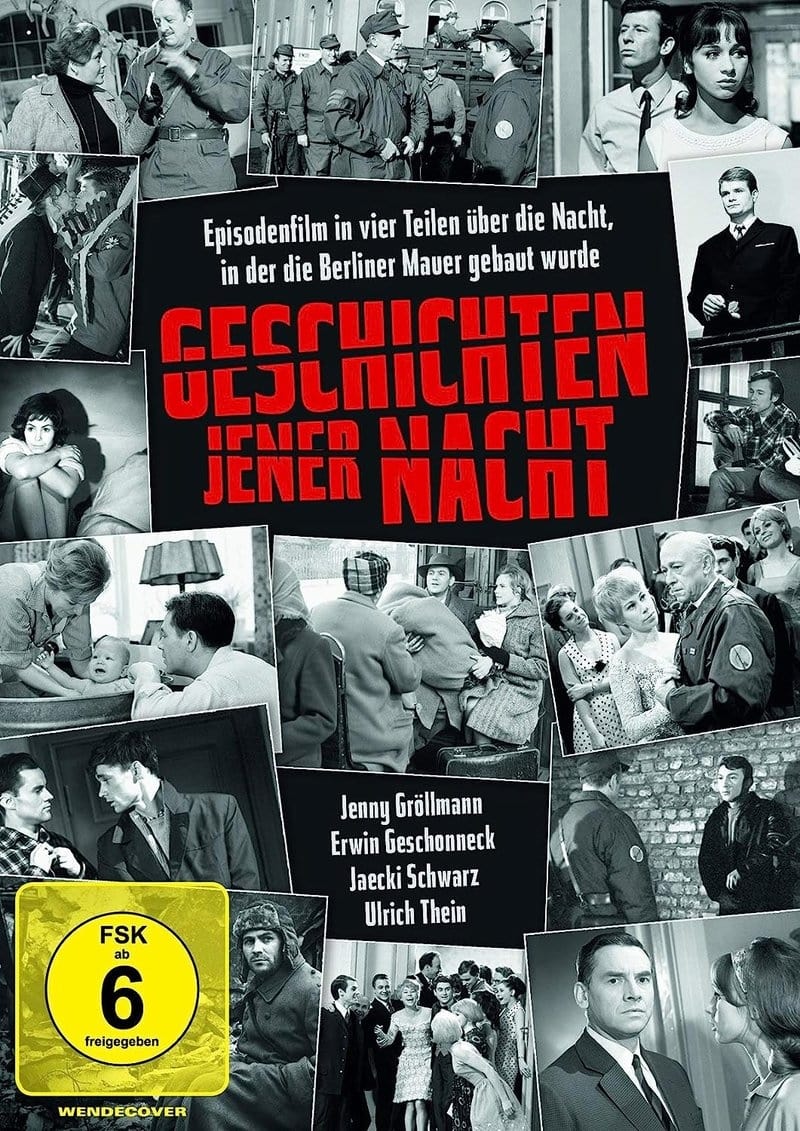
Four directors - four styles - four episodes, all relating the events of a single night which has entered the history books: August 12-13, 1961. There are thousands of complex narratives connected with the frontier drawn through the middle of Berlin, and each episode relates the story of a difficult decision made on that night...

Major Bert Harkus takes over the artillery regiment in Jesnack after graduating from the military academy. The troop proudly presents itself during an exercise. But apart from some good results in shooting, Harkus soon realizes that there are a few problems. As he does not believe that constant combat readiness is guaranteed, he orders far-reaching changes and does not only make friends. Only gradually do the troops pull themselves together.
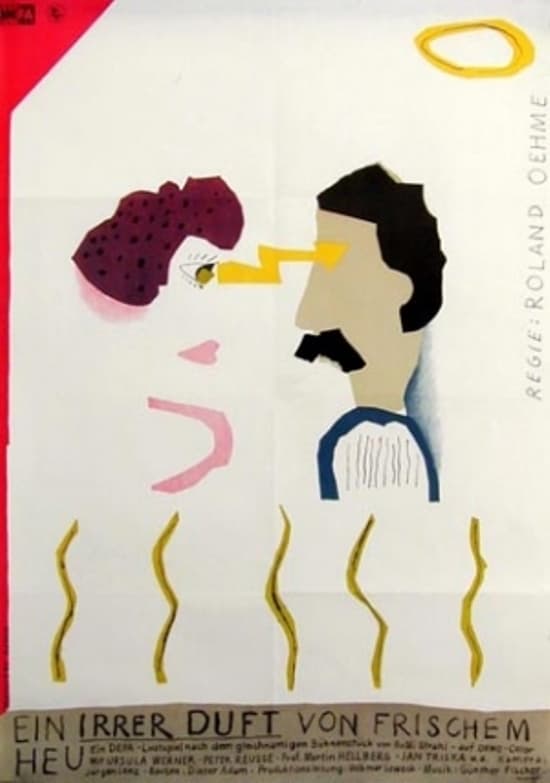
Signs and wonders are said to be happening in Trutzlaff, a small village in Mecklenburg. The party secretary of the local LPG, Mattes Mathias, has the "second face", which has been passed down from generation to generation in his family and is first mentioned in the witches' church chronicle in 1681. This special bond with the church lives on to this day. Mattes engages in a constant but creative competition with Pastor Himmelknecht. But it is not only his weather forecasts that come true every day. With his miraculous powers, Mattes tracks down lost things and heals the sick. Mattes' reputation reaches far beyond the village of Trutzlaff to the district town. A letter from the village cobbler has even reached the Vatican. Both here and there, people have pricked up their ears and want to get to the bottom of the matter. ... The only one who keeps a clear head is Mattes. But then there is "The crazy smell of fresh hay"!
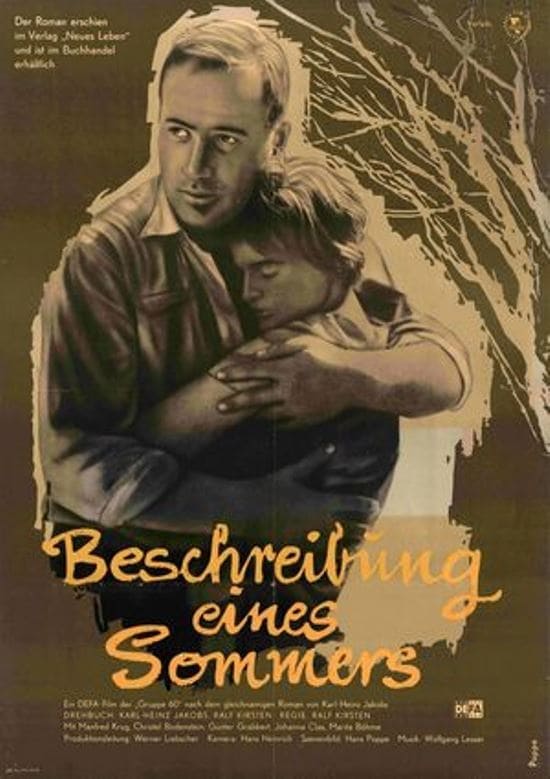
In the late fifties a large industrial complex was built near Schwedt, in the GDR. This low budget film tells about the voluntary participation of the brigades of the Freie Deutsche Jugend in the building up …
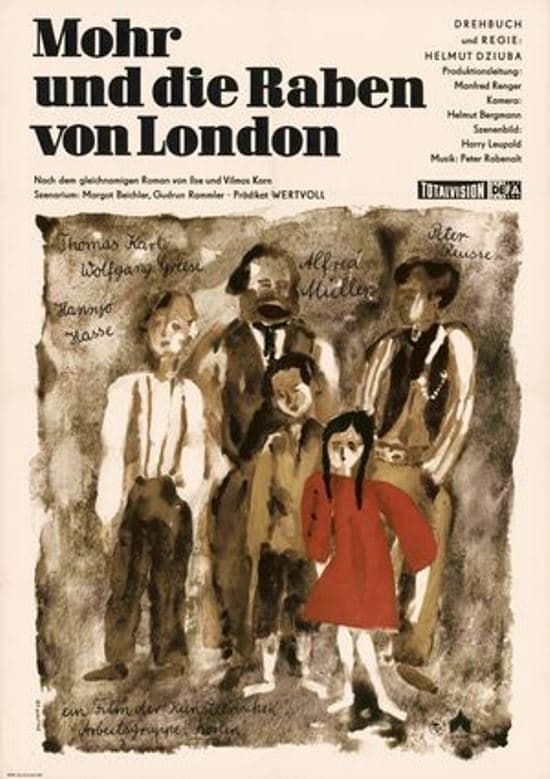
London in 1856. Karl Marx is living in exile in the British capital. One day, "Mohr", as Marx is called by his friends, meets the 13-year old worker′s son Joe. The boy works every day for twelve hours in a spinning mill and even has to work night shifts although that violates current rules. Marx tries to end the illegal activities of the spinning mill owner and one night shows up at the mill together with an inspector. But his foray is undermined by a robbery by the rebellious raven gang that is led by Joe′s brother Billy. The spinning mill owner of course takes this chance to blame his young workers for the theft. But Marx is not let astray and does not stop to fight against child labour. Furthermore, he tries to get the members of the raven gang back on the straight and narrow – with success.
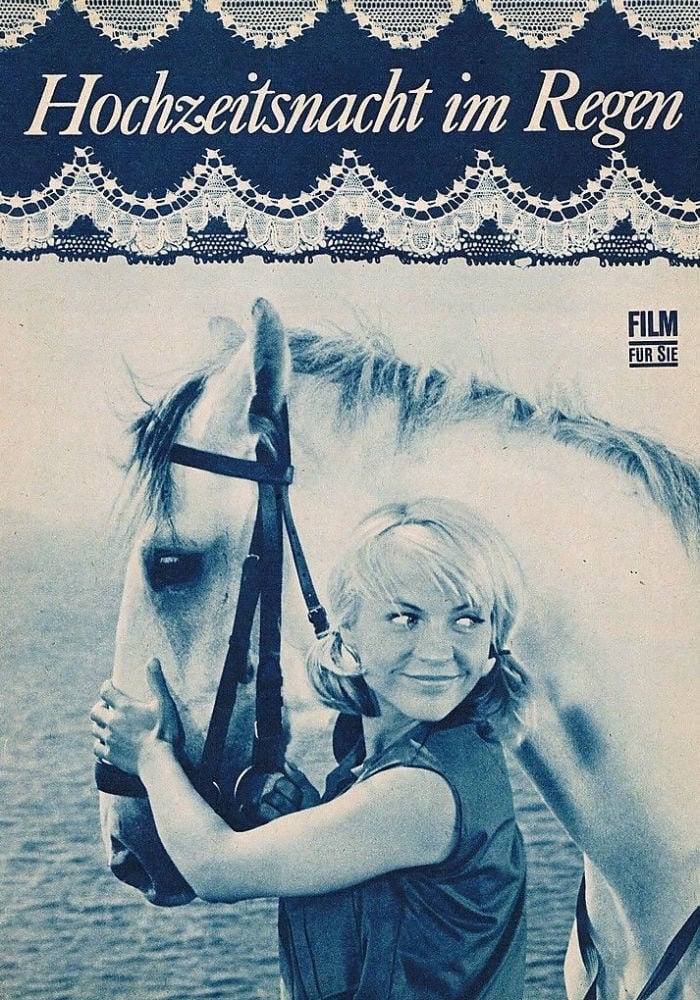
This comedic musical tells the story of Gabi, a young hairdresser from the Baltic coast who desperately wants to be a jockey. One day, she packs her bags, drives to Hoppegarten, and is soundly rejected by the head coach. Gabi doesn't want to give up, and in order to at least have a roof over her head, she rushes into a marriage with the seemingly nice Freddie. However, this marriage soon proves to be her second rejection, as Freddie openly dislikes the fact that she wants to be a jockey.
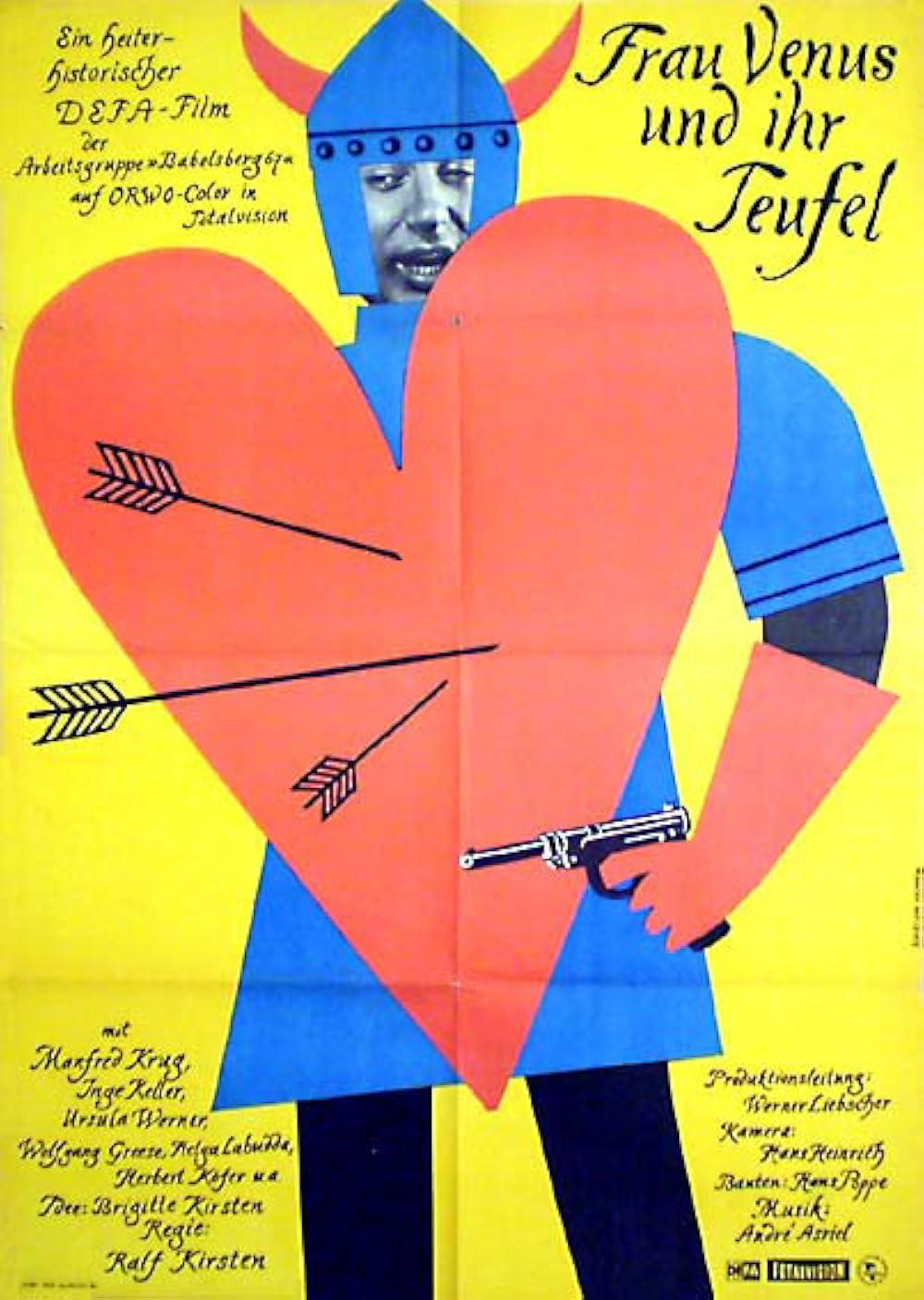
Hans Müller finds himself on a trip in Thüringen, accompanied by his loving female friend, Moritz. Hans doesn't understand much about trust, which constantly leads to problems between the two of them. During one of their fights, Lady Venus intervenes and sends the young man back to the Middle Ages - so he can learn the true meaning of love. Disguised as Tannhäuser, he has to stand his ground against a horde of minstrels. At a singing competition, he blunders, without the support of Moritz, who had also been thrown back into the 13th century. And with the help of Frau Venus, his adventure will surely turn out even worse...
On a West German Autobahn, Robert plummets from a bridge and is hospitalized. As he recovers, he flashes back to a Bulgarian holiday where he met Jutta and her uncle Lothar, who’d ordered a West German passport to smuggle her out of the DDR. Back home, Robert and Jutta marry and have a daughter, Anna, but Jutta still yearns for the West. Lothar arranges their escape: Robert, Jutta, and Anna hide in a car trunk, but delays doom Anna. At the border, a grief-stricken Jutta blames Robert; distraught, he leaps from the bridge, surviving to face his guilt. A film banned in the GDR.

Two men want to escape the hustle and bustle of Christmas in the city and travel to the countryside. However, it's not easy to find accommodation on the spur of the moment. And so they end up in a rather spartan hostel…

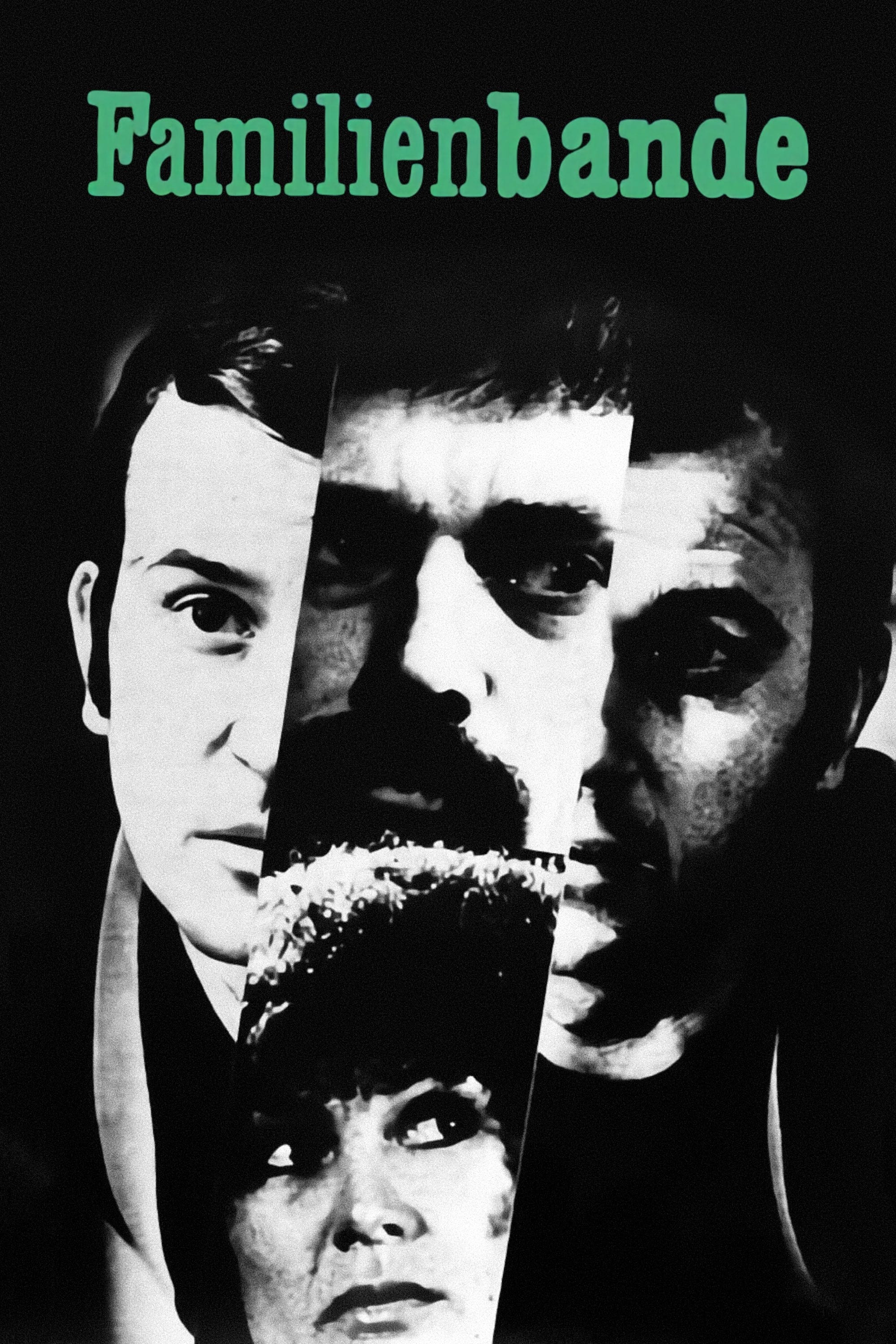
The worker Frank Raban lives with his wife and young daughter in a room in his mother's apartment. He builds his own home and sometimes procures materials illegally. When an after-work bricklayer wants to be paid in forum checks, Frank strikes outraged and ends up in front of the public prosecutor. His brigade vouches for him. His two West Berlin brothers Markus and Olaf help him out with money, but the price is high. Markus runs an antiques business - with stolen art treasures from the GDR. He uses the family ties to the East for his burglaries. When a museum guard is murdered by Markus and Olaf, Frank tells his wife everything. She tries to convince him to turn himself in to the police.


Helene Sonntag, 40, unmarried and a teacher. She has long dreamed of happy partnership, but things turn out as they should. In order to avoid the work overload caused by substitute teaching and vacation childcare, she is forced to make a move.
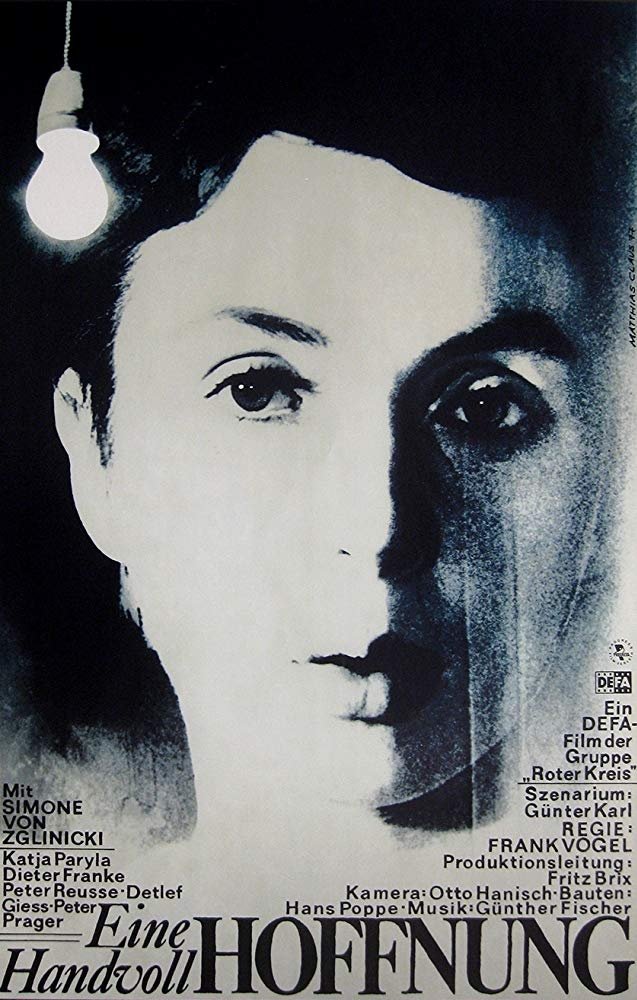
Berlin at the end of the 1940s. Anneliese Weyher is working as a switchboard operator. She is living with her aunt after losing her parents in the war – a stroke of fate that has thrown the young woman off course emotionally. Indifferently, she is doing her work; her private life consists of an affair with a black-marketeer. Even when Anneliese witnesses an armed robbery, committed by infamous Wollnick and his gang, she stays lethargic and apathetic – she keeps silent instead of helping the inspector who is a friend of her aunt. It is not until Anneliese by coincidence meets her former lover, the watchmaker Kurt, that her life seems to take a positive turn.

Normal everyday life in an apartment building on Plantagenstraße in East Berlin is disrupted when a truck pulls up with the new tenants' furniture. And they include two small children - now, of all times, when old Matuschke's wife has just died and consideration should actually be shown for the widower. Even worse for Mrs. Tillack, however, is the fact that the entire male world seems to be after her 16-year-old daughter Katrin.
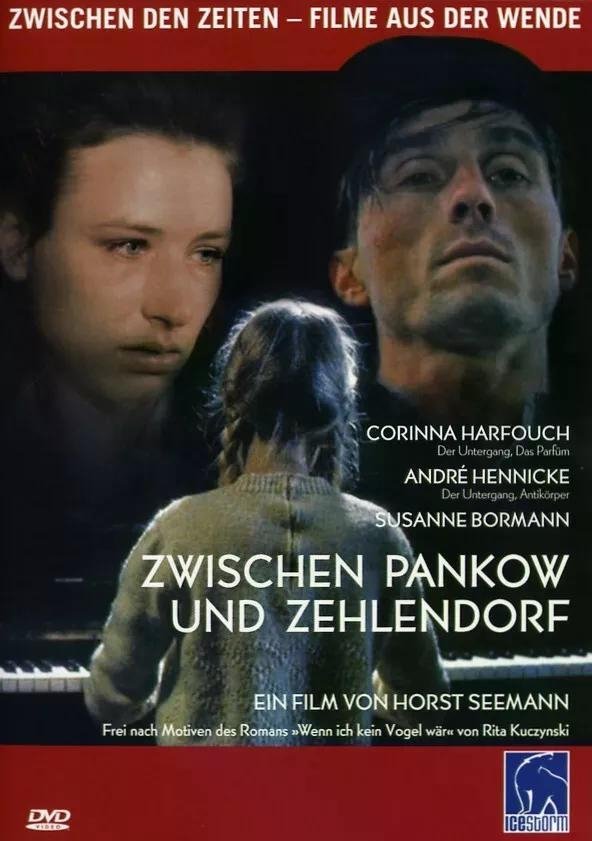
In 1950s Berlin, eleven-year-old Susanne spends her time alternately in eastern Pankow with her mother and sister and in western Zehlendorf, where her wealthy grandmother enables the piano student to attend a music school. What she sees as a well-established everyday life comes to an end when her father Emil returns traumatized from captivity as a prisoner of war and begins to reorganize the family's life.
Jürgen Matthes, Horst Knüpfer, Peter Vorberger - three men of different ages who are entrusted with the same large-scale IT project. In the context of this project, they begin to reflect on their work, the quality of human relationships and the meaning of life in general.
Mira is a young, bigoted, rich and greedy auntie who makes the people around her dance to her tune. And if she ever suffers the minor ailments of old age, it is Doctor Falk, the husband of her niece Suschen, who cures her ailments. In the face of Mira's wealth, the dear relatives outdo each other in courting her aunt's favor, begrudgingly lying in wait for each other. But their greedy hopes are dashed one day when the old maid believes she has been impregnated by a guest of the Napoleonic army. This miracle prompts Auntie to sacrifice her fortune in order to secure the silence and help of the Falks.
The hunt for gold - that is the motive that leads different types of adventurers to the gold mining town of Dawson in Alaska. The main characters in this story based on Jack London’s story are Kid and Shorty. Their greed for the precious metal leads the adventurers into extreme ventures and wild speculation. The Kid and Shorty take advantage of this and start buying up land because they supposedly want to build a new town. Everyone else now believes that great gold discoveries are to be expected on this land. This gives Kid and Shorty their big coup; at the same time they take revenge on their adversary Wild Water, who had once cheated them in the "egg trade".

A depiction of class conflicts in Germany between 1918 and 1945. The Spartacist Erwin is shot by officers in 1918, and his pregant working-class bride Marie begins a new relationship with social democrat Geschke. Erwin's son Hans grows up to be a communist like his father, leading to bitter hatred between him and his Nazi step-brother, while Geschke becomes increasingly resigned to the political situation in Germany. The three aristocratic officers who shot Erwin many years ago meet again during the Kapp Putsch, but their support for the Third Reich eventually leads each to their deaths.
The Ruhr area in November of 1918. 13-year old Achim Wolters and his friends get their hands on some potatoes on the market. They want to surprise Achim′s father, who works on a mine sweeper boat, with a decent meal. But Achim′s father does not show up – an informer at the train station has betrayed him for his left-wing beliefs and has turned him over to the police. The priest tells Achim the sad news and advises him to pray for the release of his father. But when carpenter Stelzebein stresses that everybody has to take actions for himself, the devout boy at first does not believe in Stelzebein′s words. But then Achim witnesses in the prison how brutally the imperial police treat his father and the other inmates. Together with his loyal friends, Achim takes Stelzebein′s side. When the revolution starts, they stand together on the barricades.
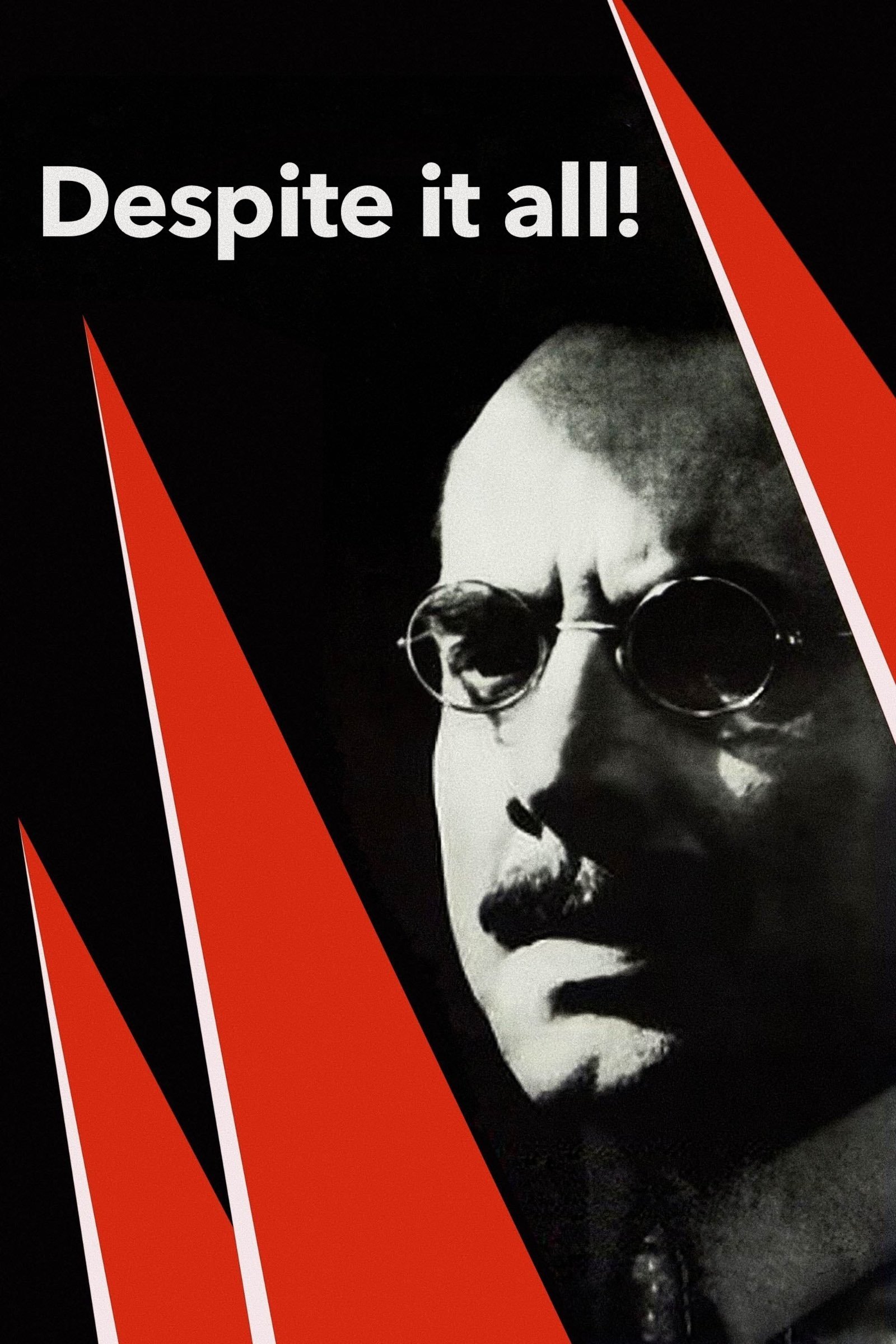
October 1918: Karl Liebknecht is released from prison and Berlin workers celebrate his release. Although WWI is almost over, the German Kaiserreich in vain sends its last reserves to the slaughter. The working class is in a rebellious mood; the uprising of Kiel’s sailors against war and militarism sets off a call for revolution led by Liebknecht. On November 9, Liebknecht declares the Free Socialist Republic of Germany. But pro-Kaiser military and right wing Social Democrats oppose him.
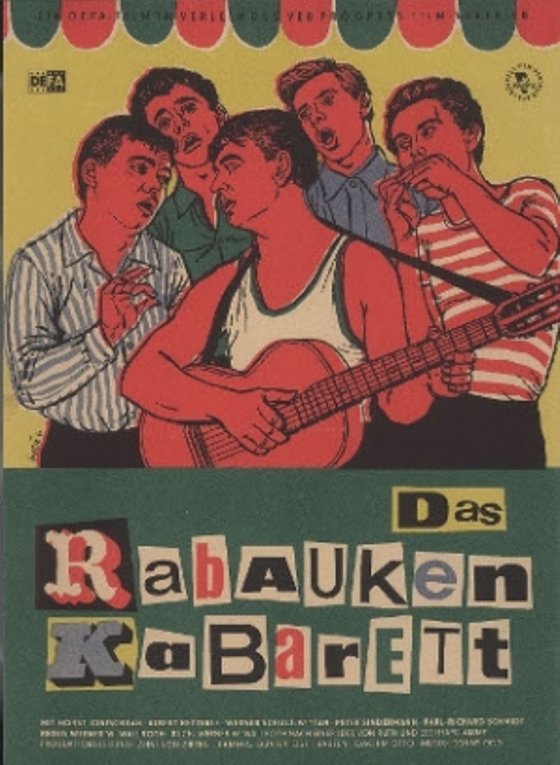
Wolfgang is a bully, but overall he‘s not a bad guy. However, not everyone in Thuringia, where he goes to school, is sympathetic to him and his buddies. His daring adventures often go too far - up to and including stealing three bottles of liquor. Meanwhile, the new head of the boarding school knows how to use the undisputed skills of hooligans for the common good. Together with them he founds the "Cabaret of Debaucheries". With sharp jokes and music, they now pounce on slackers, slackers and drunks - and in the process slowly change for the better.

The plot is based on the dramatic fate of the Red Army commander Aleksei Ivanovich Pavlov. Having been captured in January 1942 and being among the displaced persons, he didn't immediately decide to return to the USSR. Having rolled around the foreign country for 17 years, Aleksei nevertheless returned to his homeland. He goes to his brother in the south of the country to Sevastopol. Aleksei accidentally meets the doctor Anna Andreyevna, who was saved from death in besieged Leningrad. She travels by car from Moscow and also to the south, with her daughter Tanya; she suggests he join them. Aleksei tells about his life on the road.
A film about the experiences of a cab driver who drives a young, heavily pregnant woman who has collapsed in a store to hospital. The encounters during the subsequent search for the future father so that he can take the expectant mother's things to the hospital are shown. The GDR leadership argued that the film should be banned.
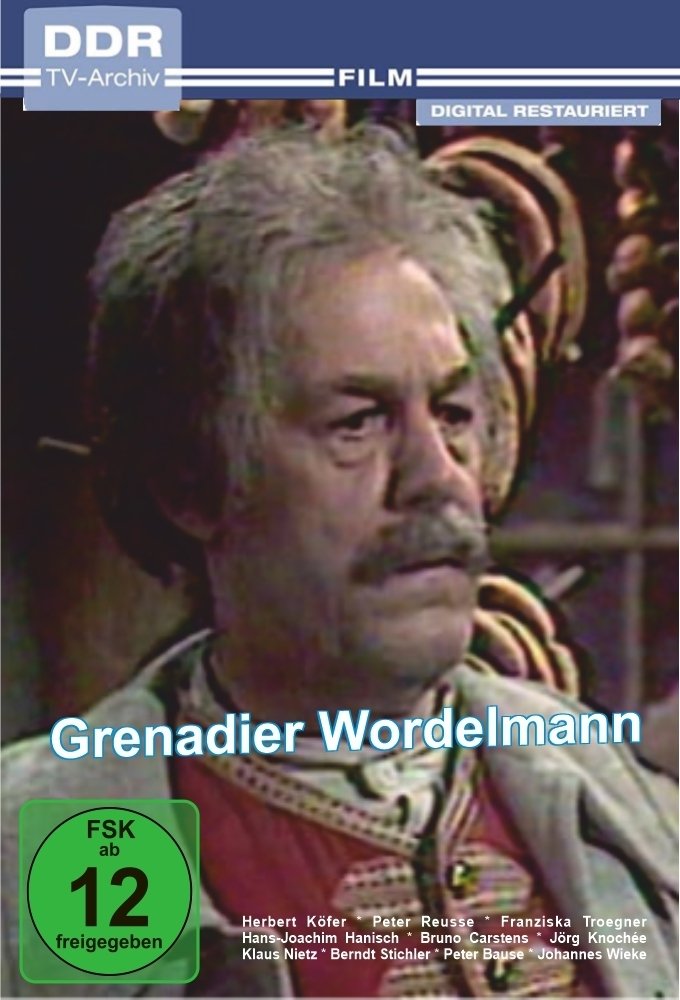
1780: When farmer Schmitzdorff in Wust, Brandenburg, is denied permission to marry his stepdaughter Sophie, he goes to Potsdam to obtain permission from the king himself. Because when he believes he is in the right, the proud man stubbornly insists on his opinion. But his stubbornness gets the better of him when he meets the dashing Wordelmann, Frederick II's personal grenadier, in an inn on the way. The latter sees the farmer as a welcome distraction from his otherwise dreary everyday life. Wordelmann tricks Schmitzdorff at his expense and pretends to be allowed to perform the wedding because of his military affiliation. And so the grenadier ends up organizing a wedding that isn't a wedding and takes the dastardly prank to the extreme until everyone involved has lost their laughter.