
In this East German film, the third one in The Third is Margit's third lover. After her mother's death, Margit has two affairs which don't work out, and one lesbian friendship which she retains. She is looking for a husband, though, and thinks she has spotted a candidate in her fellow factory worker. As she contemplates marrying him, her story is told in a series of flashbacks.

Paul and Paula have had bad experiences with love: Paul is financially well off but has lost all affection for his wife, and Paula leads a troublesome life raising two children on her own. They meet and discover a strong passion for each other. Life seems like a dream when they're together - but their short flights from the burdens of reality are once and again interrupted by Paul's ties to family and career.

A humorous and satirical comedy, which places a man from the year 2222 one day in the (then) present day life in GDR, East Germany under Communist regime. Using a crystal for mind reading he uncovers some improprieties and moral weaknesses in the "Beautiful future" professed by VEB ("Volkseigener Betrieb" – "State Owned Holdings").

Based on a fairy tale by the Brothers Grimm: Jakob is a poor farmer′s boy. Because of his timidity that even makes him run away from mice, he is often ridiculed by other people. Even the king is ill-disposed towards him. One day he sends Jakob to the devil to rob him of three golden hairs. This is supposed to be Jakob′s certain death. But naïve Jakob gets going and on his way even promises the oppressed subjects of the king to ask the devil for a way out of their misery.

A young soldier discovers three chests of copper, silver and gold and an old tinder-box in the hollow of an old oak tree. He is now rich. But he squanders the money until it is all gone. All he has left is the old tinder-box. He uses it to light a small pipe and three large dogs come to his rescue. Based on the fairy-tale by Hans Christian Anderson.

No one has any time for Moritz. And at school, things are not exactly the greatest either. Moritz runs away and moves into the inside of an advertising pillar. A speaking cat, a circus girl and a street sweeper become his new friends. Gradually, they help the young boy to realize that running away does not solve anything.

Early 1921: a man is on his way home. Gleb Chumalov, regimental commander, worker and Hero of the Order of the Red Banner, returns to his home town from the Civil War. The victory over the enemies of the Russian people gives him the conviction that a new, better time will dawn overnight. Gleb looks for his comrades from earlier years, but only finds people who are emaciated by their efforts. The cement works where he used to work has been plundered and abandoned. With great effort, Gleb and his comrades try to get the plant up and running again. The struggle seems to begin anew... It is the time after the victory of the “Great October Socialist Revolution“ and the time of building a new society.
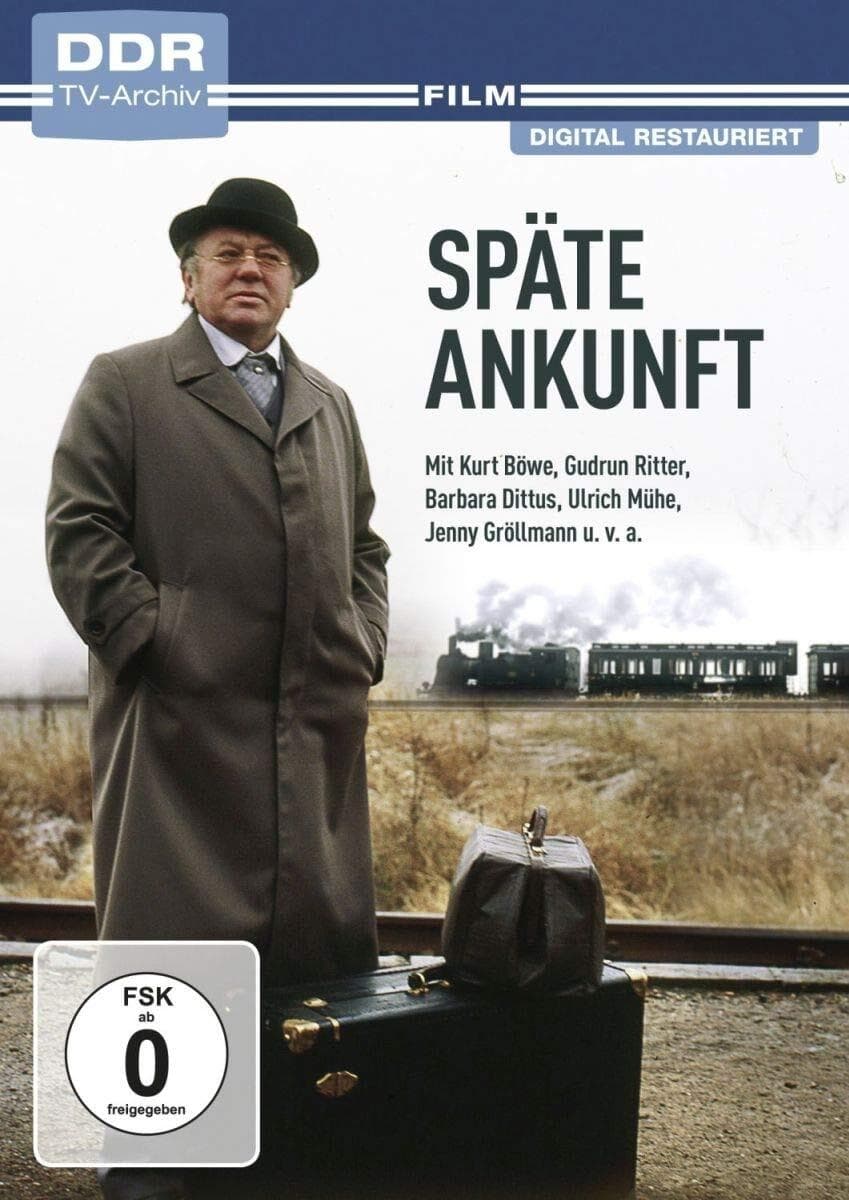
In 1896 the Berlin noble doctor Dr. Wilhelm Holtfreter takes over his well-to-do wife Mathilde and takes over the country doctor's office in the Prussian district of Westprignitz from the late Dr. Tochtenhagen. His decision was met with incomprehension everywhere.
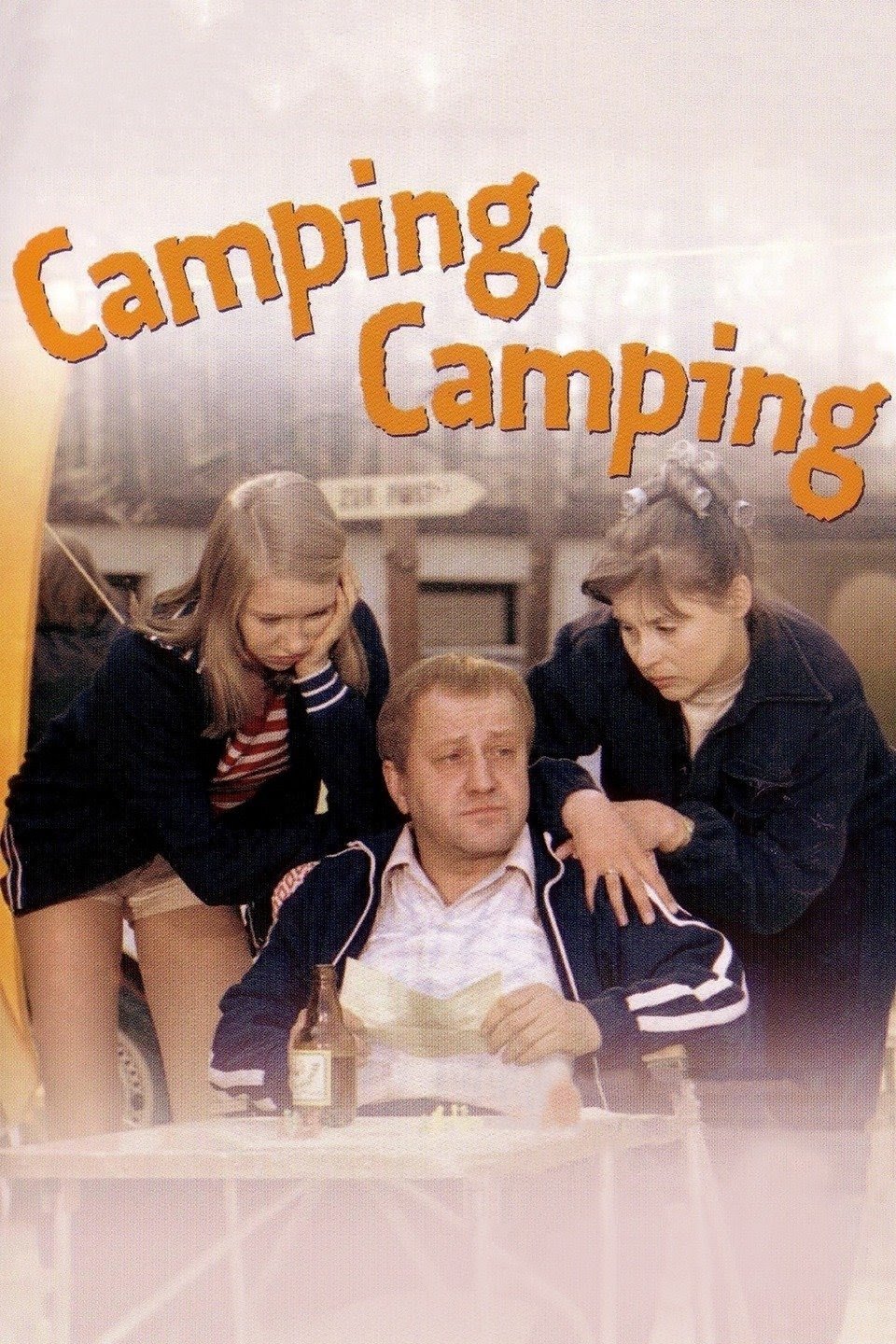
The fully loaded Trabi rolled towards the Baltic Sea and father Detlef is for once in excellent mood. Did he not agreed with his friend Alfred, located immediately each issue back with an urgent telegram from the resort. But as the two then adventurous go stalking in the jungle of the big city, they experience a failure after another. Sullen Detlef longs for marriage Trott and campground. There would be matched and over the years rather bland become married woman Eveline is undergoing a remarkable transformation.

In the forests of the Ore Mountains, on the border with Bohemia, a gang of smugglers is up to mischief. Anyone who dares to oppose them is murdered in cold blood. The locals are paralyzed by fear of the ominous bush ghost that is said to be behind it all. Then a stranger turns up at the remote forester's lodge and begins investigating a murder that took place twenty years ago. Having become wealthy in the Alaskan gold fields, Arndt is now looking for the woman he once loved and whose perjury landed him in prison. The forester and the weaver Eduard Hauser help him with his investigations. But Hauser himself soon becomes the victim of a sinister intrigue. Fritz Seidelmann, an unscrupulous profiteer who is after Hauser's fiancée Angelika, lures him into a trap. Hauser is arrested as an alleged bush ghost. For the time being, Arndt can do nothing for him ...

At the end of the 19th century, the Wyoming Oil Company has established itself in the vicinity of Wind River City at the foot of the Rocky Mountains, where they have been illegally pumping oil from Native American territory. One of the company's greedy agents, Mike Allison, kicks out both his white partners and the Native Americans. He has his some of his associates secretly murdered and blames it on the Native Americans, who are then killed when they get in the way of his plans. Five chiefs with lifelong shares in the Oil Company die mysteriously as a result. The young chief Shave Head asks his a half-blooded brother Chris Howard for help.

When twin brothers Georg and Steffen look a little too deeply into their glasses one day, they decide to swap roles for 14 days. Georg is the manager of a large department store and Steffen is a writer. The two experience bizarre situations: The department store director is adored by a saleswoman with a passion for literature and has to report on his literary work as the guest of honor at a brigade meeting. He is also short of ideas for the lively stories he is supposed to write. The writer, on the other hand, is not very familiar with the bureaucratic customs of running a department store. He allows all the sales assistants to take their housekeeping day at once, approves 3,000 marks for decoration purposes and approves of all departments of the department store being open until 8pm.

Russian soldier Grisha escapes from a German prisoner-of-war camp in the spring of 1917. He is caught and is to be shot as a spy. This decision is controversial. The dispute continues. Grisha is executed on the orders of the army high command.

Kasper Mai, an export merchant and comrade with a “clean” record, discovers he is the prince of Hohenlohe-Liebenstein. His royal grandmother designates him as the heir to her estate. A private trip to her reveals that she does not want a NATO airbase built on her land. The GDR and his grandmother thus find a common interest, and a clever lawyer from the East works against other family members looking to settle their debts with the estate money.

In a small village in West Prussia in the 1870s, Germans, Poles, Gypsies and Jews live together as neighbors. One night Johann, a German mill-owner, secretly opens the dam gates and floods the mill of his Jewish rival Levin. After his business is ruined and his calls for justice go unanswered, Levin leaves town.

Kathe Kollwitz was 47 years old, and already a well established artist in Germany and abroad when Peter, her youngest son, volunteered to join the German army in WWI and was killed two weeks later. This painful tragedy changed Kollwitz's life and art forever.

Young lovers Hero and Claudio, soon to wed, conspire to get verbal sparring partners and confirmed singles Benedick and Beatrice to wed as well.
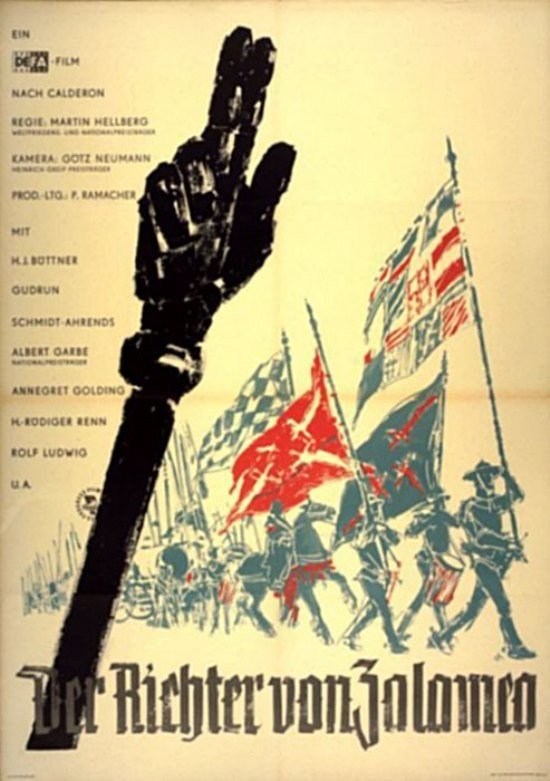
Historical drama set during the reign of Philip II of Spain. The royal troops have taken up quarters in the village of Zalamea. Captain Don Alvaro is staying with the farmer Pedro Crespo. His daughter Isabel behaves very coldly and dismissively toward the captain, which irritates him. Finally, he takes her by force and humiliates her father. The captain is put on trial in the village. Pedro is appointed judge and, despite all the threats from General de Lope, sentences the captain to death. De Lope then wants to deny him his judicial authority. Surprisingly, King Philip II appears in the village and confirms the harsh sentence, but wants to pardon the offender. However, the sentence has already been carried out.
This is part one of a two-part biopic about Karl Liebknecht. In 1914, Germany is arming itself for war. Karl Liebknecht, left-wing revolutionary Social Democrat, workers’ leader and a virulent antimilitarist, is one among 110 SPD members of Parliament who vote against approving war loans. From then on, he is considered un-German and a traitor to the fatherland, and his own party’s leadership turns against him. Despite threats, Liebknecht speaks up against the war and writes the manifesto “The Main Enemy Is at Home.” Even when he is arrested and charged with treason, he does not surrender.

Albert Hauptmann is an out of work waiter in Cologne who is often confused with a former Captain of the Nazi Army. Albert uses this to his advantage and becomes the Director of the Montan Corporation, and a member of the West German Parliament. Herr Karjanke, the real Captain, learns of Albert’s ruse, and wants to claim his "rightful" position in Parliament. But Karjanke cannot come forward until his politicking "Doppelganger" succeeds in passing an amnesty law for war criminals. When Albert is finally brought before a judge on charges of fraud, he learns that this own amnesty law does not apply to him.
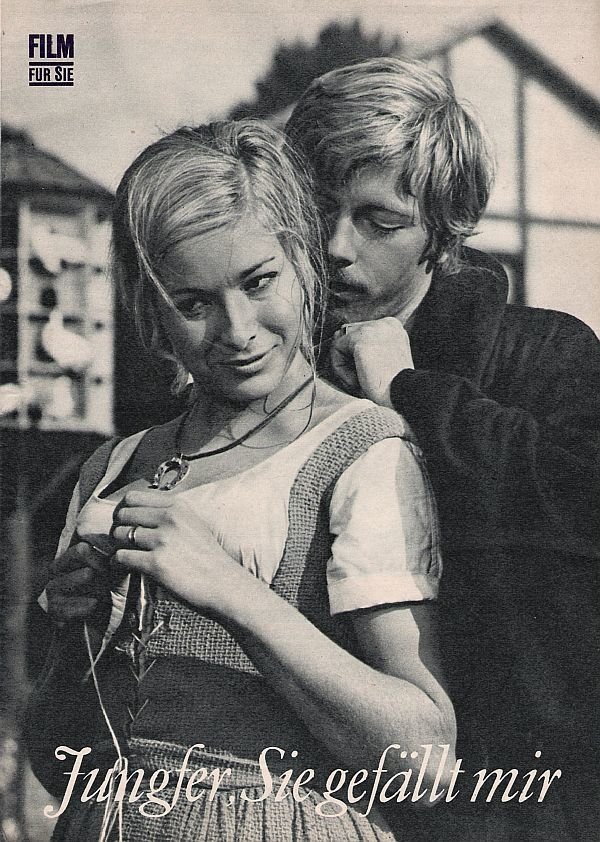
A Saxon village in 1792: While the Prussians go against France, the haymaking takes place in the village and the resolute Marthe catches her daughter Ev with the village blacksmith Ruprecht in the hay.

Fifteen-year-old Heinz Stielke is a Hitler Youth fanatic who is devastated to learn a hidden truth about his respected father who was a German officer in WWII: He was Jewish. Pushed out of his community after the discovery, young Heinz falls into a tailspin of alienation and anger. He is subsequently thrust into a series of social collisions across the war-torn German fatherland.

Johann Wolfgang von Goethe (1749-1832) was the author of Werther, the romantic novel that was transformed into a play during Goethe's lifetime and which initiated the whole German romantic movement. The book's story tells of young love and suicide. In this East German film, based on a book by Thomas Mann, Lotte (Lilli Palmer) was the woman who served as the model for the heroine in the novel Werther. She comes to Goethe's hometown for a visit, and her experiences there eerily re-create episodes from the book. Goethe comes across as a pompous old bore, and his friends as pandering sycophants, in this very proper communist party-sponsored, anti-heroic movie.

During the October Revolution in 1917 the Bolshevik Party appointed a woman commissioner of the “Free Anarchist-Revolutionary Section”. This regiment emerged from an anarchist division of the ship of the line “Imperator Paul I.”

It’s the spring of 1945 in a small resort town on the Baltic. Günter is 16 and firmly believes that the Germans will win the war. During the hunt for a forced labourer who is on the run, Günter catches him and watches as he is shot to death. He proudly accepts the award of an Iron Cross before being shipped to the nearby front as part of the last contingent of troops. He is quickly captured by Soviet soldiers, but manages to escape and return home. When the town is occupied by the Red Army, Günter is arrested for the murder of the forced labourer. The film was banned in 1968 before it was completed, and a large portion of the negative was later destroyed.
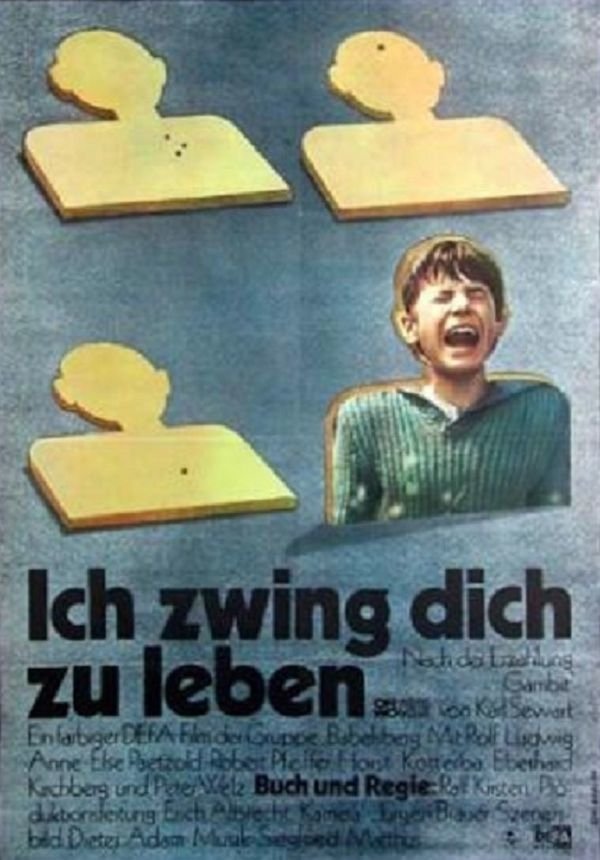
Germany at the end of World War II: Teacher Grübler lives in a small village in the Ore Mountains together with his 15-year old son Wolfgang. At school, the dutiful Grübler, a member of the NSDAP, teaches his pupils to volunteer for military service, but when his own son volunteers for the Waffen SS, he is nevertheless shocked and fears for his boy′s life. But Wolfgang starts to hate his father for his doubts: He thinks his father is a coward. In his desperation, Grübler chains and kidnaps his son to hide him in a dugout in the forest until the end of the war. In their shelter, father and son are fighting bitterly but when the Nazis who still believe in the "Endsieg" discover their hideout, Grübler sacrifices his life to save Wolfgang.
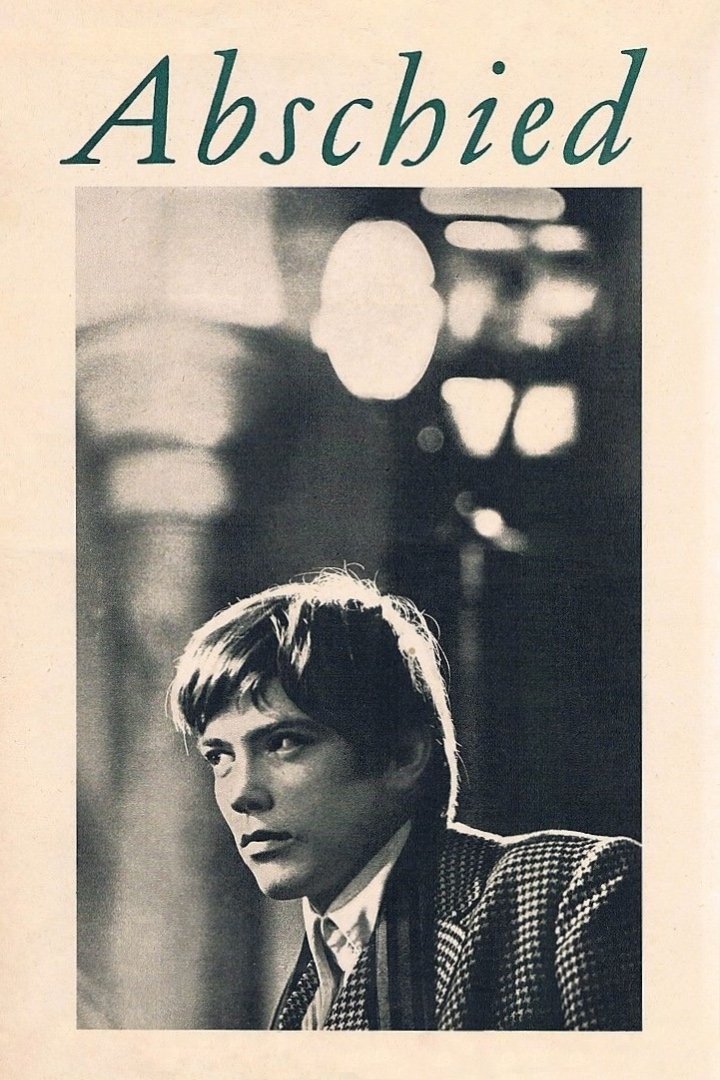
In August of 1914, amidst the public ecstasy surrounding the impending war, Hans Gastl, the young son of a Munich bürger, makes a decision: he will not take part in this war. This resolution signifies a turning point in his life; a farewell to his class and his family.

Biography of the comic poet Carlo Goldoni (1707-1793).

Actor Ernst Stein, having abdicated from the stage in 1968 in protest of the Soviet invasion of Czechoslovakia, has long since retreated from the world around him. In a remote house encircled by an overgrown garden, he lives in a world of dreams and memories. Suddenly, in 1989, an out-of-kilter society sends forth its progeny. Young people, tramps and characters of all sorts take refuge with Stein for a short span, carrying the turmoil of the times into his house.
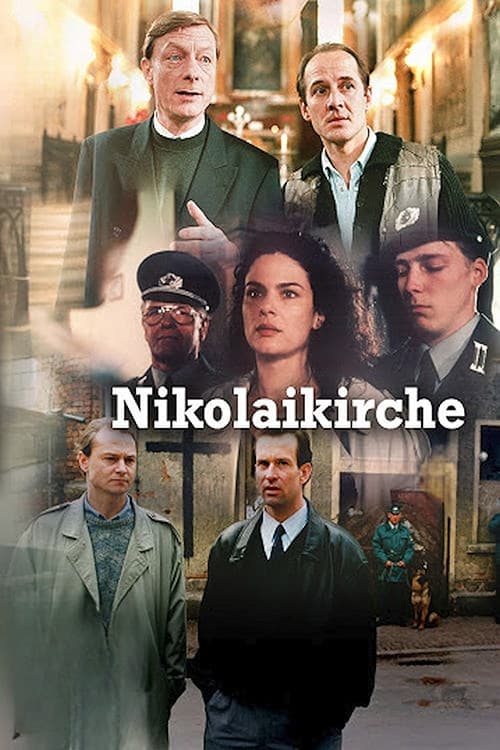
The story of a Leipzig family from 1987 to the Monday demonstrations in 1989. After the death of her father, a high-ranking officer in the People's Police, the daughter joins the resistance movement around St. Nicholas Church. Phenomena such as obedience, followership, spying and resistance are illustrated in this haunting film based on individual people. A film that provides food for thought for the discussion about the fall of the Berlin Wall and recapitulates contemporary history.
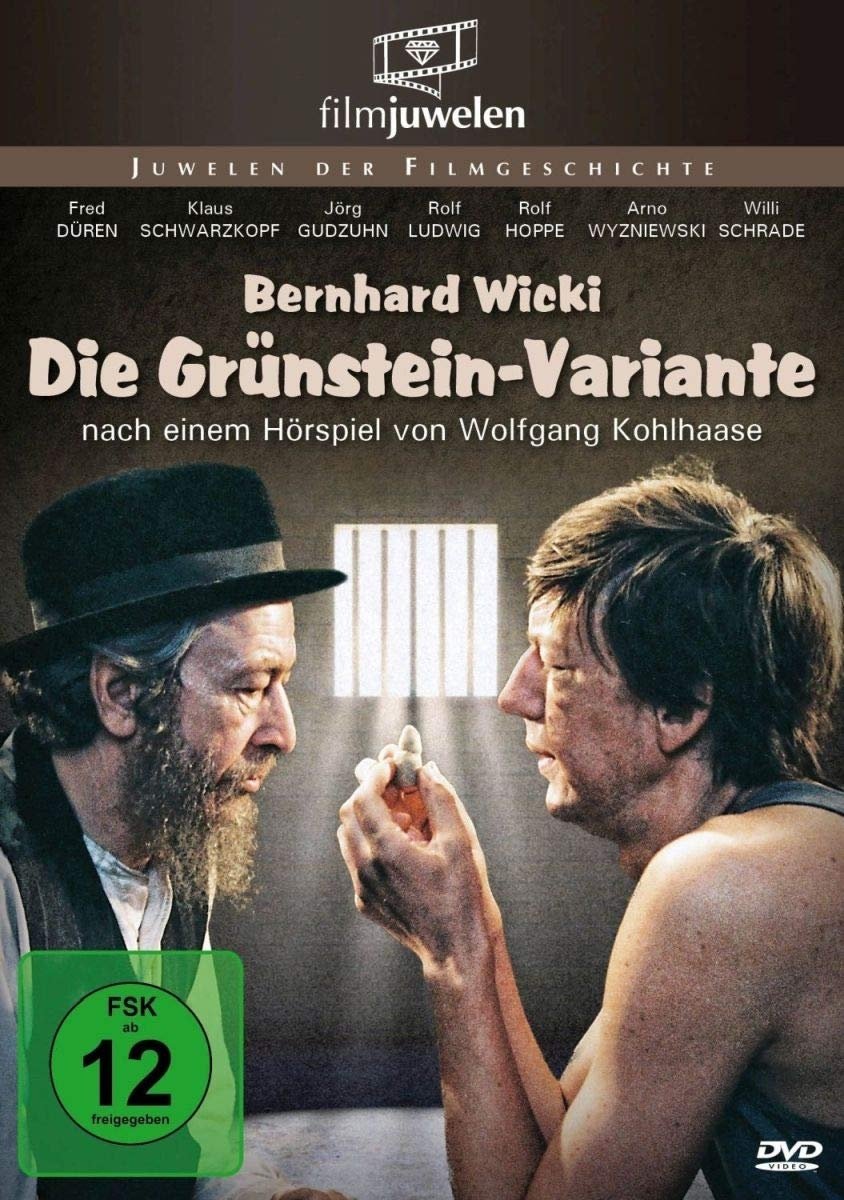
The plot revolves around three men waiting to be deported in a prison. To escape the monotony, they form chess pieces from their bread rations, with which they then play against each other. Grünstein, a Polish Jew, proves to be a real talent, because although he is a beginner, he manages to defeat even the experienced player Lodeck, a German sailor, with his "Grünstein Variant".
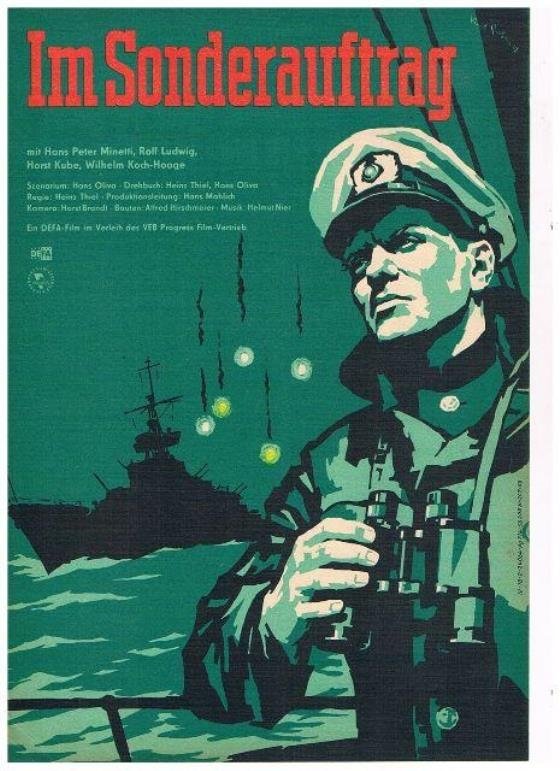
A warship returning from a training exercise was tasked with apprehending an unknown schooner that had violated GDR territorial waters. Although nothing illegal was found during the search of the ship, the ship's commander Fischer was suspicious of the owner of the schooner, Arendt, a former lieutenant of a Nazi coastal battery. Fischer's doubts were confirmed when a diver came aboard the schooner and photographed a military object underwater. The investigation showed that the detained schooner was on a sabotage mission, and the "activities" of Arendt, a former Gestapo Obersturmführer, were also revealed.

Three gangsters overpower a night watchman and try to break into a safe. Opening the door triggers an alarm and they flee through the window without any loot. Their boss at ZEG (Zentrale Einbruchs-Gesellschaft) m.b.H. is furious with them. Tommy points out an old method, and Ricky recommends the new "occupier way". They disguise themselves as American soldiers and take part in the charity bazaar of the Privy Councillor von Lambert. There they organize a parlour game in which all those present place their valuables on a table around which they march. Then the lights go out. To the horror of the guests, the three "occupiers" disappear with all their jewelry and money.

Shortly before the outbreak of World War II, the paths of three people on the run cross by chance in the small Baltic Sea port of Rerig: Gregor, a member of the Communist Party of Germany (KPD); Judith, a Jewish woman; and a pastor who wants to save an Ernst Barlach sculpture classified as degenerate art. All those involved share a common fate and the dream of a fisherman's boy from Zanzibar, which is less a real goal than a utopia of a better future. Adaptation of Alfred Andersch's novel.
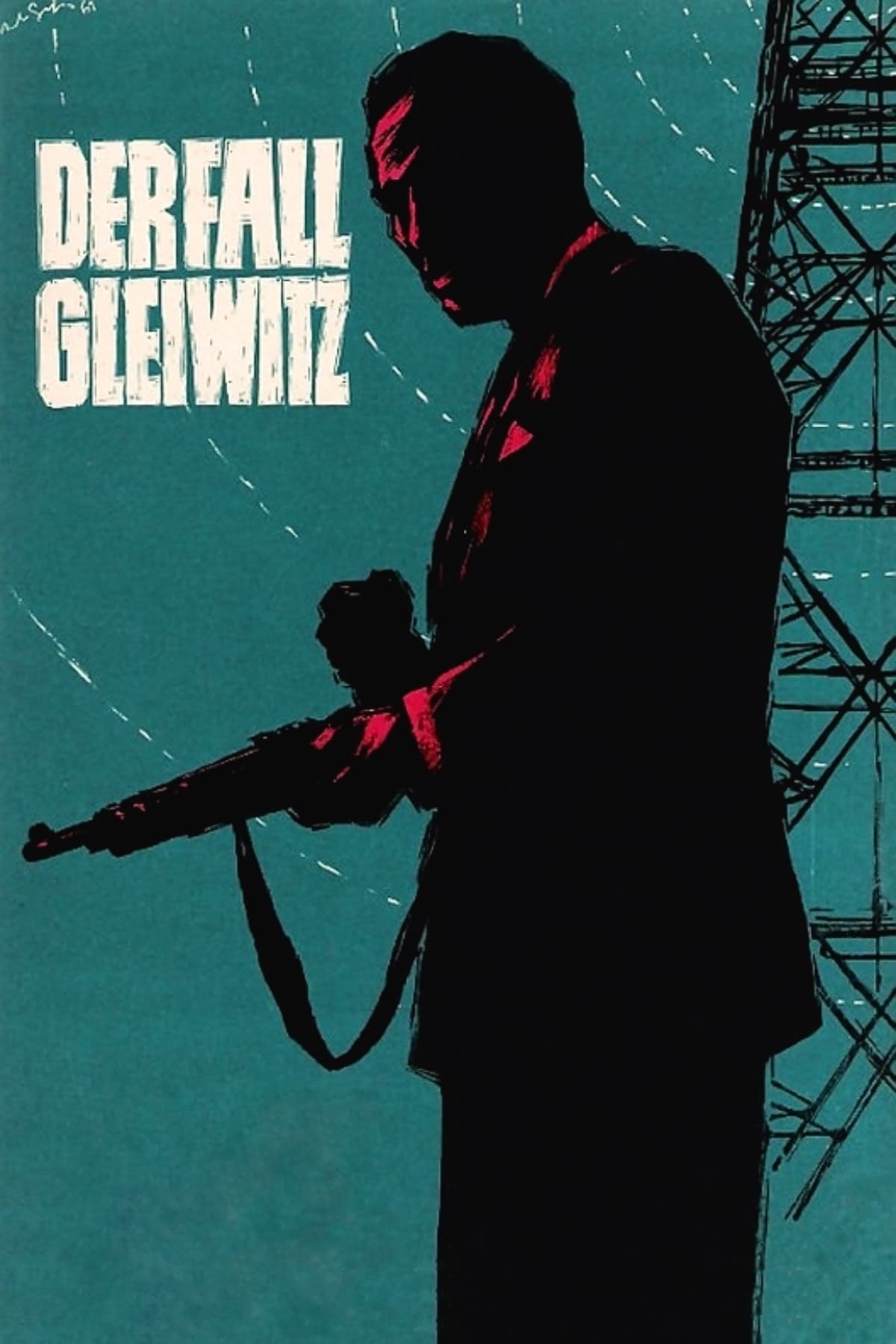
To justify their invasion of Poland at the start of WWII, Nazi high command hatches a secret plan: six Polish men from an SS training camp are sent on a special mission to the town of Gleiwitz, to fake a Polish raid on Germany. The ‘provoked’ Germans will thus launch a ‘counterattack’ on Poland.

A morality tale from the time of the Saxon Kingdom. The von Siebenthal volunteer fire department has nothing to do. When their local pub is in a very dilapidated state, but the landlord has no money to renovate it, the fire department tries to help out by setting fire to it themselves, but it doesn't quite work. They look for a new object to set fire to, the supposedly empty prison. But there is only one prisoner, who is heroically rescued by Captain Kaden.

The Berlin Volkseigene Betrieb (VEB) Komet is planning a company outing. Willi Redlich, member of the party committee, votes like the others: The relatives stay at home. But he doesn't dare tell his wife Susanne. So she does the work of renting the "Waldschlösschen" restaurant for him - without his knowledge. When Willi wants to book the seats, everything is fully booked and he switches to the "Sonnenburg" opposite. Meanwhile, word has gotten around among the women that they are excluded. They plan a counter-event. On the day of the excursion, both groups are sitting in their inns and the women make sure that they can still celebrate together.
The young Walter Retzlow, drafted into the guard team of a foreign labor factory in the last year of the war, receives the papers of a murdered anti-fascist by chance. He adopts the new identity, which promises him security.
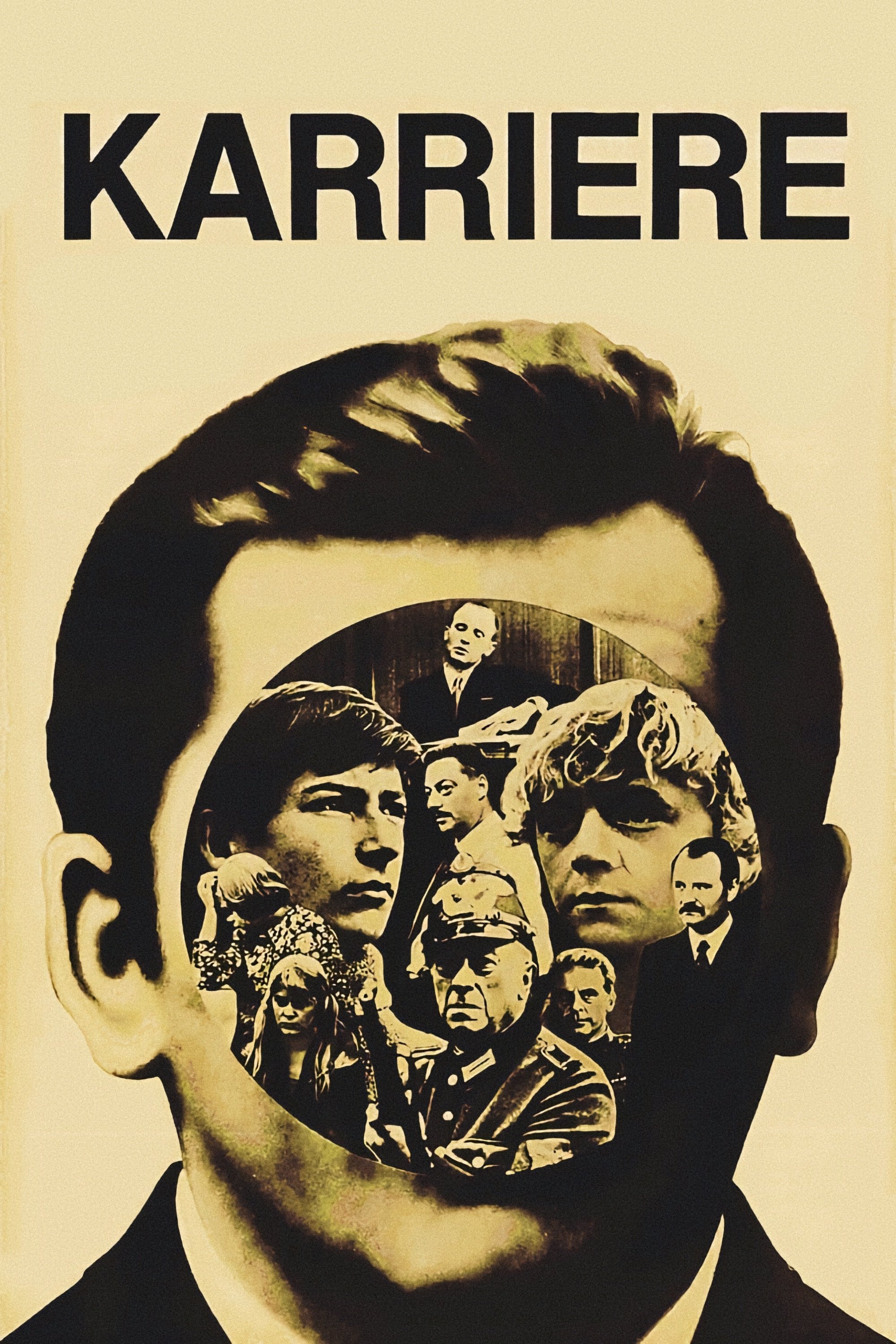
Günter Walcher, 40-years-old, is a hardworking, apolitical West German businessman caught in a moral conflict. He is offered a promotion to become the head of a division—on the condition that he find a reason to fire Zacharias, a communist and the work council chairman.
Winterkind tells a tragic story of the Russian Yelena, who after seven years of captivity learns that her son Boris, born in the camp, has been adopted by a German couple.
After a hot and steamy company party, Sibylle and Harald, both in their late thirties, spend the night together. He is a widower with two sons, with the younger son just entering school. She is single and relatively satisfied in her current relationship with a married colleague. When they meet again later, they resolve to enter into a strictly intellectual relationship.
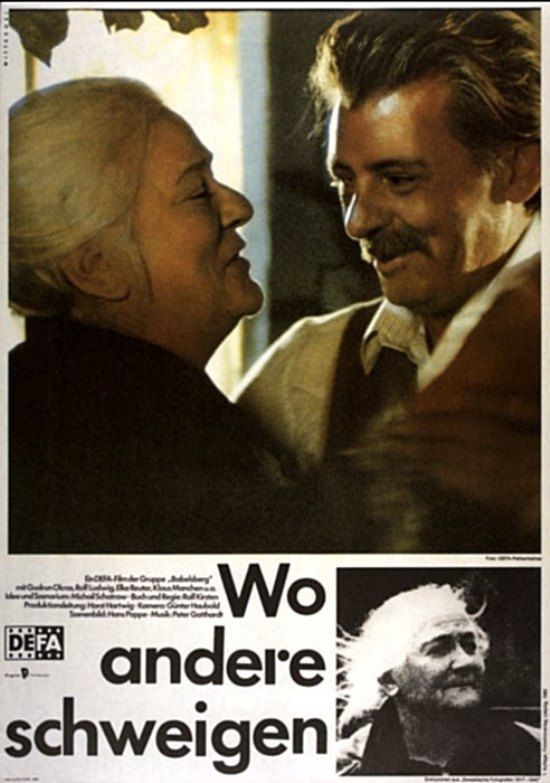
Ten days in the life of socialist politician Clara Zetkin. In August 1932, she is summoned from Archangelskoje near Moskow to open the new legislative session because at seventy-five, she is the oldest representative in the German Reichstag. Although she is ill and almost blind, she see this as her chance to make her voice heard amid the growing Nazi influence in Germany.
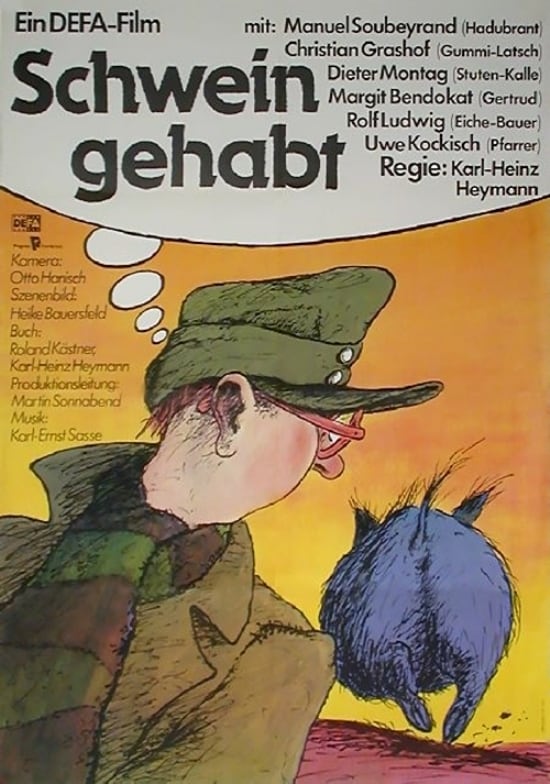
In the winter of 1945/46, new teacher Hadubrant is tricked by Olly, the 14-year-old daughter of his landlady, into stealing a wild boar. It has fallen into Olly's trap, but as game is the property of the Soviet army, Hadubrant wants to put it to good use: school meals. But others in the village are also interested in the pig. The mayor wants it to fulfill his meat plan, the priest wants to swap it for coal to heat his church, the policeman wants to return it to its rightful owner, and some simply want to eat it. The pig keeps disappearing in mysterious ways. Hadubrant's commitment to his charitable cause finally earns him a delegation to the district town for "higher duties".
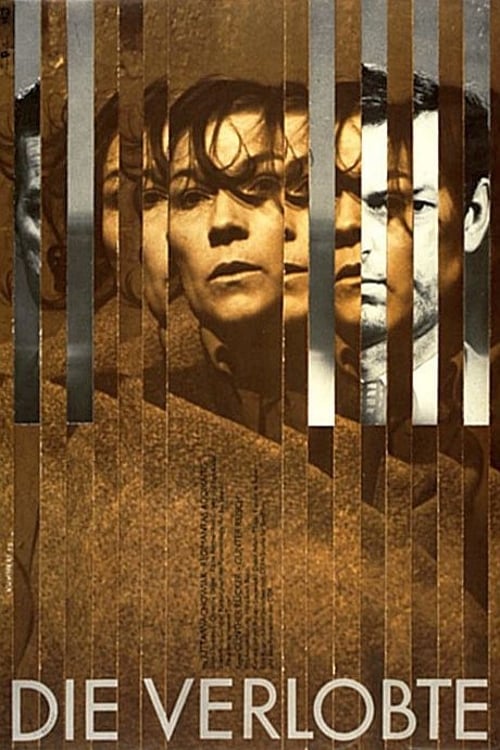
The wrenching story of a woman sentenced in 1934 to ten years in prison for antifascist activities. The love between her and her fiancée enables her to survive the tribulations of her time in prison, where she is one of few political prisoners.
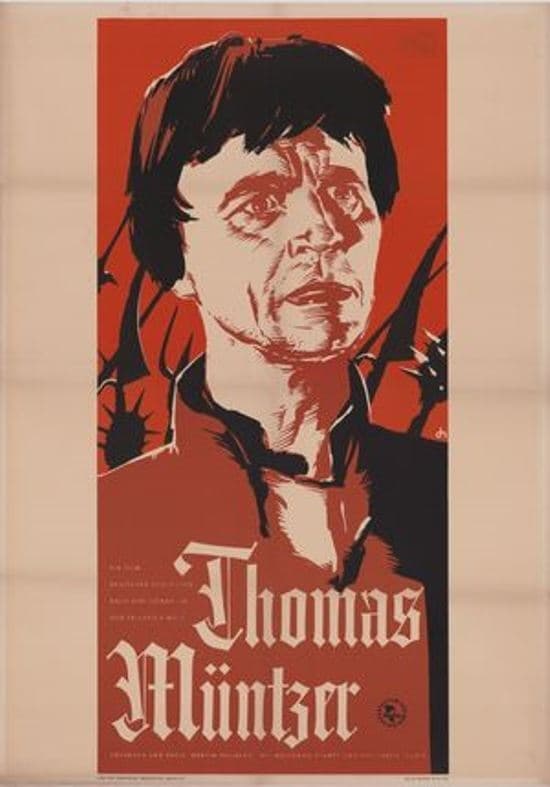
In 1523, young Thomas Müntzer arrives with his wife Ottilie in the Thuringian village Allstedt to assume the rectorate. As a follower of Luther′s teachings, he finds in the Bible not only reasons for clerical, but also for secular reforms. But when Luther turns away from the rural population after a discord with Müntzer, it is Müntzer who becomes the peoples′ spokesman. He is forced to go to Southern Germany, where he convenes with revolting farmers. But his way leads him back to Thuringia. In 1525, he and Heinrich Pfeiffer form the centre of the Thuringian peasant uprising in Mühlhausen, but their success is diminished by the fact that peasants and craftsmen don′t seem to be able to work together. In Frankenhausen, Müntzer becomes the leader of a peasants′ army that is set to fighting the ruler′s army – and sustains a devastating loss. Müntzer is arrested and sentenced to death by decapitation for his insurgency.

The film "Die Unbesiegbaren" covers an episode in German history, in which the Bismarck government tried to mitigate the rise of the social-democrat movement.
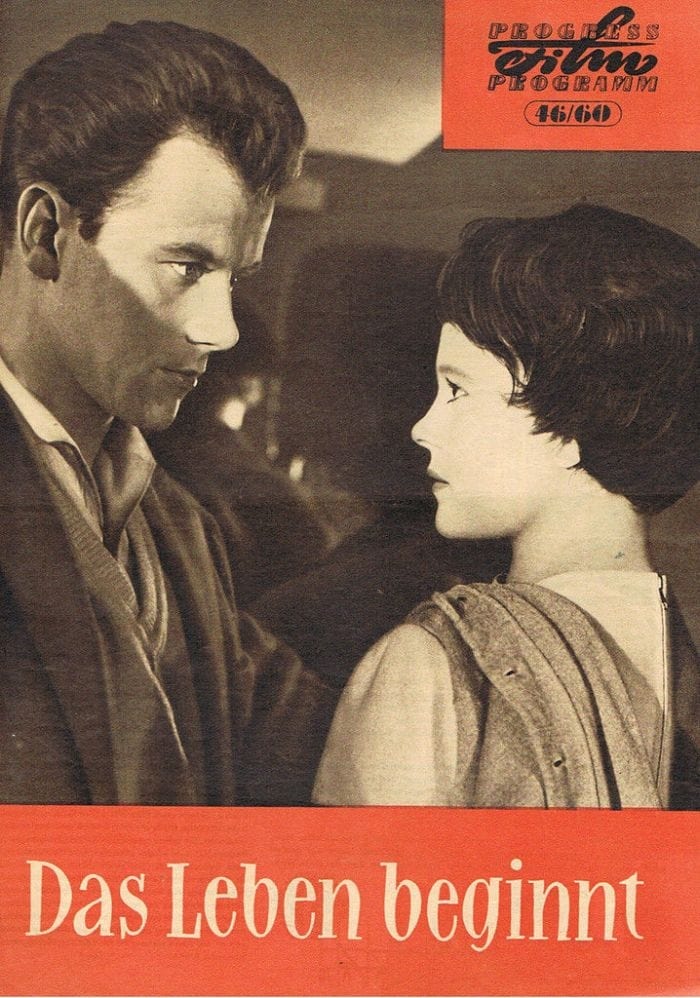
A new world full of excitement and temptation opens up for 18-year-old Erika when her father flees from Krüselin, a small village in Brandenburg, to West Berlin, taking his daughter with him. Her uncle's luxurious house, the turbulence of life in the big city, and her cousin's progressive thinking and quick wit all turn her head at first. But behind all this glitter and tinsel lurks the cold, hard world of money and Erika begins to feel homesick for the town where she grew up and for Rolf, her first real boyfriend.
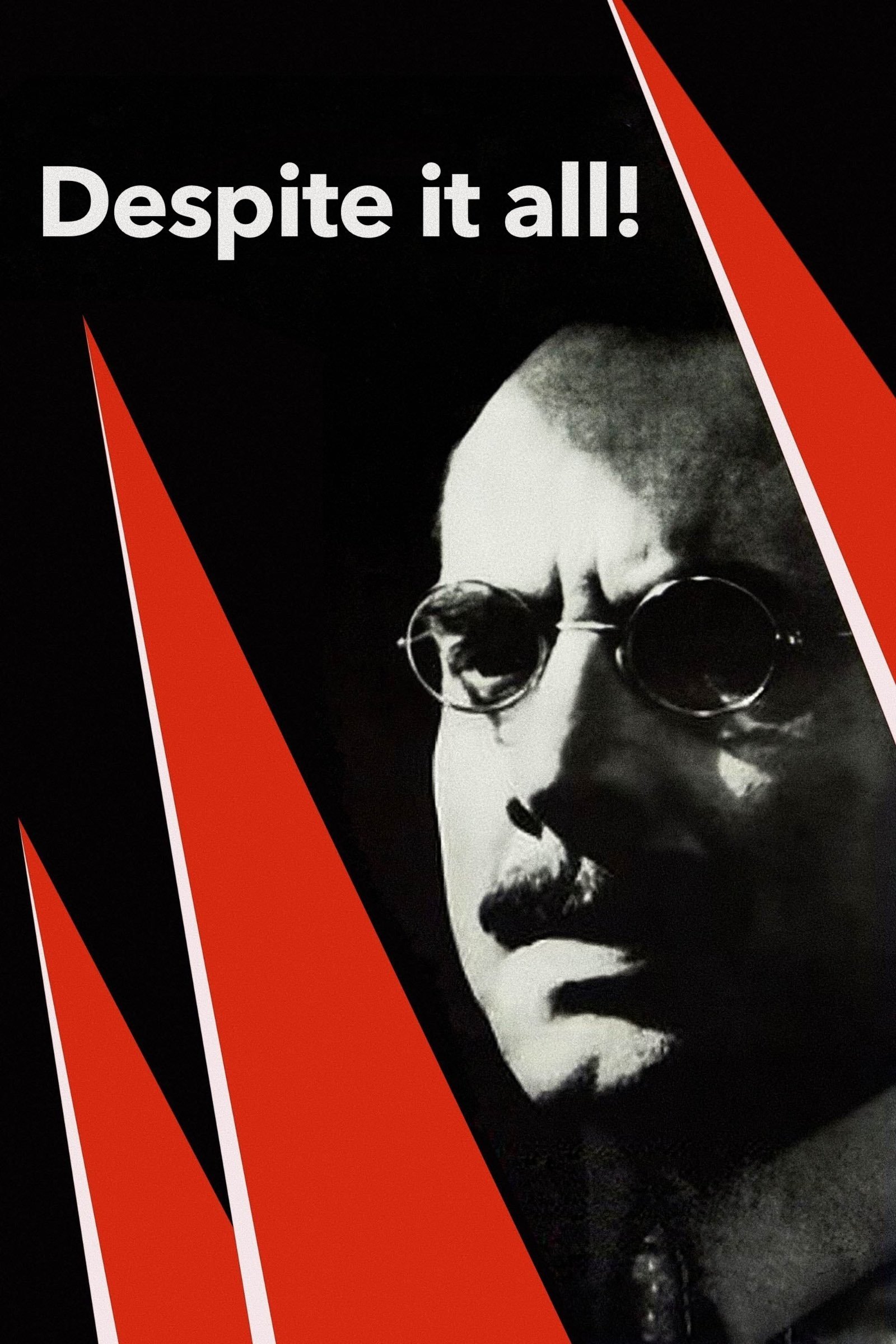
October 1918: Karl Liebknecht is released from prison and Berlin workers celebrate his release. Although WWI is almost over, the German Kaiserreich in vain sends its last reserves to the slaughter. The working class is in a rebellious mood; the uprising of Kiel’s sailors against war and militarism sets off a call for revolution led by Liebknecht. On November 9, Liebknecht declares the Free Socialist Republic of Germany. But pro-Kaiser military and right wing Social Democrats oppose him.
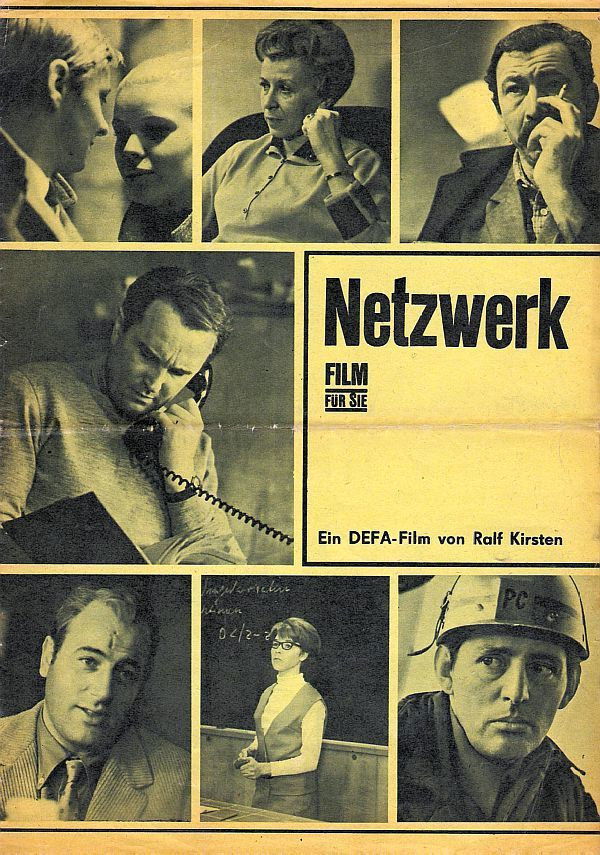
The writer Schaffrath enters the office of Dr. Hans Kahler, a graduate engineer, and asks if he may look around the facility, as he intends to write a report on the workers in the new section of an oil refinery.

The "Astoria", an English luxury liner, collides with a freighter shortly before the end of its voyage and threatens to sink. Captain Mitchell, successful and envied, sets in motion an expensive rescue operation. He manages to avert a catastrophe and bring the passengers and the ship to safety. But the shipowner considers the operation excessive, calls Mitchell a coward and fires him. His career seems to be over. When his friends and his fiancée also make fun of him, he devises a cunning plan of revenge.

A documentary and film essay about the artist scene in East Berlin during the 1950s.

A conference is to be held once again to discuss the construction of a new dam, which Professor Paul Satie rejects. During a train journey, he spontaneously leaves the train. Here in Wolfsgrün, from 1948 to 1950, he helped build the old, now far too small dam as a youth brigadier. He and the others who helped build it have erected a monument to this. A monument with his name on it. Is that perhaps why he is against the new dam?
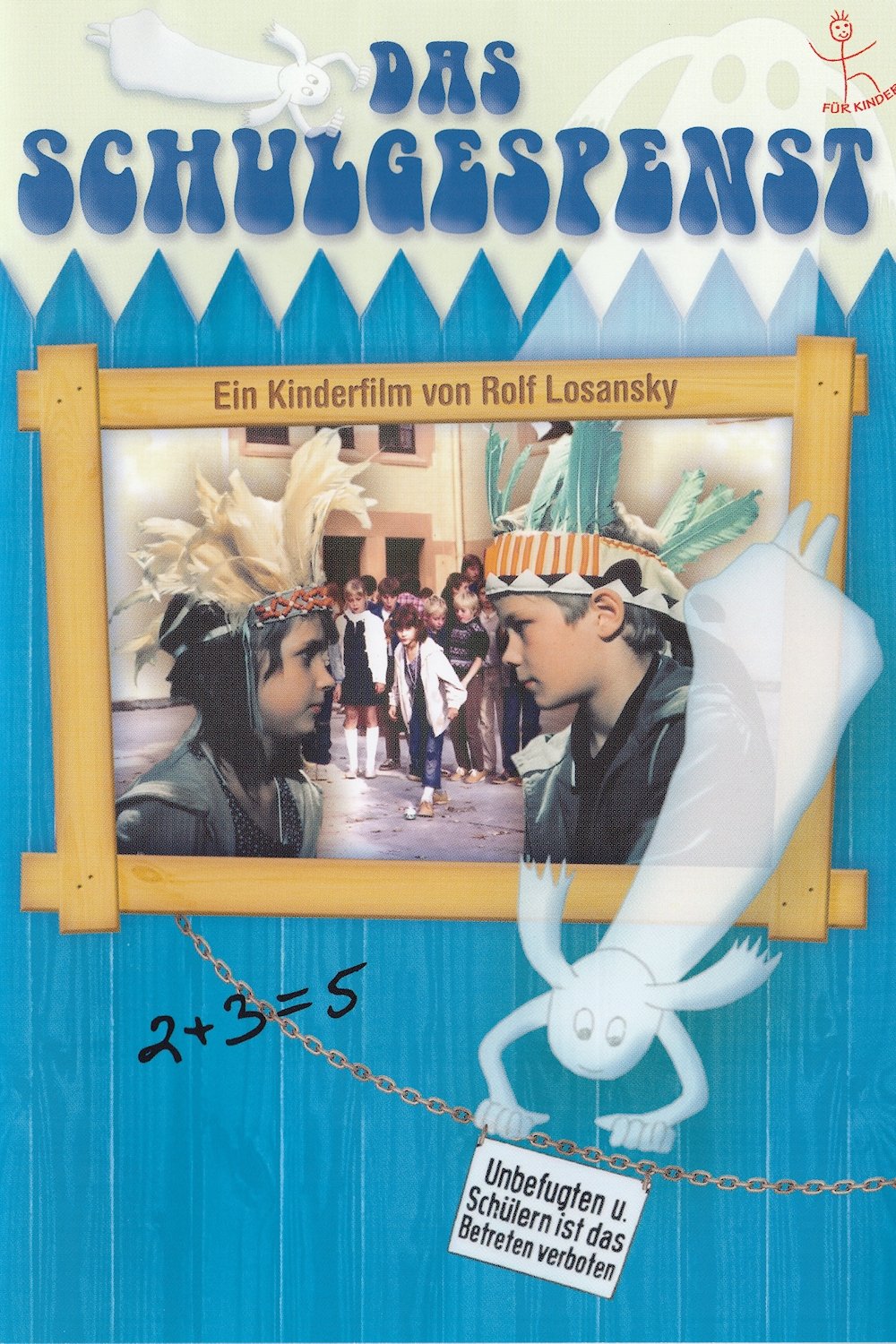
Carola is a mischievous girl who doesn't care much for school- except for sports and recess, of course. Without her good friend Willi to keep her on the straight and narrow, she would really be in trouble. One day at school, Carola has an idea. She invents what she calls "International Ghosts' Day" and a ghost named "Buh" to go with it. When Buh turns out to be less-than-imaginary the two decide to switch places, with Buh taking on all the schoolwork, and Carola taking the opportunity to play practical jokes on all her friends...

One day, the happily married Karl Lehmann is asked by his single colleague, Mrs. Schmidt, for an unusual service: She wants a child. Lehmann is willing to help. His wife Inge and Mrs. Schmidt have a child at the same time, and since the women like each other, they make an agreement. They share Karl Lehmann. One week Inge gets him, one week Mrs. Schmidt - always alternating. It could be nice if it weren't for the prudish, shocked or even envious people around them. However, some see it in a positive light. A Mr. Schmidt is interested in Inge's week off and a colleague Lehmann is interested in Mrs. Schmidt's week off. And it's not long before Mr. Karl Lehmann is booted out and seeks refuge with a waitress.
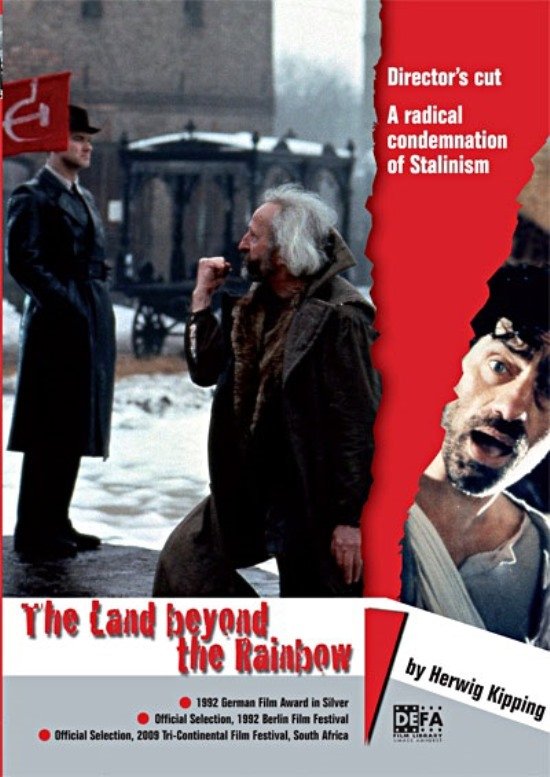
A surrealist tale set in the East German village of Stalina.
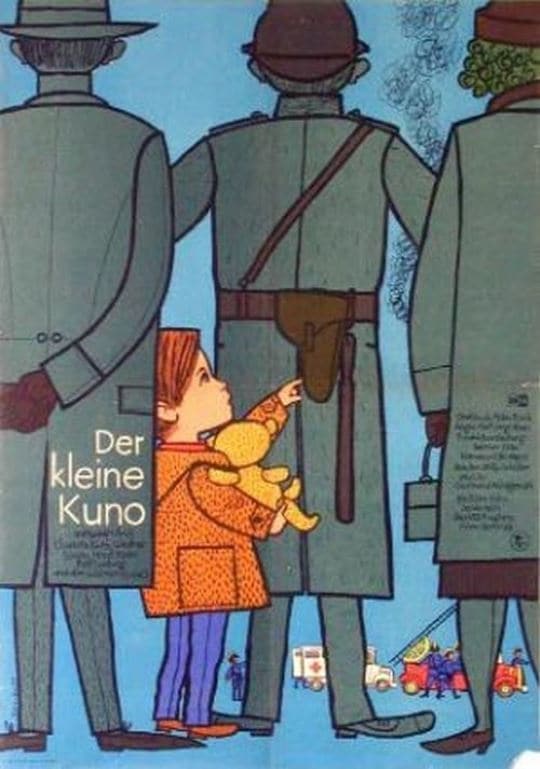
What do grown-ups actually do at night? Little Kuno has been asking himself this question a lot lately. One day, the curious six-year-old decides to get to the bottom of it and sneaks outside his house at night. He wanders around the streets aimlessly and experiences some very exciting things.
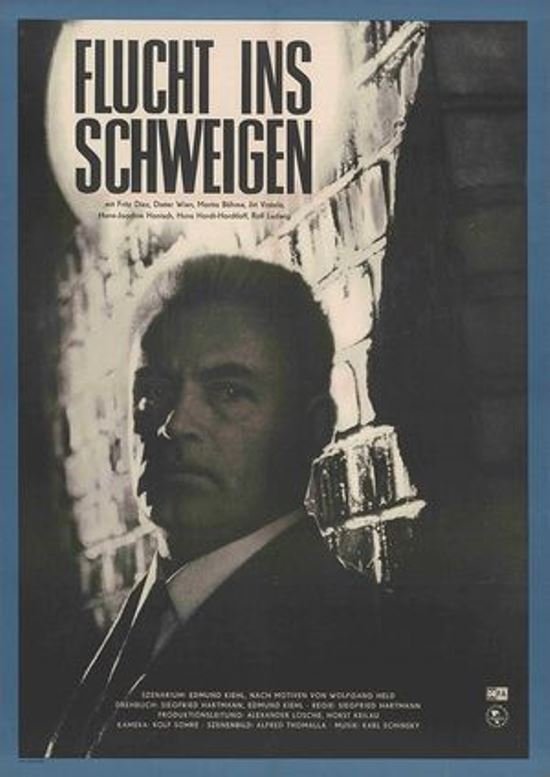
During construction work in a small town in Thuringia, the burial of an unidentified man in an SS uniform with gunshot wounds is discovered. Taking into account that there were no military operations in this place and an ancient gold coin was found near the body, two police inspectors, Captain Stetter and Lieutenant Hoffmann, arrive to investigate the unusual incident. Soon they manage to get on the trail of a mysterious crime that took place twenty years ago, but it is cut short with the murder of the owner of the plot of land where the corpse was found. Realizing that the new crime is closely connected to the death of an unknown SS man, the police search for clues in the memories of old residents and archival documents.

Film by Kurt Jung-Alsen.
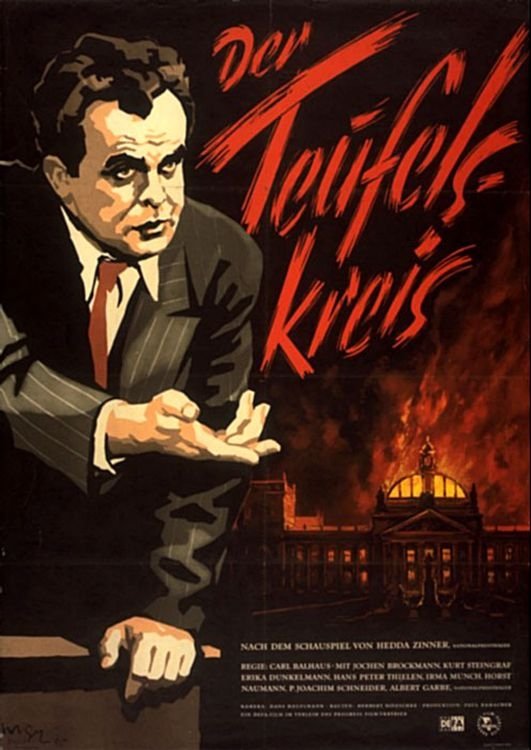
Shortly after the seizure of power by Adolf Hitler at the beginning of 1933, preparations were underway to silence the members of the socialist and communist parties.

The soccer team of the company sports association "BSG Hartenfels" is going downhill. New training methods - based on scientific findings - are needed, says Paul Schmidt. But he runs up against the star striker Wieland, whose friends naturally stick by him. So water sportswoman Ruth, deputy chairwoman of the BSG, decides to use female cunning to change the situation for the better. She and her friends Lilo and Uschi want to "work" the unruly ones. In the end, there is indeed a victory - on the sports field - and two happy couples.

Spain 1936: Despite the victory of the Popular Front, nothing has changed for the peasants; the grandees continue to oppress them. The poor peasant son Pablo fights back and encourages the others to demand their rights. The grandees flee. Students from Madrid arrive and help the rural population to democratize. Pablo falls in love with Magdalena and learns to read and write from her. When Franco begins his bloody attack on the young republic, they defend the village together. When Magdalena dies in a bombing raid by German planes, Pablo begins to hate the Germans. However, fighting together with the International Brigades, he realizes that there are other Germans too, and that they share a common enemy.

Young, pretty Milli is passionate about winter sports, and of all things, she wins a vacation trip to the Baltic Sea at her company - in summer, of course. After her first dip in the sea and meeting a nice young man, her initial displeasure fades. But not for long, because Robby turns out to be a filou, shuns regular work and is also a womanizer. After some confusion, Milli's vacation ends well after all. She goes home with Robby, who wants to take a job as a car mechanic in her home town of Suhl.

GDR and West Berlin in the 1950s. Hans Nettermann, a designer at the "Komet" bicycle factory, is a favorite of the BSG road riders. His dream is to one day ride in a stand-up race. A construction error throws him back in the road race. They work for a long time to fix it. Then he is persuaded to go to West Berlin to become a professional rider. Although he makes it to the top class, he also learns about the scams in professional sport. He marries Marianne, who has followed him and tries to persuade him to return to the GDR, which he eventually does. After some difficulties at work, he is nominated for the first amateur endurance race in the GDR and wins.

This documentary, intended to inspire new home filmmakers, tells the stories of ordinary people who learned how to make their own films by renting inexpensive AK 8 cameras. A young couple documents their vacation on the Baltic Sea, a garden plot community celebrates a party, and comrades from a sports club even film themselves playing cards underwater. The film's sarcastically humerous commentary on everyday life plays with clichés and taboos.

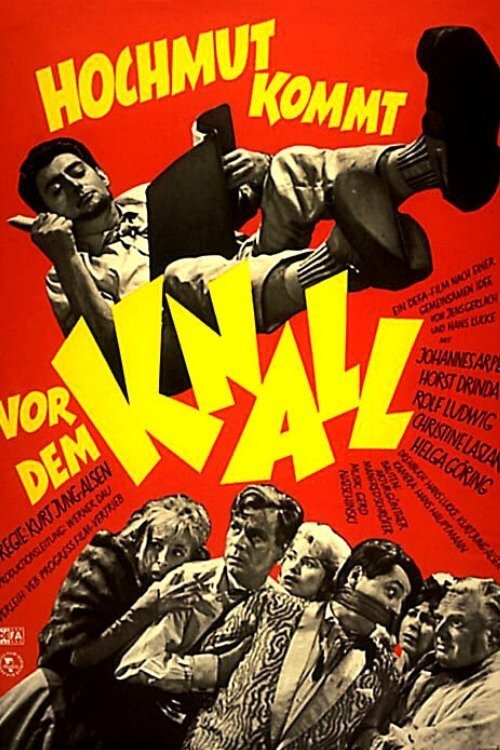
Under political pressure, a West German radio station stages a radio play about a Russian invasion of West Germany. A handsome fee convinced the unemployed Anton Wiesel to take on the direction. At the same time, the driver Harry Kyritz received an inheritance: a decrepit barge with which he intends to become an entrepreneur. His acquaintance with Madeleine Müller, the daughter of a coal wholesaler, comes at just the right time. But so does Mr. Müller, because he is broke. So he throws a big party to sell his daughter as his last profitable asset. Harry has a good chance when the radio plays a radio play about a Russian robbery. The guests take it as a factual report and flee to the cellar. Harry reveals his true financial situation, but Müller accepts him anyway - as a model worker for the Russians. But when the mistake is revealed, Harry is out of the running in favor of a wealthier son-in-law.
Martin, the young protagonist of this hybrid documentary interspersed with staged scenes, is afraid of school, his father, and the future in general. He could perhaps talk to his mother, but he doesn't dare because of his poor school performance. Martin knows that he will have to repeat the year if things continue as they are.