
In this East German film, the third one in The Third is Margit's third lover. After her mother's death, Margit has two affairs which don't work out, and one lesbian friendship which she retains. She is looking for a husband, though, and thinks she has spotted a candidate in her fellow factory worker. As she contemplates marrying him, her story is told in a series of flashbacks.

On the occasion of their daughter's birth, the king and queen give a lavish feast. Among the guests are twelve fairies who endow the infant in the cradle with all good qualities. As the king loathes diligence, he does not invite the thirteenth fairy - the fairy of diligence. A captain lets her slip into the castle and she casts a spell on Sleeping Beauty, wishing death upon her. The twelfth fairy transforms and mitigates the spell. On the day she turns fifteen, the princess is to sink into a hundred-year sleep after pricking her finger on a spindle.

East Germany 1978. Karoline and Robert, teenagers who used to live in the same house until Robert's family moved, meet again at this year's holiday-camp. First love, first nude experience, first self-made theatre performance of "Romeo and Juliet". A look at the east-German youth in the late seventies.

The opera singer Ludwig Löwenhaupt wants a proper festive roast for Christmas, so he buys a goose in advance to feed the whole family. What he doesn't realize, however, is that the children, Elli, Gerda and Peterle, will grow fond of the animal, which is christened Gustje, and will no longer want to eat it. After the "liberation", the "five kilos of meat", which were initially locked up in the cellar, become a pet that the children take to bed with them and communicate with. But shortly before Christmas, father Löwenhaupt still wants to slaughter them. However, as his family protests and his conscience gets in the way, he can't slaughter the goose after all. So Gustje only has to leave a few feathers as proof that she has been plucked, and the opera singer is given another goose that has already been cut up.

A flamboyant comedy about love, work and money—revealing that the "planned" economy produced some unconventional entrepreneurial methods.

In the forests of the Ore Mountains, on the border with Bohemia, a gang of smugglers is up to mischief. Anyone who dares to oppose them is murdered in cold blood. The locals are paralyzed by fear of the ominous bush ghost that is said to be behind it all. Then a stranger turns up at the remote forester's lodge and begins investigating a murder that took place twenty years ago. Having become wealthy in the Alaskan gold fields, Arndt is now looking for the woman he once loved and whose perjury landed him in prison. The forester and the weaver Eduard Hauser help him with his investigations. But Hauser himself soon becomes the victim of a sinister intrigue. Fritz Seidelmann, an unscrupulous profiteer who is after Hauser's fiancée Angelika, lures him into a trap. Hauser is arrested as an alleged bush ghost. For the time being, Arndt can do nothing for him ...
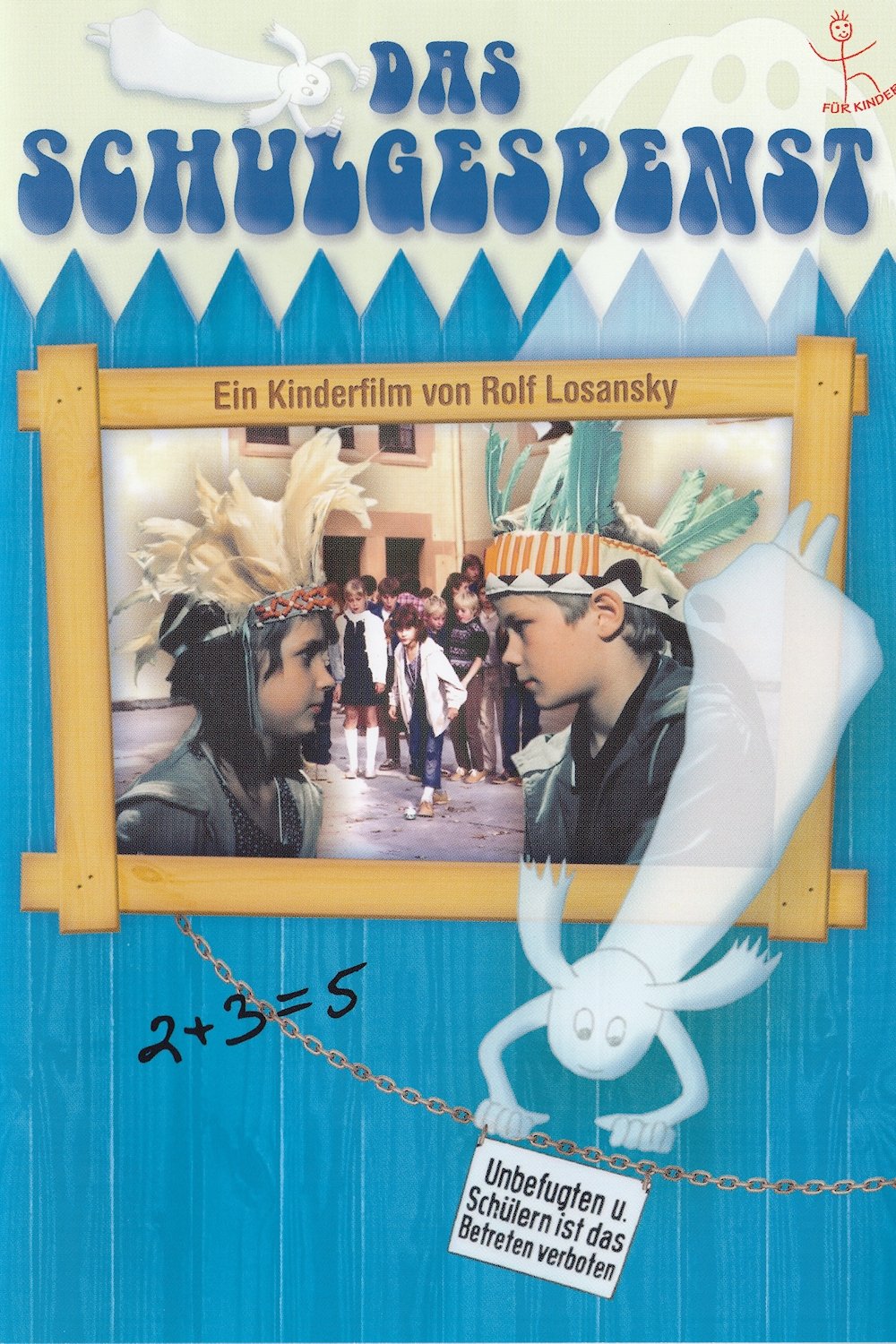
Carola is a mischievous girl who doesn't care much for school- except for sports and recess, of course. Without her good friend Willi to keep her on the straight and narrow, she would really be in trouble. One day at school, Carola has an idea. She invents what she calls "International Ghosts' Day" and a ghost named "Buh" to go with it. When Buh turns out to be less-than-imaginary the two decide to switch places, with Buh taking on all the schoolwork, and Carola taking the opportunity to play practical jokes on all her friends...

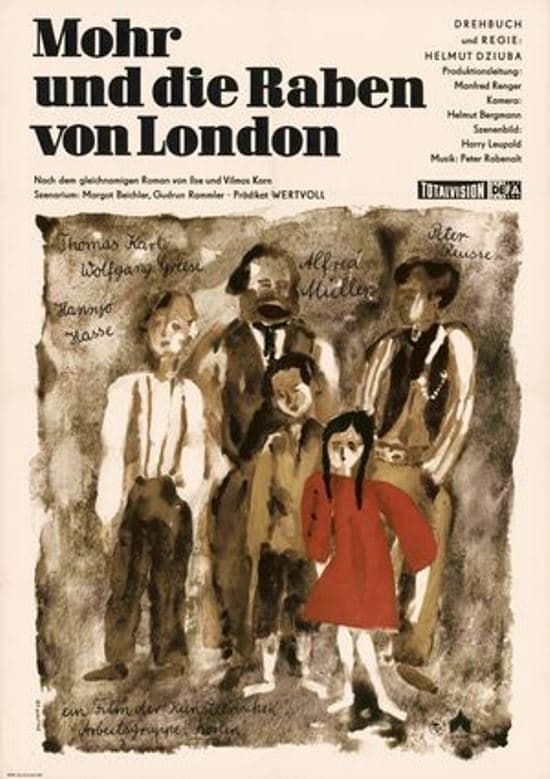
London in 1856. Karl Marx is living in exile in the British capital. One day, "Mohr", as Marx is called by his friends, meets the 13-year old worker′s son Joe. The boy works every day for twelve hours in a spinning mill and even has to work night shifts although that violates current rules. Marx tries to end the illegal activities of the spinning mill owner and one night shows up at the mill together with an inspector. But his foray is undermined by a robbery by the rebellious raven gang that is led by Joe′s brother Billy. The spinning mill owner of course takes this chance to blame his young workers for the theft. But Marx is not let astray and does not stop to fight against child labour. Furthermore, he tries to get the members of the raven gang back on the straight and narrow – with success.

Mechanic Hannes Blaschke and his wife Maxi, who works as a bus driver, have just become happy parents of twins. Now they have a serious transportation problem: Their Trabant is far too small for the grown family that furthermore includes two sons and a dog. Thanks to the support of a state secretary and of his brigade, Hannes acquires a Tschaika – a limousine that is normally restricted to representational purposes – for a small price. Whereas Maxi views the state carriage only as a useful means of transportation, Hannes enjoys the unusual pre-emption he is receiving for the spectacular car. Hannes, who normally is just a humble guy, starts to grate his colleagues with his new affectations. Thus, they teach him an effective lesson: They decorate the state carriage with flowers and thus bring Hannes back down to earth in a humorous way.

A depiction of class conflicts in Germany between 1918 and 1945. The Spartacist Erwin is shot by officers in 1918, and his pregant working-class bride Marie begins a new relationship with social democrat Geschke. Erwin's son Hans grows up to be a communist like his father, leading to bitter hatred between him and his Nazi step-brother, while Geschke becomes increasingly resigned to the political situation in Germany. The three aristocratic officers who shot Erwin many years ago meet again during the Kapp Putsch, but their support for the Third Reich eventually leads each to their deaths.

Fifteen-year-old Heinz Stielke is a Hitler Youth fanatic who is devastated to learn a hidden truth about his respected father who was a German officer in WWII: He was Jewish. Pushed out of his community after the discovery, young Heinz falls into a tailspin of alienation and anger. He is subsequently thrust into a series of social collisions across the war-torn German fatherland.

A Western set in the US around the turn of the century. Atkins leaves the city to return to the valley where he formerly lived. There he meets Native Americans who learn to trust him. They ask Atkins to buy weapons for them. On his journey Atkins meets Morris, whose interest in mineral resources puts Atkins loyalty to the Native Americans to the test.

The young and rebellious Werther is passionately, but hopelessly, in love with Lotte. Although he knows that she is married to somebody who can offer her a secure future, Werther tries to be near her. Lotte cannot decide between these two men. She eventually rejects Werther, who does not survive her decision.

The school authorities want to read success stories in director Joachim Faber's reports. But they cannot simply be produced on an assembly line. Pupils, for example, use the wrong tone. The matter draws circles until the superiors finally talk about refusal to work. Director Faber is caught between the efforts to resolve the conflict with pedagogical means and the pressure from above.

The young Friedrich Freiherr von Kuhlbanz died almost 300 years ago, but he is cursed beyond death. "I will not rot in my grave if I have committed the murder of the shepherd Dühn", the squire once swore and became a legend as the mummy of Roggelin. One night, Maja meets the ghost of Friedrich in the crypt. And with his sad story, he is able to win her over to help him. Maja is determined to prove Friedrich's innocence.
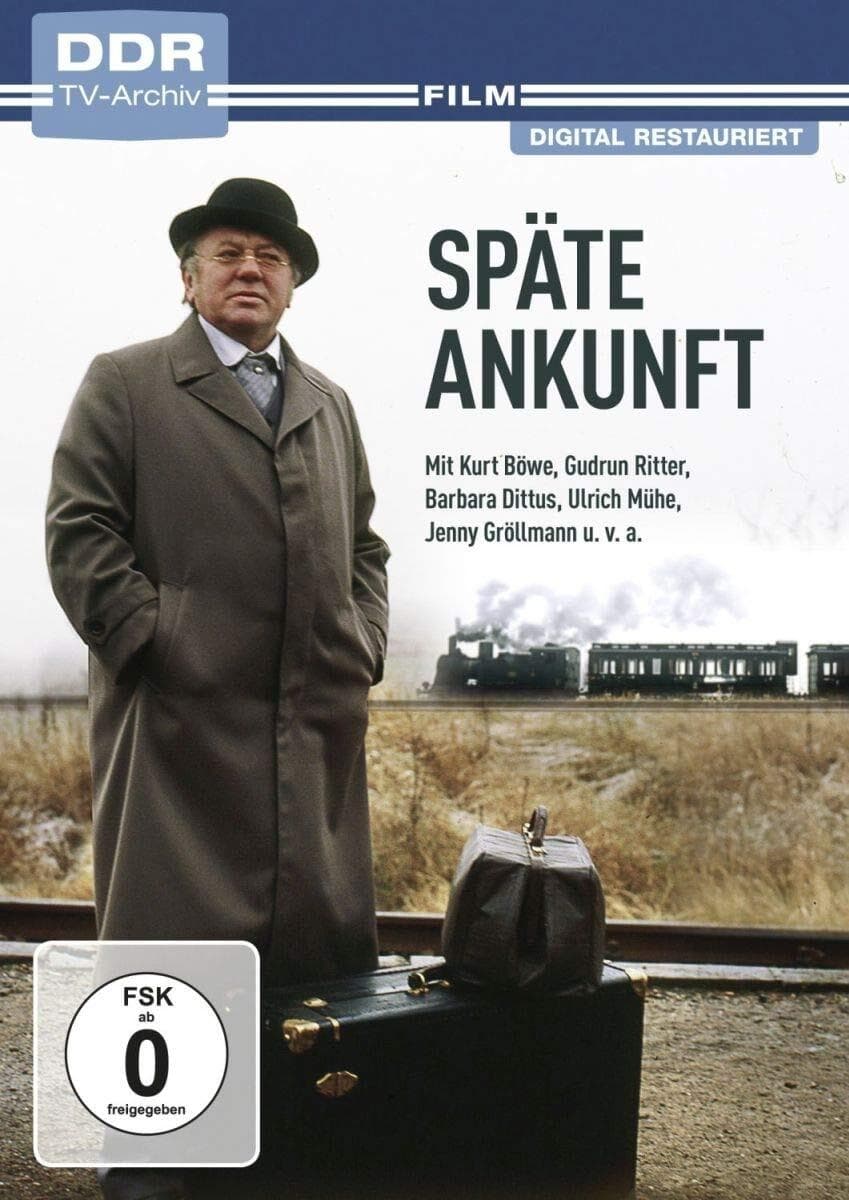
In 1896 the Berlin noble doctor Dr. Wilhelm Holtfreter takes over his well-to-do wife Mathilde and takes over the country doctor's office in the Prussian district of Westprignitz from the late Dr. Tochtenhagen. His decision was met with incomprehension everywhere.


When he reaches age 18, Peter is released from the children's home where he grew up, but this does not mean he is truly ready for adult life.

Tambari - it's a name of an old boat which children of a small village on a Baltic sea shore got from an old fisherman Luden. But not all the village adults were ready to approve it...

Europe, 1620: The well-known astronomer and mathematician Johannes Kepler, who teaches as a professor in Linz, receives the message that his mother is prosecuted as a witch in Württemberg. The truth behind the allegations is rather simple: His mother has been denunciated by a former friend after an argument with the authorities. Kepler tries desperately to convince the prosecutors of the absurdity of their allegations with rational arguments.

Twelve-year-old Isabel and her mother, who was a famous political singer, had to escape Chile after the 1973 military coup. Isabel’s father stayed behind fighting in the underground. For six years, they have lived in a new apartment building in East Berlin. At first, the neighbors made an effort to welcome them, but later became more distant. Isabel does not feel at home in the strange country. Not even her friendship to Philip, the neighbors’ son, can change her mind. Almost every day, Isabel sits on the stairs waiting for a letter from her father, from whom she has not heard for many years.

Normal everyday life in an apartment building on Plantagenstraße in East Berlin is disrupted when a truck pulls up with the new tenants' furniture. And they include two small children - now, of all times, when old Matuschke's wife has just died and consideration should actually be shown for the widower. Even worse for Mrs. Tillack, however, is the fact that the entire male world seems to be after her 16-year-old daughter Katrin.

Ramona lives her lonely life in Berlin working in a lipstick factory. One day she accidentally runs into Andrzei, a Polish mechanic illegally selling cigarettes in Germany during the weekend. One thing leads to another, and soon she finds herself pregnant. Then her life starts falling apart, when Andrzei tells her he already has a wife back in Poland and her baby dies shortly after its premature birth.

The fun-loving, 26-year-old architect Franziska Linkerhand (Simone Frost) works for a famous professor. Yet, she feels restrained by her dependence on him and longs to take risks. When her marriage falls apart, she moves to a small town for a fresh start. Franziska approaches her new life with vigor and idealism. Many of her colleagues have given in to the dictates of economic restrictions and prefabricated apartment blocks; but Franziska hangs onto her ideals and, as in her private life, is not willing to compromise…
In the Jim-Crow South, Val Xavier is a bass-playing drifter who retains a wild, compassionate spirit amid neon-lit decay. Nicknamed “Snake Skin” for his animal-hide jacket, Val seeks to shed the emptiness of wealthy nightclubs and, after turning thirty, yearns for a modest, purposeful life grounded in honest work.
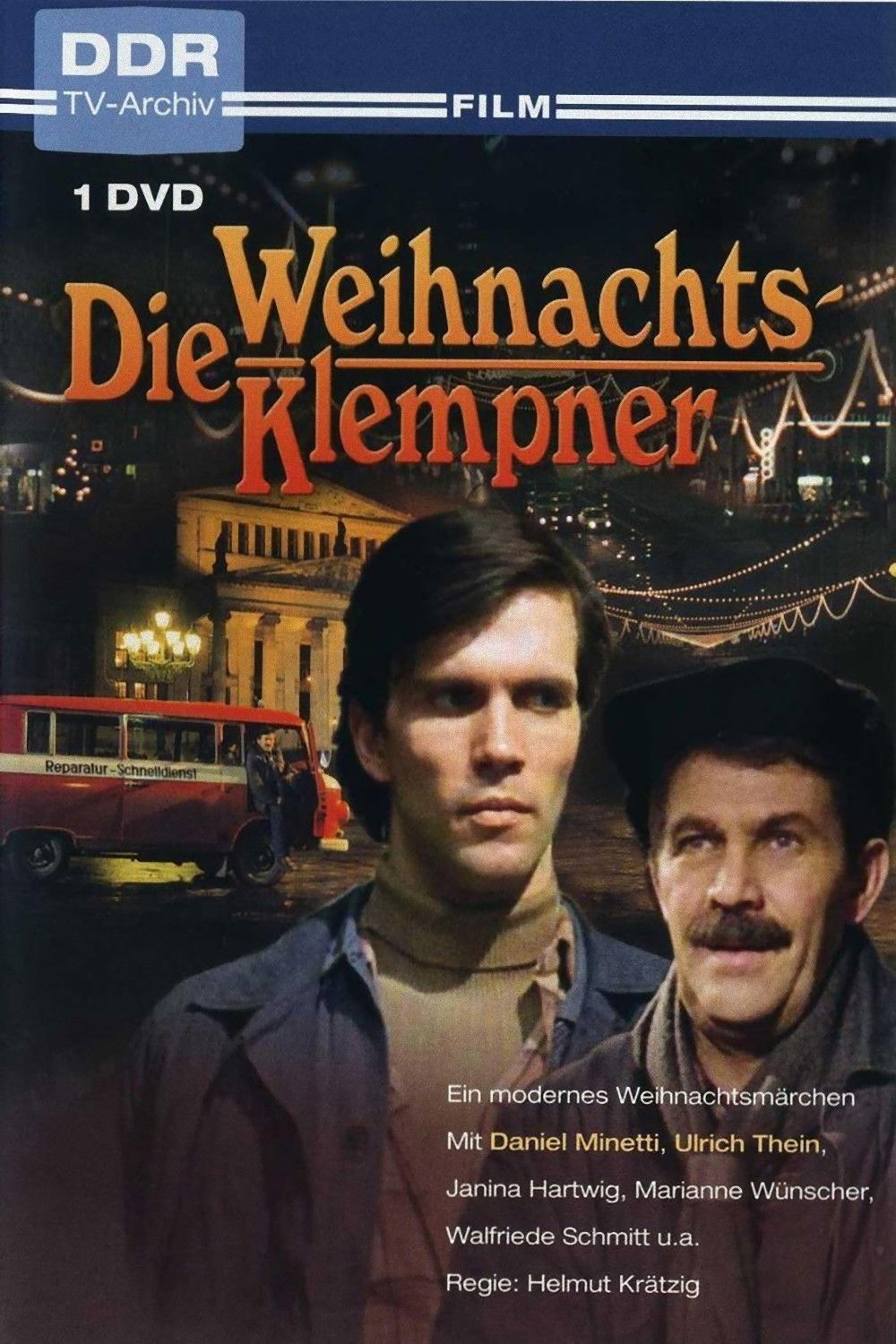
Plumber Martin and his younger colleague Frank are on call on Christmas Eve of all days. Frank's girlfriend Regina, who is expecting her first baby at any moment, is anything but thrilled. But it doesn't help, duty is duty. One emergency call follows another, but this evening it's not just broken water pipes that are waiting for the two plumbers...

A dead body is found in a burning car on the Berlin-Leipzig highway. The police investigate: Murder. Objects found in the car point to gold smuggling. At the funeral of the murdered man, his circle of acquaintances is scrutinized. They are all suspects. The trail leads detective Lindner to a bar.

This quirky episodic comedy weaves together three plotlines centered around the employees of a car garage, with some unexpected fairytale elements to get things moving. A woodland fairy convinces shy bookkeeper Piel to suddenly start driving his Trabi far above the speed limit. Manager Neumann sells his soul to a black cat in order to purchase a more respectable vehicle. And a spirit named "Car Accident" offers to warn owner Sengebusch about upcoming traffic accidents so he can make money by always being the first on the scene.



In the 22nd Century, antiquities command huge prices. A woman uses a time machine to travel back the the 19th Century in order to buy paintings from Vincent Van Gogh before he was famous. Will she be wealthy upon her return?
The play tells the story of the chronic drunkard and landowner Puntila. When he is drunk, he is virtually free of himself; he develops immense strength in these phases and can really be a human being. Then he wants to fraternize with his chauffeur Matti, wants to give him a forest and a sawmill, and even wants to give him his daughter as his wife. Puntila could accomplish many, many more good deeds in his frenzy, but when he returns to a sober state, Puntila reveals himself to be the "black sheep" of his capitalist class and an insignificant person. His classmate reads him the riot act and shows him the limits of this species, which Puntila can never break. GDR television showed the play in a production by the Berliner Ensemble.
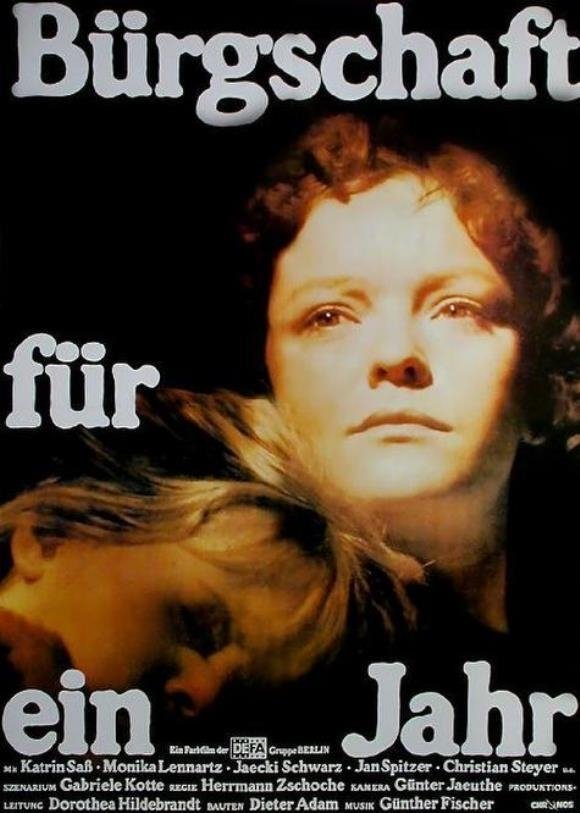
Nina Kern, a divorced woman in her late twenties, will soon be fully deprived of her custody rights for her three children, who already reside in a home for the displaced due to Nina’s many years of willful neglect. Although she has broken her promise to change her moral conduct many times, she is given one last chance on probation.
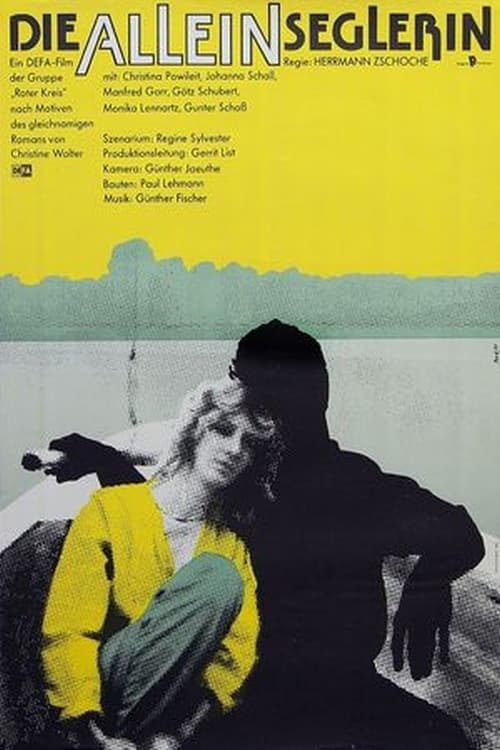
Christine inherits a sailboat from her father, whom she barely knew. Christine is a divorced single mother and her job at a research insitute leaves her with too much work and too little time to sail. She can't find anyone to buy the boat at full value, so she tries to repair it over the winter in the hopes of being able to get a better price in the spring. Working on the boat become something of an obsession to the detriment of Christine's relationships with her son, boyfriend and collegues. When the boat is finally ready to sell, she isn't sure that she is willing to part with it after all.
Lydia Kowalenko is fired from the pharmaceutical company where she has worked for many years because she refused to help cover up the use of a dangerous chemical. Her daughter Katja, however, has no scruples and risks an operation which is more beneficial to her own medical research than to the convalescence of a young patient. Then Katja's only son dies after a car accident. Was he too the victim of a career-minded doctor?

One day, the happily married Karl Lehmann is asked by his single colleague, Mrs. Schmidt, for an unusual service: She wants a child. Lehmann is willing to help. His wife Inge and Mrs. Schmidt have a child at the same time, and since the women like each other, they make an agreement. They share Karl Lehmann. One week Inge gets him, one week Mrs. Schmidt - always alternating. It could be nice if it weren't for the prudish, shocked or even envious people around them. However, some see it in a positive light. A Mr. Schmidt is interested in Inge's week off and a colleague Lehmann is interested in Mrs. Schmidt's week off. And it's not long before Mr. Karl Lehmann is booted out and seeks refuge with a waitress.

Grandpa Lörke is preparing for a contemplative, quiet Christmas Eve. But nothing comes of it, because his daughter Anne informs him that his 17-year-old granddaughter has disappeared.

On the way to summer camp, eleven-year-old Lena develops a crush on Wolfgang, but Antonia is interested in him too. Although Lena and Wolfgang grow closer to each other, camp director Eichler disapproves of their relationship and tries to split them up by assigning them to different groups. The conflicts escalate until one night, during a disco event, Lena suddenly runs away.

A group of young people draws straws to see who'll steal some cigarettes. With this theft, Sebastian starts a bizarre, symbolic odyssey through a sclerotic world, in search of himself and of truth and justice. When he tries withdrawing from one social paradigm, he finds himself caught in another.

The film tells the love story of two young couples. According to their social ranks, construction worker Edy is dating employee Siegi, while medical student Dieter is dating art school student Sonja. Rather unintentionally, they exchange partners. During a carnival ball, Dieter makes out with Siegi because he falls for her her fresh and happy girlish manner. Sonja coolly observes this game and sees this intermezzo as a test for their relationship. While Siegi and Dieter vacation at the sea, Sonja falls in love with Edy. Now the die seems to be cast for new constellations. But when both couples stand in front of the registrar’s office, they finally come to their senses.

During a weekend spent on the island Hiddensee, the snobbish high school student Jan, who has just been expelled from school, meets Christine. Christine is impressed with his bragging attitude although he just uses it to hide his insecurity and his remorse about the fact that he was sacked. Naturally, he keeps quiet about his current situation. Christine’s companion Hannes is less thrilled about Jan. Later on, the three of them meet again at a dockyard in Stralsund. After the disreputable end of his school career, Jan is assigned to the very brigade in which Christine and Hannes work as a crane operator and a brigadier respectively.

Five Days, Five Nights (Fünf Tage, Fünf Nächte) takes place in Dresden in the immediate aftermath of the Second World War. While Dresden is in ruins, over two thousand paintings by artists including Rembrandt, Raphael, Rubens, Giorgione, and Vermeer have disappeared from the city’s Old Masters Picture Gallery. Red Army captain Leonov and his soldiers have been ordered to recover the lost paintings. During the next five days, Dresden’s residents join the search for the collection. A secret Nazi document offers a first lead…


On a forest road in the Brandenburg March, village teacher Potsch accidentally encounters the distinguished Professor Menzel, who got stuck there in his car. In the conversation that ensues, Menzel and Pötsch quickly discover that they both are great admirers of the early 19th-century writer Max von Schwedenow who was born in the area.