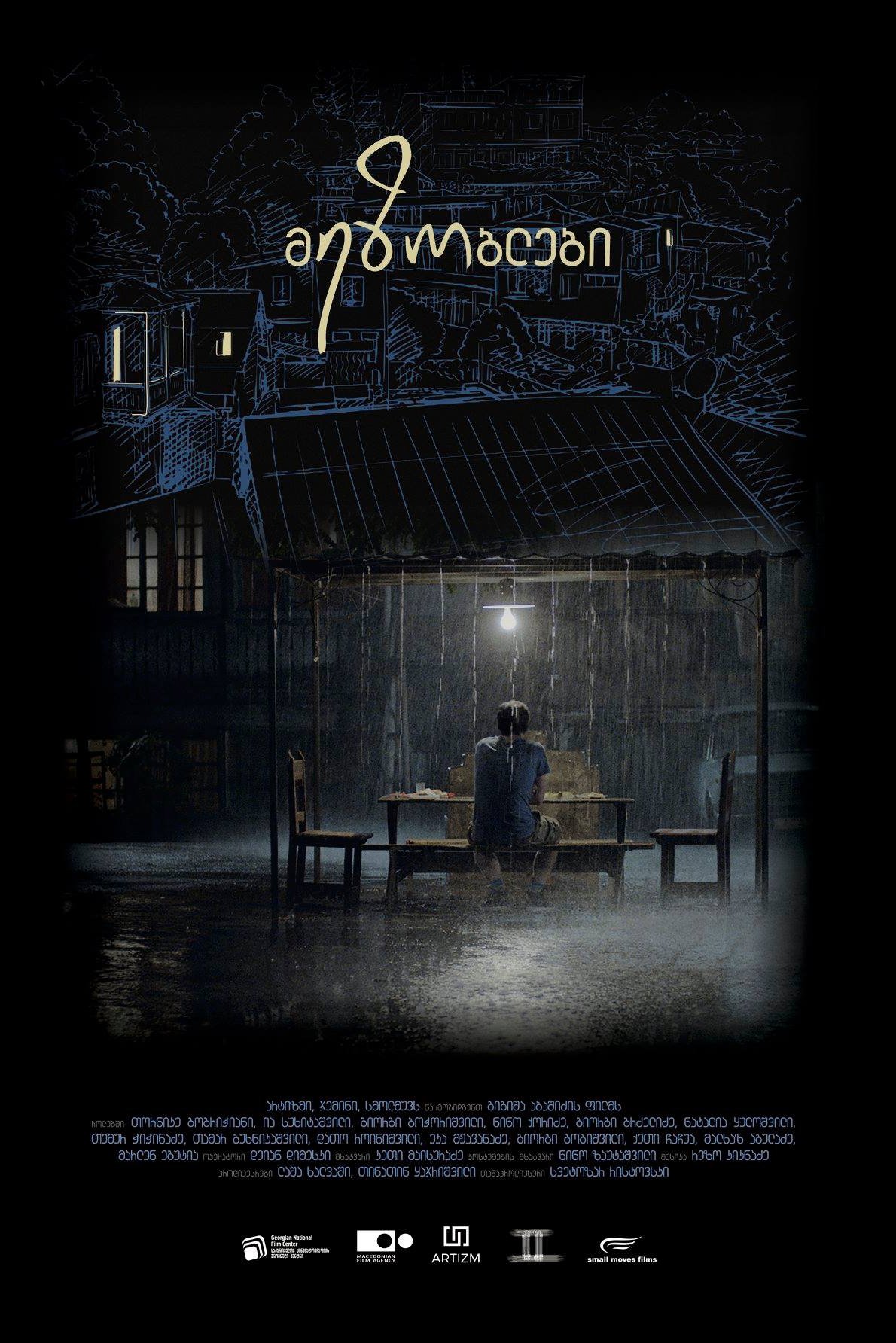
Lifetime friends and neighbors from the same year in Old Tbilisi turn into enemies and confront their fellow neighbor's family when an investor shows up to buy their yard and houses.
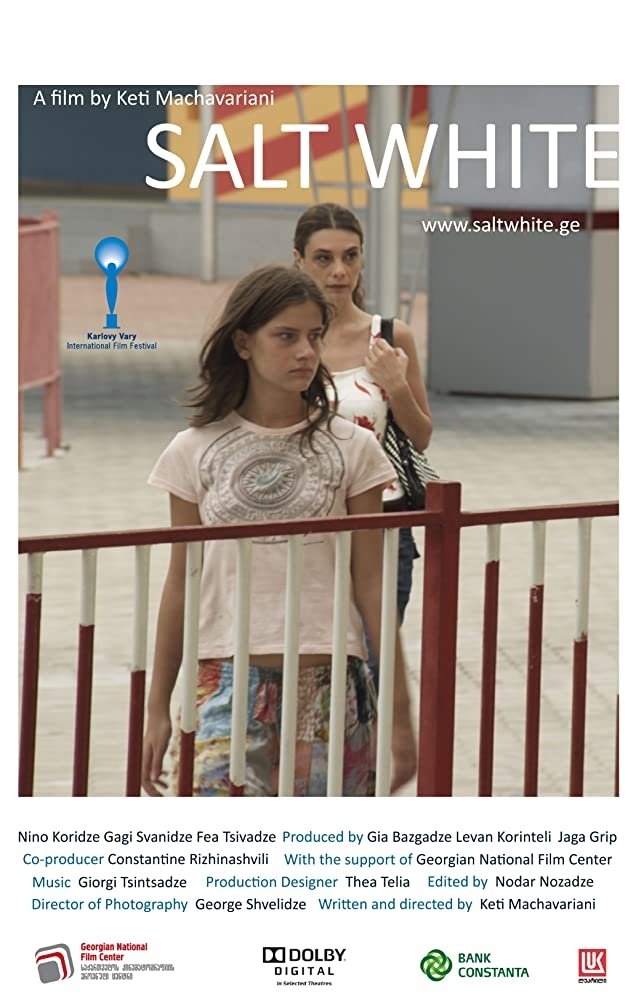
Nowadays, Nino and Niko's closed world is disrupted and changed forever by the homeless Sopo. She points Nino to a new path - the path of hope.

The shepherd boy Besame is lucky, with the help of the old maestro he becomes a student at the conservatory and begins to learn to play the flute. But the governor and other envious people lock Besame in a correctional cell to learn the ruthless rules of life. Here he is tortured, deprived of music, accustomed to money, and turned into a strong animal. Besame's metamorphosis frightens even the bullies, but the maestro saves the young man again - the sound of the flute washes away all the filth from Besame, returning love and freedom.
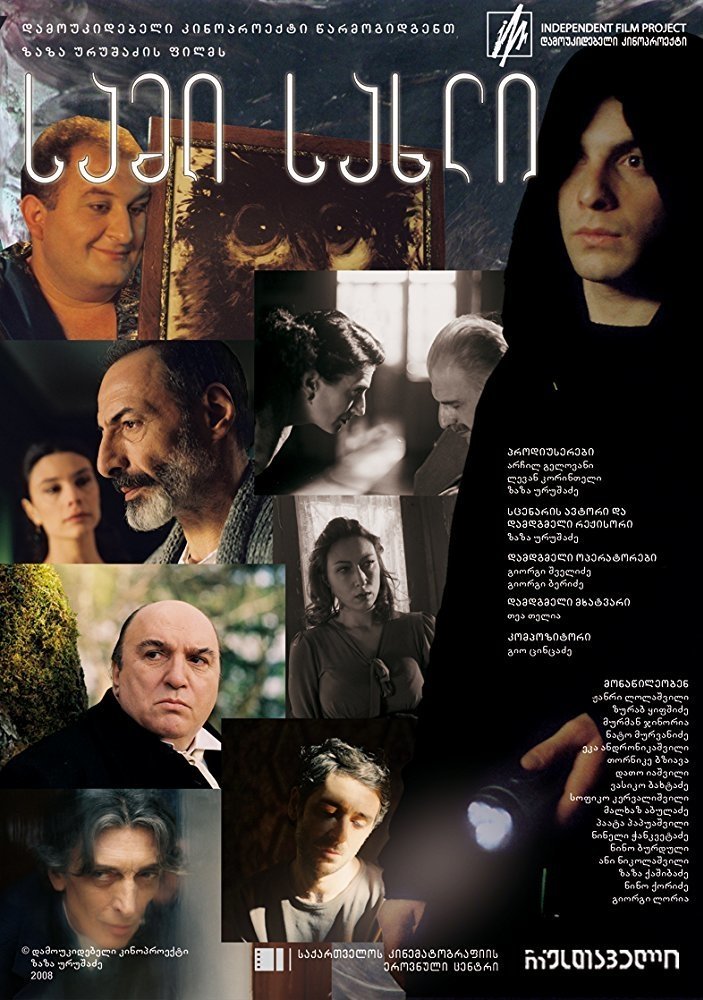
hree stories happening in three different centuries, revolve around a mysterious painting entitled "Two Owls". In the 19th century thread, a man living in a big mansion is worried about his brother whose wife died a while ago. The brother however behaves as if she was still alive. A befriended psychiatrist is being called for help in order to examine the phenomenon in long conversations. He has to recognize however that the man's behavior doesn't harm anyone. He actually offers a painting to the doctor which his wife allegedly just finished: it's called "Two Owls". The painting reappears in the midst of World War II. A woman finds it in the apartment of her husband's lover. The general of the Red Army was just found dead there. He died in the arms of his concubine. Torn between ambiguous feelings of grief and anger the widow has to make a decision. She also needs to retain her composure as the military police is already waiting outside. The last story happens in present time.

A metaphoric depiction of post-Soviet countries. The artificial environment of the USSR, built on an ideology that was not possible outside of theory has crumbled, but in its place the new cherished "freedom of democracy" remains merely the hollow words of concept. The film takes place in a vast building of a train station, resembling an aquarium. There the lost masses are ruled by chaos. The terror and misunderstandings of their country has been replaced by senseless and heartless bureaucracy. Having lost all hope, the travelers seek to abandon their country and find a new home, but the trains that come rushing through their station are not stopping. We meet people from all walks of life: a couple of lovers; a group of musicians; a priest; a thief; a banker carrying a briefcase of money; models walking idly on a podium; unhappy families; thieves, prostitutes. All seem trapped and cannot leave.

A diminutive twentysomething 'Soso' (a nickname given to him by his mother) leads a group of revolutionaries in a massive bank heist to rob the Imperial Bank in 1907 Tbilisi. In the process, Soso becomes the man known as Joseph Stalin.

In a hauntingly beautiful town, permeated with the remains from the past, a young woman and her daughter arrive at night to meet the woman’s mother. A few days of their stay in a timeworn hotel are filled with a sense of anticipation, uncertainty and uneasiness, as they share intimate moments or find themselves in potentially dangerous situations. Tense meeting in the flooded room where the child sees her grandmother for the first time hints at the unhealed emotional wound from the past. Impossibility of their connection is reflected in the child’s gaze. Swimming in the pool seems to be the only thing the young woman shares with her mother.