
It is the time before the First World War - in a fishing village on the Baltic Sea coast, the unusual love story of the young, ambitious lawyer Belling and the fun-loving actress Franziska begins. The young couple believes in career in the neighboring big city, would not be there the rich businessman of Elchem, who limits their love power of his money. Franziska has found an admirer and patron in the entrepreneur - a woman between two men who plays, but cleverly he makes the couple financially dependent on himself... The film adaptation of the novelle by Heinrich Mann describes the moral decay of a social layer fixed on success and money at the beginning of the 20th century.
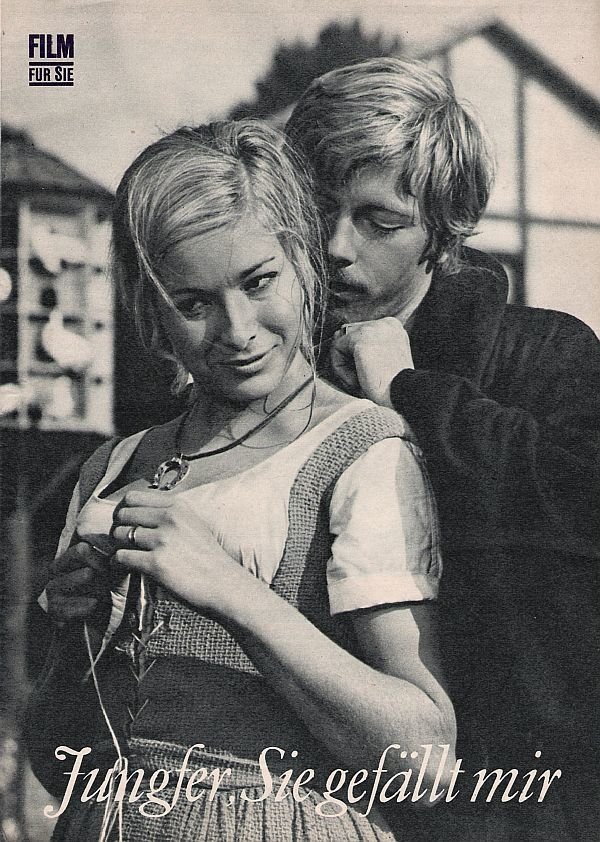
A Saxon village in 1792: While the Prussians go against France, the haymaking takes place in the village and the resolute Marthe catches her daughter Ev with the village blacksmith Ruprecht in the hay.

Albert Hauptmann is an out of work waiter in Cologne who is often confused with a former Captain of the Nazi Army. Albert uses this to his advantage and becomes the Director of the Montan Corporation, and a member of the West German Parliament. Herr Karjanke, the real Captain, learns of Albert’s ruse, and wants to claim his "rightful" position in Parliament. But Karjanke cannot come forward until his politicking "Doppelganger" succeeds in passing an amnesty law for war criminals. When Albert is finally brought before a judge on charges of fraud, he learns that this own amnesty law does not apply to him.


Single crime writer Tom Clempner receives a delivery of goods that he did not order. Out of the box emerges a domestic robot called Graumer, whose pleasant female voice reveals it to be the latest ultra-de-luxe model. The sender's address, the agency for the placement and rental of domestic staff, does not mention delivery to Clempner, so the robot suggests that he should just keep it. As it costs him nothing, the writer quickly overcomes his reservations and makes diligent use of the unforeseen help, perfect in conversation and housework. However, it doesn't take long before the man of the house becomes annoyed by Graumer's all-encompassing care. The robot has already become indispensable, be it in the construction of Tom's new mystery plot or the preparation of the upcoming dinner for some acquaintances. But why does Graumer seem so disturbed when he learns that a police inspector will be among the guests?

The noble Madame de la Lommerane lives her life with pleasure and sophistication, naturally according to her social rules. Her partner, the Marquis d'Arcis, does not play along with her game—he has his own ideas about life. To counteract the somewhat tired relationship, she plays along, pretending that her infatuation has faded...
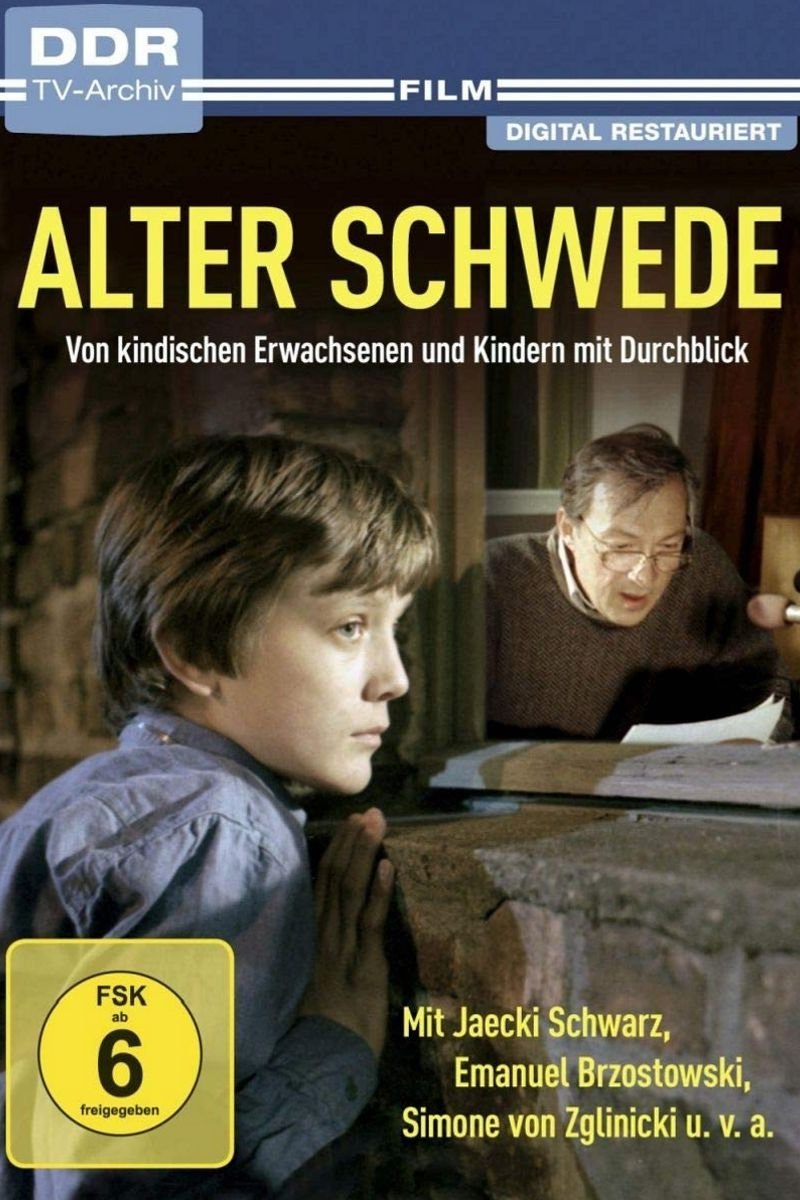
A famous journalist wants to adopt a 13 years old orphan boy but their relationship are not perfect.
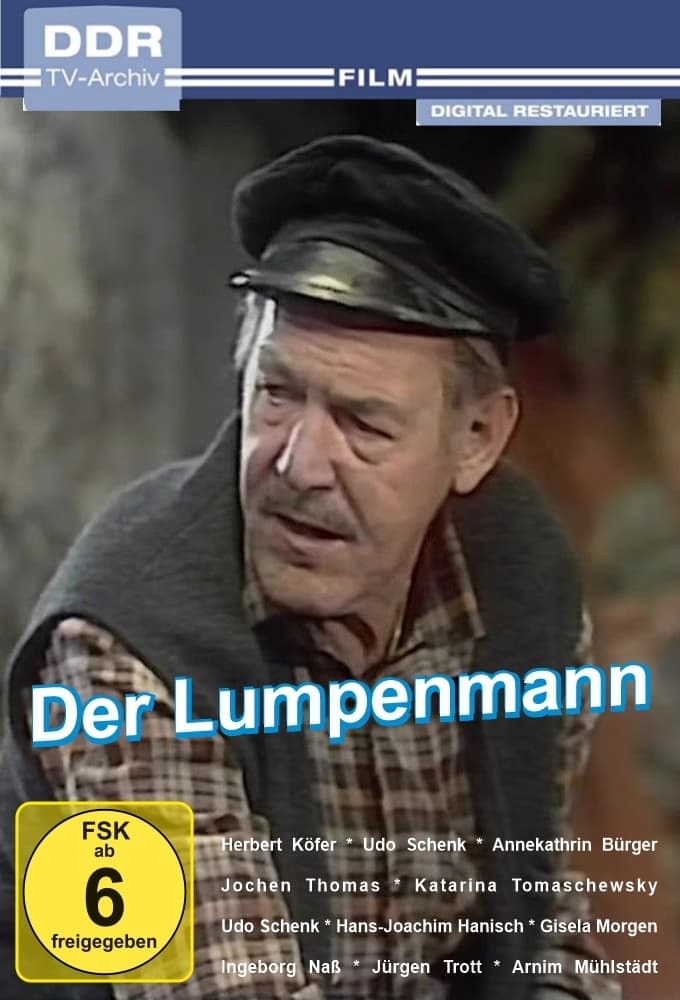
Peter, medical student and son of old materials dealer Richard Müller, wants to get engaged to the daughter of the director of a local construction company. The profession of his father has so far only vaguely hinted out of shame. And so his future in-laws think Richard is working in ministry. When he learns about it, he is initially offended. After all, he lives his profession with body and soul. But then Richard takes advantage of the misunderstanding and pays the bride parents a visit.

Katrin and Dieter really want a new car, but don't have enough money. They therefore decide to host Aunt Mathilde's 60th birthday party and invite all their relatives, including those they haven't been in contact with for years. Because some of them are said to be swimming in money. So Katrin and Dieter hope for some support, but some of it turns out to be just a sham.

Electronic data processing is an absolute must in the Information Age. Karl Hoppe, the director of a large plant, is aware of this need for modernization and hires mathematician Dr. Jochen Bernhardt to install computerized systems which are supposed to calculate ways in which the plant could be run more effectively. Dr. Bernhardt is so focused on efficiency that he forgets about the human side of work, causing his girlfriend to leave him and several dissatisfied employees to quit their jobs.
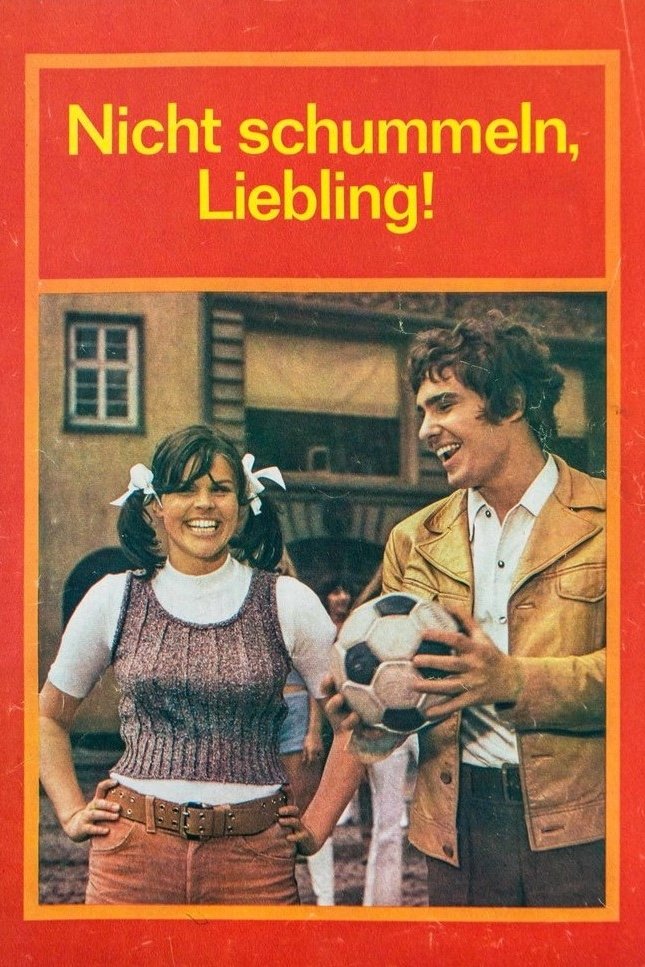
For some time now, the residents of the placid little village of Sonnenthal talk only about one topic: Football! The ambitious mayor wants to promote the Sonnenthal team to the district league at any price because this success would also boost his own popularity. But he did not expect the resistance of the new head of school, Barbara, who is heavily annoyed by the one-sided focus. To bring Sonnenthal′s men and the mayor in particular to their senses, Barbara sets up a women′s football team that soon turns out to be a serious competition for the men′s team.
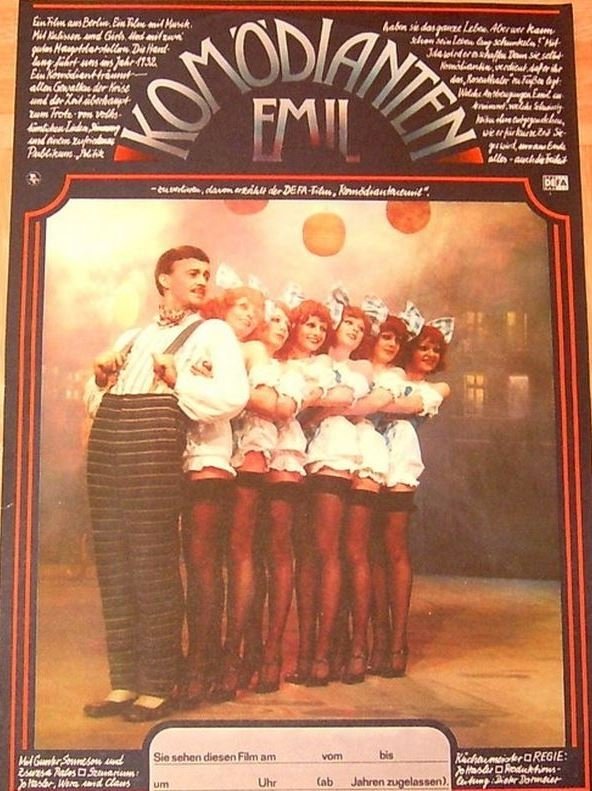
The early 1930s in Berlin. Cabaret artist Emil Damaschke wants to entertain people with his program - together with Ida, the attraction from Hungary. But because he risks a lip that is too big, he is thrown out of the "Rosenthaler" cabaret, ends up on the criminal circuit and briefly in prison. Back out again, he and his colleagues leased the "Rosenthaler", whose Jewish owners had fled abroad to escape the Nazis. They set up a cooperative. However, a gang of criminals who professed allegiance to the Nazis wanted a share of the profits and believed they had a free ride. Emil rejects Ida's intention to win over the workers as a new audience, he makes money with advertising and refuses to join the criminals. They kidnap Ida, murder her in the forest and make sure that Emil is framed for the murder. Emil ends up in prison and the criminals take over the cabaret - in Nazi uniform.

Five young, pretty female athletes are training for an international skydiving contest. From heaven they basically fall straight into the arms of five charming young men. Their coach is less than thrilled about the flirtation and urges his athletes to concentrate on the contest. He is convinced that love-making will put the victory to risk and asks them for sexual abstinence. The power of love turns out to be stronger, however, and soon the first love couples find each other.

Four directors - four styles - four episodes, all relating the events of a single night which has entered the history books: August 12-13, 1961. There are thousands of complex narratives connected with the frontier drawn through the middle of Berlin, and each episode relates the story of a difficult decision made on that night...

Paul Pospischiel loses his job in the great colliery collapse in the Ruhr, retrains and builds a new life for himself. One day, he receives a letter from his mother, which tears him from his comfort zone and triggers a serious conflict. She has discovered the man who sent his father to a concentration camp decades ago and is therefore responsible for his death. The mother demands accountability from this man. Paul decides to confront the suspected informer and murderer...

Having been happily married for ten years, Gerda Wagner, devoted mother and housewife, suddenly gets it into her head that she would like a career as a pop star. She had singing lessons in the past and her voice is still beautiful. A chance meeting with the idolized Italian singer Fabiani, revives her stage fever - much to the annoyance of her husband Gustl Wagner, head of the records section at a department store.
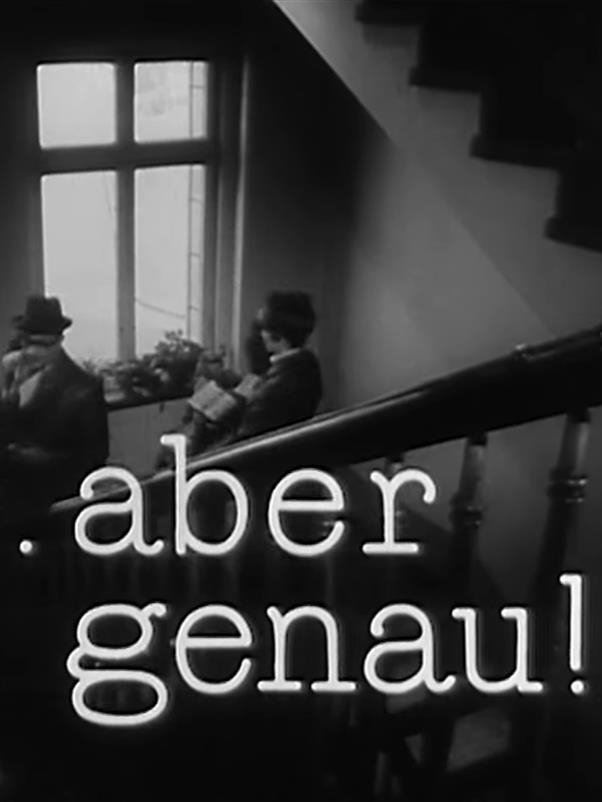
Electrician Liercke from the service combine is on his way to a customer. He is accompanied by his secretary, Anna Naß, who uses a stopwatch to record every movement of the foreman, with the corresponding travel surcharges and complications (broken doorbell - knocking like this). The tenant, who has repaired the damage himself, is prepared to pay the job costs, but not the sums that the secretary has calculated for the individual activities of the electrician before the actual work. When the customer asks to see the price list, he is told: "It's still being printed!" He hands Mr. Liercke 2.22 marks in coins. The missing 20 mark bill "will also be printed first".

What the trick and illusion artists Lina and Richard Kortmann have to offer their audience is by no means sensational. Their performances are too antiquated, so that the Kortmann show is only available from the Artists' Exchange at low rates. This also threatens the realization of Mr. and Mrs. Kortmann's secret wish - a private pension in the Black Forest for their old age. But they are not so quick to throw in the towel: together they devise a new trick that not only conjures up rabbits and paper flowers or makes them "magically" disappear from the stage; Kortmann manages to conjure people out of this world.