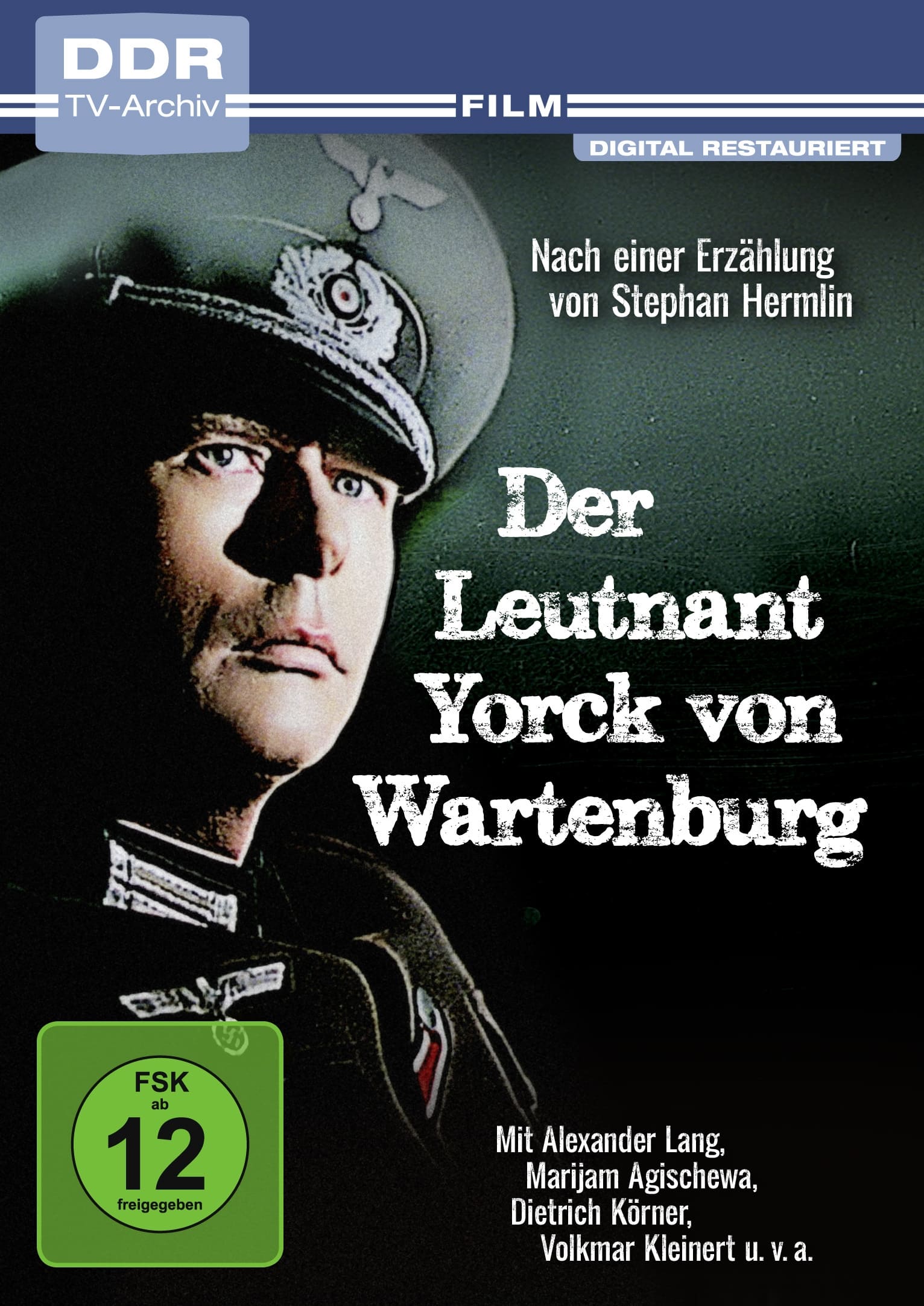
The young officer Count Yorck von Wartenburg - he bears one of the most famous names of the German past - awaits his execution as a participant in the conspiracy of July 20, 1944. Von Wartenburg, together with his comrades, suffers infinitely long days of terrible torture, disrespect and humiliation as a death candidate. In a dream, he experiences his escape and the real continuation of his fight against fascist barbarism, for which he must detach himself from his class and is involved in the anti-Hitler front by communists and the Soviet army.

Early 1921: a man is on his way home. Gleb Chumalov, regimental commander, worker and Hero of the Order of the Red Banner, returns to his home town from the Civil War. The victory over the enemies of the Russian people gives him the conviction that a new, better time will dawn overnight. Gleb looks for his comrades from earlier years, but only finds people who are emaciated by their efforts. The cement works where he used to work has been plundered and abandoned. With great effort, Gleb and his comrades try to get the plant up and running again. The struggle seems to begin anew... It is the time after the victory of the “Great October Socialist Revolution“ and the time of building a new society.

In November of 1939, the British consulate in Norway receives documents saying that the Nazis are conducting secret rocket research in Peenemünde. But the British doubt the authenticity of the so called "Oslo report". Thus, the Germans continue their experiments unimpeded. At the same time, resistance groups from France, England, Poland, and Germany try to find and to sabotage the secret Nazi research base. When the first "V 2" rocket is successfully launched, the Allied commanders finally become interested in the "Oslo report".
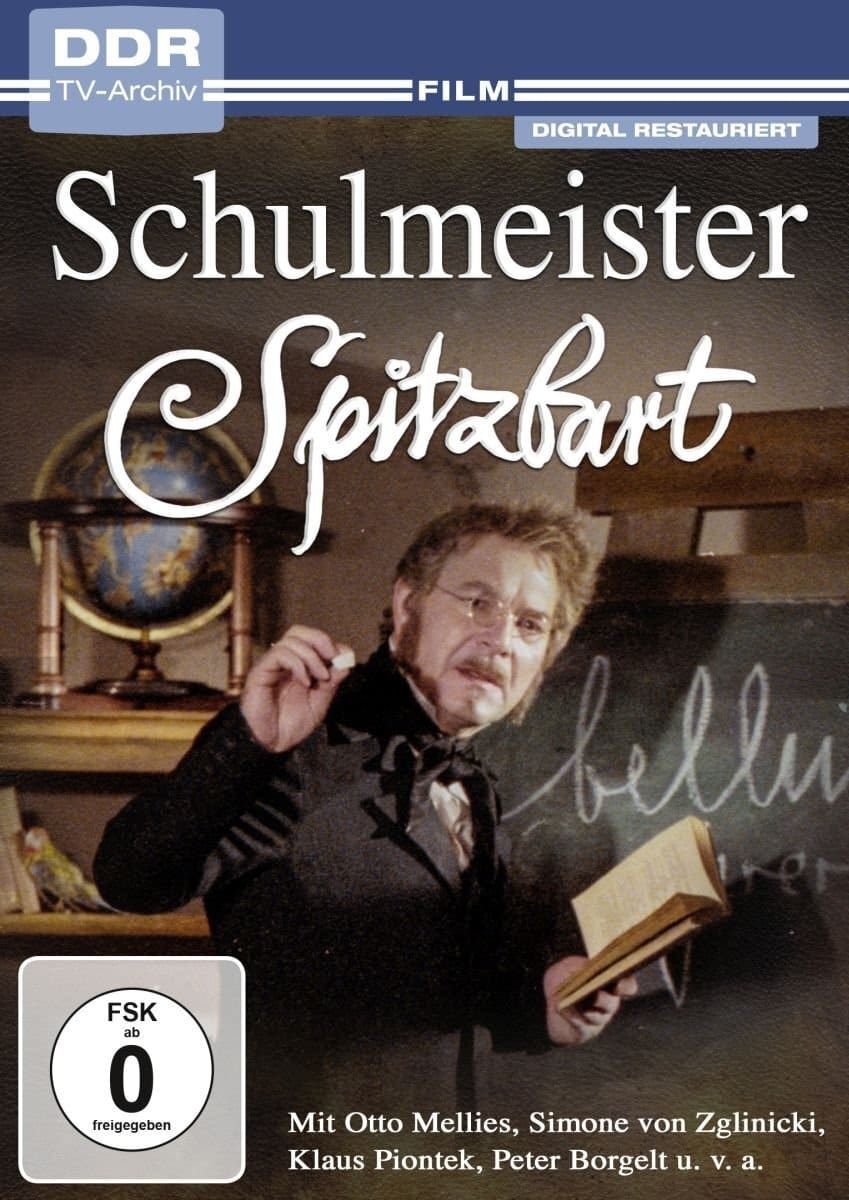
1831. A village schoolteacher Matthias Spitzbart dreams of the ideal school and writes a textbook on the perfect educational institution. When he becomes principal of a grammar school by chance, he puts his ideas into practice. His almost missionary-like zeal blossoms in wondrous ways, but his family idyll is deceptive. Entangled in his activities, Spitzbart fails to see his wife's affair with pro-rector Mehlmann, daughter Friederike flirts with the trainee teacher, and son Michael's misdeeds are enough to make a mockery of his efforts at exemplary behavior. Teachers, parents and the mayor are of the opinion that he has upset everything that worked before: he is dismissed...

The opera singer Ludwig Löwenhaupt wants a proper festive roast for Christmas, so he buys a goose in advance to feed the whole family. What he doesn't realize, however, is that the children, Elli, Gerda and Peterle, will grow fond of the animal, which is christened Gustje, and will no longer want to eat it. After the "liberation", the "five kilos of meat", which were initially locked up in the cellar, become a pet that the children take to bed with them and communicate with. But shortly before Christmas, father Löwenhaupt still wants to slaughter them. However, as his family protests and his conscience gets in the way, he can't slaughter the goose after all. So Gustje only has to leave a few feathers as proof that she has been plucked, and the opera singer is given another goose that has already been cut up.

In November 1831, the 51-year-old Prussian Major General Carl von Clausewitz burns the first chapters of his autobiography, which he had begun to write at the insistence of his wife Marie. Shocked by the sudden death of his friend Gneisenau, he is forced to realize that at his friend's deathbed he has finally said goodbye to the hopes and plans that had once determined his life and that of his friends...

The fifty-four year old Dora, formerly a vegetable cleaner in the village and now cook in a holiday home, drinks her two glass of beer daily after work - one of the few amenities she allows. Her job as a senior cook takes her very seriously. With her endearing zeal, she writes in her free evenings on a manuscript about mistakes and possibilities of the large kitchen.

In 1923, Judge Böhnsdorf and Inspector Dumke convict 22-year-old Fritz Bondersen of treason, accused of selling military secrets on the testimony of General Director Gotthardt, and sentence him to 15 years in a Zuchthaus. Despite his protestations of innocence, Bondersen can’t produce proof. Two years later, his fiancée Edith Volkmann, aided by journalist Günther Borchert, tracks down a French officer whose eyewitness account could discredit Gotthardt’s statement. Their quest to expose a massive fraud offers Bondersen a final hope for justice.

Russian soldier Grisha escapes from a German prisoner-of-war camp in the spring of 1917. He is caught and is to be shot as a spy. This decision is controversial. The dispute continues. Grisha is executed on the orders of the army high command.
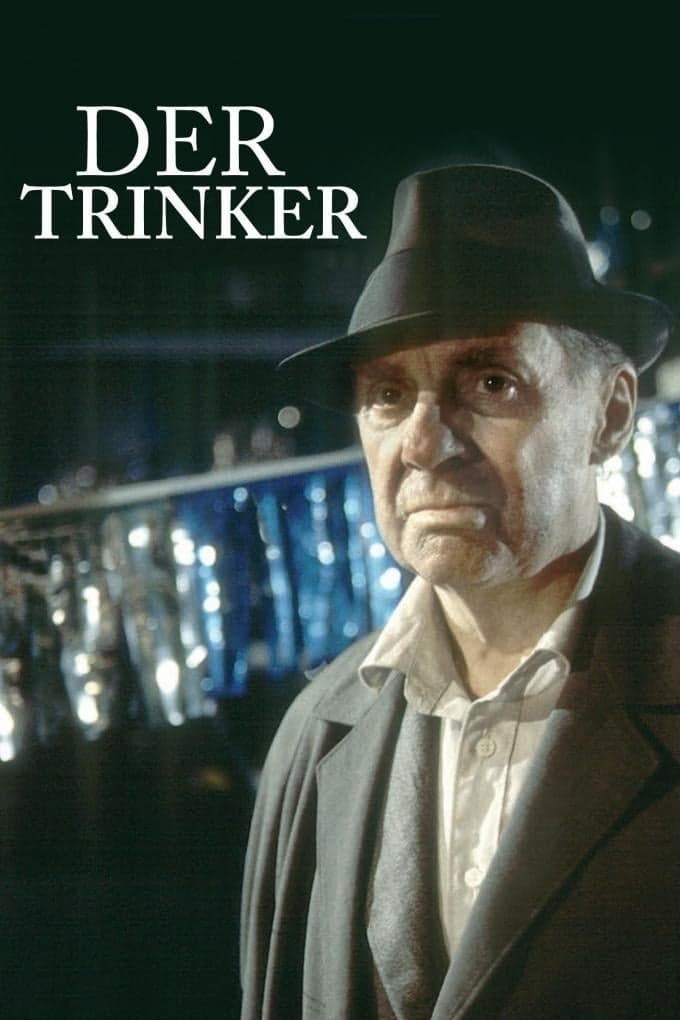
Hans Fallada tells in his published after the war novel "The drinker" the story of the agricultural wholesaler Erwin Sommer, who flees from his narrow bourgeois relations under the burdens of the new times in the kingdom of the king alcohol, whose liberty and independence promises prove a lie - the only truth of the alcohol. On behalf of the WDR television play Ulrich Plenzdorf has adapted Fallada's 1944/45 novel for a film adaptation by Tom Toelle with Harald Juhnke in the main role of Erwin Sommer.
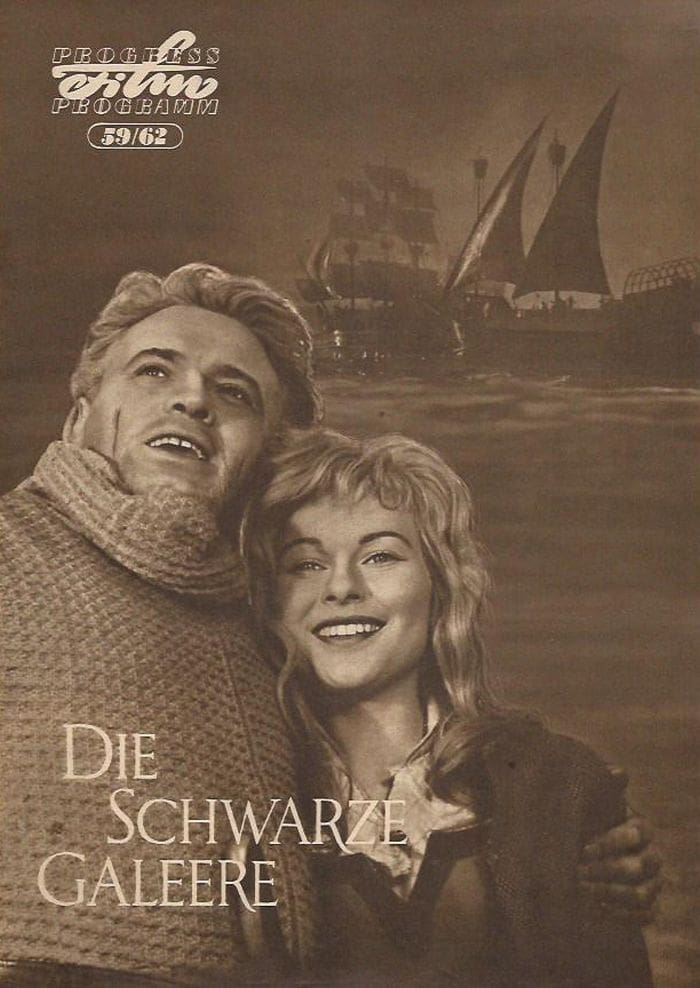
Antwerp at the end of the 16th century. For the second time, the city falls into the hands of the plundering and murdering Spaniards. Jan and Myga are just ten years old. While Myga's father tries to come to terms with the Spaniards, Jan leaves the occupied country with his father. When Jan has grown into a young man, he joins the Geusen and is entrusted with the best ship as helmsman, the "Black Galley". He survives numerous battles and dangers, but one day he is captured by the Spanish. He frees not only himself but also his beloved Myga from the hands of the enemy. In 1609, the Spaniards are forced to finally recognize the independence of the northern provinces.

The fun-loving, 26-year-old architect Franziska Linkerhand (Simone Frost) works for a famous professor. Yet, she feels restrained by her dependence on him and longs to take risks. When her marriage falls apart, she moves to a small town for a fresh start. Franziska approaches her new life with vigor and idealism. Many of her colleagues have given in to the dictates of economic restrictions and prefabricated apartment blocks; but Franziska hangs onto her ideals and, as in her private life, is not willing to compromise…

18-year old Georg and 13-year old Barbara have been playing together as children. Play becomes love later, which leads to a catastrophe , as their parents are hostile leading to file a report to the court, as Barbara is still under age.

Radical West German terrorist Rita Vogt abandons the revolution and settles in East Germany with a new identity provided by the secret service. She lives in constant fear of having her cover blown, which unavoidably happens after the reunification.
Johann Hull, a man with revolutionary charisma, comes to St. Barbara one day. He encourages the starving fishermen to fight to improve their living conditions. They dare to revolt.
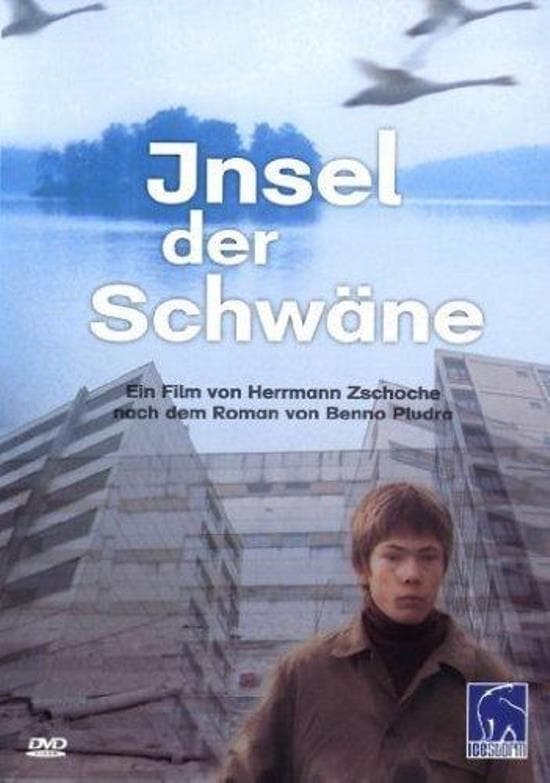
Fourteen-year-old Stefan Kolbe, along with his mother and sister, moves from an idyllic small town to the developing area of Berlin-Marzahn, where his father works as a construction worker. Stefan must find his way in a completely new environment and surrounded by strange people. Stefan gets to know two girls, who attempt to seduce him, and gets himself into trouble with the landlord, who kisses up to societal authority figures. He becomes friends with the anxious Hubert, defends him against the constant humiliation of the older student Windjacke, and encourages him to stand up for himself. It ends tragically in a bitter fight between Stefan and Windjacke.
Last years in the Life of german Dramatican Georg Büchner. Around the year 1830 he and his fellow students try to initiate a revolution in Germany, but they are not successful. Büchner has to leave the country and seeks exile in France and Switzerland, where he falls ill with typhus.

In the nineteenth century, seventeen year old Effi Briest is married to the older Baron von Instetten and moves into a house that she believes has a ghost.

Electronic data processing is an absolute must in the Information Age. Karl Hoppe, the director of a large plant, is aware of this need for modernization and hires mathematician Dr. Jochen Bernhardt to install computerized systems which are supposed to calculate ways in which the plant could be run more effectively. Dr. Bernhardt is so focused on efficiency that he forgets about the human side of work, causing his girlfriend to leave him and several dissatisfied employees to quit their jobs.
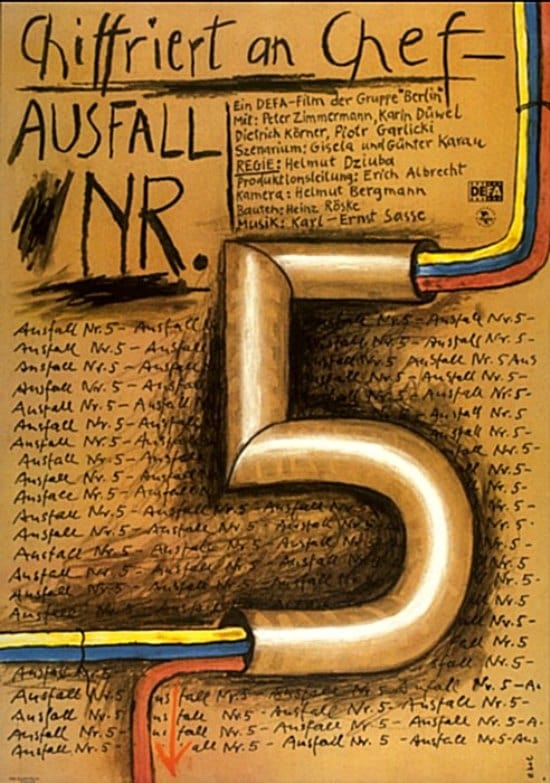
Wolf Brandin is in his mid-twenties and lives with his wife and child in East Berlin at the end of the 1950s. In West Berlin, the student of electrical engineering is recruited by the American secret service CIA. But Brandin immediately notifies the State Security of the German Democratic Republic and from then on lives a dangerous life as a double agent. When Brandin reaches the breaking point, his marriage starts to unravel because Brandin is not allowed to tell his family about his double life.

Hannes comes forward with a suggestion on how to make his brigade more efficient. Due to his success, he and all of his colleagues are granted a special leave. They decide to spend their free time in a holiday home. Hannes, however, does not join them. Instead, he pretends that he has to help his wife Irma with the installation of a machine for the agricultural cooperative. While Irma thinks that he spends his holiday with the brigade, Hannes goes on a road trip with the young and pretty Monika who has no idea that he is married.

The Lübeck merchant Friedemann owes his crippled figure to a wet nurse "devoted to drink". He lives a secluded life with his three simple-minded sisters and his bedridden mother, loving only the theater and music. Only Gerda, the unhappy wife of the district commander of Rinnlingen, makes him blossom...
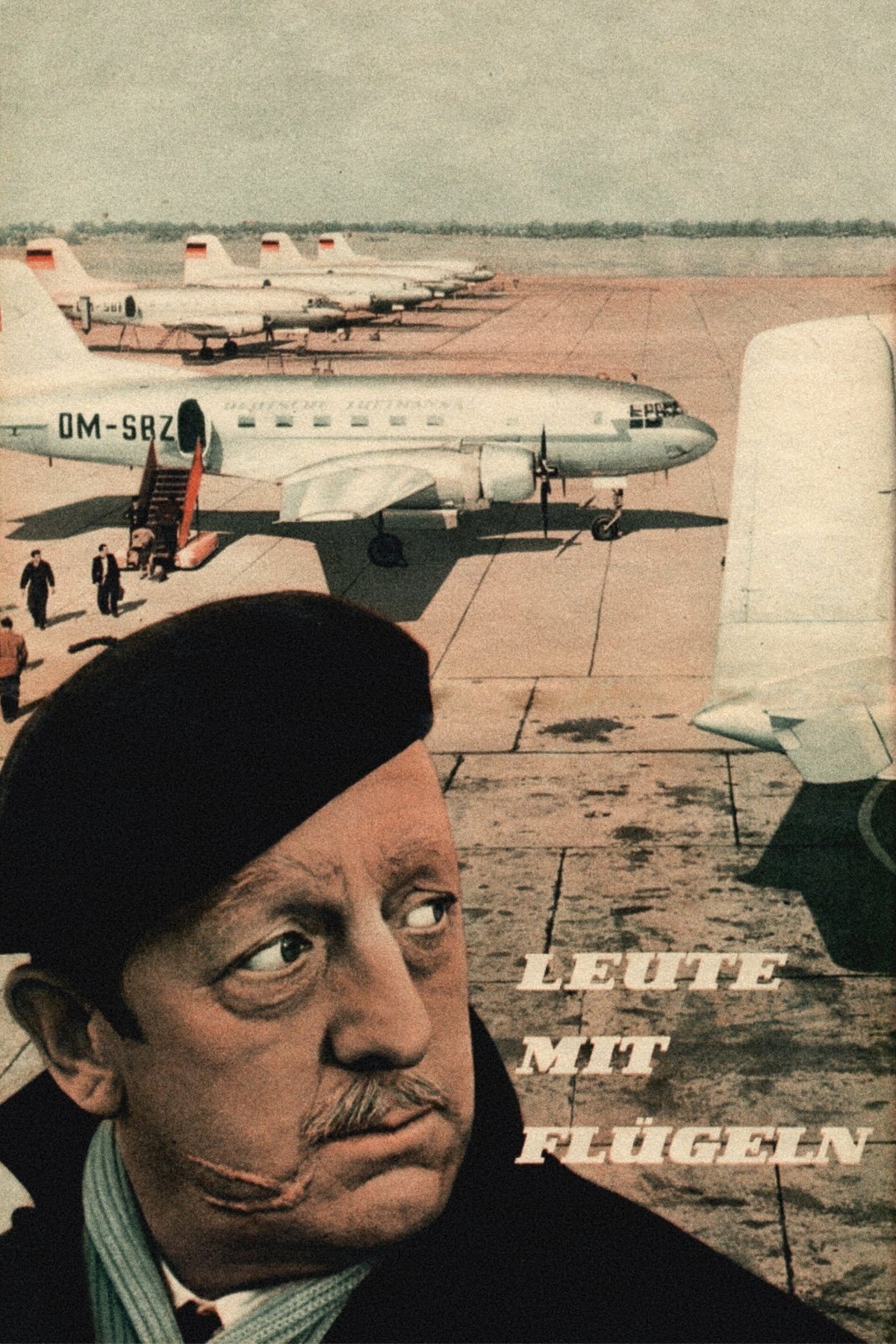
This film continues the story of radio operator Ludwig Bartuschek from “The Sailor’s Song”. Near the end of the Weimar Republic, Bartuschek (Erwin Geschonneck) is working as a mechanic in the Sperber airplane plant. Director Dehringer offers him the opportunity to train as an airplane constructor if he is willing to give up his communist beliefs under oath. Bartuschek will not allow himself to be bought and instead joins the underground resistance movement.
The young forester Rudolf is released from a mental hospital after suffering from a mental illness. His widowed mother accompanies the taciturn son to a vicarage where he is supposed to recover. There he meets the pastor's daughter Anna, with whom he immediately falls in love, and the two decide to get married. His mother is critical of the marriage and demands that her son conceal his stay in the "lunatic asylum" from his wife. This secret overshadows the young couple's relationship from the very beginning, and the burden of silence finally makes Rudolf want to take his own life. Only at the last minute is Anna able to save him from this stupidity.