

The murder of an underworld figure, Takis Katridis, puts Martha, a young girl who was in love with him, as well as her father, craftsman Giannis, in the dock. Each one of them, separately, claims to be the guilty one, so that the other won’t go to prison.


A modern retelling of the Greek myth of Phaedra. The young and fiery second wife of an extremely wealthy shipping magnate meets her estranged stepson Alexis and sparks immediately fly. Their love seems doomed from the beginning when she convinces him to come to Paris to meet his father.
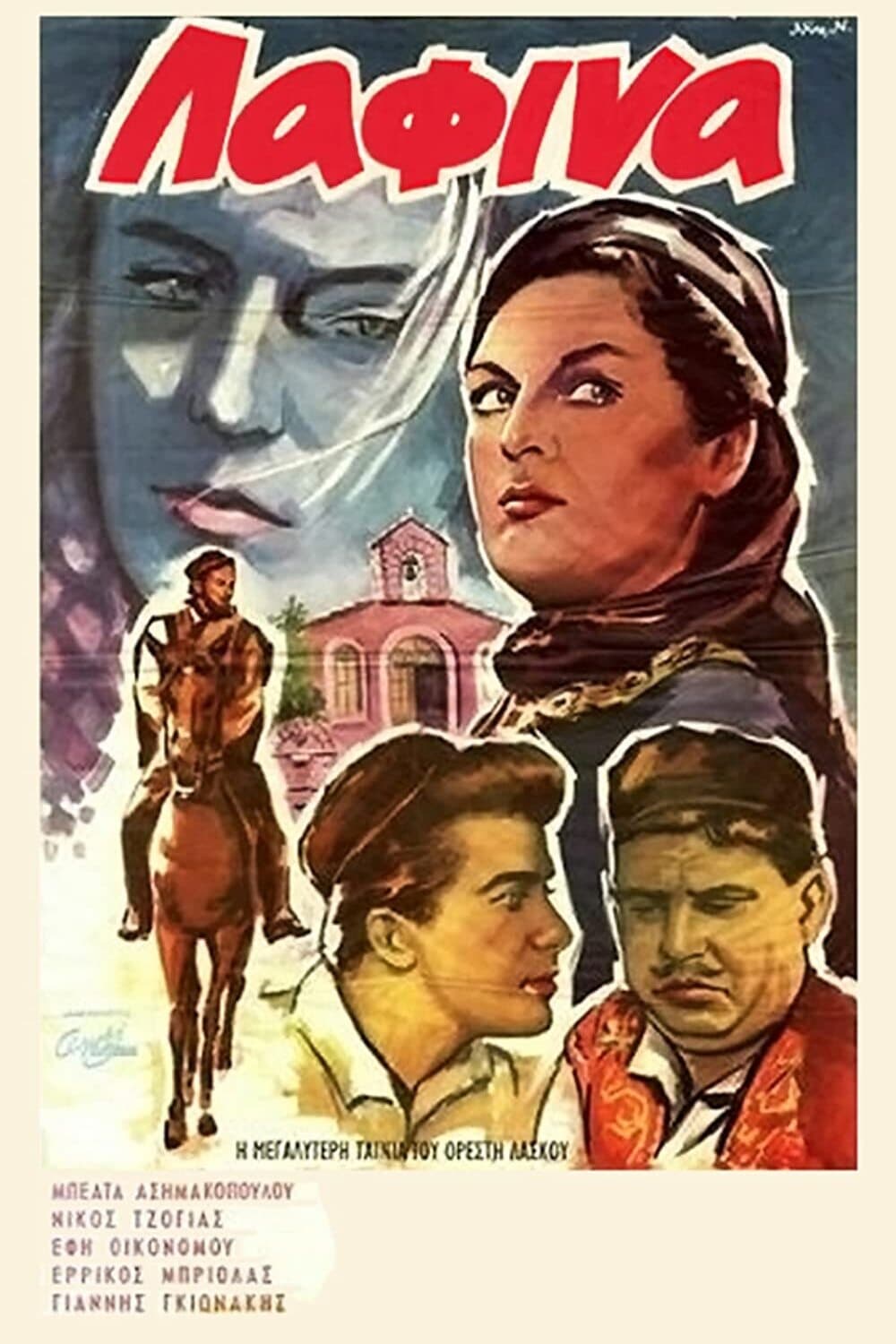

In a countryside village, a veteran politician, Damalas, and a young attorney, Ntinos, son of the village doctor, are rivals in the upcoming elections. Main controller of the political dispute is the all-powerful president of the village, Spyros Dalengos, who affects 900 of the inhabitants. The power acquired by those 900 people is the only dowry of his daughter Marina, who is in love with Ntinos. He has fallen for her to, but his conscience doesn't allow him to accept the unrighteous deal offered by Dalengios, who, after that, decides to support Damalas. However, Marina secretly changes the ballots handed out by her father's men, granting victory to her beloved, who goes straight to ask her to marry him, certain that he won thanks to his own abilities and effort.

A girl, Vassula, learns shortly before marrying her lover, Richard, that the alleged father is actually her uncle. The latter, when the natural daughter died, presented the event as the death of his adoptive daughter. The mother of the girl is still alive and will accompany her to church with her true father.

Having become a beggar on the streets, Alexis reminisces about his love affair with a wealthy girl, Eva, who gave him the accordion he always wanted. When she became pregnant, Alexis suggested that she not have an abortion, in exchange for disappearing from her life. She married a failed man of aristocratic descent, who soon abandoned her for a cabaret dancer, embezzling a large part of her fortune. Alexis kidnaps his child and ends up in prison. Many years later, he is released from prison and watches his daughter's progress from afar. She learns the truth about her father from a former employee of her mother's business and rushes to find him.
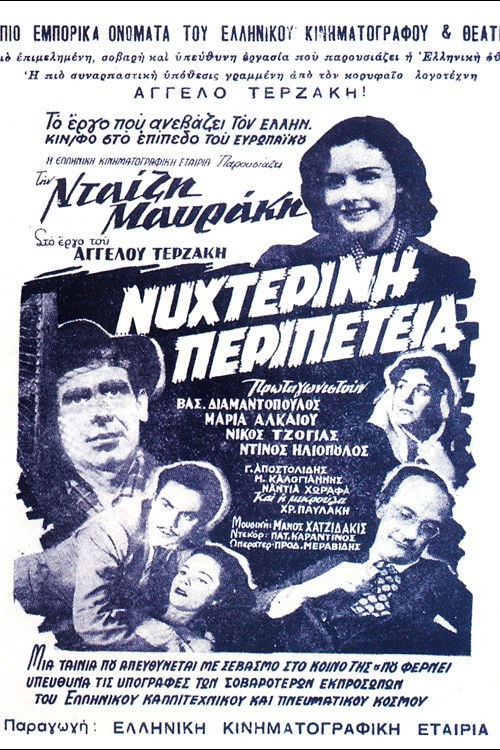

A cynical young man, Giorgos, who believes that in this life you need to steer clear of principles and attachments, clashes with his father, captain Manolis and abandons the management of the family’s shipyard. Determined to build his life again, he gets a job as a waiter in a large hotel and believes that he can also get rich by taking advantage of the sorrows and the loneliness of the wealthy.

A young painter returns to his hometown, Mystras, where he falls in love with the daughter of a family with whom his own family has a feud. The girl's father will kill her, thinking she is a man, since she had disguised herself as a man to save her lover.

Petros, one of Greece's best athletes, decides to end his life with the help of his beloved wife Anna in order to escape his incurable illness and the terrible pain that accompanies it. Anna is then brought to justice on charges of premeditated murder. The trial unfolds through the testimonies of people close to them, who testify about the reasons that led her to this decision. During a break in the trial, mentally and physically exhausted, she cuts her veins and dies. Innocent or guilty? The answer to this question is left to the audience.

An ex-member of the Resistance pumps six bullets into a grizzled woman and spends the night at the police station, recounting the dangerous life of her heroic father during the Nazi Occupation of Greece. Is she capable of forgiveness?
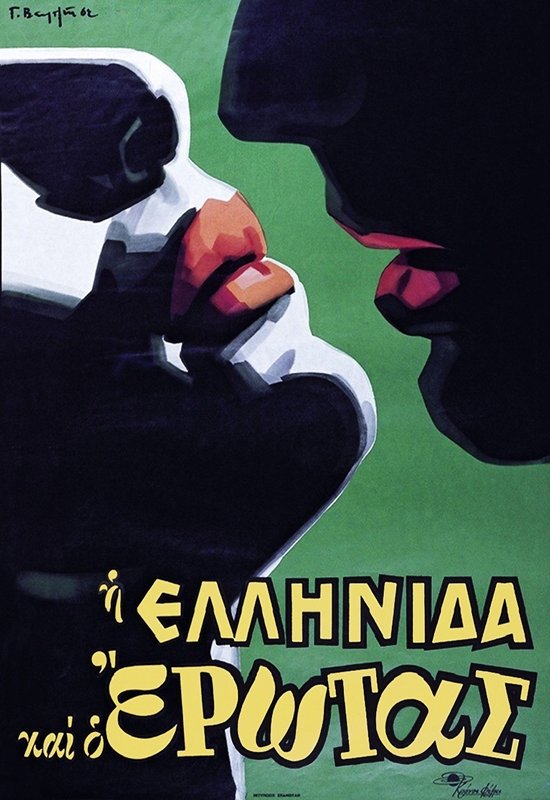
Revolving around the modern Greek woman and her perspective on love in general, not one, but twenty-one brief and vivid vignettes attempt to shed light on an ever-present matter: can there be consequences in Cupid's eternal game?

A mother fights tooth and nail to get her child back from an orphanage. She left him there when the man of her life, the child's father, abandoned her, leaving her alone and helpless. But she is not discouraged and continues her struggle.

Anna is been abondoned by her lover and she's forced to give her newborn child for adoption.

A woman is on trial for her husband’s murder and must prove her innocence.

A family story of incest, decadence and desolation. Greece, early twentieth century. A bourgeois family is on the verge of breaking up. The mother has abandoned the family, and the father, a retired officer, keeps his three daughters, as well as the illegitimate son of the oldest daughter, confined in the house. After his death, the three sisters live through their personal drama. The eldest, Eleni, imbued with the morals of the time and closely identifying with her father, tries to take his place. The middle one, Maria, representing rebellion, goes off with a captain of the sanitation service, while the youngest, Anna, skating on thin ice through all this, is completely destroyed.

Hecuba (Ancient Greek: Ἑκάβη, Hekabē) is a tragedy by Euripides, written c. 424 BC. It takes place after the Trojan War but before the Greeks have departed Troy (roughly the same time as The Trojan Women, another play by Euripides). The central figure is Hecuba, wife of King Priam, formerly queen of the now-fallen city. It depicts Hecuba's grief over the death of her daughter Polyxena and the revenge she takes for the murder of her youngest son, Polydorus.