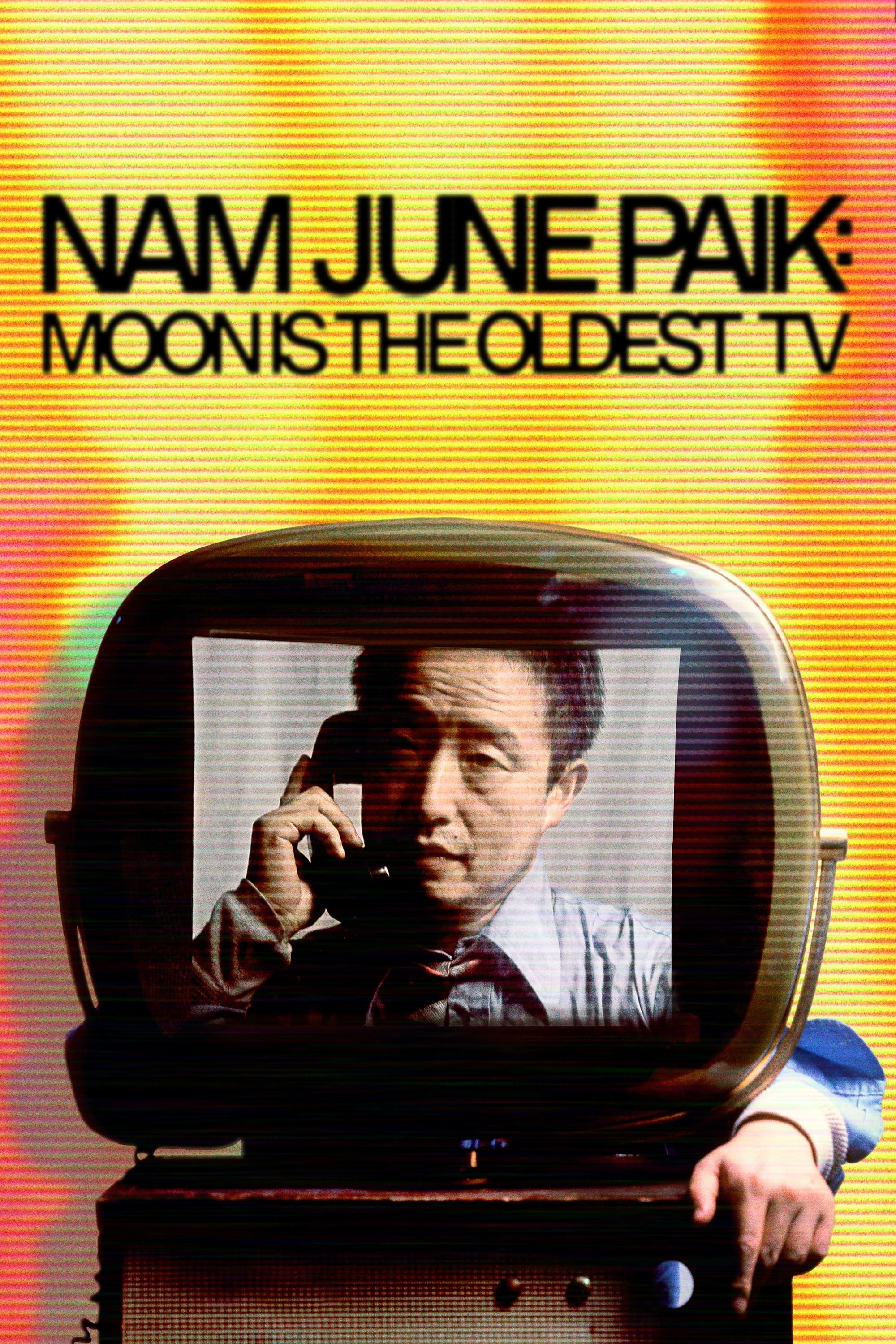
The quixotic journey of Nam June Paik, one of the most famous Asian artists of the 20th century, who revolutionized the use of technology as an artistic canvas and prophesied both the fascist tendencies and intercultural understanding that would arise from the interconnected metaverse of today's world.
A short documentary profile of the Anthology Film Archives, shot on the eve of the move to the historic 2nd Avenue Courthouse. Staff and patrons are interviewed, and films preserved by Anthology are spotlighted.
Home movies shot on Super 8mm by W+B Hein over 10 years.
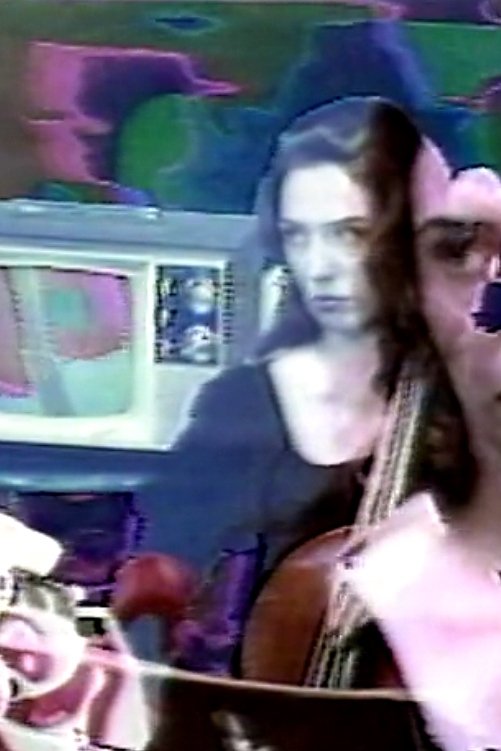
This tape is Jud Yalkut's video realization of Charlotte Moorman and Nam June Paik's concert performance of John Cage's composition 26'1.1499" For String Player. In this extraordinary performance, which is manipulated and synthesized by Yalkut, Paik and Moorman play Cage's score on a collection of "instruments" that include a pistol, a dish of mushrooms, balloons, a practice aerial bomb, and a telephone call to President Nixon.

Inverting the form, style and time frame of commercial television advertising, Logue has produced a unique series of dynamic video portraits of avant-garde artists, writers, musicians and performers. In 30 Second Spots: New York, which Logue terms "commercials for artists," each of the succinct vignettes conveys the artistic essence of her subject with clarity, wit, and an elegant economy of means. John Cage, Steve Reich, Philip Glass, Meredith Monk, Spalding Gray and Steve Reich are among the artists who are captured here with concise drama. Each subject performs in close-up before a stationary camera.
Short film about performance, realized when Nam June Paik participated in Karlheinz Stockhausen's piece "Originale" in Cologne in 1961.
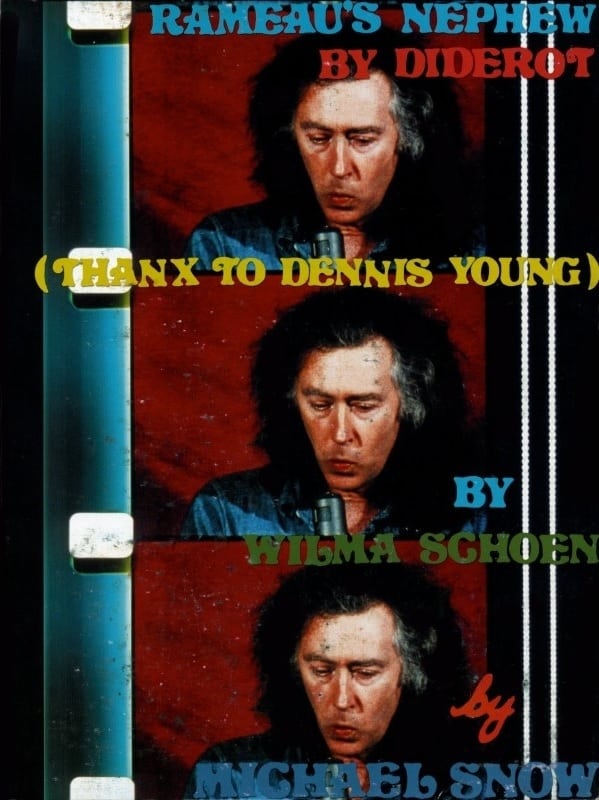
Various unrelated vignettes, often juxtaposing sound and image.
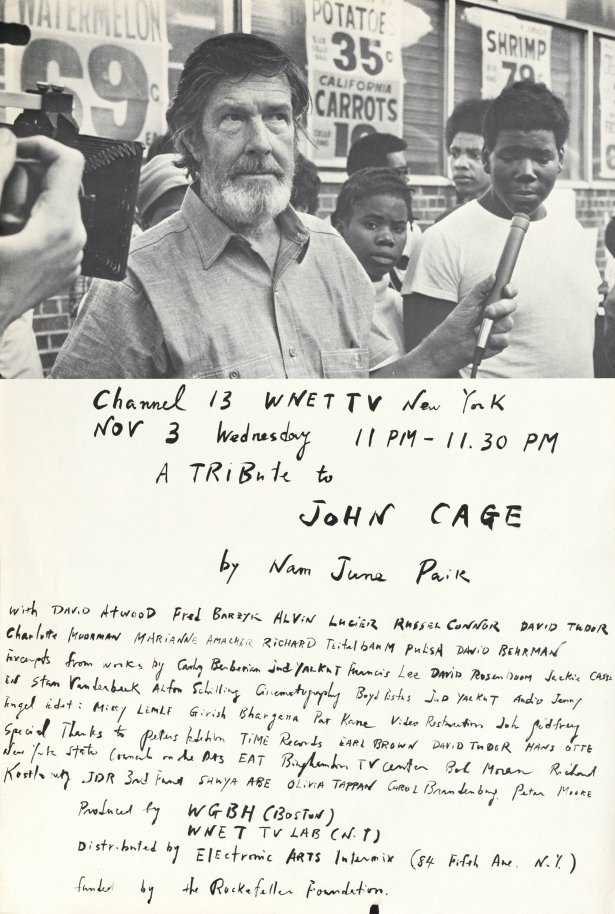
A Tribute to John Cage is Paik's homage to avant-garde composer John Cage. A major figure in contemporary art and music, Cage was one of the primary influences on Paik's work, as well as his friend and frequent collaborator. In this multifaceted portrait, Paik creates a pastiche of Cage's performances and anecdotes, interviews with friends and colleagues, and examples of Paik's participatory music and television works that parallel Cage's strategies and concerns. The methodology and philosophies that inform Cage's radical musical aesthetic — chance, randomness, the democratization of sounds — are evident as he performs such seminal pieces as 4'33" (of complete silence) in Harvard Square, or throws the I Ching to determine performance sites. Among the collage of elements included in this work are segments from Paik's Zen for TV; Paik and Charlotte Moorman in early performances, including the TV Bra; and anecdotes from composer Alvin Lucier.
Early documentary about the pop art scene and happenings in Germany.

A compilation of avant-garde artwork and talent of the mid to late 20th century hosted by Ryuichi Sakamoto.

This exhibition focuses on Jonas Mekas’ 365 Day Project, a succession of films and videos in calendar form. Every day as of January 1st, 2007 and for an entire year, as indicated in the title, a large public (the artist's friends, as well as unknowns) were invited to view a diary of short films of various lengths (from one to twenty minutes) on the Internet. A movie was posted each day, adding to the previously posted pieces, resulting altogether in nearly thirty-eight hours of moving images.
This fascinating film documents the U.S. premiere production of Originale, a Happening by German composer Karlheinz Stockhausen. Filmed at the "2nd Annual Avant Garde Festival of New York," which was produced by Norman Seaman and Charlotte Moorman, the stage production was directed by Allan Kaprow. Performers include Nam June Paik, Moorman, Jackson Mac Low and Allen Ginsberg, among many others.
1966, 16mm film on video, black-and-white and color; 10 minutes

A film collage tracing the story of the lives, loves, and deaths within the artistic community surrounding Jonas Mekas.

A compilation of over 30 years of private home movie footage shot by Lithuanian-American avant-garde director Jonas Mekas, assembled by Mekas "purely by chance", without concern for chronological order.

Nam June Paik's first single-channel videotape since 1989 is a heartfelt tribute to his long-time collaborator Charlotte Moorman. This portrait traces Moorman's career as an avant-garde performer, from her classical training to her notorious arrest as the "Topless Cellist" and subsequent talk-show celebrity. Rare documentations of Moorman's performances include Otto Piene's Sky Kiss and Jim McWilliams' Chocolate Cello. Interviews with Moorman's friends, family and collaborators, such as Yoko Ono, Christo and Jeanne Claude, Otto Piene, and Barbara Moore, among others, provide intimate recollections of the inimitable Moorman.
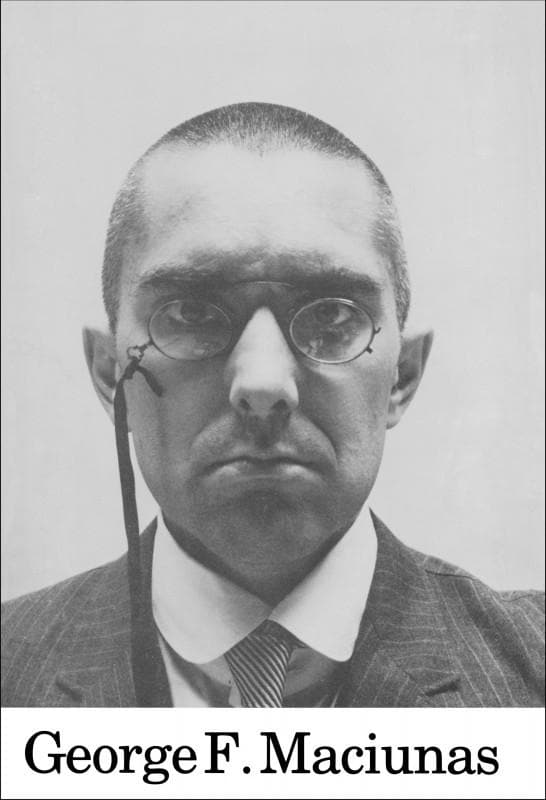
In 1961 Lithuanian American artist and impresario George Maciunas established the avant-garde art movement Fluxus. George details the rise of Fluxus following a sensationalized tour of “concerts” in Europe in 1962, and continuing in New York for most of the 1960s and ’70s. During this time Maciunas was converting the dying industrial buildings of Soho into a network of artists’ lofts, creating one of the first official real estate co-ops of artist-owned buildings. Maciunas’s life and legacy—as recounted by artists of his generation, including Yoko Ono and Jonas Mekas—ignited debates that remain pivotal to artists working today.
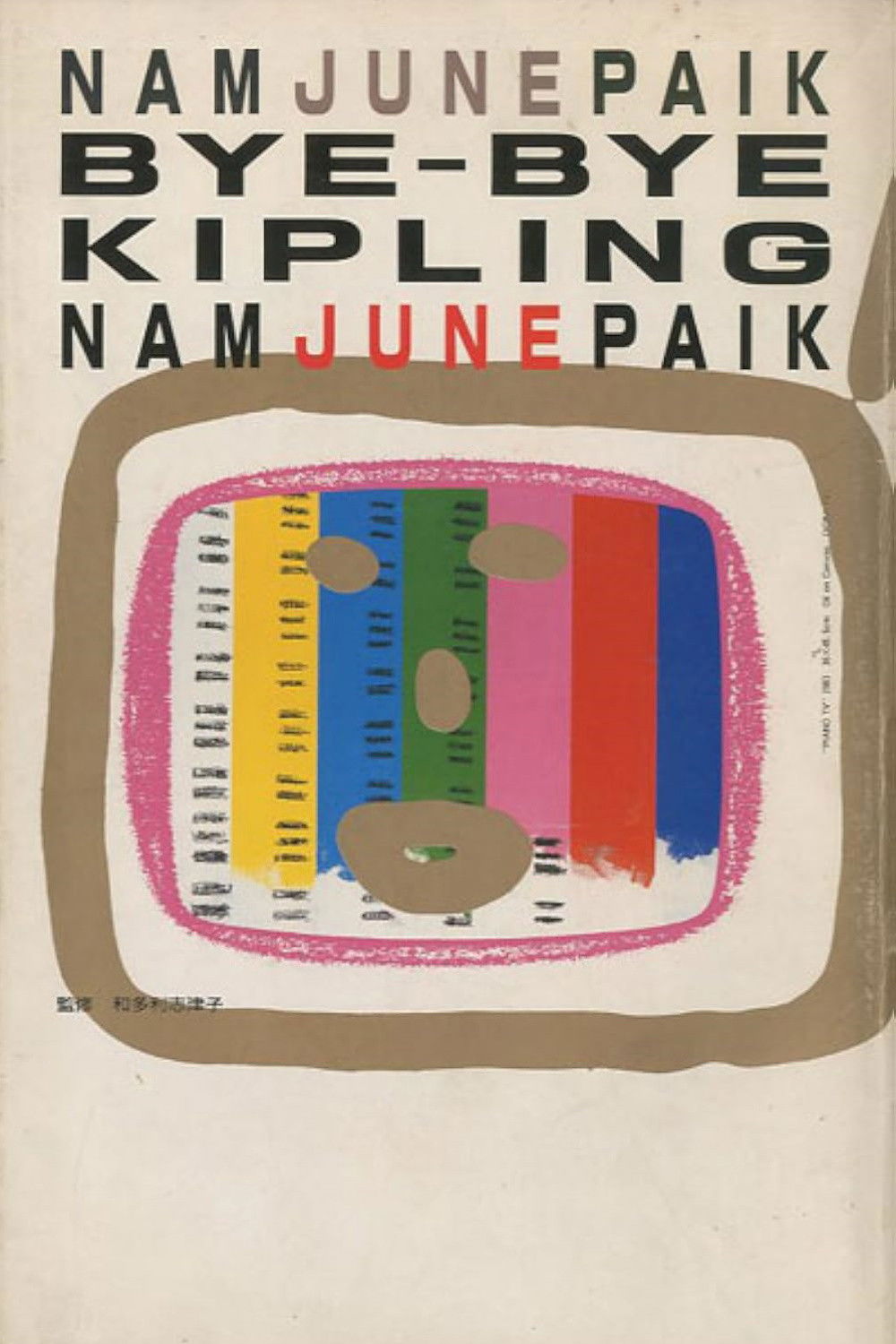
This ambitious live satellite link-up of Japan, Korea and the United States features interviews with Keith Haring and architect Arata Isozaki, and performances and works by Philip Glass and the Kodo Drummers, Charlotte Moorman, Nam June Paik, and Lou Reed. In an extraordinary section, a performance in Japan of classical Western music is accompanied by a group of Kabuki dancers.
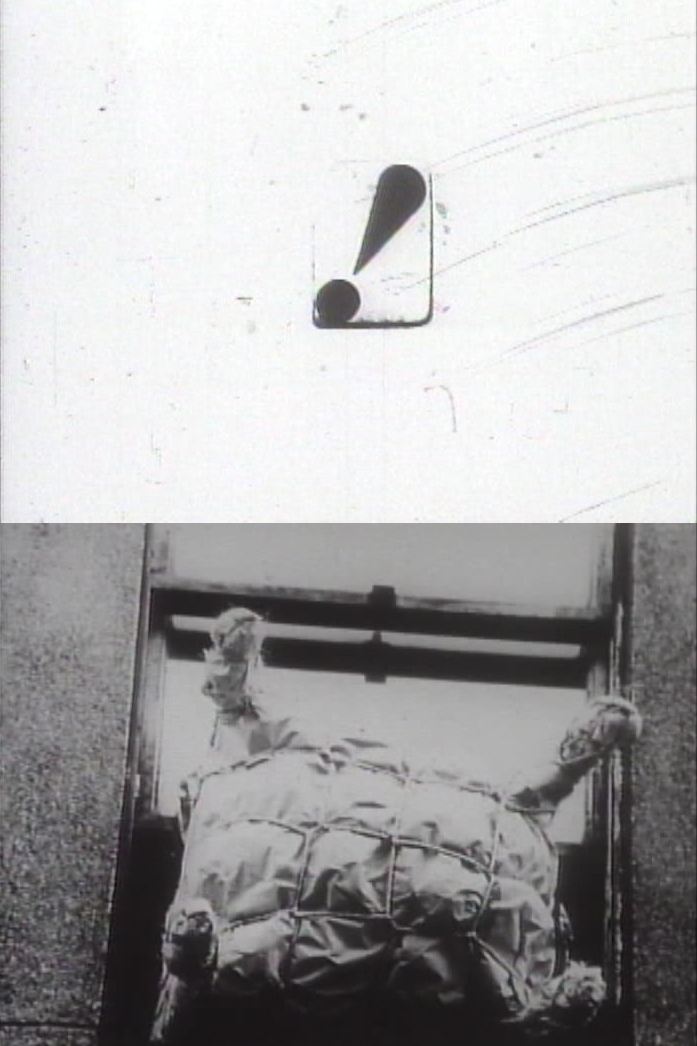
Hi-Red Centre were comprised of Genpei Akasegawa, Natsuyuki Nakanishi and Jiro Takamatsu, who enacted ‘happening’-style performance art in unusual spaces during the early 1960s in Japan. The film is an extremely rare document of one of their early events, where they hired out a room in the Imperial Hotel and invited many friends and professionals in the art scene to participate in the occasion. The performance parodies Cold War fears and the construction of private bomb-shelters, as they diligently measure each guest’s weight and proportions in pretence that they are to build human-size shelters for each individual. Key figures of the art scene make an appearance, including Yoko Ono, video-artist Nam June Paik, noise artist Yasunao Tone, filmmaker Masao Adachi and graphic designer Tadanori Yokoo. A rarely seen and exceptional insight into the Japanese art scene of the era, Jonouchi records the event in his characteristically erratic style.
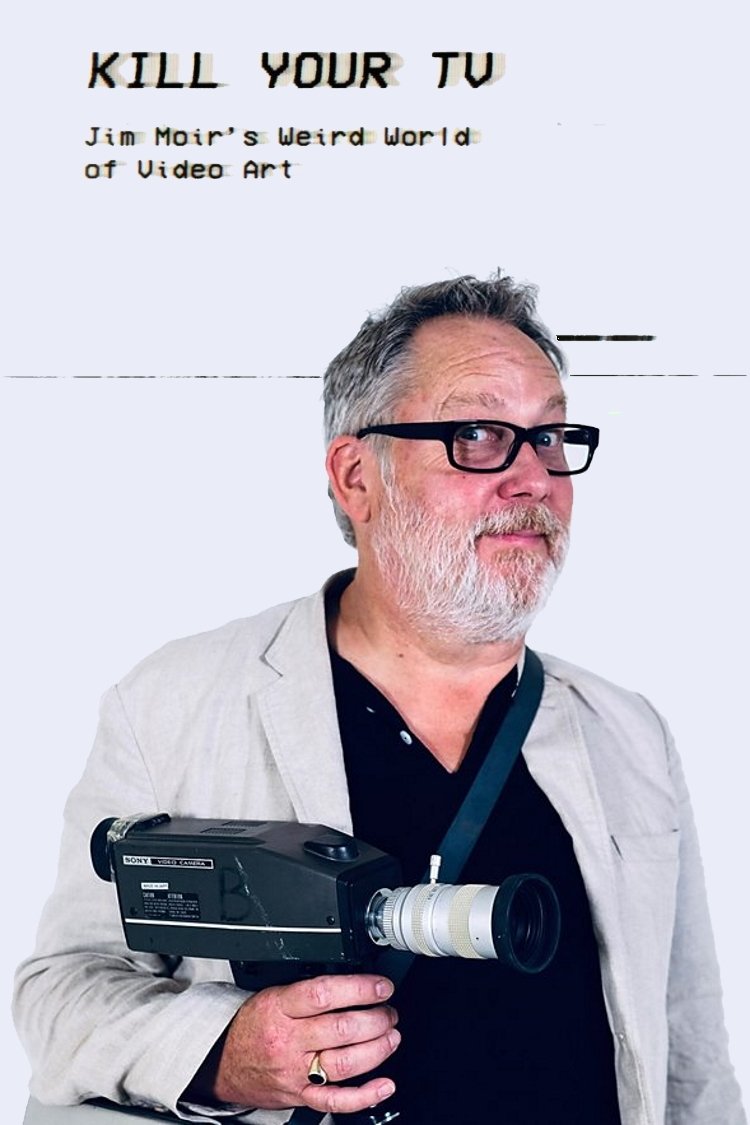
Jim Moir (aka Vic Reeves) explores Video Art, revealing how different generations ‘hacked’ the tools of television to pioneer new ways of creating art that can be beautiful, bewildering and wildly experimental.
“Drawing on his personal archives, Mekas has assembled a Fluxus vaudeville starring Yoko Ono, Joseph Beuys, and the late Nam June Paik. Most of the material is relatively recent although Ben Vautieur shows some early 1960s work to hilarious effect and Mekas channels Fluxus founder George Maciunas throughout.” – J. Hoberman, VILLAGE VOICE
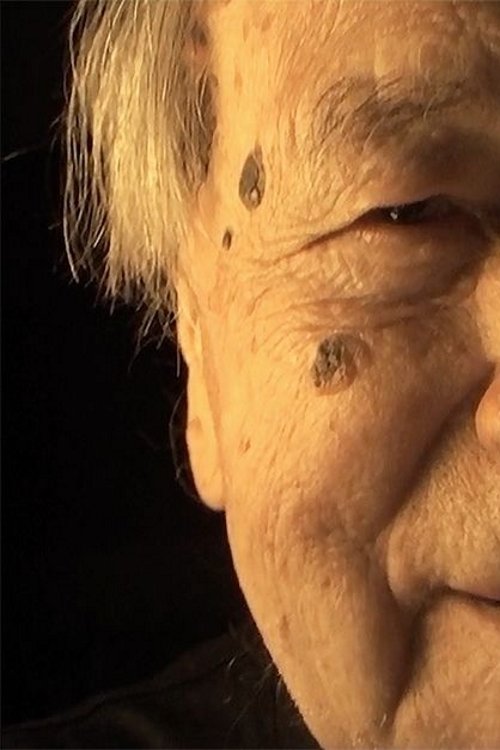
The tapes in the program consist of some of Mekas’ earliest cassettes from the 1990s not long after he first began working with video as well as more recent mini-DV tapes from 2010s. The contents of the tapes have not been previously seen in their entirety. The footage provides rare insight into aspects of Mekas’ video-making practice, as well as his activities, thoughts, dreams, and concerns, especially during the later years of his life.
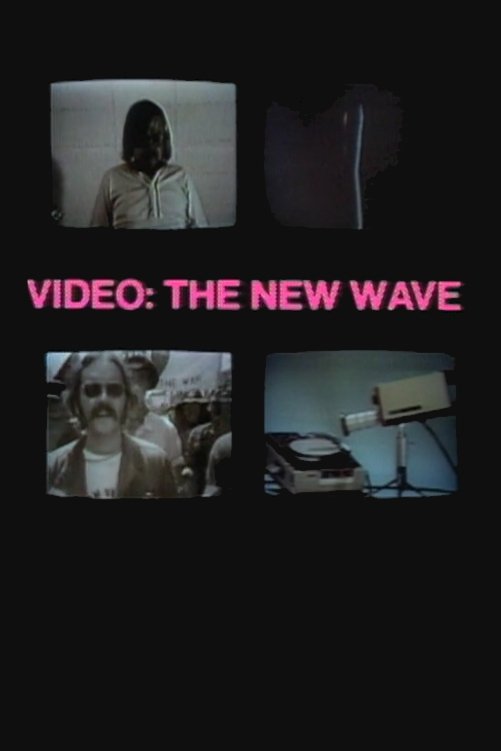
The New Wave is the seminal compendium of independent video work in the early 1970s. Written and narrated by Brian O'Doherty, this overview of the emerging video field includes examples of guerrilla television and "street" documentaries, early explorations with image-processing and synthesis, and performance video. This historical anthology includes excerpts of tapes by the following video pioneers: Stephen Beck and Warner Jepson, Peter Campus, Douglas Davis, Ed Emshwiller, Bill Etra, Frank Gillette, Don Hallock, Joan Jonas, Richard Serra, Paul Kos, Nam June Paik, Otto Piene, Willard Rosenquist, Dan Sandin, James Seawright, Steina Vasulka, TVTV, Stan Vanderbeek and William Wegman.
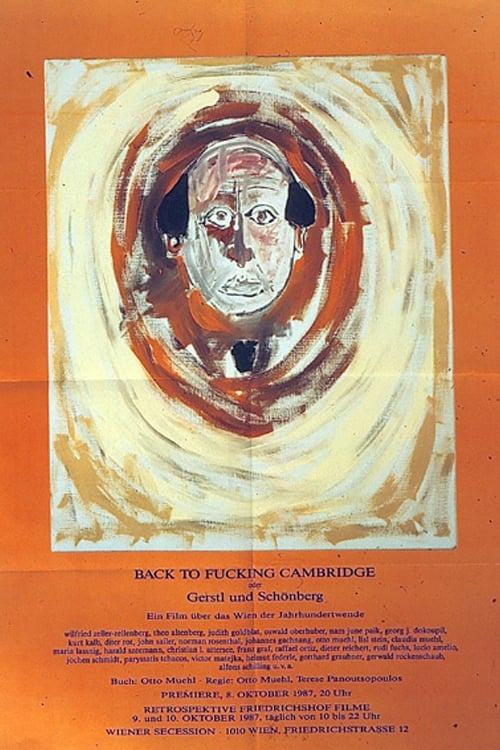
About a group of graduates from Cambridge University who go back to their college to visit a friend who has stayed on there. Otto Muehl founded a community of artists in Vienna in 1970 with the aim of exploring a completely free life practice. Since 1972, this society experiment at the Friedrichshof in Burgenland, 60 kilometers from Vienna, further developed. From the mid-1970s, other municipalities were founded in 30 European cities. At Friedrichshof itself lived at times up to 240 members and visitors.
Single channel video (color; sound; 1984)
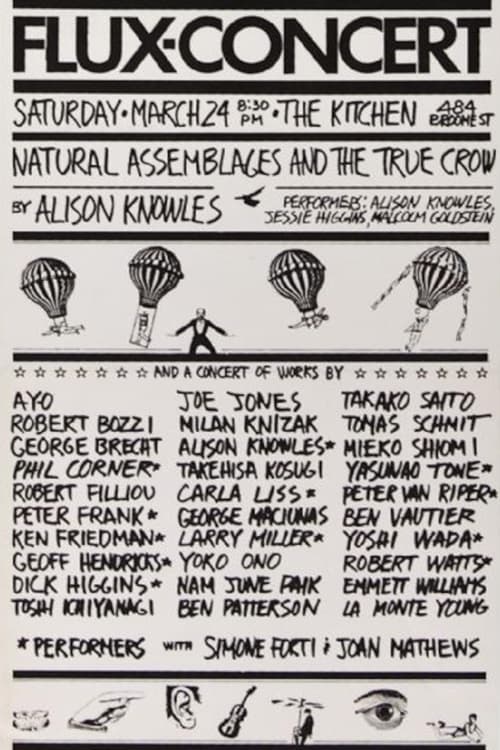
On March 24, 1979, The Kitchen presented a two-part program dedicated to the work of various Fluxus artists. The programming began with the premiere of Alison Knowles’s “Natural Assemblages and the True Crow.” For the piece, Knowles engaged in a dialogue with her own taped voice, which read aloud selections from various natural history books. Simultaneously, violinist Michael Goldstein provided an improvised score while dancer Jessie Higgins executed a number of one-movement phrases by following instructions on index cards. The second part of the night’s programming consisted of forty rapid performances—most sixty seconds or less—by various Fluxus members, including Yoko Ono, George Brecht, La Monte Young, and Nam June Paik. Ken Friedman and Larry Miller coordinated this portion of the event.
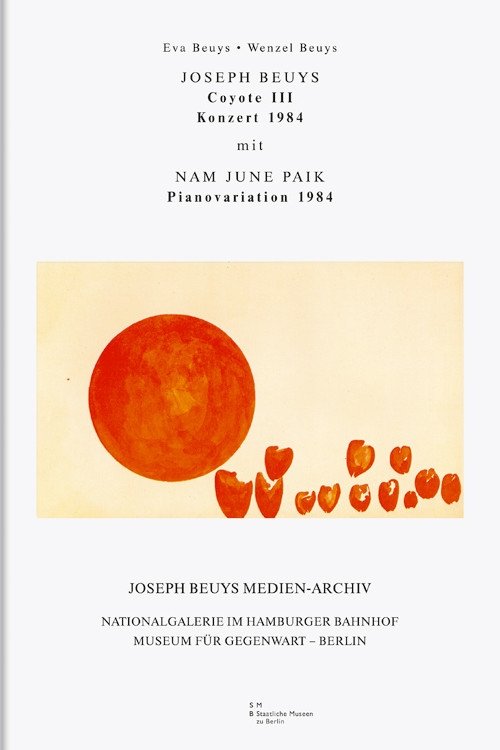
DVD accompanying the book "Coyote III", documenting Joseph Beuys and Nam June Paik performing at the Sôgetsu Hall in Tokyo on the 2nd of June 1984. Nam June Paik sits on one side of the stage playing European classical music, improvisations and Japanese folk music. On the other side, Joseph Beuys acts out experiences from living in an enclosed space with a coyote - a free man who turns back into an animal, into a form of life that he understands as a prerequisite for this freedom
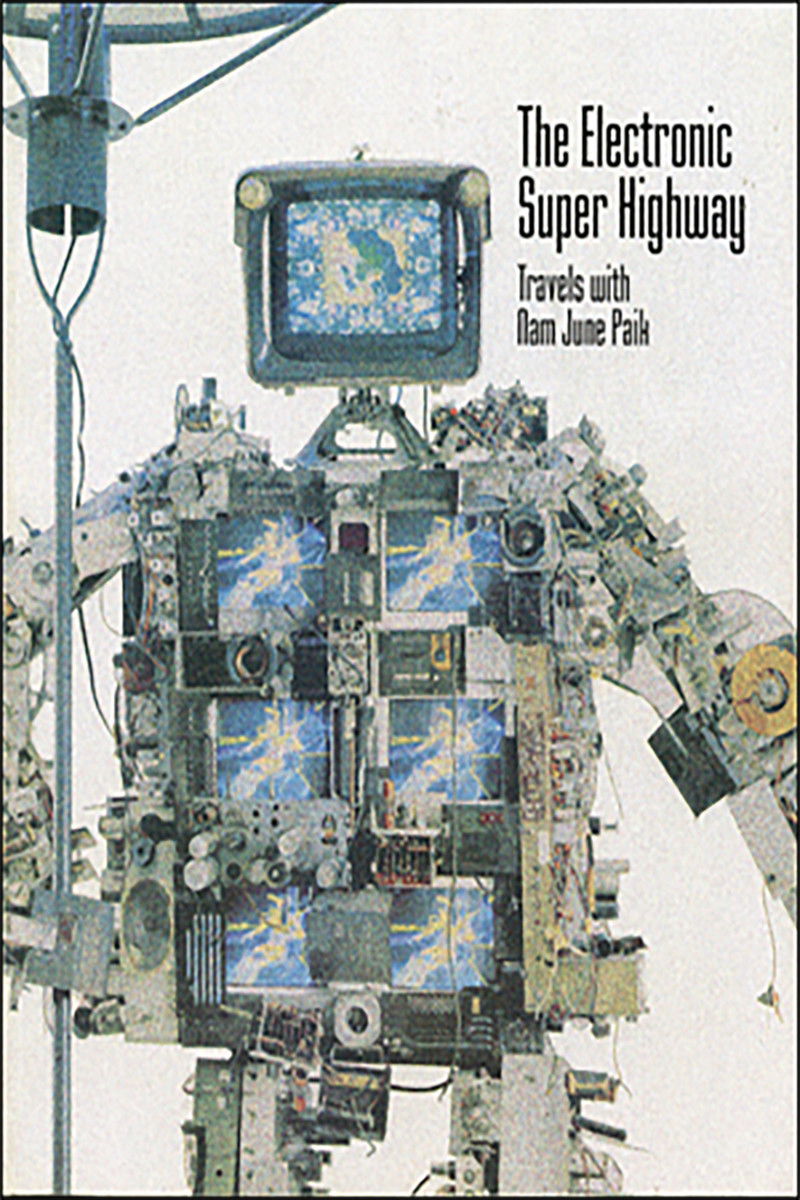
A portrait of Nam June Paik produced as a 'video catalog' for the exhibition 'The Electronic Super Highway', which premiered at The Museum of Art in Fort Lauderdale, Florida, with recent installations, historical background and interviews.
Friends and colleagues (including Yoko Ono and Merce Cunningham) of Nam June Paik share their thoughts about the groundbreaking multimedia artist in this series of candid interviews filmed by Skip Blumberg at Paik's memorial service. This tribute to Paik also includes "Bonus Art Video," in which 17 New York City artists discuss Paik's work, and the short educational film "Lessons from the Video Artist."
The film about Nam June Paik, the pioneer of video art, provides insight into his multifaceted artistic work and at the same time paints a biographical portrait of the Korean artist.
An unreleased diary film shot during the Fairleigh-Dickinson Artist Seminar simultaneous to the production of Back and Forth by Michael Snow.
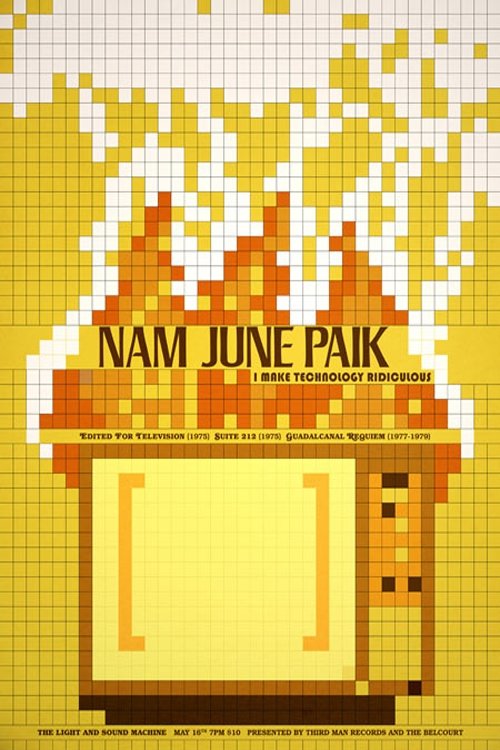
Produced for public television station WNET/Thirteen in New York, Nam June Paik: Edited for Television is a provocative portrait of the artist, his work and philosophies. This fascinating document features an interview of Paik by art critic Calvin Tompkins (who wrote a New Yorker profile of the artist in 1975) and ironic commentary by host Russell Connor. Taped in his Soho loft, with the multi-monitor piece Fish Flies on Sky suspended from the ceiling, Paik elliptically addresses his art and philosophies in the context of Dada, Fluxus, the Zen Koan, John Cage, Minimal art, information overload and technology.
A documentary about the life and work of video artist Nam June Paik made by the Korean Broadcasting Network.
The film portrays a group of artists who since the early 1960s have completely disrupted our ideas of what art can be. In large part filmed in Venice in 1990, when many of the original Fluxus artists met to hold a large exhibition almost 30 years after the first highly untraditional Fluxus' performances. Features Eric Andersen, Philip Corner, Dick Higgins, Yoko Ono, Nam June Paik, Ben Vautier, and many others.
An intimate and humorous portrait of her husband, artist Nam June Paik, as he undergoes physical therapy after an illness.
Kubota continues her ongoing video diary project. Here she reflects on her relationship with her husband Nam June Paik.
Kubota's tribute to her husband, artist Nam June Paik, who died at their home in Miami in January 2006.