
After twelve years in the US, Kirsten returns home to her father with her American husband and their eleven-year-old son. Her father is a tough and cold businessman with whom she has never been on good terms. The couple soon separate, and Kirsten meets a former friend. Her father dies just as he is beginning to develop a good relationship with his grandson.
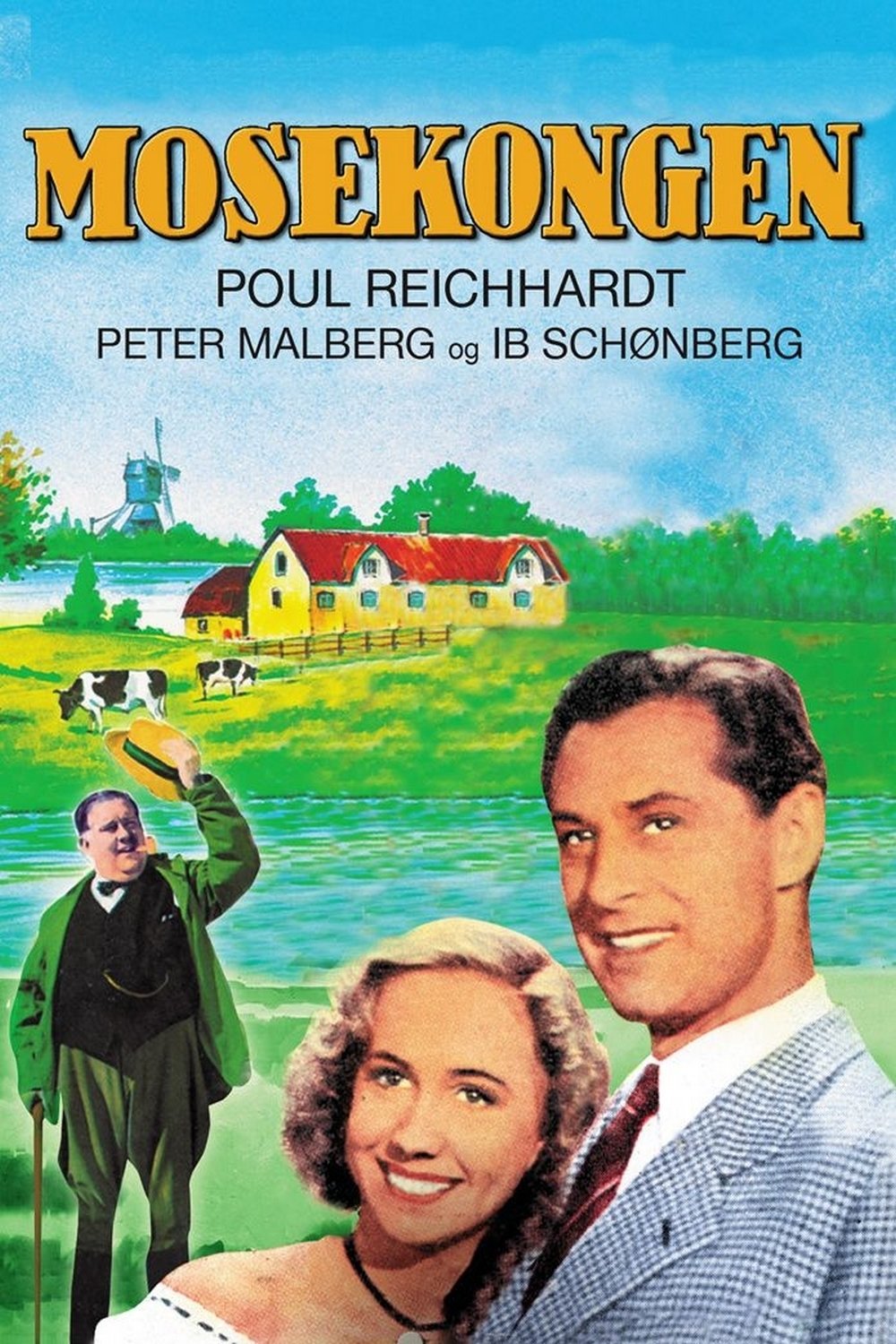
Landowner Munk has problems – he cherishes his wild moorland and does not want to parcel it out. His friend Martin Hald tries to mediate, but in vain. At the same time, Munk is worried about his nephew Jørgen, who grew up with him. He is in prison – convicted on false grounds. In prison, he has a friend named "Fusser," and when they are released, Fusser decides to investigate Jørgen's case.

This film could easily be a true story taken from contemporary Denmark. It is a typical Tuesday morning: stormy weather, slush, and bitter cold. Two young women are cycling to work. They make an unpleasant discovery: they find a dead man on a bench in the park.

Lykke Jeppsen is beautiful and young, but she is best served by not being much else. She certainly shouldn't set her sights on driving a car, because no woman in her family has been allowed to do so since Lykke's mother had a terrible accident in a car from another era. But Lykke secretly takes driving lessons, and one day she has to pass the test: Who is the best driver?

Det Støver Stadig (It's Still Dusting) is the second film in the popular "Dust series" (Støv På Hjernen, Støv For Alle Pengene). Once again, Arvid Müller and Aage Stentoft wrote the festive script, which introduced new customs and traditions to the Danish housing market. The small community in the "sleepy town" is easily recognizable, but major changes have taken place since last time, because the residents of Solvænget have—with municipal support—bought the property they live in, and (something completely new at the time) the wives have had to take jobs to make ends meet! Mrs. Rigmor Hansen is absolutely brilliant as the manager of a Quick laundry. Her "truths" about the new everyday life in Denmark are crystal clear—and eternally young. The property's first general meeting with the guys in the stairwell – and the presentation of the first annual accounts – are golden scenes from the golden age of Danish family films.

In a sophisticated world, everyone lies and deceives each other, and only the peaceful Norwegian Steen is upset by the low-level cheating. A bet is made: can he go a day without lying? Of course he can, and in fact, the bet ends up causing him more trouble than it saves him. Because when the truth comes out, there is no end to what can be revealed.

A really nice mood bomb from Danish films golden age in the comedy genre! Peter Malberg is the somewhat goofy - but very much in love author Peter Strøm. He has fallen for the publisher's daughter, Else Fischer (played by one of the 30s biggest divas, Gull-Maj Norin). The same has just happened to the bright journalist Fritz Faber, who also intends to fight for the young Else. Naturally, this creates the classic intricacy and it all happens on board the Great America-steamer.

Eight separate family dramas (uncovering many aspects of deceit) are woven together to the sound of a certain Chopin waltz.
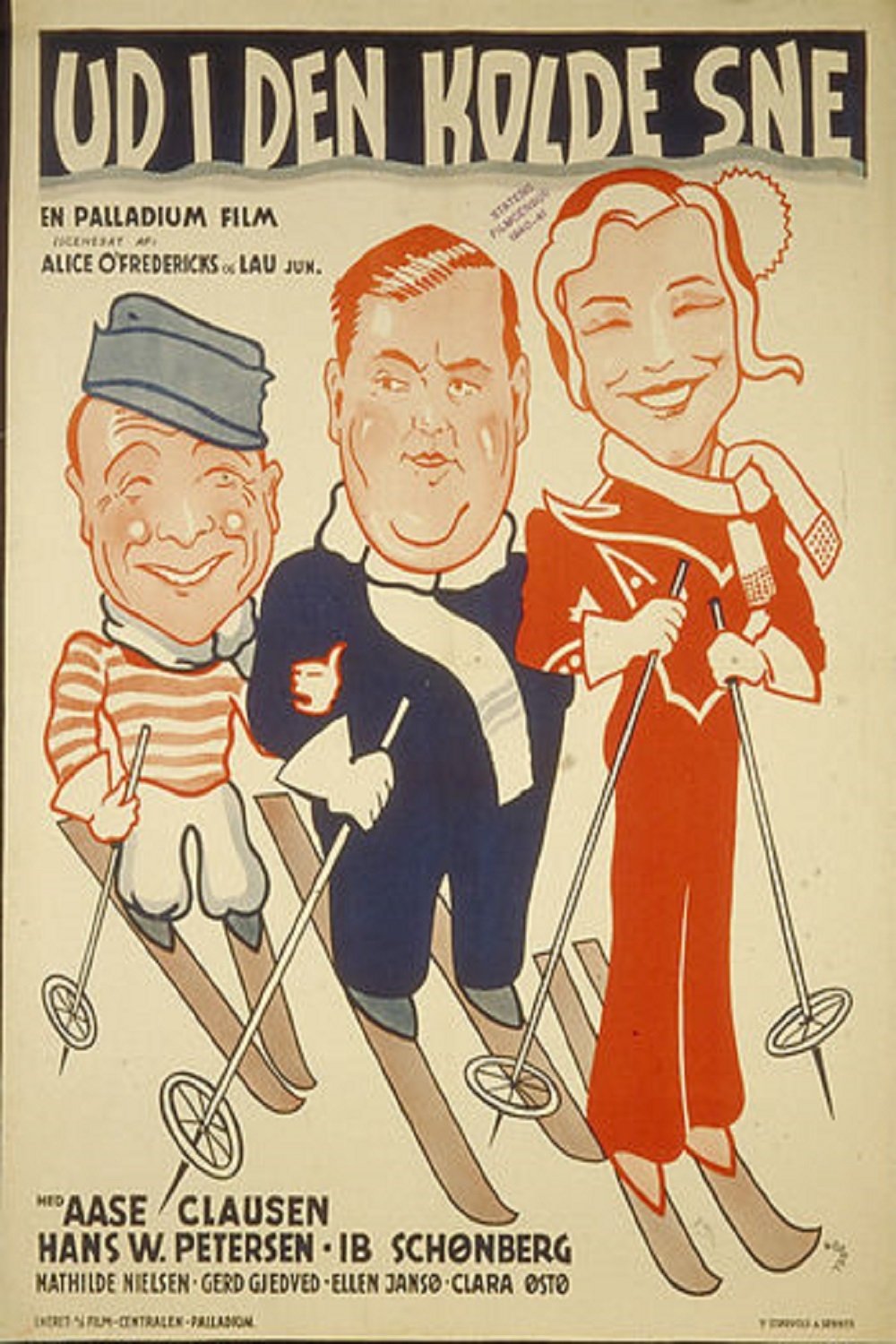
Taxi driver Peter Basse is a jovial and cheerful man who faithfully looks after his daughter at the wheel and steers his carriage through the streets of Copenhagen with unwavering composure. One day he drives for the stylish valet Johan, employed by the old Dowager Baroness von Hessen. The taxi driver is tasked with delivering an important letter to the Dowager Baroness's grandson. Along the way, Peter Basse learns that the Dowager Baroness may be going crazy. In any case, she has made the acquaintance of two spiritualists.

Pat and Patachon live in the attic of an old house along with a number of other curious kinds of people. One of the residents is a fortune teller, who tells Patachon that he will inherit a fortune and marry one of the two sweet choir girls who live next door, and whom he happens to be in love with. The two friends don’t think much more of it and instead head off to work, as models for a tailor. They stroll through the streets in sharp suits, in the hopes that the two choir girls will see them and think that they’re wealthy men, who simply live in the run-down house to study the bohemian lifestyle.
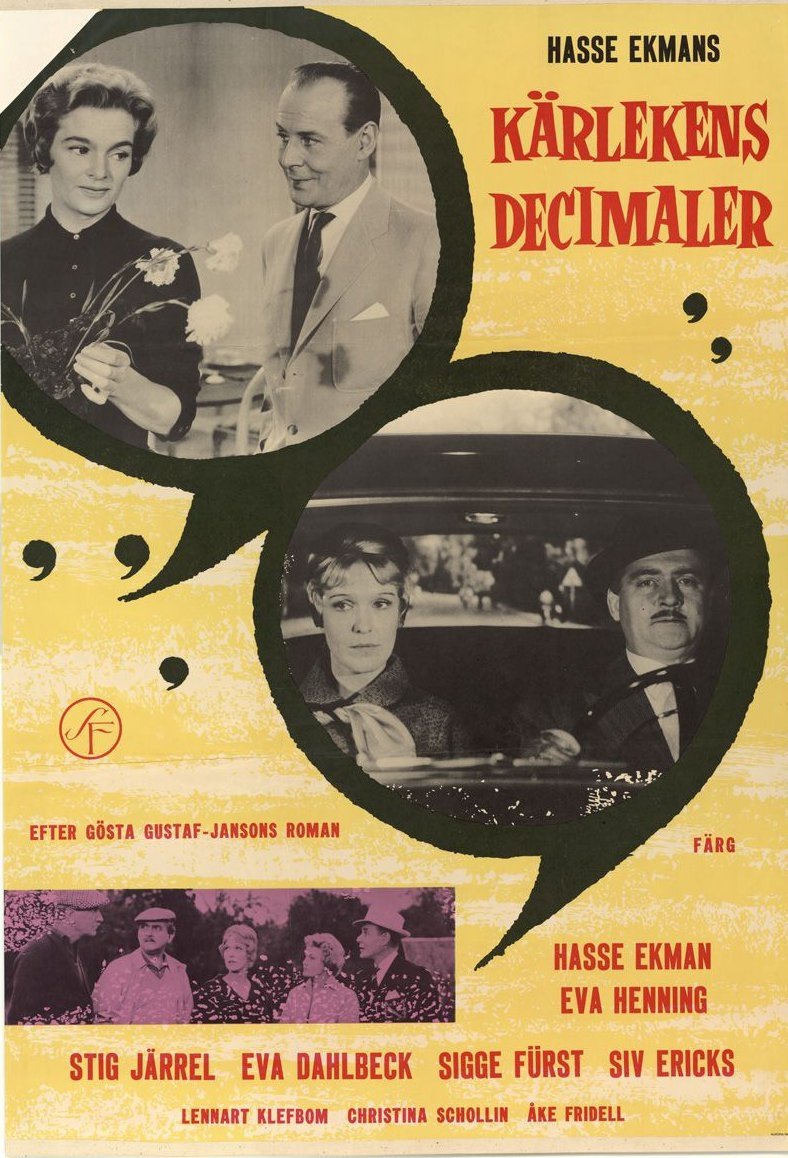
Charlie Gedelius has spent the last years abroad as a golf trainer. In Copenhagen, Denmark, he meets young Lena, who happens to be his brother-in-law's mistress. He goes back to Sweden to meet his sister Astrid. Her son Staffan has borrowed money from a money-lender to pay for an abortion for a girl he has met.
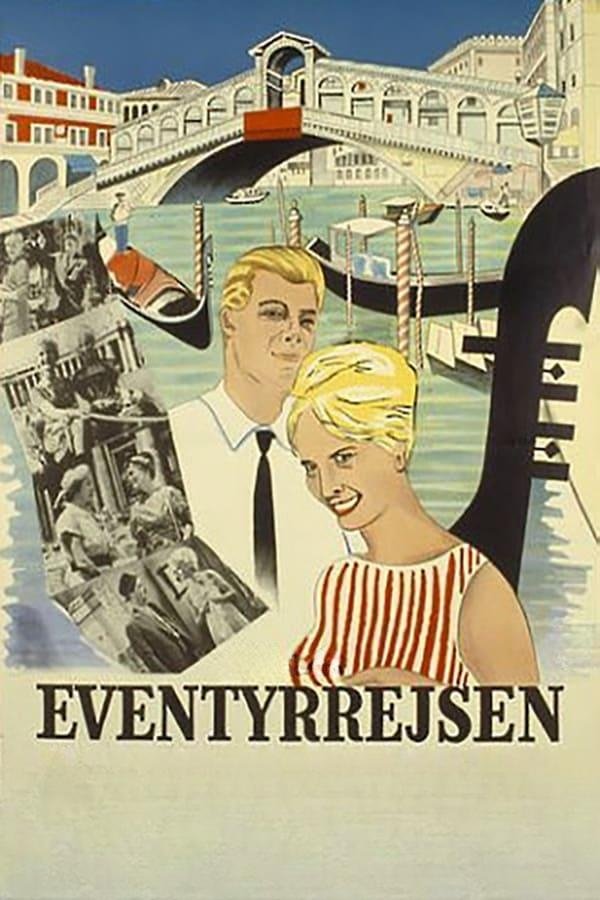
Here is the film that all travel-loving Danes should see—and nod in recognition at all the funny episodes that arise when very different Danes go on vacation to Munich, Tyrol, Rome, and Venice with the dream of the adventure trip of a lifetime. The group is a festive mix: some perpetually dissatisfied, the always happy, young and old, single and a couple of womanisers, etc.

A marine musical comedy from Denmark. The radio operator, Hjalmar Olsen, lives in Nyboder. He handles all the problems for the Nyboder friends when they are in trouble - on land or at sea, from the sister's heartache with the less real rich man's son, the stoker's daughter's problems with an intrusive man, to a mutiny that breaks out on a foreign ship. Hjalmar is a man of action, who always acts quickly - and cheerfully - well supported by the gallery of brave boys and sailors.

In the early 1940s, there were a couple of guys who traveled around the country from market to market with their tent. It contained only one thing: a boxing ring. The big, strong boxer challenged the local farmhands to a quick three-round boxing match and promised a large cash reward to anyone who could knock him out.

The strict customs regulations have brought about a special type of lawbreaker - smugglers! They abound in all countries, and even in our relatively peaceful country, there are more of them than one would think. The great film director Stenbuk reads sensational articles about a major smuggling affair, and he sends a manuscript back to two writers with the message that if they do not come up with a smuggling-themed manuscript within eight days, they can run and chicken.

Flemming argues a lot with his parents. So they agree that it would be best for Flemming to go to boarding school. Here he encounters a completely different world and now has to try to cope in a boys' environment. There he discovers how good it is to have a family and that it wasn't the best solution to the arguments.

A group of residents in the Copenhagen suburb of Solvænget decide to buy a farm in order to become self-sufficient in vegetables and other goodies. Unfortunately, farm life turns out to be much more strenuous and difficult than the small group of city dwellers had imagined.

Sabotage of a Nazi factory is carried out by the husband of the lover of a resistance leader.

A portion of the tail of a prehistoric reptile is discovered in Denmark. It regenerates into the entire reptile, which proceeds to destroy buildings and property and generally make a nuisance of itself. It can fly, swim, and walk, and has impenetrable scales, which makes it difficult to kill.
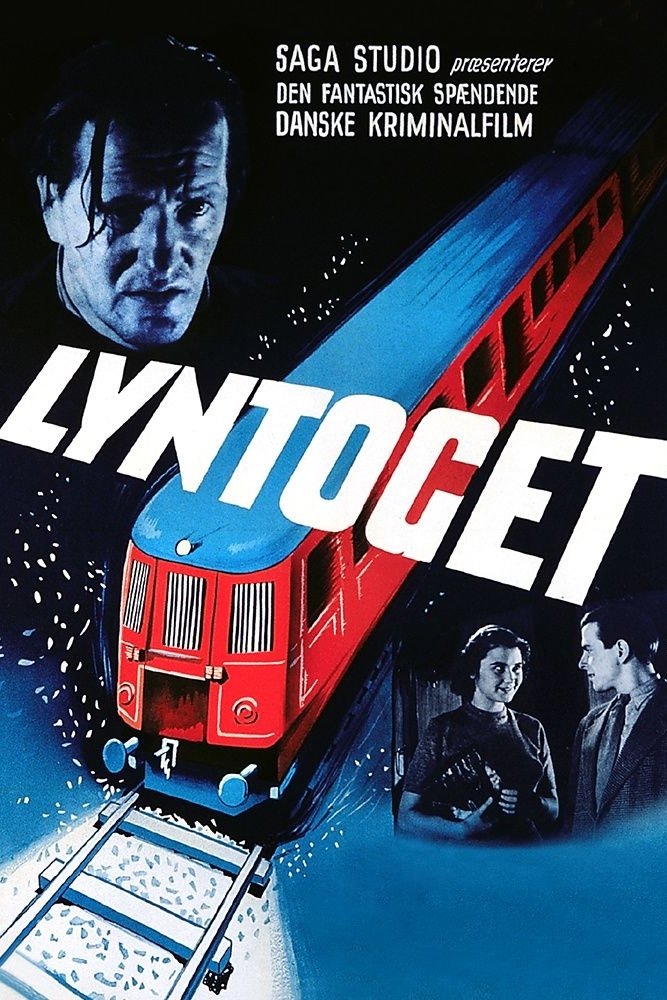
A dangerous prison escaper, a young Jutland woman, and a bank clerk, who has just deprived his employer of some cash and is now headed abroad, meet on a lyntog (literally "lightning train") from Arhus to Copenhagen.
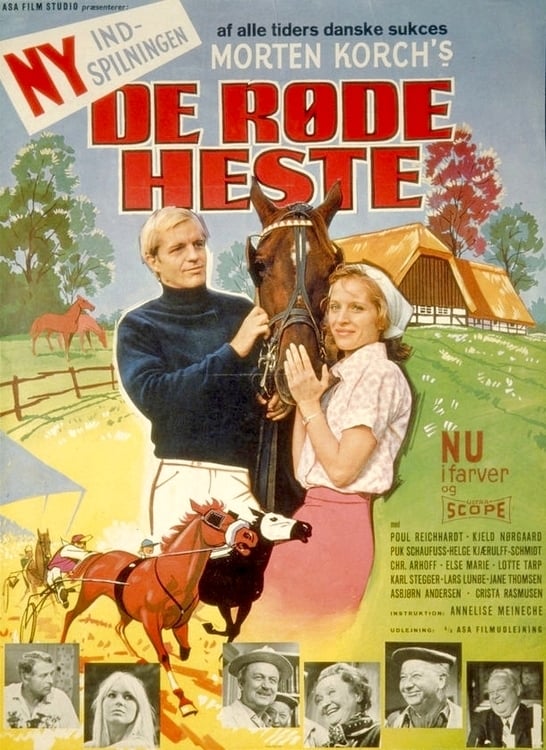
The young and spirited farmer Ole Offor takes over the Enekær farm on Zealand, along with its stud farm and enormous debt. At the same time, he marries Bente, the daughter of the farm's former owner. Although it is initially a marriage of convenience, the young couple develop strong feelings for each other, and together they take up the fight against debt, Bente's evil stepmother, and her nasty lover, riding master Wilders.
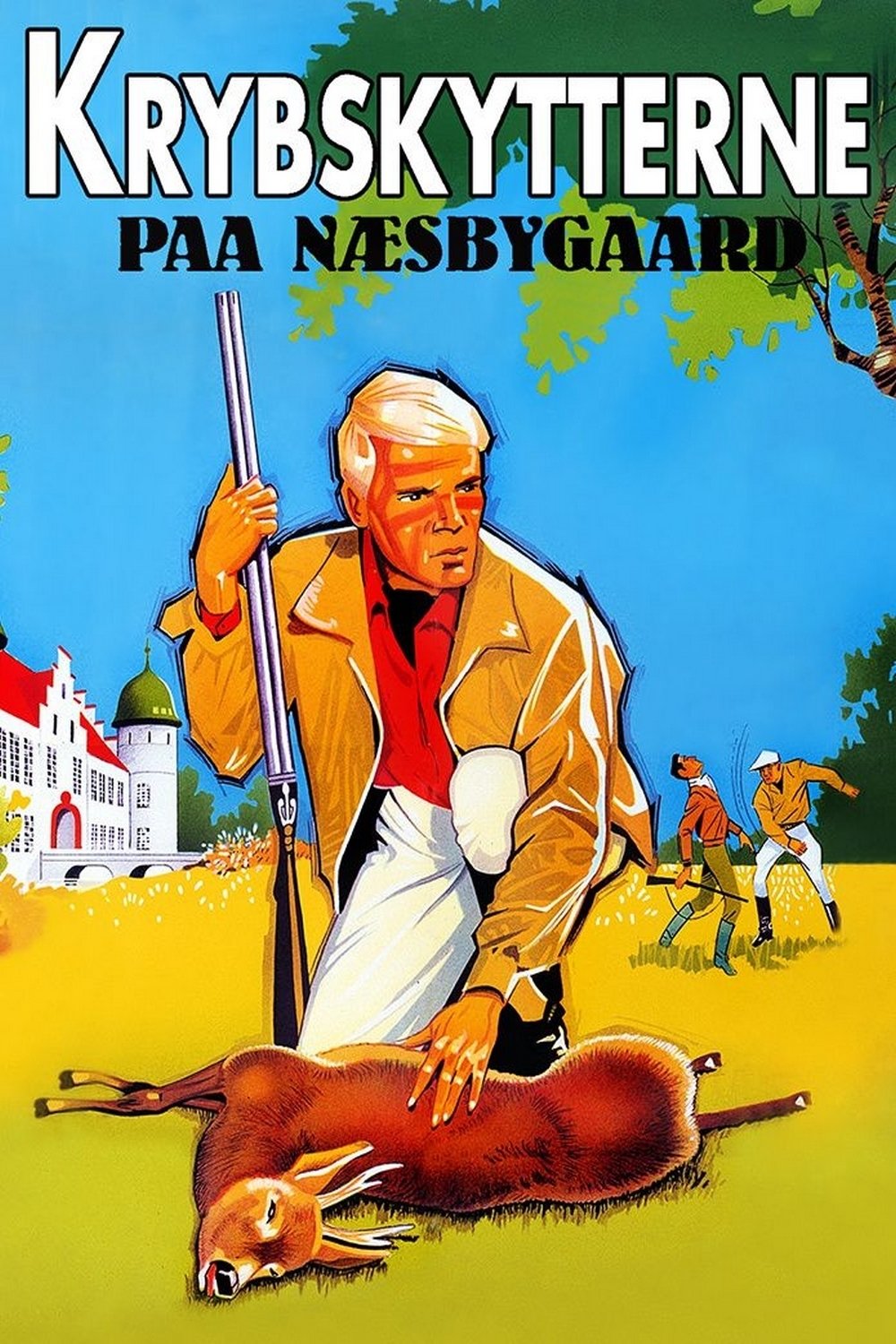
At the Næsbygaard estate, the old landowner misses his grandson Martin, who is on a cattle farm in Texas learning about agriculture. The estate's shooter is ill, so the stud master has to take care of his job as well. This comes at a time when he is training hard for the gallop race for the King's honorary prize. To help lift their spirits, they are visited by some children from Copenhagen who are on vacation. When serious problems arise involving poaching on the estate's land, the children help to solve the case. The stud farm manager is injured, and it looks as if the estate's horse will not be able to participate in the big gallop race. But luckily, young Martin returns home from Texas just in time....

One dark night, a ravishing young girl flees from a convent boarding school in Switzerland. She is Lisa Hoffmann, daughter of a wealthy Danish-American oil magnate from Brazil, and she is running away with her sweetheart, the calypso singer Jacque. There is a huge uproar in newspapers around the world, and even more so when it turns out that the two young people are performing in cabarets around Europe's capital cities.

Director Paul Borg (Ebbe Langberg) neglects his young, beautiful wife Marianne (Ghita Nørby). He even forget their wedding day, in favor of a new fast sports car, a beautiful silver-gray Jaguar. During his drive, he runs out of gas. A young lady Laura Lublinski (Hanne Borchsenius), helps him and he takes an innocent flirtation with her. When Marianne learns this, she moves home and dump into an artist community with Jenny (Bodil Steen), Ovengaden of water 52 in Christianshavn. Here she takes the unrepentant Don Juan, Mario (Dario Campeotto) and the guitar-playing Eigil (Dirch compatible).

Peter Soeborg and Susanne have been happily married for a month. He is a postman, but very gifted voice and in a couple of years participated as korherre Alhambra Theatre's operettas. Peter and especially his cute little wife proud dreams for the future, and their mutual friend, the old dresser Kragelund, who lives in the same house, also believe in Peter's abilities. There has to be premiered at the operetta "Love", and Peter hopes to be considered. But it should prove to be quite easy.

The young fisherman Kurt Vinderup returns home to the small fishing village of his childhood after completing his military service in the Royal Danish Navy. On the quay, he meets a young girl named Bitten. He and Bitten had been in the early stages of a relationship before he left for the capital. But in his absence, she has become engaged to his brother Jacob Vinderup.

An episodic film with six different stories that are more or less interwoven. A married couple is celebrating their 19th wedding anniversary. The wife wants a chest of drawers. During a trip to the countryside, they pass by the place where the chest of drawers is sold. Dr. Gregersen's wife is pregnant. Meanwhile, the doctor has bought an expensive typewriter. The doctor advertises the typewriter for sale through his friend, and the buyer is none other than the doctor's wife. A couple wants a bigger apartment, they argue and break up. Later, we meet them again, where they have both found work through an advertisement with a rich man as a housekeeper and a driver. A woman wants to sell a pram because she is going to the hospital. Her little son is to be looked after by her sister. The couple who cannot have children have just adopted the little boy's sister and now come to buy the pram.

Landowner Martin Kaas lives with his grandson Martin at Næsbygård. Martin is an avid horseman. One day, his horse loses a shoe, so Martin goes to see the village blacksmith Mortensen, where he meets the blacksmith's foster daughter Elise. The blacksmith is known to be an honest and religious man, but no one but Elise knows how brutal and cruel he really is. Elise discovers that her foster father, together with the estate's manager Hermansen, is involved in many shady deals that are not in the best interests of the estate. Martin, who often feels lonely, forms a warm friendship with Elise. One day, Martin disappears, and a letter left on his bed reveals that he has been kidnapped and that only a large ransom can bring the boy back.

A young orphan is sent to live in a Danish village where he is cast out because his mother was a West Indian. With nowhere to turn, the ingenious survivor begins devising a new life outside of town.
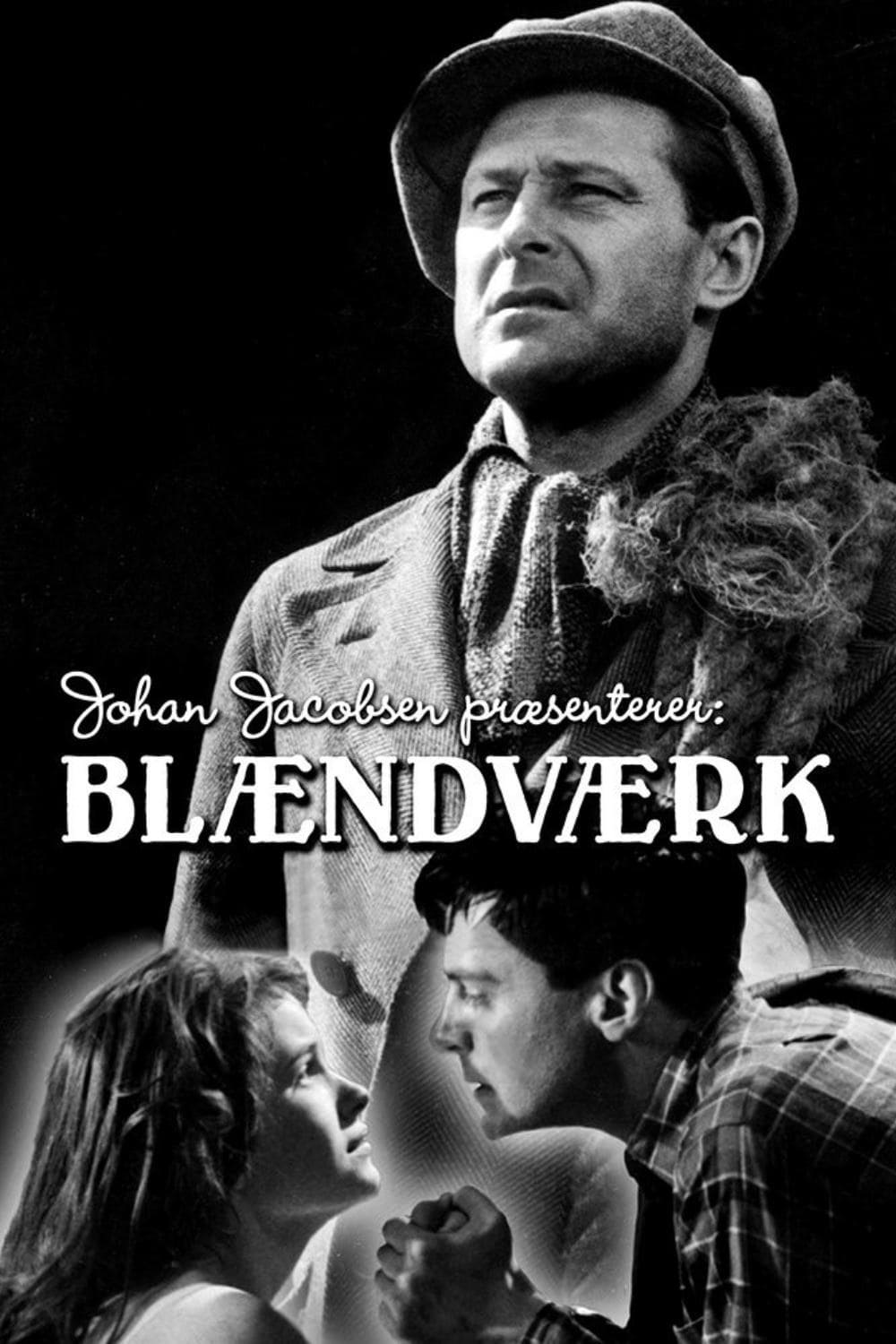
The young mechanic Borge Rasmussen works in Salling Harbour and lives with the slightly older Marinus Frederiksen, who chairs the city's port workers. Marinus sees in Borge, who has lost his parents, his only friend and is easily influenced by his extremist views.
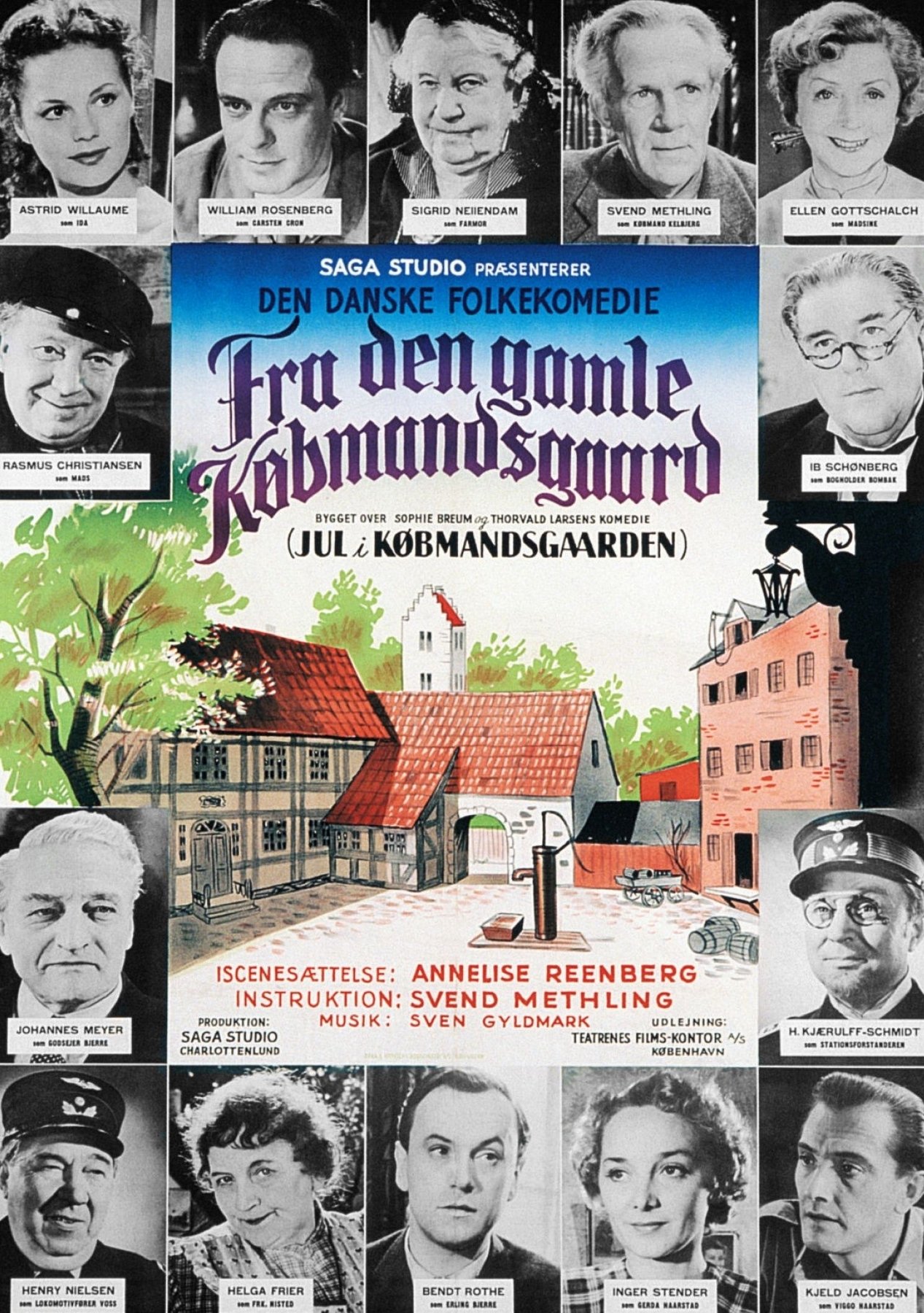
Two rival young men both desire the merchant's pretty daughter, a bad young man robs the merchant's safe and blames it on "mother-in-law's dream", a worldly-wise grandmother directs the battle of love from her living room, and a couple of silly railway workers spread song and joy.

The young sailor Morten returns home from his travels in the midst of the general strike of 1944, where he is confronted with the occupation. He joins a resistance group and actively participates in the struggle. There is no time for relaxation. He must always be on guard. Only with the sweet and charming young Lise can he relax a little and be himself. During a factory sabotage, the group is captured by the Germans.

A husband is tempted to stray, gives in, and then struggles with himself and his conscience. The children are weighed in the balance, and in the end they are what make him stay in the marriage, even though he must then forsake the woman who for a time sweetened his life outside the confines of home.

Jørgen von Hejden is very distinguished, but poor. He is something of a fortune hunter. He dreams of getting rich quick. But his skills are not up to the radio quiz show, so he sticks to gambling, roulette, and dice games. When he marries the beautiful and wealthy Marianne, he also gambles. He has married her for her money! But Marianne is not only wealthy, she is also strong-willed. She inherited this trait from her father, shipowner John Christensen.

A film director sends his director and two screenwriters out into the city to find out what a film should contain in order for the person in question to want to see it. This results in many different episodes. The film includes the famous scene where Dirch Passer and Kjeld Petersen wallpaper a room.

It's all about an anonymous little gray book originating from sexually advanced Paris. The book doesn't look like much, but shouldn't be judged by its cover. Wherever this book goes, something will happen. And for sure, this book goes around.
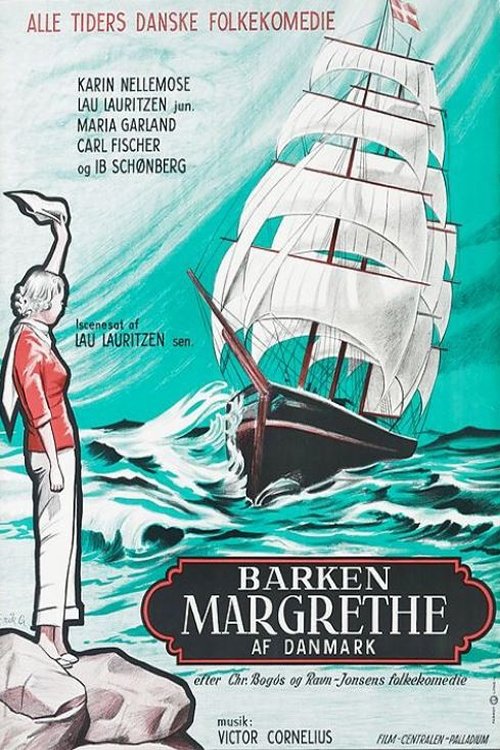
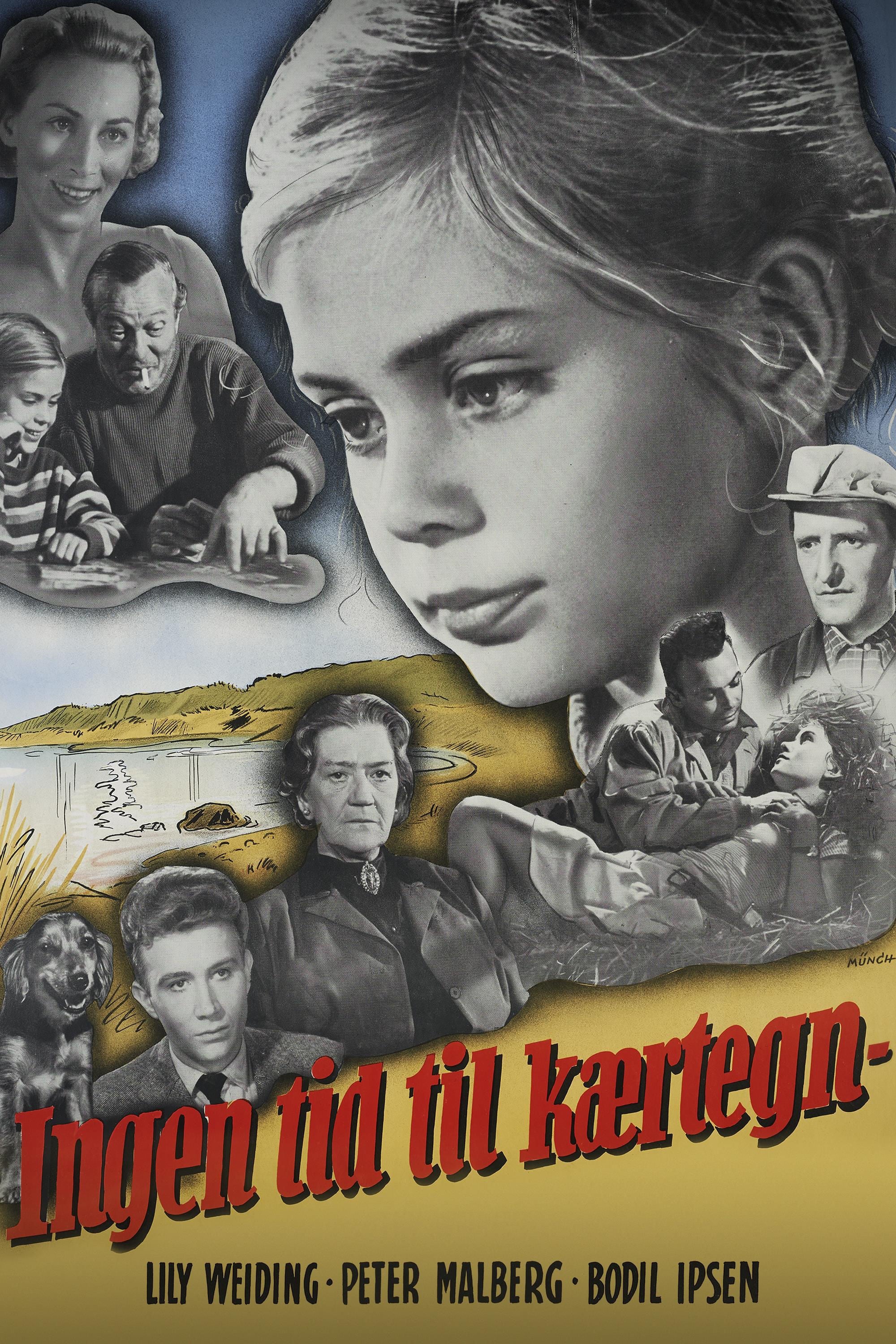
The Danish Ingen tid til Kaertegn (Be Dear to Me) is heavily reliant on the appeal of its star, 8-year-old Eva Cohn. Our heroine is the neglected child of a businessman father and actress mother. Feeling that happiness lies well outside her own backyard, Eva goes on a search for that happiness. The longer she stays away, the more her parents realize that they've unfairly ignored her. The plot is nothing new: it's what is done with it that pleases the eye and ear. Ingen tid til Kaertegn was one of the more popular entries in the 1957 Berlin Film Festival.

Behind the red gates lies Dyrehaven with the green beeches and the famous zoo hill - the motley world of clowns. Professor Labardi is behind the popular singer pavilion, where his young daughter, Gulnare, performs. After a rainy summer, there is an economic low tide on Bakken, and the family is tempted to seek help from Gulnare's enterprising suitor, Carlo Petersen. But Professor Labardi carries a secret: the clown family has family ties to the fine legal world outside the gates. There is conflict, money transactions, love, hypocrisy and villainous streaks when the fine world and the hill folk meet. Behind the Red Gates is a terrific folk comedy that takes us behind the attractions at the traditional amusement park in Klampenborg.

Crime writer Rodian moves into a hotel which used to be the hideout for the thief Mathisen and his gang. However, when Rodian has gone to bed and fallen asleep, Mathisen reads the writer's manuscripts and copies the fictional crimes. This gets Rodian in trouble...

Three young men discover a scam that three somewhat older gentlemen from Aarhus' upper class have set up to avoid bankruptcy. The gentlemen directors have both accounts and safe deposit boxes at the bank branch where one of the young men works, so it seems only natural to give the swindlers a taste of their own medicine, so to speak. The situation is further complicated when a journalist gets wind of the double heist and wants his share of the pie.

The only daughter of an old landowner has died in Italy after leaving her family 15 years ago. Her son now returns home to Denmark. He threatens the landowner's nephew for his inheritance, prompting the nephew to devise several plans to discredit the boy in the eyes of his grandfather. The plans almost succeed, but thanks to help from the priest, among others, the story ends with a reconciliation between the grandson and his grandfather.

After three long years, the young legal secretary Bodil is reunited with his former girlfriend Carsten. Their love affair flares up again, but unfortunately Bodil has meanwhile come a little too close to his boss' son, the skirt hunter Hugo. And he has no intention of making Bodil happy.
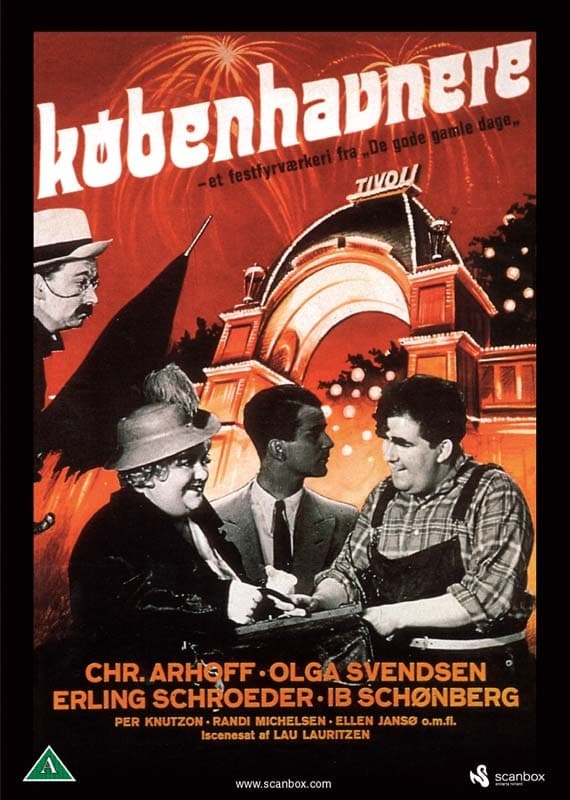

A folk comedy set in a village on the island of Zealand, where a powerful and dishonest businessman tries to trick the traditional owner out of his farm, Svanegården. The businessman wants to sell it to the Germans, but a group of brave people and couples in love manage to prevent this from happening.
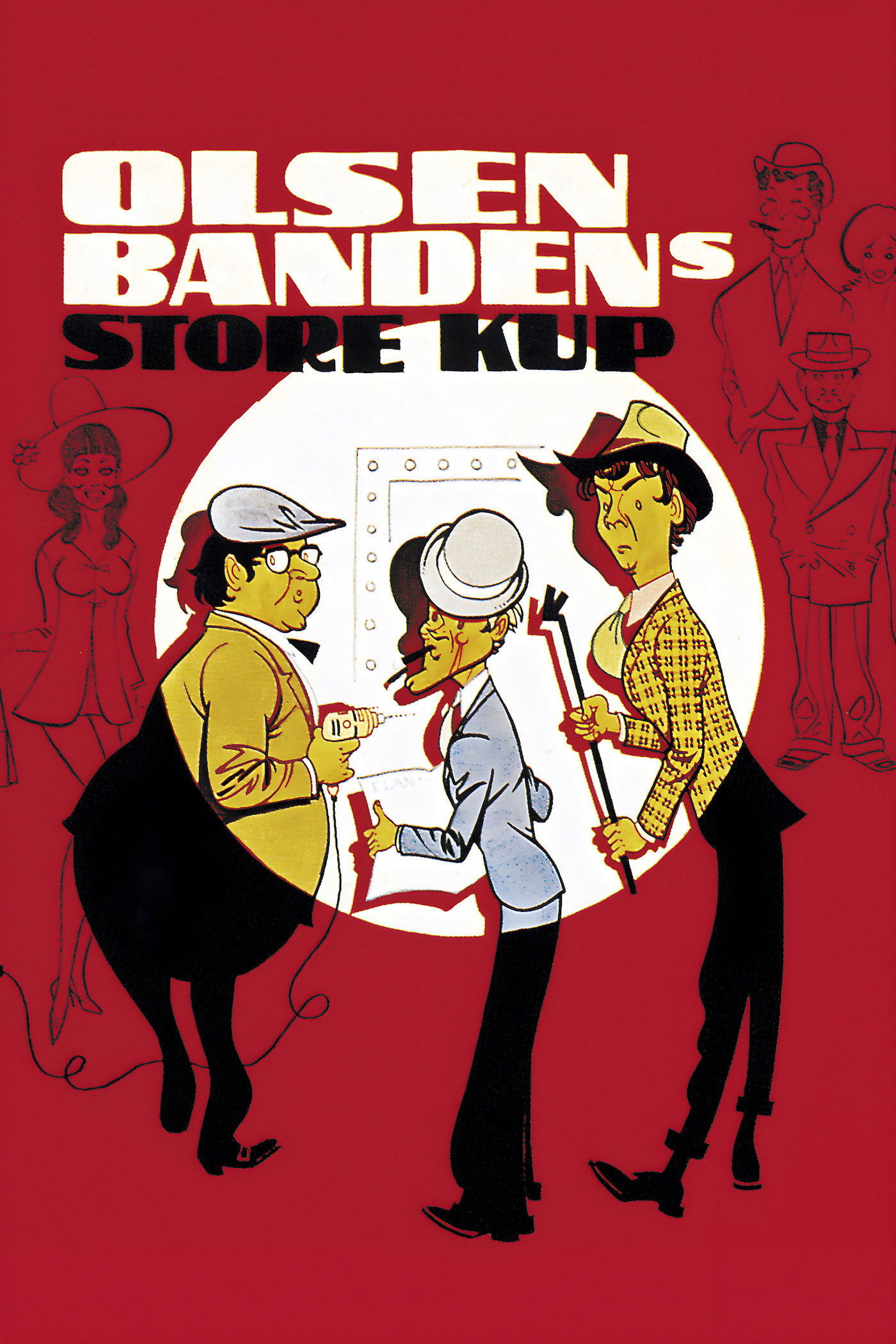
After his usual stay behind bars, Egon has another cunning plan involving millions. They rob over 4 million from a money transport. The gang keeps a low profile and hide the money. But it's stolen by "Kongen" and "Knægten", who immediately start living it up - in the penthouse suite at the Sheraton. The suitcase with the money changes hands several times, before Kongen's daughter takes of with all the money.

Egon and the gang are hired to stage a robbery of an antique Chinese vase for an economically challenged baron. Naturally they fooled, which infuriates Egon. The gang tries to get back at the baron by switching the vase with a cheap Hong Kong copy. One attempt is made during the barons hunting party, where Egon ends up being bricked up in the catacombs. In another attempt, the gang has to coordinate breaking through several walls at The Royal Theater in Copenhagen with the "Elverhøj" overture.

An American gangster nicknamed "English Joe" has fled across the Mexican border with his gang, consisting of four men in addition to himself. The American police are after them because of a bank robbery in which they killed several of the bank's employees. But "English Joe" soon comes up with a new plan that can bring them to safety for a while and at the same time give them the opportunity for a new coup. An old engineer who has worked at a weapons factory in Mexico has traveled home to his own country to complete an epoch-making invention: the silent machine gun. The men are ordered to Denmark, where the old engineer now lives.

In a train on its way through the bombed out Germany are a bunch of happy American soldiers. They are going to Copenhagen for some R&R. One of them is John Petersen, a lieutenant in the American army and another is his friend Bill. They are talking about how much they are looking forward to a rest in Denmark and John Petersen who is of Danish descent talks about his native Copenhagen.

A Chinese diplomat is kidnapped from a conference in Genève and the world peace is at risk. The trail leads to a hiding place in Denmark and the Danish secret service brings in their best agent, agent Smith, who has been in a psychiatric hospital since his last assignment. To accompany Smith they once again turn to novelty and party tricks salesman Frede Hansen, because they need an unrecognizable man to infiltrate the crime syndicate behind the kidnapping.
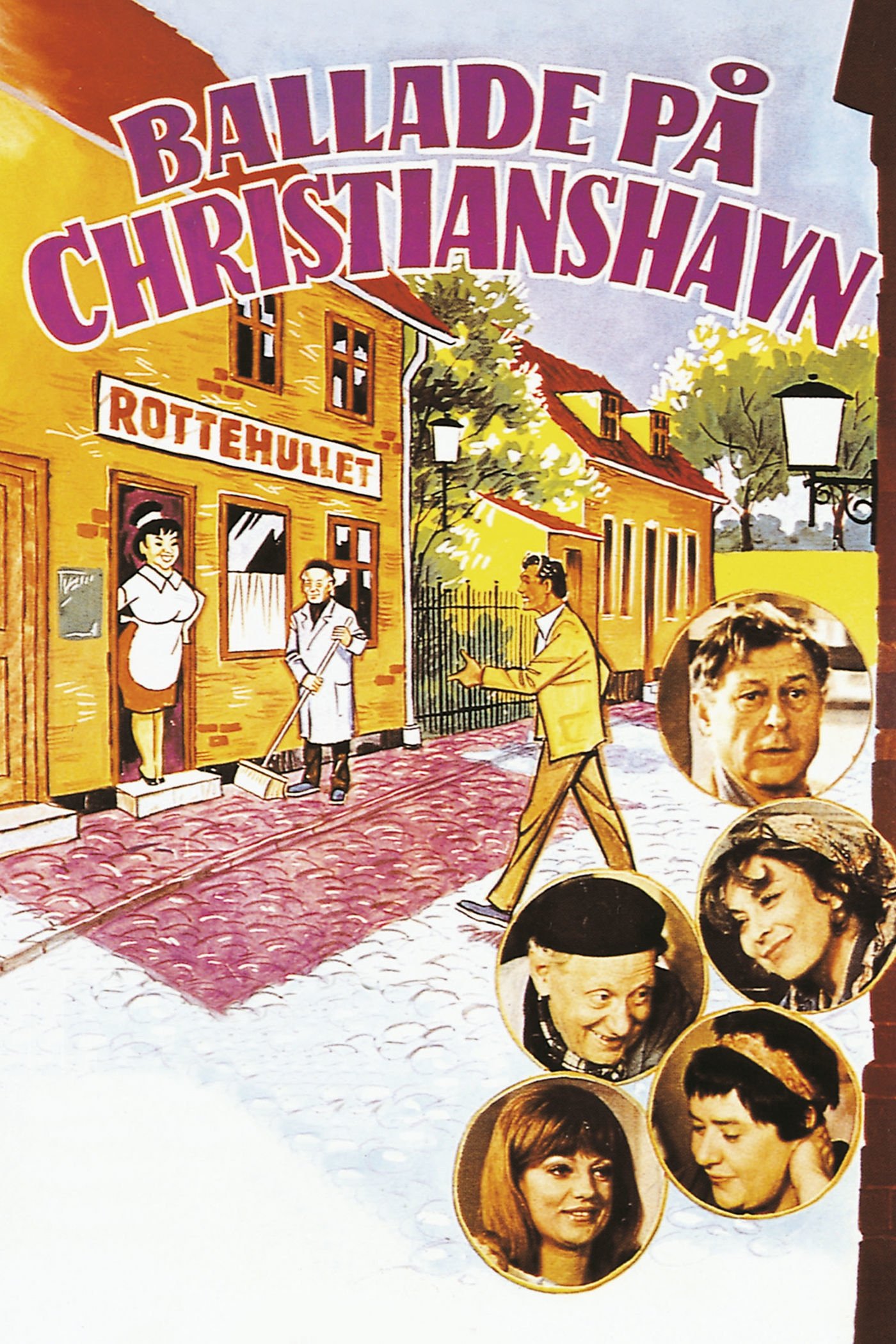
Residents of the old house are quite happy with their existence. But once they find out that the authorities plan to demolish the entire neighborhood including their house in order to build a business center they decide to unite and fight the plan...

Three girls (around 20 years old) who have grown up in different parts of Denmark get a strange letter. It turns out they are sisters, and will inherit from their late mother, if the can stay together one month in the same house. They end up in a lot of (romantic) trouble, because of speculations of who their father(s) might be.
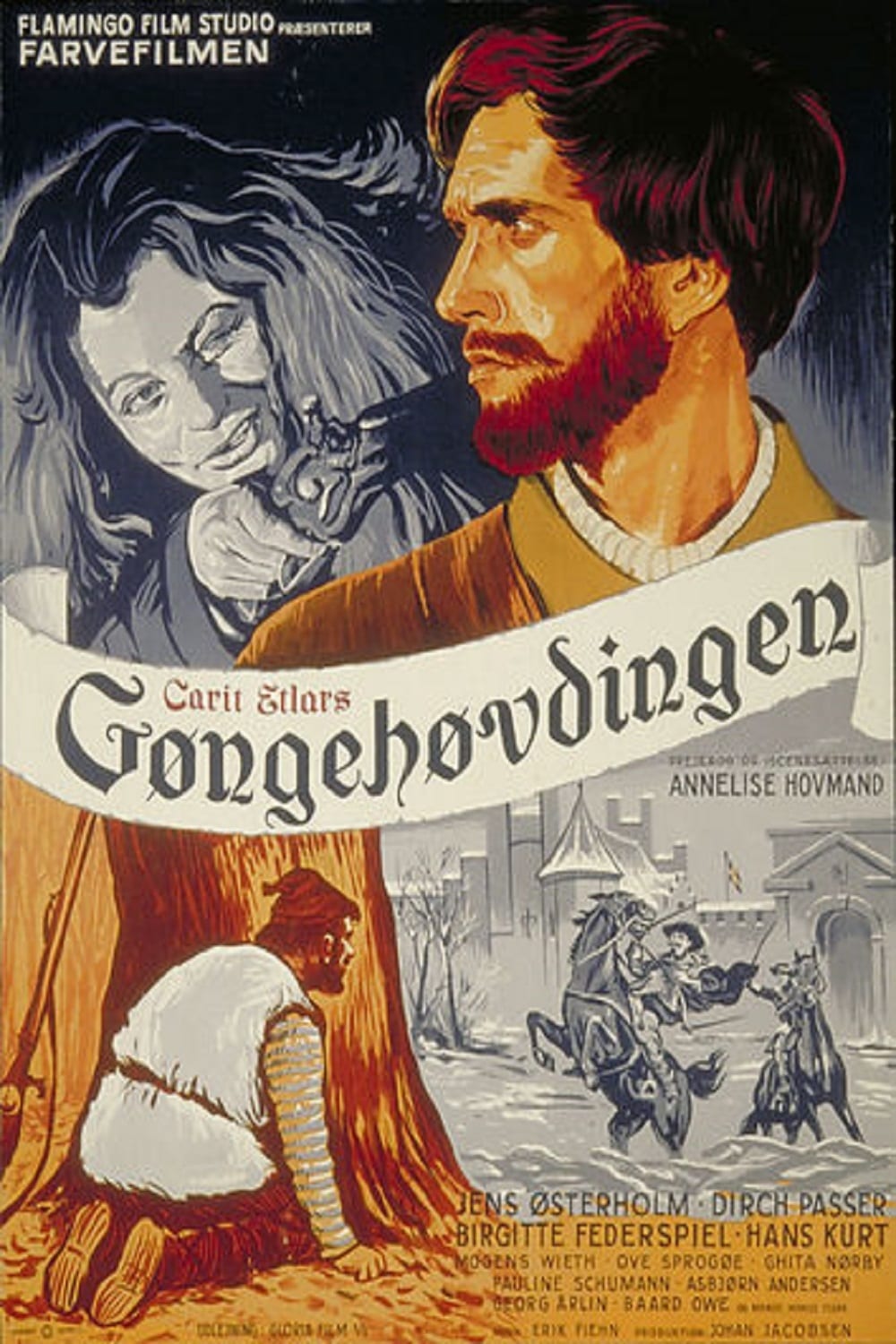
It is the war year of 1658, and the winter in February is so harsh that the belts are frozen. The Swedish King Charles X Gustav, who has arrived in Germany, is now staying in Jutland. He and his army can cross the straits and continue on toward Copenhagen. Svend Gønge is given a particularly difficult task by Frederick III: 50,000 rigsdaler belonging to the king must be brought from Vordingborg Church to Copenhagen.
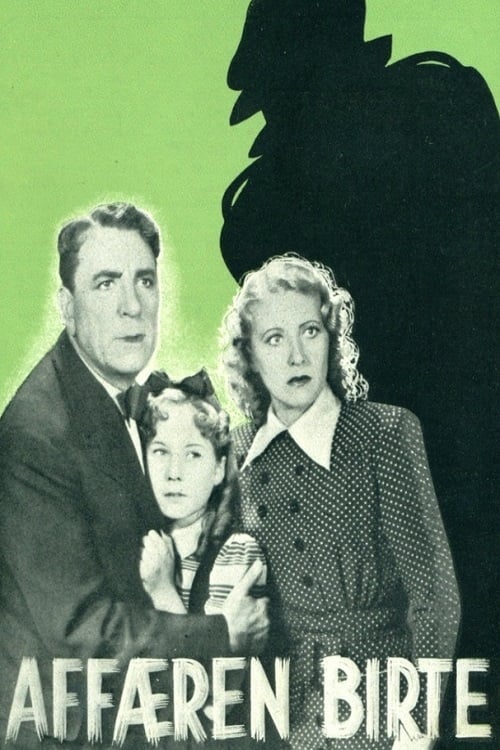
A large city is in a state of panic, in workplaces and in homes people are discussing the terrible fate that has befallen a little girl named Birte. A sex offender has been at play, he has been haunting the city's parks and facilities for a long time, and his latest victim is Birte Elkær, daughter of the scientist Hans Elkær and his wife Martha. The police have deployed extra personnel, and they are now searching for the second day. Will the little girl be found alive?

Factory worker Otto Nielsen and his wife Helga live in a 2-room apartment in a sad Copenhagen suburbs district, where the S-trains still bumble by, but of course, such things can be used to. They have five children and it is often difficult to meet daily expenses. Nielsen has bought a building site outside the city, it is his dream to once again be able to exchange the narrow apartment with his own house.
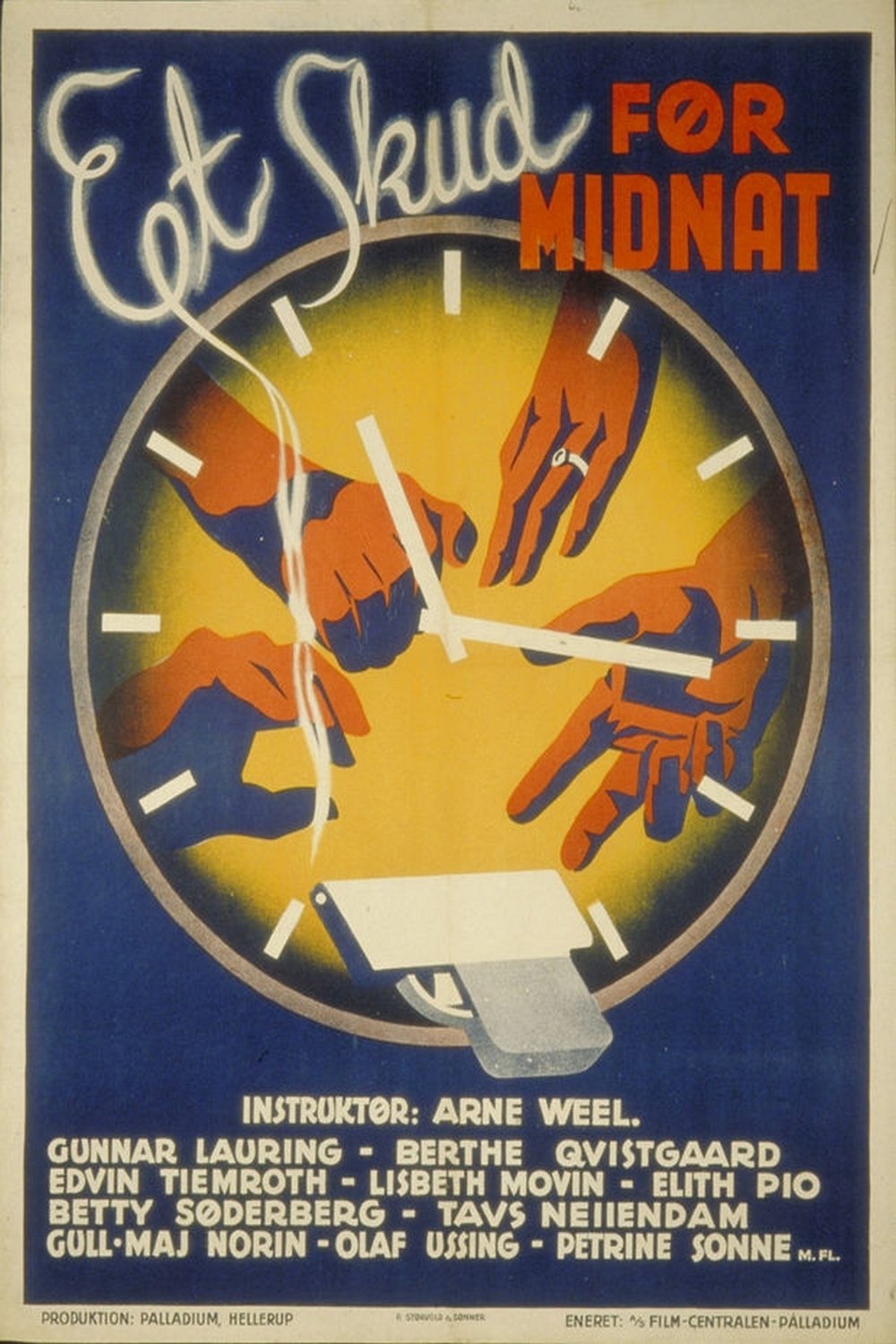
Dr. med. Peter Lind is a young, partying model doctor who, despite an extensive and wealthy female clientele, is getting tired of the monotony of medical life and is therefore planning to go on a long trip abroad to experience adventure. His wife Vera is very unhappy with this plan. Peter and Vera have recently divorced after four years of marriage and are therefore better off than ever. Since they cannot agree on whether Peter should travel or not, they choose fashion writer and theater critic Martin Steen as their umpire.
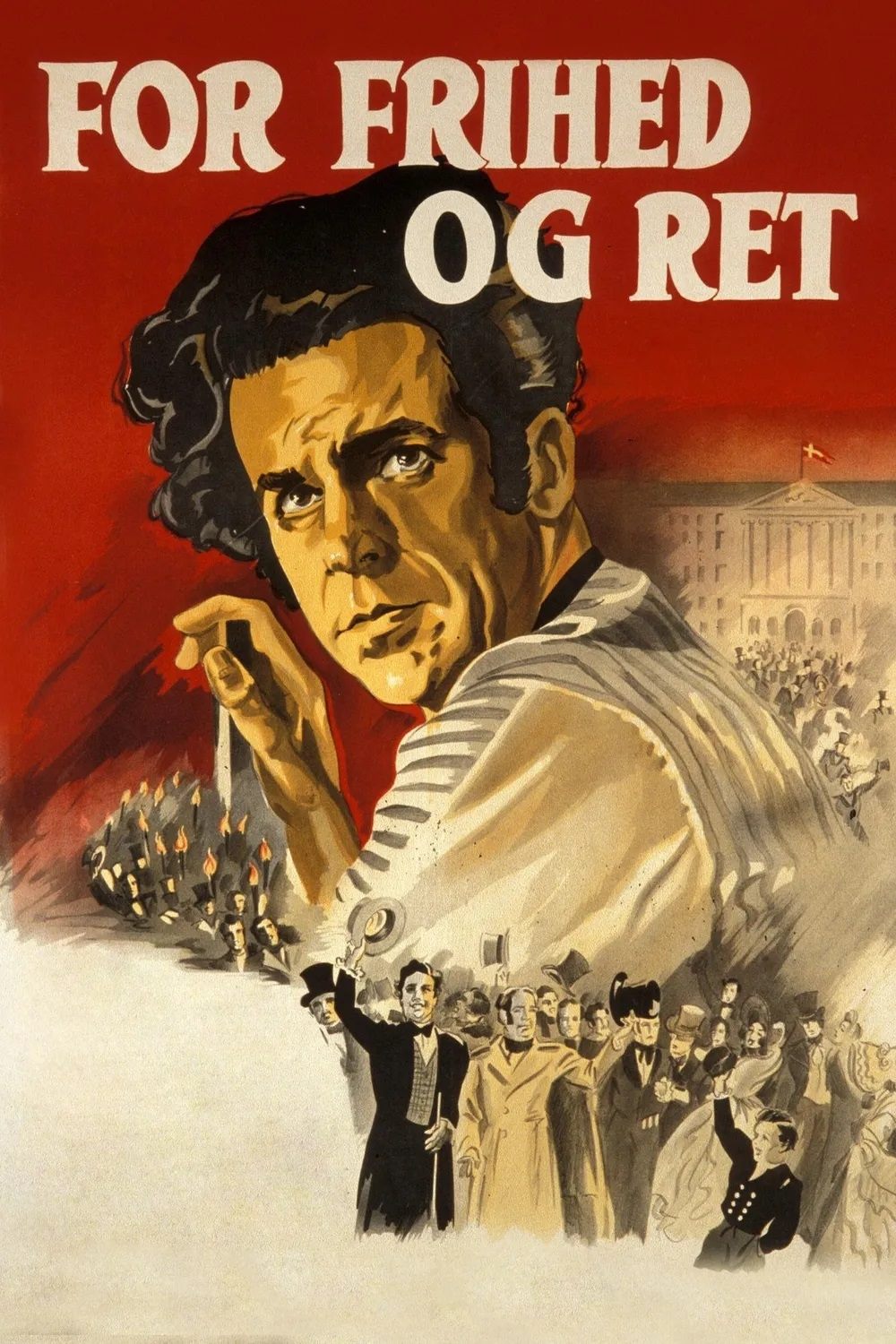
A picture of the life of the Danish people from the late 1820s to the introduction of the free constitution in 1849. A fictional character, Rasmus Nielsen, travels around the country, first as a traveling teacher, later in other positions, and through his experiences we are introduced to the conditions of various population groups. The central figure in the portrayal of historical figures is the politician Orla Lehmann.

The attic of a city house is the home to a colony of artists. Among them is a writer, whose corpus is larger than her output. We also meet a hard-of-hearing poet who can still hear the grass growing. There's a painter, a sculptor and more. All are penniless - hoping that one day they will experience their breakthrough. "The Seventh Heaven", as the corridor is called, also houses two prominent residents, Fyrtårnet and Bivognen. They have set up a small diner and engage lively with the artist from the colony.

Ms. Møller is a cashier in a large piano store and will soon be celebrating her 25th anniversary. She wants to help the sweet young Grete Holm in the packing room. In order for the poor and orphaned Grete to meet a rich young man, Ms. Møller invites her on a skiing holiday in Sweden. Grete finds herself a ski instructor, and it all goes wrong when Ms. Møller has all her savings stolen and is also accused by the piano company's director of having taken the cash herself. However, she manages to expose the real thief, and Grete's ski instructor turns out to be an engineer with his own company.
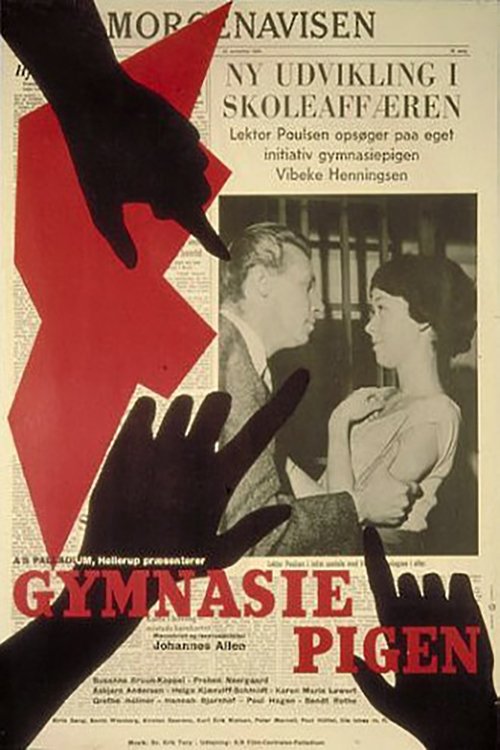
18-year-old Vibeke Henningsen is a student at a large modern school for girls and boys. She is an only child, and her parents, who are both self-employed, have not devoted the necessary time to Vibeke's upbringing. She was born with a combative and difficult character, and when she is demoted from 12th grade to 11th grade after a probationary period, she directs her hatred toward the school's most beloved teacher, Associate Professor Poulsen, whom she directly accuses of refusing to allow her to continue in 12th grade.

Fyrtårnet and Bivognen are gardeners at a residence for young women. Here they are friends with budding actress Eva, but when the three reveal one evening during the performance of an illegal theater performance, they are kicked out. By detours, they get on board a schooner, where Fy and Bi play up to dance and get seasick, while Eva still has her course set against the sloping boards.
Some young squatters have occupied a building that the insurance company wants to demolish, but Adam Berg hesitates to call the police on them. A difficult policyholder wants more money for a claim than the company has paid out. A former schoolmate pesters Adam to allow him to take out insurance he is not actually entitled to. A young man, Tom, appears in Adam's world. Is Adam homosexual? And Adam meets the lawyer, Paul, who is dressed in women's clothing and, as a crossdresser, is known as Sonja.
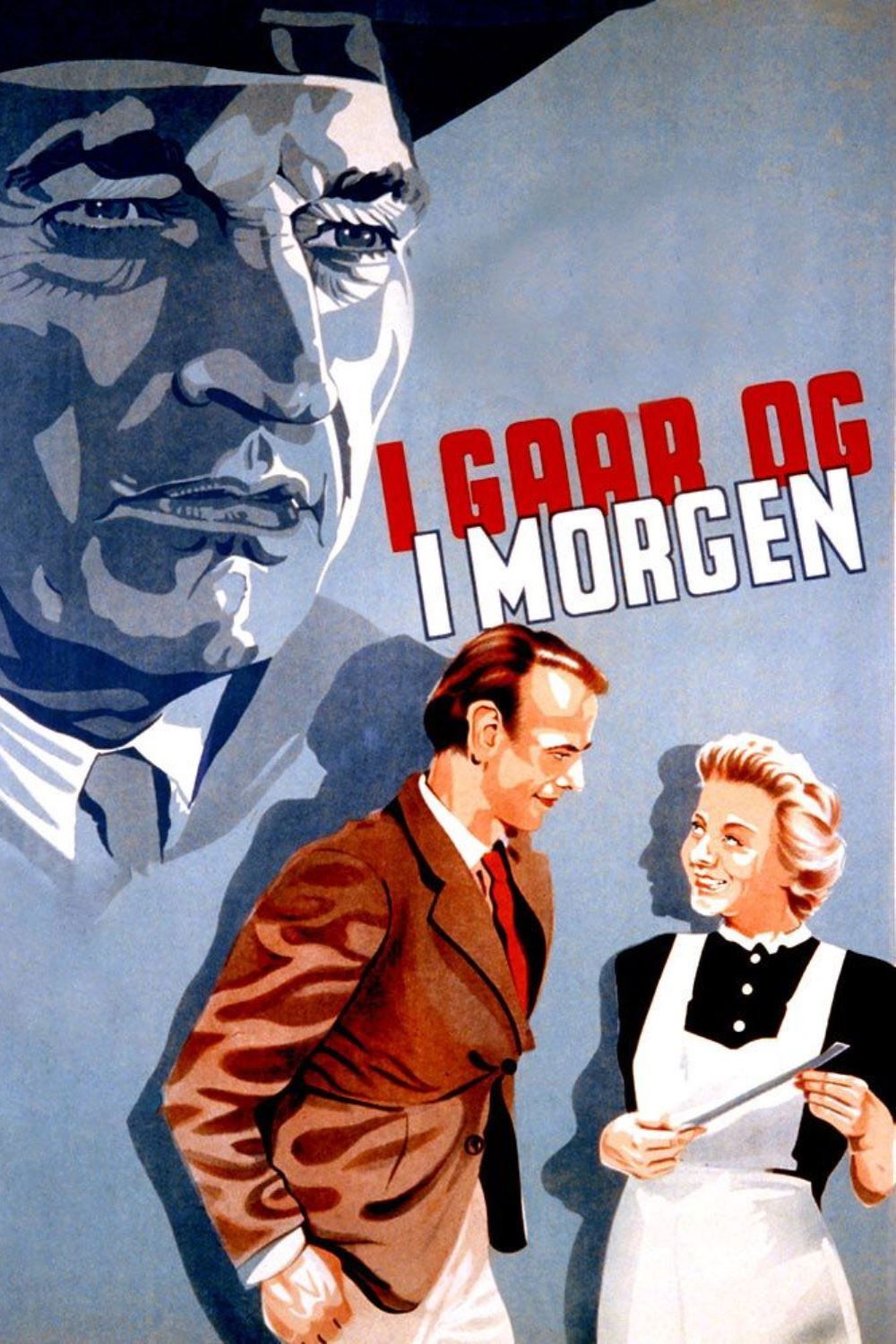
Director Albrechtsen, who heads a large construction company, is a tough and ruthless businessman. He does not shy away from dubious transactions when they serve his interests, and it is precisely on this basis that he comes into sharp conflict with his employee of many years, civil engineer Humlegaard, and the conflict leads to Humlegaard leaving the company. In the film, we now follow the far-reaching consequences of Albrechtsen's brutal actions.
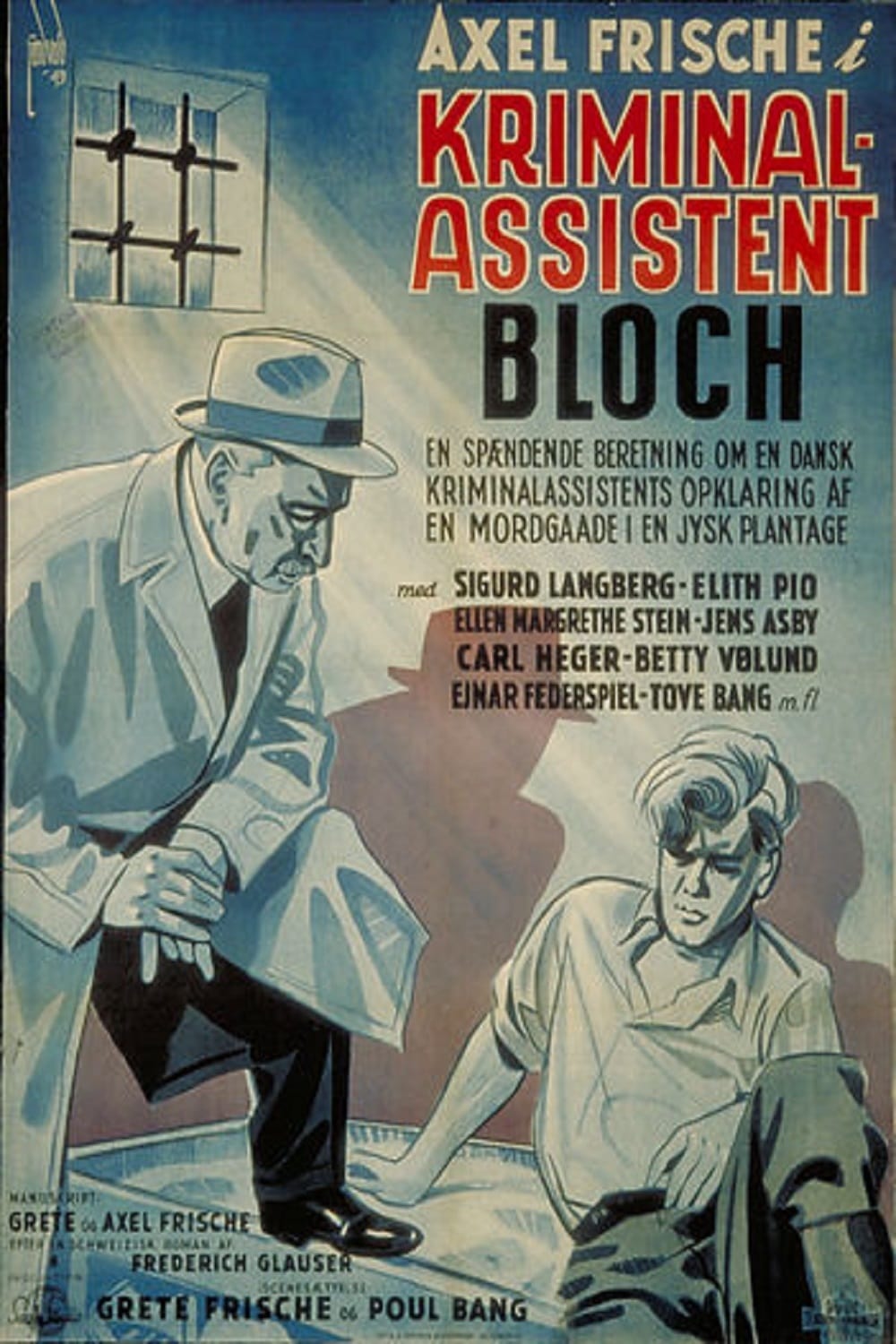
In the small town of Fjordnæs, former accountant Carl Frank lives with his family. He is a sick and broken man who has just finished a prison sentence for fraud. His financial affairs are in an extremely sad state, and he has no chance of getting a job. Frank decides to commit suicide and leaves the house with his revolver. Detective Bloch is called in from Copenhagen when Frank's revolver is found with a young horticultural worker.

17 -year-old May will by crook career on " the boards " - she will show that she can sing and have talent - and in its endeavors sticking her " a spoke in the wheel" for many. Several are the hardships she exposes its surroundings , to reach his goal. Although the whole thing is a joke - it becomes pretty " serious " when she torpedoing - with a bull's-eye - an engagement , then the " blow up " and with it, the economic basis of the Danish Advertising Television - the film is! But everything ends well - as befits - engagement and øresund television rescued .
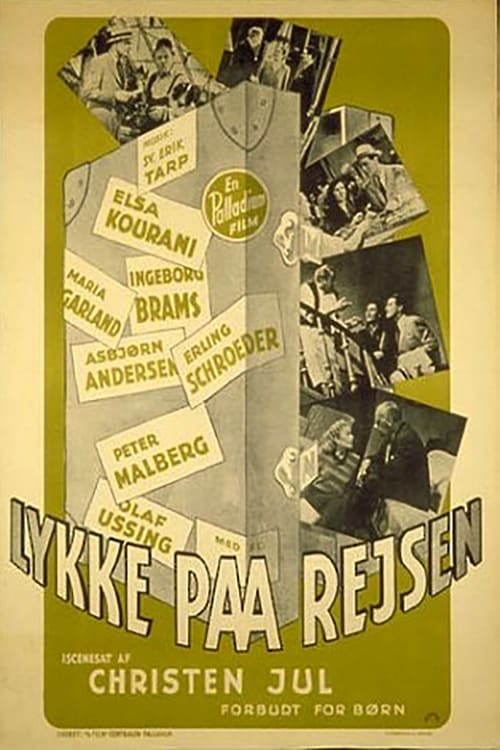
Klaus Seeberg is conducting research to find a new perfume. His wife Dagny is growing impatient, which is why she secretly hooks up with Joachim Friis-Olsen. When Klaus discovers this, he goes to Paris to sell his invention. One evening in Paris, he meets a Danish woman named Betty. Back in Denmark, Klaus' aunt throws a party. In addition to Joachim, Betty unexpectedly shows up at the party. What will Klaus do now? Is he in love with Betty?
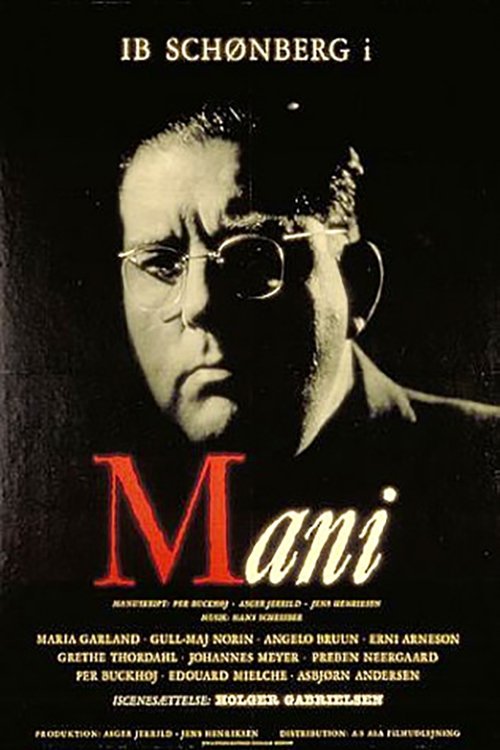
Erik Menkel is released after six years, convicted of the murder of Viktor Smith. He is sought out by an old college friend of Smith's, who wants Menkel to finish Smith's work. At the same time, Menkel knew a young woman who is looking for him. Jerle lets Erik Menkel disappear so that no one knows Menkel is still alive. Barbara discovers that Menkel is living with Jerle and seeks him out. Jerle has a terrible secret.
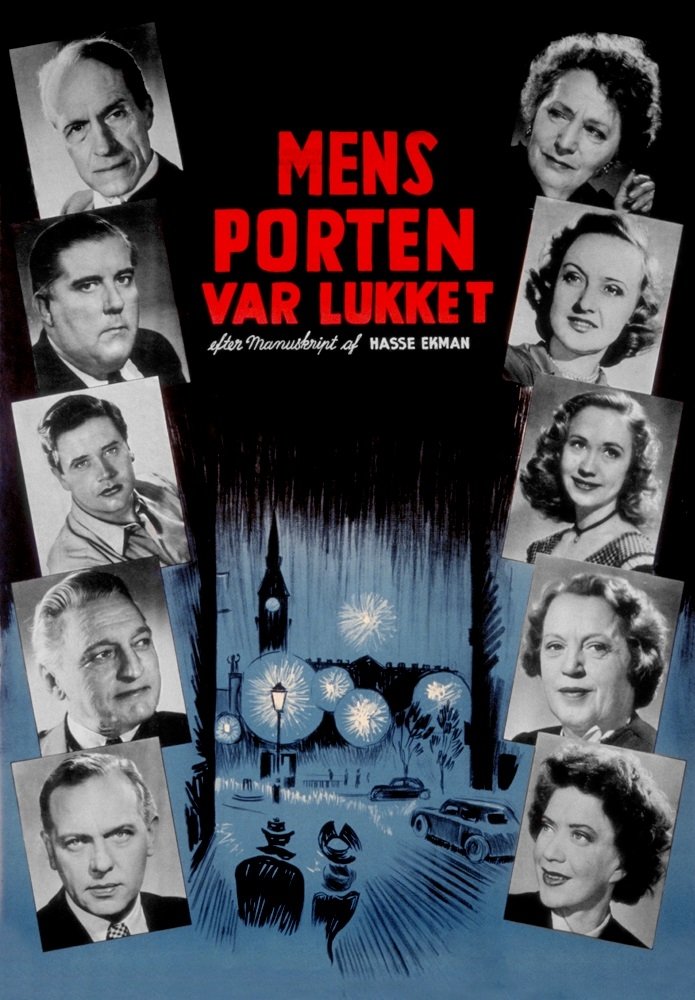
The film depicts a series of events that take place in a Copenhagen apartment building while the gate is closed, specifically between 10 p.m. and 7 a.m., and we encounter a number of human destinies, happy and unhappy, just as in real life.
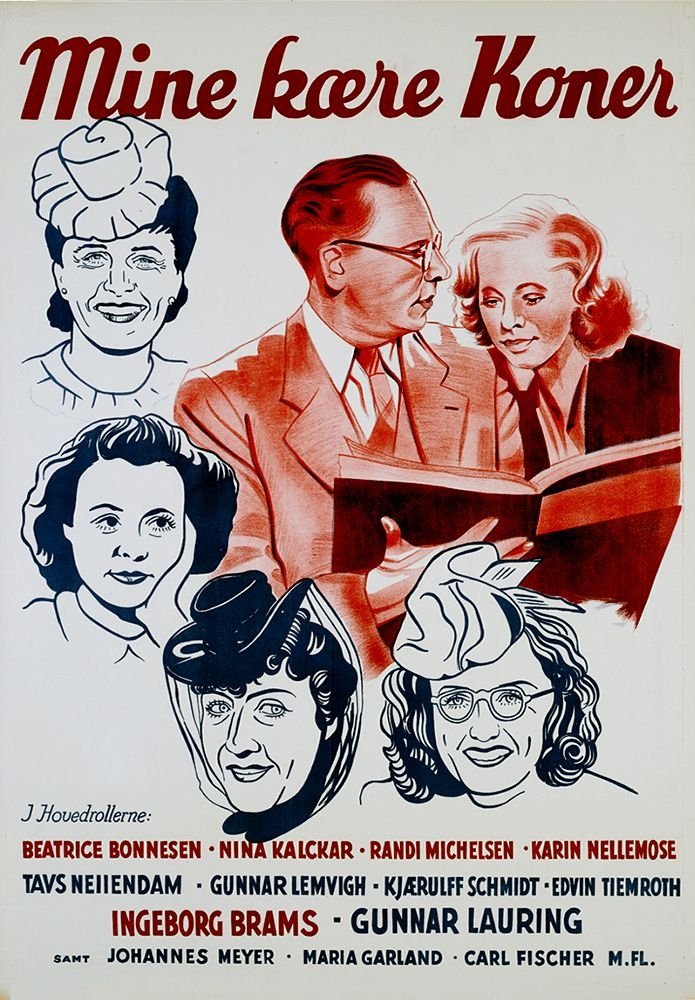
The celebrated actor George Bergmann has four divorces behind him. When his four former wives get the impression that he is cozying up to a very young actress, they feel that they must take action. However, this leads to various misunderstandings and complications, which partly involves the former wives' new men and partly the young girl's strict parents.
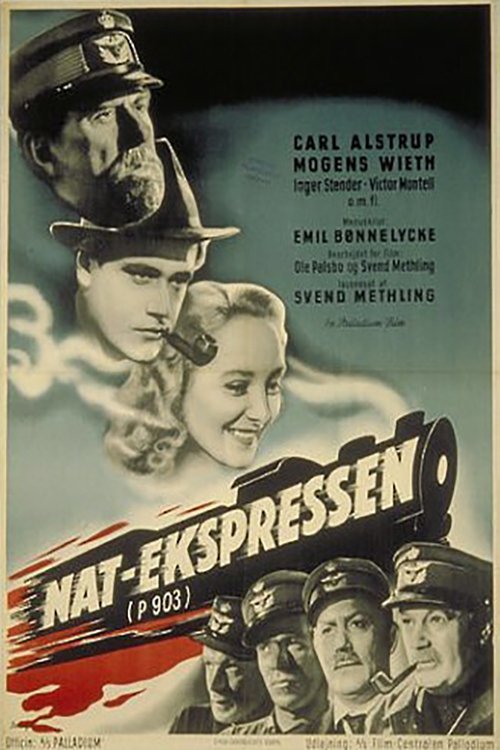
One night there is a terrible accident in the little station town of Bredsted. The young son of the rich Mogens Kragfelt is struck by the Natekspressen (P. 903) near the station. Police chief Aagesen sends the young detective officer Lund (Jørn Jeppesen) to investigate the case, where there are various mysterious circumstances, among other things there are traces of fights at the rails just where Kragfelt was crossed.
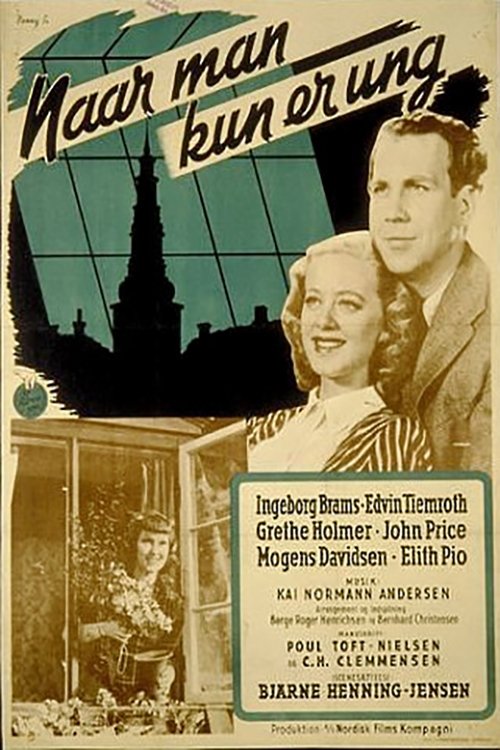
Peter West goes to Copenhagen to see if he can make a living as a painter. He is quickly accepted into the circle of young artists in the city. He quickly produces many paintings, but he cannot sell a single one. Susan, a young female journalist, is in love with Peter and decides to help him. Since her father is also an art connoisseur, she takes advantage of him, so that Peter gets a well-deserved breakthrough.
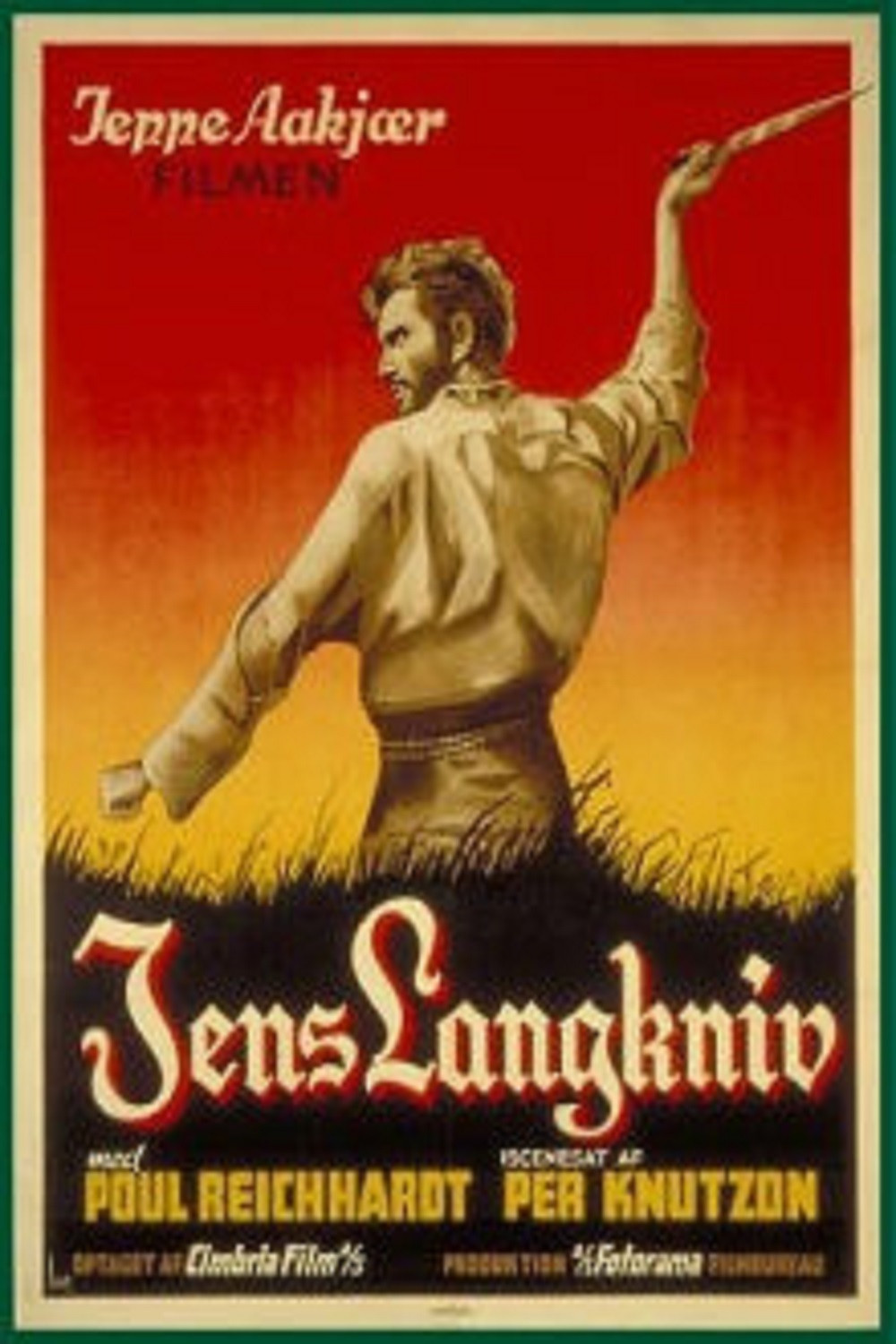
Jeppe Aakjær's heroic poem about Jens Langkniv becomes something more than the story of a robber in a small parish in Jutland.

Bella is surrounded by external security, comfort, and expensive luxury. In her cold, unconnected everyday life, she randomly meets 20-year-old hippie Jacob. They share a sense of loneliness.
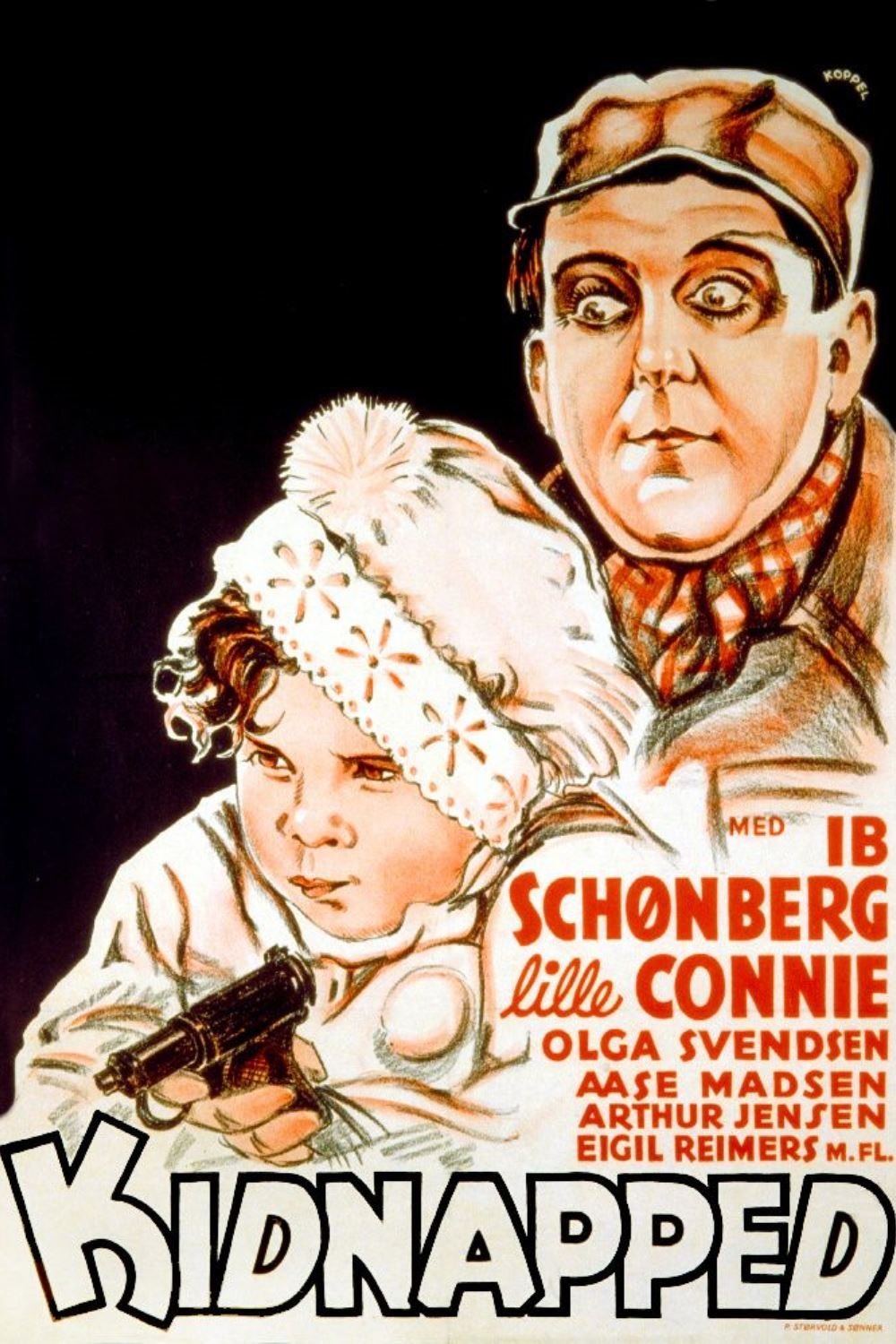
Anno 1826. Grethi Birger is 17 years old and is now all alone in the world. Her mother is dead, and she has never known her father. Grethi are now looking for the mother's only sister, aunt Birger who has a laundry in a remote provincial town. Aunt is of strictly religious disposition, receiving sister daughter with cool goodness. When the young county clerk Peer discovers that Grethi is heir to a large fortune from his father, he plans to marry her without telling anything about the legacy.

Mrs. Adda Ernst is a middle-aged lady of the bourgeoisie. She has a nice husband Mr. Ernst, a lovely home and two healthy children Birgit and Hans, who like most of their peers are interested in swing. Mrs. Adda is musical herself, and has a beautiful singing voice, sometimes she can fall into melancholy over the career she never had. But she is naturally endowed with a rare good mood, she soon sheds her sad mood. In reality, she has only one worry. She is afraid of getting old, and therefore makes some convulsive efforts to still seem young. She refuses to realize that her daughter has grown up.
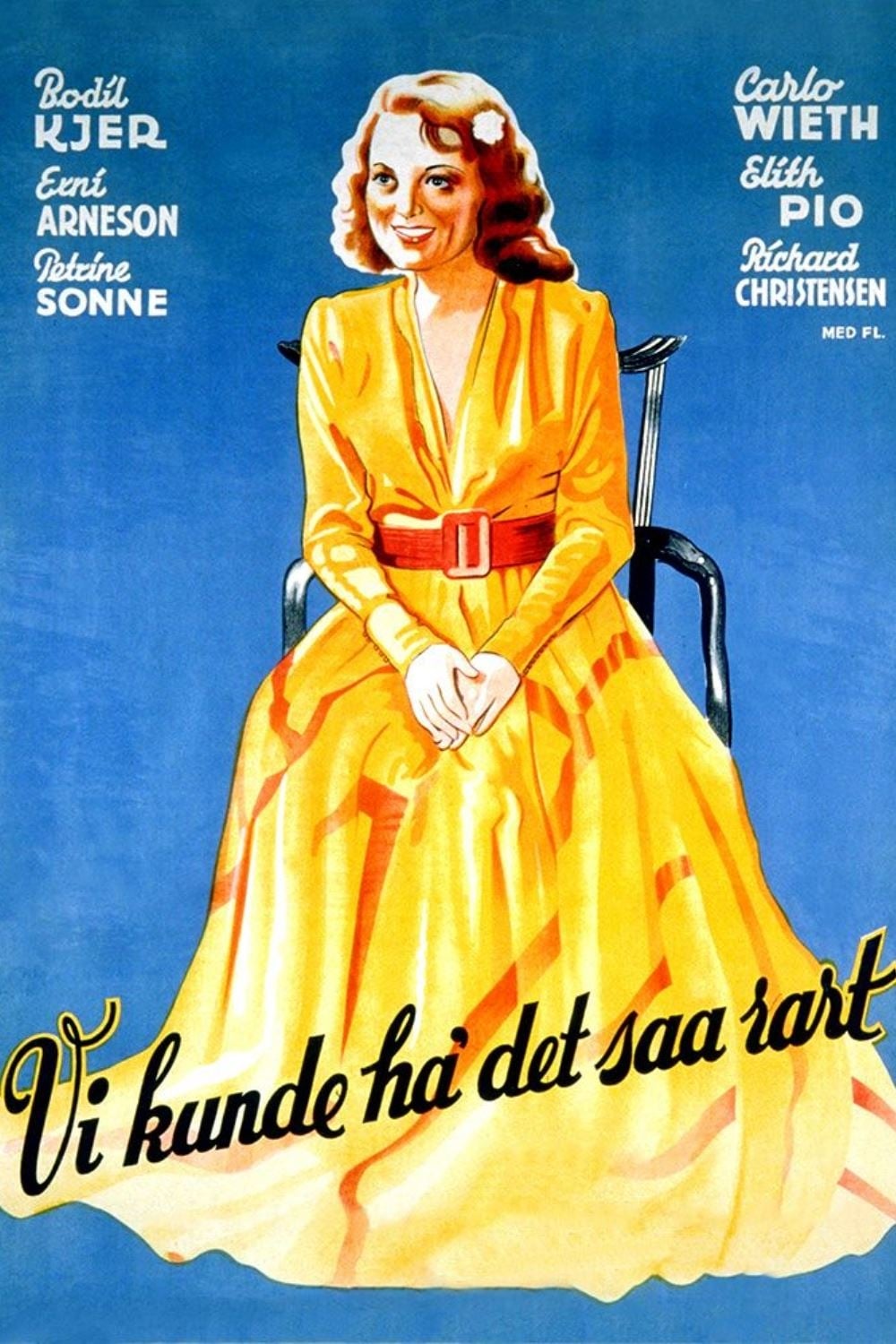
A renowned and widowed otolaryngologist hires a young, penniless poet as live-in nanny for his three rowdy – but musically gifted – children.

It's a warm summer evening in North Zealand. Black clouds are rising over the horizon and threatening thunder. Margit is cycling from the small guesthouse where she has settled down for her summer vacation to a party at a friend's house, which lives a few kilometers away. Margit is wearing a black dress and looks quite stunning, coming there on a bicycle - but it's necessary, because the landlady has decreed that all her guests must wear black - "it looks so good on her white terrace".
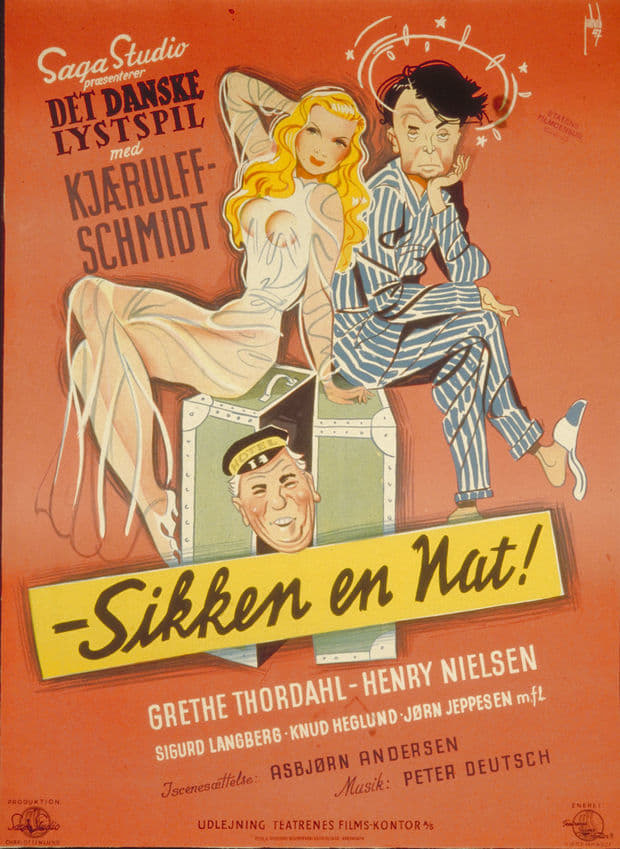
Peter and Tove are getting married. Since Peter only has three days' leave from his ship, they decide to go on their honeymoon to Copenhagen. After eating out in town, they check into a hotel for the night. The newlyweds quickly become embroiled in a crime drama. First, Peter finds a dead body in the bed. When the night porter finally arrives, the body has disappeared. The body is seen again in a large trunk, but disappears once more before the night porter can see it. Then Peter is kidnapped in the trunk.
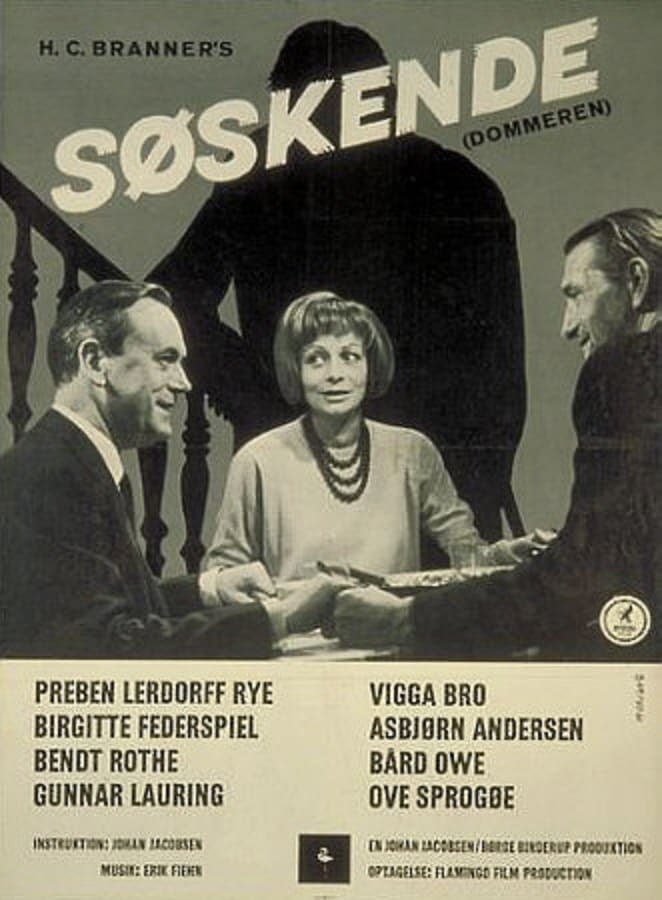
Three siblings see each other again after many years at their father's deathbed. The eldest, Arthur, a lawyer, has everything under control – or so it seems, as the middle child, Irene, is struggling with her abusive husband, while little brother Michael is the outsider, living a sleepless life of booze and prostitutes. When their father is close to death, the three are called together, and a major family drama unfolds in their father's living room. Gradually, they agree that they should stand together instead of arguing about old affairs. But when their sick father suddenly falls down the stairs, it is as if all good intentions fall to the floor again.

Stine is now eleven and her life and world in a Copenhagen suburb's modern social housing is portrayed in episodes around her family, friends and school.
The beauty of the islands is depicted in this Danish short documentary.

Fourteen-year-old Jan and his companion Erling appear as extras in a film being filmed at Nordisk Film's studios in Valby. A mysterious burglary at the studio's fine mechanics workshop gives the two healthy boys the opportunity to act as detectives.

It may appear to be smooth sailing, but the atmosphere behind the scenes at Poul and Jørgen's racing team is tense: the big race is just around the corner, and a deposed member of the team is trying to sabotage them. As if that's not enough, Jørgen can't stay away from Poul's girlfriend. The danger of capsizing is therefore imminent - but then Poul's cousin Basse appears.
Humorous short film about burglary prevention and robbery. A journalist and a press photographer come in possession of a couple of magical gallows who can make them invisible. Immediately, they see their cut to leverage the shoe's features to catch thieves on fresh deed - and get a good story on the cover!
Propaganda film for diphtheria vaccination. The film shows drastically how many carriers can be found among us. Every 11th Dane is a carrier of diphtheria! There are as many deaths a week as there were deaths throughout 1939. It is the duty of every citizen to be vaccinated.
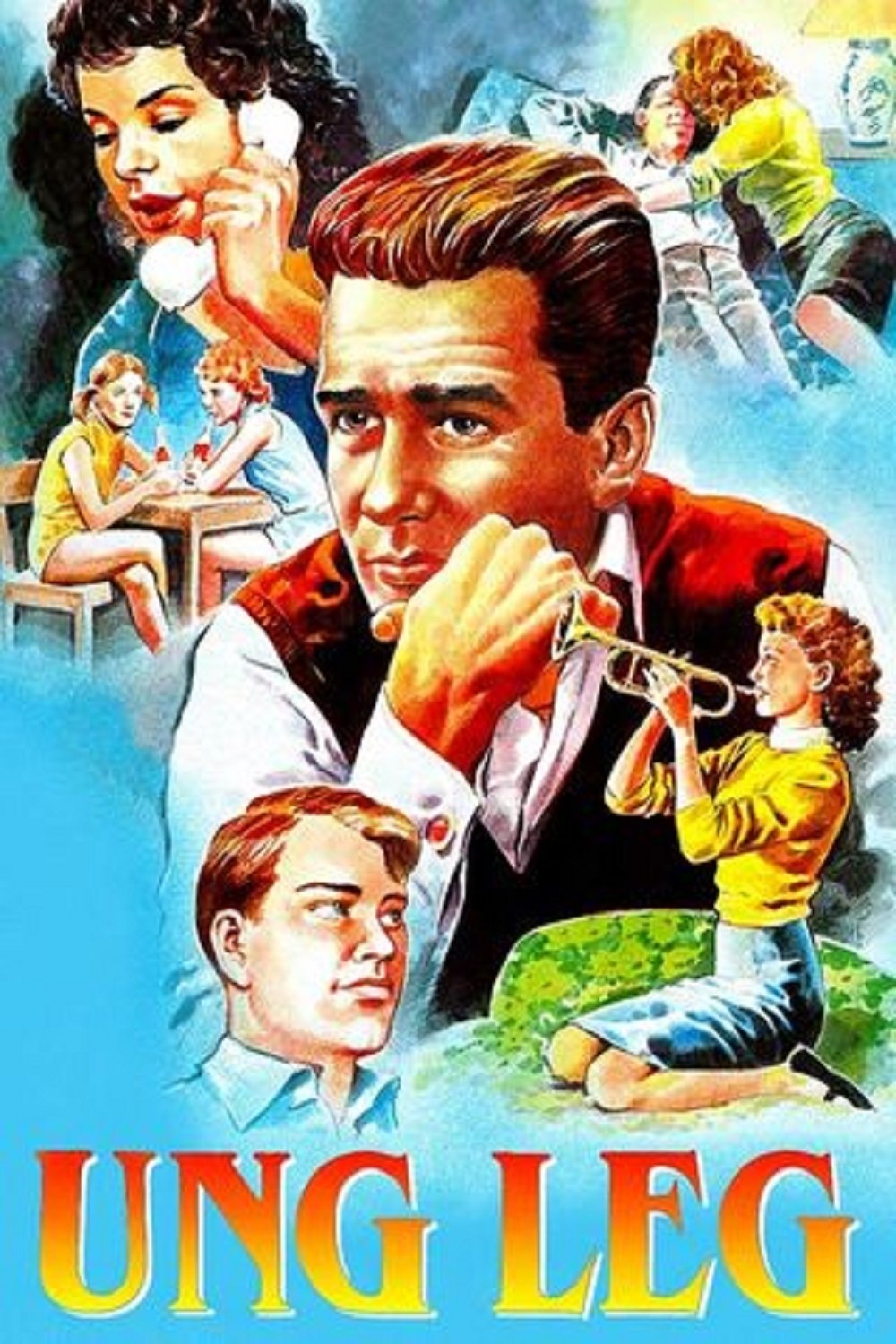
A tale of wealthy youth in post-WWII Copenhagen.
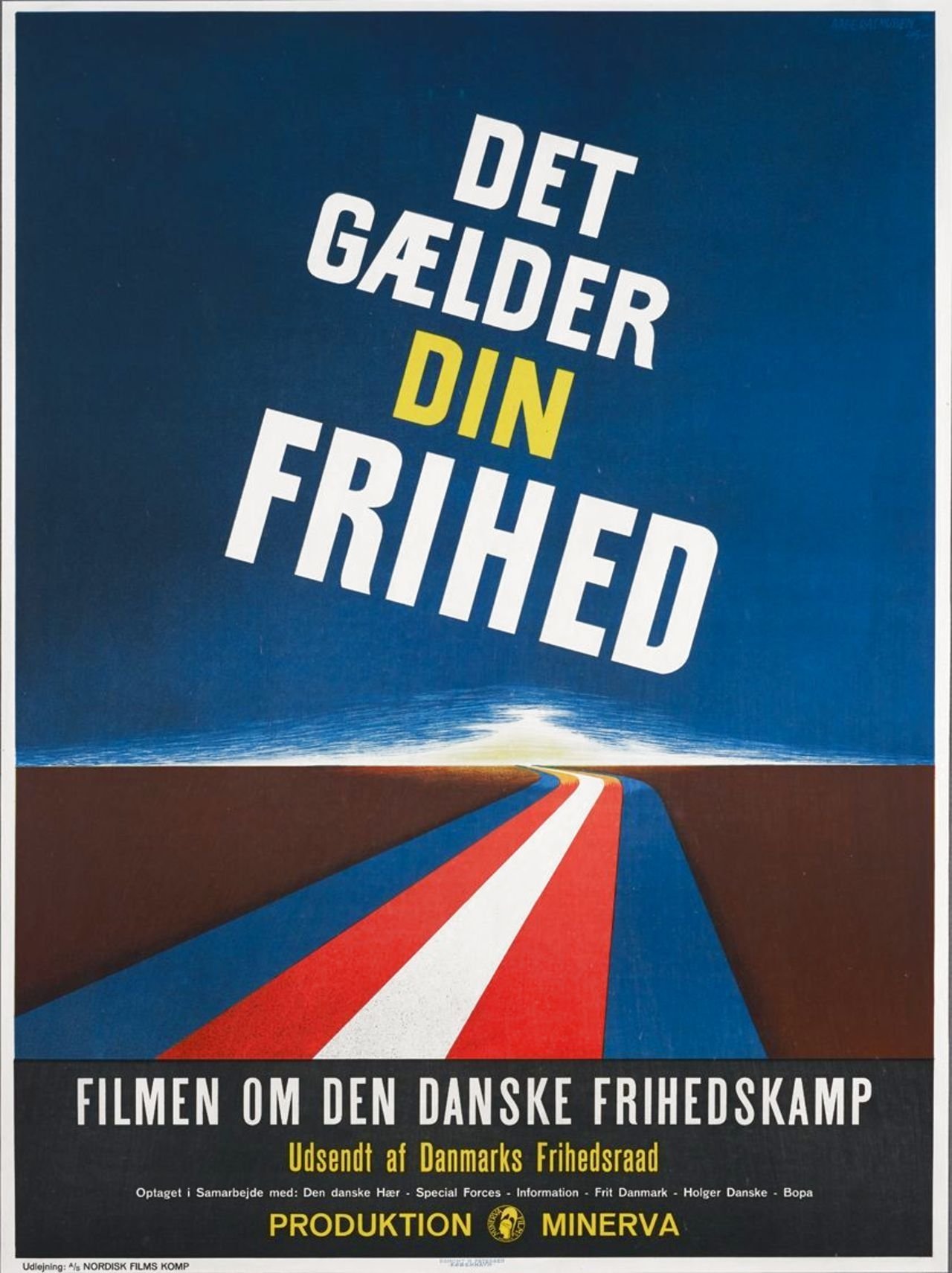
A Danish documentary on World War II told from the perspective of the resistance movement. Incorporating footage shot by filmmakers working alongside freedom fighters, it offers a vivid first-hand account of the perils of clandestine resistance activities. At the same time, the film delivers a sharp critique of the Danish government’s wartime policy of cooperation with the occupying German forces.


1914. The monarchs of Sweden, Denmark and Norway meet to demonstrate unity. In the crowd is a beautiful noble woman from Finland. She is eagerly courted by the monarch's aides.

Egon Olsen is commissioned to help a baron with an insurance fraud. As the dividend can finance Basse's wedding, even Valborg accepts the plans.
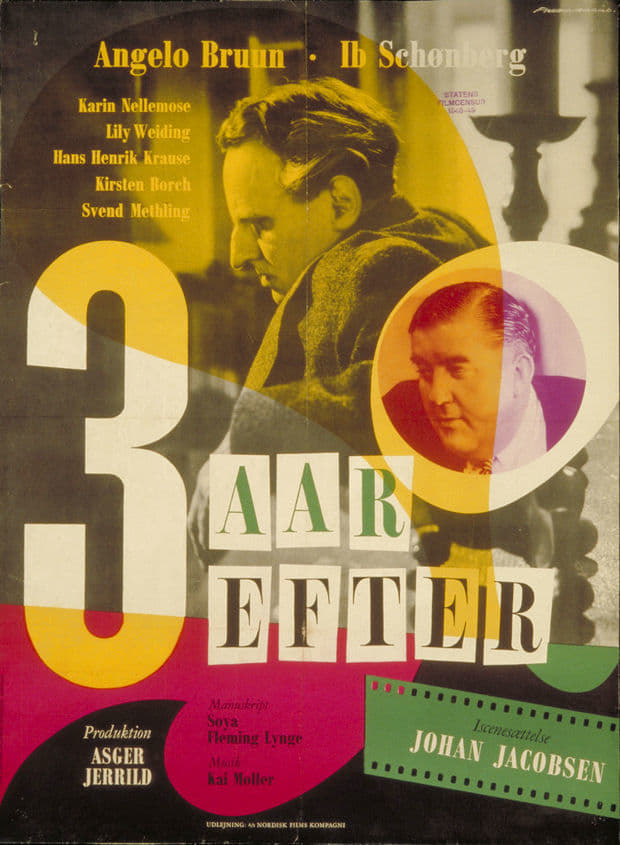
Soya's satirist take on variations of Danes, who willingly or unwillingly came to deal with German troops during the five year Second World War occupation.
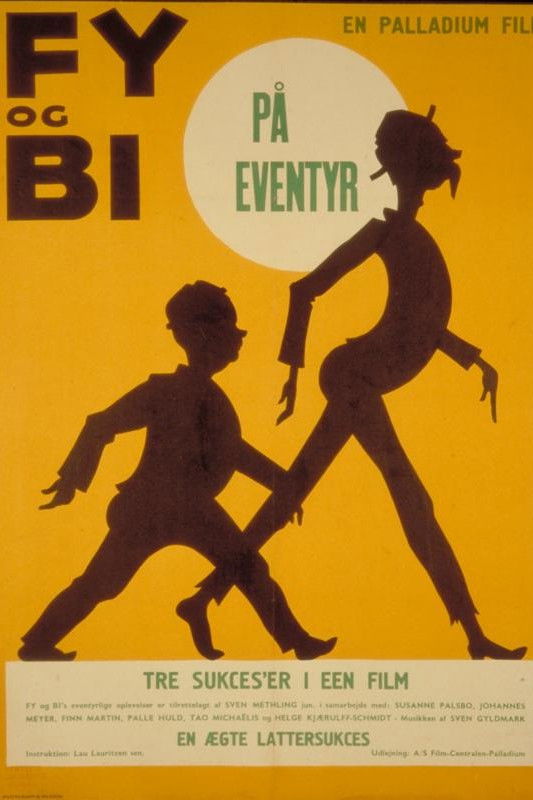

After copper miners discover a piece of the frozen tail of a giant prehistoric reptile in Lapland, scientists inadvertently bring it back to life.

The two friends, Fy and Bi, come wandering along the country road as so many times before without a destination and - without food. Hunger torments them, and they stop with wide eyes at a bakery truck, whose back door is open and opens the view to sumptuous trays of pastries and mayor's bars. However, they get a long nose and wander on to an old castle, where they seek accommodation for the night. In the castle cellar they open a book - and immediately they are back in the exciting events and deadly battles of the 15th century. And again we are back in the castle cellar, where Fy now with a bang closes the dusty, old book, and the two set out on the country road again.