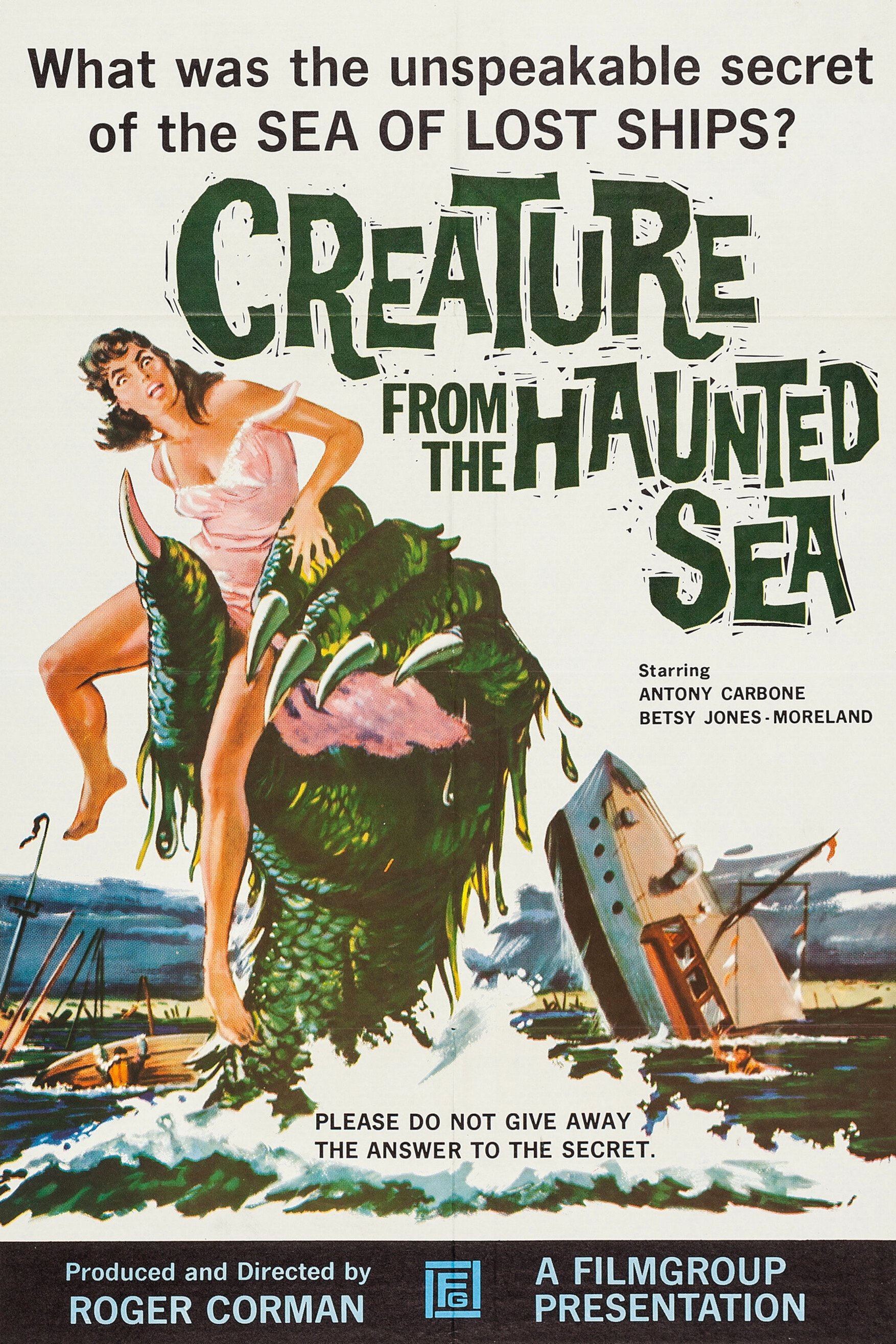
A crook decides to bump off members of his inept crew and blame their deaths on a legendary sea creature. What he doesn't know is that the creature is real.
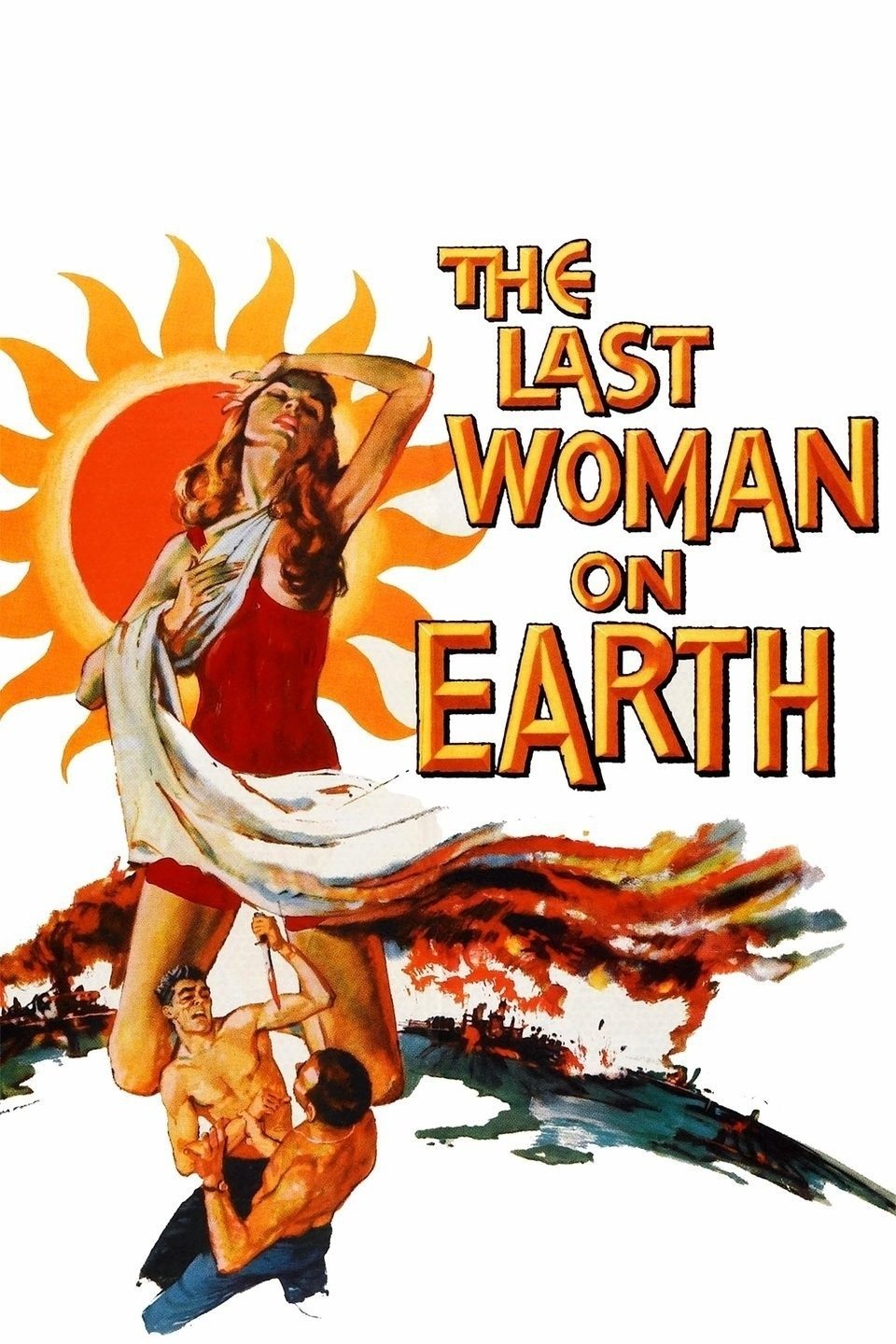
Harold Gern, a shady businessman from New York, is spending a holiday in Puerto Rico with his attractive wife Evelyn. They are joined by Martin Joyce, Harold's lawyer, who has come to discuss the latest indictment. Harold invites him along on a boat trip during which all three try out some newly bought scuba diving equipment. When they resurface, they find out that the world has changed forever.
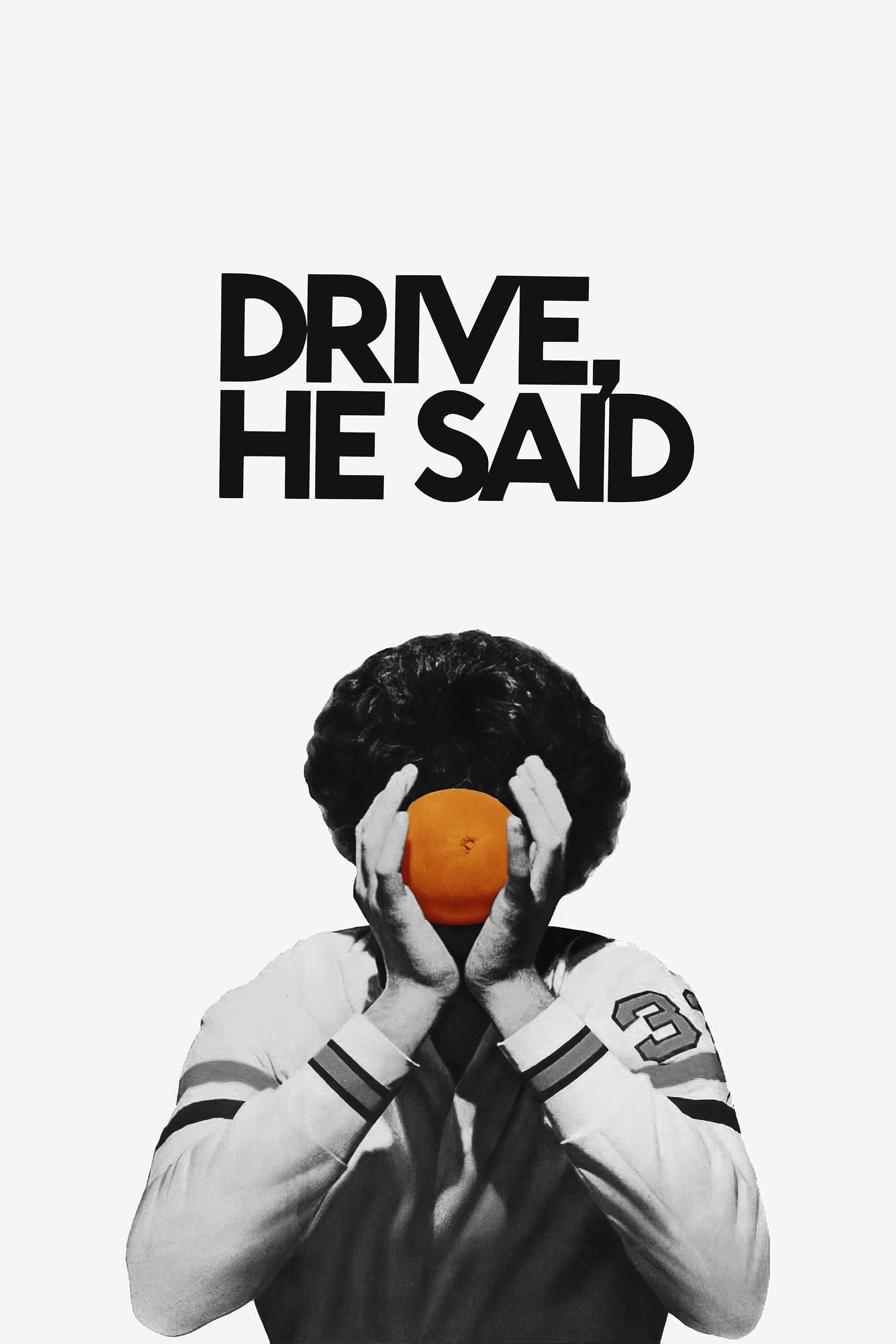
Hector is a star basketball player for the College basketball team he plays for, the Leopards. His girlfriend, Olive, doesn't know whether to stay with him or leave him. And his friend, Gabriel, who may have dropped out from school and become a protestor, wants desperately not to get drafted for Vietnam.
The making-of documentary of Bonnie and Clyde.
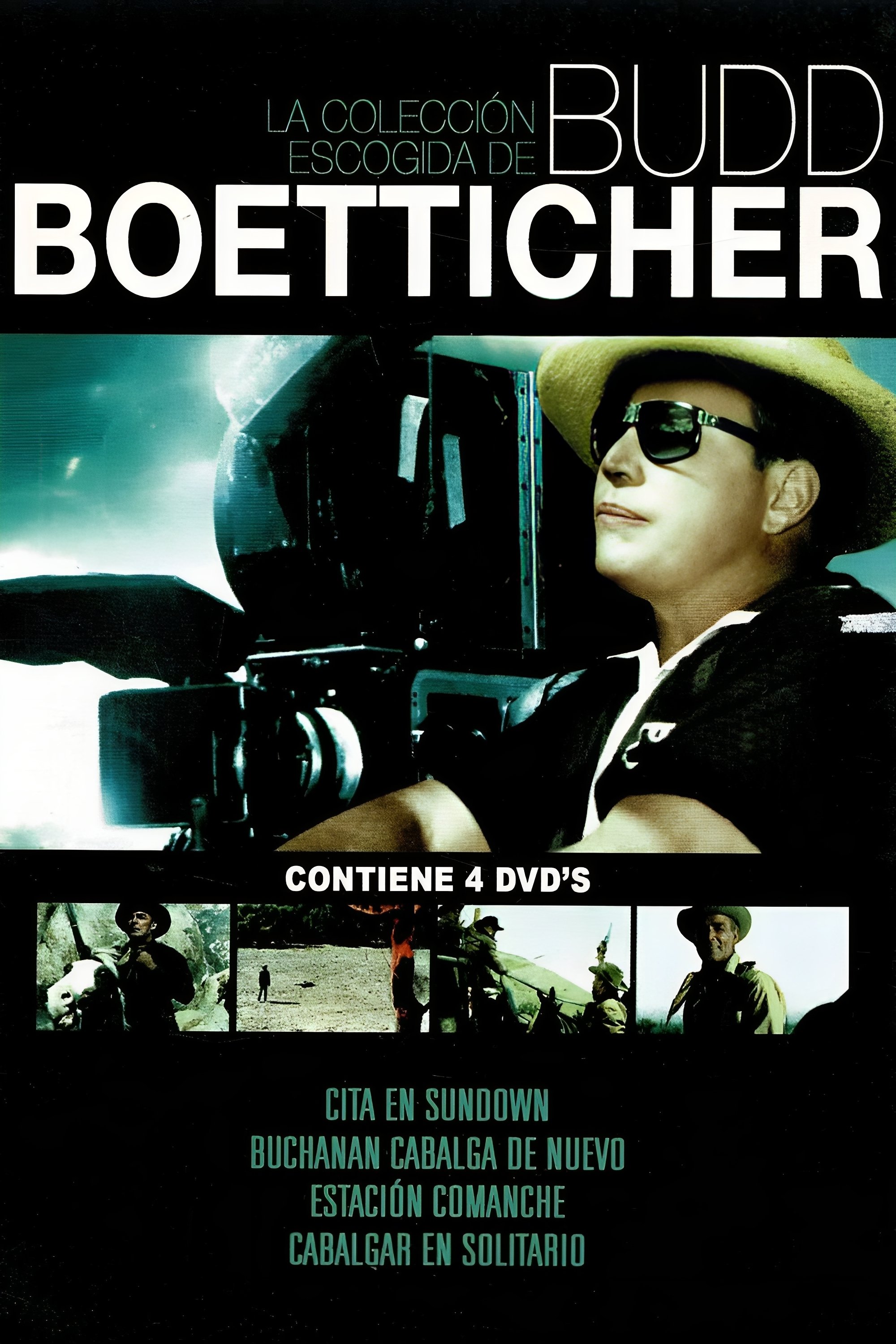
Documentary about filmmaker Budd Boetticher.
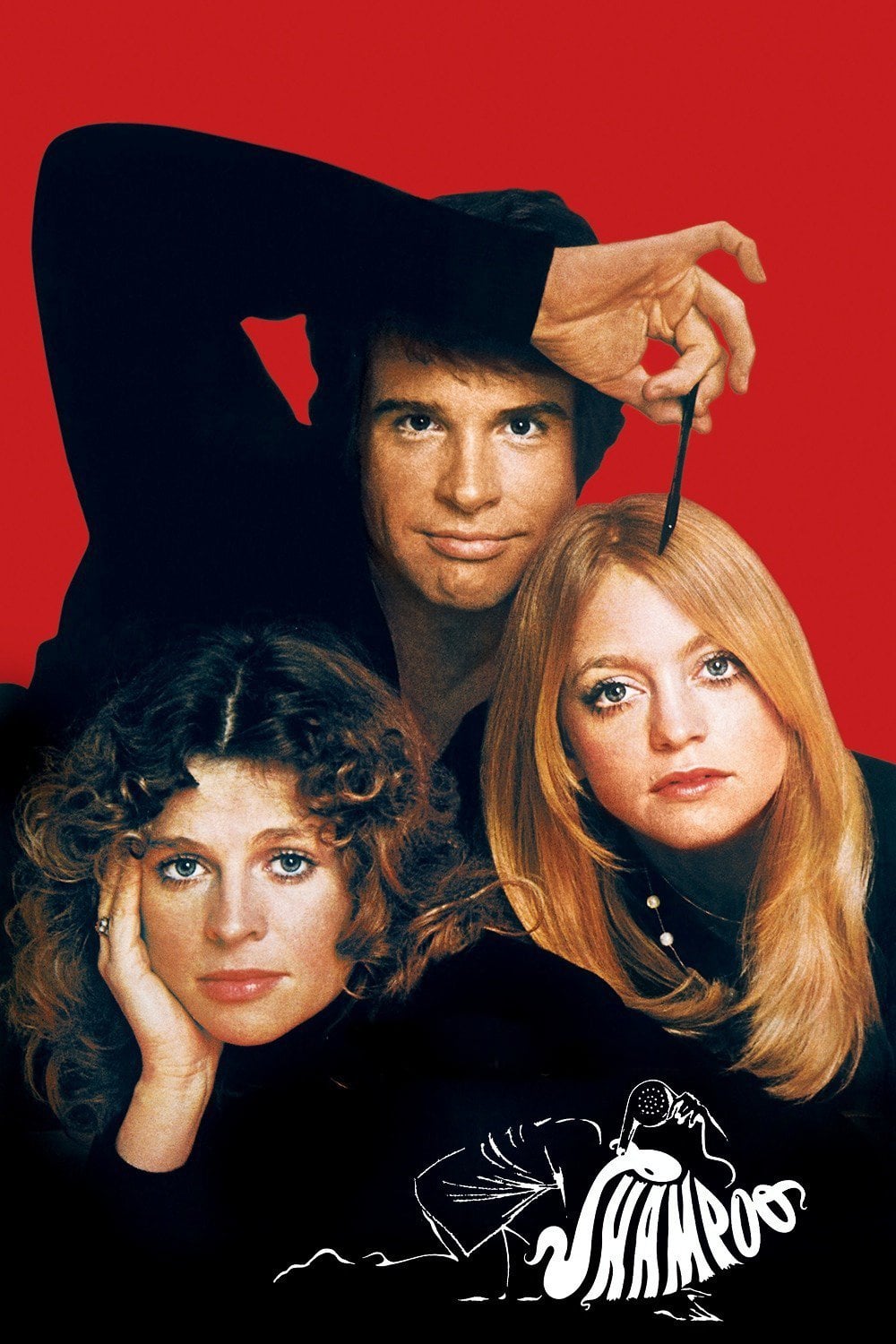
A Beverly Hills hairdresser runs around town on the eve of the 1968 presidential election trying to make heads or tails of his financial and romantic entanglements. His attempts to gather the money to open his own salon are continually side-tracked by the distractions presented by his many lovers.
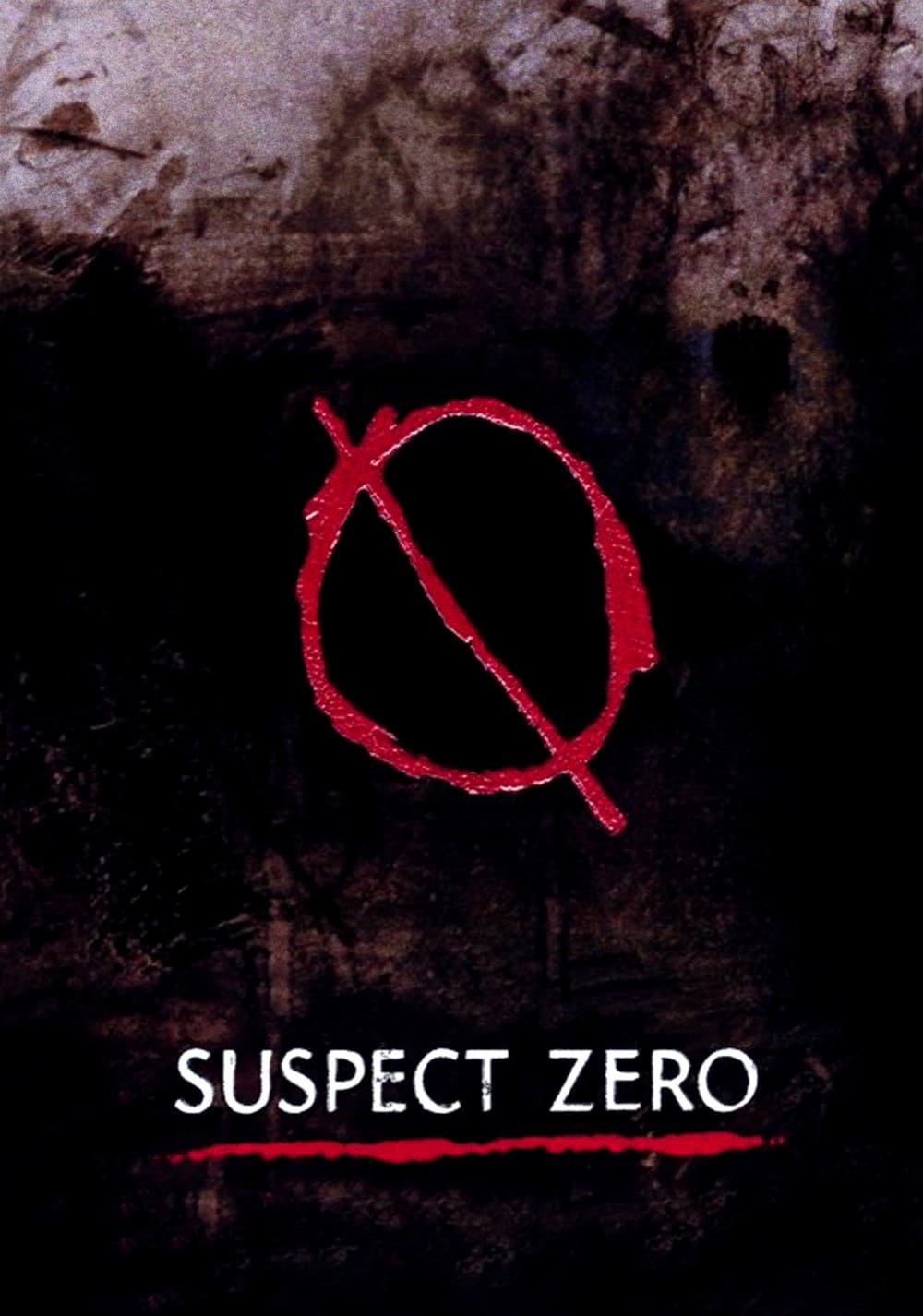
A killer is on the loose, and an FBI agent sifts through clues and learns that the bloodthirsty felon's victims of choice are other serial killers.

Pauline Kael (1919–2001) was undoubtedly one of the greatest names in film criticism. A Californian native, she wrote her first review in 1953 and joined ‘The New Yorker’ in 1968. Praised for her highly opinionated and feisty writing style and criticised for her subjective and sometimes ruthless reviews, Kael’s writing was refreshingly and intensely rooted in her experience of watching a film as a member of the audience. Loved and hated in equal measure – loved by other critics for whom she was immensely influential, and hated by filmmakers whose films she trashed - Kael destroyed films that have since become classics such as The Sound of Music and raved about others such as Bonnie and Clyde. She was also aware of the perennial difficulties for women working in the movies and in film criticism, and fiercely fought sexism, both in her reviews and in her media appearances.
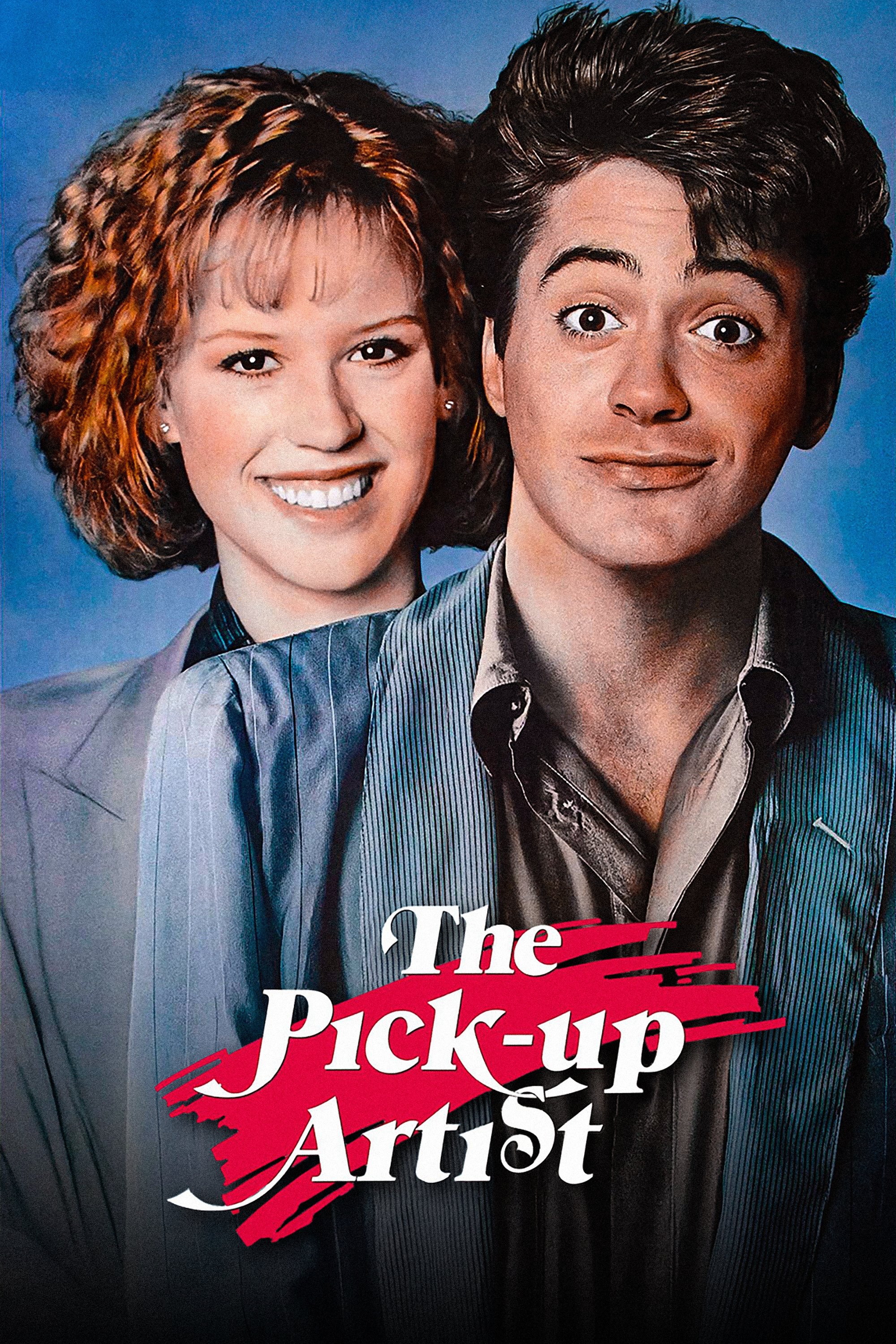
A womanizer meets his match when he falls for the daughter of a gambling addict who is in debt to the mob.
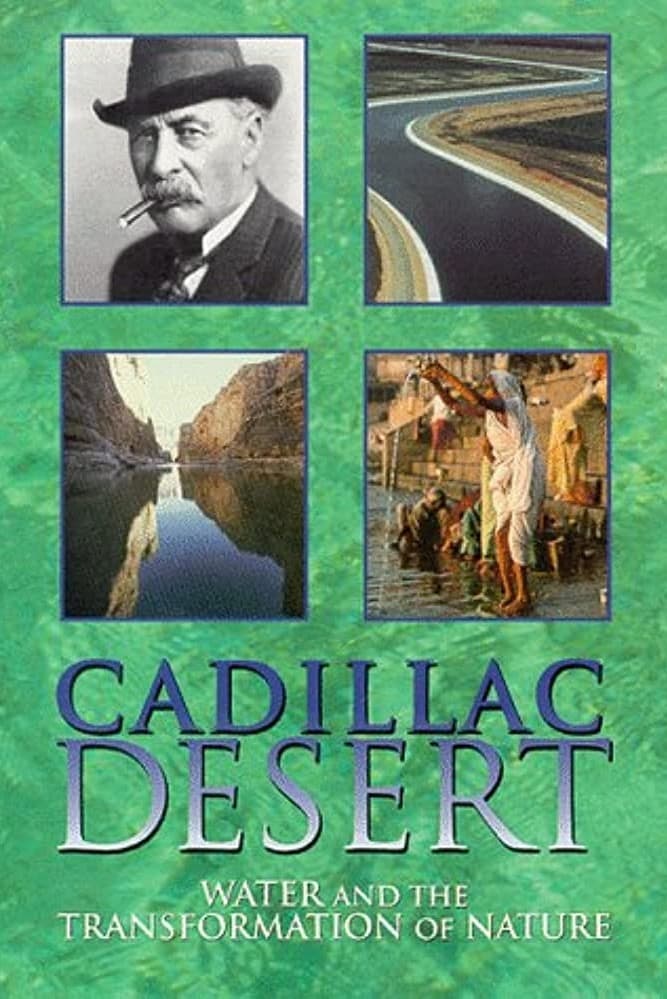
Documentary on water usage, money, politics, the transformation of nature, and the growth of the American west, shown on PBS as a four-part miniseries.
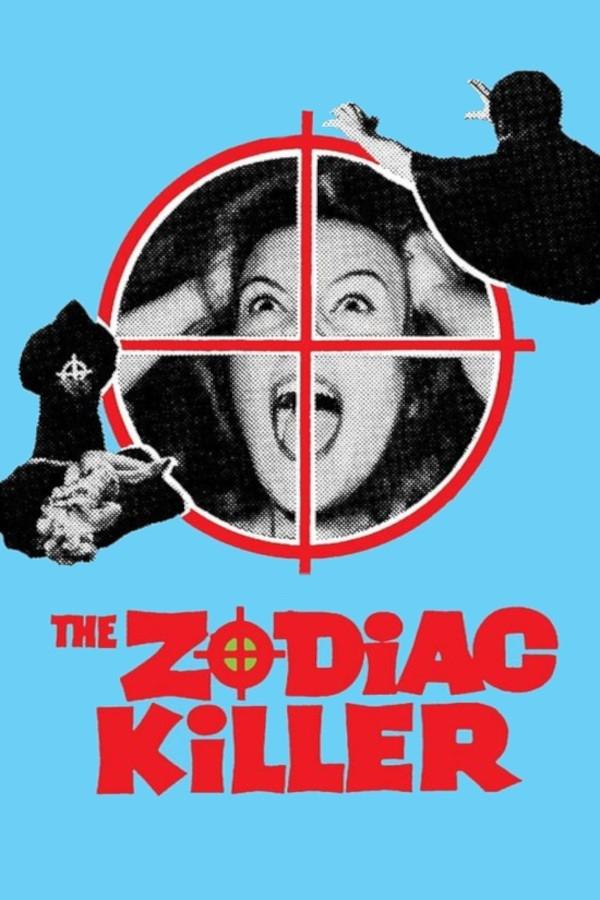
The San Francisco area is beset by a series of seemingly random murders without motive or pattern. The police are taunted by phone calls and letters. Could the maniac be the violent truck driver, or the seemingly mild-mannered mailman, or even a cop?
A profile of writer-director Billy Wilder
About a largely unsung writer of the twentieth century: John Fante, the renegade author whose highly autobiographical novels illustrate his deep-rooted love of Los Angeles and his struggles working through poverty and prejudice.
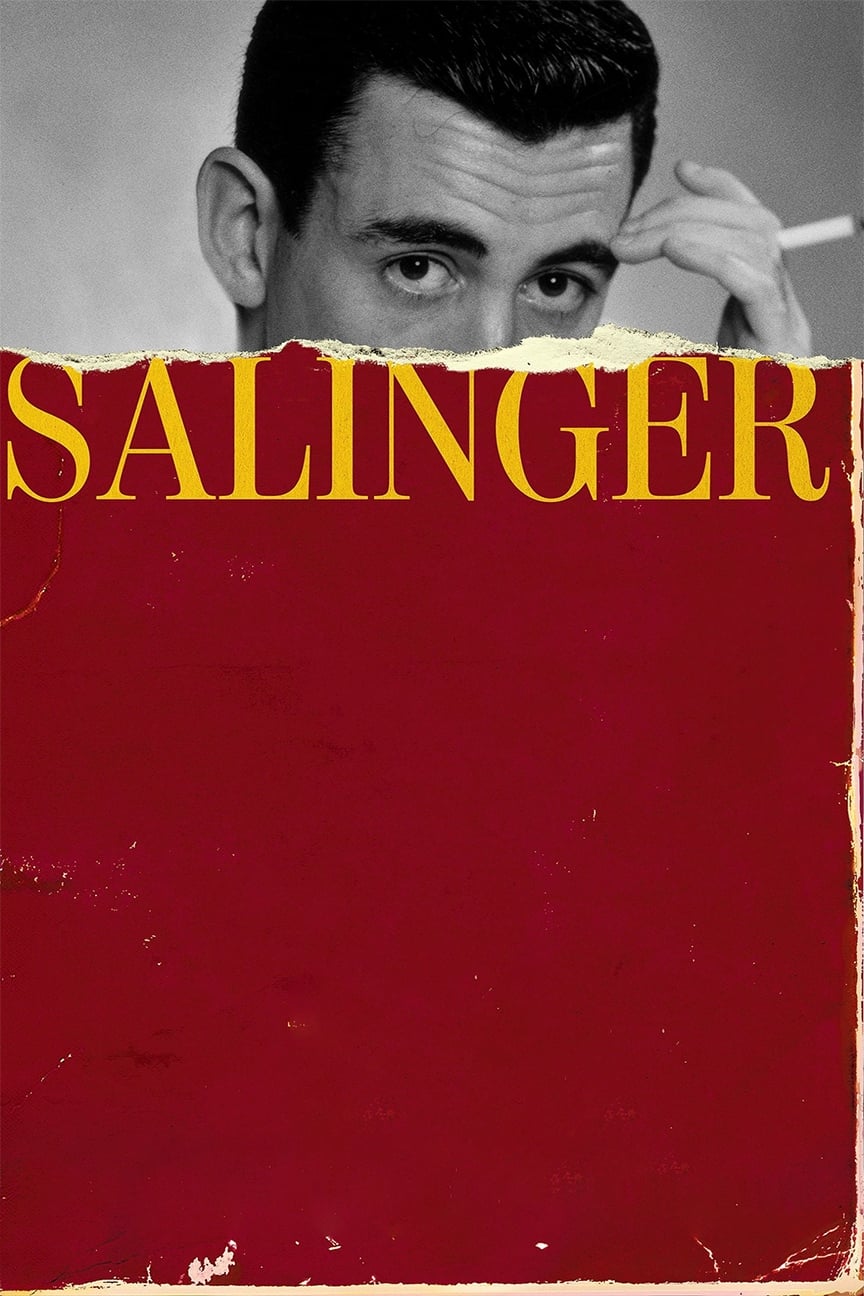
An in-depth investigation into the private world of the American writer J. D. Salinger (1919-2010), who lived most of his life behind the impenetrable wall of a self-imposed seclusion: how his dramatic experiences during World War II influenced his life and work, his relationships with very young women, his obsessive writing methods, his many literary secrets.
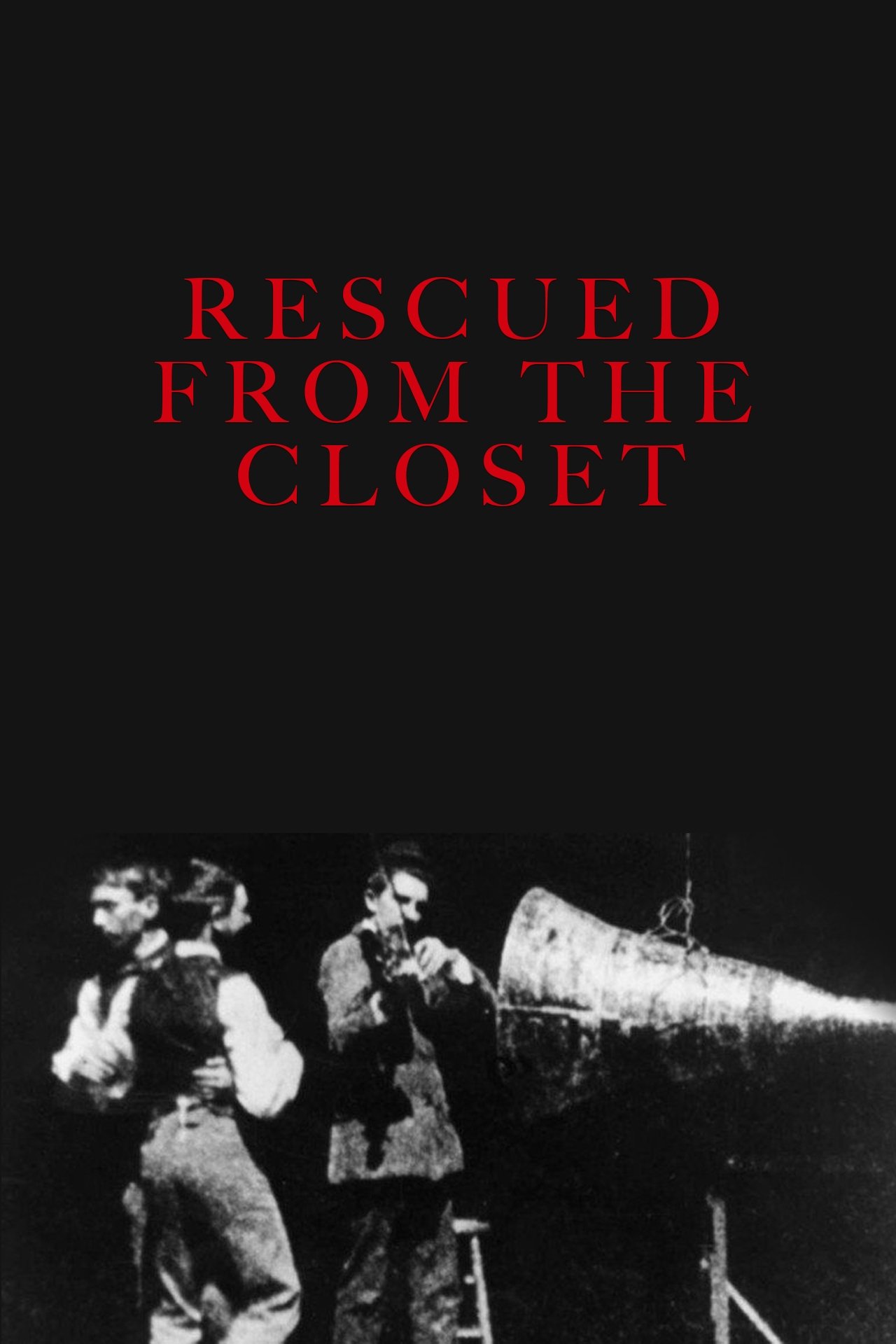
Rescued from the Closet is a 2001 documentary consisting of interviews originally recorded for the 1995 film The Celluloid Closet. It explores the history and impact of LGBT representation in cinema, providing insights into the portrayal and evolution of LGBT characters and themes within the film industry.

Jack L. Warner, Harry Warner, Albert Warner and Sam Warner were siblings who were born in Poland and emigrated to Canada near the turn of the century. In 1903, the brothers entered the budding motion picture business. In time, the Warner Brothers moved into film production and would open their own studio in 1923.
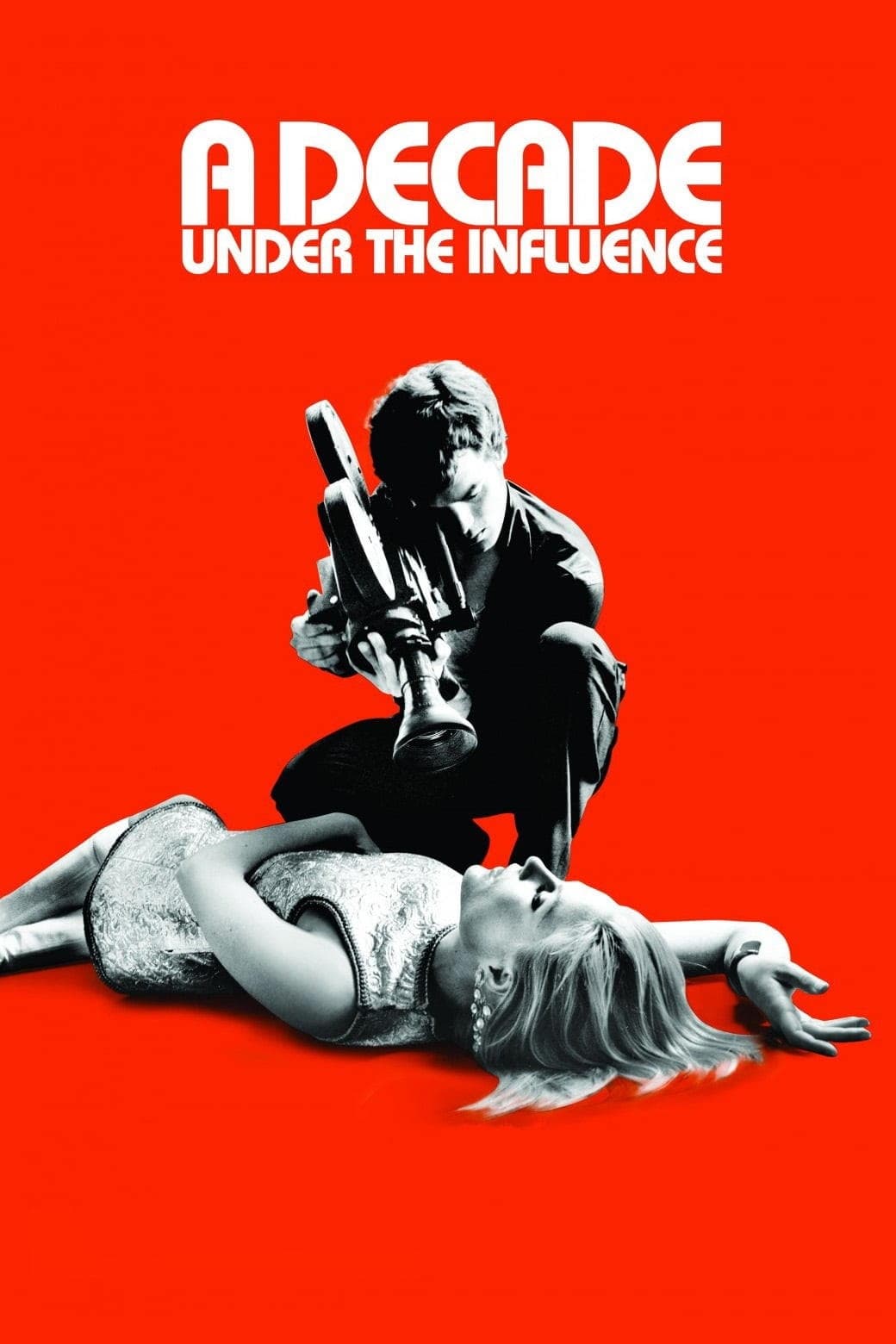
A documentary examining the decade of the 1970s as a turning point in American cinema. Some of today's best filmmakers interview the influential directors of that time.

illustrates how directors pushed boundaries and altered the art of filmmaking during the turbulent, swinging 1960s. Narrated by Woody Harrelson, "Reel Radicals" features clips from such seminal films as Arthur Penn's "Bonnie and Clyde" (1967); Mike Nichols' "The Graduate" (1967); Dennis Hopper's "Easy Rider" (1969); John Frankenheimer's "The Manchurian Candidate" (1962); Stanley Kubrick's "Dr. Strangelove" (1964) and "2001: A Space Odyssey" (1968); John Schlesinger's "Midnight Cowboy" (1969); Richard Brooks' "Elmer Gantry" (1960) and "In Cold Blood" (1967); and Norman Jewison's "In the Heat of the Night" (1967) and "The Thomas Crown Affair" (1968). Frankenheimer, Jewison, Hopper, Schlesinger, Penn, Buck Henry, Paul Mazursky, Roger Corman and Arthur Hiller are among the filmmakers who discuss the decade.